
Review · SMALL-GROUP WALKING TOURS
Budapest All in One Small Group Walking Tour with Strudel Stop
Budapest rewards a wide-angle start. This tour links Heroes’ Square, City Park, St. Stephen’s Basilica, the Danube, and Buda Castle in one morning, using the metro and public transport to cover ground without turning the day into one long march. I like the smart route and the included strudel break, which gives you a warm seat before the final climb through Buda.
The small maximum of 10 people is another real plus. Guides such as Greg, Esther, Anna, Petra, and Luisa have been praised for clear explanations, local tips, humor, and a friendly approach. The main caution is simple: you will walk about 6 kilometers, or 4 miles, for roughly three hours, with stairs and uneven sections. This is an overview tour, not an inside look at Budapest’s grand buildings.
Five things to know before booking
- You cross both sides of Budapest: The route covers Pest’s grand avenues and riverfront, then finishes in the Buda Castle District.
- The metro is part of the experience: Public transport tickets are included, so you can reach City Park and return downtown without arranging fares yourself.
- The strudel stop is more than a snack: A visit to the Strudel House includes strudel plus coffee, tea, or mineral water.
- The group is capped at 10 people: That makes it easier to hear the guide and ask questions than on a large bus tour.
- The tour ends at Fisherman’s Bastion: You finish beside one of Budapest’s finest city views, near Matthias Church.
A strong first morning in Budapest
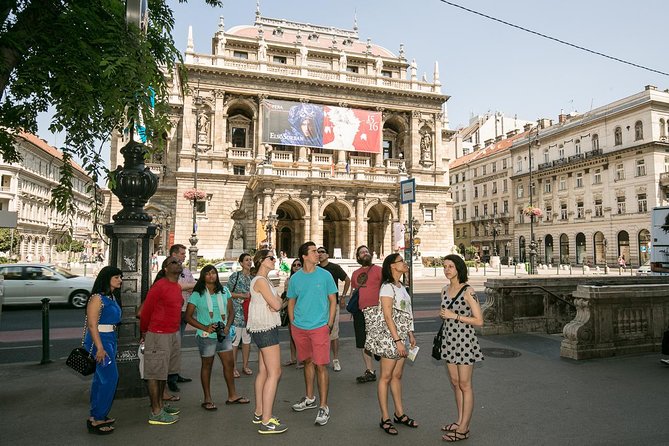
The tour begins at 9:00 a.m. outside the Hungarian State Opera House at Andrássy út 22. That early start matters. You get a head start on a busy sightseeing day, and the route gives you an overview you can use to plan the rest of your stay.
The guide first talks about the Opera House, then leads you along Andrássy Avenue. This grand boulevard is one of the city’s main routes, and the tour uses the underground beneath it to reach City Park. The short metro ride is practical, but it also introduces you to Budapest’s public transport system. The tour includes the necessary public transport tickets, including one free single ticket for your return downtown after the tour.
I like this mix of walking and transit. You are not spending half the morning trudging between distant sights, yet you still get a feel for Budapest above ground and below it. The route is active, but the transport breaks up the effort.
More Small-Group Walking Tours in Budapest:
- Amsterdam Anne Frank: Small-Group Walking Tour & Local Guide
★ 4.8 · 12,789 reviews - Boston: Freedom Trail History Small Group Walking Tour
★ 5.0 · 6,450 reviews - New Orleans Food Walking Tour of the French Quarter with Small-Group Option
★ 5.0 · 6,118 reviews
Heroes’ Square and the story of Hungary
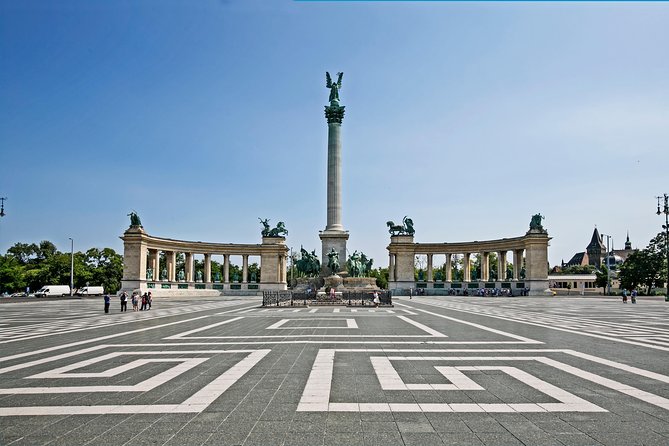
Heroes’ Square is the first major stop. Its broad open space is framed by a monument with statues of Hungarian kings and national leaders. The guide uses the colonnade to explain key points in Hungary’s past, including the celebration of 1,000 years since the Hungarian conquest of the Carpathian Basin.
This is a useful place to have a guide. The monument can look like a grand wall of stone and statues if you simply walk up, take a picture, and leave. With an explanation, the figures and layout become a quick visual lesson in how Hungary presents its national story.
Expect about 30 minutes here, with time for photographs and a clear introduction to the country’s past. The stop is outdoors and admission is free. If the day is cold, rainy, or very sunny, you will feel it quickly in this exposed square, so dress for the weather.
City Park, Vajdahunyad Castle, and Szechenyi Spa
From Heroes’ Square, you walk through Varosliget, or City Park. The park is one of Budapest’s main open spaces and contains several sights, so the guide gives you a short orientation rather than an extended park visit.
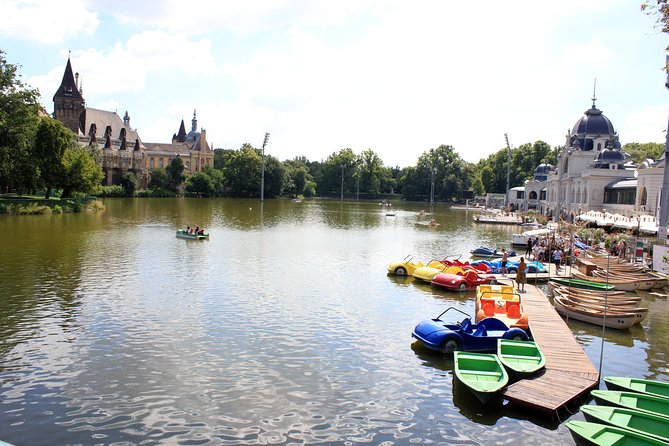
The route then reaches Vajdahunyad Castle. Built for the 1896 Millennial Exhibition, it was connected with Hungary’s 1,000-year celebration. The design brings together different architectural styles from Hungary, and the guide explains what you are seeing as you walk into the courtyard.
This is a pleasant change from the formal monument at Heroes’ Square. You move from national symbols to a more playful architectural setting, with time to look at details and take pictures. The tour does not include an interior visit, so you should think of the castle as an exterior stop.
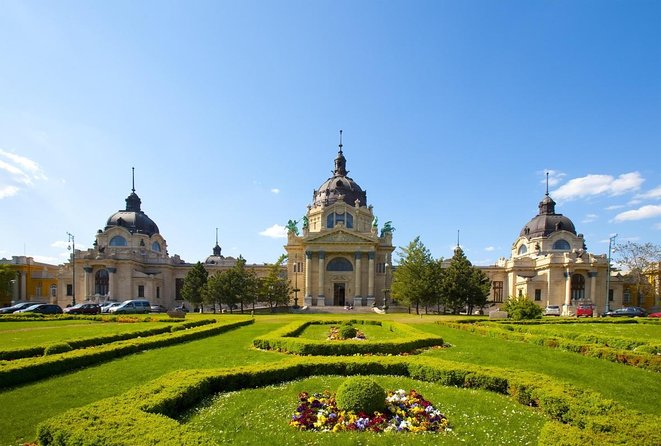
Next comes Szechenyi Spa, one of Budapest’s best-known thermal bath complexes and described as Europe’s largest thermal bath. The tour peeks into the bath house and explains local spa culture, but it does not include bathing or a full spa visit. That distinction is important. If you want to spend hours in the pools, schedule Szechenyi separately.
The stop works well as a short introduction. You learn why thermal bathing matters in Budapest without using the morning for a full spa session. You also avoid the need to carry bathing gear during the walking tour.
Returning downtown for St. Stephen’s Basilica
After City Park, the group takes the metro back toward central Budapest. The change of pace is welcome. You have covered a distant part of the city, and the public transport ride shows how easy it can be to connect the outer sights with the center.
The route then reaches St. Stephen’s Basilica, a grand neo-classical church and one of Budapest’s two tallest buildings. The guide explains the church’s story from the outside. Since interior visits are not included, you will need a separate ticket and extra time if you want to see the inside.
I see this as one of the tour’s tradeoffs. You get a broad introduction to many major sights, but no single building receives a full visit. That is a fair exchange for the amount of ground covered in four hours, as long as you know what you are booking.
A few more walks around Budapest worth a look
- Budapest: Buda Castle Walk with Saint Stephen’s Hall
★ 4.5 · 3,012 reviews - Big Bus Budapest Hop-On Hop-Off Bus and Walking Tour
★ 3.5 · 2,206 reviews - Budapest: Buda Castle District Walking Tour
★ 4.6 · 2,108 reviews - Budapest City Landmarks Walking Tour in 2 Hours
★ 5.0 · 2,048 reviews
A real pause at the Strudel House
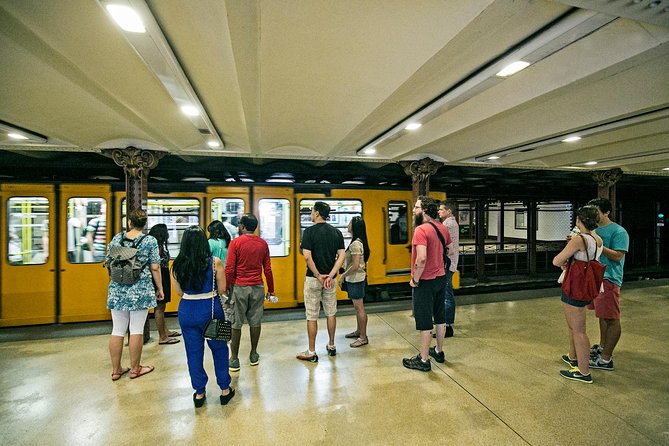
The strudel break is one of the tour’s most appealing details. You stop at the iconic Strudel House in the city center and sit down for a serving of Hungarian strudel with coffee, tea, or mineral water. The break is included in the ticket price.
This is not just a quick pastry grabbed while walking. The group has a table, and the stop gives your feet a rest before the riverfront and Buda section. On a cold day, the warm drink and indoor pause can make a real difference.
The food itself has received mixed personal reactions, which is normal with any included meal, but the overall stop is a useful part of the schedule. Some people may prefer to skip a cafe break and spend more time at the sights. I would see it as a feature if you like local food and appreciate a planned rest.
The stop also helps the tour feel less mechanical. Budapest is famous for its cafes and pastries, and tasting strudel fits the city better than a generic snack break. You may also have a chance to watch strudel being made, depending on how the stop is arranged that day.
Szabadsag ter and Budapest’s difficult recent past
After the cafe, the tour continues to Szabadsag ter, or Liberty Square. Here you see the Soviet Memorial and hear about Hungary during the communist period. The square gives the guide a place to discuss more recent political history rather than focusing only on royal monuments and older buildings.
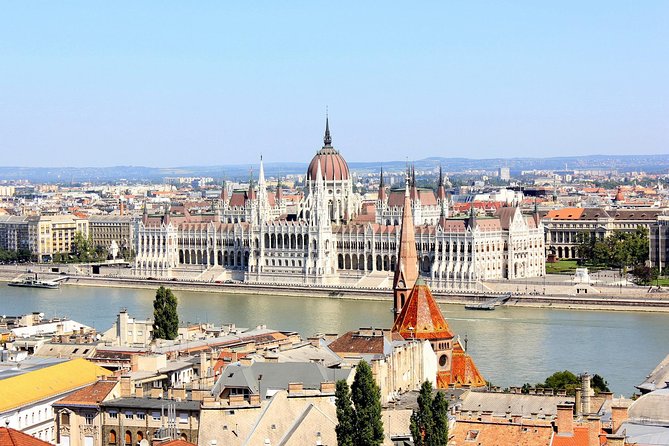
The stop lasts about 10 minutes. That is enough for a short explanation and photographs, but not a long political discussion. The tour also covers the Parliament building and current politics in Hungary from the outside.
This portion adds needed balance. Budapest is not only grand churches, castles, and bridges. Its public spaces also reflect the country’s 20th-century experience. If you prefer tours that stick to pretty views, this material may feel heavier. I consider it worthwhile because it gives context to what you see beyond the postcard scenes.
Danube views and the Chain Bridge
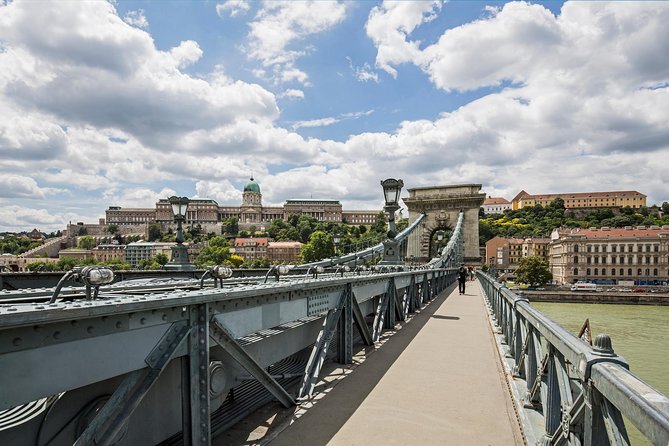
The route then reaches the Danube riverbank. You get views toward Gellert Hill and the Citadel, along with a chance to photograph the Chain Bridge. The riverfront is one of the best places to understand Budapest’s layout, with Pest on one side and Buda rising on the other.
The Danube stop is short, around 10 minutes, followed by a walk toward Szechenyi Lanchid, the Chain Bridge. The guide explains the bridge’s history during the five-minute stop. The timing is enough for orientation and pictures, but not a long promenade.
One useful point: the tour does not include the Shoes on the Danube memorial, even though it is close to Parliament and the riverfront route. If that memorial matters to you, plan to visit it separately. This is a reminder that the tour’s aim is broad coverage, not every important detail along the river.
Climbing into the Buda Castle District
The final section crosses to the Buda side and heads into the Castle District. Here the route includes Matthias Church, Buda Castle, and Fisherman’s Bastion.
At Matthias Church, the guide explains its role in coronations and how the Ottomans converted it into Buda’s main mosque. The church visit is exterior only, and admission is not included. You get the historical background and a chance to see the building, but you should return later if you want to explore the interior.
The short Buda Castle walk follows. The castle area is less about entering one specific room and more about moving through a historic hilltop district with broad views and important buildings. Expect about 15 minutes here.
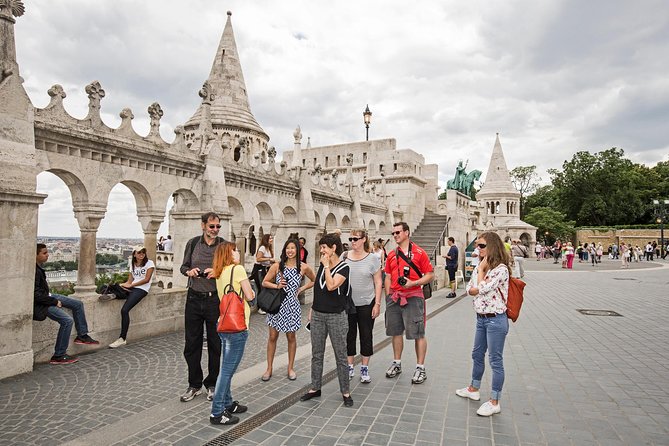
The route finishes at Fisherman’s Bastion, where the arcades offer a wide view over Budapest. The lower viewing areas are free, while the upper terrace requires admission. The tour uses the free areas, so you can finish with the city spread below you without another ticket.
Ending here is smart. You finish with a memorable panorama instead of being dropped beside a busy street. You are also in a good position to continue exploring the Castle District, visit Matthias Church or the upper Bastion terraces, or find lunch nearby.
What the small group changes
A maximum of 10 participants is one of the tour’s strongest features. With a group this size, you can usually stay close to the guide in busy public areas and ask questions without shouting across a crowd.
The guide quality matters even more on a route like this. Greg, also called Gergely, is repeatedly praised for his enthusiasm, humor, and personal connection to Budapest. Esther is described as organized, warm, and clear, with a strong ability to keep the route moving. Anna, Petra, Luisa, Andi, Monika, and Balint are also praised for local insight, patience, and strong explanations.
The tour does not use audio equipment or headphones. That can feel pleasantly personal, but it also means you need to stay near the guide, especially at Heroes’ Square, the riverbank, and the Castle District. A small group helps, but you should still pay attention when the group moves.
Physical effort, timing, and value
The advertised duration is about three and a half to four hours. You should expect roughly three hours of walking and about 6 kilometers, or 4 miles, of movement, with short stops. There are stairs in the Castle District, and the route goes ahead in all weather.
At $100.37 per person, the price is not low for a half-day city tour. The value comes from the amount packed into the morning: a private English-speaking guide, a small group, public transport tickets, a cafe stop, strudel, and sights on both sides of the river.
You are paying for planning as much as admission. The guide handles the metro and transport connections, explains what you are seeing, and keeps a far-reaching route manageable. Since the tour does not include interior admissions, the price makes the most sense if you want orientation and context rather than a series of paid entrances.
I would book it early if your schedule is fixed. It is commonly reserved well ahead of time, with an average booking window of about 48 days. Free cancellation is available up to 24 hours before the start time, but changes or cancellations inside that window are not accepted for a refund.
Who should take this tour?
This tour suits a first visit to Budapest, especially if you want to understand how Pest and Buda fit together before exploring on your own. It also works well for people who enjoy history, city views, public transport, and a moderate amount of walking.
You will get the most from it if you are comfortable outdoors in changing weather and do not need to enter every major building. The tour is less suitable if you have limited mobility, dislike stairs, or want a relaxed morning with long visits at only two or three sights.
Families with older children may like the variety. There are monuments, a castle courtyard, a metro ride, a thermal bath stop, food, a river, and a hilltop finish. The small group also makes it easier to keep children close than on a large city tour.
Should you book the Budapest All in One tour?
Book it if you want a well-planned introduction that covers a lot without relying on a sightseeing bus. The combination of metro rides, major landmarks, local history, and a proper strudel pause gives you a useful first look at Budapest.
Skip it if your priority is interior visits, spa time, or a slow afternoon at the Castle District. For most first-time visitors who can manage four miles of walking, I think the tour offers strong practical value, especially when the guide is one of the praised local hosts such as Greg, Esther, Anna, or Luisa.
FAQ
Where does the Budapest All in One tour begin?
The tour begins at 9:00 a.m. at the Hungarian State Opera House, Budapest, Andrássy út 22, 1061 Hungary.
Where does the tour end?
The tour ends on the Buda side at Matthias Church and Fisherman’s Bastion.
Is transportation included?
Yes. Public transport tickets used during the tour are included. You also receive one free single public transport ticket for returning downtown after the tour.
Is the strudel stop included in the price?
Yes. The tour includes strudel at the Strudel House, along with coffee, tea, or mineral water.
Are church and building interiors included?
No. The tour does not include interior visits to churches or other buildings. Matthias Church admission is not included, and the upper terrace at Fisherman’s Bastion requires a separate admission fee.
How much walking is involved?
You should expect about three hours of walking, roughly 6 kilometers or 4 miles, with short stops. A moderate level of physical fitness is recommended, and the tour operates in all weather.
Just added around Budapest
- Budapest: Street Art and Underground Movements Walking Tour★ 5.0 · 365 reviews
- Jewish Quarter of Budapest Walking Tour★ 4.7 · 369 reviews
- Budapest 3-Hour Walking Tour in Italian★ 4.6 · 217 reviews
- Budapest: Buda Castle District Walking Tour with a Historian★ 4.9 · 867 reviews
- Budapest: Walking Tour to the Shoes Memorial and Parliament★ 4.7 · 151 reviews
- Budapest: Jewish History Guided Walking Tour with Historian★ 4.8 · 205 reviews
- Budapest: Castle District Walking Tour★ 4.8 · 223 reviews
- Budapest Guided Food Walking Tour with Drinks Included★ 4.8 · 472 reviews
Small-Group Walking Tours, compared.

Amsterdam Anne Frank: Small-Group Walking Tour & Local Guide
Read our review →
Freedom Trail History Small Group Walking Tour
Read our review →
New Orleans Food Walking Tour of the French Quarter with Small-Group Option
Read our review →
Barcelona Tapas and Wine Experience Small-Group Walking Tour
Read our review →
Reykjavík Small group Walking Tour – by CityWalk
Read our review →
Best of Lisbon Small-Group Guided Walking Tour
Read our review →
Small Group Boat Cruise and Guided Walking Tour
Read our review →
Browse the lists this tour appears in