
Review · ROMANIA WALKING TOURS
Cluj-Napoca: 2.5-Hour Guided Walking Tour
Cluj reveals itself one square at a time. This 2.5-hour walking tour gives you a useful first look at the city’s Hungarian, Romanian, and German influences, with stops at Matthias Corvinus’s birthplace, St. Michael’s Church, Babes-Bolyai University, and Avram Iancu Square. I especially like the broad historical sweep, from the Dacians and Romans through the Middle Ages, the world wars, Communism, and modern Cluj. I also like that the guides make room for stories about witches, guilds, wine, religion, and local politics rather than simply naming buildings.
The main consideration is the walking itself. The route includes several stops where you can sit, but it is still not recommended for people with limited mobility. You should also expect a tour weighted toward history, architecture, and religion. If you want much more on everyday culture, food, or interiors, you may find the focus a little narrow.
Key points at a glance
- A strong first tour of central Cluj: The route connects the city’s main historic sights in a sensible two-and-a-half-hour walk.
- Matthias Corvinus adds a personal touch: You visit the birth house of the famous 15th-century Hungarian king, not just a distant monument.
- Three cultural influences come together: Hungarian, Romanian, and German connections shape the streets, churches, institutions, and stories.
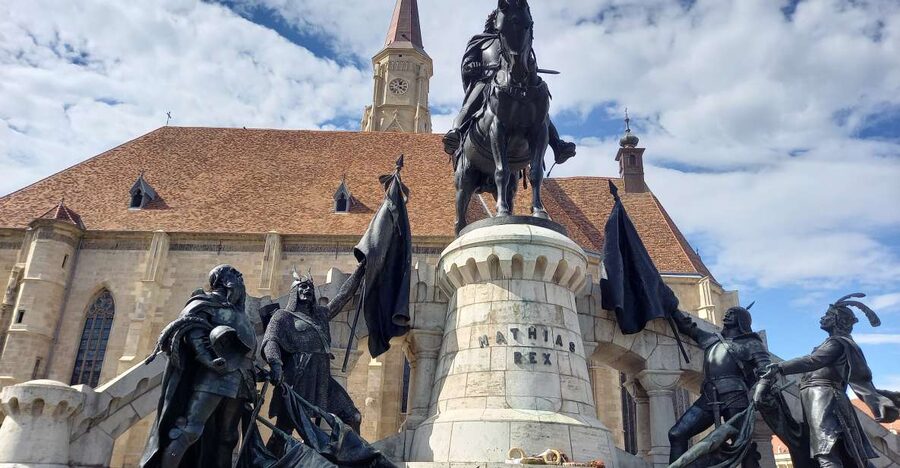
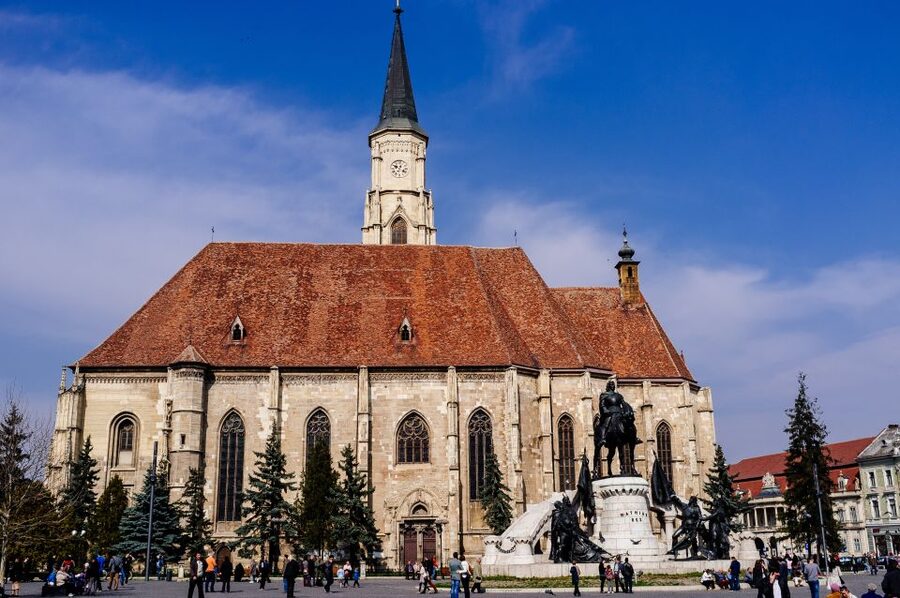
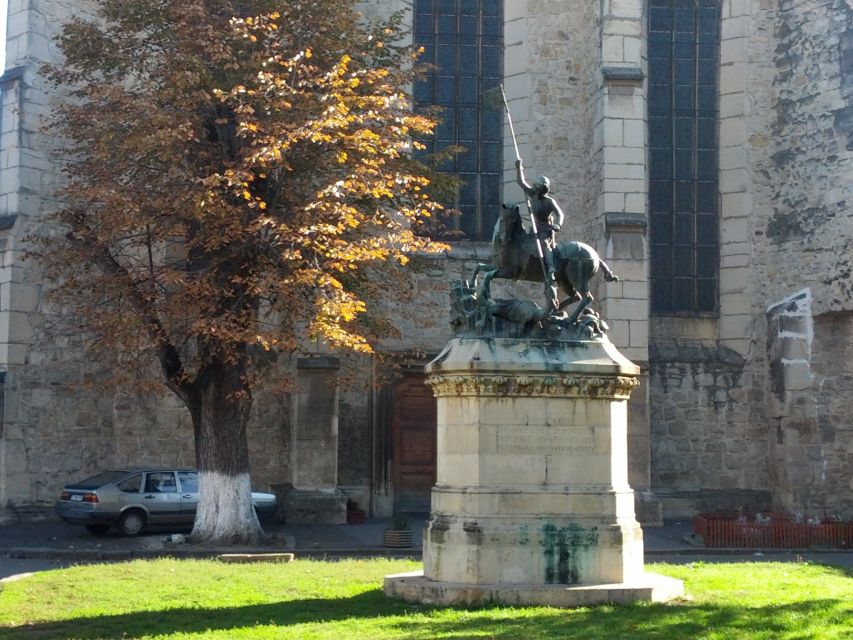
- St. Michael’s Church anchors Union Square: Its Gothic architecture and the equestrian statue of Corvinus provide the tour’s grandest visual stop.
- The guides are the main strength: Daniela, David, Andrei, Adrian, and Urzica have been praised for clear explanations, humor, flexibility, and local pride.
- Good value at $34: The price is fair if you want context and orientation, not simply a quick walk past the sights.
Why this Cluj walking tour works so well for first-time visitors
Cluj-Napoca can feel like several cities at once. Its name is Romanian, its older cultural identity is closely tied to Hungarian history, and German influence appears in the story of Transylvania and its urban institutions. A guide helps you connect those layers instead of seeing a handsome square here and an old church there.
The tour is built around the historic center, so you spend your time walking between significant places rather than sitting in transport. That matters in Cluj. The city’s story is written into its streets, façades, monuments, and public squares, and the short distances let your guide explain how one period gave way to another.
A particularly useful feature is the broad opening context. Guides have covered Cluj from the Dacians and Romans to the Middle Ages, World War I, World War II, Communism, and the present day. That range gives you a framework for the buildings you see later. You are not left wondering why a Romanian Orthodox cathedral, a Hungarian king, and a Viennese-designed theater all appear within the same central route.
The tone also seems to depend on the guide, but the experience has attracted repeated praise for clear, engaging explanations. Daniela has been singled out for her command of local history and her ability to keep the walk lively. David has been praised for showing lesser-known streets and explaining the buildings along the way. Andrei is described as professional and open to questions, while other guides have added humor and practical local insight.
More Guided Walks in the world:
- Magical London: Harry Potter Guided Walking Tour
★ 4.7 · 22,044 reviews - History and Hauntings of Salem Guided Walking Tour
★ 5.0 · 14,564 reviews - Amsterdam Anne Frank: Small-Group Walking Tour & Local Guide
★ 4.8 · 12,789 reviews
Matthias Corvinus and the story behind the famous king
One of the tour’s most distinctive stops is the birth house of Matthias Corvinus. He became one of Hungary’s best-known 15th-century kings, so seeing the place where he was born gives the story a concrete starting point.
This is more memorable than simply posing beside a statue. Your guide can connect the house to the political importance of Cluj and to the city’s Hungarian past. The stop also helps explain why Matthias Corvinus appears again later in Union Square, where his large equestrian monument dominates the space.
The tour includes stories about the king’s life and the importance of wine in the region. That pairing is useful because it keeps the stop from becoming a dry lesson about royal dates. You get a glimpse of both power and daily life, including the role wine played in the surrounding area.
Do not expect a long interior visit here. One of the few reservations raised about the tour was the wish to see more interiors. The value of this stop lies mainly in the setting, the story, and the way your guide links it to the rest of Cluj.
Union Square, St. Michael’s Church, and a royal monument
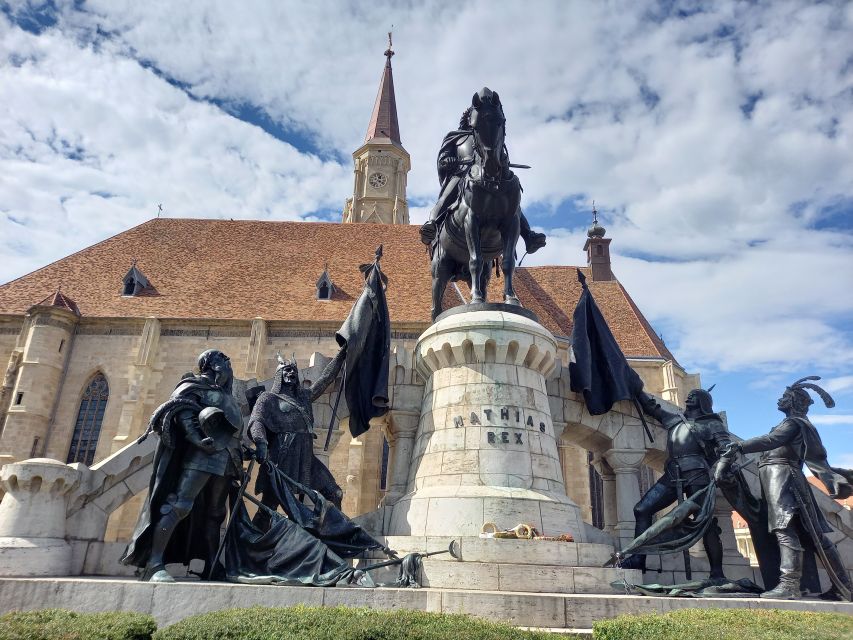
The route continues to Union Square, the great open center of old Cluj. Here, St. Michael’s Church provides the strongest architectural moment of the walk.
The church is a 14th-century Gothic landmark, and its scale makes sense only when you see it in relation to the square around it. Your guide can point out the features that separate Gothic design from the later buildings nearby, while also explaining the church’s place in the city’s religious and political past.
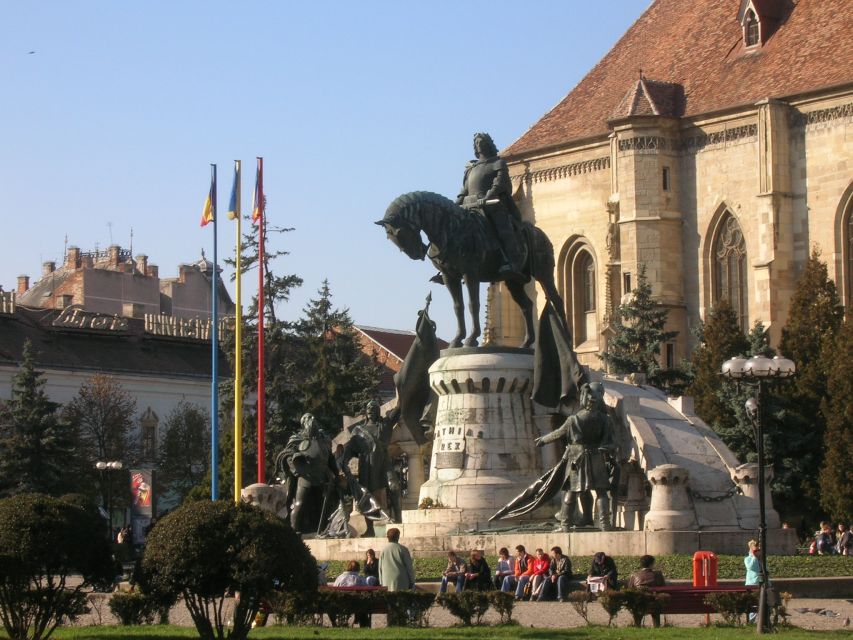
In front of the church is the large equestrian statue of Matthias Corvinus. It creates a direct visual link with the king’s birth house. You first meet the person through the place of his birth, then see how later generations chose to remember him in the center of the city.
Union Square is also a good place to pause and take in the mix of architectural periods. This is not just a checklist stop. It is where the tour’s themes come together: Hungarian memory, Christian architecture, public monuments, and the modern Romanian city.
The drawback is that the tour’s attention remains mostly outside. If you are hoping to walk into several churches or explore detailed interiors, your expectations should be modest. One useful approach is to treat the tour as an introduction, then return on your own if a building catches your eye and is open.
The Street of the Intellectuals and the city’s old defenses
From Union Square, the route reaches what is known as the Street of the Intellectuals. The name reflects the many educational institutions found here, including Babes-Bolyai University.
This section gives the walk a different feel. Instead of focusing only on royal power and religious buildings, it turns toward education and ideas. Babes-Bolyai University is especially important to Cluj’s public identity, and seeing it within the old center helps you understand why the city remains a major intellectual and student hub.
Your guide also introduces the darker and more unusual side of medieval Cluj. Stories about witches who lived in the city during the Middle Ages add a human, sometimes unsettling edge to the walk. These tales help you picture how fear, religion, and local justice could shape ordinary life.
The discussion of guilds adds another practical layer. Guilds were tied to trades, work, and the growth of urban communities. Learning about them while walking through the old center makes the medieval city feel less like a collection of monuments and more like a working place filled with craftspeople, merchants, students, and officials.
You also pass remains of the city’s defensive walls. These fragments are not as imposing as a complete fortress, but that is exactly why a guide helps. Without explanation, they can look like stray pieces of old masonry. With context, they show how the city once defined and protected its core.
This part of the route is one of the reasons I would choose a guided walk over a self-guided stroll. You can find the main square on your own. It is harder to spot the remains, understand the guild system, or make sense of a medieval witch story without someone to point out what matters.
A few more walks around the world worth a look
- Reykjavik Food Walk – Local Foodie Adventure in Iceland
★ 5.0 · 18,952 reviews - New Orleans Premier Ghost, Voodoo and Vampire Walking Tour
★ 4.5 · 12,856 reviews - Edinburgh: Harry Potter Magical Guided Walking Tour
★ 4.8 · 11,944 reviews - Edinburgh Castle: Guided Walking Tour with Entry Ticket
★ 4.7 · 11,699 reviews
Avram Iancu Square and the newer old city
The final major section brings you to Avram Iancu Square, an area described as a newer part of the old city. The change in atmosphere helps show that Cluj did not stop developing when its medieval center was built.
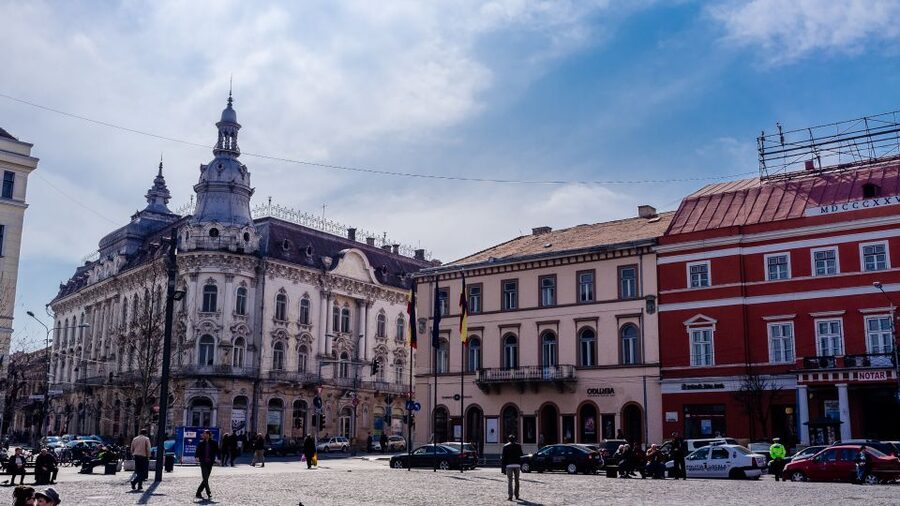
The Orthodox Cathedral is the square’s major religious landmark. Built in the 1930s, it introduces a different architectural and cultural chapter from the Gothic St. Michael’s Church. Seeing the two churches within the same tour helps you compare the city’s shifting religious identity without needing a separate lecture.
Nearby, the National Theatre adds another strong visual stop. Built in 1906 by Viennese architects, it reflects the wider Central European connections that shaped Cluj’s public buildings. Its presence also expands the tour beyond medieval and religious subjects into performance, civic life, and turn-of-the-century urban design.
This is a useful ending because it leaves you with a broader picture of Cluj. You have seen medieval defenses, a 14th-century Gothic church, a Hungarian royal monument, a 1930s Orthodox cathedral, and a 1906 theater. Few short city walks can show so many periods without leaving the central area.
What the guides add to the walk
The guide is the deciding factor here. The strongest praise has focused on guides who explain the city in a clear, personal way rather than reciting dates.
Daniela has been praised for giving a thorough account of Cluj while keeping the material understandable. She has also adjusted the pace and level of detail to suit the group. On some departures, the experience has effectively become a private tour because of the date and time selected, which allowed for an especially flexible pace.
David has been praised for taking people down streets they would not have found alone. That is a valuable skill on a walking tour, where the best moments often come from details between the headline sights.
Andrei has been described as professional, attentive, and open to questions. Another guide, Urzica, has been appreciated for covering not only politics, religion, art, and architecture, but also Cluj’s current condition. These comments suggest that the tour can be especially rewarding if you enjoy asking questions rather than simply listening.
The practical benefit is clear: a strong guide can adjust the explanation to your interests. If you know little about Romanian or Hungarian history, you get the basic framework. If you already have some background, you can ask for more detail.
There is one fair caution. The experience may vary slightly by guide. One person wanted more enthusiasm and more recommendations for the rest of a Cluj stay. Another wanted more cultural content and less emphasis on history and religion. I would treat this as a history-led city orientation, not as a full introduction to food, nightlife, or modern local life.
Walking pace, comfort, and accessibility
The tour lasts the full two and a half hours, which gives the guide enough time to explain the sights without rushing through every stop. One participant specifically appreciated that the route was not too far to walk and that there were comfortable seated pauses along the way.
Even so, you need comfortable shoes. This is a walking tour through the city center, with multiple stops and no dedicated transport between them. Bring a sun hat on a bright day, and follow any current request for a face covering.
The activity is marked as wheelchair accessible, but the information also says it is not recommended for people with limited mobility. Those details do not fully agree, so I would confirm the route and meeting point before booking if step-free access is important for you.
Pets are not allowed. Meeting points can vary depending on the option you choose, so check the exact booking details before setting out.
Is $34 a fair price?
At $34 per person, the value depends on how much context you want. If you only want to photograph Union Square and St. Michael’s Church, you can walk there without paying for a tour. The fee becomes worthwhile when you consider the full route, the historical overview, the stories about Matthias Corvinus, witches, guilds, and wine, and the explanations at several different squares and institutions.
The tour also saves you research time. You do not need to prepare a timeline of Dacians, Romans, Hungarian rulers, Romanian religious architecture, Viennese design, world wars, and Communism before arriving. A good guide gives you the main structure in one afternoon.
I would see it as particularly good value at the beginning of a Cluj visit. The tour can help you decide where to return, which buildings deserve a closer look, and how the central neighborhoods fit together. One past participant even used the tour as the first activity of a holiday, which is a sensible plan.
The flexible cancellation policy also reduces the risk. You can cancel up to 24 hours in advance for a full refund, and the reserve-now, pay-later option lets you keep your plans open.
Who should book this Cluj tour?
I recommend it most strongly if you are visiting Cluj for the first time, enjoy city history, or want a clear explanation of the city’s mixed cultural identity. It also suits people who prefer a walking route over a bus or van tour.
You will get the most from it if you ask questions. Ask about the relationship between Romanian and Hungarian traditions, the university, the defensive walls, or the buildings that interest you most. The guides have been praised for answering questions and adapting the pace.
This is less ideal if you have limited mobility, want extensive church interiors, or are mainly seeking food, shopping, nightlife, and modern street culture. It is also not the best choice if you dislike a long history lesson. The tour’s strongest subject is the past, though it reaches into present-day Cluj as well.
My verdict: a smart first walk through Cluj
I would book this tour as an introduction to Cluj-Napoca. The route is long enough to feel substantial but focused enough to avoid wasting time. Matthias Corvinus’s birthplace, St. Michael’s Church, the Street of the Intellectuals, the old wall remains, Avram Iancu Square, the Orthodox Cathedral, and the National Theatre create a well-shaped portrait of the city.
The biggest strength is the guiding. Names such as Daniela, David, Andrei, Adrian, and Urzica appear in the experience’s history of strong departures, with repeated praise for clear explanations, humor, flexibility, and local pride. At $34, that personal context makes the walk worthwhile.
Book it if you want to understand what you are seeing. Skip it only if you need a highly accessible route, several interior visits, or a tour centered mainly on contemporary culture.
FAQ
How long does the Cluj-Napoca walking tour last?
The tour lasts 2.5 hours.
What language is the tour offered in?
The live guide is available in English or German.
What sights are included?
The route includes Matthias Corvinus’s birth house, Union Square, St. Michael’s Church, the equestrian statue of Corvinus, the Street of the Intellectuals, Babes-Bolyai University, remains of the old defensive walls, Avram Iancu Square, the Orthodox Cathedral, and the National Theatre.
How much does the tour cost?
The listed price is $34 per person.
Is the tour suitable for people with limited mobility?
The activity is marked as wheelchair accessible, but it is also not recommended for people with limited mobility. Confirm the exact route and meeting point before booking if accessibility is essential.
What should I bring?
Wear comfortable shoes and bring a sun hat. A face mask or protective covering may also be required.
Can I cancel the booking?
Yes. You can cancel up to 24 hours in advance for a full refund. You can also reserve now and pay later.
Just added around the world
- Bern Private Walking Tour with a Local★ 4.5 · 75 reviews
- Berlin Walking Tour★ 4.5 · 378 reviews
- Bern Walking Tour: Explore Top Sights & Hidden Gems★ 5.0 · 108 reviews
- Small Group Walking Tour of East Berlin with a French Guide★ 5.0 · 176 reviews
- Berlin Street Art Walking Tour – Off The Grid★ 5.0 · 270 reviews
- Berlin Highlights Private Guided Walking Tour★ 4.5 · 89 reviews
- Private Walking Tour: World War 2 and Cold War Sites in Berlin★ 5.0 · 230 reviews
- Kreuzberg Berlin: Off the Beaten Track PRIVATE Walking Tour★ 5.0 · 128 reviews
Romania Walking Tours, compared.
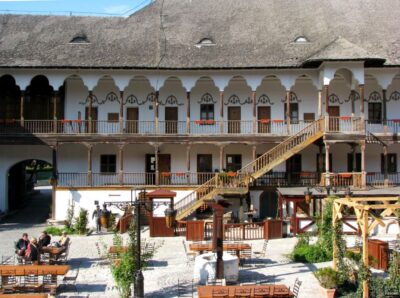
Bucharest: City Highlights Guided Walking Tour
Read our review →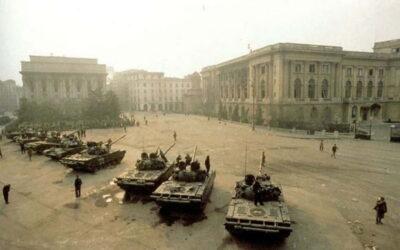
Bucharest: Communism and History Guided City Walking Tour
Read our review →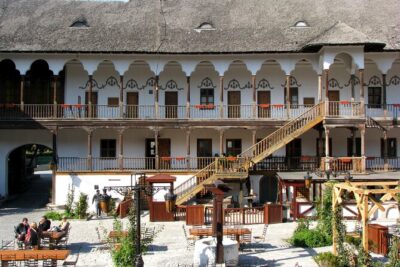
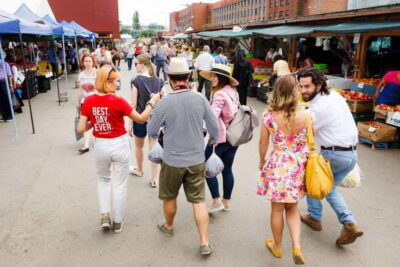
Bucharest: Hidden Markets Walking Tour with Tastings
Read our review →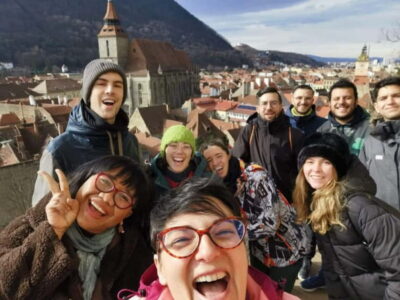
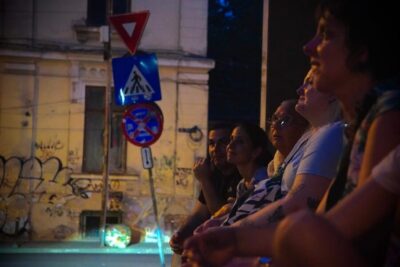
Bucharest: Ghost Stories & Romanian Mythology Walking Tour
Read our review →
Bucharest: Guided Walking Tour with Romanian Snack
Read our review →
City Tour Sighisoara Legends & Landmarks A Walk Through Time
Read our review →Browse the lists this tour appears in