
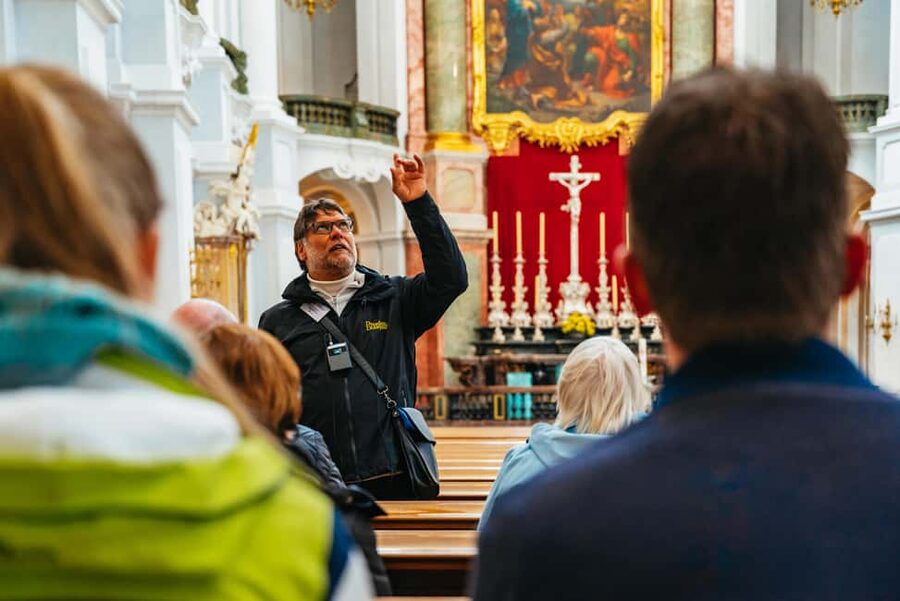
Review · GERMANY WALKING TOURS
Dresden: Guided City Walk
Dresden’s past is written in stone. This 90-minute walk makes the old town easier to read, linking medieval stories, Baroque grandeur, wartime destruction, and the peaceful revolution of 1989. I especially like the route’s strong lineup of major sights and the way a licensed guide adds small anecdotes to the big events.
I also like the practical finish: you receive tips on restaurants, events, and leisure activities while the city is still fresh in your mind. The main limitation is clear: the tour is German-only, so it will not suit you unless you understand German well. At $15 per person, though, it offers a useful first look at Dresden for very little money.
- The route covers Dresden’s essential old-town sights, including Frauenkirche, Semperoper, Zwinger, Dresden Castle, Brühl’s Terrace, and the Fürstenzug.
- The story moves across several eras, from the Middle Ages and Renaissance to the Baroque period and the events of 1989.
- The Zwinger stop includes the mysterious Nymphenbad, a detail many short city walks would skip.
- The guide adds restaurant and leisure tips, giving you help for the rest of your stay.
- The tour is wheelchair accessible and takes place entirely on foot over about 90 minutes.
- The meeting point is indoors, in the seating area of Dresden Information below the QF Passage.
Starting Below the QF Passage at Neumarkt
You begin at Dresden Information, in the lower level of the QF Passage near Neumarkt. This is a sensible meeting point because Neumarkt places you right beside Frauenkirche and the historic center. Go downstairs and look for the seating area used by Dresden Information.
The tour then sets off on foot. There is no coach transfer and no complicated transport plan. That matters in Dresden’s old town, where the best views come from moving at street level and turning your head often.
The 90-minute length is short enough to fit into a busy day. I would schedule it early in your Dresden visit, since the guide’s restaurant, event, and leisure suggestions can help shape the rest of your time. You can also use the walk to decide which buildings deserve a separate interior visit.
The guide speaks German, and the tour is offered in German only. If you are comfortable following a German-speaking guide, the language can add warmth and local character. If you are not, this is not the right choice, even though the sights themselves are easy to recognize.
Stallhof and Fürstenzug: Dresden’s Royal Stage
One of the first important areas is Stallhof, the former stable courtyard connected with Dresden’s royal complex. The name points to its original role, but the setting also helps you understand how closely court life, ceremony, and architecture were tied together.
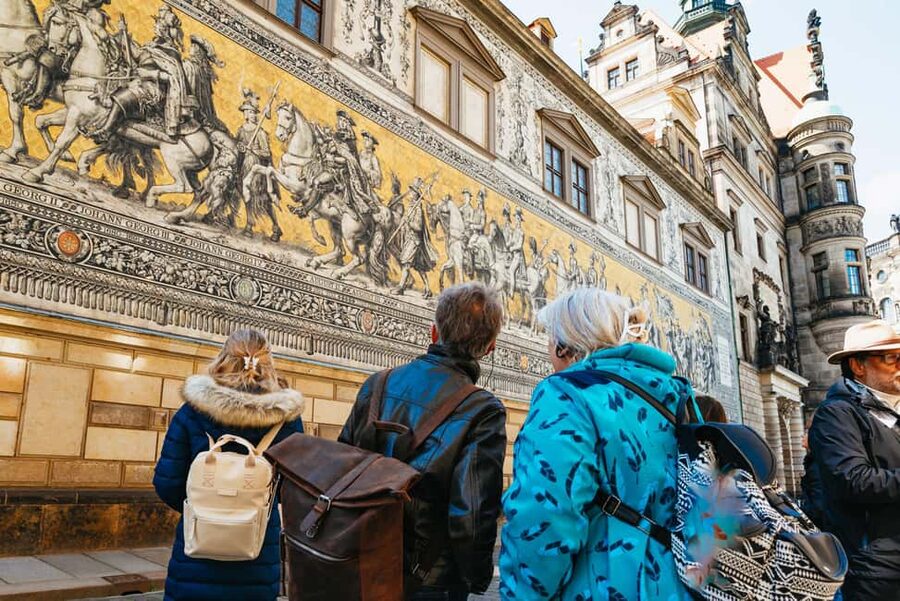
From there, the route reaches the Fürstenzug, or Procession of Princes. This long mural presents Saxony’s rulers in a grand procession. It is one of Dresden’s best outdoor history lessons because you can look closely at the figures while the guide explains the people and political story behind them.
The Fürstenzug is also a good example of how Dresden works as a walking city. You are not simply stopping at a single monument, taking a photograph, and moving on. The route connects one piece of the royal quarter to the next, so the buildings begin to make sense as parts of a larger court district.
Your guide’s anecdotes matter here. A list of rulers can become a blur, but a short personal detail or political episode gives the mural a human scale. The strongest praise for this walk focuses on how informative and easygoing the guides are, with recent comments describing the experience as interesting, educational, and pleasantly paced.
More Guided Walks in Germany:
- Berlin: Third Reich & Cold War Guided Walking Tour
★ 4.9 · 8,378 reviews - Berlin: Hidden Backyards Guided Walking Tour
★ 4.8 · 5,360 reviews - Bamberg: Guided Walking Tour
★ 4.6 · 3,202 reviews
Brühl’s Terrace and the Elbe Views
The walk continues to Brühl’s Terrace, the broad promenade above the Elbe. This is one of Dresden’s classic photo stops, and the tour makes room for it rather than rushing past.
Brühl’s Terrace gives you a useful change of angle. The old town’s grand buildings are close behind, while the river opens the view in front of you. Your guide can place the city’s center within its broader setting and explain how Dresden developed along the Elbe.
This is also where you may notice the contrast between Dresden’s polished historic core and its more complicated modern story. The city’s old buildings suggest royal wealth and Baroque confidence, but Dresden’s twentieth-century history brought destruction, division, and major rebuilding. A good guide uses the view to connect those different chapters instead of treating the old town as a frozen museum.
Bring a camera, but do not spend the entire stop looking through it. The point of Brühl’s Terrace is the relationship between river, terrace, church towers, and palace buildings. It is one of the tour’s best moments for getting your bearings.
Semperoper and the Baroque Zwinger
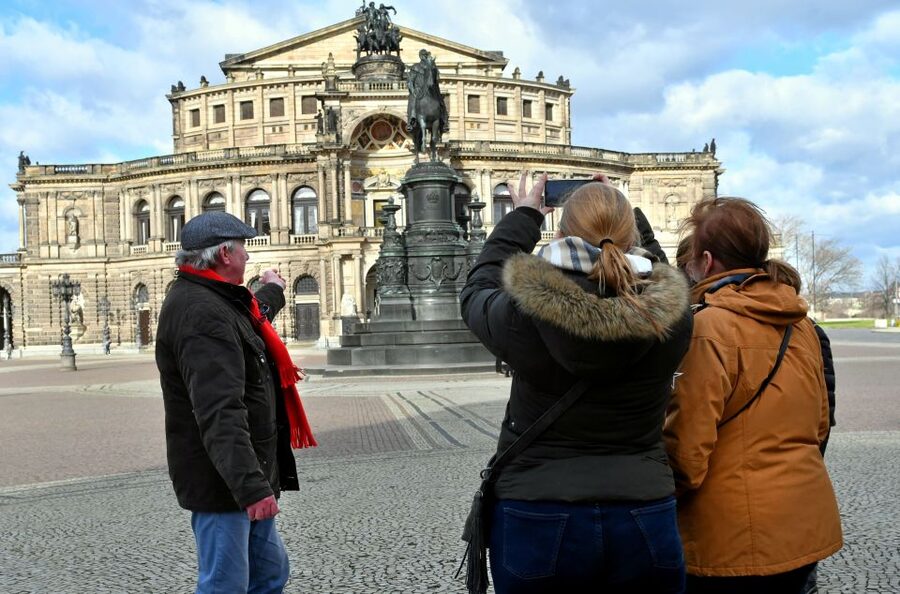
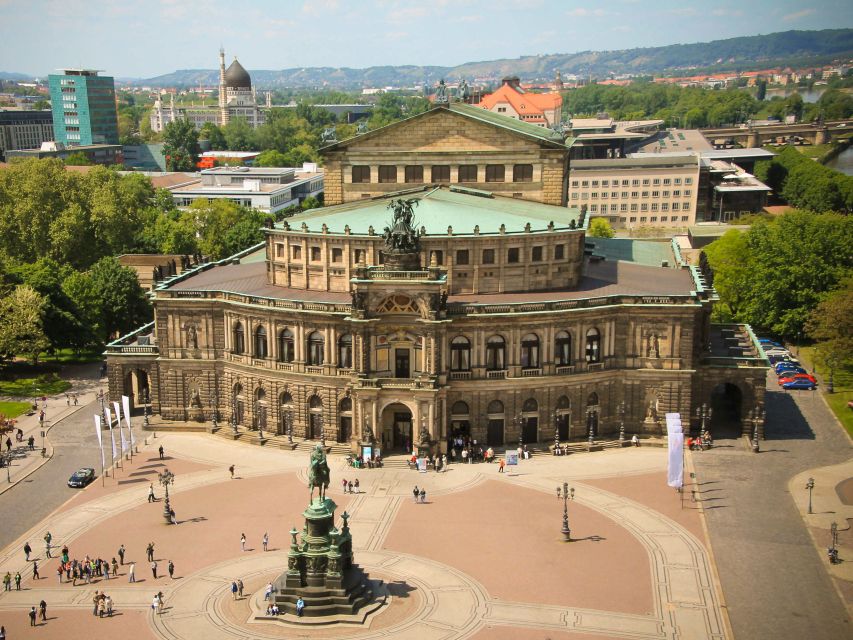
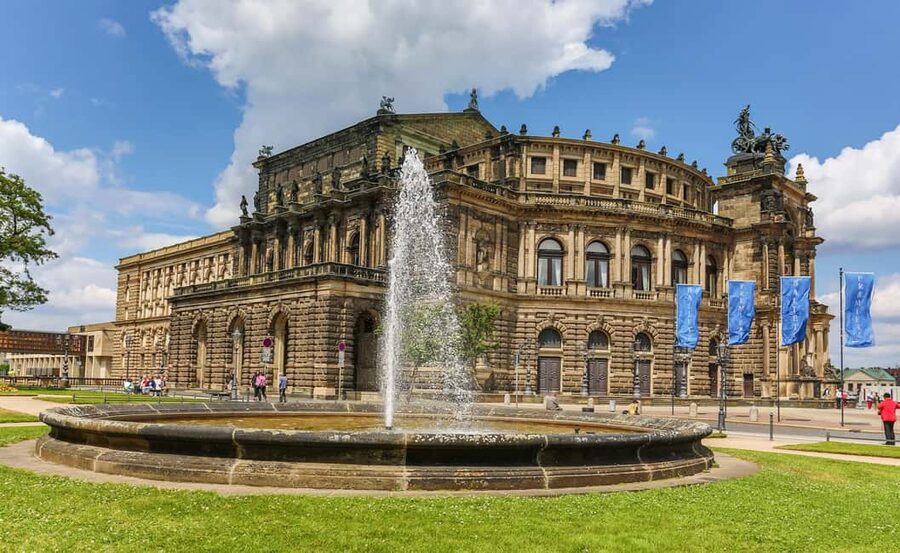
Next comes the Semperoper, Dresden’s celebrated opera house. Even from outside, the building gives you a strong sense of the city’s taste for ceremony and display. The guide explains its place in Dresden’s cultural life and the wider development of the city.
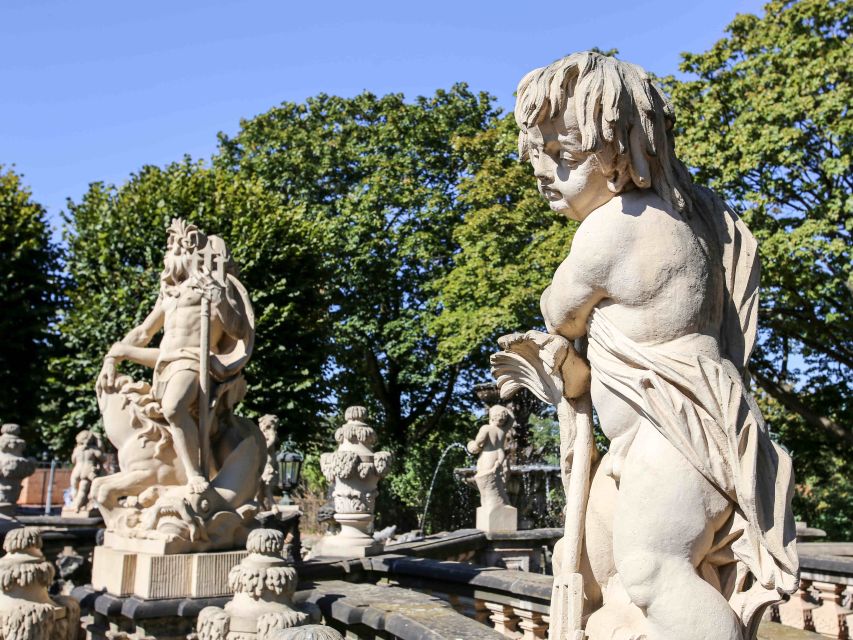
You then reach the Zwinger, perhaps the most theatrical stop on the walk. Its courtyards, galleries, sculptural decoration, and formal design show Baroque Dresden at full volume. This is the sort of place where a guide helps you notice details that you could easily miss alone.
The included visit to the Nymphenbad is a particularly useful touch. This small and decorative water feature is less obvious than the Zwinger’s grand courtyards, yet it adds another layer to the complex. The name refers to nymphs, and the setting has a quieter, more playful character than the main ceremonial spaces.
Do not expect a full museum visit at the Zwinger. The tour is about the exterior spaces and the city’s story, not a detailed look at every collection. That is a benefit if your time is limited, but you may want to return later if you care about art, architecture, or the palace’s individual rooms.
The Zwinger also shows why Dresden is often associated with Baroque architecture. Its design is meant to impress, but the guide’s explanation gives it purpose. You learn how royal ambition, public ceremony, and artistic display shaped the city center.
Dresden Castle and the Taschenbergpalais
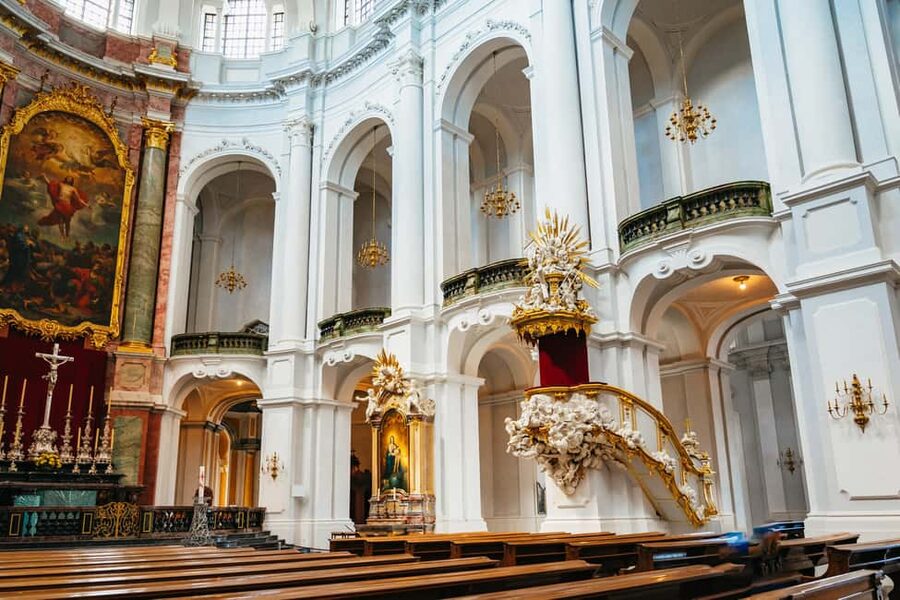
Dresden Castle brings the route back to the heart of the former royal quarter. The castle is a major architectural marker, but it also helps explain how the city’s political power was organized. From here, you can connect the Procession of Princes, Stallhof, the cathedral, and the surrounding palaces as one royal district.
The guide discusses the city’s development through several periods, including the Middle Ages, the Renaissance, and the Baroque age. That sequence is valuable because Dresden did not appear all at once in its present form. Each period added new buildings, styles, and reasons for the city to matter.
The route also passes Taschenbergpalais. Its position near the castle and Zwinger helps you see how the court expanded beyond a single palace building. This part of the walk is less about one famous photograph and more about reading the relationships among the buildings.
From there, you pass Dresden Cathedral. The cathedral gives the royal quarter a strong religious counterpart to its palace architecture. Dresden’s historic center is compact, so several major buildings appear close together, but the guide helps distinguish their different roles.
A few more walks around Germany worth a look
- Discover Berlin Half-Day Walking Tour
★ 5.0 · 9,624 reviews - Berlin City walk Government District and Places of Democracy
★ 4.7 · 8,467 reviews - Munich: Third Reich & WWII Walking Tour
★ 4.6 · 6,181 reviews - Berlin: Discover Berlin Walking Tour
★ 4.9 · 5,998 reviews
Frauenkirche and the Final Stop

The tour ends near Frauenkirche at An der Frauenkirche. This is a convenient finish, since you are close to Neumarkt, restaurants, and many of the city center’s other attractions.
Frauenkirche is one of Dresden’s most meaningful landmarks. It represents Baroque confidence, wartime destruction, and later reconstruction in a single place. The tour’s wider discussion of difficult periods and the city’s recovery gives the church more weight than it would have as a quick photograph.
The walk also addresses the peaceful revolution of 1989 and the experience of people in former East and West Germany. That modern chapter keeps the tour from becoming only a royal architecture lesson. Dresden’s story includes political division, public change, and the way ordinary people experienced a turning point.
The final location is especially useful if you want to continue exploring independently. You can stay around Frauenkirche, return to a building that caught your attention, or use the guide’s suggestions to choose a restaurant or evening activity.
Why the Historical Range Matters
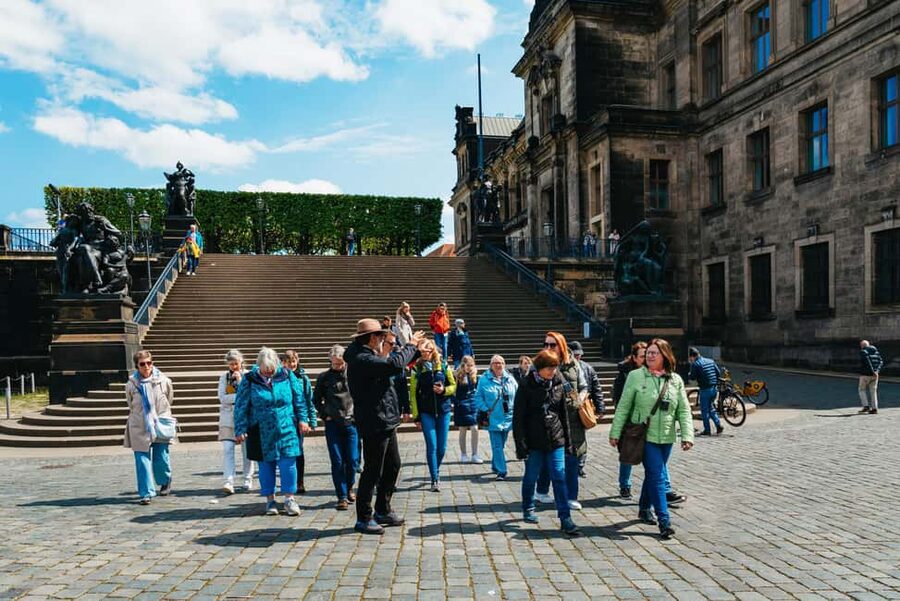
Many city walks focus on one period. This one tries to cover Dresden across a much wider span, and that gives you a more useful framework for the old town.
You hear about:
- Medieval Dresden and its darker chapters
- The Renaissance and the city’s growth
- The grand Baroque building program
- The royal court and Saxon rulers
- The destruction and rebuilding of the city
- The peaceful revolution of 1989
- The different experiences of East and West Germany
That range is ambitious for 90 minutes. You should not expect a detailed lecture on every era. Instead, you get a connected introduction that helps you decide where to spend more time later.
I like this approach because Dresden’s beauty can make its difficult past easy to overlook. The tour does not treat the city as a collection of pretty façades. It places the buildings within political and social change, which makes the walk more honest and more useful.
The Guide’s Role and the Tour’s Pace
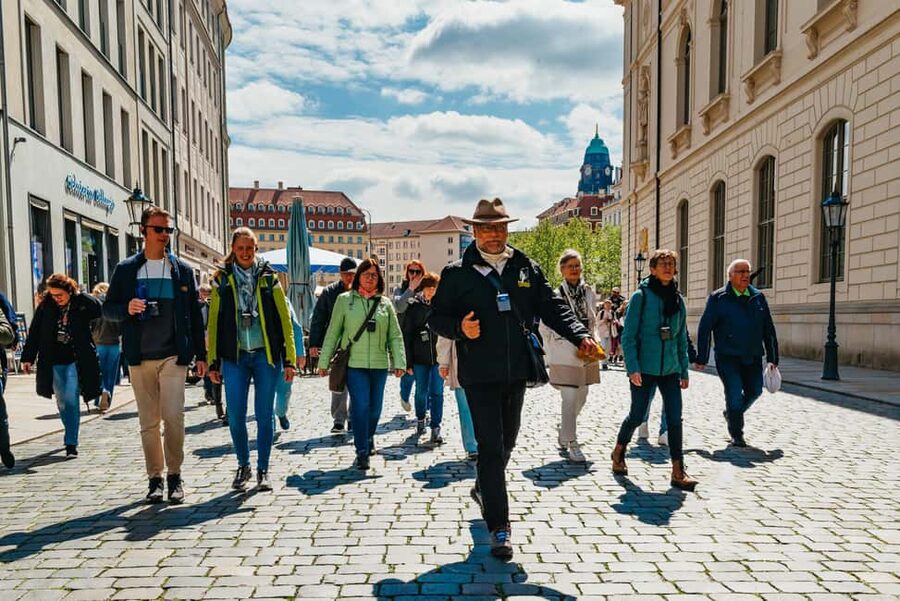
The guide is the main variable in any walking tour, but the format gives the guide room to make the history lively. The experience is designed around an experienced, licensed guide who tells both major stories and small anecdotes.
The most praised qualities are the amount of information and the friendly presentation. Recent feedback describes the tour as very interesting, educational, and enjoyable, with one German participant noting that the guide provided a great deal of information about Dresden. That is exactly what you want from a first visit: enough background to understand the sights without turning the walk into a dry list of dates.
At 90 minutes, the pace should feel purposeful. You cover many central sights, so there will be regular walking and several stops. You are not spending long periods inside museums or sitting down for extended talks.
Wear comfortable shoes and be ready to listen while standing. Dresden’s old town is compact, but the route includes several major areas. Since the entire experience is on foot, wheelchair access is an important advantage for visitors who need it.
Is $15 a Good Value?
At $15 per person, this is a strong value if you want orientation and context. You are paying less than many longer sightseeing experiences while seeing most of Dresden’s essential old-town landmarks.
The value comes from the combination of sights. On your own, you can certainly walk past Frauenkirche, the Semperoper, Zwinger, Dresden Castle, and Brühl’s Terrace. What you may miss is the connection among them, the reason the royal quarter developed as it did, and the stories behind the buildings.
The walk is also a good low-risk choice for your first hours in Dresden. If you decide you want more time at the Zwinger, Frauenkirche, or castle, you can return later. The guide’s food and leisure tips add value beyond the 90 minutes.
The limitation is that this is an overview. If you want detailed architectural analysis, extended time inside each landmark, or a tour in English, you should choose another format. At this price, though, the tour does not need to provide everything. It needs to give you a clear, useful introduction, and that is where it performs best.
Who Should Book This Dresden Walk?
I would recommend this tour to first-time visitors who want a quick introduction to Dresden’s historic center. It also suits you if you prefer learning through stories rather than reading plaques at each stop.
History-minded visitors will appreciate the wide timeline, especially the connection between Baroque Dresden and the events of 1989. Photographers will like the repeated stops at major views and façades. Families may find the 90-minute format easier than a longer walking tour, though children’s ticket rules allow a maximum of four children per adult booking.
School classes and youth groups of 10 or more, with participants under 15, are asked to arrange an exclusive group tour instead. That makes this public walk better suited to individual bookings and smaller family groups.
Book it if you understand German and want a friendly, informative start to Dresden. Skip it if you need English commentary or want extensive interior visits. For most German-speaking visitors, the low price, central route, and strong historical range make it an easy choice.
FAQ
Where does the Dresden walking tour meet?
The meeting point is in the lower level of the QF Passage, in the seating area of Dresden Information.
Where does the tour finish?
The tour finishes near Frauenkirche at An der Frauenkirche, 01067 Dresden, Germany.
How long does the walking tour last?
The tour lasts 90 minutes.
Is the tour available in English?
No. The live guide and tour language are German only.
Is the walking tour wheelchair accessible?
Yes, the activity is listed as wheelchair accessible.
What happens if I need to cancel?
You can cancel up to 24 hours in advance for a full refund. You can also reserve your place and pay later, which keeps your plans flexible.
Just added around Germany
- Berlin Walking Tour★ 4.5 · 378 reviews
- Small Group Walking Tour of East Berlin with a French Guide★ 5.0 · 176 reviews
- Berlin Street Art Walking Tour – Off The Grid★ 5.0 · 270 reviews
- Berlin Highlights Private Guided Walking Tour★ 4.5 · 89 reviews
- Private Walking Tour: World War 2 and Cold War Sites in Berlin★ 5.0 · 230 reviews
- East Meets West: Berlin Food Culture & Street Art★ 5.0 · 157 reviews
- Kreuzberg Berlin: Off the Beaten Track PRIVATE Walking Tour★ 5.0 · 128 reviews
- The History of Berlin: WWII PRIVATE Walking Tour With Locals★ 5.0 · 209 reviews
Germany Walking Tours, compared.


Berlin City walk Government District and Places of Democracy
Read our review →
Berlin’s Best: 2 Hour Walking Tour Third Reich and the Cold War
Read our review →

Explore Berlin: See All The Iconic Sights & Some Hidden Gems
Read our review →Browse the lists this tour appears in