
Review · SMALL-GROUP WALKING TOURS
Dresden: Shared Small Group Walking Tour in English
Dresden’s grandest sights fit into one very walkable circuit. I like the way this two-hour English tour connects the Royal Palace, Semper Opera, Zwinger, Frauenkirche, and Elbe views without wasting time on transport. I also like the storytelling, which moves from medieval rulers and courtly ambition to war, destruction, and rebuilding. The main limitation is clear: you see the major buildings from outside, with no ticketed interior visits.
That makes this a strong orientation tour rather than a full museum experience. At $29 per person, it offers good value if you want Dresden’s Old Town explained before exploring on your own. You should also allow for cobblestones, changing weather, and a strict meeting time at Schlossplatz. If you arrive late, the guide may leave.
Key points at a glance

- A focused Old Town route: The walk links Schlossplatz, Brühl’s Terrace, Theaterplatz, Zwinger, Dresden Castle, Fürstenzug, and Neumarkt.
- Stories beyond dates: Guides explain rulers, ambition, love, betrayal, war, and Dresden’s reconstruction in a way that gives the monuments meaning.
- Strong guide reputation: Laura, Karen, Wolfgang, Marion, and other guides are praised for clear explanations, warmth, humor, and flexibility with questions.
- No paid interior entry: You will see the buildings from the outside, although the open courtyards of the Royal Palace and Zwinger may be visited if accessible.
- Useful end point: The tour finishes at Neumarkt near Brühl’s Terrace, with lunch, coffee, cake, and further sightseeing close by.
- A practical food perk: Your mobile ticket provides a 10% discount at Restaurant Anna im Schloss in the Dresden Royal Palace.
Why this short Dresden tour works
Dresden can feel like a city built in layers. Baroque palaces, royal collections, churches, war damage, socialist-era rebuilding, and modern restoration all meet in a compact part of the Altstadt. Without context, you may simply see a handsome square followed by another handsome square. With a good guide, the walk becomes a connected story.
That is where this tour earns its price. The guides do not just point at a building and name it. They explain why a ruler commissioned it, what it was meant to communicate, and how Dresden changed over time. Several guides, including Laura, Karen, Wolfgang, and Marion, have been praised for turning dates and architecture into an easy-to-follow account.
You should expect a shared small-group experience, not a private tour. The group format keeps the price at $29, and the route is compact enough for questions along the way. The guide team has also shown a useful willingness to adjust the pace, explain things again, and answer questions from people with different levels of background knowledge.
The tour is conducted in English. It is wheelchair accessible, but you should still wear comfortable shoes because this is a walking route through historic streets and squares. Weather-appropriate clothing matters too, especially for the open sections near the Elbe.
More Small-Group Walking Tours in Germany:
- Discover Munich 2-Hour Small Group Walking Tour
★ 4.6 · 491 reviews - Hamburg Reeperbahn Small-Group Walking Tour
★ 4.0 · 269 reviews - Small Group Walking Tour: “Wild Kreuzberg”
★ 4.8 · 199 reviews
Meeting the guide at Schlossplatz
Your starting point is Schlossplatz, the large square near the Elbe and Augustus Bridge. The meeting clue is unusually helpful: look for the statue of King Friedrich August seated on his throne. He is seated, not standing and not on horseback.
This is worth taking seriously. Schlossplatz is surrounded by important buildings and can be confusing if you are scanning for a general meeting point. Give yourself extra time to find the seated king. The tour has a firm departure schedule, and a late arrival can be treated as a no-show without a refund.
The opening section takes about ten minutes. Your guide introduces Dresden through its early beginnings as a small fishing village, then traces its development into a royal capital. That shift from modest settlement to court city gives the rest of the walk a useful frame.
Schlossplatz is also an excellent first stop because it gathers several major pieces of Dresden in one view. You are near the Royal Palace, the Elbe, the bridge, and the route toward the old court quarter. The guide can begin with the city’s broad story before moving into individual monuments.
Brühl’s Terrace and the Elbe
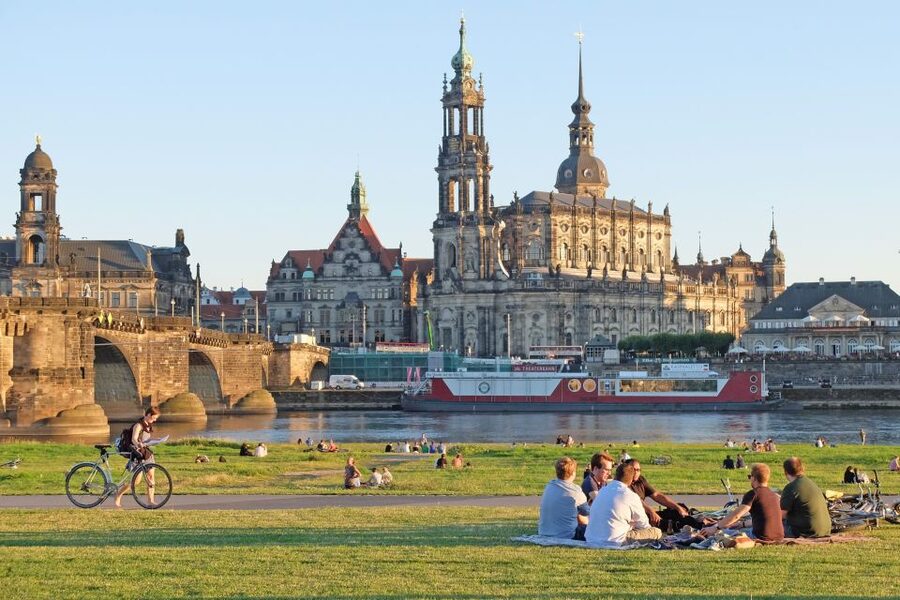
The walk includes Brühl’s Terrace, a raised promenade above the Elbe. It is one of the best places on this route to pause and look beyond the stone facades of the Old Town.
The guide spends about ten minutes here, including time for photographs. The terrace helps you understand Dresden’s setting, not just its architecture. From this height, you can look toward the river and see how the city’s historic center relates to the water.
This stop is also a reminder that Dresden is more than a collection of palaces. The Elbe shaped its trade, growth, and views. Your guide may use the setting to explain how the city developed and why this riverfront position mattered.
The drawback is simple: Brühl’s Terrace is an open-air viewpoint, so wind, rain, or strong sun can affect your comfort. Bring a light layer or rain protection when needed. Comfortable footwear is important throughout the tour, and the historic paving makes sensible shoes a better choice than fashion footwear.
Theaterplatz and the Semper Opera
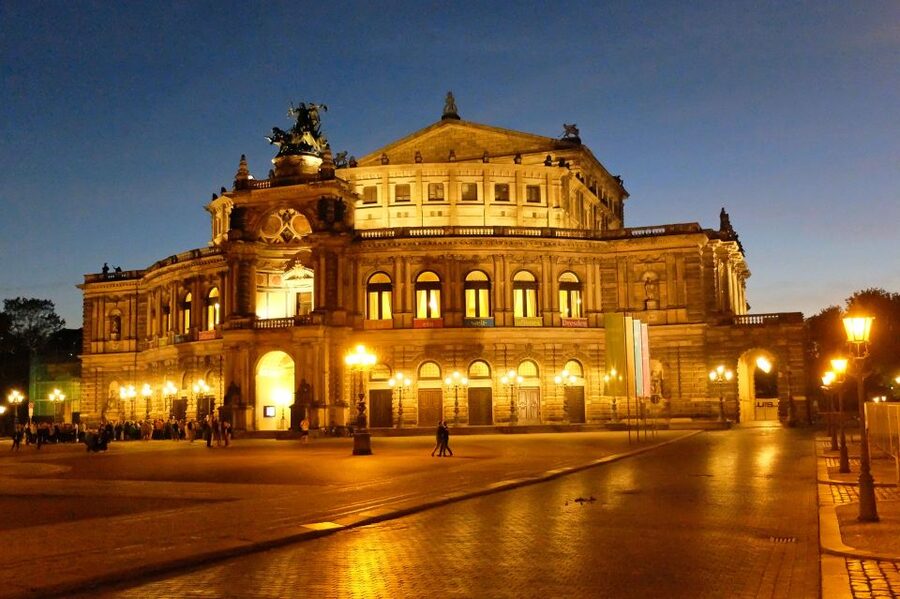
From the riverfront, the group moves toward Theaterplatz, a grand square dominated by the Semper Opera. The stop lasts about ten minutes and includes sightseeing, a guided explanation, and time for pictures.
The Semper Opera is the natural focus here, especially if you care about music and performance. Dresden’s musical identity is tied closely to this building, and the guide explains why the opera house matters rather than treating it as just another ornate facade.
You will hear about Dresden’s court culture and the role of performance in displaying status. Opera was not merely entertainment for the ruling class. It was part of the way a powerful court presented itself, attracted artists, and shaped the city’s public image.
This section is especially useful if you plan to attend a performance or visit the opera later. The tour does not include admission, so anyone wanting to see the interior will need a separate ticket or visit. Still, an outside explanation gives you a better sense of what you are looking at when you return.
A few more walks around Germany worth a look
- Discover Berlin Half-Day Walking Tour
★ 5.0 · 9,624 reviews - Berlin City walk Government District and Places of Democracy
★ 4.7 · 8,467 reviews - Berlin: Third Reich & Cold War Guided Walking Tour
★ 4.9 · 8,378 reviews - Munich: Third Reich & WWII Walking Tour
★ 4.6 · 6,181 reviews
The Zwinger: power in Baroque form
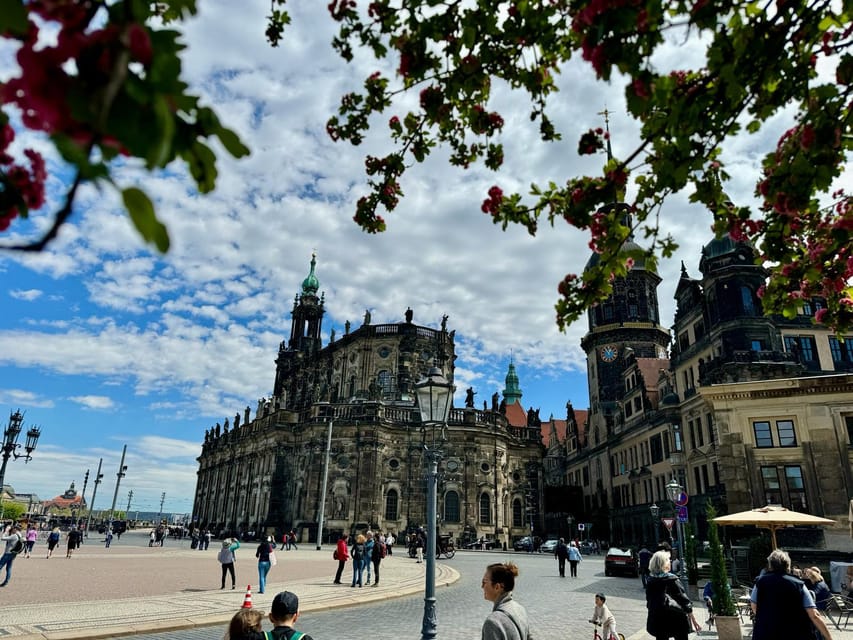
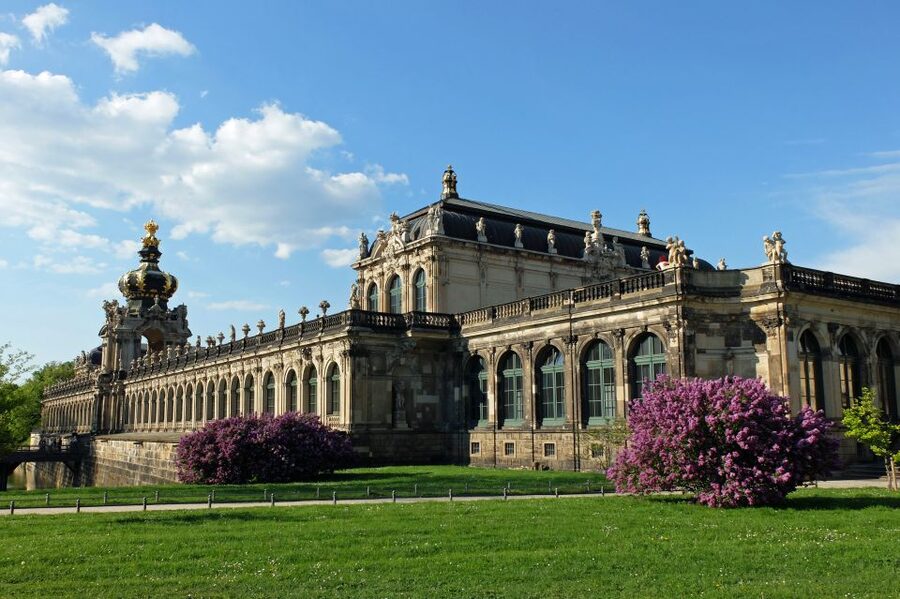
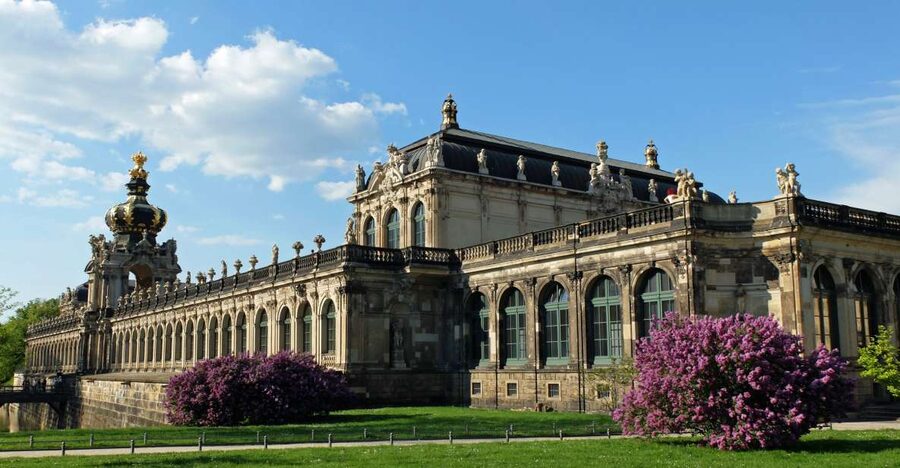
The Zwinger receives about fifteen minutes, making it one of the longer stops. That extra time makes sense. The palatial complex is elaborate, open, and full of details that can seem decorative until you hear why it was built.
Your guide explains the ruler behind the project and the way the Zwinger displayed wealth and power. Its grand design was not modest. It was meant to impress, to show that the court had money, influence, and access to the best artists and builders of its time.
You may enter the open courtyards if they are accessible, but the tour does not include ticketed areas. This distinction matters. If you want museum collections or interiors, treat this walk as preparation and plan another visit.
The Zwinger is also one of the best places for photographs on the route. Give yourself time to look beyond the central view. The courtyards, gates, and sculptural details reward a slower glance, even during a guided walk.
Dresden Castle and the Royal Palace courtyards
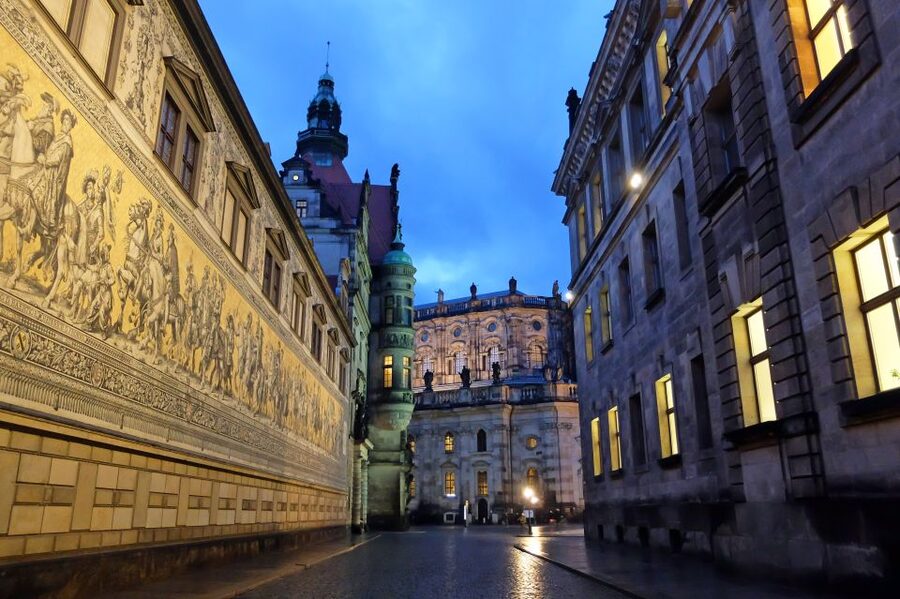
The route continues through the open spaces around Dresden Castle, also called the Royal Palace. The guide allows about fifteen minutes here, with the building mainly seen from outside and the courtyard visited if open.
This is where the tour connects architecture with the dukes and rulers who shaped Dresden. You follow the footsteps of the court toward the Royal Stables, gaining a sense of how tightly the royal quarter was arranged.
The castle is one of the places where historical photographs can be especially helpful. Marion, one of the guides praised for her teaching, used images of Dresden’s earlier appearance to show how much the city changed. That kind of visual comparison is valuable in a place where reconstruction can make the past look deceptively complete.
Dresden’s story includes severe wartime destruction and a long process of rebuilding. The tour addresses that past without reducing the city to one event. You get a wider account that reaches from early settlement through royal ambition and modern Dresden.
If you want to visit the castle museums, plan a separate block of time. The tour will not take you through ticketed rooms, and two hours is not enough for the palace collections anyway.
Fürstenzug and the walk toward Neumarkt
The Fürstenzug is a large porcelain mural showing the rulers of Saxony. The group spends about ten minutes here, including a guided explanation and time to look closely.
This is an unusually satisfying stop because the artwork stretches along a public wall rather than sitting behind a museum entrance. Your guide can help you understand who is represented and why the mural matters to Dresden’s royal identity.
The route then reaches Neumarkt, the main square associated with the Frauenkirche. The area takes about fifteen minutes and includes free time for photographs and a final look around.
Neumarkt represents both Dresden’s original center and its new beginnings. The square has been reconstructed, so it raises useful questions about what it means to rebuild a historic city. Your guide can help you notice the relationship between old forms and newer construction instead of treating the square as a perfectly untouched relic.
The Frauenkirche and Dresden’s reconstruction
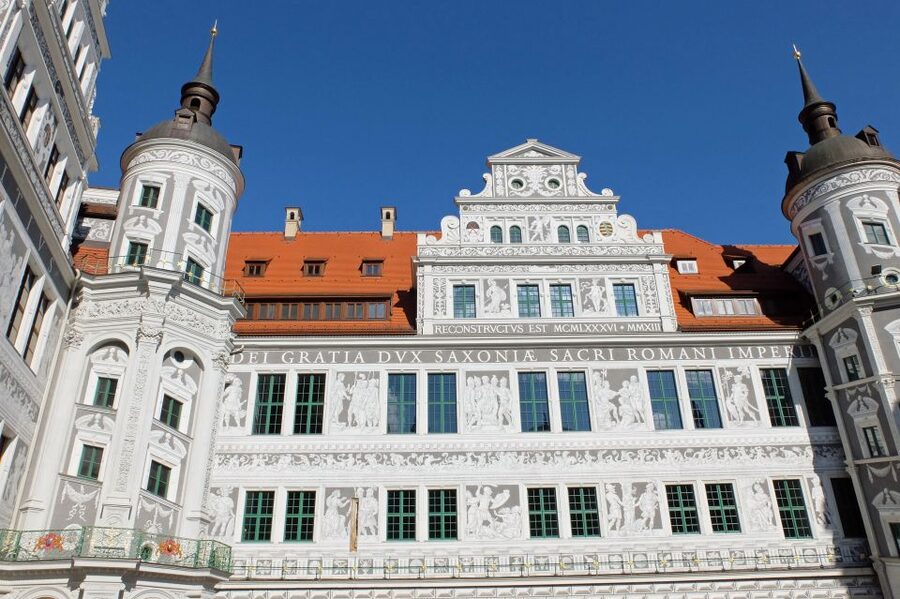
The Baroque Frauenkirche is one of the emotional centers of the walk. Its rebuilt stone form is striking, but the important part is understanding what the reconstruction represents.
Your guide discusses the church from the outside. You will not enter as part of this tour, and no ticketed interior is included. Even so, the exterior gives you a strong introduction to the church’s design and place in Dresden’s identity.
The Frauenkirche is a good example of why a guided explanation helps. You can admire the dome and elaborate facade on your own, but the story of destruction, survival, and rebuilding gives the building greater weight. Several guides have been praised for explaining Dresden’s past in chronological order, from its early settlement to the city you see today.
At this point, you may feel that the two-hour route has covered a great deal. That is true, but it also explains why the walk stays within the Old Town. You get the essential royal and Baroque center, not a survey of every district in Dresden.
Ending at Neumarkt and Brühl’s Terrace
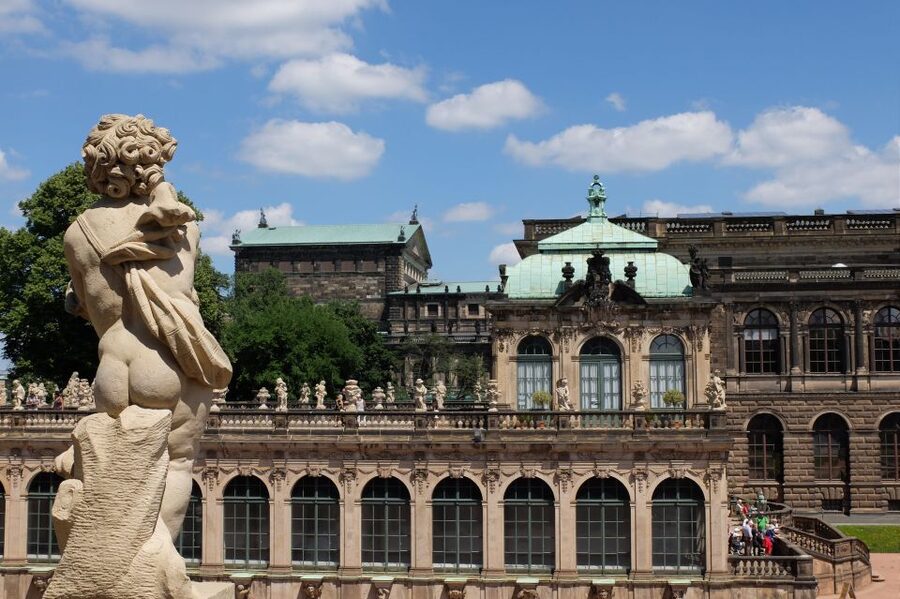
The official finish is Neumarkt, close to Brühl’s Terrace and the Elbe. This is a practical ending because you are not dropped at an isolated street corner. You are surrounded by places to continue your day.
Your guide can suggest where to eat, where to stop for traditional coffee and cake, and what to see afterward. That advice may be one of the most useful parts of the experience, especially if Dresden is your first stop in the city.
The tour also includes a 10% discount at Restaurant Anna im Schloss, located in one of the older rooms of the Dresden Royal Palace. To use it, show your mobile ticket and identify See My Dresden at the restaurant. Ask the guide where it is and what local cake or specialty might be worth trying.
Do not treat the discount as a reason to book on its own. Its value depends on your appetite and plans. But it is a welcome extra, particularly if you want to end the walk with a seated meal or a local sweet.
What the guides do especially well
The strongest feature of this tour is the guide team. Laura is repeatedly praised for her warmth, humor, and command of Dresden’s past. Karen is noted for her enthusiasm and ability to answer questions clearly. Wolfgang is praised for presenting events in chronological order and for extending the tour when the group needed more time.
Marion brings detailed background and historical images, while other guides, including Leo, Doris, Seema, and Anke, have also been praised for friendliness and clear delivery. You should not expect one specific guide unless your booking confirms it, but the pattern is encouraging.
The best guides on this route seem to understand that history works better as a story than as a list of dates. They connect buildings to people, motives, consequences, and present-day Dresden. Some have also adjusted their speaking speed for English learners and paid attention to participants with special needs.
That personal quality matters in a small-group walk. You can ask questions without turning the tour into a lecture, and the compact route leaves room for conversation.
Is $29 good value?
At $29, this tour is reasonably priced for a two-hour guided introduction to central Dresden. You are paying for live explanation, local suggestions, and a carefully connected route through the city’s main historic sights.
The value is strongest if you are new to Dresden or have limited time. In two hours, you see the key squares and buildings, learn how they fit together, and finish in a useful location for lunch or further sightseeing.
The value is weaker if you want museum interiors, a long walk through several neighborhoods, or a broad look at Neustadt. The tour stays in the historic center, and one participant would have preferred a more expansive walk. That is a fair criticism, but it is also a reminder to judge the tour by its purpose.
Book it early in your Dresden visit if you can. Then use the rest of your stay to return to the places that caught your attention, especially the Royal Palace collections, Zwinger interiors, Semper Opera, or Frauenkirche.
Who should book this walk?
I would choose this tour for a first visit, a short city break, or a morning when you want to get your bearings before making museum plans. It also suits anyone who prefers history explained by a person rather than absorbed from plaques.
It is a good match for families and mixed-age groups if everyone can manage a two-hour walk. The route is wheelchair accessible, but you should still consider the historic paving and outdoor nature of the tour.
You may want something else if you already know Dresden well, want to visit interiors, or hope to explore Neustadt. In that case, use the walk only if you want a refresher on the central monuments and a few local suggestions.
Final verdict: book it for context, not entry tickets
I recommend the Dresden Old Town walking tour if you want a clear, human explanation of the city’s central sights for $29. The guides are the main reason to go. Their warmth, humor, historical command, and willingness to answer questions give the route more value than a self-guided stroll.
Book it knowing exactly what it is: a focused two-hour introduction to Dresden’s Altstadt, with buildings viewed mainly from outside. If you want the museums and interiors, add separate visits. If you want a sensible first look at Dresden, a river view, royal architecture, the Frauenkirche, and practical advice for the rest of your day, this is a smart start.
FAQ
How long does the Dresden walking tour last?
The tour lasts two hours.
What language is the tour conducted in?
The live tour is conducted in English.
Where does the tour begin?
It begins at Schlossplatz near the Elbe and Augustus Bridge. Look for the statue of King Friedrich August seated on his throne.
Where does the tour finish?
It finishes at Neumarkt in Dresden’s Old Town, close to Brühl’s Terrace and the Elbe.
Does the tour enter the buildings?
No. Ticketed areas are not included, and buildings are viewed from outside. The open courtyards of the Royal Palace and Zwinger may be visited if they are open and accessible.
Is the tour wheelchair accessible?
Yes, the activity is listed as wheelchair accessible.
Can I cancel the booking for a refund?
You can cancel up to 24 hours in advance for a full refund.
Just added around Germany
- Berlin Walking Tour★ 4.5 · 378 reviews
- Small Group Walking Tour of East Berlin with a French Guide★ 5.0 · 176 reviews
- Berlin Street Art Walking Tour – Off The Grid★ 5.0 · 270 reviews
- Berlin Highlights Private Guided Walking Tour★ 4.5 · 89 reviews
- East Meets West: Berlin Food Culture & Street Art★ 5.0 · 157 reviews
- Private Walking Tour: World War 2 and Cold War Sites in Berlin★ 5.0 · 230 reviews
- Kreuzberg Berlin: Off the Beaten Track PRIVATE Walking Tour★ 5.0 · 128 reviews
- The History of Berlin: WWII PRIVATE Walking Tour With Locals★ 5.0 · 209 reviews
Small-Group Walking Tours, compared.

Amsterdam Anne Frank: Small-Group Walking Tour & Local Guide
Read our review →
Freedom Trail History Small Group Walking Tour
Read our review →
New Orleans Food Walking Tour of the French Quarter with Small-Group Option
Read our review →
Barcelona Tapas and Wine Experience Small-Group Walking Tour
Read our review →
Reykjavík Small group Walking Tour – by CityWalk
Read our review →
Best of Lisbon Small-Group Guided Walking Tour
Read our review →
Small Group Boat Cruise and Guided Walking Tour
Read our review →
Browse the lists this tour appears in