
Review · CITY HIGHLIGHTS WALKING TOURS
Dublin: Sightseeing Walking Tour in German
Dublin reveals itself on foot. This 2.5-hour German-language walking tour links the city’s medieval quarter, Temple Bar, the River Liffey, and O’Connell Street in one easy route. I like the small-group format and the way the guide mixes major sights with odd little discoveries, including a former cinema, a church that became a café, and a Lisbon tram with a new job.
I also like the strong historical range, from Dublin Castle and Christ Church Cathedral to the 1916 Rising and Trinity College. The main consideration is that the walk covers a lot of ground, so comfortable shoes matter. Also confirm the exact end point when booking, since the route description finishes near Trinity College while the meeting information says the activity ends back at the starting point.
Key points at a glance
- A German tour across both sides of the Liffey: The route moves from Dame Street through the medieval quarter, Temple Bar, the Northside, and O’Connell Street.
- Small-group format: A smaller group makes it easier to hear the guide and ask questions during the walk.
- History with human stories: Dublin Castle, the General Post Office, Trinity College, and the former Parliament House each connect to people and political change.
- Unusual city details: Look for a former full-time cinema, a church now used as a café and bar, a Lisbon tram, and a wobbly bridge.
- Good first-day orientation: The tour covers many central sights in 2.5 hours, helping you decide where to return later.
- German-speaking guidance: The live tour is conducted in German, with additional guides provided when needed.
Starting at the Tree of Gold on Dame Street
The tour begins at the Tree of Gold Statue, also called Crann an Óir, at Central Plaza on Dame Street. It sits at the corner of Dame Street and Fownes Street Upper, a useful central starting point for exploring Dublin on foot.
I like this location because the route gets moving quickly. You do not spend the opening part of the tour waiting beside a distant transport stop or walking through an uninteresting district. Dame Street places you close to Dublin’s former Viking and medieval quarter, where the first section of the walk has plenty to explain.
A small-group start also helps here. Dublin’s central streets can be lively, and a compact group is easier to keep together than a large crowd. The guide can speak to the group without relying on a microphone, and you have a better chance to ask about a building or street that catches your eye.
The tour is listed as wheelchair accessible. It is still sensible to consider the practical demands of a city walk, including street crossings, paved surfaces, and the full 2.5-hour duration.
More City Highlights Walking Tours in Ireland
- Dublin Highlights and Hidden Gems Guided Walking Tour
★ 5.0 · 6,020 reviews - Dublin: Highlights and Hidden Gems Walking Tour
★ 4.9 · 2,140 reviews - 90 Minute Dublin Walking tour and Sightseeing tips
★ 5.0 · 916 reviews
Dublin Castle and the medieval quarter
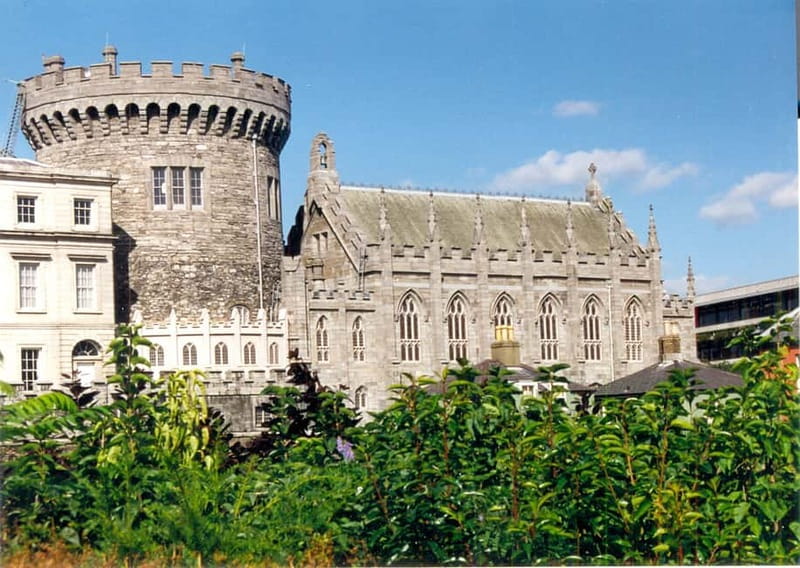
From Dame Street, the route turns into the part of Dublin shaped by its Viking and medieval past. Dublin Castle is one of the key early stops, with the tour visiting its grounds and gardens from the outside.
That external approach is important to understand. The tour does not include entry to the castle, so you are getting orientation, stories, and views rather than an interior visit. This can work well if you plan to return later for a paid visit, or if your priority is seeing several areas of central Dublin in one morning or afternoon.
The castle is also a useful place to hear how Dublin developed as a center of administration and power. A guide can make the setting easier to read, pointing out how the castle relates to the surrounding streets and the older quarter. You get more from the stop than a quick photograph because the location becomes part of the larger route.
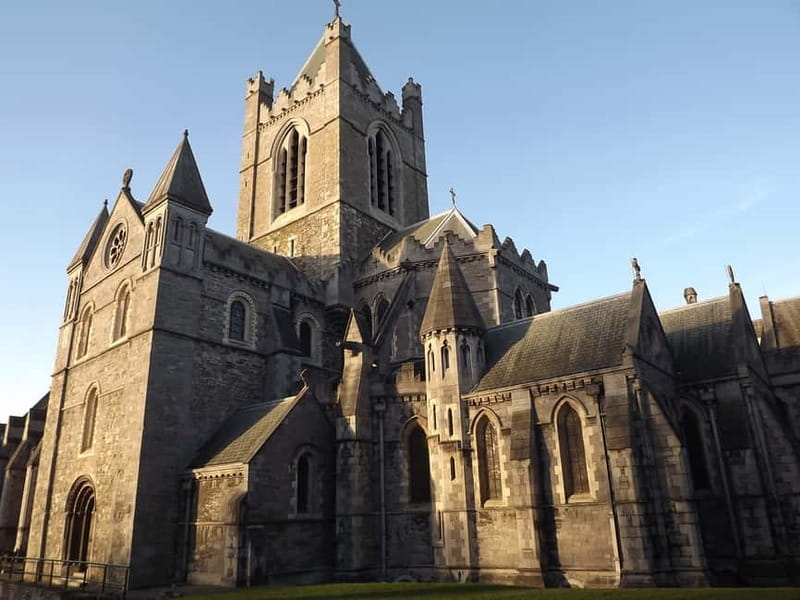
Nearby Christ Church Cathedral adds another major landmark. Again, the stop is external, but it gives you a chance to see the cathedral in its city setting and decide if you want to return inside. If you want detailed interior art, architecture, or museum time, plan a separate visit after the walking tour.
Christ Church, Fishamble Street, and Smock Alley
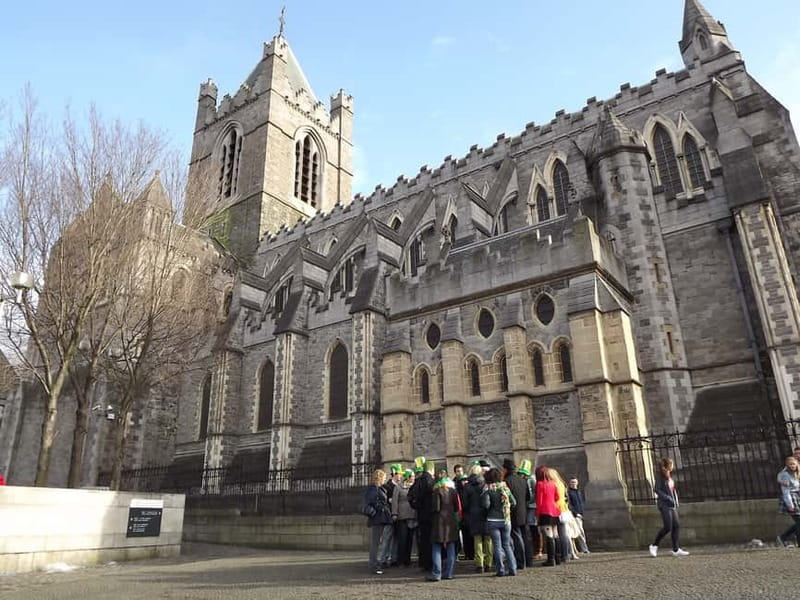
The route continues past Fishamble Street and Smock Alley, areas that add texture to the medieval quarter. These streets are useful reminders that Dublin is not just a collection of grand monuments. Its character also comes from lanes, old addresses, and places tied to theatre, trade, religion, and everyday life.
This part of the walk suits you if you prefer context over a checklist. The guide’s job is not simply to point at a building and name it. The appeal lies in connecting streets to the people and events associated with them.
You should keep your expectations realistic. The itinerary covers many locations, so no single stop receives the time of a dedicated cathedral, castle, or theatre tour. The reward is range: in one afternoon, you see how several parts of central Dublin fit together.
Temple Bar beyond the nightlife image
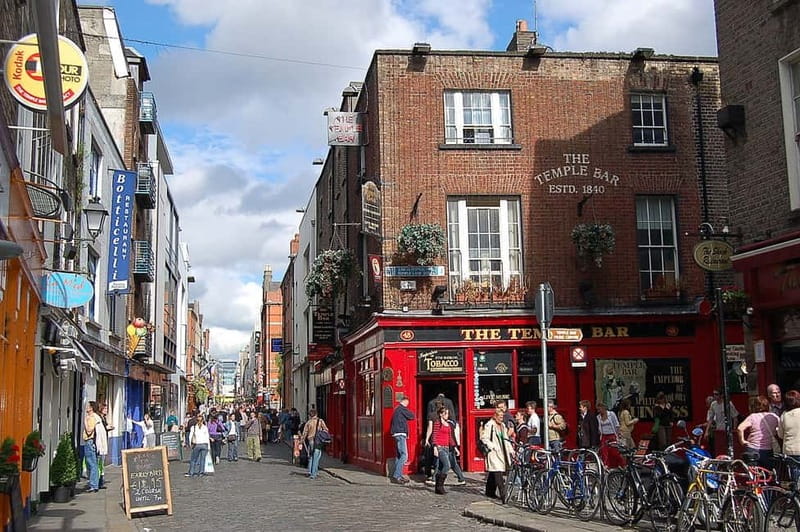
Meeting House Square and Temple Bar come next. Many people know Temple Bar mainly for pubs and evening crowds, but the tour presents the district as part of Dublin’s older urban fabric.
Meeting House Square gives the guide a chance to explain a less obvious side of the area. The route is not limited to the most photographed pub streets. It looks for details that are easy to miss when you move through Temple Bar on your own.
That is one of the strongest features of this tour. You still see the famous district, but you are encouraged to notice the less predictable details around it. The tour promises several surprises, including a humorous representation of a da Vinci painting and a stark-naked depiction of a famous 18th-century composer. Those details give the walk a playful edge without losing its historical purpose.
Temple Bar can be crowded, so stay close to the guide and keep the group’s pace. A small group helps, but this is still a central city district with active streets and plenty of distractions.
More City Highlights Walking Tours in Dublin:
- Dublin Highlights: 2.45-Hour Walking Tour in Italian
★ 4.7 · 460 reviews - Dublin: Highlights and Hidden Corners Walking Tour
★ 4.8 · 79 reviews - Historic Charleston Guided Sightseeing Walking Tour
★ 5.0 · 6,216 reviews - Vienna: Guided Walking Tour of City Center Highlights
★ 4.7 · 4,989 reviews
Crossing the Liffey by the Millennium Bridge
The Millennium Bridge takes the group across the River Liffey toward the Northside. This is a short crossing, but it gives the tour a clear sense of movement. You are not seeing Dublin as one single postcard district. You are moving between distinct parts of the city.
The bridge is also one of the tour’s lighter moments. You may get to feel its slight bounce as you cross. It is a small physical detail, yet it makes the route more memorable than a standard street-by-street walk.
The Liffey crossing gives you a chance to pause and look back toward the city center. It also sets up the next section, which turns attention to Dublin’s Northside and its main historic street, O’Connell Street.
The Italian Quarter and St Mary’s Church
On the Northside, the route includes the Italian Quarter and St Mary’s Church. St Mary’s is especially unusual because the former church now operates as a well-known café and bar.
That stop captures the tour’s approach. You see an ordinary-looking part of modern Dublin, then learn about the building’s previous purpose. A city’s past is often easiest to remember when it appears in an unexpected form, and a former church serving food and drinks certainly qualifies.
The Italian Quarter adds another layer to the central city. It helps break up the long list of major institutions and monuments with a look at a different local district. You are still near the main sights, but the route keeps searching for places that many people would pass without understanding.
Henry and Moore Streets, then O’Connell Street
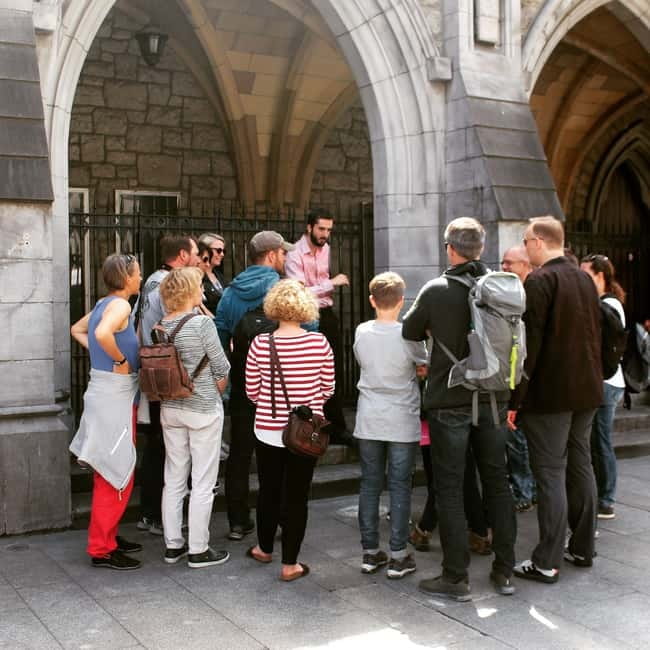
The walk continues through Henry Street and Moore Street before reaching O’Connell Street. These streets bring you into the commercial heart of the Northside and show a more everyday side of central Dublin.
Moore Street is particularly useful in a walking tour because its character comes from street life and local activity rather than one grand building. The guide can help you connect this part of the city to Dublin’s social and political past.
O’Connell Street then opens the scale of the route. It is one of Dublin’s principal historic streets, lined with monuments and linked to key moments in Ireland’s move toward independence. The broad avenue feels different from the narrow lanes around Dublin Castle and Temple Bar, so the change gives the tour a strong visual rhythm.
The General Post Office and the 1916 Rising
The General Post Office is one of the most important stops on O’Connell Street. The building served as headquarters for the rebels during the 1916 Rising, and the fighting caused major destruction to the post office, the street, and nearby buildings.
This is where the tour’s focus on human stories matters most. A short explanation of the building can turn a formal façade into a place connected to decision-making, rebellion, destruction, and national independence.
You will also see the O’Connell Monument nearby. Together, the monument and the post office help explain why O’Connell Street carries such weight in Dublin’s public memory.
The stop is external, so do not expect an interior exhibition or a museum presentation. The value comes from standing in the setting while the guide explains what happened and why the location still matters.
The former Parliament House near Trinity College
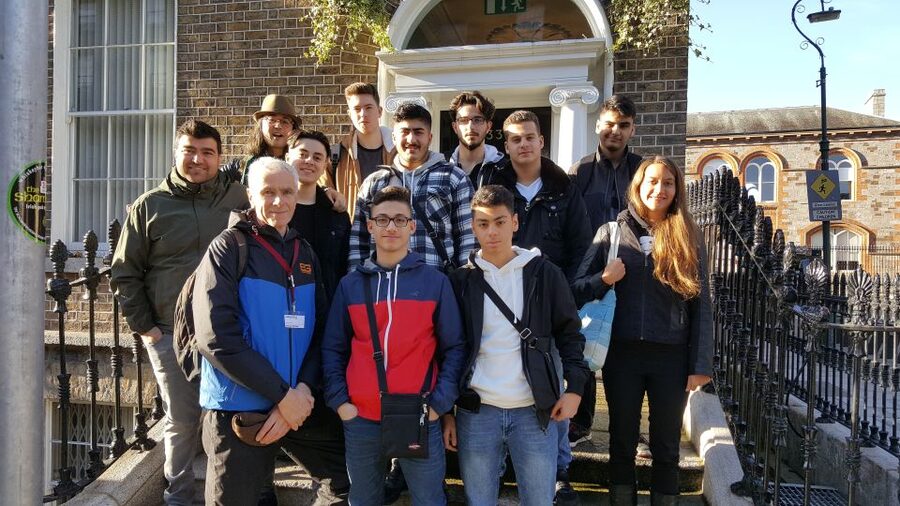
The route then moves toward the former Parliament House, now home to the Bank of Ireland. This is another stop where the building’s present use and earlier political role sit side by side.
The former Parliament House adds an 18th-century layer to the tour. By this stage, you have seen medieval sites, religious buildings, commercial streets, and places tied to modern Irish independence. The building helps fill in the political story between those periods.
The tour’s wide time span is one reason the $34 price can make sense. You are not paying for entry to one attraction. You are paying for a guide who connects a series of places that would otherwise feel scattered across the city.
If you are comfortable reading maps and doing your own research, you could walk this general route without a guide. The advantage here is the interpretation, the German language, and the chance to hear why smaller locations matter.
Finishing near Trinity and the Book of Kells
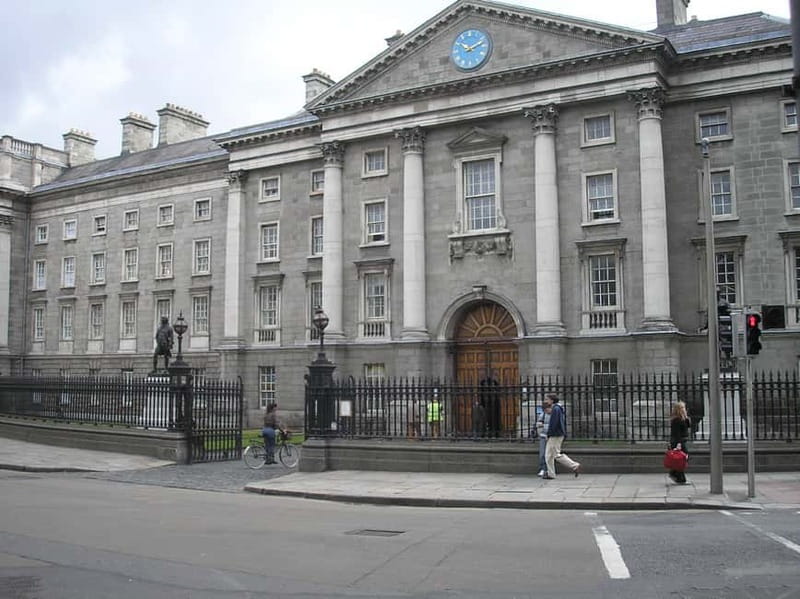
The route is described as finishing outside Trinity College, home of the famous Book of Kells. The college is an ideal final sight because it brings the walking tour back to one of Dublin’s best-known cultural institutions.
The tour does not include entry to Trinity College or the Book of Kells. You can use the walk as a preview, then return later if you want to visit inside. That arrangement is helpful if you prefer to see the city first and save major indoor attractions for a separate, unhurried visit.
There is one point to clarify before you book. The route description says the walk finishes outside Trinity College, while the meeting information says the activity ends back at the meeting point on Dame Street. Ask the operator which ending applies on your chosen date. It affects where you plan your next meal, museum visit, or transport connection.
The unusual details make the walk memorable
The major sights give the tour its structure, but the smaller discoveries provide its personality. You may encounter:
- Dublin’s first full-time cinema, now defunct
- A church that is no longer used as a church
- A former Lisbon tram now serving as a café
- The Millennium Bridge, with its noticeable bounce
- A post box linked to Ireland’s transition to independence
- A humorous version of a famous da Vinci painting
- A naked depiction of an 18th-century composer
These details are valuable because they keep the tour from becoming a procession of official buildings. You get stories about changing uses, odd public art, transport, politics, and local humor.
The supplied rating of 4.7 out of 5 from 231 ratings also fits the tour’s strongest quality: the guide’s ability to make information easy to follow and enjoyable to hear. The German-language commentary is described as entertaining and clear, which matters on a long walking route packed with names and dates.
Is $34 a fair price?
At $34 per person, this is a reasonable price for a 2.5-hour guided introduction to central Dublin. You cover both sides of the Liffey and pass many of the city’s most important landmarks, while also hearing about smaller places that are easy to miss.
The value is best if you want orientation and explanation. A self-guided walk costs less, but you would need to research the route, decide what matters, and find the lesser-known stops yourself. This tour saves that preparation and gives you a German-speaking guide throughout.
The price does not include admission to the interiors mentioned along the way. Think of it as a city walk, not a bundle of attraction tickets. If you want to enter Dublin Castle, Christ Church Cathedral, or the Book of Kells, budget and schedule those visits separately.
Free cancellation up to 24 hours before the tour and the option to reserve now and pay later add useful flexibility. They are practical benefits if your Dublin plans are still shifting.
Who will enjoy this Dublin walk?
I would choose this tour for a first visit to Dublin, especially if you want a broad view of the city center before deciding where to spend more time. It also suits you if German is your preferred language for historical explanations.
The tour works well for people who like a balance of famous sights and unusual details. It is less suitable if you want long interior visits, a deep architectural study of one building, or a very slow pace at each stop.
Bring comfortable shoes and allow the full 2.5 hours. Since the route crosses several central districts, you should also avoid scheduling an immediate appointment at the opposite end of the city.
Should you book this tour?
Book it if you want a friendly, German-speaking introduction that covers Dublin Castle, Christ Church, Temple Bar, the Liffey, O’Connell Street, and Trinity College in one walk. The small group, broad route, and humorous local details make the $34 cost sensible for a first look at the city.
Skip it if your priority is entering several attractions during the same outing. In that case, choose individual visits and spend your time indoors. Before booking, confirm the ending point, then use the tour as your Dublin orientation and return to the places that catch your interest.
FAQ
Where does the Dublin walking tour start?
It starts at the Tree of Gold Statue, also called Crann an Óir, at Central Plaza on Dame Street in Dublin 2, at the corner of Dame Street and Fownes Street Upper.
How long does the tour last?
The walking tour lasts 2.5 hours.
What language is the tour conducted in?
The live tour guide speaks German.
How much does the tour cost?
The listed price is $34 per person.
Is this a small-group tour?
Yes. The experience is described as a small-group walking tour.
Is the tour wheelchair accessible?
Yes. The activity is listed as wheelchair accessible.
Does the tour enter Dublin Castle?
No. Visits to the listed attractions are external. The tour does include the grounds and gardens of Dublin Castle.
Does the price include admission to the Book of Kells?
No. The tour finishes outside Trinity College, and admission to the Book of Kells is not included.
What places does the route visit?
The route includes City Hall, Dublin Castle grounds and gardens, Christ Church Cathedral, Fishamble Street, Smock Alley, Meeting House Square, Temple Bar, the Millennium Bridge, the River Liffey, the Italian Quarter, St Mary’s Church, Henry Street, Moore Street, O’Connell Street, the General Post Office, the O’Connell Monument, the former Parliament House, and Trinity College.
Can I cancel the booking?
Yes. You can cancel up to 24 hours in advance for a full refund. You can also reserve your place and pay later.
Just added around Dublin
- Dublin: North Quay Guided Ghost Walk★ 4.2 · 144 reviews
- Dublin: Traditional Pub Walking Tour★ 4.6 · 295 reviews
- Dublin: Macabre History Walking Tour★ 4.9 · 95 reviews
- Dublin: Mythology, Folklore and Legends Walking Tour★ 4.9 · 703 reviews
- Dublin: Traditional Pubs Walking Tour with Local Guide★ 4.9 · 112 reviews
- Dublin: Delicious Walking Food Tour★ 4.9 · 137 reviews
- Dublin: Irish Music Walking Tour with Live Performance★ 4.8 · 137 reviews
- Dublin: Highlights and Hidden Corners Walking Tour★ 4.8 · 79 reviews
City Highlights Walking Tours, compared.

Historic Charleston Guided Sightseeing Walking Tour
Read our review →
Dublin Highlights and Hidden Gems Guided Walking Tour
Read our review →
Guided Walking Tour of City Center Highlights
Read our review →

City Highlights Temple and Market Walking Tour
Read our review →
Montmartre Hidden Gems and Scenic Highlights Walking Tour
Read our review →
Browse the lists this tour appears in