
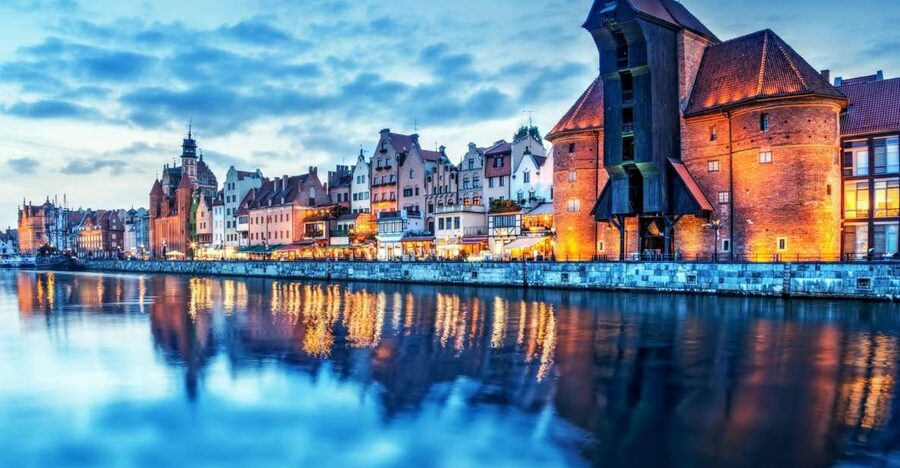
Review · CRIME AND MYSTERY WALKING TOURS
Gdańsk: Old Town Private Walking Tour with Legends and Facts
Gdańsk rewards a guide who knows its stories. This private walk links the city’s grand streets with its harder, more recent past, from medieval trade to the Solidarity movement. I especially like the mix of famous sights and lesser-known corners, plus the practical advice on restaurants, pubs, and souvenir shops. The main drawback is price: at $107 per person, it makes the most sense for couples, families, or small groups who will value a private guide.
The route can last two, three, four, or six hours, so you can choose between a brisk introduction and a serious history outing. I also like that the guide can adjust the conversation to your interests, a point made clear by the experience of visitors with guides such as Kaja, Krzysztof Przyborowski, Gabriella, and Weronika.
The six-hour version packs in the European Solidarity Centre, which is a major advantage for history fans. Still, it is a long walking day, and the shorter options do not include every major stop, so choosing the right length matters.
Key points to know before booking
- Start at the Upland Gate: Meet beneath the tourist information sign at Brama Wyżynna, about eight minutes from Gdańsk Main Railway Station.
- See the classic Old Town route: Walk from the medieval city wall past the Golden Gate, Dluga Street, Long Market, Artus Court, Neptune’s Fountain, and the Green Gate.
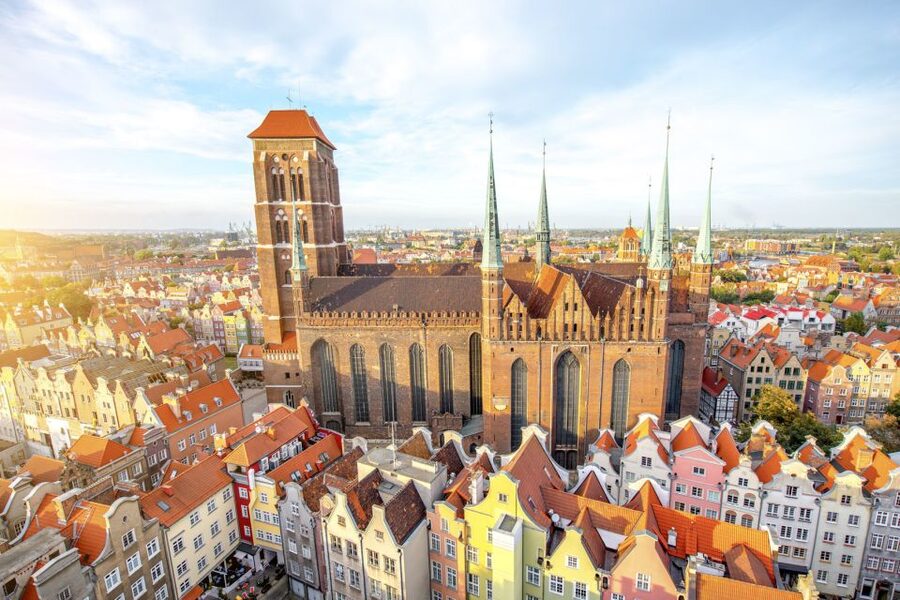
- Enter St Mary’s Basilica: Every option includes entry to the free parts of this enormous brick church, including its hall church interior, organ, altar, and royal chapel.
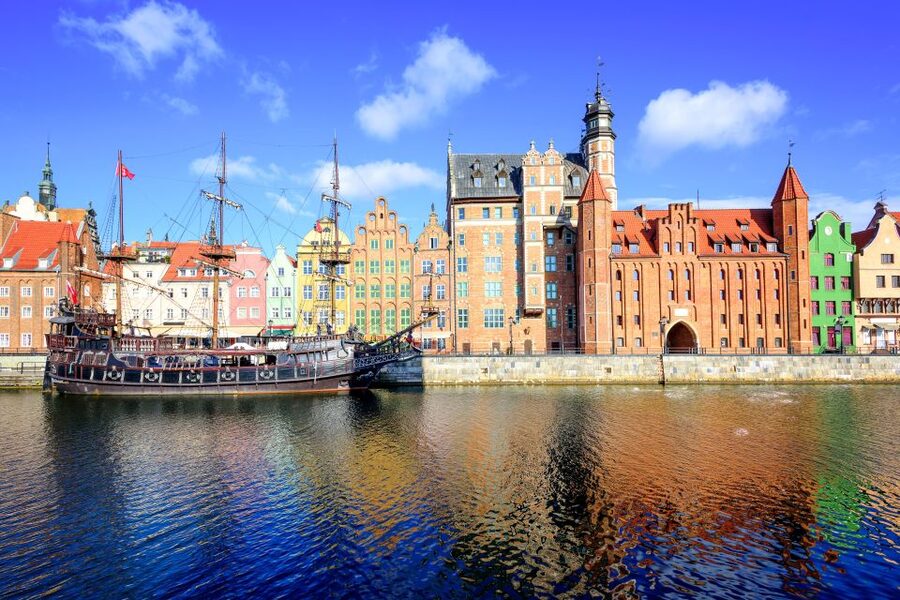
- Add the Motława islands: The three-hour route reaches Wyspa Spichrzow and Olowianka, with warehouse ruins and the red-brick Baltic Symphony Hall.
- Choose amber and Solidarity history: The four-hour option adds St Bridget’s Church, its Solidarity connection, and its remarkable amber altar.
- Make it a full history day: The six-hour tour includes the Monument to the Fallen Shipyard Workers of 1970 and skip-the-line entry to the European Solidarity Centre.
Why Gdańsk needs more than a postcard walk
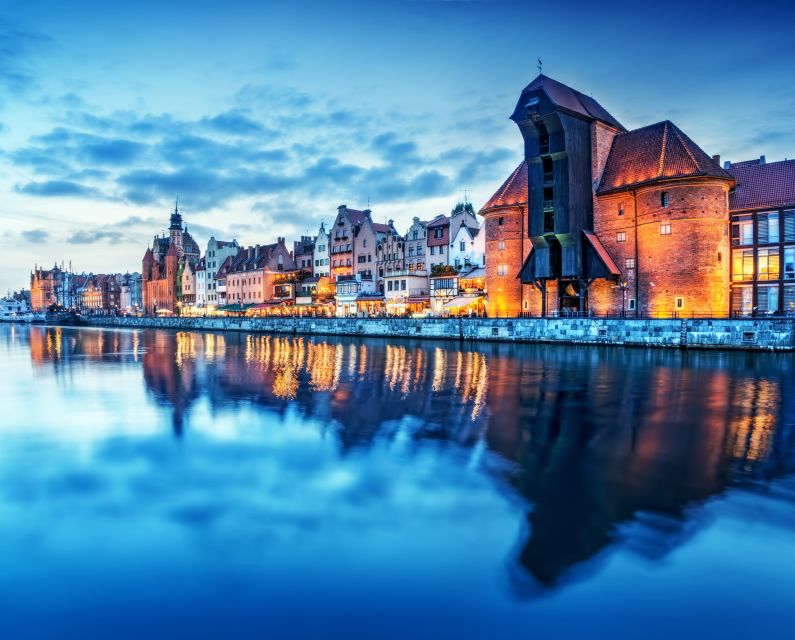
Gdańsk can look almost too polished at first glance. Its rebuilt façades, ornate gates, and long ceremonial streets make an easy picture. But the city’s story is not only about handsome architecture. It is also about merchants, shipyards, martial law, workers’ protests, and the movement that helped change Poland.
That is where a private walking tour earns its keep. You get a guide who can explain how the city’s symbols fit together instead of simply pointing at them. The legends add color, while the factual history gives the walk weight.
The city is also a place where names can confuse first-time visitors. The tour covers what is commonly called the Old Town, though several of the grand sights are in the Main Town area. A guide helps you follow the route without worrying about which district name belongs to which street.
The official guide license matters here. Gdańsk’s history reaches across medieval commerce, religious life, German and Polish influence, World War II, communism, and the Solidarity era. A licensed local guide can give that story a clear shape in the language you choose.
Guides speak English, Spanish, French, Italian, German, Polish, Russian, Norwegian, and Swedish. The strongest praise has focused on clear explanations, warmth, and genuine affection for Gdańsk. Kaja has been singled out for making the city both easy to understand and enjoyable, while Krzysztof Przyborowski received praise for answering questions fully and never making a group feel rushed.
More Old Town Walking Tours in Poland
- Warsaw: Old Town Highlights Walking Tour in English
★ 4.7 · 1,516 reviews - Old Town Krakow & Wawel Castle Walking Tour
★ 5.0 · 1,508 reviews - Krakow: The Old Town Walking Tour
★ 4.8 · 794 reviews
From Brama Wyżynna to the Golden Gate
The tour begins at the Upland Gate, or Brama Wyżynna, at Wały Jagiellońskie 2A. Look for the tourist information sign beneath the High Gate. The meeting point is practical, since it sits about eight minutes from the Main Railway Station.
This entrance once marked the approach to the medieval city. It is a good starting point because the tour moves naturally from defensive walls into the grand urban center. You begin with the city’s outer edge, then pass through the Golden Gate toward the long axis of historic Gdańsk.
Your guide can also meet you at accommodation within Gdańsk Old Town, provided it is within 1.5 kilometers of the meeting point. Give the accommodation address when booking if you want this arrangement. Otherwise, meet at the Upland Gate.
The walk then continues along Dluga Street. This is one of the city’s most impressive stretches, lined with tall façades and decorative details. It was built for display as much as for daily life, and your guide can explain how wealth from trade shaped the look of the city.
Long Market, Neptune, and Artus Court
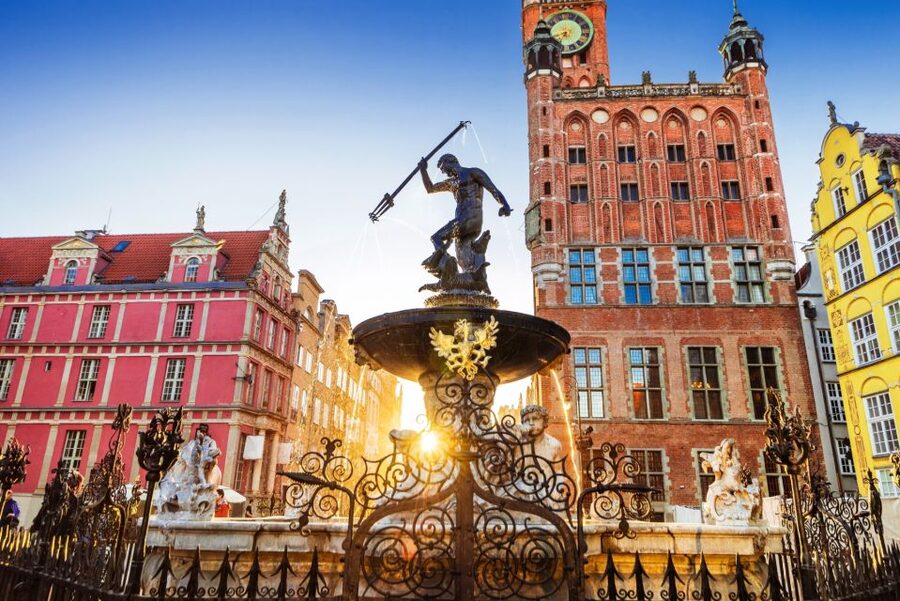
Long Market is the visual center of the standard two-hour route. Here you see the Gdańsk Town Hall, the Golden House, and Neptune’s Fountain, a 17th-century landmark that has become one of the city’s most familiar symbols.
I like this part of the walk because it gives you a quick lesson in how civic pride worked in old port cities. Merchants, city officials, and wealthy families wanted their buildings to announce prosperity. The façades are not random decoration. They form a public display of status.
Artus Court adds a more specific social story. It was once a meeting place for the city’s merchants and now operates as a branch of the Gdańsk History Museum. The building holds local history and art collections, so the visit connects the street outside with the commercial life that helped pay for it.
The standard tour is useful if you want orientation without spending half a day in museums. You get the main architectural sequence, along with local tips for food, drinks, and shopping. For a first afternoon in Gdańsk, that practical advice can be almost as useful as another monument.
The Green Gate and the Motława River
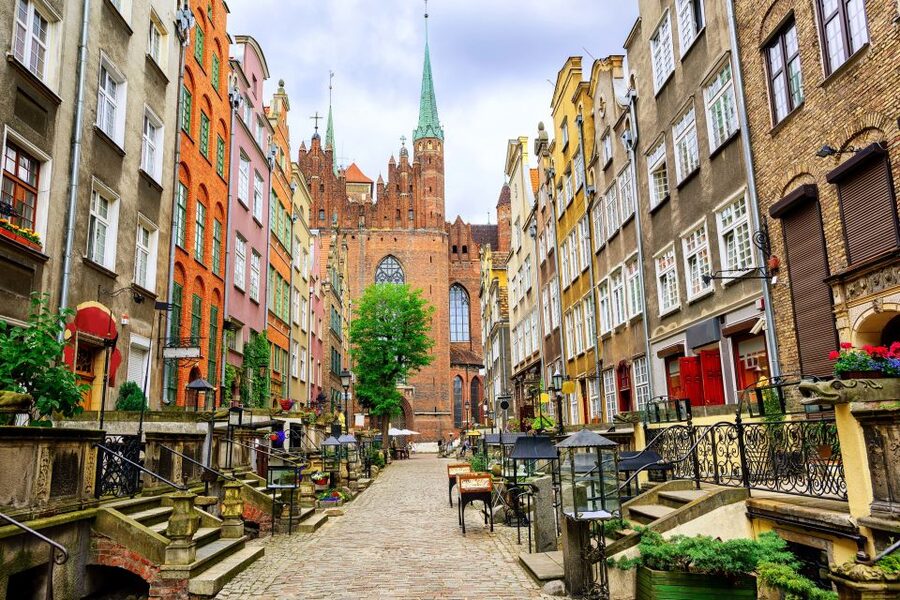
From Long Market, the route reaches the Green Gate, where the city opens toward the Motława River. This is one of the best points for seeing how Gdańsk’s identity grew from its position as a major port.
The river view also gives the walk a change of pace. After the formal façades and narrow streets, the waterfront offers more space and a chance to understand the city’s connection to shipping and trade.
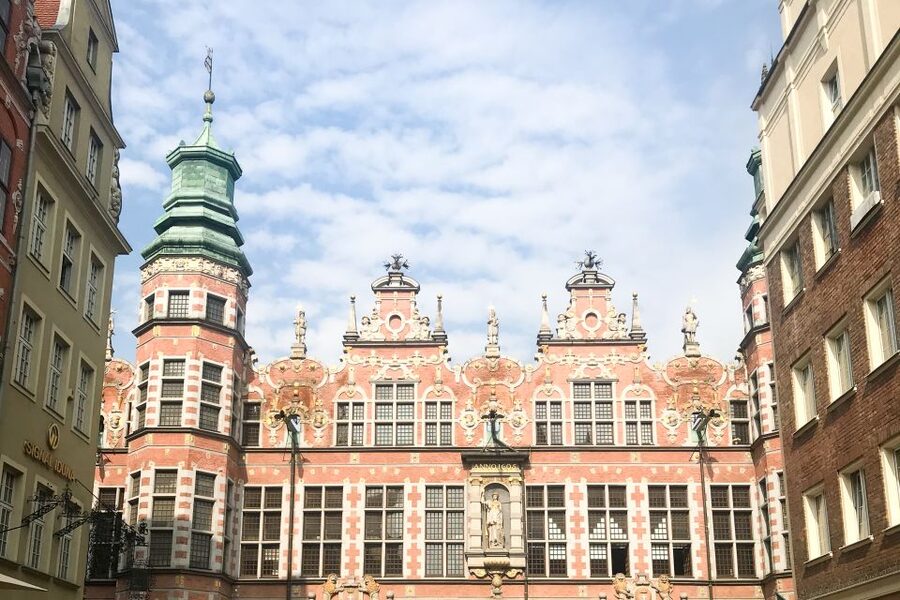
The two-hour walk ends later at the Great Armoury, a 17th-century Renaissance building and one of Gdańsk’s finest examples of that style. This creates a satisfying route from medieval defenses to civic buildings, religious architecture, river commerce, and military display.
If you have limited time, the two-hour option covers a lot. It gives you the central sights and a useful introduction, but it cannot offer much time for the city’s industrial and political story. I would choose it for a short stay, a first orientation, or a family group that may not want a longer walk.
More Crime and Mystery Walks in Poland:
- Krakow: Legends and Tales of Old Town Walking Tour
★ 4.8 · 227 reviews - Prague: Ghost Walking Tour Where Legends Come To Life
★ 4.4 · 5,253 reviews - Edinburgh Darkside Walking Tour: Mysteries, Murder and Legends
★ 5.0 · 3,862 reviews - Historical Walking Tour: Legends of Bruges
★ 5.0 · 2,541 reviews
Inside the vast brick walls of St Mary’s Basilica
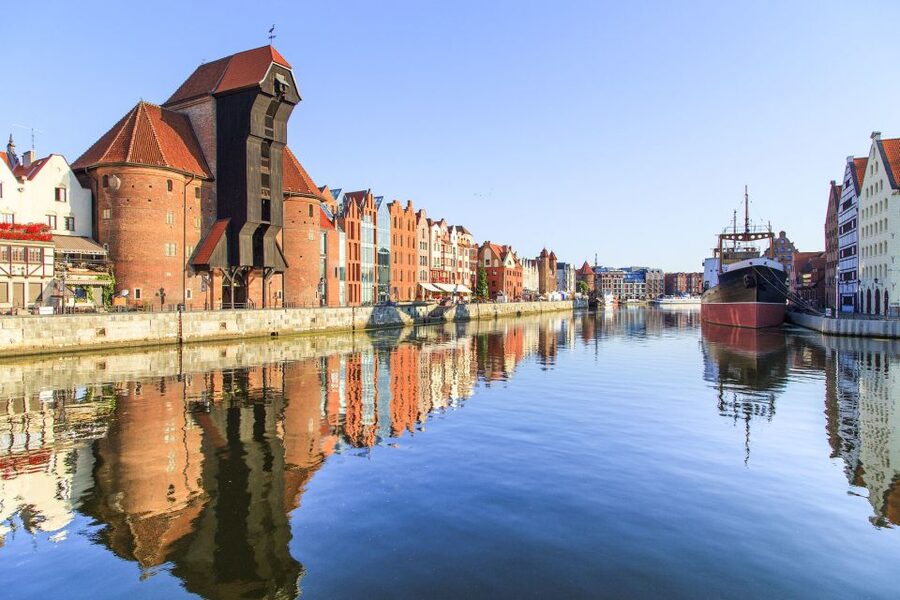
St Mary’s Basilica is one of the most memorable stops on every version of the tour. The church is among the largest brick churches in the world, and its scale becomes clear as soon as you step inside.
The interior is a grand hall church with an ornate altar, an organ set, and a royal chapel. The free parts of the church are included in every tour option, so even the shortest route gives you access to this major landmark.
The value of a guide here is not just naming the building. A good explanation helps you notice how the church’s size reflects the wealth and ambition of the historic city. It also gives you a way to connect religious architecture with the merchants and civic leaders you have just seen along Dluga Street.
The supplied information does not include a tower visit, so do not book this tour expecting a tower climb. The focus is the church interior and its place in Gdańsk’s story.
Three hours for the Motława islands
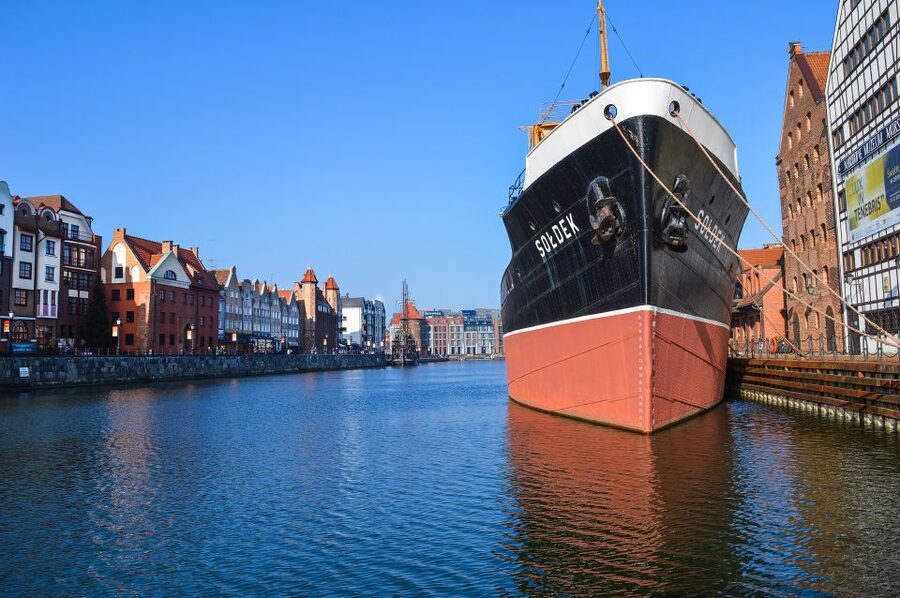
The three-hour option adds the islands on the Motława River. This is a worthwhile upgrade if you want more than the polished center.
On Wyspa Spichrzow, you walk through a redeveloped area with old brick structures and warehouse ruins. The remains point to the trade that once made Gdańsk prosperous. They also show how much of a working port city can disappear, survive, or return in altered form.
The route then reaches Olowianka Old Town, where you see the red-brick Baltic Symphony Hall. This extension helps you understand the city as a port and industrial center, not only as a collection of decorated façades.
I would choose three hours for most first-time visitors who have room in their schedule. You still get the main center, St Mary’s Basilica, and the river islands without committing to the full political history route. The extra hour also gives your guide more time to answer questions and point out details you could easily miss alone.
St Bridget’s Church and the amber altar
The four-hour option adds St Bridget’s Church, one of the most rewarding choices for visitors interested in recent Polish history and regional craft.
The church served as a sanctuary for Solidarity leaders during martial law. On one of its large doors, you can see scenes connected with Solidarity from August 1980 through the imposition of martial law in December 1981. That visual record makes the political story feel close and specific.
The church also contains religious objects and a remarkable amber altar. Amber is one of the defining materials of the Baltic region, and the altar gives you a chance to see it used on a grand scale rather than only in a jewelry shop window.
This stop adds two different layers to the tour: the courage of people connected with the Solidarity movement and the older artistic traditions of the region. If you enjoy churches, material culture, or 20th-century Polish history, the four-hour route is likely the best balance.
Regular entry to St Bridget’s Church is included on the four-hour and six-hour options. It is not part of the two-hour route, so check your selected duration carefully.
Six hours from the Old Town to Solidarity
The six-hour version is the full program. It extends from the historic center toward the shipyard area and includes the Monument to the Fallen Shipyard Workers of 1970.
The monument commemorates workers who died during anti-communist riots. It gives you a direct connection between Gdańsk’s industrial past and the later Solidarity movement. After seeing merchant wealth, warehouses, churches, and civic buildings, you encounter the workers whose protests helped reshape modern Poland.
The tour then continues to the European Solidarity Centre. This modern museum explains the Solidarity riots and the trade union movement that helped bring an end to communist government in Poland. Skip-the-line entry is included with this option.
For anyone with a strong interest in modern European history, this is the most valuable version. The museum gives you the time and setting to understand people, events, and political change rather than receiving only a brief street-side explanation.
The tradeoff is obvious: six hours on foot is a serious commitment. I would not choose this route simply because it includes the most items. Choose it because you want the full connection between Gdańsk’s medieval city and its shipyard politics.
How much value do you get for $107?
At $107 per person, this is not a bargain-priced orientation walk. The price covers a private tour with an officially licensed guide, and the cost becomes easier to justify when shared among a couple, family, or small private group.
The value comes from control and context. You can ask questions, slow down at St Mary’s Basilica, discuss food and drink recommendations, or adjust the conversation around your interests. One visitor described a guide changing the route during the tour after learning more about the group’s interests, which is exactly the kind of flexibility a private format should provide.
The included admissions also matter. All options include the free parts of St Mary’s Church. The four-hour and six-hour choices include entry to St Bridget’s Church, while the six-hour option includes skip-the-line entry to the European Solidarity Centre.
For a solo visitor, the price may feel high compared with a group walking tour. For a small group that wants a local guide, direct answers, and a route adjusted to its pace, the cost is more defensible.
Timing, languages, and practical planning
You can check available starting times for tours lasting two to six hours. The experience is wheelchair accessible, and private groups are available.
The meeting point is simple, but read the pickup rule carefully. Accommodation pickup is limited to Gdańsk Old Town and to addresses within 1.5 kilometers of Brama Wyżynna. If your accommodation falls outside that area, the itinerary may be changed accordingly.
Check your email the day before for important information. This is especially useful if you have arranged pickup or need to confirm the meeting details.
The tour offers free cancellation up to 24 hours before the start, and you can reserve now while paying later. Those terms help if your Gdańsk schedule is still moving around, though the main decision remains the duration you want.
Who will enjoy this Gdańsk walk?
I would recommend it most strongly to first-time visitors who want a clear introduction without having to manage maps, museum plans, and historical context on their own.
It also suits:
- Families who want a guide to keep children involved. Gabriella was praised for engaging children as well as adults.
- History fans choosing the six-hour route and the European Solidarity Centre.
- Couples who want a private pace and local recommendations.
- Visitors who care about architecture, churches, amber, and port history.
- People arriving by train, since the meeting point is close to Gdańsk Main Railway Station.
The tour may be less suitable if you prefer to wander alone, dislike fixed routes, or want to spend long periods inside museums. The two-hour version is fairly focused, while the six-hour version is a major time commitment.
Should you book the Gdańsk Legends and Facts tour?
Book it if you want Gdańsk explained as a living city, not just photographed as a pretty one. The strongest parts are the local guides, the clear route through the historic center, St Mary’s Basilica, St Bridget’s amber altar, and the link between old port wealth and the Solidarity movement.
Choose two hours for orientation, three hours for a fuller city walk, four hours for amber and Solidarity history, and six hours for the complete experience with the shipyard and European Solidarity Centre.
At $107 per person, I would book this for a private group that values personal attention. If you are traveling alone on a tight budget, a shorter option may be easier to justify. If you want Gdańsk’s legends, architecture, and modern political story tied together by one guide, the four-hour or six-hour route offers the best value.
FAQ
Where does the Gdańsk walking tour begin?
Meet your guide in front of the tourist information sign under the High Gate, or Brama Wyżynna, at Wały Jagiellońskie 2A, 80-887 Gdańsk. The meeting point is about eight minutes from Gdańsk Main Railway Station.
Is hotel pickup available?
Pickup is available from accommodation in Gdańsk Old Town if it is within 1.5 kilometers of the meeting point. Provide your accommodation address when booking to arrange it. Otherwise, meet at the specified meeting point.
How long can the private tour last?
You can choose a tour lasting two, three, four, or six hours, depending on availability and your selected option.
Which languages are available?
Guides are available in English, Spanish, French, Italian, German, Polish, Russian, Norwegian, and Swedish.
Is entry to St Mary’s Church included?
Yes. Entry to the free parts of St Mary’s Church is included with every tour option.
Which option includes St Bridget’s Church?
The four-hour and six-hour options include regular tickets to St Bridget’s Church.
Does the tour visit the European Solidarity Centre?
Yes, but only the six-hour option includes the European Solidarity Centre. That option also includes skip-the-line entry.
Can I cancel for a refund?
You can cancel up to 24 hours in advance for a full refund. You can also reserve the tour and pay later.
More Private Walking Tours in Poland
- Warsaw: Warsaw Ghetto Private Walking Tour with Hotel Pickup
★ 4.9 · 369 reviews - Krakow: Old Town Highlights Private Walking Tour
★ 4.9 · 79 reviews - Szczecin: Old Town Highlights Private Walking Tour
★ 4.7 · 76 reviews - Beijing: Forbidden City Tour(Group/Private)-Tickets Included
★ 4.8 · 7,974 reviews
Just added around Poland
- Krakow: Jewish Quarter Guided Walking Tour★ 4.8 · 119 reviews
- Szczecin: Old Town Highlights Private Walking Tour★ 4.7 · 76 reviews
- Old Town Poznan: Guided Walking Tour in English★ 4.6 · 78 reviews
- Krakow: Old Town Guided Walking Tour★ 4.6 · 94 reviews
- Krakow: Old Town Highlights Walking Tour★ 4.5 · 173 reviews
- Krakow: Street Food Walking Tour★ 4.8 · 285 reviews
- Kraków: Old Town & Wawel Castle Walking Tour in English★ 4.8 · 532 reviews
- Krakow: 2h Kazimierz (Jewish Quarter) Walking Tour★ 4.5 · 75 reviews
Crime and Mystery Walking Tours, compared.

Ghost Walking Tour Where Legends Come To Life
Read our review →
Edinburgh Darkside Walking Tour: Mysteries, Murder and Legends
Read our review →
New Orleans Adults-Only True Crime and Ghost Walking Tour
Read our review →
Mysteries and Murders of Salem Guided Night-Time Walking Tour
Read our review →
Ghosts and Legends Nighttime Guided Walking Tour
Read our review →Browse the lists this tour appears in