
Review · OLD TOWN WALKING TOURS
Warsaw: Old Town Highlights Walking Tour in English
Warsaw rewards curious walkers. This 150-minute English tour links the Royal Route, Chopin, Copernicus, the Presidential Palace, and the rebuilt Old Town into a clear introduction to Poland’s capital. I especially like the way it connects grand sights with the city’s painful wartime story, and I like the guides’ lively delivery, often mixing sharp historical detail with humor. The main drawback is simple: you spend most of the two and a half hours outside, so weather and comfortable footwear matter.
At $26 per person, this is a practical first look at Warsaw, especially if you have only a short stay. Guides such as Michael, Andrzej, Michal, Anna, Lucas, Olivia, and Jack have been praised for clear English, good pacing, strong storytelling, and useful advice for seeing more of the city afterward. Just remember that this is a general pay-as-you-wish tour arrangement, with the booking amount covering the reservation and guide’s payment.
Key points at a glance
- Copernicus begins the story: Meet beside the Nicolaus Copernicus Monument on Krakowskie Przedmieście Street 2, a fitting place to start a tour built around Polish figures and ideas.
- The Royal Route gives you Warsaw in one walk: See the Presidential Palace, Warsaw University buildings, colorful Krakowskie Przedmieście, and major landmarks without arranging transport.
- Chopin and Marie Curie add a human touch: The tour introduces famous people connected with Warsaw, including the place where Chopin’s heart is buried.
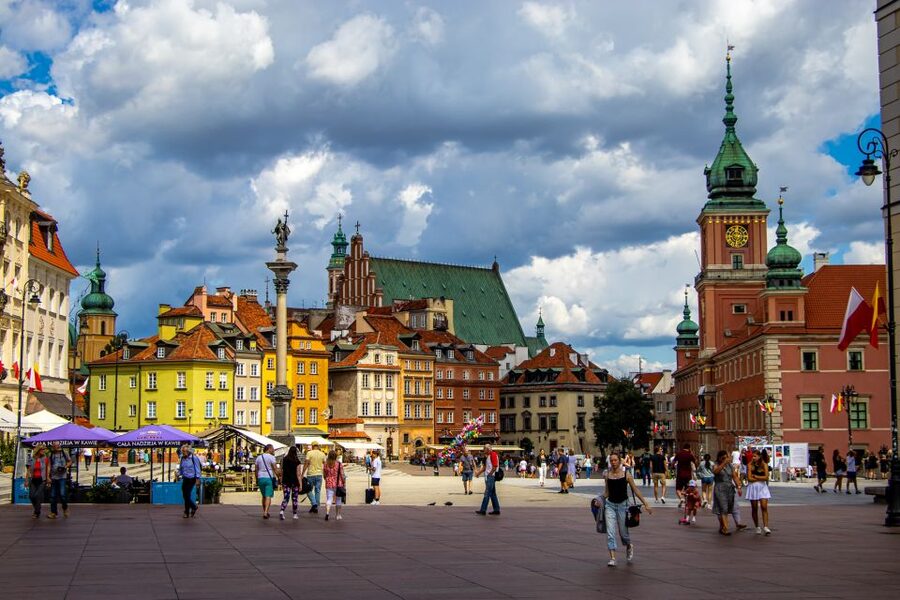
- The Old Town is rebuilt, not untouched: City walls, squares, and the reconstructed Royal Castle make more sense once you understand what Warsaw lost and rebuilt.
- The guides are the main strength: Humor, passion, clear English, and a good walking pace appear again and again in the feedback.
- Come prepared for two and a half hours outdoors: The tour runs in rain or cold, though the guide finds cover when needed.
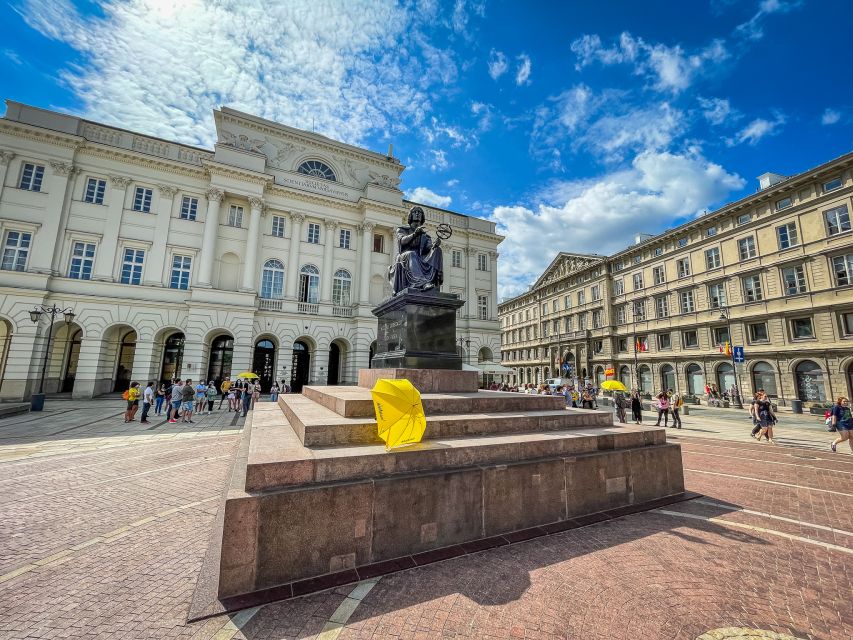
Starting beside Copernicus on Krakowskie Przedmieście
The meeting point is next to the Nicolaus Copernicus Monument at Krakowskie Przedmieście Street 2. Look for the guide carrying a yellow umbrella. That detail matters in a busy central area, and you should contact the operator promptly if you cannot find the group.
Copernicus is more than a convenient meeting point. His statue introduces one of the tour’s recurring themes: Warsaw and Poland are closely tied to people whose work reached far beyond the country. From here, the guide can place you on the Royal Route and begin explaining how the capital developed as a center of politics, education, culture, and trade.
The tour is guided in English, and the strongest part of the experience appears to be the individual guide rather than a fixed performance. Names vary, but the feedback repeatedly praises guides including Michael, Michal, Andrzej, Anna, Lucas, Jacek, Olivia, and Jack. Their styles differ, yet the common pattern is clear: expect a guide who explains rather than simply points.
You will be walking with a group, not taking a private sightseeing visit. That usually means a social atmosphere and a chance to hear questions from other people, but it also means the pace and amount of detail depend partly on the guide and group. If you want a slower, private experience, a smaller private tour can be arranged by request.
More Old Town Walking Tours in Poland
- Old Town Krakow & Wawel Castle Walking Tour
★ 5.0 · 1,508 reviews - Krakow: The Old Town Walking Tour
★ 4.8 · 794 reviews - Warsaw: Old Town Guided Walking Tour
★ 4.9 · 599 reviews
Krakowskie Przedmieście and the Royal Route
From the monument, the route follows Krakowskie Przedmieście, one of Warsaw’s most important ceremonial streets. This is where the tour begins to feel like a city walk rather than a checklist. You see grand buildings, historic institutions, and public spaces while the guide explains how the Royal Route links the center of Warsaw with areas farther south.
The street is especially useful for first-time visitors because it gives you a working map of central Warsaw. Instead of learning isolated facts, you begin to understand how the city’s political and cultural center fits together. The guide points out the Presidential Palace and Warsaw University buildings, both important for understanding modern Poland as well as its earlier periods.
I like this part because the route combines ordinary walking with context. You are not confined to one monument or museum room. You move through a public street where people use the city today, while the guide helps you read the buildings and spaces around you.
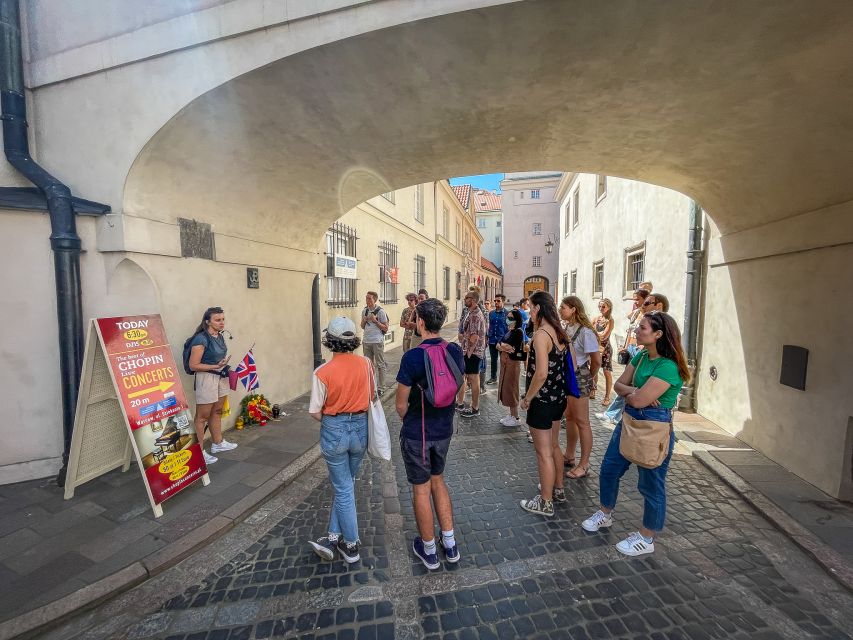
The tour also introduces famous Warsaw figures, including Fryderyk Chopin and Marie Curie. Chopin is particularly important because his connection to Warsaw remains visible in the city. You will see the place where his heart is buried, a small but moving detail that gives the composer a physical connection to the streets associated with his early life.
Marie Curie adds another layer. Her story helps show how Polish identity and achievement extend beyond the capital’s royal and military landmarks. The tour does not only focus on kings, castles, and battles. It also brings in artists, scientists, and the people who helped shape Poland’s reputation around the world.
The Presidential Palace and Warsaw’s political center
The Presidential Palace is one of the route’s major sights. Even if you do not enter, seeing it in context is useful. The guide explains why this part of the Royal Route matters to Poland’s political life and how Warsaw now functions as the country’s center of government and public affairs.
This is also where a good guide can help you avoid a common mistake: treating Warsaw as only an old European capital. The city has historic streets and reconstructed landmarks, but it is also a working capital tied to education, trade, tourism, and politics. The tour tries to hold both ideas together.
Expect information rather than a long indoor visit. The included experience is a guided walking tour, not entry to the Presidential Palace, Warsaw University buildings, or the Royal Castle. Food and drinks are also not included, so plan a café stop before or after the walk if you need a break.
The timing is useful. At 150 minutes, the tour is long enough to give serious context but short enough to fit into a busy Warsaw schedule. If you start in the morning, you can use the afternoon for a museum or another neighborhood. If you take it later, you should still have time for dinner and an evening walk.
Chopin, Marie Curie, and the people behind the monuments
Warsaw can sometimes feel like a city of large public symbols: monuments, palaces, walls, and official buildings. The references to Chopin and Marie Curie help bring the story down to a human scale.
The Chopin stop is especially worthwhile for anyone interested in music or Polish culture. Seeing where his heart is buried gives you a direct link to the city’s memory of him. It also shows how Warsaw honors its famous sons and daughters in small, personal ways, not only through huge statues.
The Marie Curie connection broadens the tour’s scope. You get a glimpse of Warsaw as a place shaped by ideas and achievement, not just by political power. Guides have been praised for answering questions, adding historical context, and explaining details that are easy to miss when you explore alone.
This is where the guide’s personality can make a real difference. Several guides have been praised for an actor’s way of presenting stories, a strong memory, and a good sense of humor. That matters during a history-heavy walk. A two-and-a-half-hour account of Poland’s past can become tiring if every stop is delivered in the same solemn tone.
The best feedback points to guides who know when to be serious and when to lighten the mood. That balance helps you keep listening, especially when the subject turns toward wartime destruction and national trauma.
Same streets, a different way to see them:
- Creepy Krakow: 2-Hour City Walking Tour
★ 4.7 · 1,131 reviews - Gdańsk City Sights & History Guided Walking Tour in English
★ 4.8 · 876 reviews - Krakow: Kazimierz Jewish Quarter Walking Tour
★ 4.8 · 571 reviews - Kraków: Old Town & Wawel Castle Walking Tour in English
★ 4.8 · 532 reviews
Entering the rebuilt Old Town
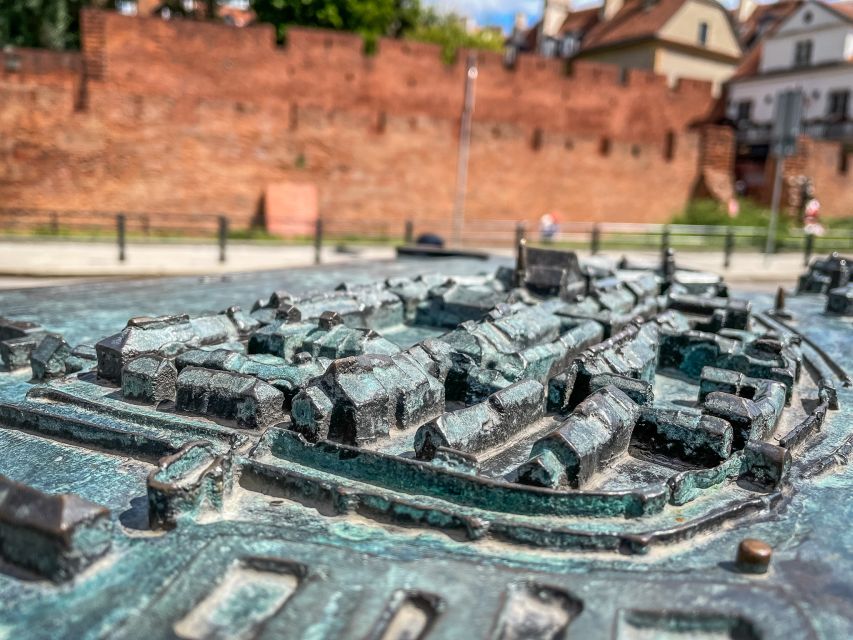
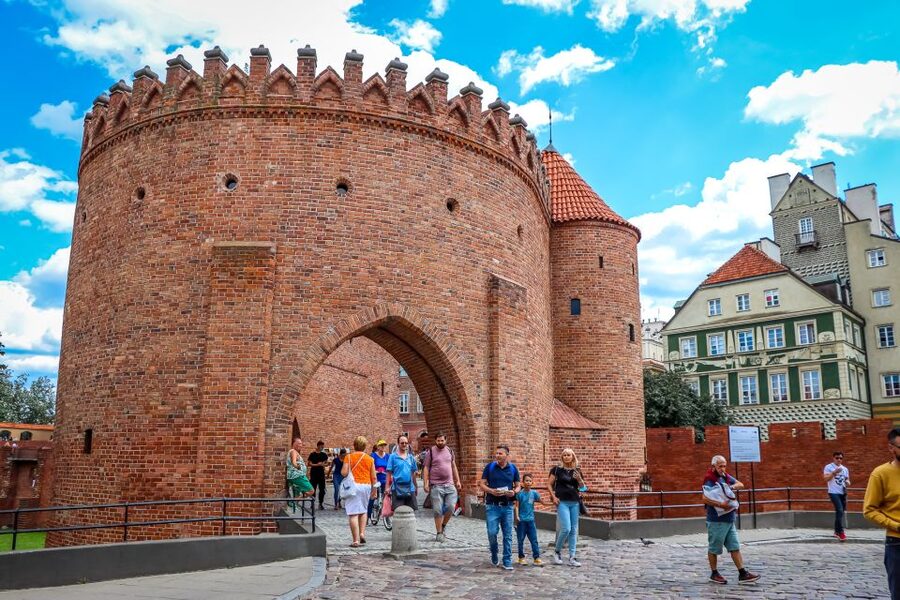
The walk eventually reaches Warsaw’s Old Town, enclosed by city walls and filled with colorful façades. This is the part most people expect from an Old Town tour, but it carries an important surprise: much of what you see was rebuilt after the city’s destruction.
The Royal Castle is the visual centerpiece. Its reconstruction is not a minor footnote. It is central to understanding Warsaw’s modern identity. The castle and Old Town show how the city rose from near-total ruin and chose to restore its historic appearance rather than leave the area as a memorial of destruction.
You will have time to admire the rebuilt architecture and hear why these places matter. The tour does not pretend the Old Town survived untouched. Instead, the buildings become evidence of a difficult decision: preserve the city’s historic character even after war had reduced much of it to rubble.
That makes the Old Town more meaningful than a pretty photo stop. You are looking at a place shaped by loss, memory, and reconstruction. The colorful streets are attractive, but the story underneath them is the real reason to pay attention.
The city walls add another useful layer. They help you understand the physical boundary of the historic center and give the walk a sense of progression. You move from the broad Royal Route into a more enclosed historic district, where the scale changes and the visual character becomes more intimate.
Do not expect the tour to cover every Old Town corner or provide extensive free time for shopping and photographs. The purpose is orientation and explanation. You can return later if you want to explore slowly, take pictures, or visit a specific site.
Warsaw’s two uprisings and the cost of war
The hardest part of the tour is also one of its most important. Your guide explains the two major uprisings against Nazi rule and how the fighting helped leave Warsaw in ruins. The history is complex, and a short walk cannot cover every political or military detail, but the tour gives you a framework for understanding the city.
This section helps explain why Warsaw looks both old and new. Rebuilt streets and restored façades are not simply signs of successful preservation. They also reflect the scale of what was lost during World War II and the work required to restore the capital.
The guide’s job here is to keep the story accurate without turning it into a string of dates. The strongest guides, including Andrzej, Michal, Michael, and Lucas, have been praised for bringing history to life, showing passion for Poland, and explaining difficult subjects with humor and perspective.
You should be ready for a serious tone at times. This is not a light architectural stroll. The tour deals with occupation, resistance, destruction, and rebuilding. That may be too much if you only want a quick photo walk, but it is exactly what makes the experience useful for understanding Warsaw.
I also appreciate that the tour connects past and present. After the wartime story, Warsaw is presented as a modern capital at the center of European trade, education, tourism, and politics. The point is not to erase the tragedy, but to show how the city continued and rebuilt.
How the guides shape the experience
The guide is the deciding factor here. The route is strong, but the same streets can feel flat if the person leading them reads out dates without explanation. The available feedback suggests a high level of consistency across the guiding team.
Michael is praised for historical detail and an easygoing manner. Andrzej is described as engaging, passionate, funny, and clear. Michal is praised for explaining the history of each place, while Anna is described as friendly and entertaining. Lucas receives credit for making Polish history and people feel more approachable.
Other names appear often as well. Olivia is praised for combining information with humor and useful tips. Jack is described as an energetic storyteller who kept the group interested even in rain. Jacek, Agnieszka, Ana, and Jedrzej also receive warm praise for clear explanations, enthusiasm, and strong English.
The repeated theme is not just factual knowledge. It is presentation. Guides are described as funny, passionate, articulate, and able to keep a good pace. One guide was even praised for helping a repeat visitor learn new things after several trips to Warsaw.
That said, a general group tour cannot guarantee a particular guide. You should book it for the route and format, then treat the guide’s personality as an important bonus rather than a promised feature.
Pace, weather, and practical comfort
Bring comfortable shoes. You will be outside for most of the 150 minutes, and the route includes continuous city walking rather than short transfers between indoor attractions.
The tour runs rain or shine. In cold or wet conditions, the guide looks for cover, and one account describes the group continuing through rain while still keeping to the planned timing. That is helpful, but it does not make weather irrelevant. Wear suitable clothing and check the forecast before you leave.
Warm weather also deserves attention. On sunny days, guides may stop in shaded areas when possible, but you should still prepare for outdoor walking. There is no mention of food or drink being included, so carry what you need for the walk.
The tour is wheelchair accessible, which makes it a useful option for people who need an accessible format. Still, you may want to confirm the details of the route for your own needs before booking, especially if weather affects where the group can pause.
The pace has generally been described as good, fast, or comfortable. That means you should not expect long pauses at every landmark. If you want a slow photographic tour, this may feel brisk. If you want to see the main sights and learn the story in one session, the pace should work well.
Is $26 good value for 150 minutes?
At $26 per person, the value depends on what you want from a city walk. You are paying for an English-speaking guide, a planned route, and historical interpretation across several major areas. You are not paying for entry tickets, meals, transport, or hotel pickup.
For a first day in Warsaw, the price is reasonable because the walk covers several districts and themes in one booking. You see the Royal Route, the Presidential Palace, Warsaw University buildings, the Chopin connection, the Old Town, the city walls, and the reconstructed Royal Castle area.
The pay-as-you-wish format needs careful reading. The booking price covers the reservation fee and guide’s payment, according to the tour information, so it is not simply a free walk where you are expected to decide the entire payment afterward. If you want a smaller private group, you can ask the operator to arrange one.
The value is strongest for people who want context. If you only need directions to the Old Town, you can walk there independently. If you want to understand why Warsaw looks the way it does and how the city’s famous people and wartime history fit together, the guide adds real value.
Free cancellation up to 24 hours before the tour and the option to reserve now and pay later also make it easier to fit into a changing itinerary. Those policies are useful, but the main reason to choose the tour is the quality of the explanation.
Who should book this Warsaw walk?
I would choose this tour if you are visiting Warsaw for the first time, have limited time, or want a clear historical base before visiting museums and memorial sites. It is also a good fit if you enjoy stories, public buildings, and walking through a city while learning how it changed.
It suits people who like a lively guide. The best accounts describe humor, energy, strong English, and a passion for Poland. Families with older children, couples, solo visitors, and small groups can all find value in that format.
It may be less suitable if you dislike group tours, cannot walk outdoors for two and a half hours, or want extensive time inside monuments. It is also not the right choice for someone seeking a food tour, a private vehicle, or a museum-led experience.
Should you book the Old Town Highlights Walking Tour?
Book it if you want Warsaw explained as a living city, not just photographed as a restored old quarter. The route gives you a useful first orientation, and the best guides turn Copernicus, Chopin, Marie Curie, the Royal Castle, and the wartime uprisings into one connected story.
Wear good shoes, dress for the forecast, and arrive beside the Copernicus Monument with enough time to find the yellow umbrella. If you have only one day in Warsaw, this is a strong way to begin. If you already know the city well, choose it for the guide and historical perspective rather than for discovering every landmark for the first time.
FAQ
How long is the Warsaw Old Town Highlights Walking Tour?
The tour lasts 150 minutes, or two and a half hours.
What language is the tour conducted in?
The live guided tour is conducted in English.
Where is the meeting point?
Meet next to the Nicolaus Copernicus Monument on Krakowskie Przedmieście Street 2. Look for the guide with a yellow umbrella.
What sights are included on the walk?
The route includes the Royal Route, the Presidential Palace, Warsaw University buildings, Krakowskie Przedmieście, the place where Chopin’s heart is buried, the Old Town, the city walls, and the reconstructed Royal Castle area.
Is the tour wheelchair accessible?
Yes, the tour is listed as wheelchair accessible.
What should I bring?
Bring comfortable shoes. Since the tour takes place outdoors in rain or cold, you should also dress suitably for the weather.
Are hotel pickup, food, and drinks included?
No. Hotel pickup and drop-off, food, and drinks are not included.
More City Highlights Walking Tours in Poland
- Krakow: Old Town Highlights Walking Tour
★ 4.5 · 173 reviews - Krakow: Old Town Highlights Private Walking Tour
★ 4.9 · 79 reviews - Szczecin: Old Town Highlights Private Walking Tour
★ 4.7 · 76 reviews - Historic Charleston Guided Sightseeing Walking Tour
★ 5.0 · 6,216 reviews
Just added around Poland
- Krakow: Jewish Quarter Guided Walking Tour★ 4.8 · 119 reviews
- Szczecin: Old Town Highlights Private Walking Tour★ 4.7 · 76 reviews
- Old Town Poznan: Guided Walking Tour in English★ 4.6 · 78 reviews
- Krakow: Old Town Guided Walking Tour★ 4.6 · 94 reviews
- Krakow: Old Town Highlights Walking Tour★ 4.5 · 173 reviews
- Krakow: Street Food Walking Tour★ 4.8 · 285 reviews
- Kraków: Old Town & Wawel Castle Walking Tour in English★ 4.8 · 532 reviews
- Krakow: 2h Kazimierz (Jewish Quarter) Walking Tour★ 4.5 · 75 reviews
Old Town Walking Tours, compared.
Underground Vaults Walking Tour in Edinburgh Old Town
Read our review →
3-Hour Walking Tour of Old Town & Prague Castle
Read our review →
Old Town and Jewish Quarter Guided Walking Tour
Read our review →
Cartagena: Historic Center and Getsemaní Shared Walking Tour
Read our review →Browse the lists this tour appears in