
Review · HISTORY WALKING TOURS
Gdańsk City Sights & History Guided Walking Tour in English
Gdańsk rewards a closer look. This 150-minute walk links the city’s grandest sights with the stories behind them, from royal processions along the old route to the first shots of World War II and the Solidarity movement. I especially like the focus on rebuilt merchant houses and the way guides connect Gdańsk’s Polish, Dutch, and German influences.
I also like the strong guide-led storytelling. Guides such as Tufi, Kate, Sandra, Marcin, and Philip have been praised for clear English, humor, and real affection for the city. The main drawback is that this is a general walking tour, so groups can become large, and the full 2.5 hours may feel long if you prefer quick photo stops over detailed history.
Key points at a glance
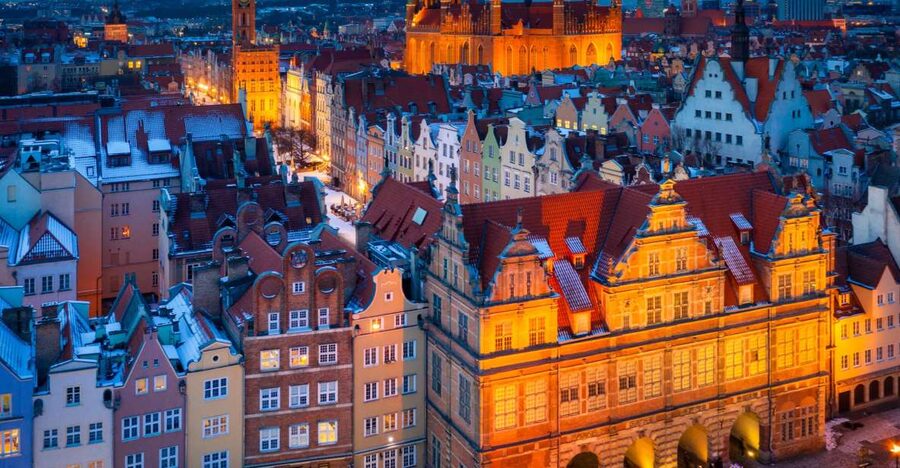
- Royal route through the old town: Follow the path once used by Poland’s kings, beginning at the Golden Gate.
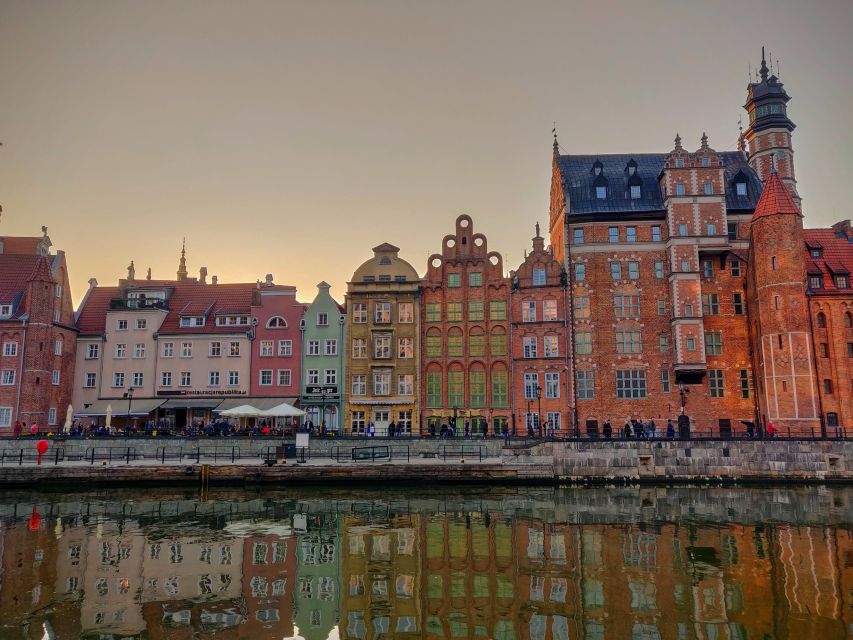
- Neptune Fountain and Long Market: See Gdańsk’s most famous public square, lined with colorful merchant houses rebuilt after wartime destruction.
- St. Mary’s Basilica: Admire the brick Gothic church, described as the largest of its kind in the world, and possibly catch its clock figures at noon.
- Zuraw crane by the harbor: View the medieval treadwheel crane, one of the city’s clearest symbols and the largest of its type.
- History beyond the pretty streets: Learn how World War II began here and how Solidarity helped bring down communism in Eastern Europe.
- Good value at $26: You get 150 minutes with an English-speaking guide, though the general group format may not suit everyone.
Starting at the Golden Gate
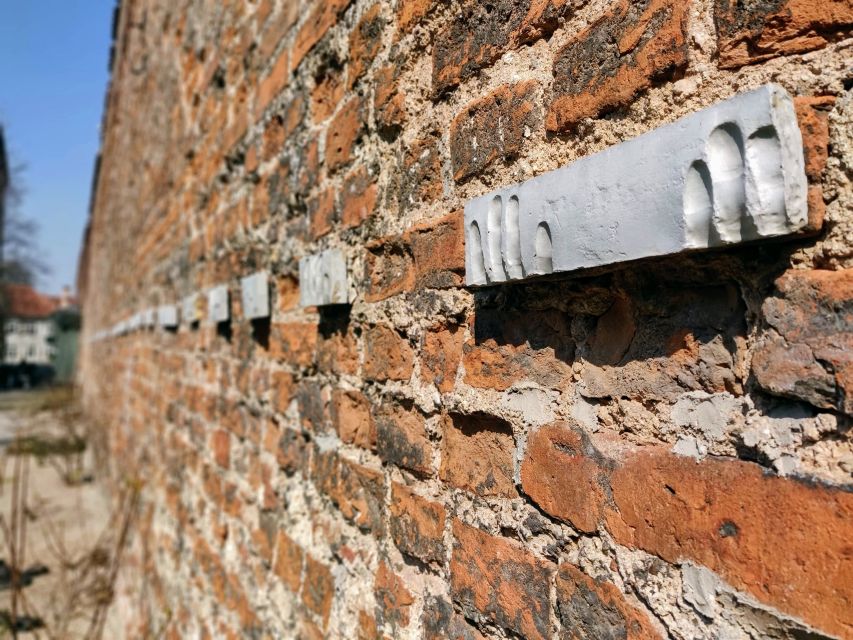
The tour begins at the Golden Gate, or Złota Brama. Look for the yellow umbrella, the key marker at this busy meeting point. The gate gives you an immediate sense of Gdańsk’s old ceremonial role, since the walk follows a historic route used by Polish kings.
This is a smart place to begin. Rather than dropping you into a random corner of the old town, the guide sets up the city’s political and commercial importance from the start. Gdańsk was not simply a pretty port. It sat at a crossroads of Polish, Dutch, and German culture, and its wealth came from trade across the Baltic Sea.
The opening section also helps you read the architecture. The tall, narrow townhouses were built for merchants, with decorative fronts that advertised status and prosperity. Their present appearance can be misleading. Much of the historic center was destroyed during World War II, then rebuilt with extraordinary care. The guide’s explanation gives those handsome façades more weight than a quick photo stop can provide.
Bring a little patience here. The tour is designed to explain, not just point. Several guides have been praised for adding family stories, personal observations, and humor to the facts, which helps keep the early historical material from becoming a list of dates.
More History Walking Tours in Poland:
- Warsaw: Jewish History Guided Walking Tour in English
★ 4.7 · 324 reviews - History and Hauntings of Salem Guided Walking Tour
★ 5.0 · 14,564 reviews - Lisbon: History, Stories and Lifestyle Walking Tour
★ 4.8 · 10,902 reviews
Long Market and the Neptune Fountain
From the Golden Gate, you move toward Long Market, or Długi Targ. This is one of Gdańsk’s grandest public spaces, framed by ornate façades and historic buildings. The route is highly photogenic, but its real interest comes from understanding how this area functioned as a commercial and civic center.
The Neptune Fountain is the obvious centerpiece. Neptune links the city to the sea, trade, and its port identity. Your guide uses the fountain as a way into Gdańsk’s relationship with the Baltic, including the period when the city became one of the wealthiest ports in the region.
I like this part of the walk because it gives you a useful framework for the rest of your stay. You start to notice the practical side of the architecture: narrow fronts, tall buildings, elaborate decoration, and the impression that the entire street was built to show off commercial success.
The rebuilt setting also raises a useful question about authenticity. You are not seeing an untouched medieval town. You are seeing a carefully reconstructed historic center, and the guide explains that distinction rather than glossing over it. For many people, that is one of the most worthwhile parts of the tour.
St. Mary’s Basilica and the city from inside
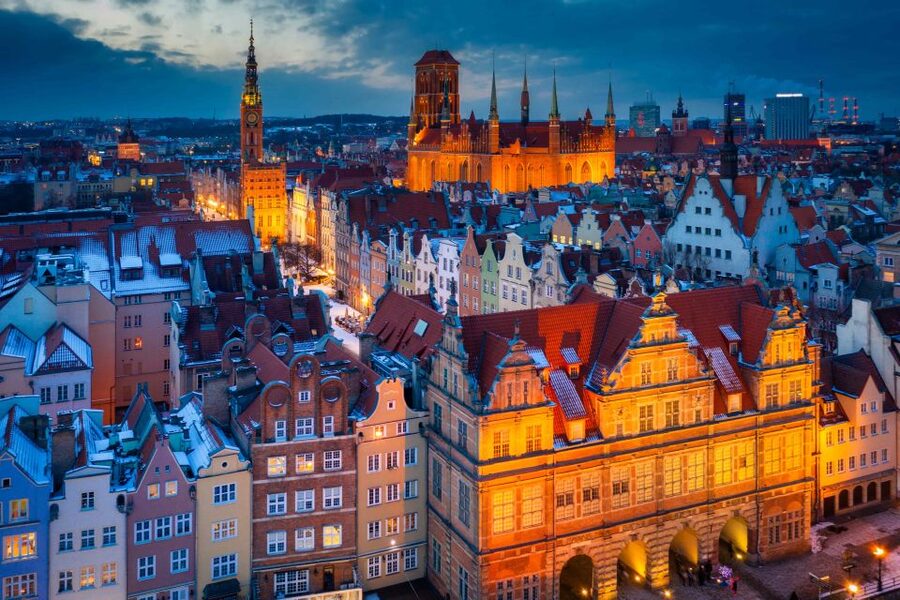
St. Mary’s Basilica is one of the tour’s major stops. Its brick Gothic construction is impressive even before you know that it is described as the largest brick Gothic church in the world. The scale is difficult to grasp from photographs, so seeing the walls and structure in person matters.
The guide discusses the church as part of Gdańsk’s religious and civic story, not just as an architectural stop. You should have time to take in the exterior and, depending on the route and timing, enter for a closer look. The precise amount of time inside can vary, so do not treat the tour as a full church visit.
Several guides have timed the walk to catch the figures moving on the church clock at noon. That is a small but memorable touch. If your tour reaches the basilica at the right time, you may see the mechanism in action. It is worth keeping an eye on the clock rather than assuming the guide will pause for it.
The basilica stop also shows the benefit of having a live guide. You can ask about the building, the city, or later places to visit. Guides including Katie, Sandra, Tufi, and Philip have been praised for answering questions clearly and offering useful suggestions for the rest of a Gdańsk stay.
The Zuraw crane and Gdańsk’s working harbor
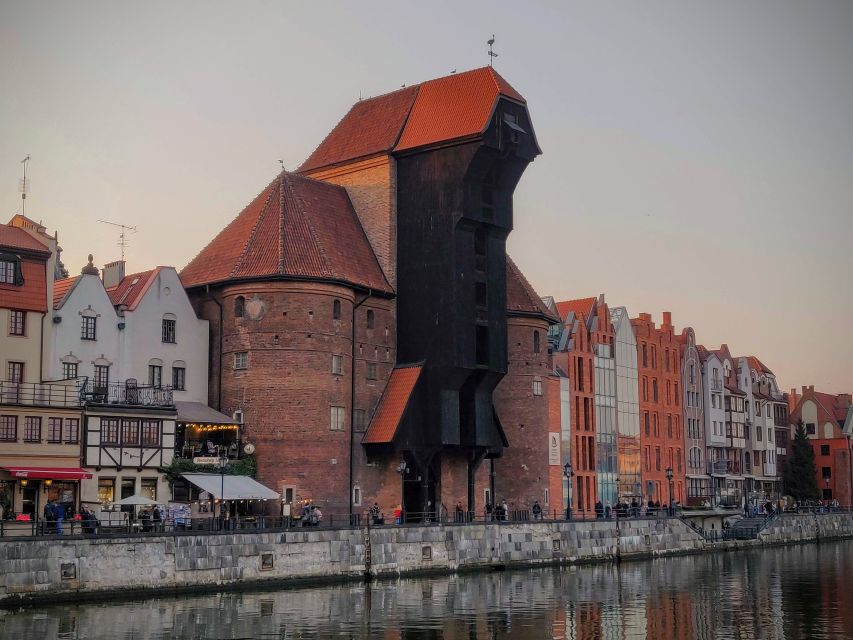
The walk continues toward the water and the Zuraw crane, a medieval treadwheel crane that has become one of Gdańsk’s defining symbols. Its wooden structure looks unusual beside the river, and it helps explain how the city handled cargo before modern machinery.
This is not simply a waterfront photo opportunity. The crane gives the guide a practical way to explain Gdańsk as a working port. The city’s wealth depended on ships, merchants, storage, loading, and access to the Baltic. You can also see rivers and canals along this part of the route, which helps connect the old town to its commercial purpose.
The crane is described as the largest of its kind in the world. Even if you are not especially interested in engineering, the stop adds variety to the tour. After streets, façades, and churches, you get a piece of working medieval infrastructure.
The waterfront can also be exposed to cold and wind. Winter accounts describe temperatures as low as minus 8 Celsius with wind chill, yet guides continued the walk and adjusted the pace. Dress for the forecast, not for the attractive old-town photographs you may have seen online.
More City Highlights Walking Tours in Poland:
- Warsaw: Old Town Highlights Walking Tour in English
★ 4.7 · 1,516 reviews - Krakow: Old Town Highlights Walking Tour
★ 4.5 · 173 reviews - Krakow: Old Town Highlights Private Walking Tour
★ 4.9 · 79 reviews - Szczecin: Old Town Highlights Private Walking Tour
★ 4.7 · 76 reviews
World War II, the Polish Post, and difficult memory
Gdańsk’s beauty can make it easy to forget how much conflict shaped the city. One of the tour’s strongest features is the explanation of how World War II began in and around the city, along with the wider political tensions that made Gdańsk such a sensitive place.
The walk includes historical discussion of the Polish Post battles, which one guide explained with particular force. This is the kind of subject that benefits from context. You learn not only what happened, but why the city’s mixed identity, political status, and strategic location mattered.
The tour does not treat history as a smooth line from medieval wealth to modern tourism. It covers destruction, rebuilding, political pressure, and changing ideas of independence. That makes the grand streets feel more human and less like a museum set.
This section can be heavy, especially when packed into a two-and-a-half-hour route. One person found that there was almost too much history to absorb at once. I agree that you should not expect to remember every date. The value is in getting a clear outline, then choosing which subjects to explore later.
Solidarity and Gdańsk’s long push for independence
The final historical thread is the Solidarity movement and its role in the collapse of communism across Eastern Europe. This gives the tour a modern finish and shows that Gdańsk’s story did not end with medieval trade or wartime destruction.
The idea of independence appears throughout the walk. The city’s changing loyalties, its cultural mix, its port economy, and its political struggles all feed into the modern story. The Solidarity section helps you see Gdańsk as a place where ordinary workers and political forces changed the direction of Europe.
I appreciate that the tour includes this recent history rather than stopping at the old town’s attractive architecture. For a first visit, it makes the city easier to understand. You leave with a sense of why Gdańsk matters to Poland today, not just why it looks good in photographs.
If you plan to visit other historic sites during your stay, do this walk early. Guides often suggest places to eat and additional sights, and the broad overview can help you decide how to spend the rest of your time.
Guide quality and group size
The guide is the main reason this tour earns such strong praise. The best guides make the 150 minutes feel shorter by mixing clear explanations with humor, personal stories, and time for questions. Tufi has been repeatedly praised for his energy and passion, while Kate has impressed people with her clarity, humor, and ability to explain centuries of change without losing the thread.
Other well-regarded guides include Sandra, Marcin, Philip, Paul, Katie, Sophia, Isabella, and Zosia. Names may vary by departure, so you should not book on the assumption that one particular guide will lead your walk.
English clarity is another strength. The tour is delivered in English, and several guides have been praised for speaking clearly and answering questions willingly. That matters on a history-heavy walk, where a soft voice or rushed explanation can quickly leave you behind.
The group format needs a little explanation. The $26 booking covers a place on the general walking tour, the reservation fee, and the guide’s payment. It is not a private walk. One account described a group of eight or nine, while another found a larger group cumbersome at certain stops. Your experience may depend on the date and demand.
If you want a smaller private tour, the supplier can help organize one after booking. Expect that to be a different arrangement and likely a different price. For most people, the general tour offers the better value, but anyone who dislikes crowds should ask about the private option.
Weather, walking pace, and practical comfort
The tour runs in rain or shine. That is worth taking seriously in Gdańsk, where winter cold and wind can make two and a half hours outdoors feel much longer.
Wear weather-appropriate clothing and comfortable shoes. A warm coat, gloves, and a hat matter in winter, while rain protection is useful in any season. The walk includes streets, public squares, and waterfront areas, so conditions can change during the route.
Guides have adapted well to difficult weather. On cold days, they have brought groups indoors for parts of the explanation and arranged a coffee or mulled wine break. One guide paused halfway through so the group could warm up, and another made room for a bathroom or coffee stop.
These breaks are not guaranteed as a fixed part of every departure. They depend on weather, timing, and the guide. Still, the reports suggest that the staff pay attention to comfort rather than stubbornly pushing through a miserable day.
The tour is listed as wheelchair accessible. Because it takes place in public streets and near the waterfront, you should still confirm any specific mobility needs before booking. Hotel pickup and drop-off are not included, so plan your route to and from the Golden Gate.
Is $26 good value?
At $26 per person, this is a strong value if you want a serious introduction to Gdańsk. You get 150 minutes, a live English-speaking guide, major old-town sights, waterfront views, and a clear explanation of the city’s role in Polish and European history.
The value is not just the number of stops. A self-guided walk would show you Long Market, Neptune, St. Mary’s, and the Zuraw crane, but it would not automatically explain how trade, war, reconstruction, and Solidarity fit together. The guide turns separate sights into one story.
The general group setup keeps the price reasonable. The tradeoff is less personal attention and a greater chance of crowding at busy places. If you want to ask many detailed questions or move at your own pace, a private tour may suit you better.
There has also been some confusion about payment expectations because the format resembles a free walking tour. The booking information says your $26 covers the reservation and guide payment. Before the walk begins, listen carefully to the guide’s explanation so you know how the local arrangement works.
Who should book this Gdańsk walk?
I would recommend it to first-time visitors, history fans, cruise or short-stay visitors, and anyone who wants a useful orientation before exploring alone. It is especially good for you if architecture interests you but you also want the political story behind the buildings.
Families and mixed-age groups may enjoy the humor and frequent changes of setting, though younger children may find the historical explanations long. People with limited stamina should note the 150-minute duration and outdoor format.
You may want a different option if you have already taken a detailed Gdańsk tour, dislike group walks, or prefer to spend most of your time inside museums. The content is thorough, and one person felt the historical material was almost too much for a single outing.
Should you book the Gdańsk City Sights and History Tour?
Yes, if you want to understand Gdańsk rather than simply photograph it. The tour combines the city’s best-known sights with the less comfortable stories of war, rebuilding, political struggle, and independence.
Book it near the start of your stay if possible. You will get a useful map in your head, practical recommendations from the guide, and a better sense of which museums and neighborhoods deserve more of your time.
Bring warm or waterproof clothing, expect a general group, and allow the full 150 minutes. At $26, this is a well-priced way to get your bearings and hear the city explained by someone who cares about it.
FAQ
Where does the walking tour meet?
The meeting point is the Golden Gate, known locally as Złota Brama. Look for a yellow umbrella.
How long does the tour last?
The tour lasts 150 minutes, or two and a half hours.
What language is the tour in?
The live tour guide speaks English.
What sights are included?
The route includes the Golden Gate, Long Market, the Neptune Fountain, St. Mary’s Basilica, the Zuraw crane, rivers and canals, and historic areas of the old town.
Does the tour discuss World War II?
Yes. The guide explains how World War II began in Gdańsk and discusses wartime events connected with the city, including the Polish Post battles.
Does the tour cover the Solidarity movement?
Yes. The tour explains how the Solidarity movement contributed to the fall of communism in Eastern Europe.
Is hotel pickup included?
No. Hotel pickup and drop-off are not included.
Is the tour wheelchair accessible?
The activity is listed as wheelchair accessible.
What should I bring?
Bring weather-appropriate clothing. The tour runs outdoors and takes place in rain or shine.
Can I cancel or pay later?
You can cancel up to 24 hours before the tour for a full refund. You can also reserve now and pay later, so no payment is required at the time of reservation.
Just added around Poland
- Krakow: Jewish Quarter Guided Walking Tour★ 4.8 · 119 reviews
- Szczecin: Old Town Highlights Private Walking Tour★ 4.7 · 76 reviews
- Old Town Poznan: Guided Walking Tour in English★ 4.6 · 78 reviews
- Krakow: Old Town Guided Walking Tour★ 4.6 · 94 reviews
- Krakow: Old Town Highlights Walking Tour★ 4.5 · 173 reviews
- Krakow: Street Food Walking Tour★ 4.8 · 285 reviews
- Kraków: Old Town & Wawel Castle Walking Tour in English★ 4.8 · 532 reviews
- Krakow: 2h Kazimierz (Jewish Quarter) Walking Tour★ 4.5 · 75 reviews
History Walking Tours, compared.
History and Hauntings of Salem Guided Walking Tour
Read our review →

Freedom Trail History Small Group Walking Tour
Read our review →
Historic Charleston Guided Sightseeing Walking Tour
Read our review →
Tapas Walking Tour with Food, Wine, and History
Read our review →
Savannah History and Haunts Candlelit Ghost Walking Tour
Read our review →
A History of Terror – Belfast City Centre Walking Tour
Read our review →Browse the lists this tour appears in