
Review · OLD TOWN WALKING TOURS
Old Town Poznan: Guided Walking Tour in English
Poznań rewards curious walkers. This two-hour English tour links the city’s main historic sights with the story of Polish statehood, Prussian rule, local enterprise, and modern university life. I like the easy-to-find meeting point at Freedom Square and the way the route brings together grand architecture, local stories, and useful advice for the rest of your visit.
I also like the friendly, lively guiding style reported by people who joined Susan, Jenna, Margret, and Svetlana. The main consideration is that this is a general pay-as-you-wish walk, so the listed $26 price covers the reservation and guide payment rather than functioning like a conventional fixed-price sightseeing ticket.
Key points to know before you go
- Freedom Square makes the start simple: Meet beside the fountain and look for the guide with a yellow umbrella.
- The two-hour route covers Poznań’s essential center: You visit Liberty Square, the Royal Castle, Old Market Square, the Pranger, the Old City Hall, colorful town houses, and the Parish Church.
- History gets a local angle: The tour connects trade, Polish statehood, Prussian control, Germanization, education, business, and modern city life.
- Guides are a major strength: Susan, Jenna, Margret, and Svetlana are among the guides specifically praised for clear explanations, warmth, humor, and practical tips.
- The pace suits a first look: Two hours gives you a useful introduction without taking up most of your day.
- Groups may be divided when demand is high: That can make the talk easier to follow and reduce the usual crowd around a single guide.
Why Poznań makes a strong walking-tour city
Poznań is often described as the cradle of Polish statehood, and that claim gives the walk a useful sense of purpose. You are not simply moving from one attractive square to the next. The sights help explain how the city grew at the meeting point of trade routes, how it became prosperous, and why its character feels practical and grounded.
The city’s position helped shape its fortunes. Trade brought money, building projects, and contact with other parts of Europe. You can still see that commercial past in the Old Market Square, where the colorful façades and formal civic buildings create one of Poland’s most memorable urban scenes.
Poznań also gives you a different way to think about Poland’s partition period. At the end of the 18th century, the city became part of Prussia. Polish people faced persecution and pressure to adopt German language and culture, but local resistance was not limited to armed revolt.
The response also took the form of schools, social organizations, business projects, and economic development. That background helps explain the city’s reputation for practicality and enterprise. A good guide can make these ideas feel connected rather than presenting a string of disconnected dates.
The same city now functions as one of Poland’s major economic and cultural centers. Its international fairs and large student population give the center an active feel. You get a glimpse of that present-day energy during a tour that is firmly rooted in the past.
More Old Town Walking Tours in Poland
- Warsaw: Old Town Highlights Walking Tour in English
★ 4.7 · 1,516 reviews - Old Town Krakow & Wawel Castle Walking Tour
★ 5.0 · 1,508 reviews - Krakow: The Old Town Walking Tour
★ 4.8 · 794 reviews
Starting at Liberty Square beside the fountain
Your meeting point is Plac Wolności, or Freedom Square, beside the fountain. Look for the yellow umbrella and arrive about 10 minutes before the start.
This is a sensible place to begin because it is central and easy to identify. You do not need to search for a hotel lobby or wait for a complicated transfer. The guide gathers the group in an open public space, then sets the tone for the walk.
Liberty Square also helps frame the contrast between Poznań’s older and newer periods. The name carries ideas of civic life and political change, while the surrounding center leads you toward the historic core. Your guide may use this opening to explain how Poznań developed and why its location mattered.
I would arrive early if you want to hear the introduction clearly and avoid standing at the edge of the group. The meeting spot is simple, but a busy square can still make it easier to miss a guide if you arrive at the last second.
The Royal Castle and Poznań’s changing power
The Royal Castle is one of the tour’s important reminders that Poznań was more than a trading town. Royal authority, local government, commerce, and religious influence all shaped the city, and the castle helps place Poznań within the wider story of Polish rule.
The value here is not only the building itself. The castle gives your guide a natural place to discuss how the city’s importance changed over time. It also provides a bridge between the early history of Polish statehood and the later history of a city influenced by Prussia and Germany.
You should think of this stop as part of the wider street lesson rather than a separate museum visit. The tour is a guided walk, and admission to indoor attractions is not listed as part of the experience. If you want extended time inside the castle, you would need to arrange that separately.
That limitation is worth keeping in mind. The walk is best for context, orientation, and exterior views. It is not designed as a detailed examination of every interior or collection.
Old Market Square, where the city shows its wealth
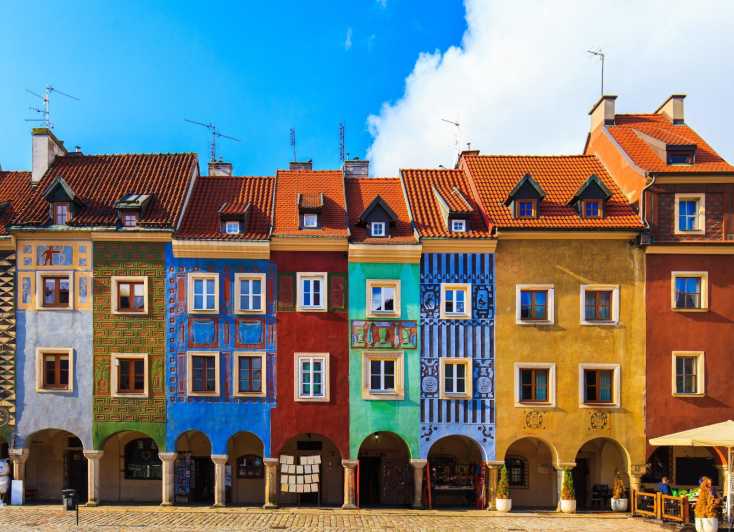
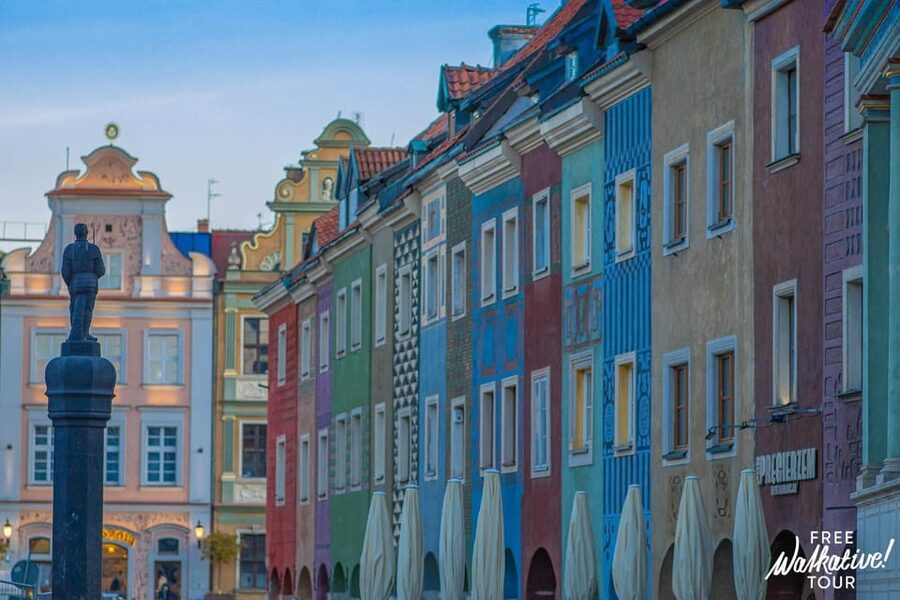
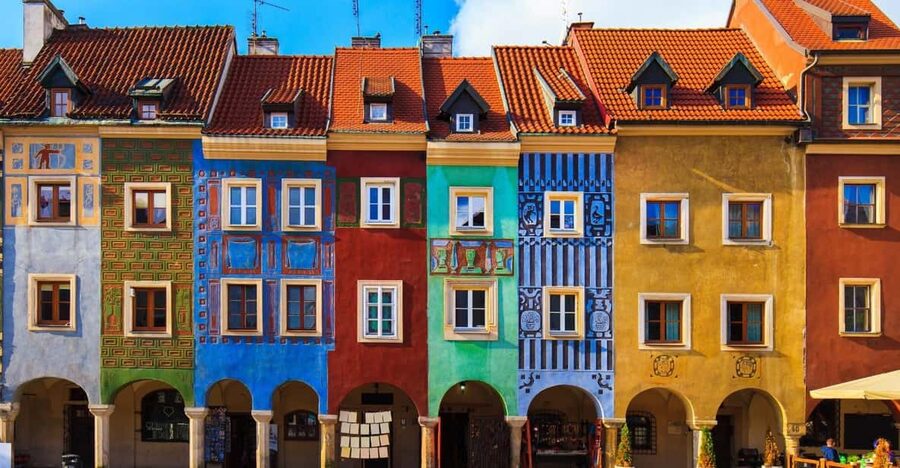
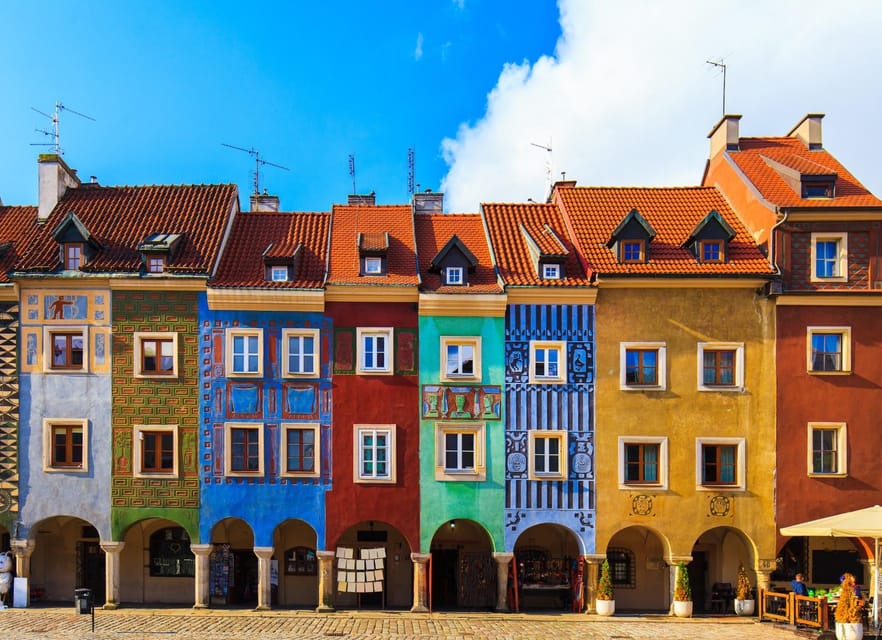
Old Market Square is the visual centerpiece of the walk. Its colorful town houses and carefully arranged civic buildings show how trade shaped the city’s appearance.
This is where the tour’s theme of entrepreneurship becomes easy to understand. A market square was not merely a pretty gathering place. It was a working center for buying, selling, meeting, governing, and displaying the success of local merchants.
The square’s colors give Poznań a distinctive feel, but the guide’s explanation adds weight to the view. You can learn how commercial success affected the architecture and why this area became such a strong symbol of the city.
The Pranger adds another layer. This historic column, connected with civic justice and punishment, is a reminder that old town centers were places of authority as well as trade. It gives the guide a chance to move from attractive façades to the rules that governed daily life.
I like this combination. You get the postcard view, but you also receive a reason to look more closely at what you are seeing. Watch for small architectural details and differences between the town houses. The tour may not stop at every façade for a long time, so keep your eyes working while the guide speaks.
Same streets, a different way to see them:
- Creepy Krakow: 2-Hour City Walking Tour
★ 4.7 · 1,131 reviews - Gdańsk City Sights & History Guided Walking Tour in English
★ 4.8 · 876 reviews - Warsaw: Old Town Guided Walking Tour
★ 4.9 · 599 reviews - Krakow: Kazimierz Jewish Quarter Walking Tour
★ 4.8 · 571 reviews
Old City Hall and the colorful town houses
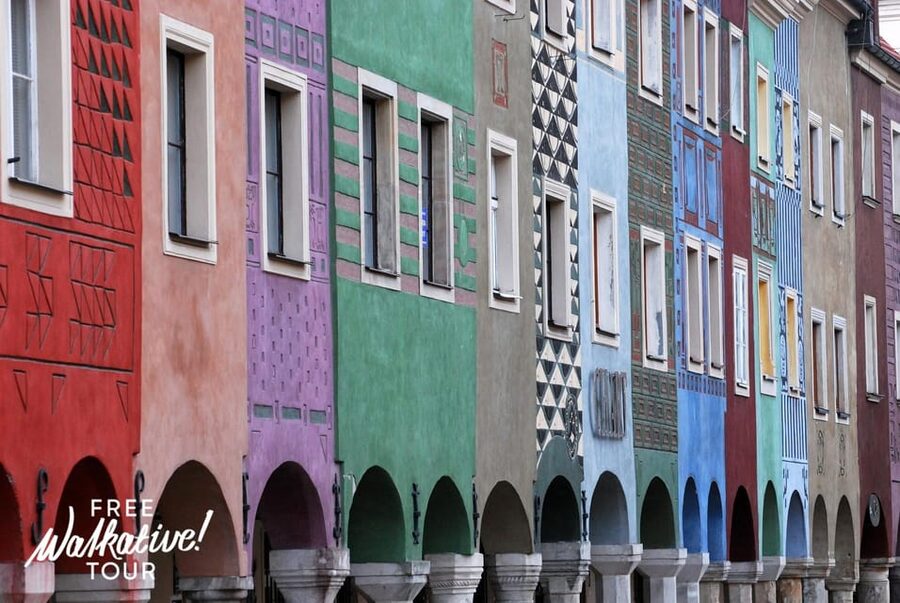
The Old City Hall is a major highlight and one of the clearest signs of Poznań’s former wealth. Its ornate appearance contrasts with the more practical idea of a market square as a place of business.
This is a useful moment to consider who controlled the city and how civic pride was expressed. A grand city hall says that local government and commerce had enough power and money to create an impressive public face.
The surrounding town houses complete the picture. Their narrow fronts and bright colors make the square memorable, but they also point to a dense urban center where merchants, officials, and residents lived close to the main civic space.
Guides such as Susan and Jenna were praised for packing in facts without losing a friendly tone. That matters here, because the architecture offers more information than you can absorb at a glance. A clear explanation helps you understand why the buildings look as they do instead of treating them as background for photographs.
The main drawback is simple: a busy square can be noisy and crowded. If the group is large, you may need to stand close to the guide to catch every detail. One useful feature is that groups have been split into two when numbers were high, making the talk easier to follow.
The Parish Church and the religious side of the city
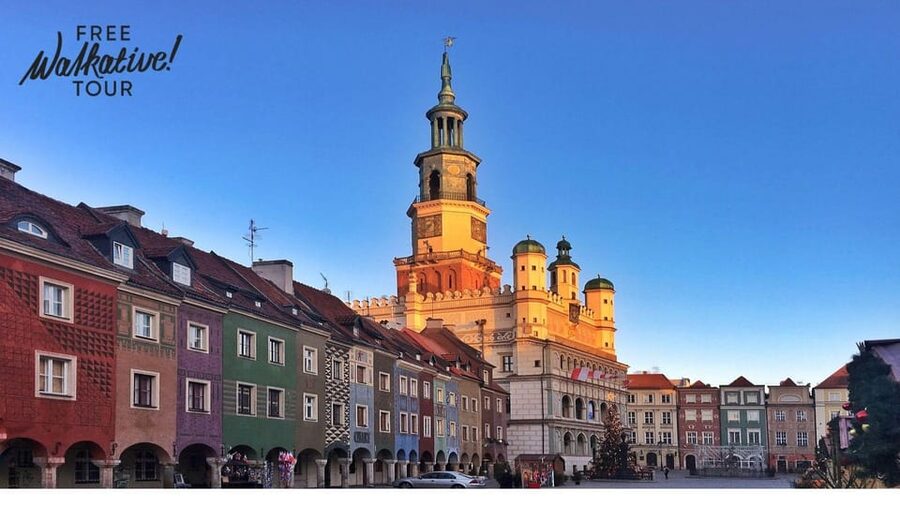
The Parish Church brings religious life into the route. Along with royal power and merchant wealth, the church helped shape Poznań’s identity and public life.
The stop is especially valuable because it balances the commercial focus of the Old Market Square. You see that the city was not built only around trade. Faith, community, education, and civic authority all had a place in the historic center.
The tour information does not promise an extended interior visit, so you should expect the guide to explain the church as part of the walking route rather than provide a full architectural study. Still, it is a useful stop for understanding how different institutions shared the city.
This is also the sort of place where a good guide can add local stories. Svetlana was praised for combining Polish history and culture with interesting local details, humor, and suggestions for places to visit. That kind of delivery can make a familiar church stop more memorable.
The story of Prussian rule and Polish resilience
The tour’s strongest subject may be the period after Poznań became part of Prussia. This gives the walk emotional and political depth without requiring you to visit a separate museum.
Poles faced persecution and Germanization during the partitions. Yet the local answer also included schools, social work, economic projects, and organized development. The lesson is practical: communities can protect their identity through institutions, not only through dramatic acts of rebellion.
This background helps explain why Poznań can feel more grounded than other parts of Poland. The city’s sense of identity grew through sustained effort in education, society, and business. You are likely to get more from the tour if you listen for those connections rather than focusing only on royal dates.
The subject can be serious, but the guides appear to keep the tone accessible. People praised the tours as informative, interactive, and fun, with guide personalities adding warmth to difficult chapters.
What the guides add to the experience
The guide is the main reason to book this walk instead of following a map alone. The route itself is compact, but the stories connect the buildings.
Susan was praised for delivering a large number of facts with lively energy. Jenna was described as friendly, well informed, and easy to follow at a good pace. Margret led a tour that was split into smaller groups when attendance was high, while Svetlana was praised for history, culture, humor, local stories, and useful suggestions.
Those details point to a consistent strength: the guides do more than recite dates. They explain the city from both historical and modern angles, then add advice for the rest of your stay.
Several people also received a Google Maps list of recommended places to visit. That is a practical bonus because you can use the tour as a first orientation, then continue exploring on your own. The exact list may depend on the guide, so treat it as helpful local guidance rather than a formal part of the package.
The main variable is group size and individual guide style. Some people enjoy a lively guide who keeps the walk moving. Others may prefer a slower, more academic approach. The available comments point strongly toward energy, friendliness, and clear explanations, but a walking tour always has some variation from one guide to another.
Is $26 good value for two hours?
The listed price is $26 per person. The activity is described as a general pay-as-you-wish tour, with the booking amount covering the reservation fee and the guide’s payment.
That makes the price worth examining carefully. You are paying for a live English-speaking guide, a two-hour route through the historic center, and a structured introduction to Poznań’s main sights. There is no hotel transfer, food, or drink included, so the value depends on how much you want interpretation rather than extras.
For a first visit, I think the price is reasonable if you want context quickly. A guide can help you understand the relationship between the Royal Castle, Old Market Square, the Old City Hall, the Parish Church, and the city’s political past in a way that a self-guided walk may not.
It is less useful if you already know Poznań well or mainly want time for photographs. The tour keeps you moving and gives attention to several stops, rather than allowing long independent visits at each one.
You can also reserve now and pay later, which helps if your schedule is still changing. Cancellation is free up to 24 hours before the start time for a full refund.
Who should book this walk?
I would choose this tour for a first visit to Poznań, especially if you have only a day or two in the city. The route gives you a clear starting map of the historic center and points you toward places worth exploring afterward.
It suits people who enjoy history but do not want a dry lecture. The blend of architecture, trade, politics, religion, Polish identity, and modern city life keeps the subject varied.
It is also a good fit for solo visitors and couples who want a friendly introduction without arranging private guiding. Families with older children may appreciate the manageable two-hour length, though the historical material may be more engaging for children who already enjoy stories about castles, cities, and political change.
The activity is listed as wheelchair accessible. If you need exact details about surfaces, street conditions, or access at individual sights, contact the provider before booking, since those details are not specified.
You should skip it if your main goal is a museum interior tour, a food tasting, or private transportation. None of those are included. This is a straightforward walking introduction with a strong focus on the city’s central sights and story.
Practical advice for making the walk better
Arrive 10 minutes early at the fountain on Liberty Square. Look for the yellow umbrella, and keep the guide in sight once the group begins moving.
Wear comfortable shoes and allow for normal outdoor walking conditions. The tour lasts two hours, and the route includes several central sights, public squares, and historic streets.
Try to stand near the guide, especially in Old Market Square. A large open space can spread a group out, and you will get more from the explanations if you can hear every detail.
Bring a way to note restaurant or sightseeing suggestions. A Google Maps recommendation list may be provided, but having your own notes helps you remember what you want to follow up on.
Finally, keep some time after the tour for your own wandering. The guide gives you the framework, but Poznań’s center rewards a slower second look at the town houses, civic buildings, and church.
Should you book the Old Town Poznań walking tour?
Book it if you want a clear, friendly introduction to Poznań in two hours. The route covers the city’s essential historic center, while the best guiding adds meaning to the colorful architecture and explains how trade, Polish resilience, and modern enterprise shaped the city.
The strongest reasons to go are the English-language guiding, useful local suggestions, manageable length, and praise for guides such as Susan, Jenna, Margret, and Svetlana. The main limitation is that you will see the sights as part of a walking overview, not through long indoor visits.
For a first day in Poznań, $26 is a fair price for orientation and context. Arrive early, find the yellow umbrella, and use the walk as your foundation for exploring the city on your own.
FAQ
How long does the Old Town Poznań tour last?
The walking tour lasts two hours.
What language is the tour conducted in?
The tour is conducted in English with a live guide.
Where is the meeting point?
Meet at Plac Wolności, also called Freedom Square, beside the fountain. Look for the guide with a yellow umbrella.
How early should I arrive?
You should arrive 10 minutes before the activity starts.
What sights are included on the route?
The route includes Liberty Square, the Royal Castle, Old Market Square, the Pranger, the Old City Hall, historic town houses, and the Parish Church.
Is hotel pickup included?
No. Hotel pickup and drop-off are not included.
Can I cancel for a full refund?
Yes. You can cancel up to 24 hours before the activity for a full refund.
Is the tour wheelchair accessible?
Yes. The activity is listed as wheelchair accessible. Specific access details for individual sights are not provided.
Just added around Poland
- Krakow: Jewish Quarter Guided Walking Tour★ 4.8 · 119 reviews
- Szczecin: Old Town Highlights Private Walking Tour★ 4.7 · 76 reviews
- Krakow: Old Town Guided Walking Tour★ 4.6 · 94 reviews
- Krakow: Old Town Highlights Walking Tour★ 4.5 · 173 reviews
- Krakow: Street Food Walking Tour★ 4.8 · 285 reviews
- Kraków: Old Town & Wawel Castle Walking Tour in English★ 4.8 · 532 reviews
- Krakow: 2h Kazimierz (Jewish Quarter) Walking Tour★ 4.5 · 75 reviews
- Krakow: Legends and Tales of Old Town Walking Tour★ 4.8 · 227 reviews
Old Town Walking Tours, compared.
Underground Vaults Walking Tour in Edinburgh Old Town
Read our review →
3-Hour Walking Tour of Old Town & Prague Castle
Read our review →
Old Town and Jewish Quarter Guided Walking Tour
Read our review →
Cartagena: Historic Center and Getsemaní Shared Walking Tour
Read our review →Browse the lists this tour appears in