
Review · CITY HIGHLIGHTS WALKING TOURS
Genoa Must-See Attractions Walking Tour
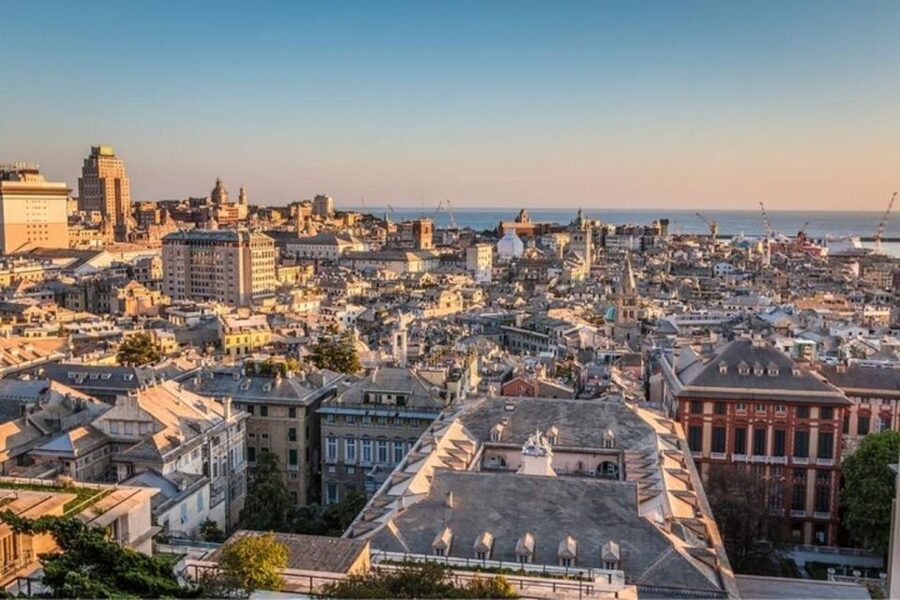
Genoa rewards curious walkers. This two-hour tour links major sights such as Christopher Columbus’ House, Doge’s Palace, Piazza Banchi, Porta Soprana, and San Lorenzo Cathedral, while a local guide explains how the city fits together. I especially like the central meeting point at Piazza Giacomo Matteotti and the strong focus on architecture, history, and local advice. The main consideration is time: 15 minutes at each listed stop gives you a useful introduction, but not a full museum visit.
I also like the language choice. You can book with a guide speaking English, Spanish, Italian, or French, and recent guide names include Giulio and Fulvio. The only drawback is that food and drinks are not included, so you will need to arrange your own coffee, snack, or meal after the walk.
Key Points Before You Book
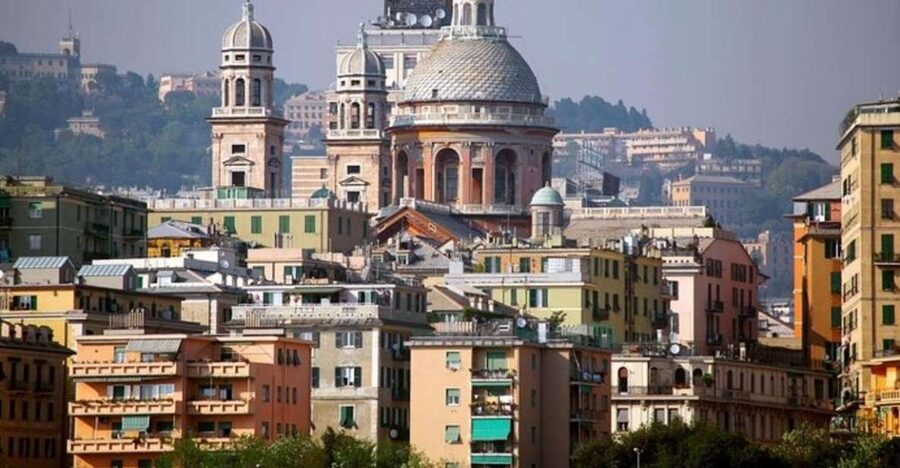
- Two hours on foot: The route covers Genoa’s historic center at a brisk but manageable pace.
- Major sights in one sweep: You see the cathedral, Doge’s Palace, medieval gates, historic squares, and Columbus’ House.
- Strong guide element: Giulio and Fulvio have been praised for clear explanations of Genoese history, art, and local eating spots.
- A useful ending point: The tour finishes at Piazza Raffaele de Ferrari, a practical place to continue exploring.
- Good language flexibility: English, Spanish, Italian, and French are available.
- Value depends on your style: At $41 per person, the tour makes sense if you want context and orientation, not long interior visits.
Why a Two-Hour Introduction Works in Genoa
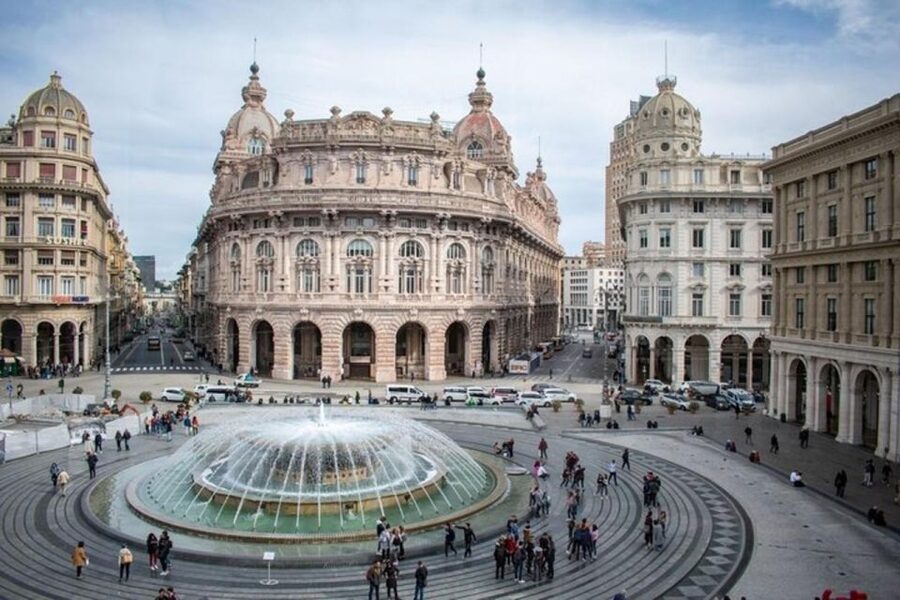
Genoa can feel confusing at first. Its old center is made up of grand squares, narrow streets, churches, medieval walls, and large civic buildings packed close together. A short walking tour helps you connect these pieces instead of seeing them as isolated photo stops.
I like the route because it moves through several layers of the city. You begin with Columbus’ House and the old defensive gate at Porta Soprana, then pass through squares tied to trade, government, religion, and public life. That gives you more than a checklist of monuments.
The two-hour length is also practical. You can fit this experience into a day that includes the cathedral, museums, shopping, or a meal. If you have only a short stay in Genoa, it gives you a quick orientation. If you have several days, it can help you decide which places deserve a longer return visit.
The tradeoff is obvious. The tour allocates about 15 minutes to each named stop, including walking, photos, and explanations. That is enough to understand why a place matters. It is not enough for a detailed museum visit or an unhurried look at every architectural detail.
More City Highlights Walking Tours in Italy
- Florence: Highlights Walking Tour with Expert Guide
★ 4.6 · 4,662 reviews - Skip-the-Line Florence Highlights and David Walking Tour
★ 5.0 · 1,127 reviews - Venice: Walking Guided Tour of the City Must-See Sites
★ 4.7 · 1,095 reviews
Starting at Piazza Giacomo Matteotti
The meeting point is Piazza Giacomo Matteotti, 60. This is a central place surrounded by cafes, shops, and cultural sights, so it works well as a launch point for the walk.
I would arrive ready to walk rather than treating the piazza as a waiting room. Comfortable shoes matter, and weather-appropriate clothing is specifically advised. Genoa’s historic center is best handled on foot, and the route includes several outdoor stops.
A central start also gives you a simple plan if you are fitting the tour around other activities. You can meet your guide, spend two hours seeing the old center, and finish at another major square without arranging transport between stops.
Columbus’ House and Genoa’s Medieval Edge
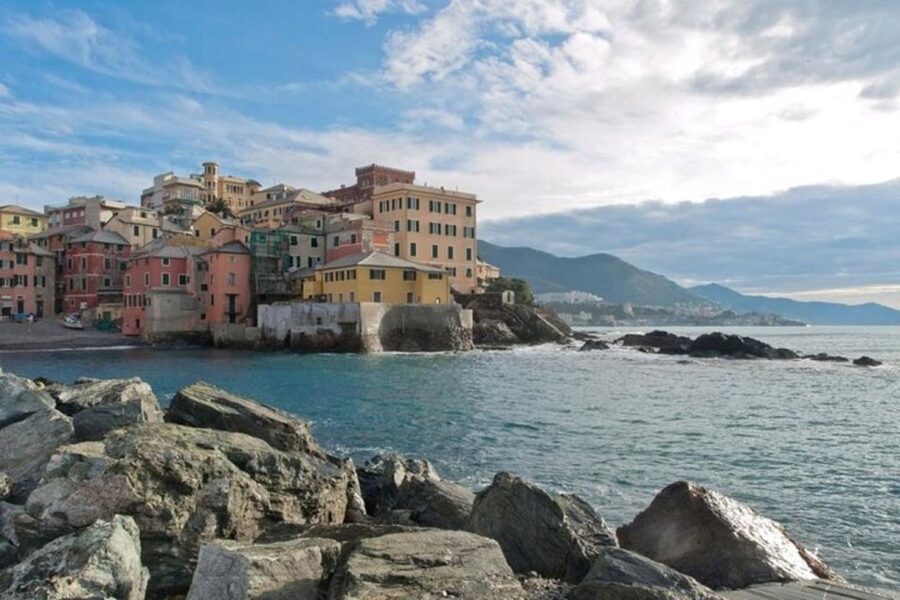
The first stop is Christopher Columbus’ House, where you have time for a guided visit, sightseeing, and photos. The listed stop lasts about 15 minutes, so expect a compact explanation rather than a long indoor program.
This is a useful opening because it places a famous name within Genoa itself. The guide can provide context about Columbus and the city’s historic identity before the route moves into the civic and religious center.
I would treat this stop as an introduction. If you want extensive detail about Columbus, this tour is unlikely to satisfy that interest on its own. Its strength is the wider route, where this small historic site becomes one part of Genoa’s larger story.
Doge’s Palace and the City’s Civic Power
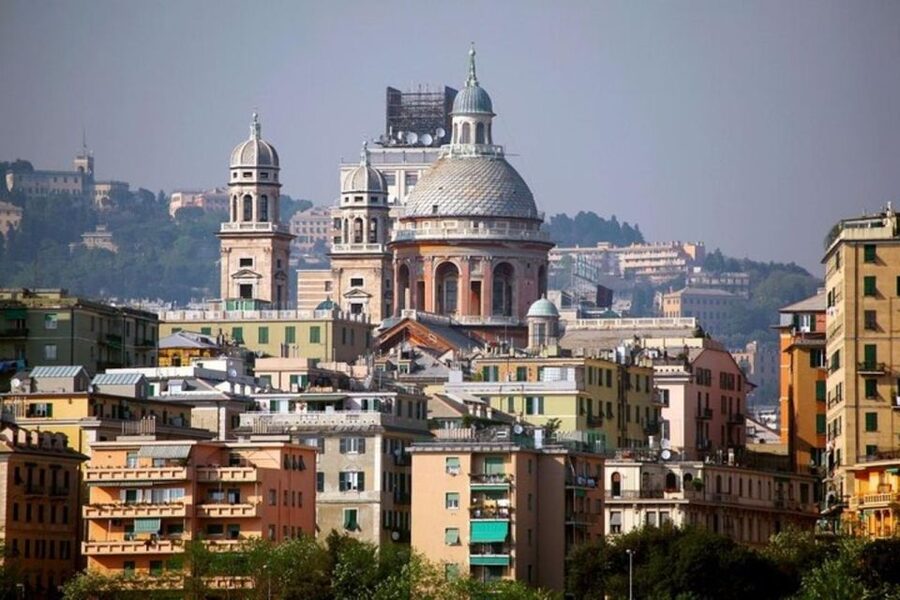
The walk continues to Doge’s Palace, once the home of Genoa’s doges. Today, the building is a museum and a center for cultural events.
This is one of the strongest stops for understanding how Genoa governed itself. The palace represents public authority, while nearby squares and commercial areas show how civic life connected with trade and daily business.
You will have about 15 minutes here for guided sightseeing and photographs. That is enough to take in the building and hear the main points, but you should not expect to explore all museum spaces. If the palace interests you, note it as a possible return visit after the tour.
A good guide can make this stop more useful by explaining what the building meant, not just naming it. Recent praise for Giulio and Fulvio focused on their explanations of local history and art, which is exactly the kind of added value that helps a short stop feel worthwhile.
Same streets, a different way to see them:
- Venice: Doge’s Palace and St Mark’s Basilica Walking Tour
★ 4.4 · 6,291 reviews - Milan: Guided Walking Tour & Last Supper Visit with Ticket
★ 4.7 · 5,409 reviews - Naples: Street Food Walking Tour with Local Guide
★ 4.9 · 4,976 reviews - Venice: San Marco to Rialto Walk & Spritz Like a Local
★ 4.2 · 3,651 reviews
Piazza San Giorgio and Piazza Banchi
Next, the route reaches Piazza San Giorgio and Piazza Banchi. These stops shift the focus from individual monuments to the spaces between them.
Piazza San Giorgio gives you another historic square to compare with the larger civic areas. The brief stop lets you listen, look around, and understand how Genoa’s old center is arranged.
Piazza Banchi adds a commercial note. Its position in the route helps show that Genoa was not simply a city of palaces and churches. Trade and public exchange shaped the center too.
These two piazzas are especially useful if you like urban history. You are not just walking from one famous building to the next. You are seeing how streets and squares formed a working city.
The limitation is that the supplied information does not specify a particular interior visit at either square. Plan on exterior sightseeing, explanation, and photos. That is still valuable, but set your expectations accordingly.
Porta Soprana and the Medieval City Walls
Porta Soprana is one of the clearest visual reminders of medieval Genoa. It is a towered gate from the city’s 12th-century walls, and the route includes time for a guided visit and photographs.
I like this stop because defensive architecture tells a different story from palaces and churches. The gate points to a city concerned with protection, access, and control. It also helps you picture the old boundaries of Genoa.
The 15-minute format works well here. You can see the gate, hear its basic story, and continue without turning the tour into a long historical lecture. If you are interested in medieval structures, this is another place to mark for a slower look later.
The route also includes a stop identified as Castello. The available details describe it as a photo and sightseeing stop but do not explain a specific building or activity there. I would ask the provider for clarification if this location is important to you, especially since the supplied description labels it inconsistently.
San Lorenzo Cathedral Takes Center Stage
The Cattedrale di San Lorenzo is the tour’s main architectural highlight. The experience specifically calls attention to the cathedral’s beauty, and the guide provides time for a visit, explanation, sightseeing, and photos.
This is where the tour’s art and architecture focus should pay off. A cathedral can be easy to admire without understanding, but a guide can point out details you might otherwise pass by. Recent comments about explanations of art and monuments suggest that this is an area where guides such as Giulio and Fulvio add real value.
You get about 15 minutes at the cathedral, so the stop is best viewed as a strong introduction. You may have enough time to appreciate the exterior and hear the important context, but not to study every chapel or spend a long period inside.
I would plan to return if San Lorenzo is high on your list. The tour gives you the reason to care about the building. A separate visit lets you look at it without watching the clock.
Finishing at Piazza Raffaele de Ferrari
The walk ends at Piazza Raffaele de Ferrari, Genoa’s main square. This is a smart finish because you are left in a central area with options for the rest of your day.
You can use the guide’s final suggestions to choose where to go next. One of the strongest points in the guide feedback is the practical local advice, including suggestions for typical places to eat. That can be more useful than another ten minutes of formal history, especially when lunchtime is approaching.
The ending also gives you a chance to continue independently. You are not returned to the starting point, so think of the route as a short line through the center rather than a loop.
What the Guides Add
The tour is only as good as the person leading it. Here, the available feedback points to two named guides, Giulio and Fulvio.
Giulio has been praised for speaking English and French very well, explaining Genoese history and art clearly, and suggesting local culinary places. Fulvio has been praised for presenting the main historic sights with strong information about local buildings and for showing less familiar streets.
Those details matter. A guide who only recites dates gives you facts that fade quickly. A guide who connects art, civic history, buildings, and food gives you a working sense of the city.
The rating is 4.5 from 113 reviews, which supports the idea that the experience is generally dependable. Still, guide-led tours can vary from person to person. The language you select and the guide assigned may affect the feel of the walk.
The option for a private group is useful if you want a more personal pace. The regular format may suit solo visitors, couples, or small groups looking for an efficient introduction. The available information does not specify the standard group size, so do not assume the walk will be private unless you book that option.
Is $41 a Fair Price?
At $41 per person, this is not the cheapest way to walk around Genoa. You can see many exterior sights on your own for free. The question is whether you want explanations, structure, and local guidance.
I think the price is reasonable if you value those three things. You are paying for two hours with a live guide, a planned route through several important locations, and practical advice for continuing your visit. That can save time and help you avoid wandering past significant places without knowing their importance.
The value is lower if you prefer slow sightseeing or want to spend serious time inside the cathedral and Doge’s Palace. The tour does not include food or drinks, and the short stop lengths mean you may want to pay for separate entries or return visits later.
For a first look at Genoa, I would call $41 fair rather than cheap. It works best as an orientation service with history attached.
Who Should Take This Walk?
I would recommend this tour to first-time visitors who want to understand Genoa quickly. It also suits anyone arriving with only part of a day, since the two-hour length leaves room for lunch, museums, shopping, or a second neighborhood.
It is a good match if you enjoy architecture, public squares, medieval structures, and local stories. The four language choices make it easier to find a comfortable guide.
Families and older visitors may appreciate the compact duration and wheelchair-accessible format. You still need suitable clothing and shoes, but the tour does not require a full day of walking.
I would be more cautious if you want extensive interior access, a food tour, or a slow photographic walk. This is a guided overview, not a specialist architecture course or culinary experience.
Practical Details That Matter
The activity includes the walking tour and a local guide. Food and drinks are separate, so plan for your own refreshments.
You can cancel up to 24 hours before the tour for a full refund, and the reserve now, pay later option keeps your plans flexible. Starting times depend on availability, so check the schedule before building the rest of your day around it.
The tour is offered in English, Spanish, Italian, and French. A private group is available, and the experience is wheelchair accessible.
Bring comfortable shoes and clothing suited to the weather. Since the route includes outdoor squares, streets, gates, and cathedral sightseeing, your comfort will affect how much you enjoy the explanations.
Should You Book the Genoa Must-See Attractions Walking Tour?
Book it if you want a clear first look at Genoa, a local guide, and a route that connects major monuments with smaller urban spaces. The praise for Giulio and Fulvio points to strong explanations, art and history context, and useful food advice.
Skip it if you prefer to explore alone, linger inside museums, or spend a full hour at each monument. At $41, the best value comes from the guide’s interpretation and the efficient route, not from the amount of time spent inside any one attraction.
For most first-time visitors with two hours to spare, I would book it early in the visit. Use the tour to get your bearings, then return to San Lorenzo, Doge’s Palace, or any square that deserves a closer look.
FAQ
How long does the Genoa walking tour last?
The tour lasts two hours.
How much does the tour cost?
The listed price is $41 per person.
Where does the tour start?
The tour starts at Piazza Giacomo Matteotti, 60.
Where does the tour finish?
The tour ends at Piazza Raffaele de Ferrari, Genoa’s main square.
Which attractions are included?
The route includes Christopher Columbus’ House, Doge’s Palace, Piazza San Giorgio, Piazza Banchi, Porta Soprana, Castello, Genoa Cathedral, and Piazza Raffaele de Ferrari.
Is the tour guided?
Yes. A live local guide leads the walking tour.
Which languages are available?
The guide languages are English, Spanish, Italian, and French.
Is the tour wheelchair accessible?
Yes, the activity is listed as wheelchair accessible.
Can I book a private group?
Yes, a private group option is available.
Are food and drinks included?
No. Food and drinks are not included.
What should I bring?
Bring comfortable shoes and clothing suitable for the weather.
Can I cancel for a full refund?
Yes. You can cancel up to 24 hours in advance for a full refund.
Just added around Italy
- Bergamo: Digital guide made by a local for your walking tour★ 5.0 · 184 reviews
- Full Day Tour by Car and Walking among the Apulian Beauties★ 4.5 · 182 reviews
- The Original Street Food Walking Tour in Bari★ 4.5 · 226 reviews
- Bari Walking City Tour★ 4.5 · 511 reviews
- Bari: Street Food Walking Tour with a Local Guide★ 5.0 · 160 reviews
- Bari Walking Tour with Pasta Experience★ 4.5 · 270 reviews
- Assisi Private Walking Tour including St. Francis Basilica★ 5.0 · 124 reviews
- Private St. Francis Basilica of Assisi and City Walking Tour★ 5.0 · 114 reviews
City Highlights Walking Tours, compared.
Historic Charleston Guided Sightseeing Walking Tour
Read our review →
Dublin Highlights and Hidden Gems Guided Walking Tour
Read our review →
Guided Walking Tour of City Center Highlights
Read our review →
City Highlights Temple and Market Walking Tour
Read our review →
Montmartre Hidden Gems and Scenic Highlights Walking Tour
Read our review →
Browse the lists this tour appears in