
Review · FOOD WALKING TOURS
Heritage Walk & Street Food Tasting in Jaipur
Jaipur tastes best one small shop at a time. This three-hour walk combines local food and old-city culture in a way that feels far more personal than simply ticking off the Pink City’s major sights. I like the generous tasting stops, from samosa and kachori to sweets and masala chai, and I like the way guides such as Vivek, Raj, Kumar, and Pushpendra connect each dish to Jaipur’s neighborhoods, trades, and traditions. The one thing to consider is that this is a walking tour through busy lanes and narrow alleys, so it is not suitable for wheelchair users and may feel tiring in hot weather.
At $21 per person, the experience offers good value if you want food, history, and local orientation in one outing. I especially appreciate the small group limit of 10 people and the company’s clear promise of no hidden sales agenda. You finish at Chhoti Chopad rather than returning to the starting point, so plan your next move before you set off.
Key points to know before you book
- Around 15 food samples are possible: Some participants have tried roughly 15 items at six different stops, so arrive hungry.
- The back lanes are the real attraction: You move beyond the main roads into Jaipur’s gullies, markets, temples, artisan areas, and residential corners.
- Guides make the food easier to understand: Vivek, Raj, Kumar, and other local guides explain ingredients, customs, architecture, and the stories behind each neighborhood.
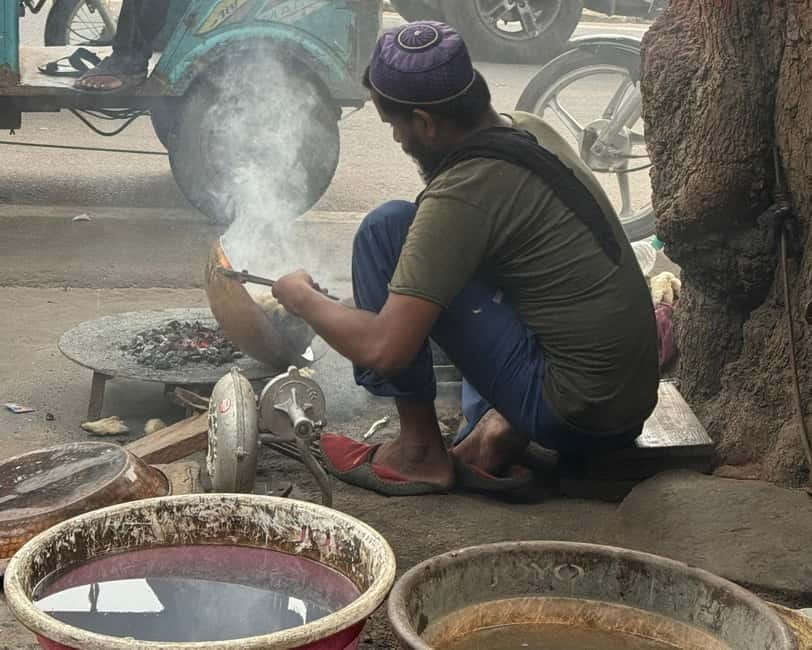
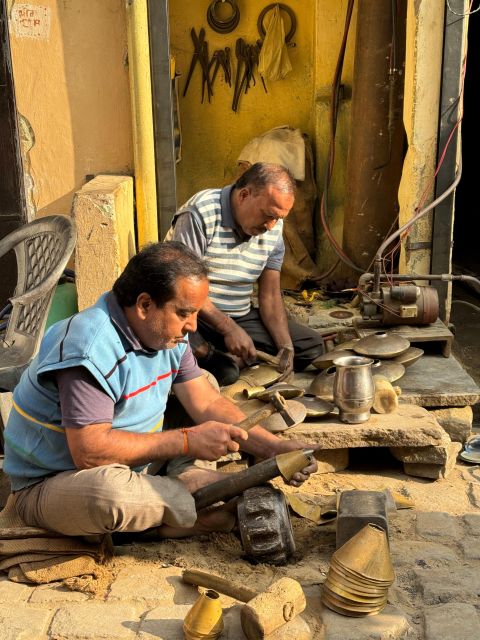
- You see working traditions, not only monuments: The route can include metal beaters, bangle makers, local shopkeepers, and craftsmen at work.
- The group stays small: With no more than 10 participants, it is easier to ask questions and keep up in crowded streets.
- Comfort matters: Wear walking shoes, carry water, use sunscreen, and dress modestly for temple visits.
Why this Jaipur walk works so well
Jaipur’s old city can be hard to read at first. Its broad roads and famous gates give the Pink City a clear shape, but the real daily life often happens behind the main streets. This tour takes you into the smaller lanes, where food stalls, workshops, temples, markets, and homes sit close together.
That combination is the tour’s main strength. You are not only eating snacks while someone recites dates and names. You are learning why certain foods matter, seeing how local trades continue, and getting a better sense of how the old city functions.
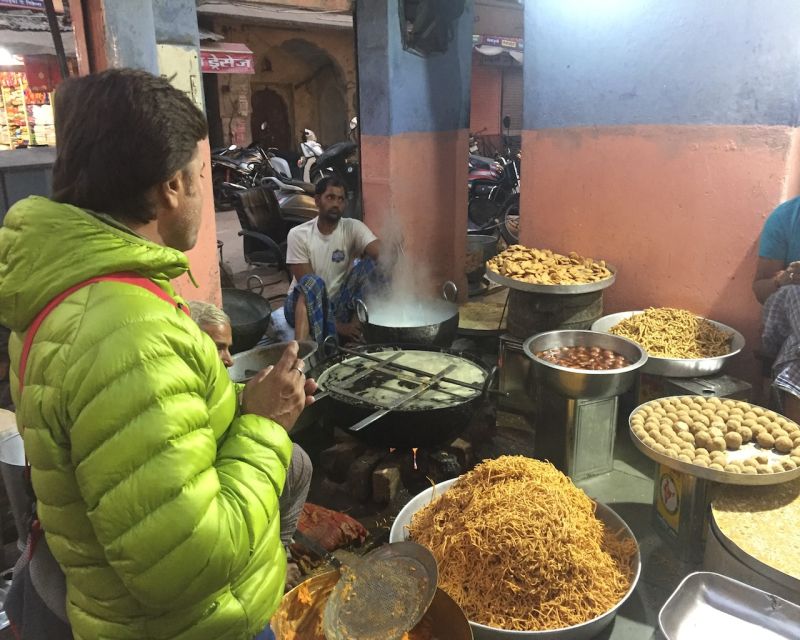
The food is also plentiful. You are likely to sample familiar Indian snacks such as samosa and kachori, along with Jaipur sweets, masala chai, and other regional items. The exact selection can vary, but the experience is designed around several local shops and food stops rather than one sit-down meal.
I would not treat the tour as a formal restaurant crawl. You eat at small local outlets and street-side places, often standing or stopping briefly. That is part of the appeal, but anyone wanting a quiet table, air conditioning, or a fixed menu should choose a different food experience.
More Food Walking Tours in India
- The Great Indian Food Tour: Old Delhi Food and Heritage Walk
★ 5.0 · 1,698 reviews - Old Delhi Food, Heritage&Cultural Walk with Rickshaw ride to Masterji Kee Haveli
★ 5.0 · 742 reviews - Delhi Food Walk: Rickshaw Ride, Street Eats & Market Tour
★ 5.0 · 401 reviews
Starting at Golcha Cinema
The meeting point is the entry gate of Golcha Cinema. This gives you a clear landmark in the old city, but you should check the route carefully before arriving because the walk does not include hotel pickup or drop-off.
From the start, expect a city scene rather than a polished attraction. Jaipur traffic, pedestrians, shopfronts, motorcycles, and vendors all share the space. A local guide is useful here because the route quickly moves beyond what you are likely to find by simply following a map.
The guides are one of the most praised parts of the experience. Vivek is often described as warm, patient, and deeply familiar with Jaipur. Raj and Kumar are also praised for clear explanations and easy conversation. Pushpendra has been noted for his welcoming manner and strong understanding of local history and culture.
This matters most if you are visiting Jaipur for the first time. You can ask where to eat, how to move around the old city, what local customs mean, and which sights deserve more time. Solo participants have also found the guides reassuring, especially when navigating unfamiliar lanes.
Chaura Rasta: tea, snacks, and city orientation
The first major section takes you toward Chaura Rasta for about 45 minutes. This part combines a guided walk with tea and street food, so it helps set the rhythm for the rest of the afternoon or morning.
Masala chai at a local tea shop is a simple but useful introduction to Jaipur food culture. You get a chance to pause, ask questions, and learn how the guide approaches the tasting. If you are unsure about spice, dairy, sweets, or unfamiliar textures, this is a good time to explain your preferences.
The food is not presented as a challenge. The guides help you choose and explain what you are eating. One guide has been particularly praised for showing visitors how to judge the quality of street food, which is useful when you continue exploring independently.
Chaura Rasta also gives you an early look at Jaipur’s planned old-city design. The route is not limited to food stalls. Look up at painted facades, notice the geometry of the streets, and pay attention to how shops and homes fit into the historic city plan.
Badi Chaupar and the old city’s food traditions
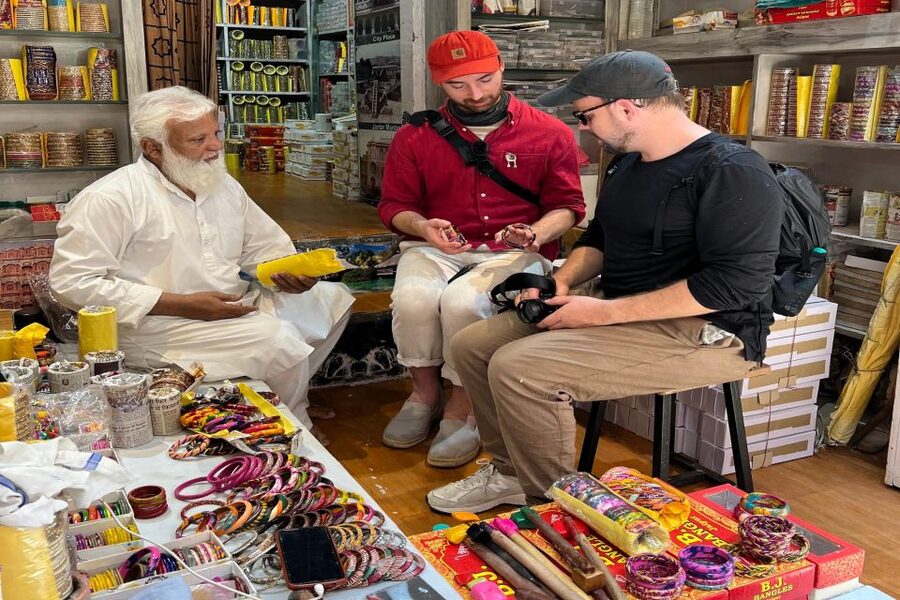
The walk continues to Badi Chaupar, another 45-minute section with tea, local snacks, food tasting, and views along the way. Badi Chaupar is one of the city’s important open squares, so this part can feel more spacious than the narrower lanes.
Here, the guide helps connect the food to Jaipur’s trading culture and royal past. You may taste more regional snacks and sweets, with enough variety to keep the food side interesting. Several people have found the portions more filling than expected, so do not eat a large breakfast if you take the morning tour.
A useful warning: the food is plentiful, but you should not expect a separate full serving of 20 different dishes. One participant advised arriving with a reasonable appetite and realistic expectations. The tour offers a broad sampling, not an unlimited buffet.
The sweet foods can also arrive earlier than you expect. One person suggested that the order might work better with savory dishes before sweets, since a sugar-heavy start can make later snacks harder to finish. If you have a sensitive stomach, low spice tolerance, or food restrictions, tell your guide at the beginning. A picky eater with no spice tolerance and IBS reported being comfortable, but that is personal experience, not a guarantee for everyone.
More History Walking Tours in India
- Fontainhas Heritage Walk by Make It Happen
★ 5.0 · 2,834 reviews - Old Goa Heritage Walk by Make It Happen
★ 5.0 · 797 reviews - Private Heritage Walking Tour in Jaisalmer Fort and Old Bazaar
★ 5.0 · 306 reviews - Panaji: Heritage Walk through Goa’s Latin Quarter
★ 4.8 · 291 reviews
Tripolia Bazar and Jaipur’s working crafts
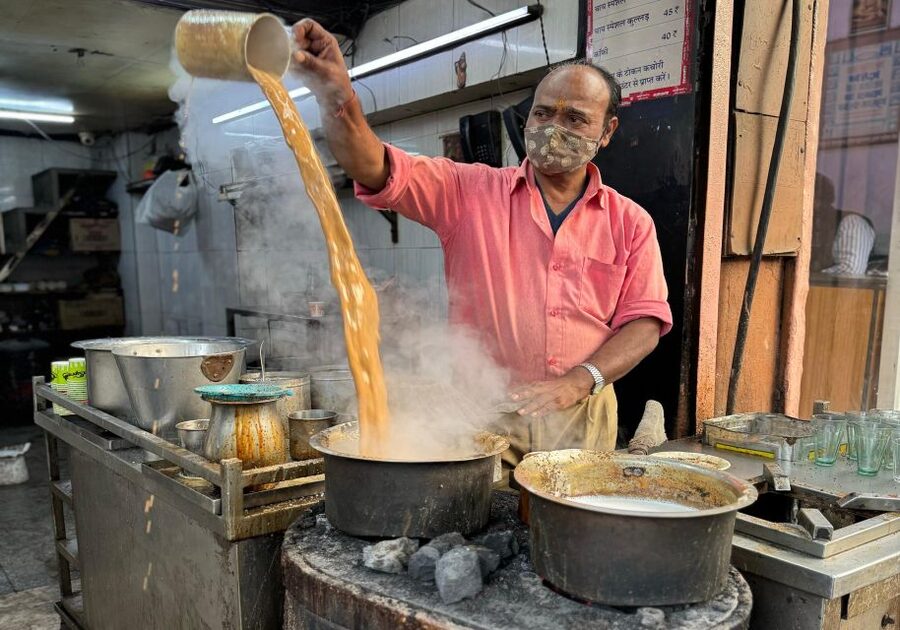
The route then reaches Tripolia Bazar for another 45 minutes of walking and explanation. This section is less about eating and more about seeing the old city as a place of work.
You may leave the main lanes and enter the gullies of Jaipur’s famous quadrants. These smaller passages show a side of the city that is easy to miss if you stay on the main sightseeing route. The guide can point out fresco-painted houses, old architectural details, temples, and the meaning of the city’s entry gates.
A particularly interesting part is the visit to a street associated with the Thatheras, a community of metal beaters. This is the kind of stop that gives the walk its character. Instead of seeing handicrafts as souvenirs in a shop, you get some sense of the people and work behind them.
The tour can also introduce you to local artisans and craftsmen. One part of the route focuses on bangle making through sealing wax, offering a glimpse of a specialized local skill. These encounters may be brief, and the exact artisans available can vary, but they add substance to the walk.
This is also where the tour moves beyond the standard food-and-photo routine. You are seeing how Jaipur’s commercial life, craft traditions, faith, and architecture overlap in the same compact area.
Choti Chaupar and the final tasting stops
The final 45-minute section takes you to Choti Chaupar, also spelled Chhoti Chopad, with more street food and regional snacks. By this point, you will have walked through several different parts of the old city and should have a clearer sense of how the main roads connect with the smaller lanes.
The tasting may include additional savory items, sweets, and local specialties. Some people have sampled about 15 food items across six stops, while others describe a more moderate selection. The amount can depend on the day, the group, the pace, and what is available.
You finish at Chhoti Chopad. There is no hotel transfer, so have your onward transport arranged or ask your guide for practical advice. One guide helped a participant get safely into an Uber, which is the sort of small courtesy that can make a difference after dark or after a long walk.
What makes the food safe and enjoyable
Street food can make visitors nervous, especially on a first trip to India. This tour’s approach is useful because the guide chooses the stops and explains what you are eating. Several participants from the United Kingdom, United States, Germany, and elsewhere reported eating a wide range of food without stomach trouble.
Still, you should use ordinary care. Tell the guide about allergies, medical needs, spice limits, or foods you avoid. Carry personal medication, as advised, and do not force yourself to eat something simply because it is included.
The food is generally described as fresh, filling, and suitable for visitors, but no tour can remove every personal health risk. The strongest benefit here is not a medical guarantee. It is local judgment, clear explanation, and the ability to ask questions before trying something unfamiliar.
History, temples, and local customs
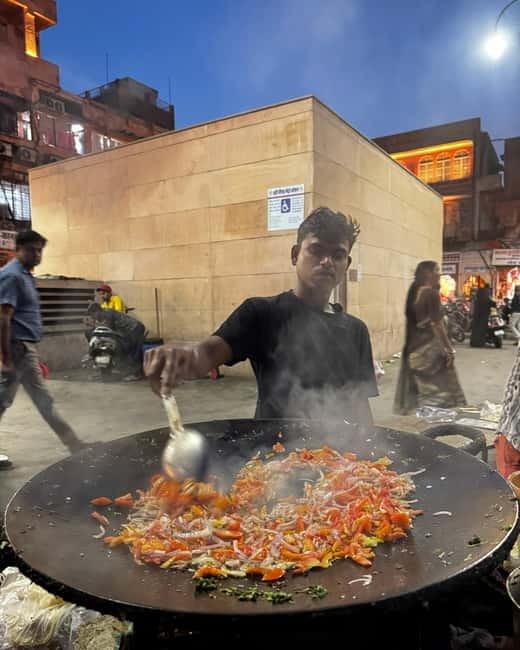
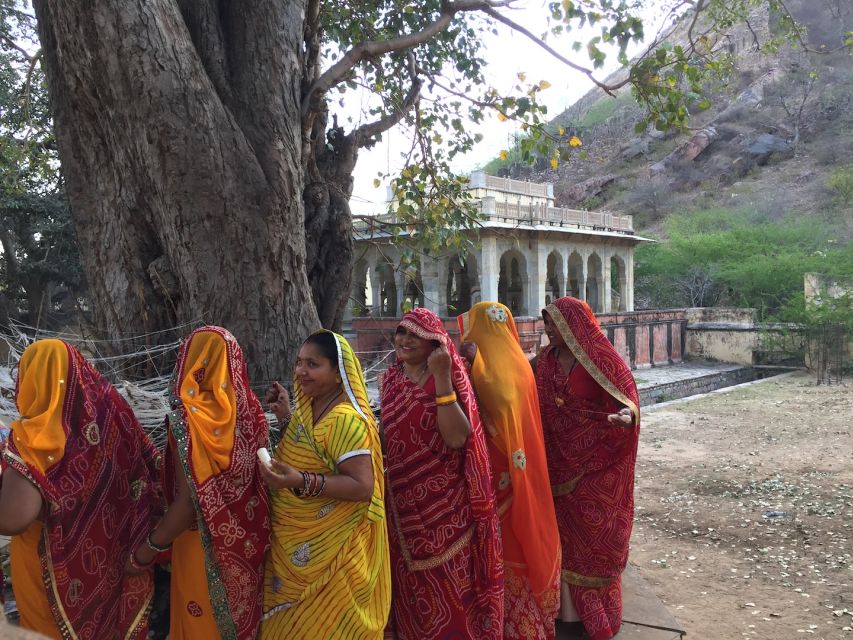
The heritage side of the walk gives the food more meaning. You may visit a Hindu temple, see a community well, observe old homes with painted decoration, and learn about Jaipur’s planned architecture and royal connections.
You should dress modestly for temple visits and avoid flash photography inside. Photography is allowed elsewhere, but ask before photographing people or artisans at close range. The old city is a lived-in place, not a stage set, and respectful behavior improves the experience for everyone.
The guide’s storytelling is an important part of the value. Vivek has been praised for explaining Jaipur’s past, local life, architecture, and food in a relaxed way. Kumar is also described as clear and engaging, while Raj has been praised for answering questions and adjusting the pace.
This makes the tour useful even if you are not a serious food enthusiast. You are likely to come away with a better understanding of Jaipur’s neighborhoods, trades, religious life, and street layout.
How much walking and what to wear
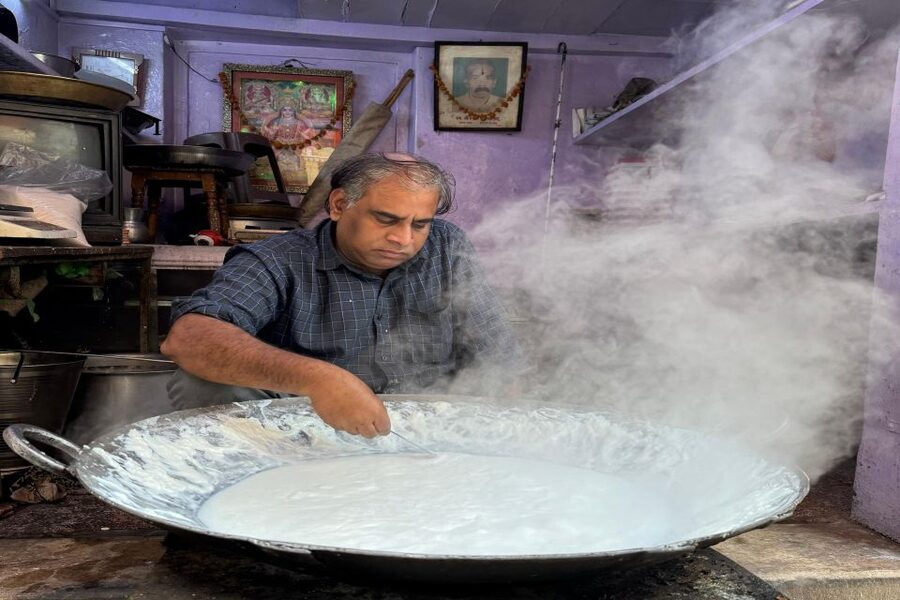
The tour lasts three hours and involves substantial walking. Comfortable shoes are essential. The lanes can be crowded, uneven, or difficult to navigate quickly, and you may spend part of the time standing at food stops.
Wear light, comfortable clothing suited to the weather, but keep temple visits in mind. Sunscreen and a hat are sensible, and you should carry water. A bottle of water is included, but staying hydrated remains your responsibility.
The tour is not suitable for wheelchair users. It is also less suitable for anyone who struggles with extended walking, crowds, heat, or standing. On the other hand, the small group size helps the guide adjust the pace and answer individual questions.
The experience can work in the morning or later in the day, depending on the available start time. A late afternoon outing offers the added pleasure of watching the old city change as evening approaches, while a morning tour can be more comfortable in warmer months.
Is $21 good value?
At $21 per person, this is a strong value if you use all three parts of the experience: food, local guiding, and cultural orientation. The included tasting covers samosa, kachori, sweets, masala chai, and more, along with water and the heritage walk.
You are also paying for access to places you might not confidently find alone. The value is not simply the price of the snacks. It comes from having someone lead you through confusing side streets, explain what you see, and introduce you to local trades and food sellers.
The small group limit of 10 is another plus. You will not get the same easy conversation in a large coach group. The guide can respond to food preferences, photography stops, and individual questions.
The main limitation is that the price does not include transport from your hotel, alcoholic drinks, or a sit-down meal. If you want a private tour, luxury comfort, or a carefully controlled menu, this is not the right format.
Who should book this Jaipur experience?
I would recommend it most strongly to first-time visitors who want a practical introduction to the old city. It is also a good choice for food lovers, solo visitors, couples, families comfortable with walking, and anyone interested in everyday culture rather than monuments alone.
It suits curious eaters, but you do not need to be adventurous with every dish. The guide can tailor choices and explain the food before you try it. The tour is especially useful early in a Jaipur stay because it can help you understand the city and identify places or dishes to revisit.
You should think twice if you dislike street food, cannot walk for three hours, need step-free access, or prefer a quiet, seated meal. Spice-sensitive participants should communicate clearly at the start.
Free cancellation is available up to 24 hours before the tour for a full refund, and you can reserve now and pay later. The guide language is English, and the experience is run by Rajasthan Cultural Tours.
Should you book it?
Book this walk if you want Jaipur explained through its food, streets, crafts, and people. The strongest reason to go is the combination of generous tastings and local guidance. You are likely to see corners of the old city that would be easy to miss, while guides such as Vivek, Raj, and Kumar add context without making the walk feel like a lecture.
The decision is simple: come hungry, wear good shoes, and expect real city conditions. If that sounds appealing, this is one of the better-value ways to get your bearings in Jaipur’s Pink City.
FAQ
How long does the Jaipur heritage and food tour last?
The tour lasts three hours.
How much does the experience cost?
The listed price is $21 per person.
Where does the tour begin?
You meet at the entry gate of Golcha Cinema in Jaipur.
Where does the tour finish?
The walk finishes at Chhoti Chopad, also written as Choti Chaupar.
What food is included?
The tasting includes samosa, kachori, famous sweets, masala chai, and other local street food from local shops.
Is water included?
Yes. A bottle of water is included.
Is hotel pickup provided?
No. Hotel pickup and drop-off are not included.
What language does the guide speak?
The live tour guide speaks English.
How large is the group?
The tour is limited to 10 participants.
Is the tour suitable for wheelchair users?
No. The experience is not suitable for wheelchair users because it involves extensive walking through old-city streets and lanes.
More Street Food Walking Tours in India
- Agra: Street Food Walking Tour, Spice Market, & Tuk-tuk Ride
★ 4.9 · 102 reviews - Street Food walking tour in Bangalore with a food evangelist
★ 5.0 · 83 reviews - Mumbai Street Food Tour with Evening Bazaar Walk
★ 4.9 · 79 reviews - Naples: Street Food Walking Tour with Local Guide
★ 4.9 · 4,976 reviews
Just added around India
- Tipu Palace + Koté Vishnu + Fort + KR Market + Jain Temple = Bengaluru Pété Walk★ 5.0 · 150 reviews
- Street Food walking tour in Bangalore with a food evangelist★ 5.0 · 83 reviews
- Bengaluru Pete City Market Half-Day Walking Tour★ 5.0 · 163 reviews
- Amritsar Heritage Walking Tour★ 5.0 · 112 reviews
- Agra Walking Tour★ 5.0 · 109 reviews
- The Great Indian Food Tour: Old Delhi Food and Heritage Walk★ 5.0 · 106 reviews
- Spiritual Walk Tour Trivandrum (Guided Walking Experience)★ 4.6 · 87 reviews
- Spiritual Walking tour with Puja Ceremony -The Pushkar Route★ 5.0 · 101 reviews
Food Walking Tours, compared.

Reykjavik Food Walk – Local Foodie Adventure in Iceland
Read our review →

New Orleans Food Walking Tour of the French Quarter with Small-Group Option
Read our review →

Authentic Parisian Gourmet Food Tour with 10 Local Dishes & Wines
Read our review →

Tapas Walking Tour with Food, Wine, and History
Read our review →
Browse the lists this tour appears in