Review · HISTORY WALKING TOURS
Nazis in Buenos Aires: a historical walking tour
History can feel uncomfortably close. This 2.5-hour walk links Buenos Aires with the Holocaust, Nazi fugitives, Perón-era politics, and the city’s Jewish community, using central streets and working buildings as its classroom. I like the serious, evidence-based approach, and I like how guide Max explains disputed claims without forcing a simple answer. The main consideration is that this is a discussion-heavy tour, not a light sightseeing stroll.
You’ll visit places connected with Adolf Eichmann, a 15,000-seat Nazi gathering, a neo-Nazi attack, and the bombing of the former Israeli embassy. Max’s careful storytelling is one of the experience’s strongest points. He teaches history at the University of Buenos Aires and is praised for explaining what is known, what remains disputed, and where the evidence is thin.
Key points before you book
- Adolf Eichmann’s Buenos Aires connection: Learn how the Nazi war criminal was identified and captured after living in Argentina.
- A city-wide history lesson: The route crosses Recoleta, Retiro, and Microcentro, tying major sites to World War II and Argentine politics.
- A difficult final stop: The tour ends at the memorial site of the former Israeli embassy, linked to Latin America’s worst terrorist attack.
- Max’s teaching style: Expect photos, graphics, questions, and careful attention to sources rather than quick claims.
- A reasonable $25 price: For 2.5 hours with an English-speaking guide, the cost offers strong value if you want serious historical context.
- Basic preparation helps: Knowing the main events of World War II and the Holocaust will help you follow the discussion.
Why this walk matters in Buenos Aires
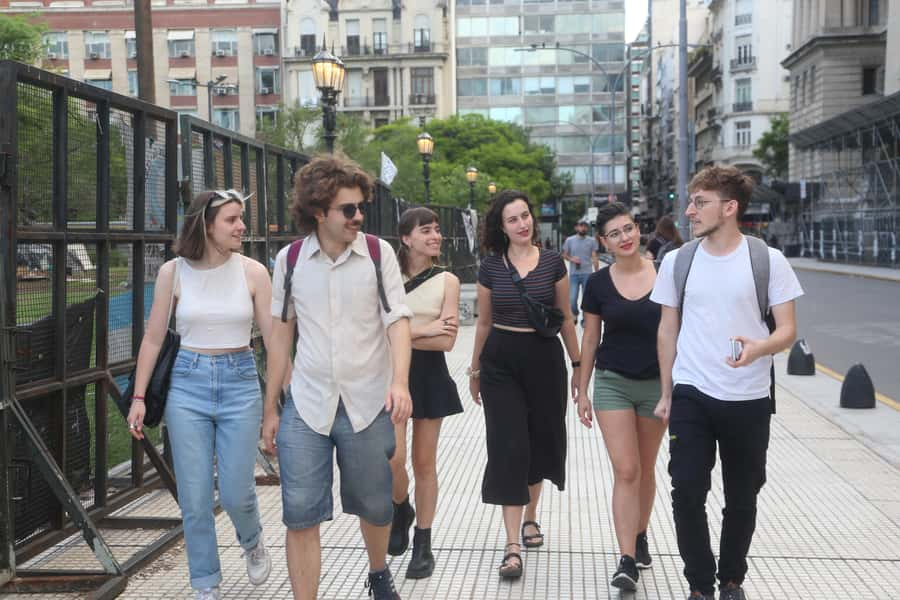
Buenos Aires is often introduced through grand avenues, cafés, tango, architecture, and political history. This tour takes you into a less comfortable part of the city’s past: the arrival of Nazi war criminals after 1945 and the question of how much Argentine officials knew about, tolerated, or encouraged that migration.
The title poses a question, not a verdict. Was Argentina simply a place where fugitives managed to hide, or did parts of the government actively help them arrive? You will hear the competing arguments and the evidence used to support them.
That distinction matters. The subject can easily become a collection of sensational stories about secret escape routes and famous criminals. Here, the historical setting comes first. You learn about Argentina before and after World War II, the presidency of Juan Domingo Perón, immigration policy, international politics, and the experience of the Jewish community in Buenos Aires.
I especially like that the tour does not treat Perón as a one-note character. His presidency is central to the discussion, but the guide also deals with the political disputes around his rule. That wider frame helps you understand why Nazi migration remains a contested subject in Argentina.
The tour also gives attention to Jewish life in Buenos Aires. The city has the second-largest Jewish community in the Americas, and the story is not only about European war criminals. It is also about the people who built lives in Argentina, the threats they faced, and the long memory of the Holocaust.
More History Walking Tours in the world:
- History and Hauntings of Salem Guided Walking Tour
★ 5.0 · 14,564 reviews - Lisbon: History, Stories and Lifestyle Walking Tour
★ 4.8 · 10,902 reviews - Boston: Freedom Trail History Small Group Walking Tour
★ 5.0 · 6,450 reviews
Starting beside Palacio Libertad
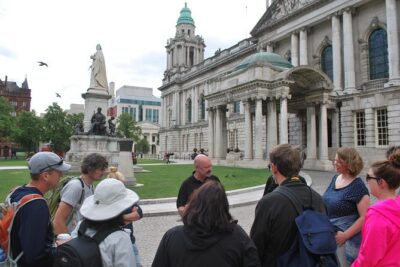
The walk begins near the Monument to Juana Azurduy, in front of Palacio Libertad, formerly known as the CCK. Look for Max wearing a black cap near the benches facing the palace.
This is a practical meeting point in central Buenos Aires, but give yourself time to find the monument and guide. The opening section sets the historical scene before the group moves through the city. That gradual approach is useful because the tour covers several countries, decades, and political arguments.
You do not need to arrive as a history expert. A basic grasp of World War II and the Holocaust will make the discussion easier, but Max is prepared to answer questions about Nazism, Judaism, Argentine history, and the war itself.
The route is in English and lasts about two and a half hours. It is a walking tour, so wear comfortable shoes and bring water. There is also a ten-minute break for the restroom, which is welcome on a long city walk.
Luna Park: a stadium with a political past
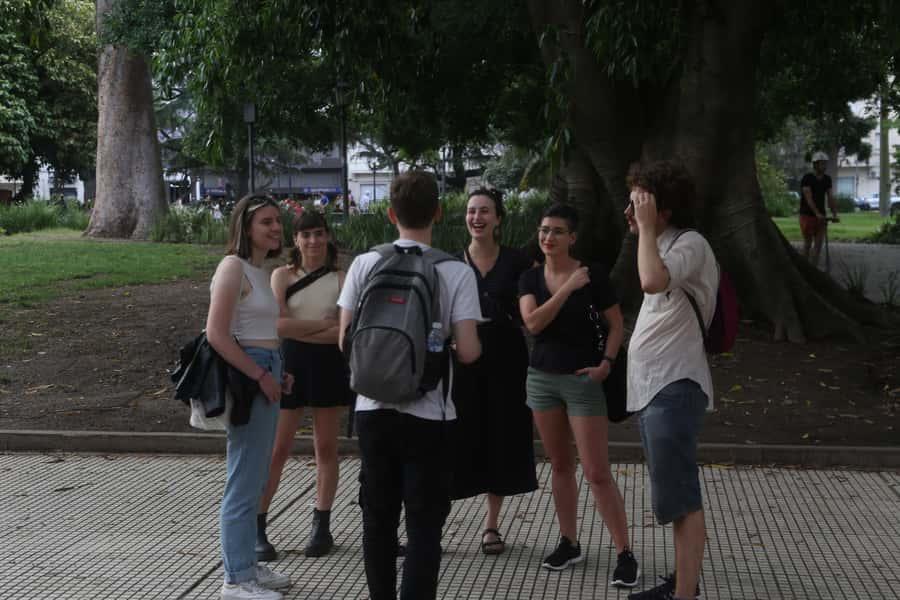
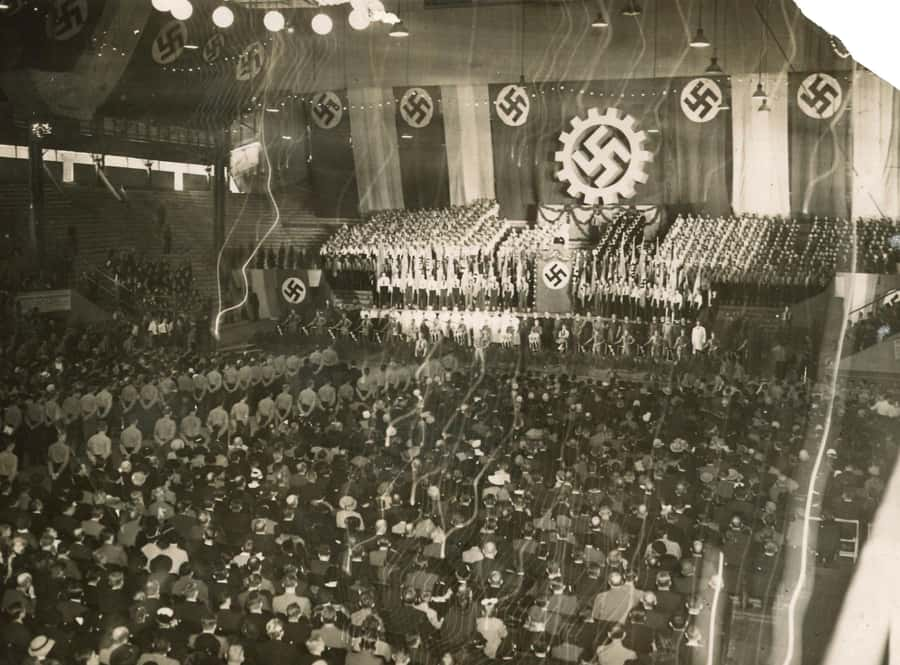
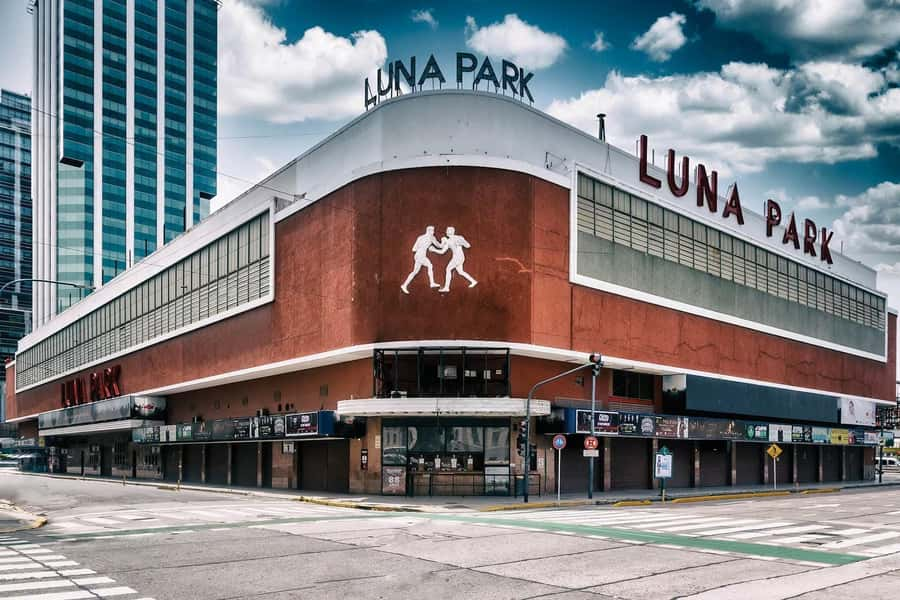
The first major stop is Luna Park, where you spend about 20 minutes. This still-operational stadium is tied to one of the tour’s most striking subjects: a Nazi meeting attended by 15,000 people.
That number changes how you view the building. Luna Park is not presented simply as a sports venue. It becomes evidence of the scale at which pro-Nazi ideas could appear in public before and during the war years.
The value of this stop is the physical setting. You are not studying a distant photograph in a museum. You are standing by a venue that remains part of Buenos Aires life, while considering how a mass political gathering once took place there.
Entry to Luna Park is not included. The experience is designed as an exterior walking stop, so you should not expect an arena tour. Even so, the building gives the guide a useful backdrop for discussing political organization, public sympathy, and the difference between isolated extremists and movements with a visible audience.
ABC Restaurant and the story of Eichmann
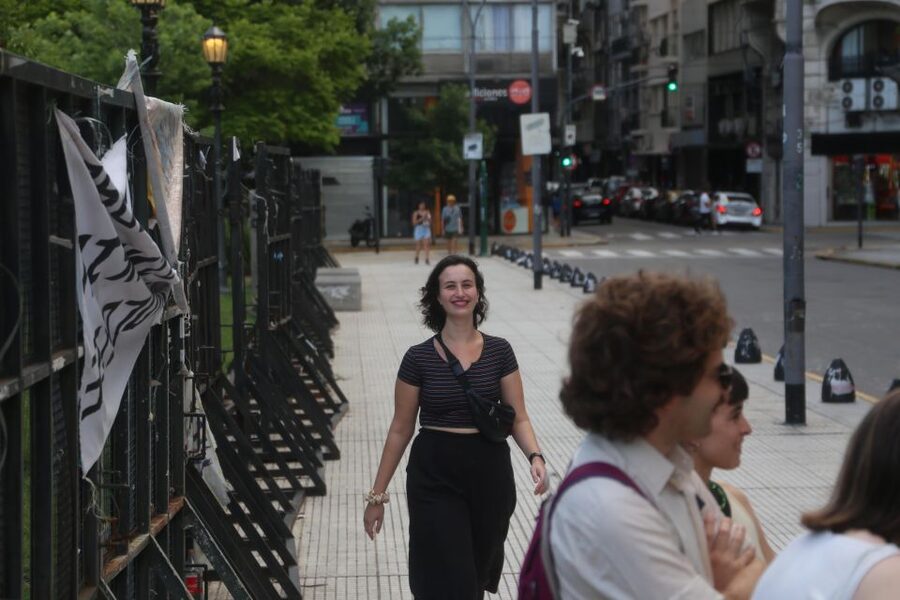
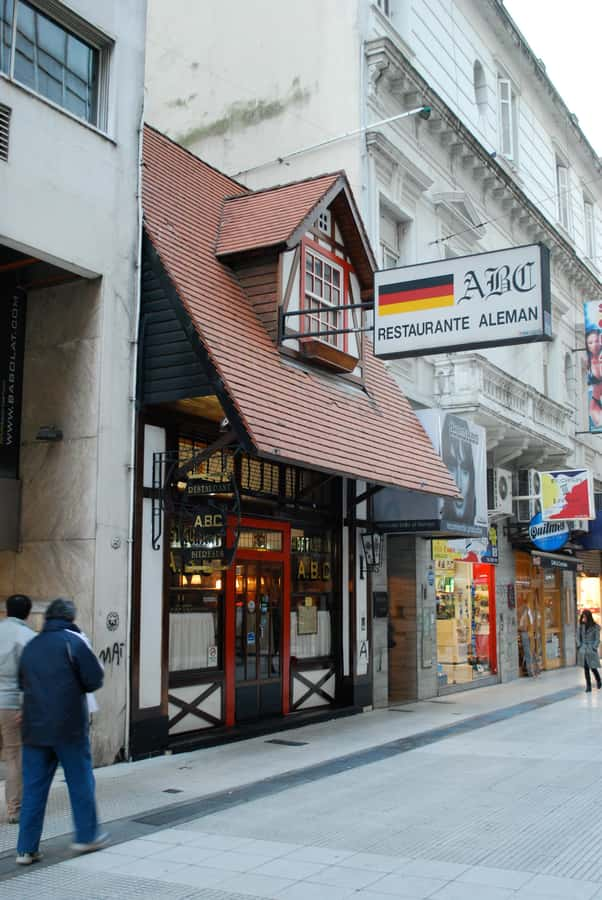
The next stop is ABC Restaurant, with around 20 minutes devoted to the site. This is where the tour connects an ordinary place for a coffee with the spy-like story of Adolf Eichmann.
Eichmann was one of the principal organizers of the Nazi deportation of Jews during the Holocaust. After the war, he lived under a false identity in Argentina. The story of how his location was identified, confirmed, and passed to Israeli agents has the shape of a thriller, but the guide keeps the focus on evidence and historical responsibility.
The detail that Eichmann sat for coffee here gives the story a human scale. It is easier to grasp the reality of his hidden life when the discussion is tied to a café rather than an abstract map.
This section should suit you if you enjoy historical investigation. It is not just a list of facts about Eichmann’s crimes. You will also consider how intelligence work operated, why his identity was difficult to establish, and how his capture affected Argentina and Israel.
The stop is brief enough to keep the walk moving, but long enough for questions. Max’s approach is especially useful here because the subject invites dramatic exaggeration. His habit of separating confirmed information from uncertainty helps keep the story grounded.
A few more walks around the world worth a look
- Magical London: Harry Potter Guided Walking Tour
★ 4.7 · 22,044 reviews - Reykjavik Food Walk – Local Foodie Adventure in Iceland
★ 5.0 · 18,952 reviews - New Orleans Premier Ghost, Voodoo and Vampire Walking Tour
★ 4.5 · 12,856 reviews - Amsterdam Anne Frank: Small-Group Walking Tour & Local Guide
★ 4.8 · 12,789 reviews
The National Arms Museum and the machinery of history
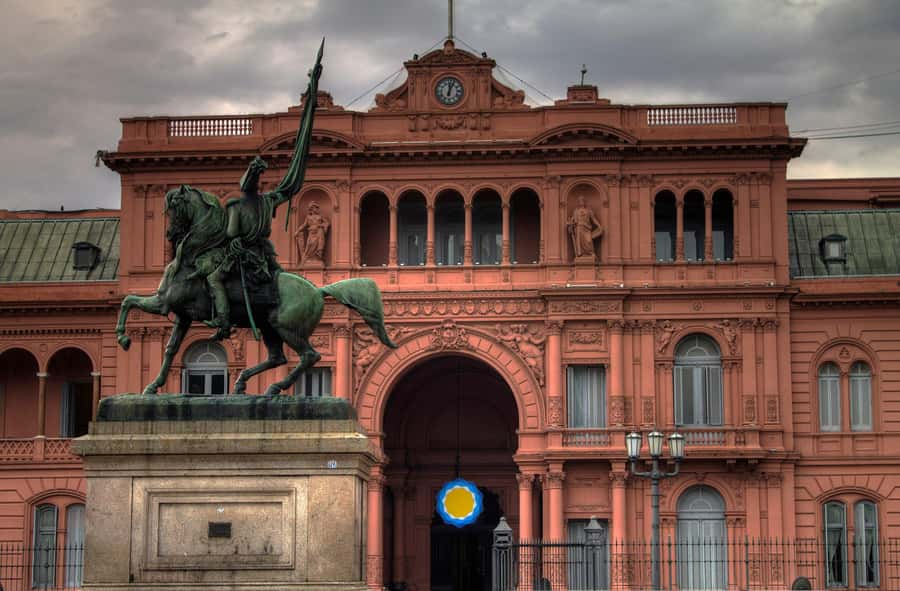
The Museo de Armas de la Nación, also known as the Tte. Gral. Pablo Riccheri National Arms Museum, is the third listed stop. The visit lasts about 20 minutes.
The museum’s presence adds a military and institutional layer to the tour. The discussion is not limited to fugitives hiding in private homes. You also consider the structures of power, the armed forces, international relations, and the political environment that shaped Argentina after the war.
Entry to the museum is not listed as included, so you should treat this as a stop connected with the building and its surroundings rather than assume you will tour the collections. The guide’s presentation remains the main attraction.
This is one of the points where the tour’s wider purpose becomes clear. The story of Nazis in Buenos Aires cannot be separated from Argentine politics. You will hear how debates over Perón’s presidency connect with postwar migration, government knowledge, and the country’s position in a changing world.
Palacio San Martín and international politics
At Palacio San Martín, another 20-minute stop, the route turns toward diplomacy and international affairs. The building offers a strong setting for discussing how Argentina related to Europe, the United States, Israel, and the wider postwar order.
This section helps prevent the tour from becoming a narrow hunt for famous Nazi names. War criminals did not move through a vacuum. Their arrival involved borders, documents, political choices, institutions, and international pressure.
You may find this part more analytical than cinematic. That is a strength if you want to understand the issue properly, but it may feel less dramatic if your only interest is the story of fugitives on the run.
The guide’s role matters here. Max is praised for being clear, patient, and willing to admit when a point is not certain. That is exactly the tone this subject needs. You get a stronger tour when the guide can say that historians disagree instead of pretending every question has a neat answer.
The Italian Circle and the route’s broader context
The Italian Circle of Buenos Aires is the next 20-minute stop. As with the other locations, the site works as a physical prompt for discussing migration, identity, political networks, and Argentina’s links to Europe.
The exact significance of each building may not be obvious when you first arrive. That is why the guide’s images and historical material are important. Max uses photographs and graphics to show how places looked and functioned at the time under discussion.
I would not book this walk expecting every stop to have a large plaque explaining its Nazi connection. Much of the meaning comes through the spoken account. You need to listen, ask questions, and allow the history to build from one stop to the next.
This part also reinforces the tour’s focus on Argentina as a country shaped by immigration. The discussion is not limited to German arrivals. Italian and other European connections help explain why Buenos Aires became a city where international politics and local life often met on the same streets.
The Israeli embassy memorial and a painful ending
The final destination is Plaza Embajada de Israel, the memorial site of the former Israeli embassy. This place is connected with the 1992 bombing, described as the worst terrorist attack in the history of Latin America.
The ending shifts the tour from World War II and postwar escape networks to the lasting effects of antisemitism, political violence, and Middle Eastern conflict in Buenos Aires. It also links the past to present-day questions about memory and public safety.
This is not a casual final photo stop. The subject is painful, and the guide treats it with care. The location gives the tour a strong sense of continuity: the story does not end when Nazi fugitives settle in Argentina. Ideologies and conflicts can continue to shape lives many decades later.
The activity details describe the final stop as Plaza Embajada de Israel. Another meeting-point note says the activity ends back at the meeting point, so confirm the exact ending location when you reserve. Either way, plan for a walk through central Buenos Aires rather than a return transfer.
What the $25 price really buys you
At $25 per person, this is a good deal for a two-and-a-half-hour guided walk, especially if you value interpretation over admission tickets. The fee includes the English-speaking guide, but not entry to Casa Rosada, Libertad Synagogue, or Luna Park Stadium.
Those exclusions are not a major weakness because the tour is built around outdoor locations and explanation. Still, you should not expect a series of museum interiors. The main product is Max’s research, storytelling, visual material, and ability to place each site in context.
I see the value in the time spent. You are not only learning about Eichmann or Nazi immigration. You are also getting a guided introduction to Argentine political history, the Jewish community, Perón, terrorism, and the way public memory works.
The tour’s high rating reflects its strongest feature: delivery. Max is described as friendly, passionate, careful with sources, and able to make complex material accessible. The walk is compared to a university seminar held in the streets, which is a useful description, as long as you understand that this means serious discussion rather than a fast-moving city tour.
Who will enjoy this experience most
I would choose this tour if you like modern history, political debate, intelligence stories, or the difficult side of a destination. It is also a good fit if you have already seen Buenos Aires’s major sights and want a more focused subject.
You will get the most from it if you:
- Know the basic outline of World War II and the Holocaust.
- Enjoy asking questions and weighing conflicting evidence.
- Can walk for around two and a half hours.
- Are comfortable discussing antisemitism, terrorism, political violence, and war crimes.
- Want an English-language tour led by a teacher rather than a guide who only points out buildings.
It may not suit children under 10, and it is not suitable for wheelchair users. The route also requires comfortable footwear. Because the topic is heavy, families with older children should decide based on maturity and interest, not simply age.
This is not the best choice if you want a relaxed introduction to Buenos Aires, lots of interior access, or a tour centered on architecture and food. It is also not ideal if you only want a narrow account of Nazis who escaped to Argentina. A portion of the experience deals with broader Argentine politics and the Jewish community, which is central to the subject.
Practical tips for a better walk
Arrive a few minutes early at the Monument to Juana Azurduy and look for Max’s black cap near the benches facing Palacio Libertad. The meeting point is central, but the monument can be easier to find if you first identify the palace.
Wear shoes you can trust on city streets and carry water. The ten-minute restroom pause helps, but it is still sensible to begin the walk prepared.
Keep your afternoon flexible. The advertised duration is 2.5 hours, and the tour includes several 20-minute stops, questions, and movement between neighborhoods. It covers Recoleta, Retiro, and Microcentro, so the experience feels like a city walk as well as a history class.
Book with the subject in mind. The most rewarding moments are likely to come from connections between places, people, and politics rather than from a single dramatic revelation. If you approach it as a chance to test an argument, the tour gives you much more than a collection of Nazi escape anecdotes.
Should you book it?
Yes, if you want a serious and unusual look at Buenos Aires. The price is fair, the route covers important central sites, and Max brings the subject a careful, teacherly style that suits disputed history.
Book it especially if you want to understand how Nazi fugitives, Perón-era Argentina, Eichmann’s capture, the Jewish community, and later antisemitic violence fit into one larger story. Skip it if you want a light sightseeing walk or a tour focused only on Nazi criminals.
For history-minded visitors, this is one of the stronger ways to see Buenos Aires beyond its postcard image. Bring comfortable shoes, an open mind, and enough background to follow the discussion. You will leave with more questions than you started with, which is often the mark of a worthwhile history tour.
FAQ
How long does the tour last?
The tour lasts 2.5 hours. The itinerary includes several stops of about 20 minutes each and a ten-minute pause for restroom use.
What language is the tour in?
The tour is conducted in English by a live guide.
Where does the tour begin?
It begins a few meters from the Monument to Juana Azurduy, near the benches facing Palacio Libertad, formerly known as the CCK.
How do I recognize the guide?
Max wears a black cap and waits by the benches facing Palacio Libertad.
What should I bring?
Bring comfortable shoes and water. You should also arrive with a basic understanding of World War II and the Holocaust if possible.
Is the tour suitable for children?
The activity is not suitable for children under 10 years old. The subject includes Nazism, the Holocaust, terrorism, and political violence.
Is the tour wheelchair accessible?
The activity is not suitable for wheelchair users.
Are admission tickets included?
No. Entry to Casa Rosada, Libertad Synagogue, and Luna Park Stadium is not included.
Just added around the world
- Walking Tour of Boston’s Freedom Trail★ 4.5 · 77 reviews
- Downtown Freedom Trail Walking Tour – History & Architecture★ 4.5 · 194 reviews
- Boston Seafood Lovers Food and History Walking Tour★ 5.0 · 208 reviews
- Boston “Death and Dying” Walking Ghost Tour★ 4.5 · 223 reviews
- Boston Food of the North End Private Walking Tour★ 5.0 · 174 reviews
- Boston Movie Mile Walking Tour★ 4.5 · 119 reviews
- 1 If By Land Walking Tours★ 5.0 · 95 reviews
- Boston History and Freedom Trail Private Walking Tour★ 5.0 · 117 reviews
History Walking Tours, compared.
History and Hauntings of Salem Guided Walking Tour
Read our review →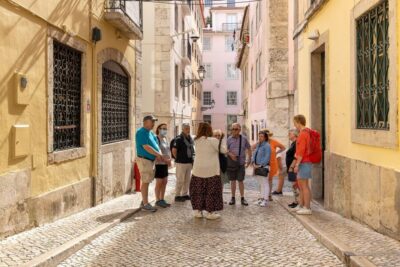
Freedom Trail History Small Group Walking Tour
Read our review →
Historic Charleston Guided Sightseeing Walking Tour
Read our review →
Tapas Walking Tour with Food, Wine, and History
Read our review →
Savannah History and Haunts Candlelit Ghost Walking Tour
Read our review →