
Review · BERLIN WALKING TOURS
Potsdam, City of Emperors Walking Tour
Royal Potsdam packs centuries into one day. I like the way this small-group walking tour links Prussian palaces with the Potsdam Conference and Bridge of Spies, rather than treating the city as a string of pretty buildings. I also like the guide-led use of local buses, trams, and trains, which gives you a better sense of Potsdam beyond its royal park.
The main drawback is the pace. You cover about 5 to 6 kilometers on foot, add several public transport rides, and may be in a group of up to 30 people. The tour also finishes outside Sanssouci Palace, with entry costing extra, so you need to plan your palace visit carefully.
Key points before you book
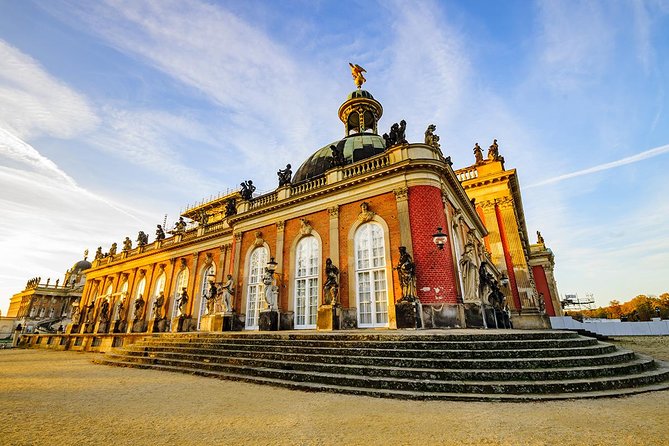
- The day connects royal and modern history: You move from Prussian kings and Kaisers to the 1945 Potsdam Conference.
- The Bridge of Spies is an early highlight: Glienicke Bridge brings Cold War intrigue into an otherwise royal-looking setting.
- Sanssouci Palace entry is not included: Expect to pay about €12 if you want to go inside, and note that the palace is closed Mondays.
- Public transport is part of the experience: You need an ABC ticket, costing €3.40 for a single trip according to the tour information.
- The walking is real, not decorative: Comfortable shoes matter, especially with the 5 to 6 kilometers of walking.
- Guide quality shapes the day: Guides such as Sophia, Rodrigo, Susan, Alice, and Rochelle have been praised for making complicated history clear and lively.
Why Potsdam makes a better day trip than a quick palace stop
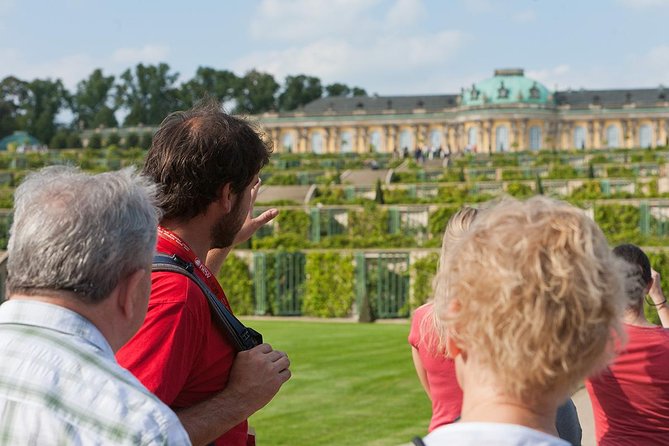
Potsdam sits just outside Berlin, but it feels like a separate chapter of German history. It began as a garrison city for Prussia and later became closely tied to the German kings and Kaisers. Its grand buildings were not placed here by accident. They reflect the power, ambition, and taste of several generations of rulers.
This tour is useful because it puts those buildings into a wider story. You are not simply looking at palace facades. You are learning how Prussian military power shaped Potsdam, how royal families used the city, and how the Second World War changed its meaning.
The route also gives you more than the usual Sanssouci visit. You see the Dutch Quarter, Neuer Garten, Cecilienhof Palace, Babelsberg Palace, Potsdam’s Brandenburg Gate, and Glienicke Bridge. That wider sweep makes the $80 price easier to assess. You are paying for several hours of guiding, transport planning, and historical context, not just entry to one palace.
Still, the value depends on how much you want a guided day. If you are happy navigating public transport and reading palace information on your own, you could spend less independently. If you want someone to explain why these places matter, the tour earns its keep.
A few more walks around Berlin worth a look
- Discover Berlin Half-Day Walking Tour
★ 5.0 · 9,624 reviews - Berlin City walk Government District and Places of Democracy
★ 4.7 · 8,467 reviews - Berlin: Third Reich & Cold War Guided Walking Tour
★ 4.9 · 8,378 reviews
Meeting near Zoologischer Garten at 10:00
The day begins at 10:00 am in front of the Starbucks near Berlin’s Zoologischer Garten station, at Joachimsthaler Str. 1 to 4. This is a central meeting point, but give yourself enough time to find the exact Starbucks and your guide.
You will use Berlin’s public transport system to reach Potsdam. The required ABC ticket is not included. The tour information gives a single-trip ABC fare of €3.40, but you should buy the correct ticket before joining the group and allow time for the journey.
Public transport is both a practical detail and part of the appeal. You are not sealed inside a tour bus. You see how Berlin and Potsdam connect, and you learn the basic rhythm of getting around the region. The tradeoff is that the day includes waiting, boarding, and moving as a group.
The tour ends at the S-Bahn Kundenzentrum Zoologischer Garten, at Hardenbergplatz 13. You can also stay in Potsdam after the guided portion and make your own way back later. That flexibility is useful if you want more time at Sanssouci or in the historic center.
Glienicke Bridge and the Bridge of Spies

After reaching Potsdam, the group walks to Glienicke Bridge. The stop lasts about 30 minutes, and admission is included because the bridge is an open public site.
This is one of the most distinctive parts of the tour. Glienicke Bridge is better known as the Bridge of Spies because it was associated with Cold War prisoner exchanges. The setting can look calm and almost elegant, yet the history involves secrecy, political tension, and divided Germany.
The guide’s role matters here. A short stop at a bridge could otherwise feel thin, but the story gives the place weight. You begin with royal Potsdam, then quickly see how the city remained tied to major European power struggles long after the monarchy disappeared.
The walk to the bridge also helps set the tone for the day. This is not a palace-only outing. It mixes open-air history, urban movement, royal buildings, gardens, and twentieth-century politics.
Bassinplatz and Potsdam’s historic center
From Glienicke Bridge, you take a short bus ride to Potsdam’s town center and explore the area around Bassinplatz. This portion lasts about 30 minutes.
Potsdam’s central streets show how much the city was shaped by royal planning. Baroque buildings and formal streets reflect the ambitions of Prussian rulers who wanted a city suited to military administration and court life. You will also encounter the Dutch Quarter, one of the city’s most recognizable historic areas.
This section is less about entering one famous monument and more about reading the city around you. Look at the scale, street patterns, and building styles as your guide explains how Potsdam grew. The point is to understand the city as a whole, not simply collect palace photographs.
The schedule here is fairly tight. Thirty minutes gives you a useful introduction, but not the freedom to linger over every street or shop. If you have a particular interest in the Dutch Quarter, you may want to return after the tour.
Same streets, a different way to see them:
- Berlin: Discover Berlin Walking Tour
★ 4.9 · 5,998 reviews - Berlin’s Best: 2 Hour Walking Tour Third Reich and the Cold War
★ 5.0 · 5,486 reviews - Berlin: Hidden Backyards Guided Walking Tour
★ 4.8 · 5,360 reviews - Explore Berlin: See All The Iconic Sights & Some Hidden Gems
★ 5.0 · 4,429 reviews
Babelsberg Palace and the Kaisers’ city
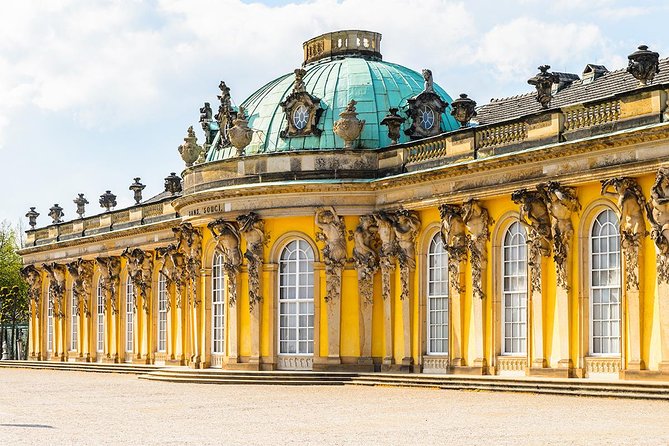
The route continues by tram to Babelsberg Palace. The stop lasts about 30 minutes, and entrance is not included.
Babelsberg was a formal royal residence. It helps explain why Potsdam became known as the city of the German Kaisers. The city housed the Prussian army and provided a setting for several royal palaces, so military identity and court life were closely linked.
The area also has a modern connection through Babelsberg film studios. That gives the stop an extra layer, linking royal Potsdam with Germany’s film industry. The tour information does not promise an interior visit, so you should think of this as an exterior and historical stop rather than a palace admission.
Thirty minutes is enough for an overview and photographs, but not a slow exploration. That is a recurring feature of this outing. You see many important sites, yet you do not get unlimited time at any one of them.
Neuer Garten and Cecilienhof Palace
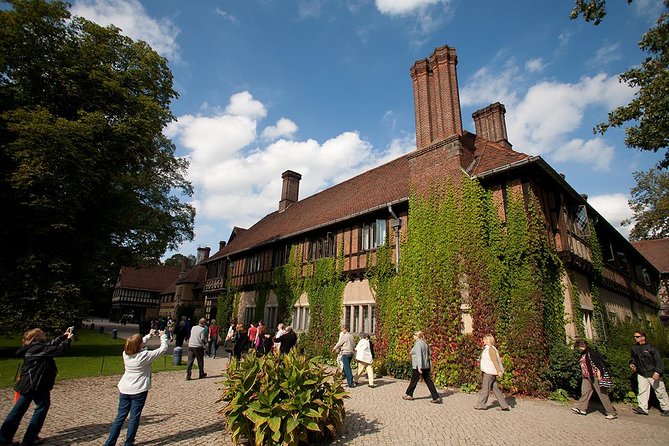
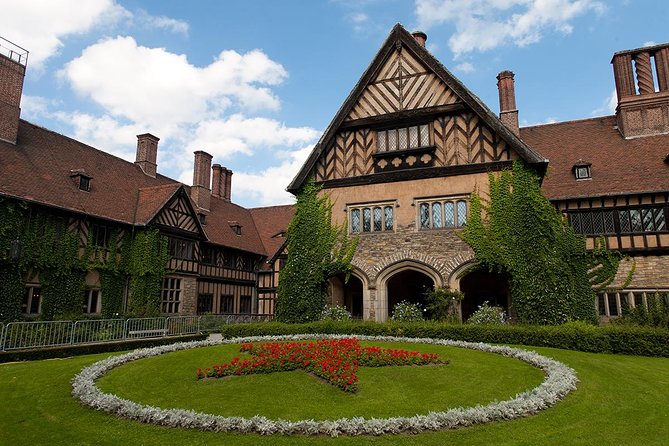
Next comes Neuer Garten, or New Garden, followed by Cecilienhof Palace. The stop lasts about 30 minutes, and palace admission is not included.
Cecilienhof is especially important because it connects the old monarchy with the end of the Second World War. It was home to the German Crown Prince before the royal family abdicated. Its story helps show how quickly Germany moved from imperial rule to defeat and political upheaval.
The palace later became the site of the Potsdam Conference, where Allied leaders negotiated arrangements after the war. That makes this one of the strongest historical stops on the route. You are standing in a former royal setting that later hosted decisions affecting postwar Europe.
You should check what you want from this stop before booking. If your priority is entering Cecilienhof and studying its rooms, the tour may feel brief, since the entrance fee is not included and the scheduled stop is only about half an hour. If your priority is understanding the building’s place in German and world history, the guide’s explanation may be the main reward.
Potsdam’s Brandenburg Gate and the story of royal expansion
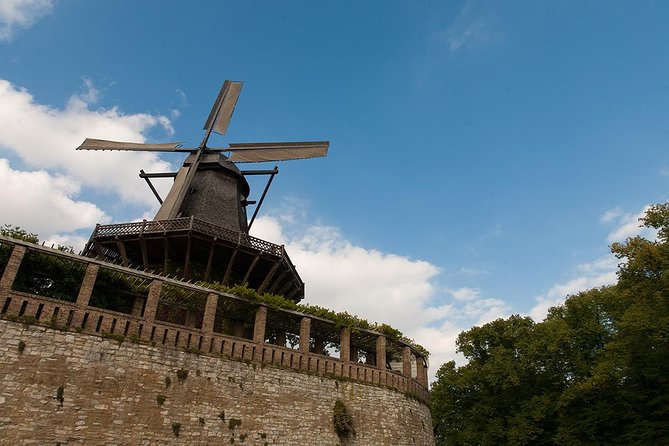
The Potsdam Brandenburg Gate is another 30-minute stop. It is not Berlin’s Brandenburg Gate, although the name can cause confusion. Here, your guide explains the city’s growth through the work of four generations of Prussian kings, followed by the upheavals of two world wars.
This is a good place to see how Potsdam’s grand ambitions were expressed in public architecture. The gate marks a city shaped by royal planning, military power, and the desire to project status.
By this point, the tour has moved through several periods: Prussian expansion, imperial Germany, the First World War, the Second World War, and the changes that followed. The guide’s ability to keep those periods connected is important. Several guides, including Rodrigo and Alice, have been praised for making the history easy to follow and for keeping the explanations lively.
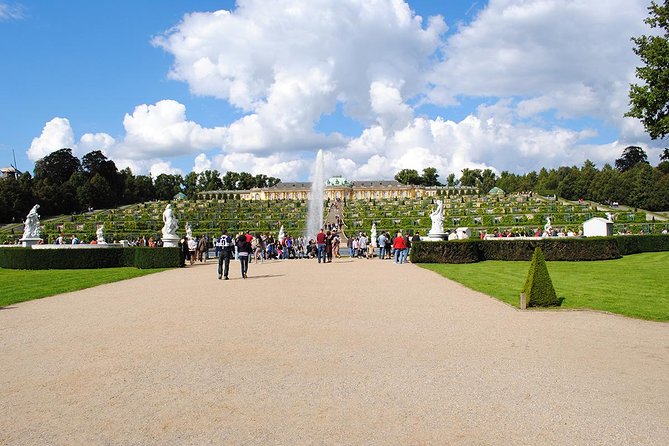
Sanssouci Palace, Frederick the Great’s summer retreat
The tour ends at Sanssouci Palace, the former summer palace of Frederick the Great, King of Prussia. The scheduled visit lasts about 30 minutes, and admission is not included. The listed entrance price is €12.
Sanssouci is the visual payoff of the day. Its setting and architecture show the personal side of Frederick the Great’s rule, away from the formal business of the capital. Your guide explains the palace and helps you understand how to buy the best-priced tickets and avoid the longest lines.
Read that carefully: the tour does not include admission, and the guided portion ends outside the palace. If you want to tour the interior, you will need to budget extra time and money. You may also find that ticket availability affects how much you can see.
The palace is closed on Mondays, so this tour needs special care if your visit falls at the start of the week. In winter, some statues at Sanssouci may be covered, which can slightly reduce the visual appeal of the park. The grounds remain a worthwhile part of the stop, but expectations should match the season.
After the guided portion, you can stay in Potsdam and explore independently, or return with the guide by train to central Berlin. That choice is one of the tour’s practical strengths. You are not forced to leave just as the palace area becomes interesting.
How the transport and walking affect the day
This is called a walking tour, but it is really a walking and public transport tour. You walk between sites, then use a bus, tram, or train to cover the larger gaps.
The total walking distance is about 5 to 6 kilometers. Add uneven pacing, time on your feet, and transfers, and you get a full half-day outing. You do not need special athletic ability, but you should have a moderate level of fitness and wear comfortable shoes.
The group size can reach 30 people. Some departures may be much smaller. One reported outing had only two people, while another had 26. A tiny group can feel personal and flexible. A group near the maximum can make it harder to hear the guide and keep up, particularly during transfers.
The operator allows the guide to adjust the route based on the group and conditions. That can work in your favor, but it also means the exact experience may vary. The day usually lasts about six hours, though the stated duration is approximately five and a half hours.
What the $80 price really covers
At $80, this is not a cheap independent day trip. You also pay for public transport, food, drinks, and palace admissions. The ABC ticket adds €3.40 for the stated single trip, and Sanssouci costs about €12 if you enter.
The price makes more sense if you value the guide’s historical explanation and the coordination of a complicated route. Moving between Glienicke Bridge, the center, Babelsberg, Cecilienhof, the Brandenburg Gate, and Sanssouci requires attention to transport and timing. You avoid doing all that planning yourself.
The included lunch break is useful, but food and drinks are not included. Treat it as time to pause rather than a paid meal. If you are watching your budget, bring water and allow room for your own lunch cost.
The tour is also a good fit for people who want a broad first look at Potsdam. You get a guided framework and can return later to explore the palace interiors or central streets at a slower pace.
The guides make the largest difference
The strongest part of this experience is the human one. Sophia has been praised for a smooth, well-informed day. Rodrigo is described as enthusiastic and clear, while Susan made the past feel close and accessible through her personality and insight.
Alice took extra care of the group, and Rochelle earned praise for covering a lot of ground while keeping the explanations useful. These details matter because Potsdam can otherwise become a blur of royal names, dates, and buildings.
The tour works best when the guide tells a connected story rather than delivering isolated facts. You want to understand why the Prussian kings built here, how the Kaisers used the city, and why Potsdam became central to postwar negotiations. The best guides make those links easy to remember.
Who should book this Potsdam tour?
I would choose this tour if you want a structured introduction to Potsdam and enjoy moving through several layers of German history in one day. It suits first-time visitors to the city, people who prefer a guide, and anyone interested in the connection between Prussia, the monarchy, the Second World War, and the Cold War.
It is less suitable if you want a slow palace visit, dislike group transfers, or expect all admissions and transport to be covered. You should also think twice if 5 to 6 kilometers of walking sounds tiring.
My practical advice is simple: book it for the guide and the full historical route, not just for Sanssouci. Buy the ABC ticket ahead of time, wear good shoes, check the Monday closure, and keep extra money available for palace entry.
At 93 percent recommended and a 4.7 rating from 169 reviews, the experience has a strong record. I would book it if your Berlin schedule has one day for Potsdam and you want the city explained rather than merely photographed. If you already know Potsdam well, an independent return visit may offer more freedom.
FAQ
How long does the Potsdam City of Emperors tour last?
The tour lasts approximately five and a half hours, although the experience is also described as lasting about six hours.
Where does the tour begin?
It begins at 10:00 am in front of the Starbucks near Zoologischer Garten station, at Joachimsthaler Str. 1 to 4, 10623 Berlin.
Where does the tour end?
The listed end point is the S-Bahn Kundenzentrum Zoologischer Garten at Hardenbergplatz 13 in Berlin. You may also stay in Potsdam after the guided portion and return later on your own.
Is public transportation included?
No. You need to purchase an ABC public transport ticket before joining the tour. The stated single-trip ABC fare is €3.40.
Is Sanssouci Palace admission included?
No. Entrance to Sanssouci Palace costs about €12 and must be paid separately. The tour ends outside the palace.
Is Sanssouci Palace open every day?
No. Sanssouci Palace is closed on Mondays.
How much walking is involved?
The tour covers about 5 to 6 kilometers of walking. Comfortable shoes and a moderate level of fitness are recommended.
Can children join the tour?
Children under the age of 13 may join free. The tour can have a maximum of 30 participants.
Just added around Berlin
- Berlin Walking Tour★ 4.5 · 378 reviews
- Berlin Street Art Walking Tour – Off The Grid★ 5.0 · 270 reviews
- Berlin Highlights Private Guided Walking Tour★ 4.5 · 89 reviews
- Small Group Walking Tour of East Berlin with a French Guide★ 5.0 · 176 reviews
- Private Walking Tour: World War 2 and Cold War Sites in Berlin★ 5.0 · 230 reviews
- East Meets West: Berlin Food Culture & Street Art★ 5.0 · 157 reviews
- Kreuzberg Berlin: Off the Beaten Track PRIVATE Walking Tour★ 5.0 · 128 reviews
- The History of Berlin: WWII PRIVATE Walking Tour With Locals★ 5.0 · 209 reviews
Berlin Walking Tours, compared.
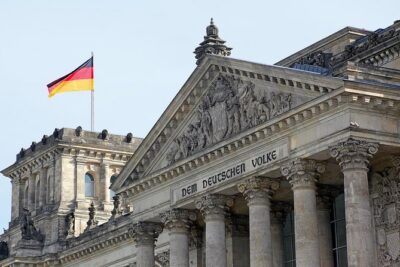
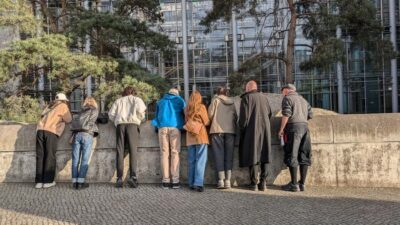
Berlin City walk Government District and Places of Democracy
Read our review →
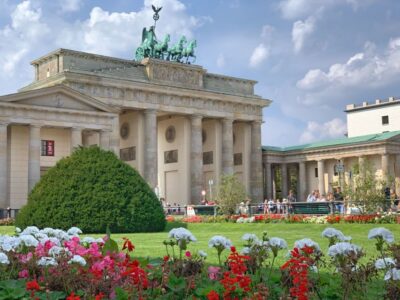
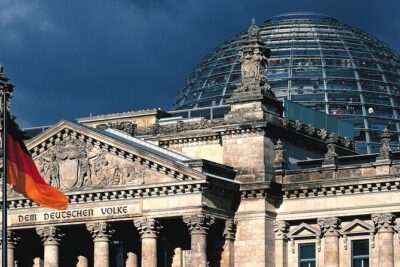
Berlin’s Best: 2 Hour Walking Tour Third Reich and the Cold War
Read our review →
Explore Berlin: See All The Iconic Sights & Some Hidden Gems
Read our review →
Third Reich Berlin: Hitler and WWII Walking Tour
Read our review →Browse the lists this tour appears in