
Review · HISTORY WALKING TOURS
Rotterdam: Highlights, Gems, Architecture & History Walk
Rotterdam makes more sense on foot. This small-group walk connects the city’s medieval beginnings, wartime destruction, harbor power, and bold modern buildings into one clear story. With local guides such as Yoreh and Elmer leading the way, you get more than a checklist of sights. You get the reasons behind Rotterdam’s unusual shape and its appetite for new ideas. I especially like the old-to-future architecture theme and the use of large photo sheets to show what stood here before, what stands here now, and what may come next.
I also like the practical finish inside the Markthal. You end near food, with suggestions for lunch and more places to visit, rather than being left beside an anonymous street corner. The main consideration is physical: expect about 5 kilometers, roughly 11,000 steps, stairs or standing at several points, and a fairly steady pace. The two-hour version is easier to fit into a tight schedule, while the three-hour option gives the city’s story more room to breathe.
Key points to know before booking
- A local view of Rotterdam: Dutch guide Yoreh grew up in the city and brings personal stories, local habits, and honest opinions about its past and future.
- A clear WWII story: The walk explains how the German bombing and invasion changed Rotterdam and why rebuilding produced such a modern city.
- Architecture from three eras: You compare older buildings with current designs and proposed future developments, rather than seeing modern towers in isolation.
- A useful route through central Rotterdam: Depot Boijmans Van Beuningen, Veerhaven, Erasmus Bridge, Leuvehaven, the Maritime District, Oude Haven, Cube Houses, and Markthal all fit into one walk.
- Small comforts matter: Stroopwafels, toilet stops, sitting points, photo advice, and restaurant suggestions make a long city walk easier.
- Good for first-day orientation: You finish at the Markthal with a better sense of where to return during the rest of your stay.
Why Rotterdam needs a story, not just a sightseeing list
Rotterdam can puzzle you at first. It lacks the old-world streetscape many people expect from a Dutch city, and its center can feel like a collection of separate districts, towers, water edges, and traffic routes.
That is exactly why this walk is useful. It begins with the city’s roots on the Rotte River in the 13th century, then follows Rotterdam’s growth from a small trading settlement into one of Europe’s great ports. The guide connects the harbor to daily life, commerce, urban planning, and the city’s modern identity.
The WWII section gives the route its emotional center. Much of central Rotterdam was destroyed in the May 1940 bombing, and the rebuilding that followed was not simply an attempt to recreate the old city. Rotterdam chose space, experimentation, traffic flow, high-rise construction, and new forms of housing.
I value that context because the Cube Houses, Markthal, and modern skyline can otherwise seem like separate design projects. Here, you learn why Rotterdam looks different from many Dutch cities and how destruction, practical needs, and civic ambition shaped what came next.
More City Highlights Walking Tours in the Netherlands
- Amsterdam: Cultural Highlights Walking Tour
★ 4.9 · 2,629 reviews - Amsterdam Highlights Walking Tour: Small Group Experience
★ 5.0 · 1,132 reviews - Amsterdam: Historical Highlights Walking Tour with Tasting
★ 4.6 · 381 reviews
Depot Boijmans and the first look at Rotterdam’s new face
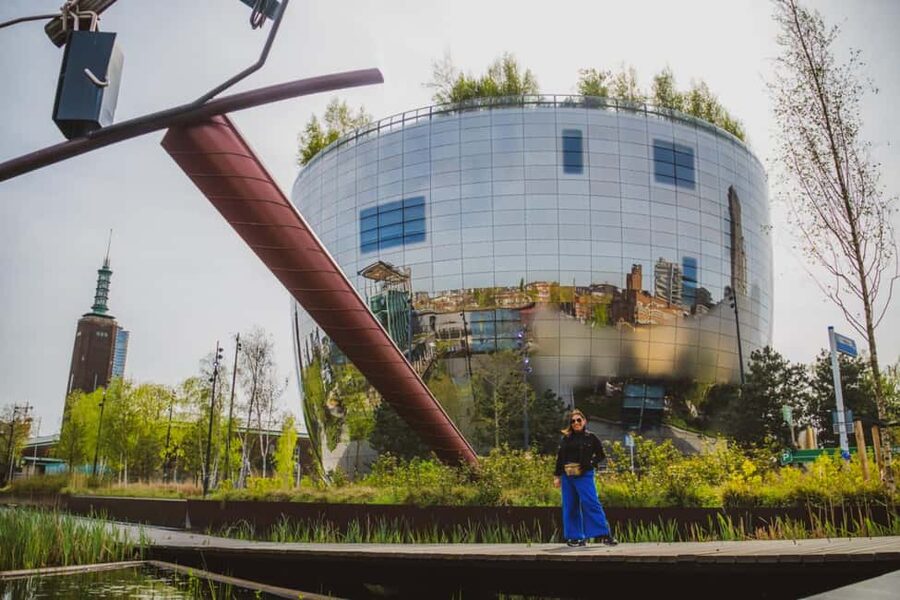
The route passes Depot Boijmans Van Beuningen, the striking art storage building near the Museum Quarter. Even from outside, its rounded mirrored form makes a useful opening statement: Rotterdam treats architecture as part of public life, not just a container for art or offices.
You should not expect a museum visit during the walk. The building is a pass-by stop, so the guide uses it to explain the city’s current design culture and its relationship with art. If you want to visit inside, plan that separately.
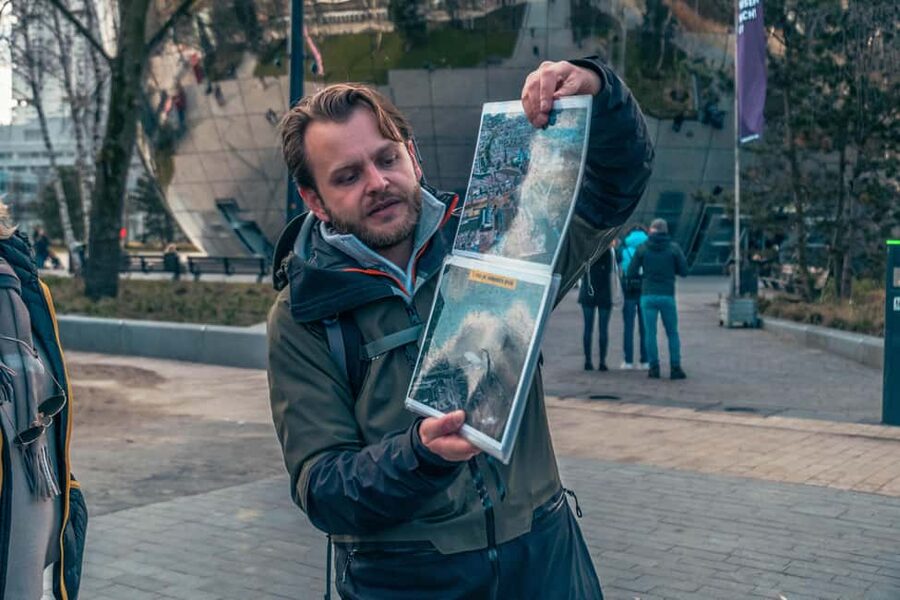
This is also where the photo material becomes valuable. Yoreh is known for carrying A3 images, maps, and other visual aids that show earlier versions of buildings and areas. Old photographs can make Rotterdam’s wartime loss and postwar rebuilding much easier to grasp than a spoken date alone.
Veerhaven and the contrast of older Rotterdam
Veerhaven offers a change of mood. After the modern geometry around the Museum Quarter, you reach an area associated with older harbor life and more traditional architecture.
The point is not to pretend Rotterdam is uniformly old. It is to show you the pieces that survived or developed differently from the bombed center. This contrast gives the rest of the walk more meaning. Rotterdam’s identity is not simply modern. It is a conversation between the fragments of its past and the city’s determination to keep changing.
This part can also be helpful if you are deciding where to spend more time later. The guide offers suggestions for museums, restaurants, shopping, and photo locations, so keep your phone handy if you want to save ideas.
Erasmus Bridge and the city’s water connection
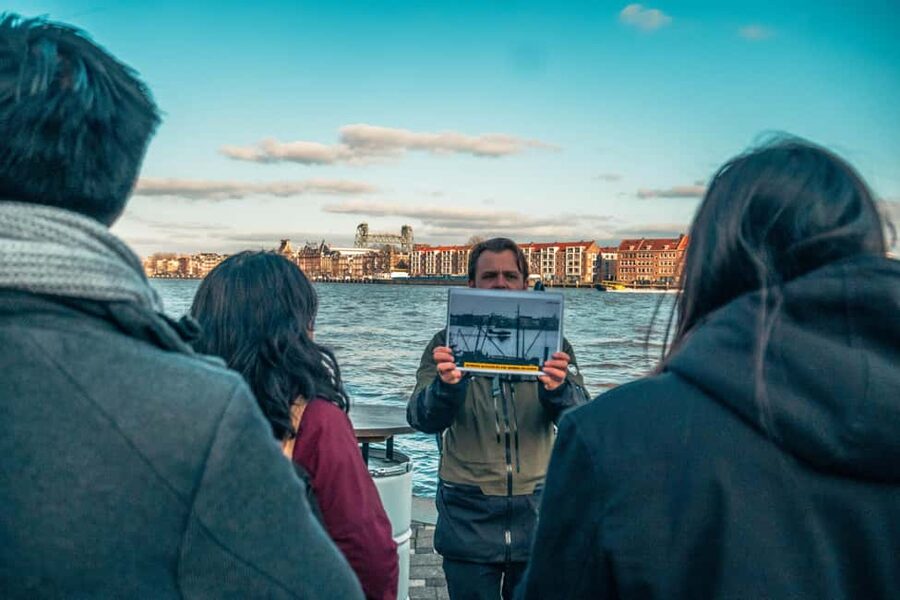
The Erasmus Bridge is one of the route’s major visual moments. Its shape is often linked with Rotterdam’s resilience, and the bridge gives you a broad view across the water and toward the city skyline.
You pass by rather than stop for a formal bridge tour, but the setting provides room for photographs and a strong sense of scale. Rotterdam’s port is not just background scenery here. Water, shipping, bridges, and urban expansion are central to the city’s story.
The guide may adjust the exact route for weather or city events. That is sensible in a working city where public spaces can host festivals, construction, or other activity. The route’s main themes remain, but a particular viewpoint or street may change.
More History Walking Tours in the Netherlands
- Amsterdam: Haunted History and Ghost Walking Tour
★ 4.5 · 488 reviews - Amsterdam History Walking Tour
★ 5.0 · 281 reviews - Amsterdam: Highlights & History Walking Tour
★ 4.8 · 266 reviews - Anne Frank and Amsterdam Jewish History Walking Tour
★ 5.0 · 259 reviews
Leuvehaven and the Maritime District
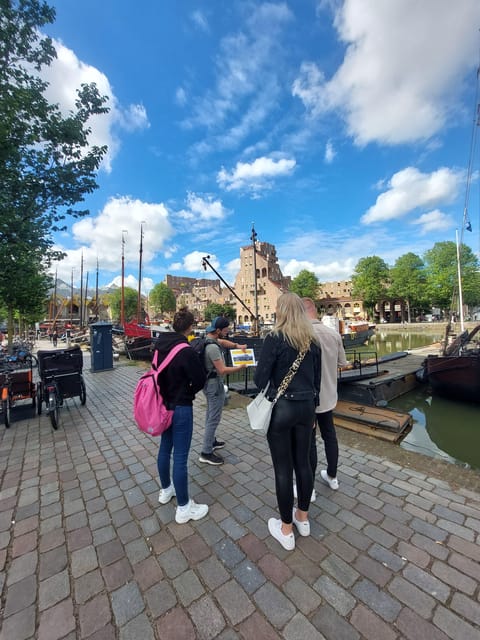
At Leuvehaven, the tour spends about ten minutes passing through an area where Rotterdam’s maritime identity is especially clear. The Maritime District continues that theme, linking the city’s present-day skyline with its working harbor past.
This is one of the better parts of the walk for understanding why Rotterdam grew so powerful. The guide does not treat the port as a remote industrial zone. Instead, you see how shipping helped shape neighborhoods, employment, public space, and the city’s international outlook.
You may hear stories about industry, important local figures, and everyday life. The guide’s personal connection helps here. Yoreh is praised for explaining not only what happened, but why it mattered to people living in Rotterdam.
Oude Haven and the city’s old-new conversation
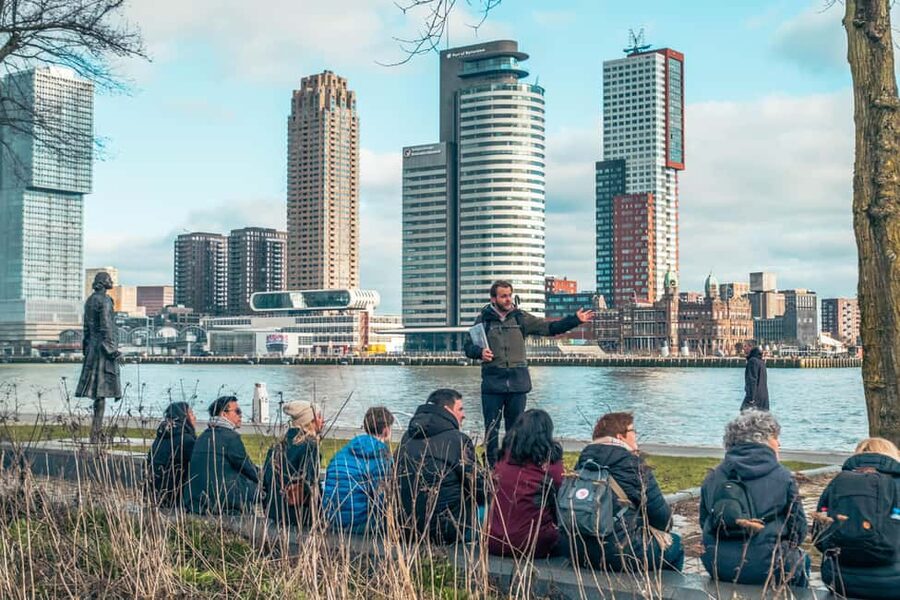
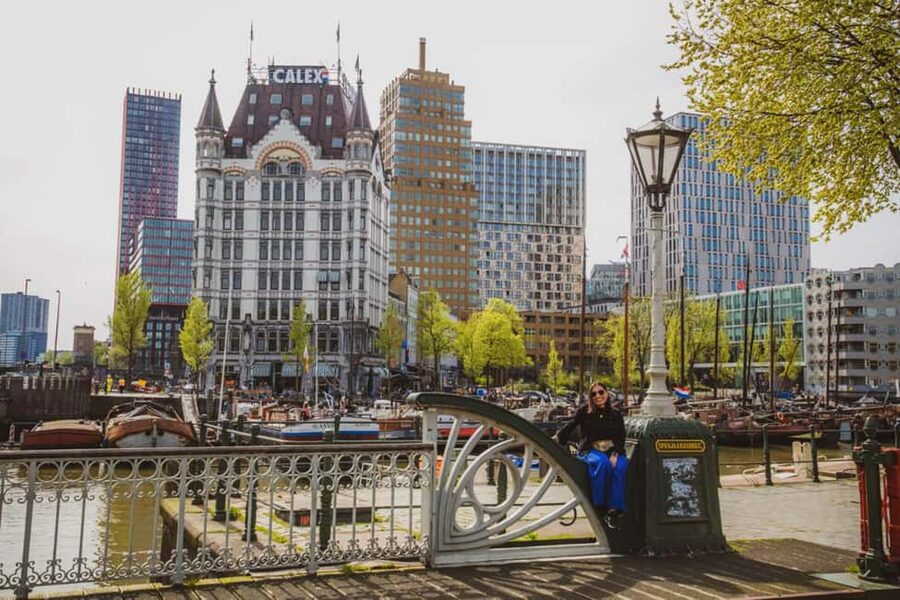
Oude Haven is another useful contrast point. It brings you close to older harbor areas while the modern city rises around them.
The route’s strength is the way it keeps placing one era beside another. Rotterdam is easier to understand when you can see surviving older structures, restored waterfront areas, postwar buildings, and daring new designs within the same walk.
This is also a good place to ask questions. The group is small, and the guides are described as happy to adjust explanations to people’s interests. If architecture interests you most, you can ask about materials, planning, and design. If WWII history matters more, you can spend more time on the bombing and reconstruction.
Cube Houses and Overblaak’s bold experiment

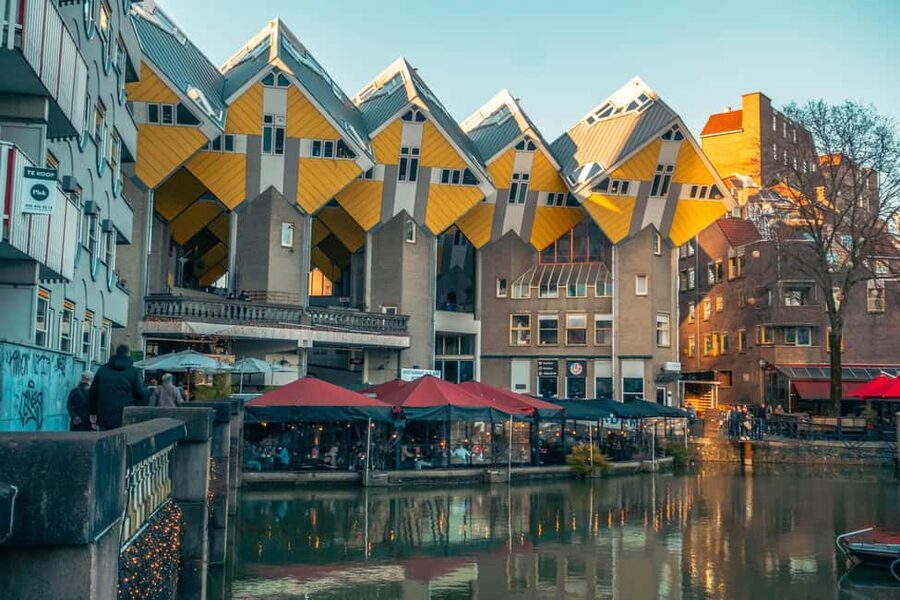
The Cube Houses are the most playful stop on the route. Their tilted forms and unusual angles make them one of Rotterdam’s best-known sights, but the walk adds useful context beyond the standard photo opportunity.
You pass through the Overblaak area and learn how the housing concept fits Rotterdam’s wider habit of testing new ways to use limited urban space. The buildings are fun to photograph, but they also raise practical questions about privacy, furniture, windows, and ordinary life inside an unconventional design.
The walk does not include entry into a Cube House. You can visit inside afterward, just about a minute away, so plan that extra stop if you want to see how the interior works.
This is one of the places where families may enjoy the tour. One guide kept children aged 12 and 16 interested for the full three hours, and the visual material helps make architectural ideas easier to follow.
Markthal, the final stop, and a smart place to end
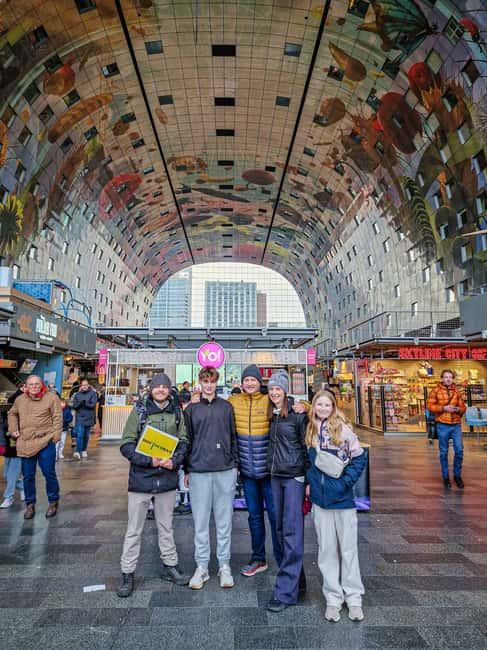
The Markthal is both a landmark and the practical finish to the route. Its vast interior artwork has earned it the nickname Modern Sistine Chapel, and the building brings together housing, food, public space, and striking design.
You visit the Markthal rather than simply passing outside. The guide can point you toward places to eat, which is welcome after a five-kilometer walk. A stroopwafel halfway through the tour provides a small Dutch energy boost, but you may still be ready for a proper meal by the end.
Finishing here works well because you can continue independently. You are near food and can use the guide’s suggestions to choose something that suits your budget and appetite. You can also return later for a closer look at the market and the building’s interior.
The two-hour and three-hour choices
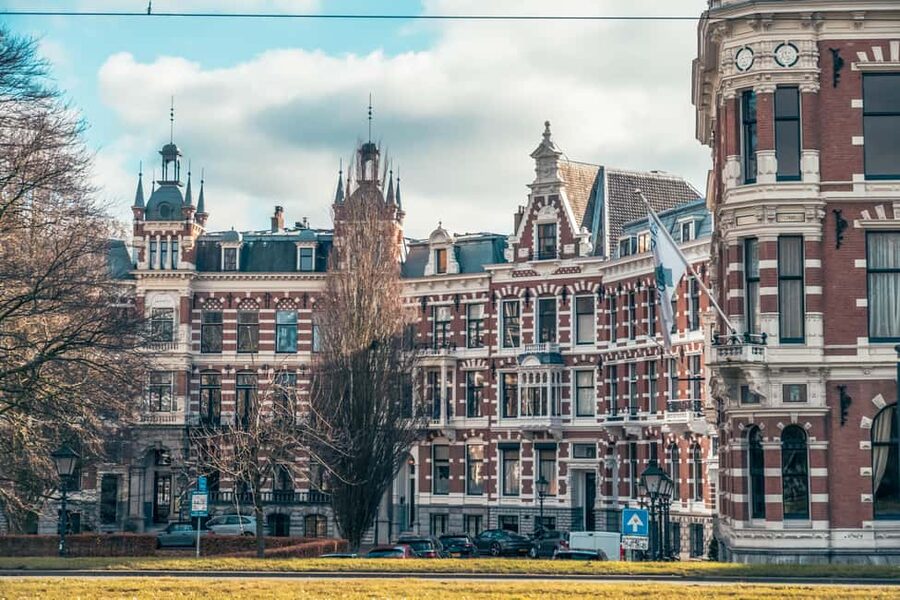
The two-hour option gives you a broad orientation. It is a good fit if Rotterdam is one stop on a busy itinerary, if you want to understand the city before exploring alone, or if a shorter walk is easier on your feet.
The three-hour option adds more detail and a fuller route through the central districts. You get more time for the WWII story, architecture, local anecdotes, future development plans, and questions. The extra hour is not filler. It helps connect the stops into a coherent explanation.
Both versions involve a steady pace. You can stop for photos, but the group needs to keep moving to finish on time. The guide does provide small sitting breaks when conditions are dry, plus a restroom break halfway, though this is still an active walk rather than a leisurely wander.
How the guide affects the experience
The strongest praise centers on the guides, especially Yoreh and Elmer. Yoreh is described as a native Rotterdammer with strong English, a warm manner, and a passion for both the city’s difficult past and its future plans.
That combination matters. A guide can recite dates, but this experience aims to explain how Rotterdam feels to someone who grew up there. Personal stories, local quirks, humor, photo advice, and suggestions for the rest of your visit give the walk a human scale.
The group may be very small. One solo visitor had a private-feeling two-hour walk even though no other bookings were scheduled, and couples have also had the guide’s full attention. The exact group size can vary, but the experience is designed as a small-group tour rather than a large procession.
The photo boards are another real benefit. They let you compare past and present scenes on the spot, and they help when the subject is an invisible loss, such as streets and buildings destroyed during WWII.
Price, pace, and who gets good value
At $48 per person, the tour is not the cheapest way to see Rotterdam, but the value is solid if you want orientation, history, architecture, and practical advice in one booking.
You are paying for two to three hours with a local guide, a carefully connected route, visual material, a stroopwafel, sitting opportunities, a restroom stop, photo tips, and food suggestions. You also avoid spending your first day piecing together the city’s story from separate museums and guidebook paragraphs.
The price is less compelling if you only want quick photographs of the Cube Houses and Markthal. You can see those sights without a tour. It makes more sense if you want to understand why they are there and how they fit into Rotterdam’s development.
Wear good walking shoes. The route covers about 5 kilometers and 11,000 steps, with periods of standing and some stairs. Wheelchair users can use a route where stairs and steps are avoided, and an accessible restroom is available, but you should still consider the distance and time on your feet.
The walk is not recommended for people with back, hip, or foot problems, or for highly pregnant participants. Bring clothing suitable for the forecast, since much of the experience takes place outside.
Should you book this Rotterdam walk?
Book it if this is your first visit, especially during your first day or two. The route gives you a useful mental map, explains why the city looks the way it does, and leaves you with a practical list of places to revisit.
It is also a strong choice for anyone interested in architecture, city planning, WWII history, harbor culture, or local stories. Families can benefit from the visual aids and the variety of stops, provided everyone is comfortable with the walking distance.
Skip it if you dislike brisk walking, long periods of standing, or tours that cover several subjects in one outing. For most visitors who want more than surface-level sightseeing, though, this is a well-priced introduction to a city that rewards explanation. End at the Markthal, take the guide’s lunch advice, and let the rest of Rotterdam unfold from there.
FAQ
How long does the Rotterdam walking tour last?
You can choose a two-hour or three-hour version. The shorter tour gives you a general overview, while the longer option offers more detailed stories, a fuller route, and more time for architecture and history.
How much does the tour cost?
The price is $48 per person.
Which languages are available?
The tour is available in Dutch and English.
Where does the tour start?
There are four starting location options, and the exact meeting point depends on the option you book.
Where does the tour finish?
The walk finishes inside Rotterdam’s Markthal, also called the Market Hall.
Which major sights are included?
The route passes Depot Boijmans Van Beuningen, Veerhaven, Erasmus Bridge, Leuvehaven, the Maritime District, Oude Haven, and the Cube Houses. You visit the Markthal.
Is the tour wheelchair accessible?
Yes. The route can avoid stairs and steps, and an accessible restroom is available. You should still consider that the walk lasts up to three hours and covers about 5 kilometers.
How much walking is involved?
Expect approximately 11,000 steps and about 5 kilometers. There are restroom breaks and selected sitting opportunities, but you should wear comfortable walking shoes.
Just added around the Netherlands
- Small Group Walking Tour in Amsterdam with Friendly and Fun Guide★ 5.0 · 281 reviews
- Humans of Amsterdam: Cultural Walking Tour incl. meeting 2 locals★ 5.0 · 320 reviews
- Amsterdam: Private Introduction Walking Tour (TOP RATED)★ 5.0 · 223 reviews
- Amsterdam Private Historical Walking Tour★ 5.0 · 75 reviews
- Private Tour: Amsterdam City Walking Tour and Canal Cruise★ 4.5 · 142 reviews
- Anne Frank and Jewish Quarter Amsterdam Private Walking Tour★ 5.0 · 684 reviews
- Small Group Walking Tour – Hello Amsterdam★ 5.0 · 505 reviews
- Amsterdam: Anne Frank and World War II Walking Tour (TOP RATED)★ 4.5 · 72 reviews
History Walking Tours, compared.
History and Hauntings of Salem Guided Walking Tour
Read our review →
Freedom Trail History Small Group Walking Tour
Read our review →
Historic Charleston Guided Sightseeing Walking Tour
Read our review →
Tapas Walking Tour with Food, Wine, and History
Read our review →
Savannah History and Haunts Candlelit Ghost Walking Tour
Read our review →
A History of Terror – Belfast City Centre Walking Tour
Read our review →Browse the lists this tour appears in