
Review · CITY HIGHLIGHTS WALKING TOURS
Salamanca: Monuments and Landmarks Guided Walking Tour
Salamanca rewards a slower look. This small-group walking tour links the city’s grandest sights with lesser-known details, from the shell-covered Casa de las Conchas to the painted ceiling called the Sky of Salamanca. I like the clear route and the chance to see several major monuments without spending a day arranging separate visits.
I also like the guide’s local connection. Martoke receives repeated praise for her clear English, friendly manner, history and architecture knowledge, and easy pace. The main consideration is that two to three hours is a tight window for this many stops, and some participants may find the historic streets and extended walking tiring.
Key points at a glance
- Meet under the Plaza Mayor clock: The tour begins in Salamanca’s grand central square, an easy landmark for finding your guide.
- See the city’s golden sandstone core: The route connects the Plaza Mayor, Monterrey’s Palace, Casa de las Conchas, the cathedrals, and university courtyards.
- Look for the Sky of Salamanca: This ceiling painting offers a quieter, more unusual stop than the city’s famous facades.
- Martoke is a major strength: Her English, German, Spanish, and Dutch make this a useful choice for mixed-language groups.
- Expect a genuinely small group: Past groups have been as small as three or six people, making questions and conversation easier.
- Extended options add depth: You can choose two extra monuments, including university buildings, St. Stephen’s Convent, cathedral towers, the Monastery of the Dueñas, or Las Claras.
Why this Salamanca walk works so well
Salamanca is compact, but its history is layered. A short walk can take you from an elegant Baroque square to Gothic decoration, university courtyards, church towers, and a ceiling painted with stars and constellations. The hard part is knowing what you are looking at and why it matters.
That is where this tour earns its price. For $29 per person, you get a live guide, a planned route, and an introduction to the main historic center. You are not simply being pointed toward buildings for photographs. The guide explains the architectural shifts, local stories, and details that are easy to miss when you explore with only a map.
I see this as a strong first activity in Salamanca. It gives you a framework for the rest of your visit, then leaves you at Plaza de Anaya, close to more historic sights and within easy reach of the city center. You can return later to whichever place deserves more time.
The tour is especially useful if you know little about Salamanca before arriving. Several past participants described it as a good way to understand the city quickly, with facts balanced by anecdotes and humor. That mix matters. A list of dates may be correct, but it rarely helps you remember a place.
More City Highlights Walking Tours in Spain:
- Seville: Small-Group City Highlights Walking Tour
★ 5.0 · 1,204 reviews - Madrid: City Highlights Guided Walking Tour
★ 4.8 · 347 reviews - Salamanca Sightseeing Walking Tour with Local Guide. Spanish
★ 4.7 · 312 reviews
Meeting under the clock in Plaza Mayor
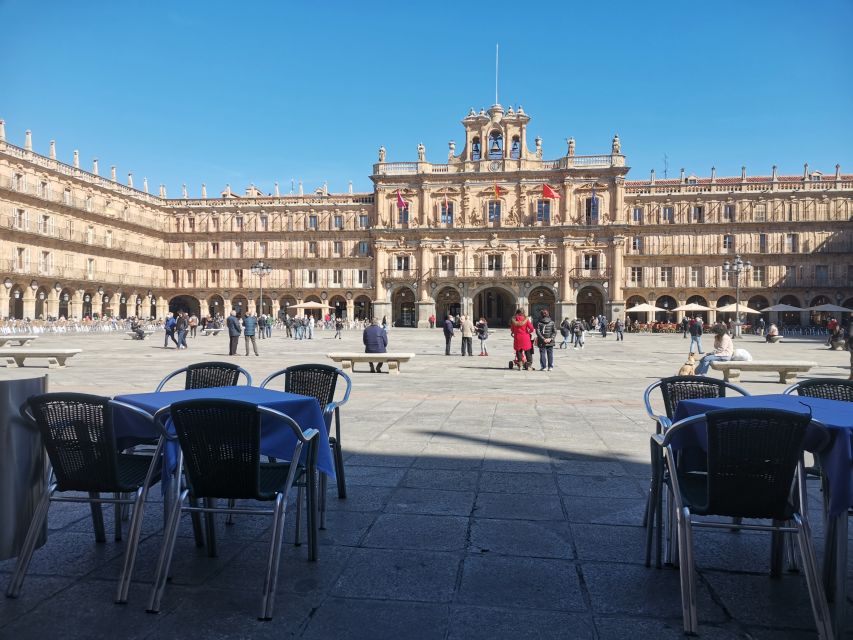
The starting point is under the clock in Plaza Mayor. This is practical and atmospheric at the same time. You begin in the city’s best-known gathering place, surrounded by the famous arcades, Baroque details, restaurants, and warm sandstone that give Salamanca its distinctive look.
Allow yourself a few minutes to locate the clock area without rushing. Plaza Mayor is broad and can feel confusing when you first arrive, especially if several groups are meeting nearby. The clear landmark makes the meeting point easier than an anonymous street corner.
The opening explanation sets the tone for the walk. You learn how the square fits into Salamanca’s public life and why its architecture is so important. The route then moves through the old center at a pace designed for looking, listening, and asking questions rather than racing from one photo stop to another.
One useful strength is the group size. The experience carries a small-group guarantee, and the reported groups have sometimes had only three or six people. That makes it easier to hear the guide, ask about a detail, or pause briefly when something catches your attention.
Monterrey’s Palace and Salamanca’s sandstone style
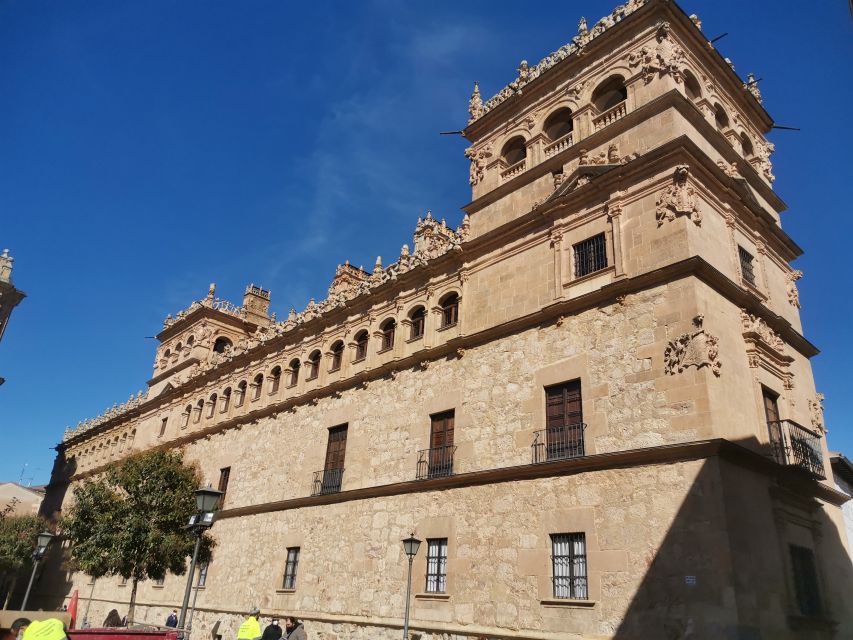
Monterrey’s Palace comes next in the stated route. It adds another grand architectural note before the walk turns toward the better-known university quarter. Here, the value is partly visual: you get another chance to study Salamanca’s golden stone and the way local buildings use ornament to announce status and power.
Your guide helps connect the palace with the wider character of the city. This is the kind of stop that can pass quickly if you are walking alone. With context, it becomes part of a larger story about Salamanca’s noble families, religious institutions, and academic importance.
Do not expect a long independent visit at every stop. The experience is a guided overview, not a series of extended museum sessions. That is useful for a first look, but if Monterrey’s Palace becomes a personal favorite, you may want to set aside additional time later.
Casa de las Conchas: look closely at the facade
Casa de las Conchas is one of Salamanca’s most recognizable buildings. Its Gothic facade is covered with carved shells, an unusual design choice that gives the building its name and makes it easy to spot among the city’s pale stone structures.
The facade rewards patience. From a distance, the shells create a strong pattern. Up close, you can appreciate the repeated decoration and the skill involved in covering a large surface with such precise detail. A guide can also point out the building’s place within Salamanca’s noble and academic quarter.
This is a good example of why a walking tour adds value. You can find Casa de las Conchas by yourself, but you may not know which features deserve attention or how it relates to nearby university buildings. The tour gives you that first layer of meaning without requiring you to prepare beforehand.
The stop is also a natural photo break. Keep in mind that the group still has a schedule, so you may not have unlimited time for detailed photography. If you want carefully composed facade shots, note the location and return later.
More Guided Walks in Spain:
- Granada: Albaicín and Sacromonte Guided Sunset Walking Tour
★ 4.9 · 2,962 reviews - Madrid: Tapas & Wine Tasting Tour with Local Guide
★ 4.8 · 2,171 reviews - Madrid: Royal Palace Skip-the-Line Guided Tour
★ 4.5 · 2,140 reviews - Madrid: Welcome to Madrid Guided Walking Tour
★ 4.9 · 1,738 reviews
The old and new cathedrals, side by side
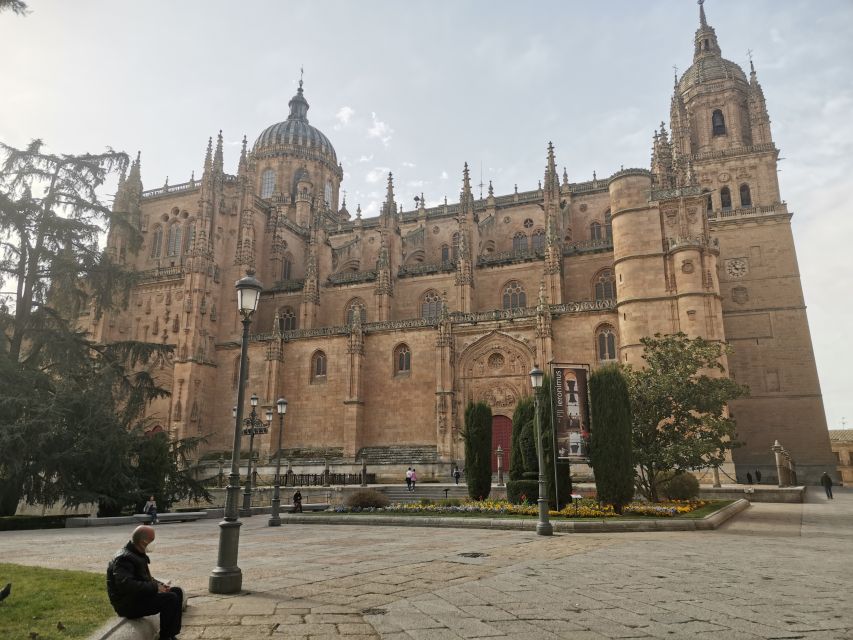
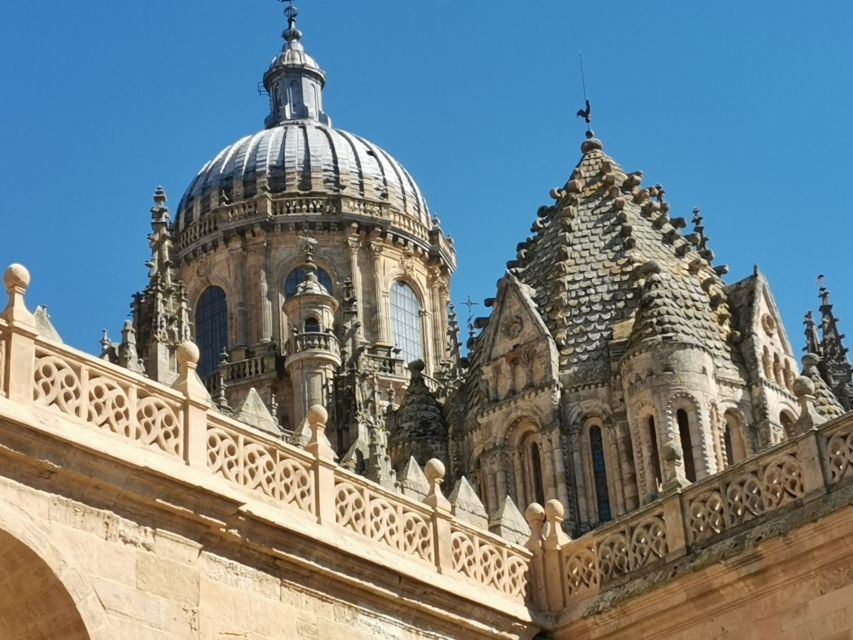
The cathedral portion brings two major buildings into the route: Salamanca’s old cathedral and new cathedral. Their close relationship lets you see how styles and building periods changed over time, rather than treating each church as an isolated monument.
Expect the guide to focus on architecture, history, and the stories behind the buildings. Previous groups have valued explanations that cover several centuries of European design, which helps you make sense of the different forms and decoration.
The cathedral visit also adds visual weight to the walk. After the open space of Plaza Mayor and the patterned Casa de las Conchas, you move into a setting built for ceremony and worship. The scale can be impressive, but the schedule means this is still part of a wider tour.
If you want a slow examination of every chapel, tower, and artwork, the standard route may feel too brief. If your aim is to understand the cathedral’s place in Salamanca and decide if you want to return, the timing is more useful.
The Sky of Salamanca is the tour’s unusual stop
The Sky of Salamanca is one of the most distinctive moments on the route. This painted ceiling is tucked away in a less obvious building, so it is the sort of place you could easily miss while following a standard sightseeing path.
The painting gives the tour a welcome change of pace. Salamanca is famous for facades and monumental stonework, but this ceiling shifts your attention upward and inward. It also shows that the city’s artistic appeal is not limited to its most photographed buildings.
I would pay close attention here. A less familiar stop can be more memorable than another grand exterior because you are seeing something you may not have found alone. The guide’s explanation is important, since the meaning and setting of the painting are not self-explanatory.
This part of the walk also illustrates the balance of the tour. You get the headline sights, then a quieter detail that rewards curiosity. That combination makes the experience feel more personal than a simple circuit of the main squares.
Inside the University of Salamanca
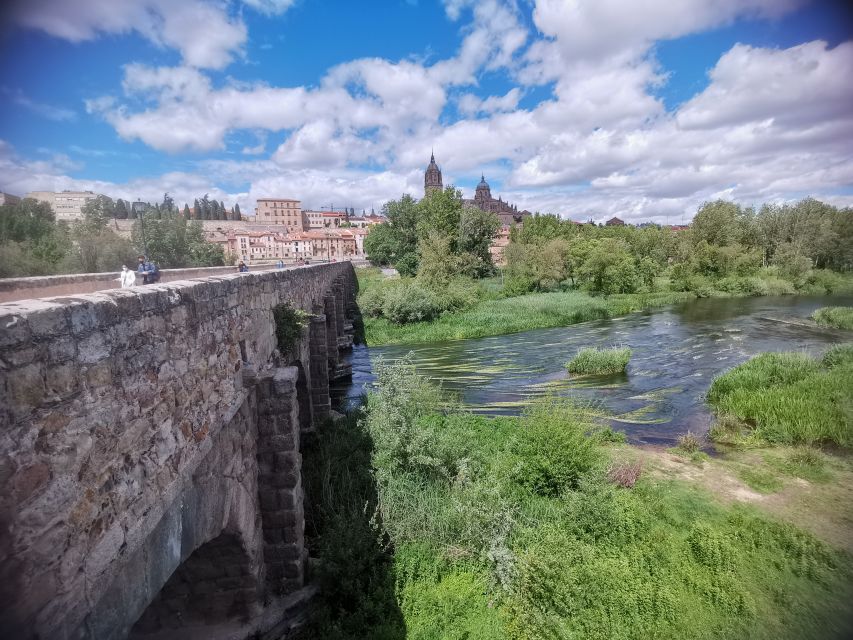
The University of Salamanca is one of the main reasons to choose this tour. It is described as the oldest university in the Hispanic world, and the route includes its patios, grounds, and university buildings.
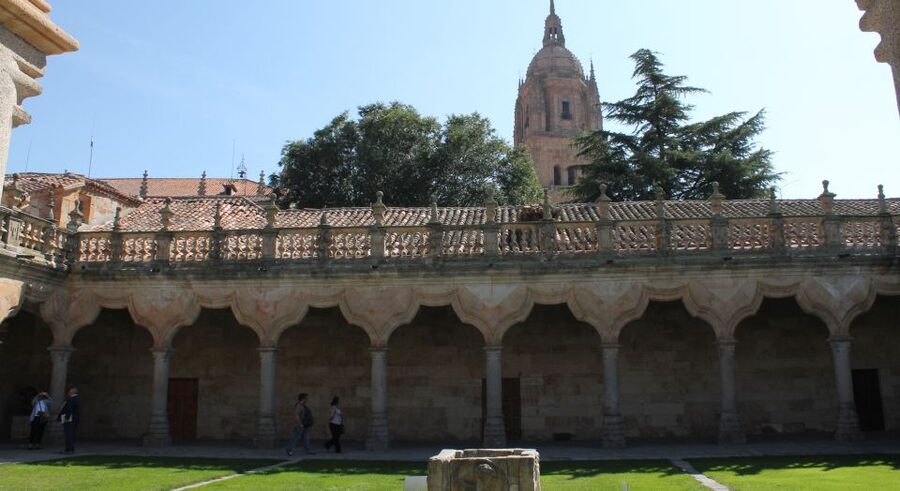
The Patio de Escuelas Menores gives you a chance to see the academic setting from within rather than simply viewing a facade from the street. Courtyards create a different mood from Salamanca’s large public squares. They are enclosed, detailed, and tied to the daily life of an institution that has shaped the city for centuries.
The university facade deserves careful attention too. Salamanca’s stonework often rewards close inspection, and the guide can help you focus on details that blend together when you first look at the whole building. One past participant appreciated being shown places that would have been difficult to locate alone, which is exactly the advantage here.
The university is also the point where the tour’s educational purpose becomes clearest. You are not only seeing an old building. You are learning why Salamanca has such a strong academic identity and how that identity fits with its religious and civic monuments.
The extended version lets you add two extra monuments. Choices include historic university buildings, St. Stephen’s Convent, the medieval cathedral towers, the Monastery of the Dueñas, or Las Claras. These additions are worth considering if you want more interiors or a closer look at religious architecture, but they will make an already full walk more demanding.
Finishing at Plaza de Anaya
The tour ends at Plaza de Anaya. This gives the route a tidy finish near another important part of the historic center, rather than leaving you far from the places you have been exploring.
The ending location is useful for planning the rest of your day. You can continue exploring on foot, return to a monument that deserves more time, or stop for a meal. The precise next step depends on your plans, but you finish with a better sense of how the central sights fit together.
This is also a good point to ask the guide for practical suggestions. Martoke has been praised for sharing information about local customs, food, and items for sale, not just architecture. Her long connection with Salamanca adds a local perspective that can help you look beyond the obvious monuments.
What the guide adds to the experience
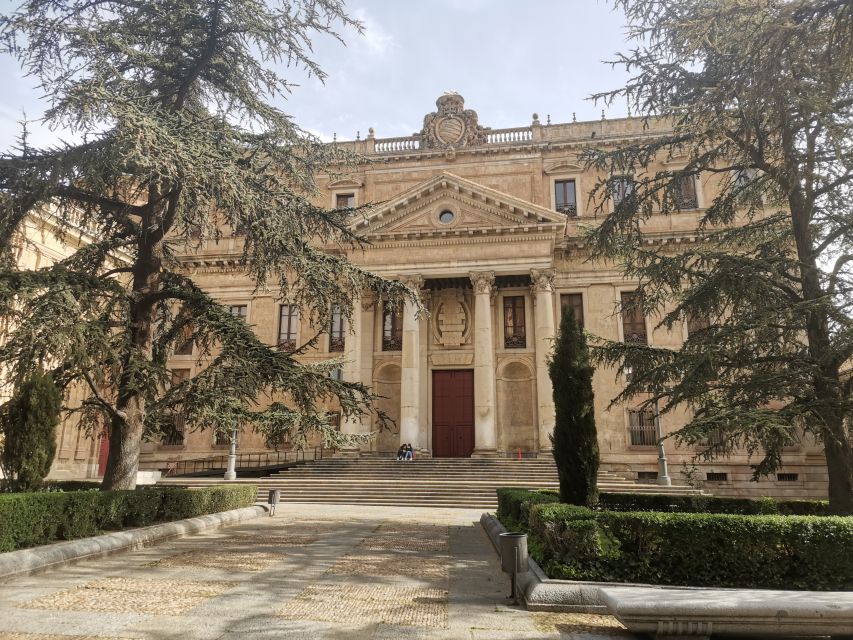
Martoke is the guide most closely associated with this experience, and her strengths appear consistent across many departures. She is described as clear, friendly, professional, and engaging, with especially strong English. She also speaks Spanish, German, and Dutch.
Her ability to adjust to a small group matters. When only a few people are present, you can ask more questions and spend a little longer on the subjects that interest you. One group appreciated having a local resident who had lived in Salamanca for many years, while another praised the easy pace and mix of facts, anecdotes, and amusing stories.
That does not mean every moment will suit everyone. If you prefer to wander silently and set your own pace, a guided route may feel structured. If you like connecting buildings with historical context and asking questions as you go, the format is a good match.
The strongest praise centers on three things: clear explanations, a controlled pace, and personal warmth. Those qualities are especially important in a city where the architecture can seem similar at first glance. A good guide helps you notice the differences.
Timing, walking effort, and practical comfort
The standard experience lasts two to three hours. That is long enough to cover the principal sights, but short enough to fit into a morning or afternoon. Plan on continuous walking through the historic center, with time spent standing while the guide explains each place.
Wear comfortable shoes and comfortable clothing. This advice is basic, but it matters more here than it might on a bus tour. You will be moving between plazas, facades, courtyards, and religious buildings, and the experience does not include transport.
The information gives two different signals about mobility. The activity is marked wheelchair accessible, but it is also described as unsuitable for people with mobility impairments. I would treat that as a reason to confirm the current route and access details before booking if you use a wheelchair or have difficulty walking.
The tour is offered in English, Spanish, Dutch, and German. Check the available departure language when choosing a time, since the best guide experience depends on following the explanations comfortably.
Is $29 a fair price?
At $29, the tour offers solid value if you want an organized introduction to Salamanca. The price covers the walking tour and live guide, while the route brings together several major sights that would take planning to connect efficiently on your own.
The real value is not simply the number of buildings. It is the explanation between them. You can walk around Plaza Mayor, Casa de las Conchas, the university, and the cathedrals without paying for a guide, but you may miss the connections, stories, and less obvious stops.
The price makes the most sense for a first visit, a short stay, or anyone who wants to get oriented before exploring independently. It is less compelling if you already know Salamanca well or want a deep, single-building visit with plenty of time indoors.
Free cancellation up to 24 hours before the start and the option to reserve without paying immediately give you some planning flexibility. Those terms are helpful if your schedule is still changing, but the main reason to book remains the guide and the carefully chosen route.
Who should book this walking tour?
I would recommend it to first-time visitors who want to see the city’s essential monuments without spending hours researching them. It also suits couples, families with older children, and small groups who prefer the chance to ask questions rather than follow a large crowd.
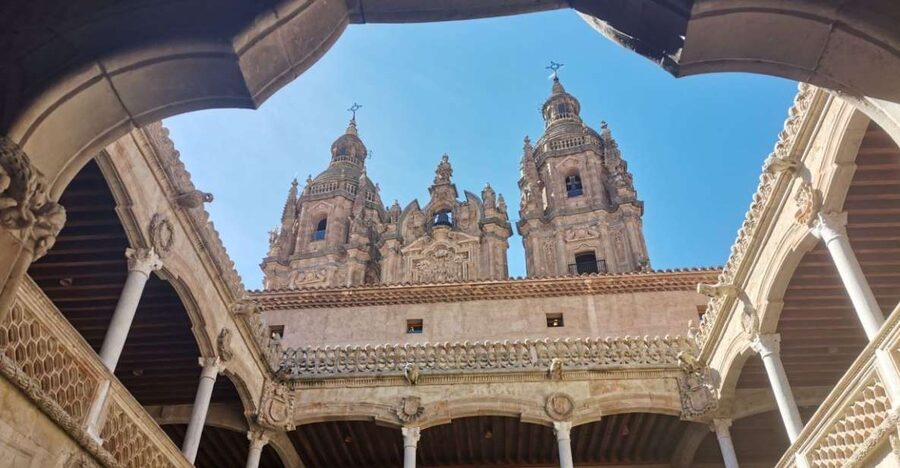
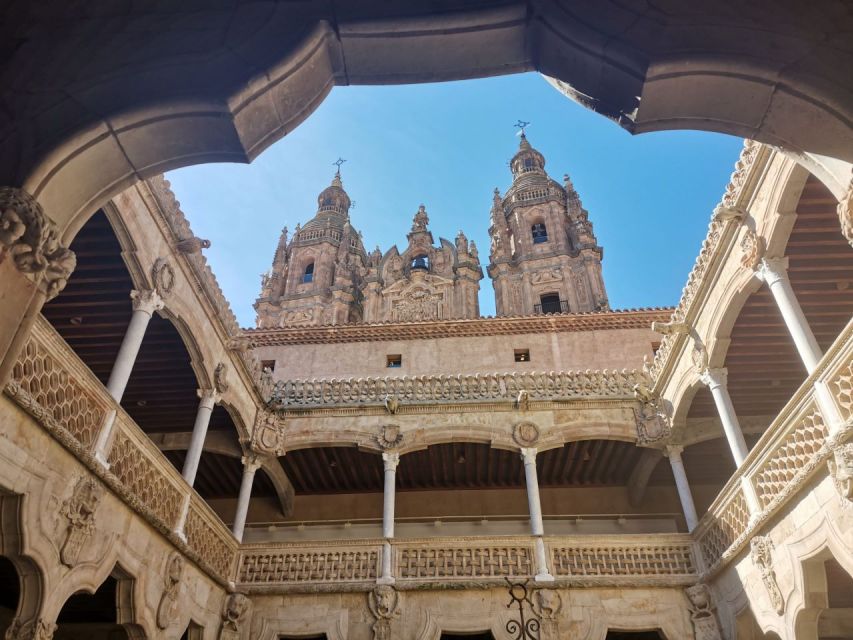
It is a particularly good choice for people interested in architecture. You see Baroque Plaza Mayor and Clerecía, Gothic Casa de las Conchas, university buildings, courtyards, cathedral spaces, and the Sky of Salamanca in one connected walk.
It may not be ideal for anyone who dislikes scheduled sightseeing or needs frequent rest. The tour covers a lot in two to three hours, and the extended option adds even more walking and monument visits.
Final verdict: book it for a smart first look
Book this tour if you want Salamanca to make sense quickly. The route covers the famous sights, adds the Sky of Salamanca and university courtyards, and benefits from Martoke’s clear explanations, local perspective, and gift for keeping a small group engaged.
Choose the standard version if you want a manageable introduction. Consider the extended option only if you have the energy and a strong interest in additional religious, academic, or tower visits.
At $29, this is a sensible use of a few hours. You will still need time later for your favorite interiors and unhurried photographs, but you should finish at Plaza de Anaya with a much better idea of where to spend that extra time.
FAQ
How long does the Salamanca walking tour last?
The tour lasts two to three hours, depending on the selected option and availability.
Where does the tour begin?
You meet the guide under the clock in Plaza Mayor.
Where does the tour finish?
The tour finishes at Plaza de Anaya.
What sights are included?
The route includes Plaza Mayor, Monterrey’s Palace, Casa de las Conchas, Salamanca’s old and new cathedrals, Patio de Escuelas Menores, and the University of Salamanca.
What languages are available?
Live guiding is available in Spanish, English, Dutch, and German.
Can I choose extra monuments?
With the extended tour, you can choose two additional monuments from the historic university buildings, St. Stephen’s Convent, medieval cathedral towers, the Monastery of the Dueñas, or Las Claras.
What should I bring?
Bring comfortable shoes and comfortable clothing, since the experience is a walking tour through Salamanca’s historic center.
Just added around Spain
- Barcelona Private Food Tour: Tapas, Paella & 8+ Food Tastings★ 5.0 · 164 reviews
- Barcelona Gothic Quarter Walking Tour with Tapas★ 5.0 · 248 reviews
- Picasso Museum and Walking Tour Plus Optional Wine & Food Tasting★ 5.0 · 596 reviews
- Private Barcelona Old Town and Gothic Quarter Walking Tour★ 5.0 · 134 reviews
- Barcelona Architecture Walking Tour With Casa Batlló Upgrade★ 5.0 · 137 reviews
- Semi-Private Montserrat Monastery, Funicular & Scenic Nature Walk★ 5.0 · 172 reviews
- Montjuïc Walking Tour With Optional Flamenco Show★ 5.0 · 196 reviews
- Gothic Quarter Donation-Based Walking Tour in English★ 5.0 · 72 reviews
City Highlights Walking Tours, compared.
Historic Charleston Guided Sightseeing Walking Tour
Read our review →
Dublin Highlights and Hidden Gems Guided Walking Tour
Read our review →
Guided Walking Tour of City Center Highlights
Read our review →

City Highlights Temple and Market Walking Tour
Read our review →
Montmartre Hidden Gems and Scenic Highlights Walking Tour
Read our review →
Browse the lists this tour appears in