
Review · CITY HIGHLIGHTS WALKING TOURS
Salzburg Oldtown: Sightseeing Walking Tour with Licensed Local Guide
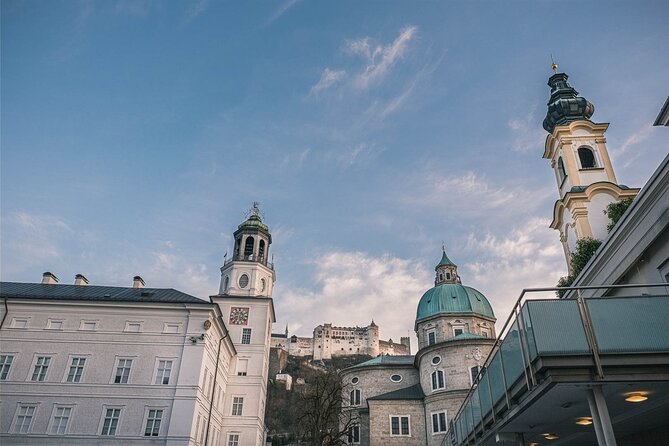
Salzburg reveals itself best on foot. This 90-minute walk links Mozart, Mirabell Garden, the cathedral, the river, and the city’s grand squares in one useful introduction. I like the short format, which fits neatly into a busy morning, and I like the local guides, especially Johannes, Sonja, Brigit, and Sonya, who are praised for clear stories, humor, and a good walking pace. The main limitation is that several major interiors are viewed from outside, so you will need to return on your own.
The tour costs $10.89 per person and is offered in English. That is strong value for a guided orientation, a printed city map, and a postcard. You should think of it as a well-paced first look at Salzburg, not a full museum tour or a substitute for entering the cathedral, Saint Peter’s, or the Mozart sites.
Key points to know before you book
- Mozart, Mirabell, and the Oldtown in one route: You cover many of Salzburg’s essential sights without spending half a day on a formal tour.
- A brisk 90-minute introduction: The pace keeps the walk moving, though you will not have long to study each stop.
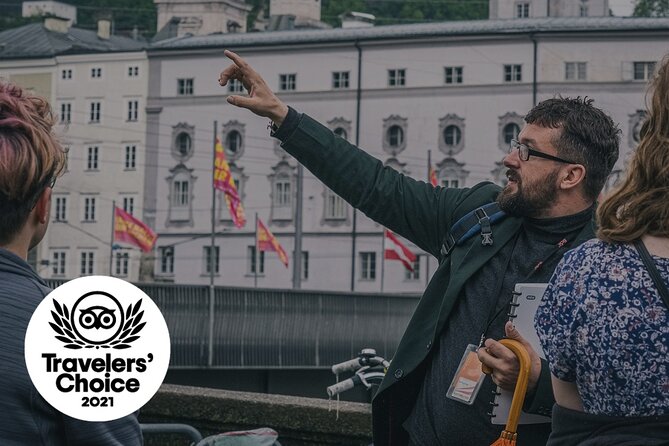
- Strong guide-led storytelling: Johannes, Sonja, Brigit, and Sonya are praised for humor, clarity, useful advice, and an engaging delivery.
- Mostly outdoor sightseeing: The tour focuses on façades, squares, gardens, courtyards, and city views, with limited interior access.
- A practical finish at Mozartplatz: The end point is beside the cathedral, Residenzplatz, and tourist information, making it easy to continue exploring.
- Small enough to stay manageable: The group can include up to 25 people, so this is not a private walk but should remain reasonably organized.
Why this walk works as a first look at Salzburg
Salzburg can feel confusing at first. The river divides the city, the Oldtown has a maze of lanes, and the main sights sit in several connected but distinct areas. This tour gives you a mental map before you start choosing museums, churches, cafés, and viewpoints for yourself.
The route also makes good use of Salzburg’s most recognizable themes. You hear about Mozart, the archbishops, the Salzburg Festival, the university, the monastery, and the fortress while physically moving through the places tied to those subjects. That connection between story and setting is the real value here.
I also like the balance between famous sights and small details. You see the love-lock bridge, an old canal system, modern art, the university grounds, and the oldest bakery in Salzburg. These details prevent the walk from becoming only a parade of monumental buildings.
The strongest praise centers on the guides’ delivery. Johannes is described as entertaining, warm, and well paced. Sonja is praised for useful suggestions about food and coffee, while Brigit handled a cold, misty morning with a brisk route and a bright red coat that made her easy to follow. Those details matter on a walking tour. Good timing and clear group management can make a bigger difference than a long list of dates.
More City Highlights Walking Tours in Austria
- Vienna: Guided Walking Tour of City Center Highlights
★ 4.7 · 4,989 reviews - Vienna: Guided Walking Tour of City Highlights & Hidden Gems
★ 4.9 · 2,180 reviews - Vienna: Small Group Guided Walking Tour of City Highlights
★ 5.0 · 540 reviews
Starting at Spirit of Mozart at 10 a.m.

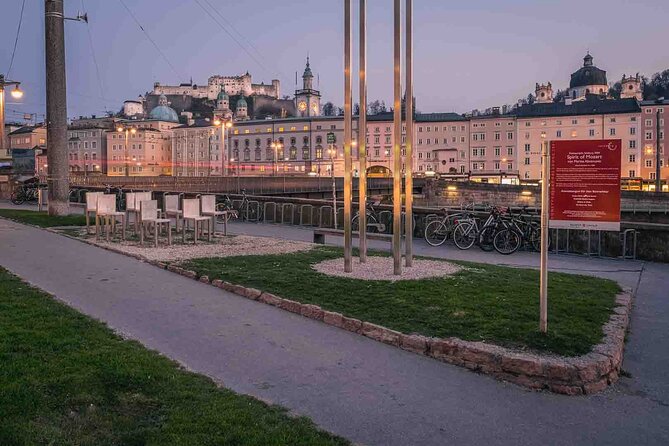
The tour begins at Spirit of Mozart on Imbergstraße 33A at 10 a.m. You receive a mobile ticket, and the experience is offered in English. The listed group limit is 25 people, enough for a social group but not so large that the walk should feel like a crowd procession.
The start point puts you on the eastern side of the river, close to the route toward Mirabell and the Oldtown. You should arrive ready to walk rather than expecting a series of long stops. Most listed visits last about five minutes, with Mirabell Garden receiving about 15 minutes and Mozartplatz about 10.
That timing tells you what kind of tour this is. You get a clear explanation at each site, then move on before the walk becomes slow. If you want detailed photographs, a long look at architectural decoration, or time inside every church, save those activities for after the tour.
Mozart Residence and the meaning of Rome of the North
The first stop is Mozart Residence, the house where Mozart lived from age 17. The guide discusses the building from across the square rather than taking you inside. You also hear why Salzburg is known as the Rome of the North.
This is a useful opening because it places Mozart within Salzburg’s wider identity. The city is not only a birthplace or former home of a famous composer. Its churches, squares, clerical power, and grand architecture help explain the comparison with Rome.
The five-minute stop is brief, so treat it as an introduction. If Mozart’s life is your main reason for visiting Salzburg, you will want separate time for the residence and Mozart’s birthplace later in the day.
Mirabell Garden gives you a reason to return
Mirabell Garden receives the longest stop, about 15 minutes. You get an overview of its past and its role today, but the guide specifically leaves you with a reason to return and explore it more carefully.
That is sensible. A garden rewards slow wandering, photographs, and attention to its layout. A short group stop can show you where the garden fits into the city, but it cannot replace an unhurried visit.
I would use the tour’s garden stop as a planning tool. Notice the setting, listen for the historical points that interest you, and then come back later if the weather is good. The garden is also a practical early landmark, helping you understand the relationship between the river, the eastern side of Salzburg, and the Oldtown across the water.
Same streets, a different way to see them:
- Vienna: Vienna Central Cemetery Guided Walking Tour
★ 4.8 · 3,307 reviews - Vienna: Viennese Underworld Guided Walking Tour
★ 4.7 · 1,865 reviews - Vienna: World War II Historical Walking Tour
★ 4.8 · 1,772 reviews - Vienna Historic Center Small Group Walking Tour
★ 5.0 · 1,746 reviews
Across the river to Getreidegasse
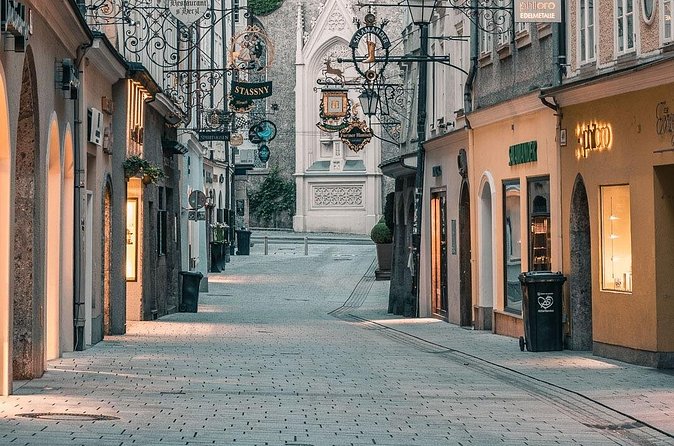
After crossing the river, the walk reaches Getreidegasse, Salzburg’s most famous street. The group follows it toward Mozart’s birthplace.
This section helps you understand the Oldtown’s basic rhythm. Getreidegasse is not simply a route between two stops. It is one of the city’s key commercial streets and a natural place to notice Salzburg’s distinctive signs and historic façades.
The stop is listed at about five minutes, so you will not have much time for shopping or detailed browsing. That is fine. The point is orientation. You can return later when you know where the street leads and where Mozart’s birthplace sits.
A possible interior at Universitatskirche
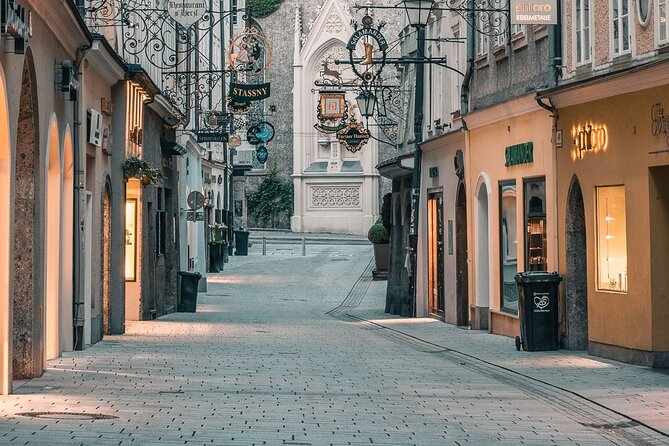
The University Church is one of the more unusual stops. The guide describes it as the last historic building in Salzburg and says it is no longer used as a church. The group can enter if the building is open.
This conditional access is worth noting. Unlike an outdoor façade stop, this may give you a quick look inside, but entry is not guaranteed. The church could be closed for a reason outside the tour’s control.
Keep your expectations flexible. If the doors are open, the interior adds variety to a route otherwise focused mainly on streets and squares. If they are closed, the guide still uses the building to explain Salzburg’s architectural and university story.
University grounds, modern art, and the canal system

At Wilhelm-Furtwängler-Garten, you hear how the area once served as a monastery garden and now forms part of Salzburg University. The guide also connects the stop with modern art and the city’s canal system.
This is one of the route’s better examples of moving beyond the postcard version of Salzburg. You are not only looking at palaces and churches. You are also seeing how older spaces have been absorbed into modern civic and academic life.
The five-minute stop will be quick, but it gives you useful context for the buildings and public spaces around it. If you like city planning, university history, or less obvious urban details, pay close attention here.
The Festival Hall and Salzburg’s summer music season
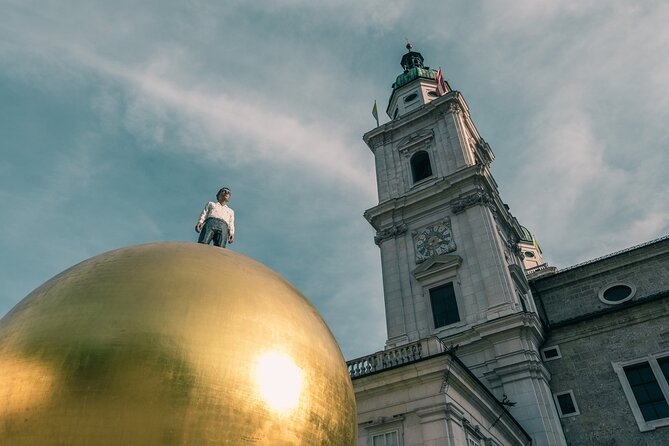
The Grosses Festspielhaus is linked to the Salzburg Festival, one of the most prestigious classical music festivals in the world. The guide explains that most concerts and opera performances take place there during the six-week summer season.
For many people, this is the point where Salzburg’s musical reputation becomes more concrete. Instead of treating the city’s music culture as a vague Mozart association, you see the building connected to a major annual event.
The stop is only about five minutes, so you should not expect a performance or a tour of the hall. Still, the explanation can help you decide if you want to investigate festival programming or concert options during your stay.
Saint Peter’s courtyard and Salzburg’s beginning
Saint Peter’s Abbey marks one of Salzburg’s oldest foundations. The city was founded here in 696, and the monastery is described as the oldest in the German-speaking region.
The tour visits the monastery courtyard but does not enter the church or Saint Peter’s cemetery. The reason is practical: the monastery and church remain active, and guided group visits are not allowed.
This is a fair compromise. Saint Peter’s is a place where respectful sightseeing matters, and the courtyard lets you see the setting without treating an active religious site like a museum exhibit. You receive the background from the guide, then can decide if you want to return independently to see more.
Salzburg Cathedral and the city’s grand center
The cathedral is Salzburg’s most important church, but the tour examines the façade from outside. You do not enter during the walk, and you are encouraged to return afterward for the interior.
That arrangement keeps the group moving and avoids building the schedule around opening conditions. It also means you should plan extra time if the cathedral is a priority. The exterior alone gives you an important sense of Salzburg’s scale and religious power, but the interior is a separate experience.
From here, the tour continues through the central areas of the Oldtown. The route feels increasingly connected as the earlier stops begin to make geographical sense.
Kapitelplatz, the fortress view, and a bakery detail
Kapitelplatz offers a view of Hohensalzburg Fortress, along with more modern art and a look toward Salzburg’s oldest bakery. This is a good pause for understanding how the monumental fortress sits above the city’s central spaces.
The square also shows the tour’s mix of major sights and small local details. A fortress view is an obvious Salzburg highlight. The bakery reference gives you a practical lead for later, especially if you want to pair sightseeing with food stops.
Because the tour includes several short explanations in open squares, weather can affect comfort. On a cold or misty morning, the brisk pace is helpful. Bring suitable clothing, since much of the experience happens outdoors.
Makartsteg and the river crossing
The route crosses the river on Makartsteg, Salzburg’s love-lock bridge. Here the guide discusses the locks, the river, the bridge, and the buildings along the water.
This is one of the most photogenic transitions on the walk, but the guide also turns it into a lesson in how Salzburg is arranged. You move physically between the newer side and the Oldtown while looking back at the buildings lining the river.
The crossing helps prevent the tour from feeling like a collection of unrelated stops. You see how the city’s two sides connect and why the river is such a useful reference point when you explore alone.
Residenzplatz, the heart of the Oldtown
Residenzplatz is the main square and the heart of the Oldtown. Its name comes from the archbishop’s residence, which stood here in earlier times.
This is the kind of place where a guide adds real value. Without context, a grand square can blur into the next grand square. With an explanation of the archbishops and the residence, the space becomes easier to read.
The five-minute stop is enough to orient you, but not enough to study every surrounding building. Take note of the square’s location because it is close to the cathedral, Mozartplatz, and the tourist information office.
Mozartplatz and the end at the statue
The final stop is Mozartplatz, where the Mozart statue was erected in the 19th century and the Mozart cult began. The guide discusses the statue and some of the mystery surrounding Mozart.
Ending here works well. You finish beside the cathedral and Residenzplatz, in one of the most useful parts of the Oldtown for continuing your day. The guide also hands you a printed Salzburg city map and a postcard, both small but practical souvenirs.
The tour ends at the Mozart statue in Mozartplatz. From there, it takes about five minutes to return to the starting area at Staatsbrücke and Spirit of Mozart, while the tourist information office is close by.
What the $10.89 price really buys you
At $10.89, this is inexpensive for a 90-minute English-language walk with a licensed local guide. The price is especially good if you are new to Salzburg and want help deciding how to spend the rest of your day.
The value is not in admission tickets. Almost every stop is an exterior visit, and the tour does not include entry to the cathedral, Saint Peter’s, or the Mozart buildings. You are paying for structure, explanation, local perspective, and the time saved by connecting the sights efficiently.
That makes the tour a better deal for first-time visitors than for someone who already knows Salzburg well. If you have only a short stay, the map and route can help you avoid wandering past major sights without understanding their place in the city.
Who should book this Salzburg walk?
I would recommend it most strongly to first-time visitors, couples, solo visitors, and anyone who wants a quick introduction before choosing museums or paid attractions. It also suits people who prefer history in short, lively pieces rather than long lectures.
The tour may be less satisfying if you want extensive interior visits, a private guide, or a slow photography walk. The group can reach 25 people, and the schedule keeps moving. You should also be comfortable walking outdoors for about 90 minutes, often with short stops rather than long seated breaks.
The guide quality appears to be a major strength. Johannes is praised for an entertaining and well-paced style. Sonja is noted for useful food and coffee suggestions, while Brigit made a cold morning easier with clear information and a brisk pace. Guides can vary, but the consistent pattern is a friendly, engaging presentation rather than a dry recital of dates.
Booking, cancellation, and practical details
Confirmation is sent within 48 hours of booking, subject to availability. The experience requires a minimum number of people, so if it is canceled for that reason, you are offered another date or experience, or a full refund.
You can cancel for a full refund up to 24 hours before the start time. Changes or cancellations made less than 24 hours before the 10 a.m. start are not accepted for a refund.
Service animals are allowed, public transportation is nearby, and the activity is listed as suitable for most people. Since the route includes outdoor walking and several crossings, comfortable shoes and weather-ready clothing are sensible choices.
FAQ
How long does the Salzburg Oldtown walking tour last?
The tour lasts approximately 1 hour and 30 minutes.
What time does the tour start?
The tour starts at 10 a.m.
Where does the tour begin?
The meeting point is Spirit of Mozart, Imbergstraße 33A, 5020 Salzburg, Austria.
Where does the tour end?
The walk ends at Mozartplatz, beside the Mozart statue.
Is the tour offered in English?
Yes, the tour is offered in English.
What is included in the price?
The tour includes the guided walking experience, a printed Salzburg city map, and a postcard.
Does the tour enter Salzburg Cathedral?
No. The group views the cathedral façade and discusses its history, but does not enter during the tour.
Does the tour enter Saint Peter’s Abbey?
No. The group visits the monastery courtyard but does not enter the church or cemetery.
Can the group enter the University Church?
The group can enter if the church is open. Entry is not guaranteed because the building may be closed.
What is the cancellation policy?
You can cancel up to 24 hours before the experience for a full refund. Cancellations or changes made less than 24 hours before the start time are not accepted for a refund.
Should you book it?
Book this walk if you want a fast, affordable orientation to Salzburg. For $10.89, you get a clear route through the city’s essential sights, lively local stories, a map, and a useful ending beside the cathedral and main squares.
Just plan to return to the places that catch your interest. Mirabell Garden, the cathedral, Saint Peter’s, Mozart’s homes, and the fortress all deserve more time than this brisk introduction allows. Use the tour to learn where everything is, then spend the rest of your Salzburg day following your own interests.
Just added around Austria
- The unknown Vienna City- a guided walking tour in 3 hours★ 4.7 · 137 reviews
- Hungry in Vienna? A Food Lover’s Coffee & Market Walk★ 4.9 · 276 reviews
- Salzburg: Old Town, Mozart, & Mirabell Gardens Walking Tour★ 4.8 · 461 reviews
- 3-Hour Walking Tour of Vienna Central Cemetery★ 4.7 · 71 reviews
- Hallstatt: 2-Hour Guided Walking Tour with Photographer★ 5.0 · 152 reviews
- Vienna: City Center Guided Walking Tour★ 4.8 · 99 reviews
- Private Hidden Vienna Walk — Stories Behind Quiet Corners★ 5.0 · 137 reviews
- Vienna at First Glance a Private Walking Tour for First Timers★ 5.0 · 131 reviews
City Highlights Walking Tours, compared.

Historic Charleston Guided Sightseeing Walking Tour
Read our review →
Dublin Highlights and Hidden Gems Guided Walking Tour
Read our review →
Guided Walking Tour of City Center Highlights
Read our review →

City Highlights Temple and Market Walking Tour
Read our review →
Montmartre Hidden Gems and Scenic Highlights Walking Tour
Read our review →
Browse the lists this tour appears in