
Review · ITALY WALKING TOURS
Siena Walking Tour with Cathedral and Crypt & Museum Option
Siena rewards slow looking. I like the way this tour combines medieval streets and Contrada culture with a guided visit to the cathedral, and I also like the chance to add the Crypt, Opera Museum, Baptistery, and Facciatone. The main drawback is the walking: Siena’s hills can be steep, and the dress rules and church access restrictions require some planning.
The two-hour version gives you a useful introduction to the city and priority cathedral entry. For about $95.16 per person, the three-hour option offers better value if you want the full Cathedral Complex, especially the Crypt and panoramic view from the unfinished New Cathedral façade. Guides such as Flo, Dace, Anna, Idania, Sabrina, and Elio have earned especially warm praise for their storytelling, humor, and feel for local life.
Key things to know before booking
- The Palio is more than a horse race: Your guide explains Siena’s 17 Contrade, or neighborhood districts, and the traditions that still shape daily life.
- The cathedral is the tour’s grand finale: Pre-arranged entry saves time and gives meaning to works by Duccio, Pisano, and Pinturicchio.
- The three-hour option is the better value: The OPA SI Pass adds the Crypt, Opera Museum, Baptistery, Piccolomini Library, and Facciatone panorama.
- Expect hills and uneven streets: You will walk between Piazza San Domenico, Piazza del Campo, the cathedral, and other central sights.
- Dress like you are entering a church: Bring a scarf and avoid shorts, short skirts, sleeveless shirts, and flip-flops.
- The floor mosaics change by season: They are fully uncovered from June 27 to July 31 and August 18 to October 16.
Starting beneath the tree at Piazza San Domenico
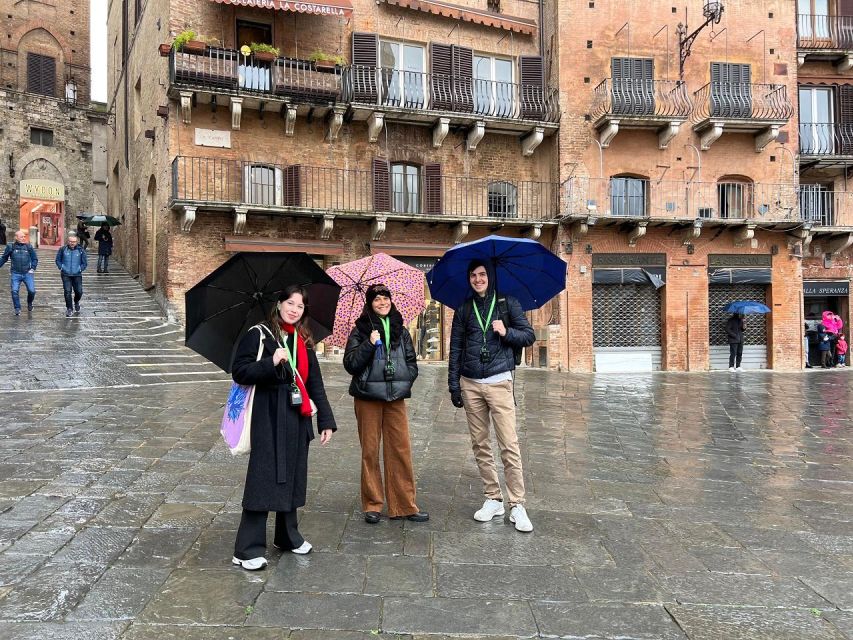
The tour begins at Piazza San Domenico, under the large tree beside the Basilica of San Domenico. Your guide holds a sign with the activity provider’s logo, so the meeting point should be easy to identify. Arrive five to ten minutes early. Once the walk begins, late arrivals cannot join.
This is a sensible place to start. The basilica and its broad square give you room to gather before entering Siena’s tighter lanes. The location also puts you near several important viewpoints and gives the guide a natural way to introduce the city’s religious, political, and neighborhood identities.
The tour is offered in English, French, or German. Small groups are available, and private tours can also be booked. A small group matters here because Siena’s streets are narrow and a good guide can pause for questions without holding up a large crowd.
You should wear comfortable walking shoes, although flip-flops and sandals are not allowed. The supplied information also advises against bringing luggage, large bags, or baby strollers. Siena is not a flat city, so anyone with mobility concerns should ask before booking. The details describe the activity as wheelchair accessible in one place, but also say it is not suitable for wheelchair users or people with mobility impairments. That conflict is important. Confirm the current conditions before paying.
More Museum Visits in Italy:
- Florence: Walking Tour with David, Duomo & Uffizi Gallery
★ 4.7 · 414 reviews - Florence: City Walking Tour and Uffizi Gallery Visit
★ 4.8 · 110 reviews - Florence: Fashion History Guided Walking Tour & Museum Visit
★ 4.2 · 72 reviews
Siena’s streets, towers, and neighborhood rivalries
The first part lasts about two hours at a relaxed pace, with the cathedral visit included. You walk through lanes and squares that reveal a quieter side of central Siena, including the Old Ghetto and the Tower District.
The guide’s role is especially useful here. Without local context, the streets can look like a beautiful sequence of brick walls and Gothic buildings. With explanation, you begin to see how the city developed, how medieval government shaped its center, and why Siena’s neighborhoods still carry such strong identities.
The tour includes viewpoints where you can see the Duomo and Torre del Mangia from different angles. These stops are practical as well as scenic. They help you understand Siena’s layout before you reach the main monuments, and they give you a chance to catch your breath on the uphill sections.
The city’s 17 Contrade are one of the most memorable subjects on the walk. Each district has its own name, symbols, traditions, and sense of belonging. The guide explains how these neighborhoods connect to the Palio, Siena’s famous horse race, held in Piazza del Campo.
This is where the tour goes beyond a basic monument walk. The Palio is not presented simply as a summer spectacle for visitors. It is tied to neighborhood pride and long-running local customs. You will hear about the competition between Contrade and see why the race matters so much to Siena’s residents.
Several guides have been praised for explaining these districts clearly and with real feeling. Dace, described as a native of Siena, is particularly noted for connecting the city’s history and customs. Sabrina has also been praised for helping people understand how Siena’s culture still works today. These are the kinds of details that can turn a pretty walk into a useful introduction to local life.
Piazza del Campo and the Fonte Gaia
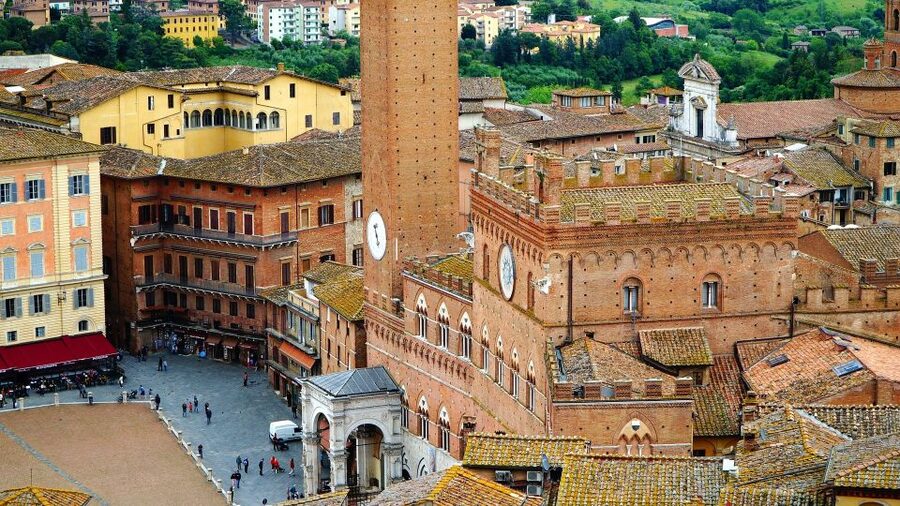
The route continues to Piazza del Campo, Siena’s shell-shaped main square and the setting for the Palio. The square is a natural high point of the outdoor portion because it brings together Siena’s civic identity, architecture, and public life.
Your guide points out the Torre del Mangia, the tall bell tower that rises above the square. The itinerary allows roughly 30 minutes around this part of the route, including the walk and explanation. You do not need to climb the tower as part of this activity, but seeing it from below helps you appreciate the scale of the square.
At Fonte Gaia, look closely at the fountain’s reliefs, which depict biblical scenes. This is an easy detail to miss if you are moving through the square on your own. The guide gives the fountain a place in the wider story of Siena rather than treating it as a quick photo stop.
The square can feel very open after the narrow lanes. That contrast is one of the pleasures of the walk. You move from hidden corners and district streets into a civic space designed to gather the whole city. If you visit during a crowded period, your guide’s commentary may be easier to follow if you stay close.
Entering Siena Cathedral with reserved access
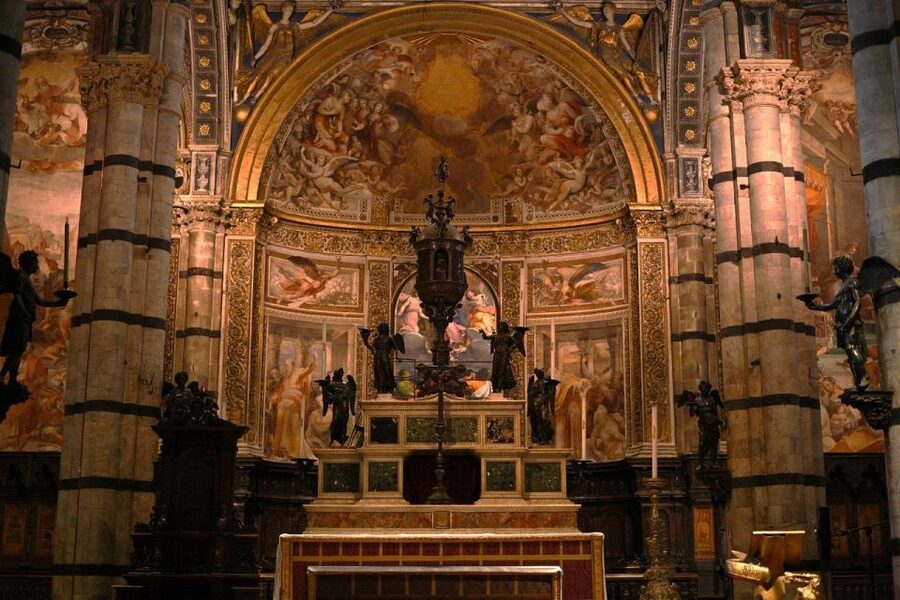
The cathedral visit is the tour’s major indoor attraction. Your ticket is pre-booked, and the activity uses a separate entrance for priority access. This does not mean you skip every possible delay caused by church operations, but it can save useful time during busy periods.
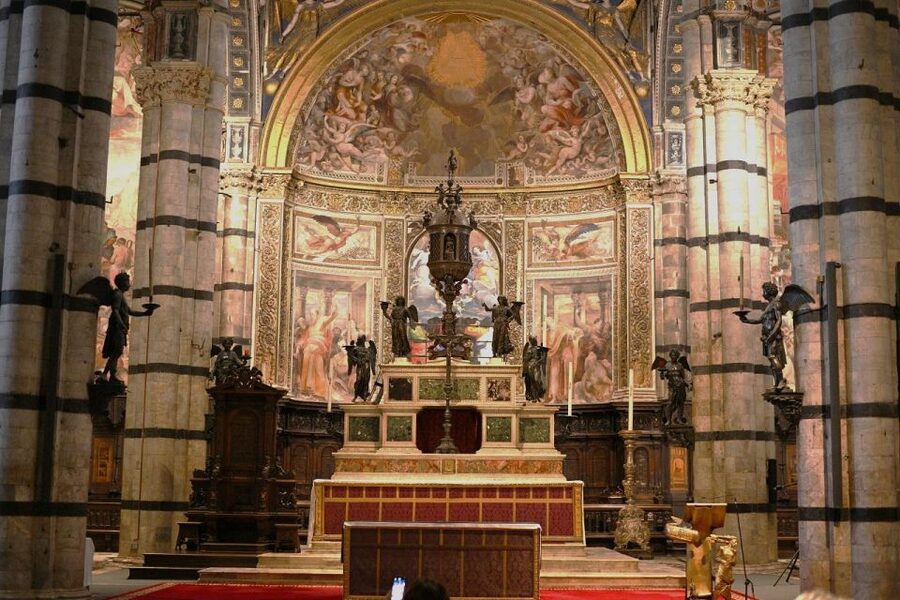
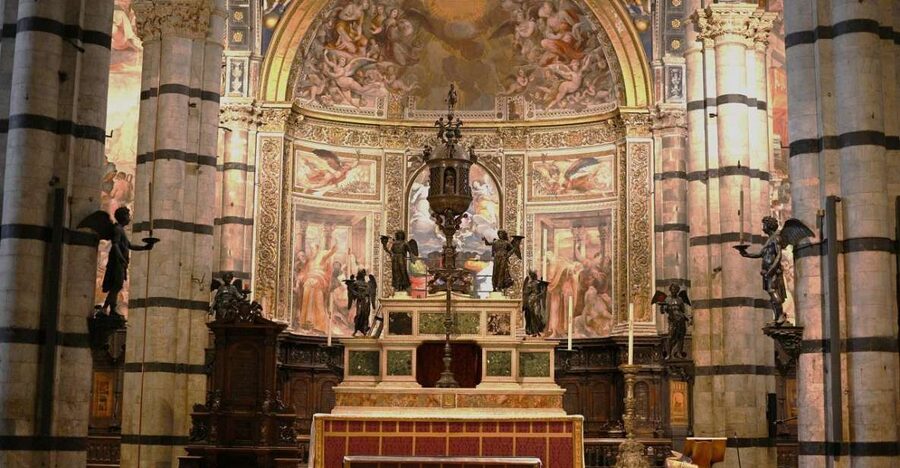
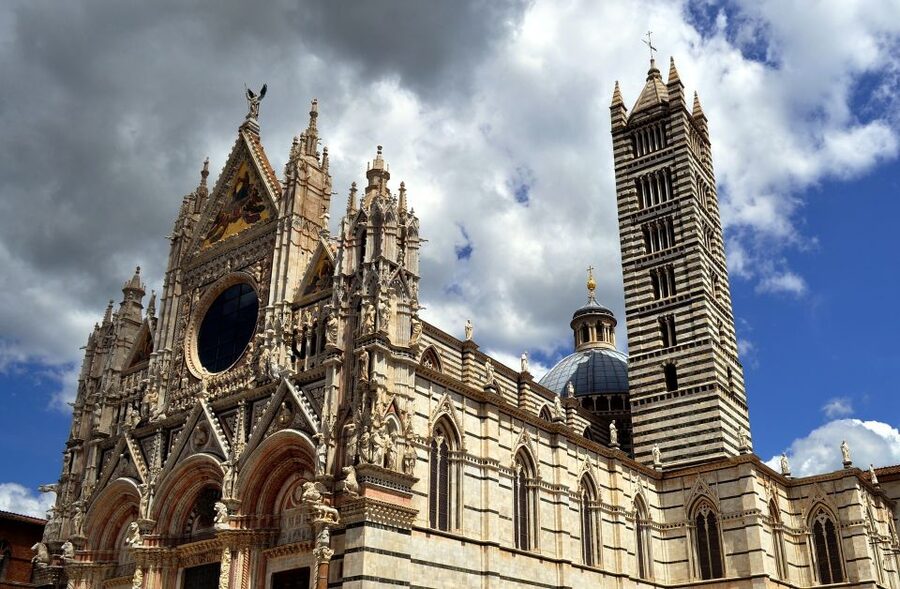
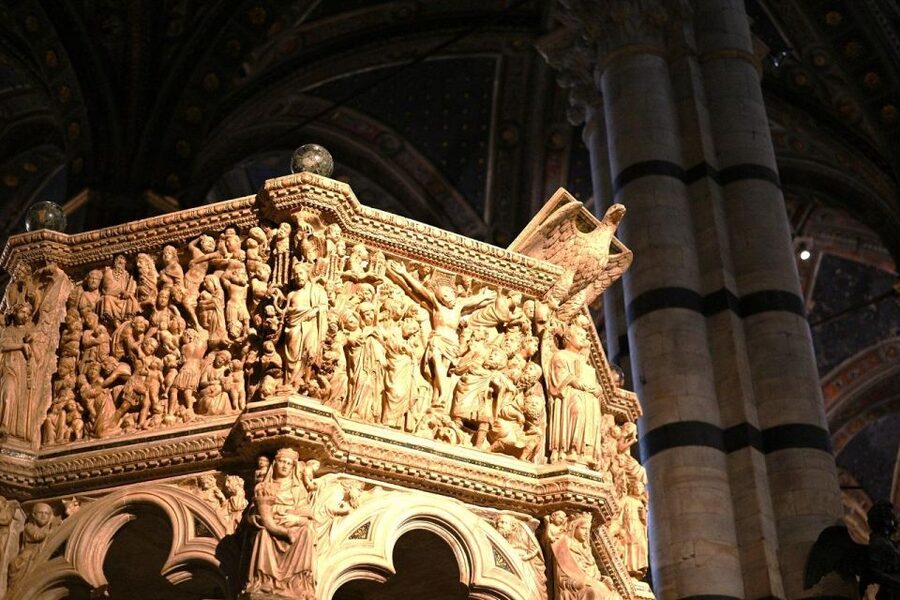
Inside, the striped marble and decorated surfaces make clear why the Duomo deserves more than a quick look. Your guide explains works connected with major Tuscan artists, including Duccio, Pisano, and Pinturicchio. The visit also includes the Piccolomini Library, a particularly important stop for its Renaissance decoration and artistic detail.
The value of a guide is strongest here. A cathedral can overwhelm you with sculpture, paintings, colored marble, and carved details. A good explanation helps you decide what to notice first. Anna has been praised for being personable, clear, and respectful in sacred spaces. That last point matters because this remains an operating church, not only a museum.
The cathedral can close without warning for a liturgical reason, including a funeral for a Cardinal. No tour operator can fully control that. If entry is essential to your plans, keep your schedule flexible and understand that a church service or other religious event can affect access.
The famous floor mosaics are also seasonal. They are fully uncovered from June 27 through July 31 and from August 18 through October 16. During the rest of the year, some sections are covered for protection. If the floor is high on your wish list, check the dates before booking.
A few more walks around Italy worth a look
- Venice: Doge’s Palace and St Mark’s Basilica Walking Tour
★ 4.4 · 6,291 reviews - Milan: Guided Walking Tour & Last Supper Visit with Ticket
★ 4.7 · 5,409 reviews - Naples: Street Food Walking Tour with Local Guide
★ 4.9 · 4,976 reviews - Florence: Highlights Walking Tour with Expert Guide
★ 4.6 · 4,662 reviews
Why the three-hour OPA SI Pass makes sense
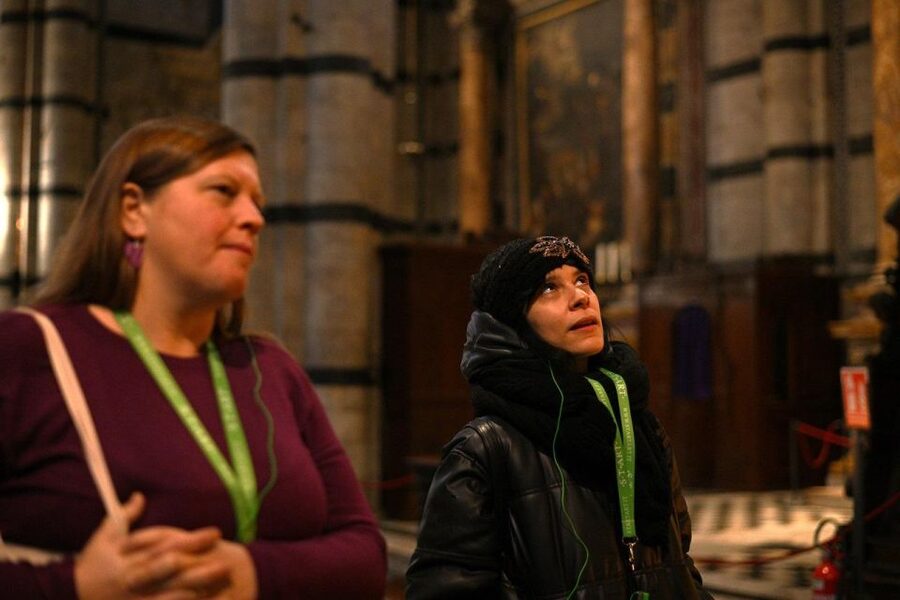
The two-hour tour includes the cathedral and Piccolomini Library. The three-hour version adds the OPA SI Pass, which covers much more of the Cathedral Complex:
- The Cathedral and Piccolomini Library
- The Crypt
- The Opera Museum
- The Baptistery
- The panorama from the New Cathedral façade, known as the Facciatone
I would choose the longer option for a first visit if the extra hour fits your schedule. The additional sites help explain Siena’s artistic ambition and the scale of the cathedral project. The Crypt, with its centuries-old frescoes, provides a striking contrast to the main cathedral interior.
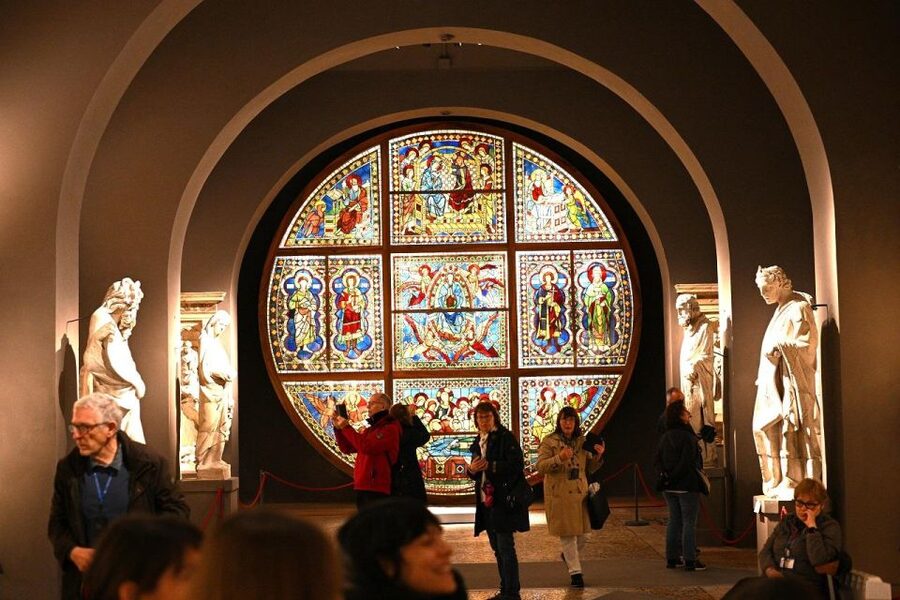
The guide explains the plan for the Duomo Nuovo, the ambitious New Cathedral that was never completed. You then have the chance to visit the Museo dell’Opera, which contains sculptures and stained glass windows. These collections give you a closer look at artworks that can be difficult to study from a distance inside the cathedral.
The Baptistery adds another religious space to the visit. The exact order of stops can depend on opening conditions and the guide’s timing, but the pass gives you access to the major parts of the complex rather than just the headline building.
The final highlight is the Facciatone, the unfinished façade of the New Cathedral. After saying goodbye to your guide, you can make the ascent at your own pace. The view reaches across Siena and the surrounding countryside, providing a strong finish to a tour that begins in the city’s lanes.
There is one practical point to remember: the extended tour is not simply a longer version of the same walk. It adds more stairs, more indoor visits, and more time on your feet. If you prefer a light introduction, the two-hour choice may be enough. If you enjoy art, church architecture, and wide views, the three-hour pass is the stronger buy.
What the guides add to the experience
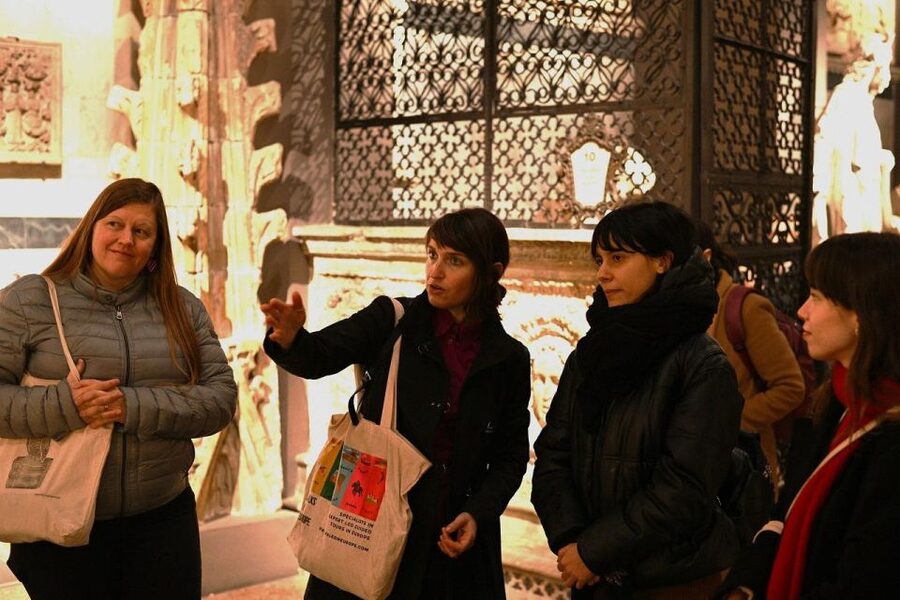
The most praised part of this tour is the quality of the guides. The feedback consistently highlights clear explanations, warmth, humor, and a personal connection to Siena.
Flo is praised as an outstanding guide after years of walking tours. Dace is described as especially strong on local culture, district traditions, art, and restaurant suggestions. Anna receives praise for her humor and respectful approach to religious places. Idania is noted for making the experience friendly and memorable.
Other guides, including Mare, Susanna, Elio Martino, and Sabrina, are praised for passion and strong command of Siena’s story. One guide who has lived in the area for 14 years was especially appreciated for explaining the Palio, answering questions, and suggesting restaurants and gelato.
That range of feedback tells you what the experience is designed to do well. It is not just a ticket escort. You get a person who can connect a fountain, district, church, and horse race into one readable story. The guide may also adjust the pace and answer questions, particularly in a small or private group.
The experience is available as a private group, but the standard format is a small-group walk. Group size can affect how much conversation you have with the guide. A group of six, for example, allows plenty of room for questions and keeps the walk personal.
Price, timing, and what you really receive
At $95.16 per person, this is not the cheapest way to see Siena’s streets. The price makes more sense when you count the guide, the reserved cathedral entry, and, with the three-hour version, the OPA SI Pass for several major sites.
The two-hour option works well if you have limited time or already plan to visit museums separately. It gives you a structured introduction, Palio background, a walk through the Contrade, and guided cathedral access.
The three-hour option is the better value if you would otherwise buy admission to the Cathedral Complex on your own. You receive access to the Crypt, Opera Museum, Baptistery, and Facciatone, along with the main cathedral and Piccolomini Library.
There is no transportation included. That is not a serious issue because the activity takes place in central Siena, but you need to reach Piazza San Domenico independently. The tour ends at the Duomo according to the route details, while another meeting-point note says the activity ends back at the starting point. Confirm the final end point when booking, especially if you have a train, bus, or lunch reservation afterward.
Free cancellation is available up to 24 hours before the start time, and you can reserve now and pay later. Those terms are useful when your Tuscany plans are still shifting.
Dress rules and planning advice
The cathedral has firm clothing requirements. Bring a scarf, and avoid shorts, short skirts, sleeveless shirts, sandals, and flip-flops. A simple scarf can solve a shoulder-covering problem, but you should still dress in a way that works for a religious site.
Leave luggage and large bags behind. Baby strollers are not allowed. Since you will walk through Siena’s steep streets and enter several historic buildings, pack lightly and wear shoes with a secure grip.
Allow extra time before the start. Arriving five to ten minutes early is not just polite. The group cannot be joined after the walk has started, and the meeting area may be busier than expected.
Tips for the guide are appreciated. They are not required as part of the listed price, but a guide who gives you a clear understanding of Siena’s neighborhoods, art, and customs may be worth thanking at the end.
Who should book this Siena walk?
I would recommend this tour to a first-time visitor who wants an organized introduction without spending a full day in museums. It suits you if you like history, local traditions, church art, and walking through side streets rather than moving only between famous sights.
The three-hour version is best for anyone who wants the Cathedral Complex in one visit. Art lovers should find the Opera Museum, Piccolomini Library, Crypt, and cathedral floor especially worthwhile. The Facciatone also gives the tour a memorable visual finish.
You may want to skip it if you dislike guided walks, have difficulty with steep streets, or only want a quick photo stop at the Duomo. The pace is relaxed, but Siena’s terrain remains demanding in places. You should also reconsider if strict church dress rules or the possibility of a last-minute cathedral closure would cause problems with your schedule.
Should you book it?
Book this tour if you want Siena explained through its neighborhoods, not just its monuments. The guides receive unusually strong praise for making the Palio and Contrada system understandable, and the cathedral access keeps the day efficient.
Choose two hours for a compact introduction. Choose three hours with the OPA SI Pass if you want the Crypt, Museum, Baptistery, and Facciatone. Before booking, check the accessibility details, cathedral opening conditions, floor-mosaic dates, and final meeting point. For most visitors who can manage Siena’s hills, the extended version offers the most complete experience for the price.
FAQ
How long does the Siena walking tour last?
The tour lasts either two or three hours, depending on the option you book. Check the available starting times when selecting your date.
Where does the tour begin?
Meet under the big tree beside the Basilica of San Domenico in Piazza San Domenico. Your guide will hold a sign with the activity provider’s logo.
Is cathedral entry included?
Yes. The two-hour option includes pre-booked priority access to Siena Cathedral. The three-hour option includes access to the wider Cathedral Complex through the OPA SI Pass.
What does the OPA SI Pass include?
The pass includes the Cathedral and Piccolomini Library, Crypt, Opera Museum, panorama from the New Cathedral façade, and Baptistery.
Is the tour available in English?
Yes. Live guiding is available in English, French, and German.
Can I book a private tour?
Yes. A private group option is available.
Are transportation services included?
No. Transportation is not included. You must reach the meeting point in central Siena on your own.
What should I wear to the cathedral?
Bring a scarf and avoid shorts, short skirts, sleeveless shirts, sandals, and flip-flops. Modest clothing is required for entry.
Can the cathedral close during the tour?
Yes. Siena Cathedral is an operating church and can close without warning for a liturgical reason.
Can I cancel the tour?
Yes. You can cancel up to 24 hours in advance for a full refund. A reserve-now, pay-later option is also available.
Just added around Italy
- Bergamo: Digital guide made by a local for your walking tour★ 5.0 · 184 reviews
- Full Day Tour by Car and Walking among the Apulian Beauties★ 4.5 · 182 reviews
- The Original Street Food Walking Tour in Bari★ 4.5 · 226 reviews
- Bari Walking City Tour★ 4.5 · 511 reviews
- Bari: Street Food Walking Tour with a Local Guide★ 5.0 · 160 reviews
- Bari Walking Tour with Pasta Experience★ 4.5 · 270 reviews
- Assisi Private Walking Tour including St. Francis Basilica★ 5.0 · 124 reviews
- Private St. Francis Basilica of Assisi and City Walking Tour★ 5.0 · 114 reviews
Italy Walking Tours, compared.
Doge’s Palace and St Mark’s Basilica Walking Tour
Read our review →
Guided Walking Tour & Last Supper Visit with Ticket
Read our review →
San Marco to Rialto Walk & Spritz Like a Local
Read our review →
Uffizi & Accademia Timed Entry: Small Group Duomo Walking Tour
Read our review →
Browse the lists this tour appears in