
Review · HISTORY WALKING TOURS
Tbilisi: Guided Walking Tour of Historic City
Old Tbilisi rewards a slow walk. This three-hour tour links five faiths, ancient trade streets, sulfur baths, and riverside churches in one compact route. I like the mix of major sights and smaller corners, plus the practical food and wine advice from guides such as Sally and Nick. The main catch is the walking itself: uneven paths, stairs, and weather can make this a tiring outing for anyone with limited mobility.
At $14 per person, the tour offers unusually good value if you want a quick introduction to the city. The group is limited to 10 people, so you should have room to ask questions rather than simply trail behind a flag. Still, the itinerary packs in a lot, and one past participant found the amount of information almost too much to process at once.
Key points at a glance
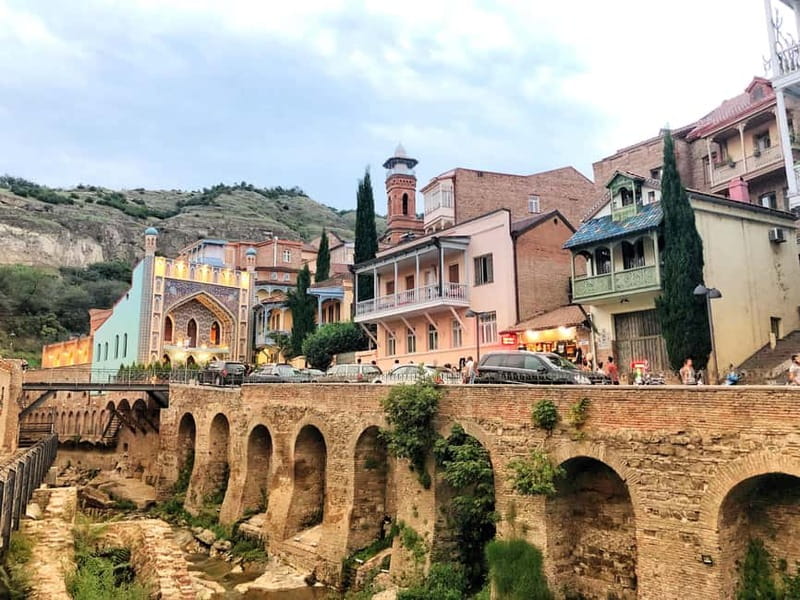
- Five Religions Connecting Square: Begin with one of Tbilisi’s clearest lessons in coexistence, where several houses of worship sit close together.
- Stories beyond the postcard sights: Devil Street, the Statue of the Toastmaster, and the Berlin Wall Stone add local color to the standard Old Town route.
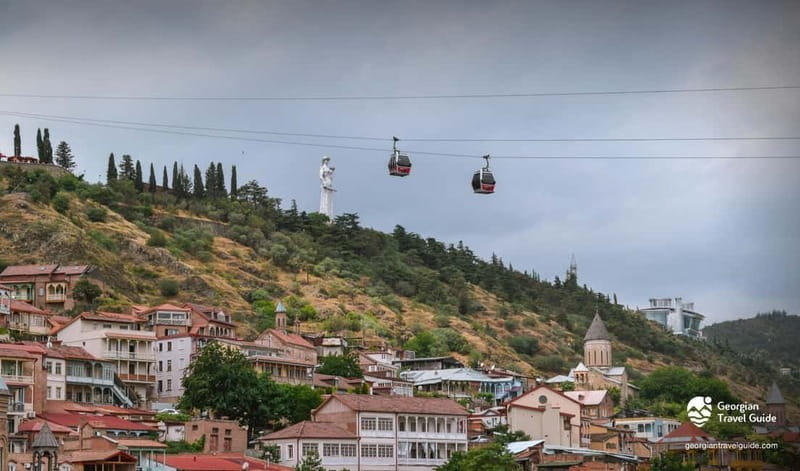
- Metekhi and King Vakhtang Gorgasali: See one of the city’s oldest churches above the Mtkvari River and hear the story of Tbilisi’s legendary founder.
- Abanotubani and Leghvtakhevi Waterfall: The sulfur bath district and waterfall bring a change of pace from lanes and monuments.
- Useful local advice: Guides share suggestions for Georgian food, wine, shopping, other places to visit, and common tourist scams.
- A small-group bargain: Three hours, a local guide, and a route through the historic center cost $14 per person.
Why this three-hour walk works well in Tbilisi

Tbilisi can feel confusing at first. The old town folds around hills, the Mtkvari River cuts through the center, and historic buildings sit beside bold modern designs. A map shows you where things are, but it does not explain why a mosque, synagogue, churches, bathhouses, and trade routes all appear within a short walk.
That is where this tour earns its price. It gives you a basic map of Old Tbilisi while adding stories about religion, trade, royal power, hospitality, and daily life. I especially like the way the route moves between famous landmarks and less obvious stops. You do not spend three hours looking only at the same postcard views.
The small group matters, too. With no more than 10 people, you can ask about Georgian food, local customs, or places you plan to visit later. Several bookings describe guides who made time for questions and photographs, and Sally receives particularly strong praise for her warmth, humor, and practical advice. Nick is also singled out for making the city’s past easy to understand.
The tour is offered in English and Russian. English is the stated main language, with other languages possible if arranged ahead of time. The minimum group size is two people, so a departure may depend on enough bookings.
More History Walking Tours in the world:
- History and Hauntings of Salem Guided Walking Tour
★ 5.0 · 14,564 reviews - Lisbon: History, Stories and Lifestyle Walking Tour
★ 4.8 · 10,902 reviews - Boston: Freedom Trail History Small Group Walking Tour
★ 5.0 · 6,450 reviews
Starting near Rustaveli Avenue
The meeting point is in front of the Magti Office at 20 Shota Rustaveli Avenue. You should arrive about 10 minutes early. This is useful advice in Tbilisi, where a few minutes spent finding the right office or crossing a busy street can quickly become more than a few minutes.
The route then heads toward the historic center and Meidan Bazar. The move from Rustaveli Avenue into Old Tbilisi helps you understand the city’s layout. The modern central avenue gives way to older lanes, courtyards, religious buildings, and streets shaped by centuries of trade.
The end point is 1 Samghebro Street. Because the tour finishes in the old town rather than returning you to the starting point, you can continue exploring, stop for food, or walk toward other central sights afterward. Plan your next activity from the finish, not from Rustaveli Avenue.
Meidan Bazar and the old Silk Road quarter

Meidan Bazar introduces you to the commercial side of Tbilisi. This area recalls the city’s role as a trading stop on routes connecting different parts of the region. The guide explains the remnants of the ancient bazaar and how this part of town once served as a center for exchange.
I like this stop because it gives the old lanes a purpose. Without context, a market passage can look like a pleasant shopping street. With the story of merchants, goods, and movement across the region, you begin to see why the old town developed in this particular form.
You should expect a photo stop and guided explanation rather than a long shopping session. If you want to buy souvenirs, save time for later and ask the guide for suggestions. The tour includes recommendations for local food, wine, shopping, and other places to visit, so this is a good point to ask what is worth your money.
Jan Shardeni Street and the Statue of the Toastmaster
Jan Shardeni Street brings you into one of Old Tbilisi’s best-known pedestrian areas. It is a lively part of the route, with restaurants, cafés, and historic surroundings. The street can also feel busy and commercial, so your guide’s commentary helps you look beyond the obvious dining options.
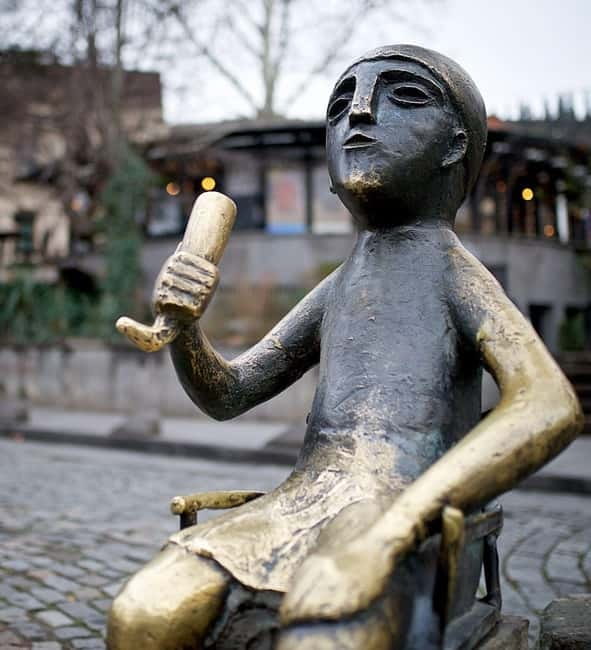
Nearby, the Statue of the Toastmaster offers a small but memorable lesson in Georgian culture. The sculpture honors the country’s tradition of hospitality and the long Georgian practice of making elaborate toasts. Food and wine are not side topics here. They are part of how Georgia presents friendship, family, and celebration.
This is one of the tour’s most useful moments for dinner planning. Guides have offered specific food suggestions, including advice about khinkali houses, as well as wine tips. An optional wine tasting or lunch can be arranged if you contact the provider in advance. That option is not included in the $14 price, so confirm the extra cost before adding it.
More Guided Walks in the world:
- Magical London: Harry Potter Guided Walking Tour
★ 4.7 · 22,044 reviews - Amsterdam Anne Frank: Small-Group Walking Tour & Local Guide
★ 4.8 · 12,789 reviews - Edinburgh: Harry Potter Magical Guided Walking Tour
★ 4.8 · 11,944 reviews - Edinburgh Castle: Guided Walking Tour with Entry Ticket
★ 4.7 · 11,699 reviews
Devil Street and the Berlin Wall Stone

The route includes Devil Street, a narrow and atmospheric passage linked with local legends. The appeal is less about a grand monument and more about the stories attached to an ordinary-looking corner. This kind of stop is easy to miss when you explore alone.
The Berlin Wall Stone provides a different kind of story. It is a small monument connected with freedom and political change. The stop is brief, but it adds a modern layer to a tour otherwise focused on medieval buildings, royal figures, religious sites, and old trade routes.
I appreciate the contrast. Tbilisi is not only an old city preserved behind pretty façades. It also has links to more recent European history and changing ideas about freedom. The Berlin Wall Stone gives the guide a chance to connect the city to events beyond Georgia.
One point to keep in mind is that these smaller stops may depend on the guide’s presentation. They are not large attractions with extensive displays. If you want a museum-style visit, this walk will not replace one. If you enjoy local stories attached to streets and symbols, they add a lot.
The Bridge of Peace and Rike Park
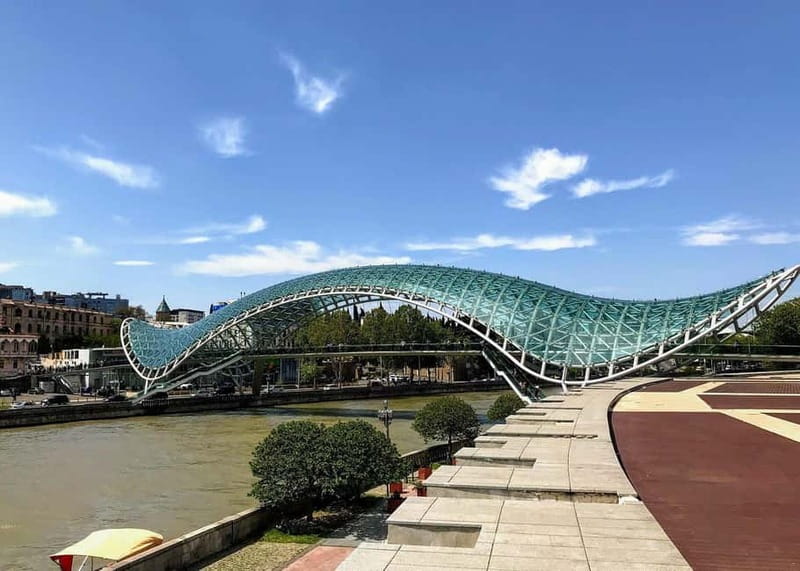
The Bridge of Peace is one of Tbilisi’s most recognizable modern structures. Its contemporary design creates a sharp contrast with the old houses, churches, and bath domes around it. The tour uses the bridge to show how the city mixes new construction with historic quarters.
Crossing or viewing the bridge also gives you a change from narrow lanes. Rike Park and nearby Europe Square open the route toward the river and provide useful photo opportunities. These stops help you orient yourself around the Mtkvari and understand the relationship between the old town, riverfront, and newer public spaces.
You should not expect a long architectural lecture or an extended park visit. The guide uses these places as part of the larger city story. That works well in a three-hour tour, though anyone hoping to linger for quiet photographs may need to return later on their own.
Metekhi Church and King Vakhtang Gorgasali
Metekhi Church is one of the route’s strongest historical stops. The church sits above the Mtkvari River and is closely tied to the story of Tbilisi’s early development. Nearby, the statue of King Vakhtang Gorgasali recalls the ruler traditionally linked with founding the city.
This is where the route gains a sense of scale. From the church area, you can look across the river and see how the old city occupies the hills and banks around it. The setting explains why Tbilisi has always been shaped by its river crossings, slopes, and defensive positions.
The visit includes a guided stop and photographs. Depending on timing, the guide may be able to take you inside churches along the way. One booking specifically notes that Sally adjusted the route to allow church visits and added a quick wine tasting. That kind of flexibility can make the difference between a fixed checklist and a more personal walk, but you should not assume every extra stop is guaranteed.
Dress respectfully when entering religious buildings. The supplied details do not give a formal dress code, but quiet behavior and suitable clothing are sensible at churches and other places of worship.
Abanotubani, sulfur baths, and Leghvtakhevi Waterfall
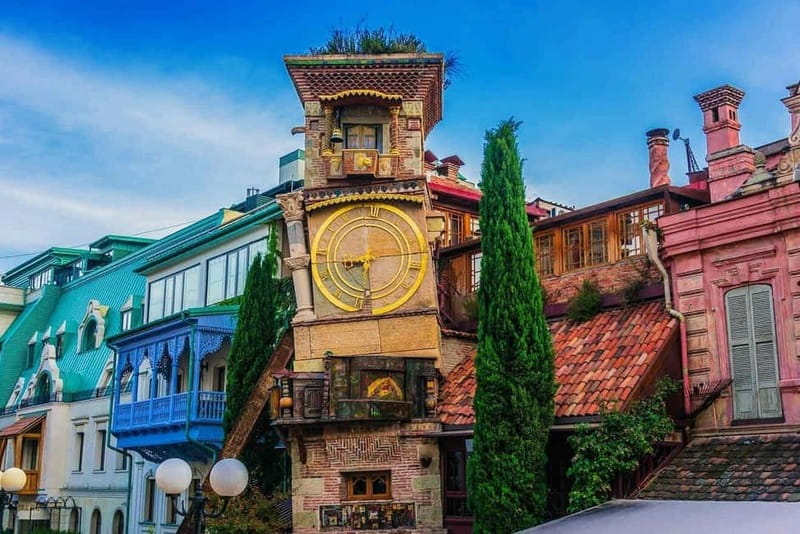
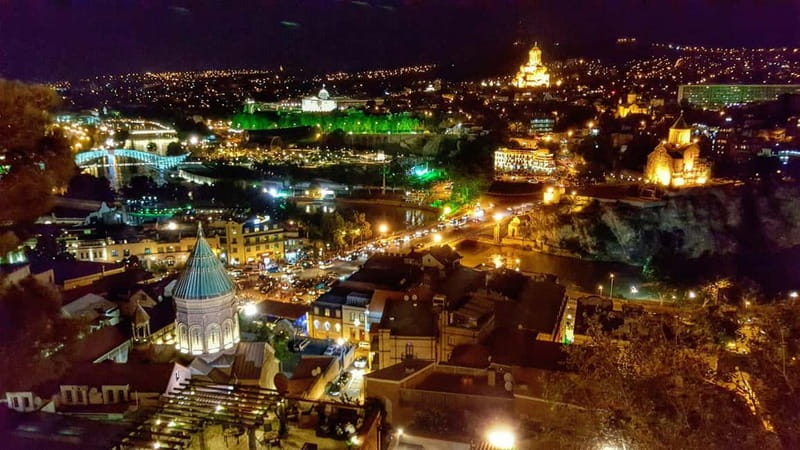
Abanotubani is one of Tbilisi’s signature districts. Its name is associated with the old sulfur baths, whose domed brick roofs cluster near the lower part of the city. The baths are tied to the city’s origin story and remain one of the most distinctive sights in Old Tbilisi.
The guide explains the baths, the healing reputation of the waters, and the role this district plays in the city’s identity. You will see the bath exteriors during the walk, but the tour description does not include a bathing session. If you want to use a bath, ask the guide for current advice and make separate arrangements.
Nearby, Leghvtakhevi Waterfall adds a welcome natural pause. The sound and shape of the waterfall make this part feel different from the market streets and monuments. It is also a good place for photographs, though paths around the old town can be uneven.
This section is one reason to wear comfortable shoes and carry water. The tour runs in rain or shine, and surfaces may be slick or awkward in poor weather. The route is described as wheelchair accessible, but the additional note about stairs and uneven paths means you should discuss your mobility needs before booking.
Samghebro Street and the Armenian Church
The route continues along Samghebro Street, a quieter path with stories built into its walls and surrounding buildings. It is a useful counterpoint to the more famous streets. You get a better sense of how Old Tbilisi feels away from its busiest photo spots.
The final stop is a historic Armenian Church, another reminder that Tbilisi’s identity was shaped by several communities. Together with the Five Religions Connecting Square, the church helps frame the city as a meeting place of faiths and cultures.
The religious theme is not treated as a quick slogan. It appears in the buildings you pass, the stories you hear, and the way the old city developed. The guide can explain the local setting and answer questions, but you should allow time for the full route rather than expecting long interior visits at every church.
The finish at 1 Samghebro Street is practical. You are already in the historic center, close to places where you can continue with a meal or further sightseeing. Ask for recommendations before saying goodbye, especially if you are staying in Tbilisi for only a short time.
What the guides add to the experience
The strongest part of this tour is the guide’s role. The route is good, but several of these places can feel disconnected without a clear explanation. Sally is repeatedly praised for her energy, patience, humor, and love of Georgian culture. She has also helped people plan food stops, shopping, later activities, and visits elsewhere in Georgia.
Nick is praised for explaining the history clearly and answering questions. Other comments describe the presentation as lively, open-minded, and suitable for families, including children aged 11 and 13. That suggests the tour is not just a list of dates and names.
You should still be ready for a fair amount of information. One person found the presentation almost too full, while another suggested that visual aids could make some historical explanations easier to follow. If you prefer a slow, quiet walk with little commentary, this may feel busy. If you want context and are happy to ask questions, the amount of material is a plus.
Is $14 good value?
At $14, this is a strong-value introduction to central Tbilisi. You receive three hours with a local guide, a small group capped at 10, and stops covering religious heritage, trade, royal history, modern architecture, sulfur baths, and local customs.
The price is especially fair if you have only one day in the city. You can cover a broad section of Old Tbilisi without spending time figuring out the route yourself. The food and wine recommendations may also save you from choosing a poor restaurant in a heavily visited area.
The value is lower if you want entry tickets, a meal, or a formal wine tasting included. Those are not part of the base experience. You are paying for the walking tour and interpretation, not a package of admissions and food.
Free cancellation up to 24 hours before the start and reserve-now, pay-later booking make it easier to fit the tour into a changing schedule. The tour runs in all weather, so bring water, wear comfortable shoes, and dress for the forecast.
Who should book this walk?
I would choose this tour for a first visit, a short stay, or the first morning of a longer Georgia trip. It gives you practical orientation, major landmarks, local stories, and advice on what to do next.
It suits history and culture fans, food-minded visitors, families with older children, and anyone who likes to ask questions. The relaxed pace and regular stops make it more manageable than a nonstop march, though you still need to handle three hours on foot.
You may want another option if stairs and uneven surfaces are a serious problem, if you dislike group tours, or if you want long interior visits at each religious site. The stated wheelchair accessibility should be treated alongside the warning about steps and uneven ground. Contact the provider before booking if you need a fully step-free route.
Should you book the Old Tbilisi walk?
Yes, if you want an affordable first look at Tbilisi with real local guidance. The best reasons are the small group, the broad route, and the practical advice from guides such as Sally and Nick. The tour goes beyond the headline sights without straying far from the historic center.
Book it early in your stay so you can use the restaurant, wine, shopping, and sightseeing suggestions afterward. Bring water, wear shoes made for old stone streets, and leave room in your schedule after the finish at Samghebro Street.
Skip it only if a three-hour walk sounds uncomfortable or if you want a quiet self-guided visit. For most first-time visitors, $14 is a modest price for getting the city’s main stories in place before exploring on your own.
FAQ
How long is the Tbilisi walking tour?
The tour lasts three hours.
How much does the tour cost?
The listed price is $14 per person.
Where does the tour meet?
The meeting point is in front of the Magti Office at 20 Shota Rustaveli Avenue.
Where does the tour finish?
The walk finishes at 1 Samghebro Street in Old Tbilisi.
What languages are available?
The tour is conducted in English and Russian. Other languages may be available with advance notice.
How many people are in the group?
The group is limited to 10 participants, and at least two people are required for the tour to run.
Is the route suitable for wheelchair users?
The activity is listed as wheelchair accessible, but some paths include stairs and uneven surfaces. Contact the provider before booking if you require a fully step-free route.
Can I add wine tasting or lunch?
Yes. An optional wine tasting or lunch can be arranged if you contact the provider in advance. These additions are separate from the base tour details.
Just added around the world
- Bern Private Walking Tour with a Local★ 4.5 · 75 reviews
- Berlin Walking Tour★ 4.5 · 378 reviews
- Bern Walking Tour: Explore Top Sights & Hidden Gems★ 5.0 · 108 reviews
- Small Group Walking Tour of East Berlin with a French Guide★ 5.0 · 176 reviews
- Berlin Street Art Walking Tour – Off The Grid★ 5.0 · 270 reviews
- Berlin Highlights Private Guided Walking Tour★ 4.5 · 89 reviews
- Private Walking Tour: World War 2 and Cold War Sites in Berlin★ 5.0 · 230 reviews
- Kreuzberg Berlin: Off the Beaten Track PRIVATE Walking Tour★ 5.0 · 128 reviews
History Walking Tours, compared.

History and Hauntings of Salem Guided Walking Tour
Read our review →

Freedom Trail History Small Group Walking Tour
Read our review →
Historic Charleston Guided Sightseeing Walking Tour
Read our review →
Tapas Walking Tour with Food, Wine, and History
Read our review →
Savannah History and Haunts Candlelit Ghost Walking Tour
Read our review →
A History of Terror – Belfast City Centre Walking Tour
Read our review →Browse the lists this tour appears in