
Review · MUNICH WALKING TOURS
Third Reich Walking Tour Munich
History feels different on the streets where it happened. This 2.5-hour Munich walk traces the rise of Hitler and the Nazi Party through central landmarks, political meeting places, memorials, and buildings that still shape the city today. I like the clear route from Königsplatz to Marienplatz, and I like that guides use photographs and stories to show how familiar places looked during the Nazi era. The main drawback is that the tour stays outside, so cold or wet weather can make the experience less comfortable.
I also like the way the guides handle difficult questions without softening the subject. Guides such as Michael, Jake, Nicola, Paul, Alex, and Aileen have been praised for combining strong historical detail with an approachable style. You should expect a brisk city walk, not a museum visit, and two and a half hours can feel short if you already know this period well.
Key things to know before you book
- Königsplatz gives the tour its political center: This broad square was an important Nazi setting and helps explain the scale of party ceremonies and propaganda.
- Odeonsplatz connects directly to Hitler’s failed early power grab: You spend about 30 minutes here, making it one of the tour’s most substantial stops.
- The Hofbräuhaus has a political past: This famous beer hall was also used as a gathering place by the Nazi Party.
- Photos help turn streets into historical evidence: Guides may show images of the same locations during the Nazi period.
- The walk ends at Marienplatz: You finish in central Munich, with the rest of the city within easy reach.
- Dress for the forecast: The tour is conducted outdoors, and several people found warm clothing essential on cold days.
Why this Munich history walk is worth your time
Munich is often introduced through palaces, beer halls, and elegant squares. That pleasant surface can hide the city’s role in the rise of National Socialism. This tour corrects the balance. It shows you where the Nazi movement developed, how it presented itself in public, and how ordinary city spaces became stages for political theater.
I value the fact that the tour focuses on places you can still see. You are not sitting in a classroom hearing a broad story detached from the city. You are standing in squares, beside public buildings, and near memorials while the guide explains what took place there.
The subject is heavy, but the best guides keep the presentation human and clear. Jake has been praised for making the material easier to absorb without making light of it. Michael, Paul, Alex, Scott, and others have been described as well prepared, open to questions, and able to connect politics, society, and culture.
That matters because the rise of the Third Reich was not a single event. It involved propaganda, public gatherings, political pressure, economic and social fears, and the gradual normalization of hateful ideas. A good walking tour helps you see those links rather than reducing the story to a list of dates.
A few more walks around Munich worth a look
- Munich: Third Reich & WWII Walking Tour
★ 4.6 · 6,181 reviews - Munich: Old Town & Viktualienmarkt City Walk in German
★ 4.7 · 2,304 reviews - Munich: Night Watchman Walking Tour
★ 4.7 · 2,092 reviews
Starting at Radius Tours on Dachauerstrasse
The meeting point is Radius Tours at Dachauer Str. 4, near central Munich. Check-in takes about five minutes, and the tour then continues on foot.
The location is practical for a first day in Munich because it is near public transportation. One useful detail from the experience is that the meeting point is easy to locate, which is welcome when you are still getting used to Munich’s streets and transit system.
The group can include up to 25 people. That is not a private walk, but it is small enough for a guide to manage questions and keep the group together. The actual atmosphere will depend on the day and the guide. In a quiet period, one person even received a solo tour with Keith, an Irish guide who has lived in Germany for decades.
Arrive ready to walk. The route crosses central Munich streets and squares, and the tour does not use a bus or other sightseeing vehicle. You may want comfortable shoes, a coat in cooler months, and water. One guide paused for a bathroom and coffee break after asking the group, which shows that the pace can be adjusted when practical needs come up.
Königsplatz and the public face of Nazi power
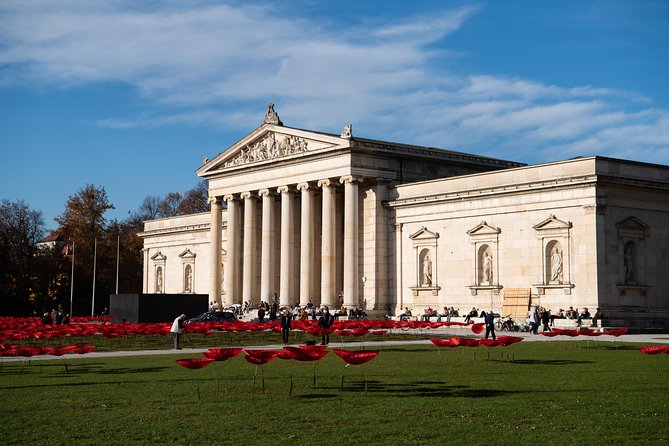
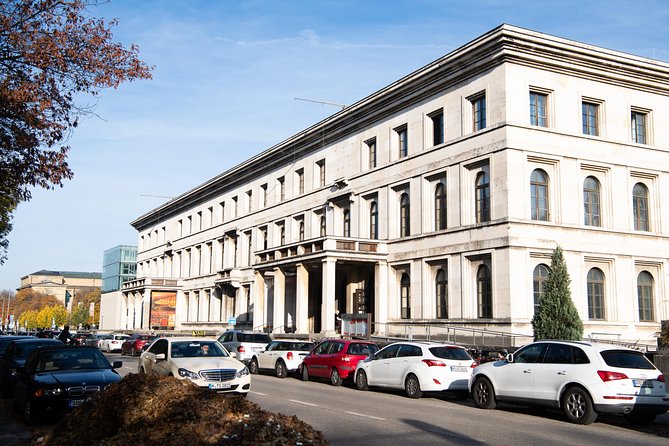
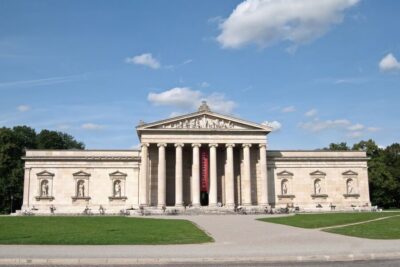
Königsplatz is the first major historical stop. The square had an important role for the Nazi Party, and its open design made it useful for marches, ceremonies, and large public displays.
This is a strong early stop because it shows how architecture and open space can serve politics. A broad square can feel impressive on an ordinary afternoon. With the guide’s explanation, you begin to picture how the same setting could be used to project order, strength, and mass support.
You will spend about 15 minutes here. That is enough time for an introduction, though anyone with a serious interest in architectural or military detail may wish for more. The tour’s goal is not to examine every building in the area. Instead, Königsplatz sets the stage for how the Nazi movement presented itself to the public.
Guides may use historical photographs at locations like this. Seeing the former appearance of a square beside the modern view can make the change easier to grasp. It also reminds you that the present-day city is not a frozen museum. Buildings and public spaces survive, but their meaning can shift.
Odeonsplatz and the road to political violence
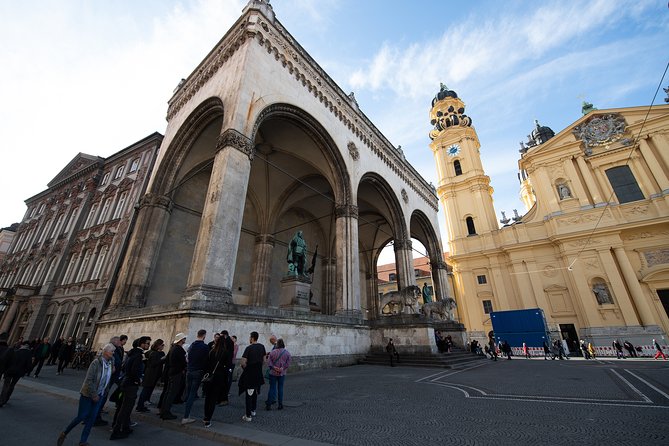
Odeonsplatz receives about 30 minutes, making it the longest scheduled stop. The square was used for Nazi marches and memorial events, but its importance goes beyond ceremony. It is tied to Hitler’s early attempt to seize political power in Munich.
This is where the guide can explain the transition from agitation to direct confrontation. You hear how public marches, speeches, symbols, and party gatherings helped create momentum, while the square’s later memorial use shows how the movement shaped its own mythology.
I find this part especially useful for visitors who know the broad outline but want to understand how the Nazi Party gained a foothold in Munich. The guide can connect the physical site with the larger political story, including the propaganda machine and the years leading toward World War II.
Odeonsplatz is also a good place to ask questions. Several guides have been praised for answering openly, including questions that may feel uncomfortable. That is important here. A tour about the Third Reich should not offer easy explanations or tidy moral shortcuts. It should help you examine how political movements use public space, fear, loyalty, and repeated messages.
Same streets, a different way to see them:
- Munich Ghosts and Spirits Evening Walking Tour
★ 5.0 · 1,900 reviews - Munich Old Town Walking Tour
★ 4.5 · 1,287 reviews - Munich: Walking Tour Old Town and Viktualienmarkt
★ 4.7 · 839 reviews - Munich: Birthplace of the Third Reich Guided Walking Tour
★ 4.6 · 771 reviews
Hofbräuhaus and beer halls as political meeting places
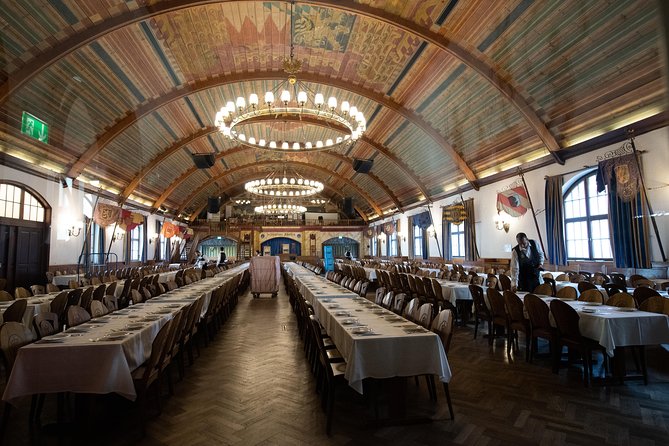
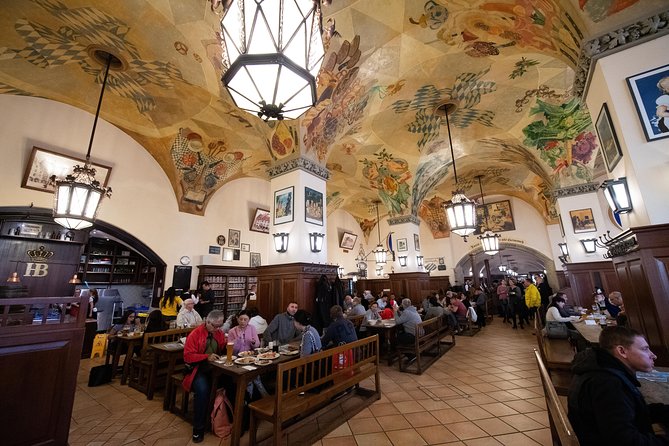
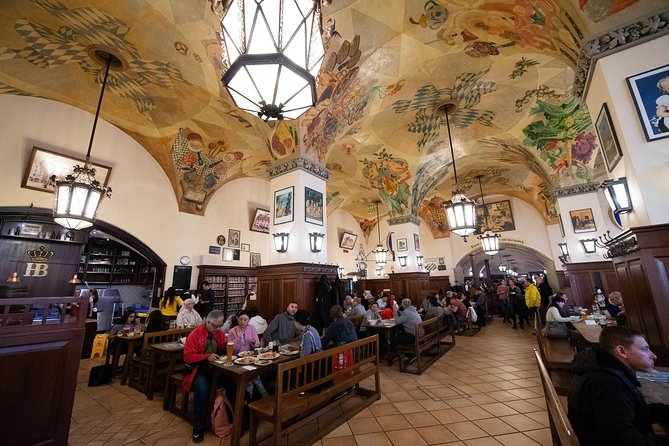
The Hofbräuhaus is one of Munich’s best-known beer halls. On this tour, you see it in a different light. It was also an important setting for Nazi Party activity and political gatherings.
The stop lasts about 20 minutes. You should not expect a full beer-hall meal or a long indoor visit. The point is to understand how places associated with everyday social life could also become platforms for political organizing.
That contrast makes the stop memorable. Munich’s beer halls were not only places to eat and drink. They could hold large crowds, speeches, arguments, and party meetings. The guide explains how the Nazi movement used such familiar spaces to reach people and build a public identity.
This is also one of the points where you should pay attention to how the guide tells the story. The strongest presentation does not suggest that a building itself caused political extremism. Instead, it shows how people and organizations used existing social spaces for their own aims.
For many visitors, this stop makes the history feel less distant. You are looking at a famous Munich institution that still forms part of the city’s modern image, while also learning about its connection to a darker period.
The Old Town Hall and Marienplatz
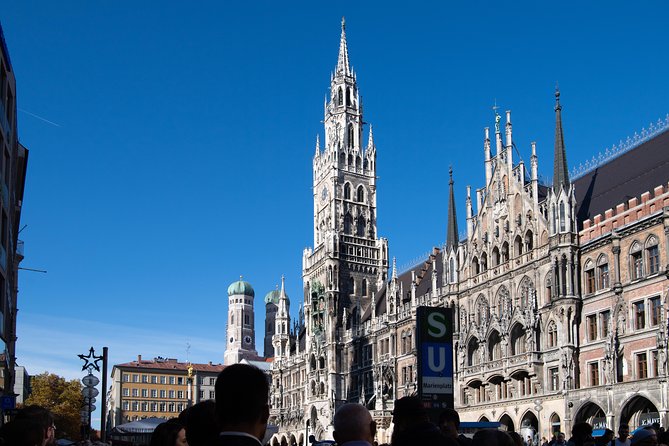
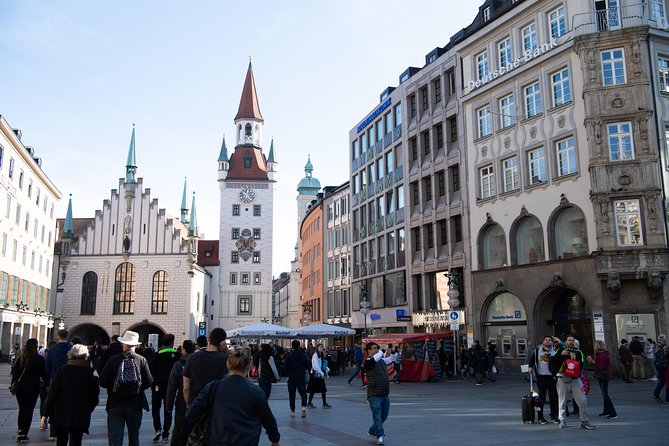
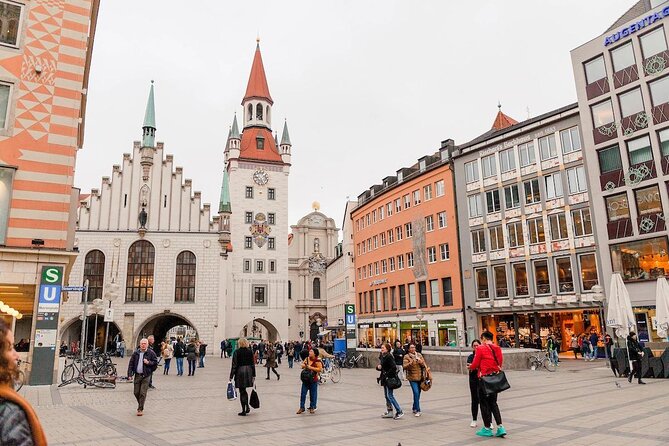
The route continues to Munich’s Old Town Hall, where you spend about 15 minutes. The building gives the tour another public setting in which to discuss how municipal life, official ceremony, and political power intersected.
The Old Town Hall is also a useful reminder that the story did not happen only in isolated party buildings. The Nazi rise unfolded in the center of the city, among civic institutions and ordinary urban routines. Your guide may use the location to connect local events with the wider transformation of Germany.
The final stop is Marienplatz, where the tour ends after about 20 minutes. This is Munich’s central city square and a practical place to finish. You can continue sightseeing, find food, use public transportation, or walk back toward other Old Town sights.
Ending here keeps the tour convenient. You do not need to arrange a return transfer, and the guide leaves you in the middle of Munich rather than at an out-of-the-way site.
Memorials, victims, and the cost of the ideology
The tour is not only about Hitler’s rise. It also pays tribute to people who opposed the Nazi regime and to those who suffered or died under it.
That balance is essential. A tour focused only on speeches, marches, and political victories can accidentally give too much attention to the perpetrators. Memorials bring the human cost back into view and show that resistance existed, even under a brutal dictatorship.
The route may also encourage you to continue learning after the walk. One person planned to visit the White Rose museum afterward, and that is a sensible follow-up if you want more on Munich’s student resistance movement. The walking tour provides the citywide framework, while a museum visit can give you more documents and personal stories.
You should not expect every victim group or wartime event to receive equal attention in two and a half hours. The subject is too large. Still, the inclusion of memorials gives the tour a moral center and keeps it from becoming a simple parade of Nazi locations.
The guides make or break the experience
The guide is the biggest variable. The tour has been led by people including Keith, Nik, Aileen, Michael, Jake, Sarah, Paul, Nicola, Daniel, Scott, Steve, Michelle, and Alex. The repeated strengths are clear speech, strong preparation, enthusiasm, and a willingness to discuss difficult questions.
Aileen used photographs to connect past and present, while Jake was praised for making the subject easier to follow and for watching the group’s comfort in bitter cold. Nicola received praise for balancing explanations at each stop with the walking time between them. Paul was noted for speaking clearly, which is especially important outdoors and in a group.
You may find different personalities from one departure to another. Some guides are more humorous, some more formal, and some more focused on political detail. That variety can work in your favor, but it means the experience is not identical each day.
The best approach is to come with questions and an open mind. This is not a tour for jokes about Nazi history, but a warm, human guide can make difficult material easier to process. Several guides have been praised for being friendly without losing sight of the seriousness of the subject.
What two and a half hours can and cannot cover
The length is sensible for a city walk. At 2.5 hours, the tour gives you a clear overview without taking up an entire day. It also fits well at the beginning of a Munich visit because you finish in Marienplatz with time to see more.
Still, the schedule is full. You cover six listed stops, walk between them, listen to explanations, and leave room for questions. One guide noted that there was a lot to take in, and that is fair. You may remember the major locations and story lines more easily than every date or name.
If you have read extensively about the Third Reich, you may want a longer or more specialized experience. One participant felt that several additional hours would suit anyone looking beyond a surface introduction. I agree with that limitation. This tour is a strong city-based overview, not a complete course in Nazi Germany.
Bring a small notebook or take a few notes on your phone if you want to review the sequence later. The tour gives you many connections in a short time, and a written outline would help you retain them.
Price, group size, and practical value
At $45.95 per person, the tour is not the cheapest way to walk through Munich. You are paying for a local guide, a planned route, historical photographs or visual aids on some departures, and a focused explanation of places you could otherwise pass without understanding.
I think the price is fair if you value context. The buildings and squares are free to see, but the meaning of those places is not always visible. A guide connects them and answers questions in real time. You also avoid spending hours researching the route yourself.
The value is weaker if you only want to take photographs or if you dislike extended walking and standing outdoors. The tour is conducted in English, lasts about 2.5 hours, and can include up to 25 people. Most people can participate, and service animals are allowed, but the route still requires a reasonable ability to walk through central Munich.
The experience is generally recommended by 93 percent of customers and carries a 4.7 rating from 4,291 reviews. Those numbers suggest a dependable product, but they should not hide the practical limits: weather matters, the subject is emotionally serious, and the schedule cannot cover every part of the period.
Free cancellation is available up to 24 hours before the start time. Changes or cancellations inside that window are not refunded. The tour can also be canceled if bad weather or low enrollment prevents it from running, in which case you are offered another date or a full refund.
Who should book this tour?
Book it if you want to understand Munich’s role in the rise of the Third Reich while seeing the actual streets and squares connected to that story. It suits first-time visitors, history students, readers who want more than a textbook account, and anyone who wants a serious introduction before visiting museums or memorial sites.
It is also a good first activity in Munich because the route gives you a clearer sense of the city. Afterward, Marienplatz, the Hofbräuhaus, and the Old Town will carry more historical meaning.
Skip it if you want an indoor museum experience, a quiet architectural walk, or a detailed specialist tour lasting most of the day. If you book, wear warm layers, use comfortable shoes, and allow yourself time afterward to think about what you have heard.
For most visitors, I would book this tour early in a Munich stay. Its strongest feature is not a single building. It is the connection between ordinary city spaces, political propaganda, public gatherings, resistance, and human loss.
FAQ
Where does the Third Reich Walking Tour Munich begin?
It begins at Radius Tours, Dachauer Str. 4, 80335 München, Germany.
Where does the tour end?
The tour ends at Marienplatz in central Munich, at 80331 München-Altstadt-Lehel.
How long does the walking tour last?
The tour lasts approximately 2.5 hours.
What language is the tour offered in?
The tour is offered in English.
What places are visited?
The route includes Königsplatz, Odeonsplatz, the Staatliches Hofbräuhaus, Munich’s Old Town Hall, and Marienplatz.
Is transportation included?
No transportation is listed. The experience is a walking tour through central Munich.
How many people can join the tour?
The maximum group size is 25 people.
Are service animals allowed?
Yes, service animals are allowed.
Can I cancel for a full refund?
Yes. You must cancel at least 24 hours before the experience starts to receive a full refund. Cancellations within 24 hours are not refunded.
Just added around Munich
- Munich: Walking Tour Old Town and Viktualienmarkt★ 4.7 · 839 reviews
- Munich: Raven Black Witches and Executioners Walking Tour★ 4.7 · 294 reviews
- Munich : Private Walking Tour with A Guide (Private tour)★ 4.5 · 85 reviews
- Munich: Guided Food Walking Tour with Beer Tasting★ 4.7 · 183 reviews
- Munich: Old Town Guided Walking Tour★ 4.6 · 479 reviews
- Munich Old Town – Guided Walking Tour in English★ 4.7 · 153 reviews
- Munich: Old Town Walking Tour★ 4.7 · 589 reviews
- Munich: Birthplace of the Third Reich Guided Walking Tour★ 4.6 · 771 reviews
Munich Walking Tours, compared.
Old Town & Viktualienmarkt City Walk in German
Read our review →
Munich Ghosts and Spirits Evening Walking Tour
Read our review →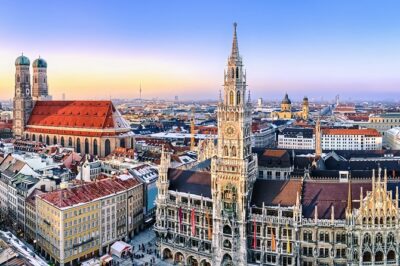
Birthplace of the Third Reich Guided Walking Tour
Read our review →Browse the lists this tour appears in