Review · HISTORY WALKING TOURS
Trier: Guided Old Town Highlights and History Walking Tour
Ancient stones tell surprising stories. This 1.5-hour walk gives you a clear introduction to Trier, moving from the Roman Porta Nigra through the medieval center and on to the home of Karl Marx. I like the compact route and the way it links famous buildings to ordinary life under Roman rule. The main consideration is that the tour is offered in German, so you need a strong grasp of the language to get the full value.
I also like the price: at $16 per person, you get a live guide and a useful orientation to Trier without giving up half a day. Guides Patrick and Herbert have earned praise for making the history both accurate and amusing, and Herbert even kept children interested. If you want in-depth access inside every monument, this is not that kind of tour. It is a brisk outdoor introduction with stories, landmarks, and room for questions.
Key points to know before you book
- Starts beside the Porta Nigra: Meet in front of the Mercure Hotel, directly opposite Trier’s best-known Roman gate.
- Covers nearly 2,000 years: The route connects Roman Trier, medieval architecture, Karl Marx, and the modern city.
- Includes major central sights: Expect the Porta Nigra, Trier Cathedral, Main Market, and the residential house linked to Marx.
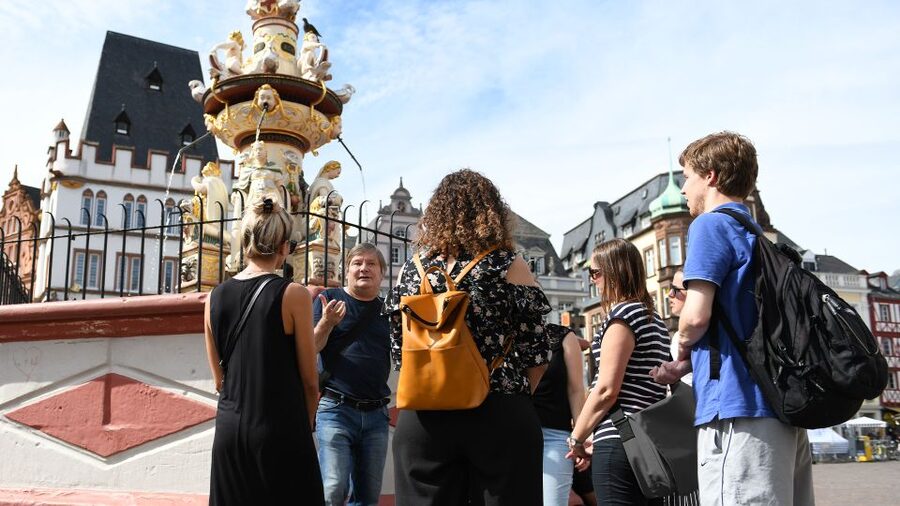
- Guides add humor and personal style: Patrick and Herbert have been praised for clear explanations, amusing details, and patient answers.
- A short, good-value orientation: The 90-minute length works well at the start of a city visit or before exploring on your own.
- German only: The tour includes a live German-speaking guide, which is the key factor for international visitors to weigh.
Why Trier makes a strong walking-tour city
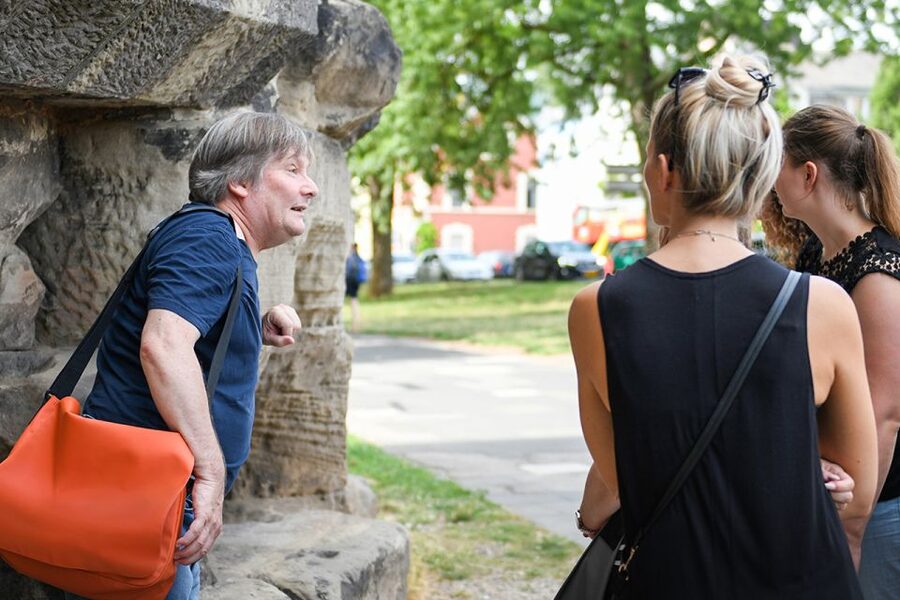
Trier rewards a tour that explains connections. You can look at the Porta Nigra and see a huge Roman gate, or you can learn why it was built, how it shaped the city, and what daily life looked like behind its defenses. A guide turns impressive stonework into a sequence of human decisions.
The city also gives you several periods in a small central area. Roman construction, medieval religious buildings, later civic architecture, and the memory of Karl Marx all appear within the same walk. You are not being sent across town from one isolated sight to another.
That compact setting matters. A 90-minute route can cover a surprising amount because the principal sights sit close to one another. I would use this tour early in a Trier visit, then return to the buildings that caught your attention.
You should expect a walking tour rather than a series of long interior visits. The supplied details focus on seeing the landmarks, hearing their stories, and learning how the city changed. If you prefer a museum-style tour with extended time inside each monument, plan an additional visit afterward.
More City Highlights Walking Tours in Germany
- Frankfurt Highlights English Walking Tour
★ 5.0 · 1,203 reviews - Cologne: Old Town Highlights Walking Tour
★ 4.6 · 1,093 reviews - Bamberg: City Highlights Walking Tour
★ 4.6 · 679 reviews
Meeting at the Porta Nigra
The starting point is easy to identify: meet your guide in front of the Mercure Hotel, opposite the Porta Nigra. This is a practical meeting place because the Roman gate is one of the clearest landmarks in Trier. You do not need to search for a small side street or a hard-to-find office.
The first few minutes should help you get oriented. The Porta Nigra gives the guide a natural opening to Trier’s Roman origins, and it immediately shows you the scale of the ancient city. I like starting here because the gate is not just a photo stop. It is the first chapter of the city’s story.
Arrive with comfortable shoes and enough time to locate the meeting point. The walk lasts 1.5 hours, so a late arrival can mean missing the opening explanation, which is likely to frame much of what follows.
The Porta Nigra and Roman daily life
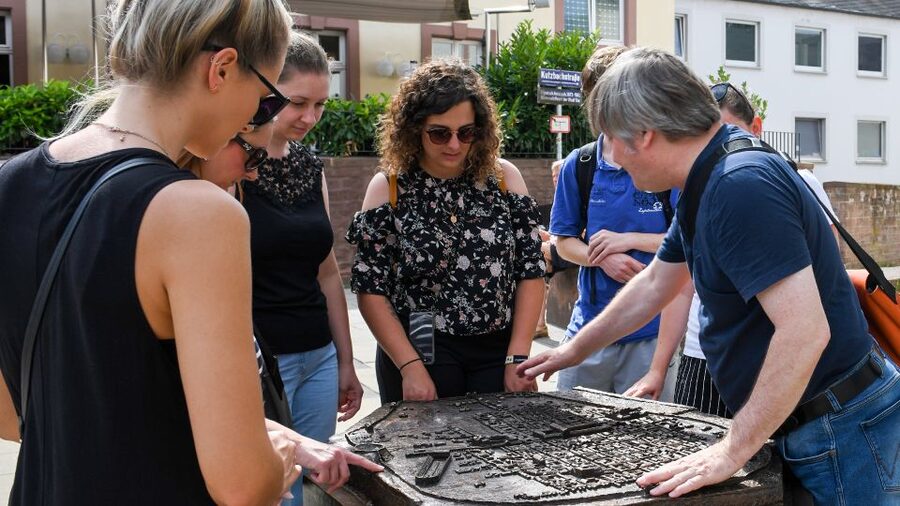
The Porta Nigra was built by the Romans as early as 170 AD. Its size and surviving stonework make it the obvious symbol of Roman Trier, but the tour’s useful angle is the human one. You learn not only when the gate was built, but what life was like under Roman rule.
That shift from dates to daily life is important. You can better understand a Roman city when the guide explains how people lived, moved, worked, and used its public spaces. The gate becomes part of a working city rather than a silent monument.
The tour also traces Trier’s ancient origins and shows how its Roman identity still shapes the center. You will hear about the city’s development as the walk moves away from the gate and into later periods.
The details provided do not promise an extended interior visit to the Porta Nigra, so think of this stop as a guided introduction and exterior history lesson. You can use the information afterward if you decide to explore the monument more slowly.
Medieval buildings and Trier Cathedral
From the Roman beginning, the route turns toward medieval architecture and the city’s later changes. This is where a guide earns the fee. Without context, old walls can blur together. With a clear timeline, you can see how Trier shifted from an ancient Roman center to a medieval city and then to the modern town you see today.
Trier Cathedral is one of the central highlights. The tour allows you to admire its architecture while placing it within the larger story of the city. The information provided does not specify an interior visit, so you should not expect a long guided examination of every chapel, artwork, or religious object.
Still, seeing the cathedral within a walking route has real value. It gives you a second major point of reference after the Porta Nigra and shows how different eras left their mark on the same city. The contrast between Roman engineering and medieval religious architecture is one of the tour’s strongest themes.
I would pay attention to how the guide explains change over time. The point is not simply that Trier has old buildings. It is that the city’s identity developed in layers, with each period altering the meaning and use of the center.
More History Walking Tours in Germany
- Leipzig: 1.5-Hour Historical Walking Tour in German
★ 4.7 · 2,217 reviews - Berlin: History of the Third Reich Guided Walking Tour
★ 4.7 · 791 reviews - Berlin Historical Highlights Walking Tour
★ 4.9 · 657 reviews - Berlin Private Complete History All Day Walking Tour
★ 5.0 · 474 reviews
The Main Market and the changing city
The Main Market adds a more civic and everyday setting to the route. After the monumental Porta Nigra and cathedral, this stop helps bring the story back to public life. Markets are places where commerce, politics, social contact, and city identity meet, so it is a useful part of a general walking tour.
Here, the guide can help you read the architecture as part of the city’s evolution. The tour promises examples of change from the Middle Ages to the present day, so you should expect attention to the way Trier combines older structures with modern life.
That mixture is one reason the route works well for first-time visitors. You are not looking at Trier as a preserved Roman display. You are seeing a living city that still uses historic spaces.
The Main Market may also be a good point to note places you want to revisit. Since the route remains in the central area, you can easily return later for another look, a meal, or more photographs. The guide can also suggest restaurants and bars for afterward, which is a small but useful advantage when you have just arrived.
Karl Marx’s residential house
The route also includes the house where Karl Marx lived. This adds a modern intellectual and political chapter to a walk that begins in antiquity. Marx is one of the most influential philosophers associated with Trier, and his connection gives the city a story that reaches well beyond Roman ruins and church architecture.
The wording points to seeing the residential house and learning about Marx’s connection to Trier. It does not promise admission or a museum visit inside, so treat this as an exterior stop and historical explanation unless your guide tells you otherwise.
I like this part of the route because it prevents the tour from becoming a parade of monuments. A city is also shaped by its people and ideas. Marx’s presence shows that Trier’s importance is not limited to what was built centuries ago.
For you, the value depends partly on your interests. If you enjoy political history, philosophy, or biographies, this may be one of the most memorable stops. If your main goal is Roman archaeology, it provides a welcome change of subject but may feel less central than the Porta Nigra.
Guides Patrick and Herbert bring different strengths
The strongest praise in the supplied feedback focuses on the guides’ delivery. Patrick has been credited with sharing a large amount of information in an entertaining way. Another recent assessment praised a guide for explaining the history and historic buildings accurately while keeping the tone humorous.
Herbert received especially warm praise for combining extensive knowledge, plenty of smiles, and a personal touch. The same feedback noted that children enjoyed the tour, which matters if you are visiting Trier as a family. A guide who can keep younger listeners involved makes a 90-minute walk much easier for everyone.
Patrick was also praised for answering questions clearly. That is useful because a city tour should leave you with more than a memorized list of dates. You should feel free to ask why a building matters, how the city changed, or where to go next.
Guide quality can vary from one departure to another, but these names give you a sense of the style to expect: informed, friendly, and not overly stiff. The strongest theme is that the explanation feels lively rather than like a lecture.
Is $16 good value for 90 minutes?
At $16 per person, this is a sensible price for a central orientation, especially if you are new to Trier. You receive a live guide, a structured route, and explanations that help you make sense of several major landmarks. Paying for that framework can save you time and make independent sightseeing more rewarding afterward.
The value is strongest if you use the tour as a starting point. Afterward, you will know which sights deserve a longer visit and which streets or buildings you want to examine again. You can also ask for restaurant and bar suggestions, adding practical help to the historical content.
The price is less compelling if you already know Trier well or want detailed access inside monuments. The walk is short, and the supplied details do not include entry tickets, museum admission, transport, food, or drinks. It is a guided city walk, not an all-inclusive sightseeing package.
Children aged 0 to 5 can join free, which improves the value for families. Older children can benefit from the stories, particularly if you book with a guide such as Herbert, whose style has been praised for holding children’s attention.
Who should take this Trier walk?
I would recommend it to first-time visitors who want a fast, clear introduction before exploring independently. It also suits anyone with limited time, since the route lasts only 90 minutes and focuses on the historic center.
Families may find the format manageable. The length is short enough for younger attention spans, and the strongest guide feedback specifically notes that children enjoyed the explanations and humor.
It is also a good match for history fans who want Roman, medieval, and modern subjects in one outing. The Porta Nigra gives you ancient Trier, the cathedral and Main Market show later stages of the city, and Marx’s house adds a personal and intellectual connection.
The biggest question is language. The live tour is in German. If you do not understand German well, you may still enjoy seeing the sights, but you will miss the main service you are paying for: the guide’s explanations, stories, answers, and humor.
Practical details that affect your visit
The walk begins at the Mercure Hotel opposite the Porta Nigra. The meeting point is central and tied to the first major sight, but you should still allow time to find the hotel and guide before the scheduled start.
The tour lasts 1.5 hours, and starting times vary. Check the available departure when booking so it fits your arrival and other plans.
You can cancel up to 24 hours in advance for a full refund, and the reserve-now, pay-later option lets you hold a place without paying immediately. Those terms are helpful if your itinerary is still changing.
The tour includes a walking tour and a live German-speaking guide. No meals, drinks, transport, or entrance tickets are listed as included. Ask the guide about restaurants and bars afterward, but expect to pay separately for anything you choose.
Should you book the Trier Old Town Highlights tour?
Book it if you want a reasonably priced German-language introduction to Trier’s main historic center. The route gives you the Porta Nigra, cathedral, Main Market, and Karl Marx connection in 90 minutes, while the guides’ praised humor and clear answers keep the history moving.
Skip it if you need an English tour, extensive indoor access, or a slow specialist look at Roman archaeology. For everyone else, especially first-time visitors and families, it is a practical way to get your bearings fast and decide what deserves more of your own time.
FAQ
How long does the Trier walking tour last?
The tour lasts 1.5 hours.
How much does the tour cost?
The listed price is $16 per person.
Where does the tour meet?
Meet your guide in front of the Mercure Hotel, opposite the Porta Nigra.
Which sights are included?
The tour highlights the Porta Nigra, Trier Cathedral, the Main Market, and the residential house connected with Karl Marx.
Is the tour offered in English?
The listed live tour language is German.
Is the Porta Nigra part of the tour?
Yes. The tour begins near the Porta Nigra and explains its Roman origins and what daily life was like under Roman rule.
Can young children join the tour?
Yes. Children aged 0 to 5 can join for free.
Can I ask the guide for restaurant suggestions?
Yes. You can ask the guide for tips about restaurants and bars to visit afterward.
Can I cancel the booking?
Yes. You can cancel up to 24 hours in advance for a full refund.
More Old Town Walking Tours in Germany
- Nuremberg: Old Town Guided Walking Tour
★ 4.6 · 2,416 reviews - Munich: Old Town & Viktualienmarkt City Walk in German
★ 4.7 · 2,304 reviews - Heidelberg: Walking Tour of the Old Town
★ 4.6 · 1,742 reviews - Cologne: Night Watchman Old Town Walking Tour
★ 4.6 · 1,638 reviews
Just added around Germany
- Berlin Walking Tour★ 4.5 · 378 reviews
- Small Group Walking Tour of East Berlin with a French Guide★ 5.0 · 176 reviews
- Berlin Street Art Walking Tour – Off The Grid★ 5.0 · 270 reviews
- Berlin Highlights Private Guided Walking Tour★ 4.5 · 89 reviews
- Private Walking Tour: World War 2 and Cold War Sites in Berlin★ 5.0 · 230 reviews
- East Meets West: Berlin Food Culture & Street Art★ 5.0 · 157 reviews
- The History of Berlin: WWII PRIVATE Walking Tour With Locals★ 5.0 · 209 reviews
- Kreuzberg Berlin: Off the Beaten Track PRIVATE Walking Tour★ 5.0 · 128 reviews
History Walking Tours, compared.
History and Hauntings of Salem Guided Walking Tour
Read our review →
Freedom Trail History Small Group Walking Tour
Read our review →
Historic Charleston Guided Sightseeing Walking Tour
Read our review →
Tapas Walking Tour with Food, Wine, and History
Read our review →
Savannah History and Haunts Candlelit Ghost Walking Tour
Read our review →