
Review · JAPAN WALKING TOURS
Kyoto: Meet the Geisha Maiko with Gion Walking Tour
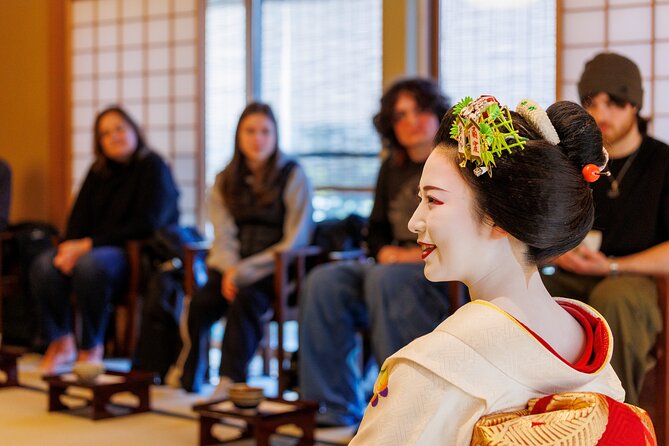
A maiko dance changes how you see Gion. This Kyoto experience combines a guided walk through Gion with rare access to an Ochaya, or traditional tea house, where you watch a maiko perform, meet a former geiko, and ask direct questions about this private world. I especially like the honest conversation and the chance to see Gion beyond its pretty lanes. The main drawback is that the walking portion can feel familiar if you have already taken another Gion tour, and the performance itself may last only a few minutes.
I also like the small-group format when available, since it gives you a better chance to ask questions and take a proper photo with the maiko. Guides such as Mika, Naomi, Tom, Takuma, Chiko, Ayako, and Eric have been praised for clear English, patience, and strong local knowledge. Plan extra time, though. The advertised duration is three to five hours, and the tour can run longer than expected.
Key points to know before booking
- The private Ochaya visit is the main event: You enter a venue that most independent visitors cannot access without a connection or membership.
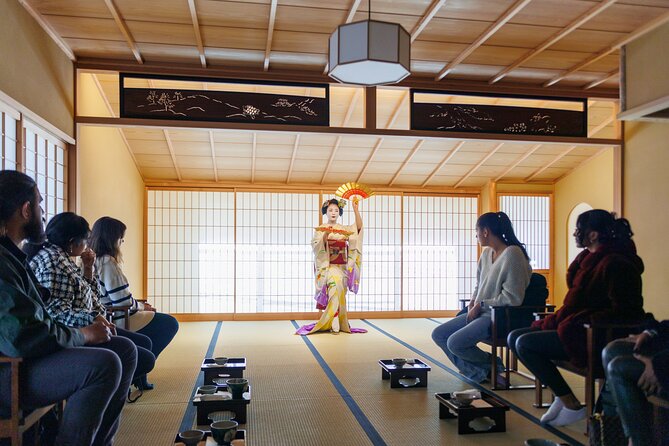
- The performance is short but memorable: Expect one or two traditional dances by a maiko and a former geiko, with much of the visit devoted to conversation and questions.
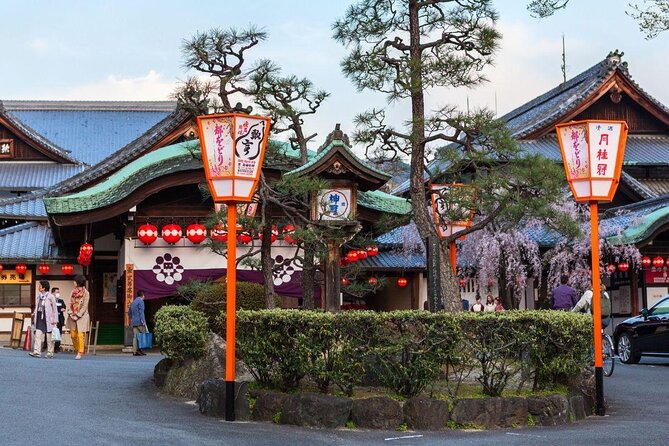
- The Gion walk supplies useful context: Shirakawa Canal, Tatsumi-jinja Shrine, Hanamikoji Street, Gion Corner, Kenninji Temple, and Miyagawasuji help explain where this traditional entertainment culture operates.
- The conversation is the real value: You can ask about training, daily life, customs, and the difference between a maiko and a geiko through an English-speaking guide.
- Bring socks and allow extra time: Shoes come off at the performance venue, stairs lead to the second floor, and rain does not cancel the walk.
- Photography has strict limits: Photos and video are allowed during the performance and photo session only. Ask the maiko directly before posting photos online, and do not post video.
Why this Gion experience feels different
Gion is easy to admire from the outside. You see wooden townhouses, narrow lanes, lanterns, and visitors hoping to catch a glimpse of a maiko heading to an appointment. That glimpse tells you very little, though. This tour gives you a guide to explain what you are seeing, followed by an opportunity to meet people connected to the tradition.
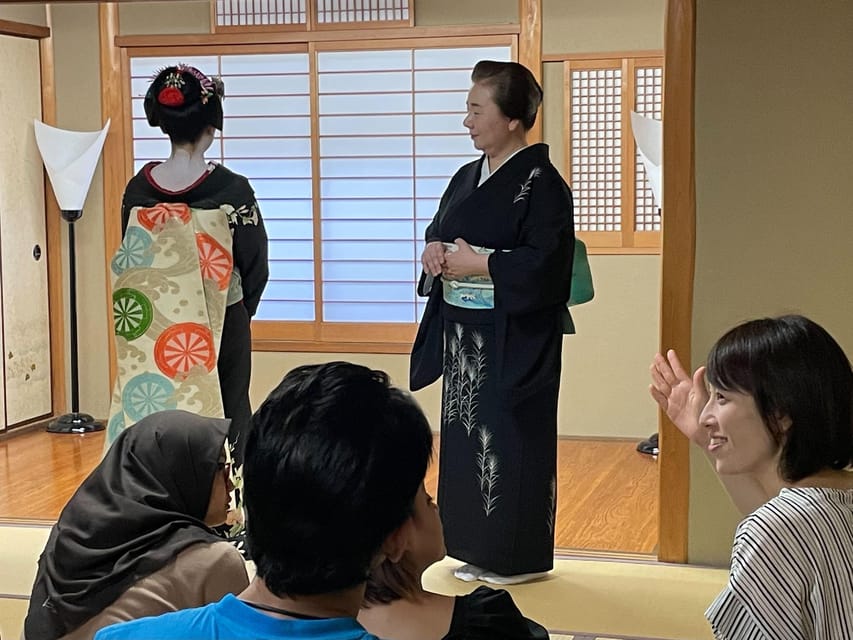
The distinction between maiko and geiko is important. A maiko is an apprentice, still training in dance, music, etiquette, and performance. A geiko is fully trained. The former geiko you meet offers a useful perspective because she can explain the work from experience while also putting the younger performer’s training into context.
I like that the encounter is not presented as a quick photo opportunity alone. The live dance is graceful and formal, but the question-and-answer period gives the visit its substance. You can ask about training and customs instead of simply watching from a distance.
The English-speaking guide acts as interpreter and cultural bridge. Several guides have been praised for handling questions carefully, including Tom, who speaks English, German, and Japanese, and Naomi, Mika, and Takuma, who have been singled out for friendly and clear explanations. Your particular guide will vary, but the format gives you help with questions that might otherwise be difficult to ask.
A few more walks around Kyoto worth a look
- Kyoto Geisha Walking Tour: Gion District & Hidden Gems
★ 4.7 · 3,273 reviews - Kyoto: Gion Magical Night Walking Tour with Geisha Trivia
★ 4.9 · 2,393 reviews - Kyoto: Gion Geisha District Walking Tour – Stories of Geisha
★ 4.7 · 2,187 reviews
Beginning beside the Kamo River
The meeting point depends on the option you choose. One possibility is the statue of Izumo-no-Okuni, near the Kamo River. Another option begins at the wargo Kyoto Kimono Rental Gion-Shijo Store.
If you choose the kimono rental option, you change clothes at the store and then walk about three minutes to the Izumo-no-Okuni statue on your own. The guide waits there, so allow enough time to find the statue after dressing. This arrangement is simple, but it is worth knowing in advance because you are not escorted from the shop.
A kimono can make the outing feel more special, especially for the final photo session. It also changes the practical side of the walk. Kyoto streets can be uneven, and summer heat can make traditional clothing tiring. One person found walking in the heat uncomfortable and suggested a café break, so consider the season before adding the rental option.
Shirakawa Canal and Tatsumi-jinja Shrine
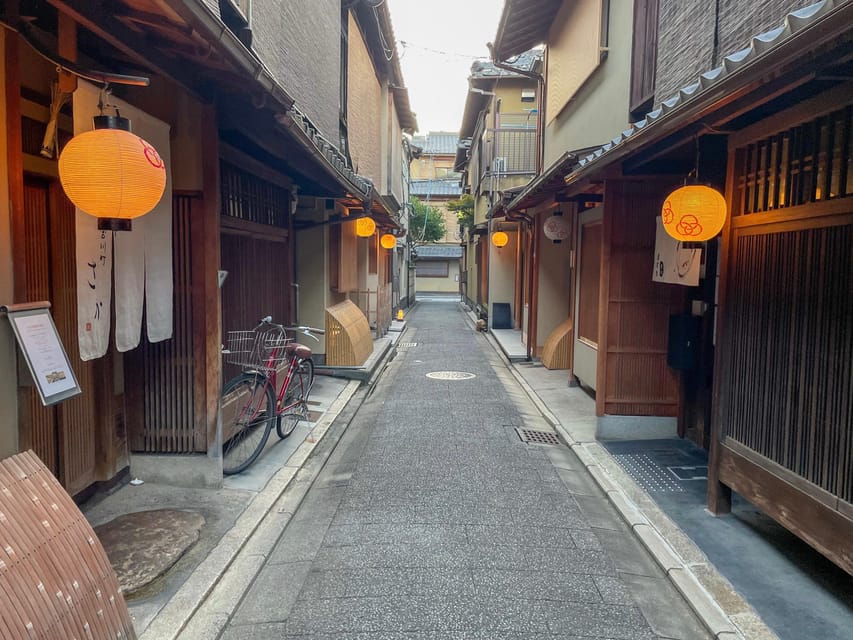
The walk begins around the Shirakawa Canal, one of Gion’s most attractive stretches. Water, traditional buildings, and narrow lanes give you an immediate sense of why this part of Kyoto is so closely linked with classical arts and evening entertainment.
The guide explains the district rather than simply leading you from one photo stop to another. You learn how the streets function, where performers work, and how the area’s architecture fits into the world of maiko and geiko. This context matters because Gion can otherwise look like a stage set designed only for photographs.
The stop at Tatsumi-jinja Shrine is brief, about five minutes. It is a small pause rather than a full shrine visit, so do not expect a long look around or a formal temple explanation. Its value is mainly in helping you understand the local setting as you continue through the district.
Hanamikoji Street, Gion Corner, and Kenninji
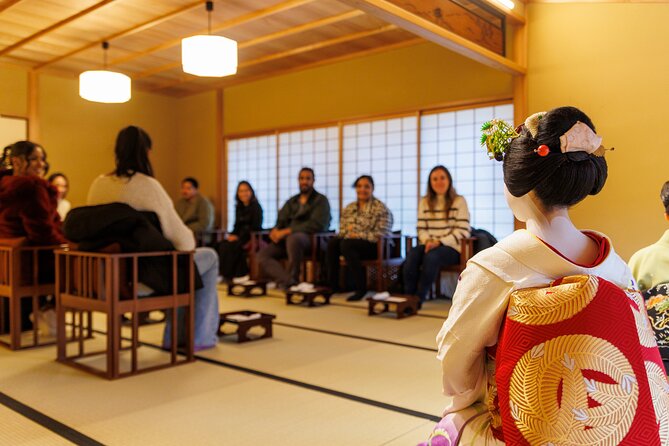
Hanamikoji Street is one of Gion’s best-known lanes, lined with traditional facades and teahouses. Your guide points out details that are easy to miss and explains how the street connects with the performing arts district.
You also pass Gion Corner, a venue associated with traditional Japanese arts. The itinerary includes a guided look rather than a separate ticketed show, so keep your expectations in check. This is a stop for orientation, not a replacement for the maiko performance later in the tour.
Kenninji Temple provides another cultural reference point. The stop is listed at about 15 minutes and includes sightseeing and a photo opportunity. In practice, the temple portion may feel more like a quick glance than a full temple tour. If Kenninji is important to you, return separately with more time.
That limitation is worth noting. The walking portion is informative, but it is not a detailed temple tour or a museum visit. If you have already explored Gion, some explanations may overlap with what you have heard before. The payoff comes when the walk leads into the private Ochaya visit.
Same streets, a different way to see them:
- Best of Kyoto: Gion, Geisha, Pagodas & Cobblestones
★ 4.9 · 2,058 reviews - Night Walk in Gion: Kyoto’s Geisha District
★ 4.5 · 2,003 reviews - Kyoto Gion Geisha District Walking Tour – The Stories of Geisha
★ 5.0 · 1,441 reviews - Nishiki Market Brunch Walking Tour (7 Tastings + Brunch)
★ 5.0 · 1,355 reviews
Miyagawasuji and the private Ochaya
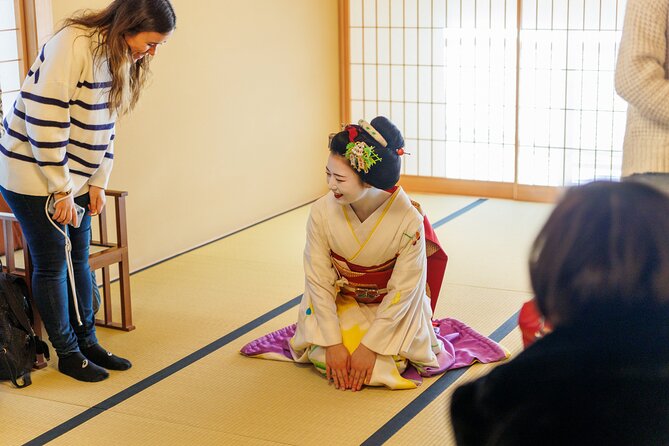
The group finishes the walking section in Miyagawasuji, another flower district associated with Kyoto’s traditional entertainment culture. This is where the tour shifts from public streets to a more private setting.
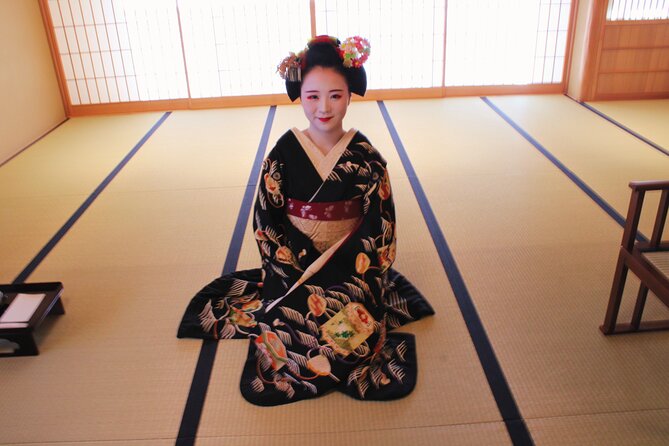
At the Ochaya, you meet a maiko and a former geiko or venue owner. The setting is an important part of the value. Ordinary sightseeing rarely gets you inside a traditional tea house, and independent visitors generally cannot arrange this kind of meeting without a personal introduction.
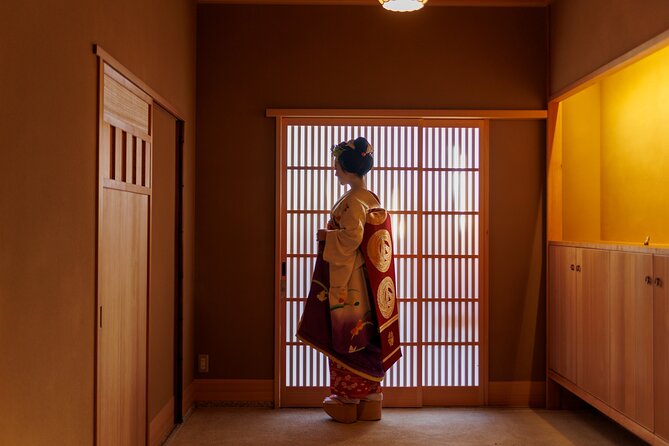
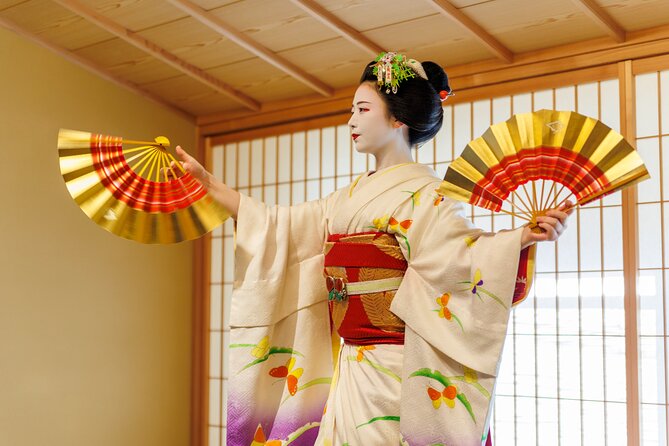
The performance includes one or two dances. The maiko performs in formal dress, with carefully arranged hair and makeup, while traditional music and movement create a sharp contrast with the modern city outside. The dance may last less than five minutes, so you should not book this expecting a long stage production.
That short performance can still be the emotional high point. The entrance of a maiko in a colorful kimono, followed by the controlled movements of the dance, gives you a direct look at an art form that is difficult to encounter elsewhere. The former geiko’s presence adds another layer, since you are not seeing only a performance but also hearing from someone who understands the profession firsthand.
The question-and-answer session is worth your time
After the dance, the mood becomes more conversational. You can ask questions about the maiko’s training, the path toward becoming a geiko, daily routines, clothing, customs, and the changing role of the profession in Kyoto.
Your guide translates the discussion into English. This is where guide quality matters most. A patient interpreter can make the difference between a few polite answers and a real exchange. Guides such as Ayako have been praised for explaining both historical and current aspects of maiko and geiko life, while Mika and Naomi have been noted for warmth and clear communication.
The venue owner or former geiko also helps make the conversation less formal. Several accounts describe warm laughter and candid stories, which can make the meeting feel human rather than staged. You are still entering a professional setting, so respectful questions and attentive listening are essential.
The photo session follows the performance. You can take a photo with the maiko, but photography and video are restricted to the performance and the designated photo session. Do not photograph casually during other parts of the visit. If you plan to share a photo online, ask the maiko directly for permission first. Videos cannot be uploaded online.
What you get for $106
At $106 per person, this is not a cheap walking tour. The price makes more sense when you separate the pieces: roughly 70 to 80 minutes of guided Gion walking, about 90 minutes at the venue, a live performance, translation, a question-and-answer session, and a private meeting that is difficult to arrange independently.
If you only want to see Gion’s streets, you can do that for little or no cost. If you want a long dance performance, this may also feel expensive because the dance itself is brief. The value comes from access and conversation, not from minutes of stage time.
I would consider it good value if you have a serious interest in traditional Japanese arts or want one special cultural event during your Kyoto stay. It is less suitable if you dislike structured activities, prefer to explore alone, or mainly want casual photographs in a kimono.
The price can feel especially fair when the group is small. A group of seven, for example, allows more space for questions and makes the photo session less rushed. Group size can vary, so check the option carefully when booking.
Timing, comfort, and practical limits
The total duration is listed as three to five hours. That range is important. The walk, translation, questions, and photo session can take longer on some days, so do not schedule a tight train connection immediately afterward.
One person became anxious about catching a train because the activity ran later than expected. If you are returning to Tokyo or connecting to another city, leave a generous buffer. The organizer does not cover incidental hotel or bullet train costs if delays affect your plans.
The tour operates in rain or shine. Bring an umbrella for the walk, and do not arrive at the venue in wet clothing or wet socks on rainy days. Socks are required inside the performance venue, so pack a clean pair even if you are not wearing a kimono.
The performance takes place upstairs in a private house. You must use stairs, and the activity is not suitable for wheelchair users or people with mobility impairments. Children under 10 cannot join.
Summer can be demanding because the walking section is outdoors. Comfortable footwear, water, and realistic expectations about the heat will help. If you choose the kimono option, remember that the outfit may look wonderful in photographs but can make a warm day harder.
Who should book this experience
I would recommend it to you if you want more than a street sighting and are genuinely curious about the people behind Kyoto’s geisha tradition. The direct conversation is especially useful for first-time visitors who want clear explanations without relying on stereotypes from films or popular culture.
It also suits photographers who want a respectful, organized portrait opportunity. You must follow the photography rules, but the scheduled photo session gives you a clear chance to take pictures without interrupting the rest of the meeting.
Couples, solo visitors, and small groups can all enjoy it. A solo visitor may benefit from the social setting and translation, while a couple can combine the meeting with the optional kimono rental.
I would hesitate to recommend it if you have very limited time in Kyoto and need a precise end time. I would also look elsewhere if your main goal is a full theatrical production, a temple-focused tour, or a long meal at a tea house. This is a cultural meeting with a short performance, not an evening entertainment package.
Should you book the Gion maiko tour?
Book it if the chance to speak with a maiko and former geiko matters more to you than checking off another temple. The streets of Gion are easy to explore on your own, but access to an Ochaya and an organized question-and-answer session is much harder to arrange.
Keep your expectations focused. The walking tour is useful but not exhaustive, Kenninji is a brief stop, and the dance may be only a few minutes. The lasting value comes from the setting, the explanations, the personal questions, and the chance to see a living tradition with proper respect.
At $106, I see it as a worthwhile special event for culturally curious visitors, especially if you choose a small group and leave plenty of time afterward. Bring socks, avoid a tight schedule, and treat the maiko as an artist and professional rather than a costume subject. Do that, and this can become one of the most memorable hours of your Kyoto stay.
FAQ
Where does the Kyoto maiko tour meet?
The meeting point depends on the option booked. It may be at the Izumo-no-Okuni statue or at the wargo Kyoto Kimono Rental Gion-Shijo Store.
What happens if I choose the kimono rental option?
After changing into a kimono, you walk about three minutes to the Izumo-no-Okuni statue by yourself. The guide waits for you there.
How long does the tour last?
The total duration is listed as three to five hours. The Gion walk lasts about 70 to 80 minutes, and the maiko meeting lasts about 90 minutes. The activity may run longer on some days.
What will I see during the Gion walk?
The route includes Shirakawa Canal, Tatsumi-jinja Shrine, Hanamikoji Street, Gion Corner, Kenninji Temple, and Miyagawasuji. The guide explains the streets, buildings, history, and connection to maiko and geiko culture.
How long is the maiko performance?
The experience includes one or two dances. The performance may be brief, with much of the venue visit devoted to conversation, questions, and photographs.
Can I take photos or videos?
Photography and video are allowed only during the performance and the photo session. Ask the maiko directly before posting photos online. Videos cannot be uploaded online.
What should I bring?
Bring socks because shoes are removed at the performance venue. On rainy days, use an umbrella during the walk and arrive without wet clothes or wet socks.
Is the tour suitable for children or wheelchair users?
The tour is not suitable for children under 10, wheelchair users, or people with mobility impairments. The performance takes place on the second floor of a private house, accessible only by stairs.
Just added around Kyoto
- Kyoto : Private Custom Walking Tour With A Local Guide★ 4.6 · 144 reviews
- Kyoto: Private 2.5 Hour Historical Walking Tour★ 4.9 · 121 reviews
- Kyoto: Private Walking Tour with a Local★ 4.6 · 118 reviews
- Kyoto: Gion Sunset Walking Tour with Local Guide★ 4.7 · 351 reviews
- Kyoto: Gion Walking Tour★ 5.0 · 195 reviews
- Kyoto: Izakaya Bars Guided Walking Tour★ 4.9 · 815 reviews
- Kyoto Gion Cultural Walk & Geisha Show with Dining Options★ 5.0 · 518 reviews
- Kyoto: Gion Hidden Gems & Geisha Culture Tour★ 4.9 · 126 reviews
Japan Walking Tours, compared.
Kyoto Geisha Walking Tour: Gion District & Hidden Gems
Read our review →
Tokyo Tsukiji Fish Market Food and Culture Walking Tour
Read our review →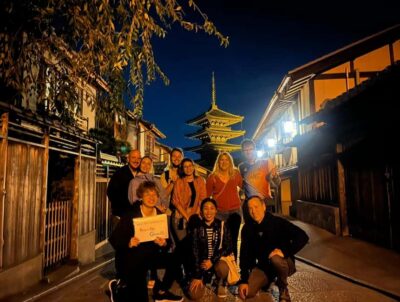
Gion Magical Night Walking Tour with Geisha Trivia
Read our review →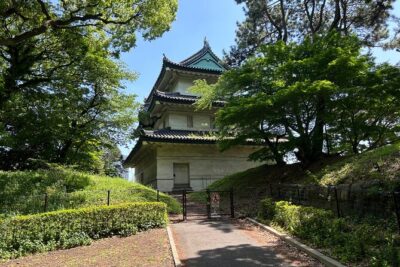
Imperial Palace and Shogun Historical Walking Tour
Read our review →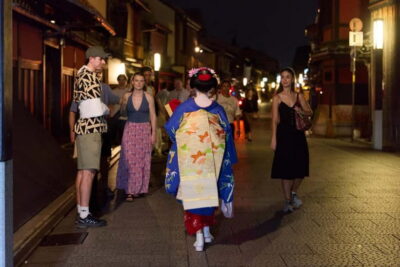
Gion Geisha District Walking Tour – Stories of Geisha
Read our review →
Best of Kyoto: Gion, Geisha, Pagodas & Cobblestones
Read our review →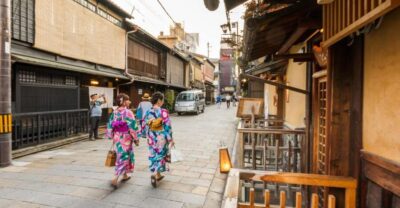
Shinjuku Local Bar and Izakaya Guided Walking Tour
Read our review →Browse the lists this tour appears in