
Review · HISTORY WALKING TOURS
Arequipa: Walk through the Historic Center of the City
Arequipa reveals itself one stone street at a time. This two-hour walk gives you a useful first look at the White City, pairing major sights such as the Cathedral with colonial cloisters, old tambos, local stories, and a rooftop or lookout finish facing Misti, Chachani, and Pichu Pichu. I especially like the small groups of up to six and the way guides such as Joss, Joseph, and Jose add restaurant tips and local context instead of simply reciting dates. The main drawback is that the tour may feel light on commentary during some stretches of walking, and one participant felt the $15 price was high for a basic introduction.
For most people, this is a good way to get your bearings soon after arriving in Arequipa. The $15 price is modest for two hours with a live English- or Spanish-speaking guide, and the route mixes famous buildings with less obvious corners. Just remember that the exact balance may depend on the guide, the group size, and how many questions you ask along the way.
Key points at a glance
- A small-group city walk: The group is limited to six, so you can ask questions without shouting across a crowd.
- Five historic sites: The route includes the Cathedral, colonial cloisters, ancient tambos, cobblestone streets, and a final viewpoint.
- Local guides make the difference: Joss, Joseph, and Jose are praised for explaining architecture, geography, customs, and local life.
- A strong first-day activity: You receive suggestions for restaurants, bars, museums, and other things to do in Arequipa and Peru.
- A scenic finish: The tour ends at a lookout or terrace with views toward Misti, Chachani, and Pichu Pichu. Some groups have enjoyed pisco sours at the end.
- Morning or afternoon departures: The schedule gives you a choice between an earlier orientation and a later walk with a possible sunset atmosphere.
Starting at Campo Redondo in San Lázaro
The meeting point is Campo Redondo in the San Lázaro area, at coordinates -16.3934138, -71.5336117. You should plan to arrive ready to walk, since the experience is a true pedestrian tour rather than a sightseeing trip by vehicle.
San Lázaro is a fitting place to begin. The area is tied to some of Arequipa’s oldest urban spaces, and its narrow streets and pale volcanic-stone buildings set the tone for the rest of the route. The tour description promises five historical sites, though the exact order can vary.
I like this start because it places you in the old city rather than dropping you at a generic meeting point near a busy road. Still, check the location carefully before setting out. The name Campo Redondo may be less familiar than Arequipa’s main plaza, and a precise meeting point matters when you are arriving with luggage, tired from a bus trip, or still getting used to the city.
The group size is one of the tour’s practical strengths. With no more than six participants, the guide can respond to individual questions and keep the pace together. Several bookings became private or nearly private when other people canceled, and that can make the experience feel more like a personal orientation than a standard group outing. You should not count on having a private guide, but a small group is part of the stated format.
More Old Town Walking Tours in the world:
- Underground Vaults Walking Tour in Edinburgh Old Town
★ 4.5 · 8,506 reviews - Prague: 3-Hour Walking Tour of Old Town & Prague Castle
★ 4.7 · 5,696 reviews - Dubrovnik: Old Town Walking Tour
★ 4.8 · 5,174 reviews
The Cathedral and Arequipa’s best-known stonework
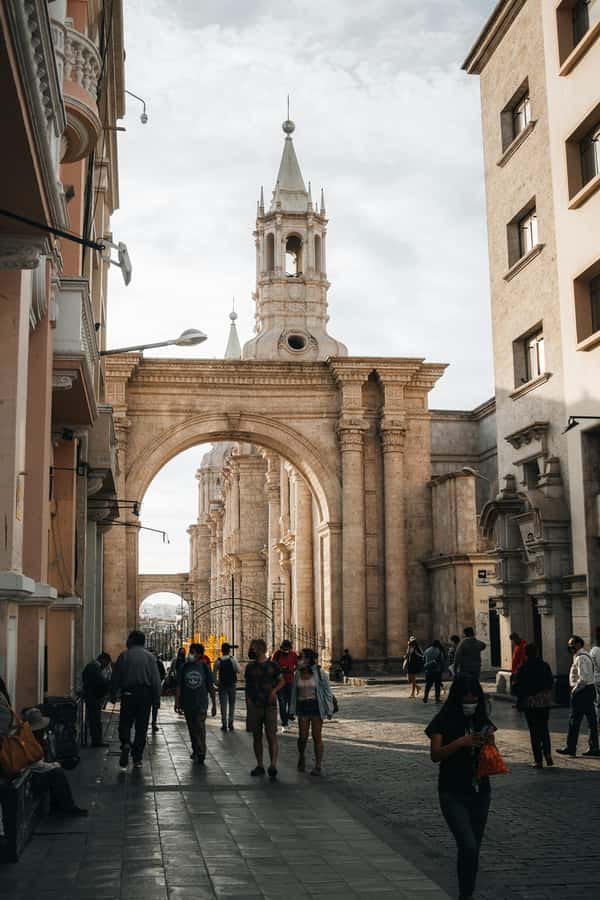
The walk includes a visit to Arequipa’s Cathedral, one of the city’s main symbols. This is an important stop because it gives you a clear introduction to the city’s architectural character and religious past before the route moves into smaller streets and less formal spaces.
Arequipa is often called the White City because of its extensive use of pale volcanic sillar stone. The Cathedral helps you see how that material shaped the appearance of the historic center. Rather than treating the building as a quick photo stop, a good guide can connect its design to the city’s setting, local building traditions, and cultural influences.
Do not assume this walking tour replaces a dedicated Cathedral visit. One participant later took a separate guided Cathedral tour after receiving that suggestion from Joss. That is useful advice: the walk can point out the building and explain why it matters, but you may want extra time inside if religious art, architecture, and detailed interpretation are high on your list.
The guide’s skill matters here. Joss has been praised for covering architecture and geography with energy, while other visitors valued Joseph’s explanations of Arequipa and the surrounding region. You are likely to get more from the Cathedral if you ask questions instead of waiting for a long formal lecture.
Colonial cloisters and five layers of the old city
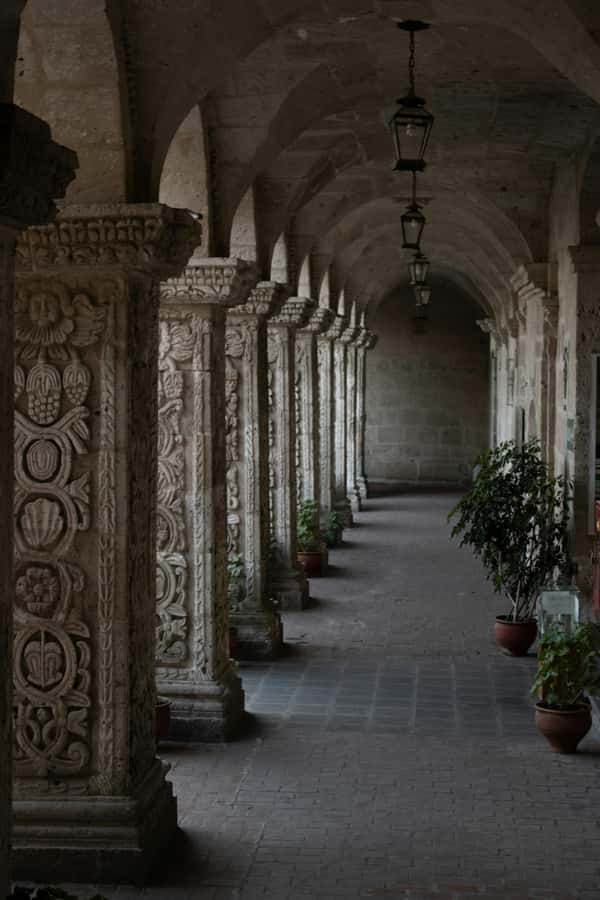
The next part of the route explores colonial cloisters. These enclosed courtyards are among Arequipa’s most atmospheric spaces, with arcades, stonework, and a quieter feel than the main streets. They show how religious and civic life once worked within compact, carefully arranged buildings.
I like the inclusion of cloisters because they slow the walk down. A city tour made up only of plazas and exterior façades can become a parade of quick stops. Courtyards offer a chance to notice columns, carved details, proportions, and the way light changes across the stone.
The description refers to five wonderful historical sites, but it does not provide a fixed name for every stop. You should therefore think of this as a guided introduction rather than a guaranteed museum itinerary. The experience focuses on interpretation, stories, and a broad feel for the old center.
That approach suits you if you want context before choosing which museums or monuments to visit on your own. It may disappoint you if you expect long interior visits at every location. One participant felt there could have been more information about the streets and buildings passed along the way, with some walking time that felt quiet. I would treat that as a reminder to ask questions and make clear that you want more architectural detail.
Tambos, legends, and the less polished side of Arequipa
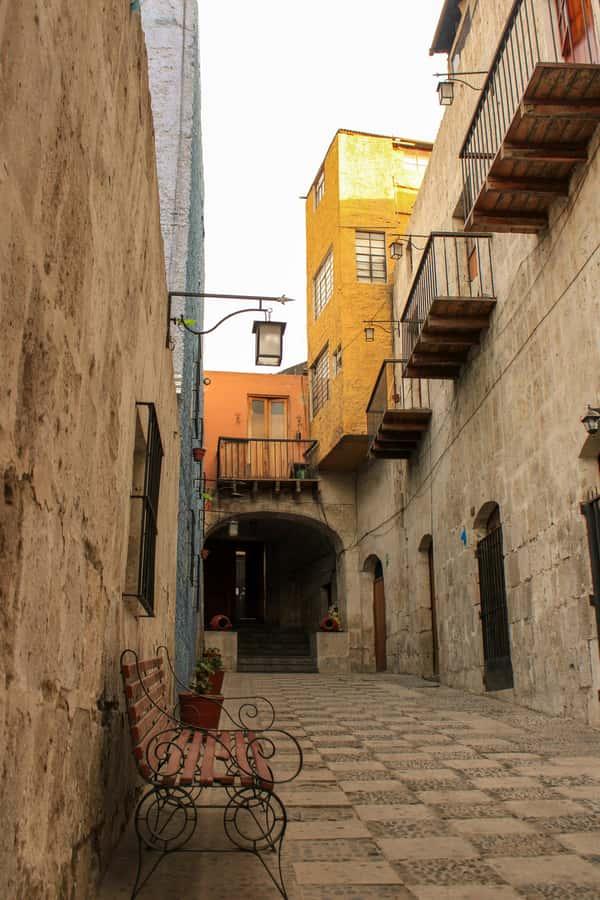
A particularly appealing part of the route is the visit to the tambos, old lodgings that have played a lasting role in Arequipa’s daily life. These places add a useful layer to the city story. You are not only looking at grand religious buildings and official monuments. You are also seeing spaces linked to movement, trade, lodging, and ordinary urban life.
The tambos help explain why Arequipa should not be reduced to a few photogenic façades. They connect the historic center with the people who passed through it and used it over many years. This is exactly the kind of stop that can be easy to miss if you walk alone with a map.
The route also uses local traditions, legends, and curious facts. These stories are part of the appeal, especially if you enjoy understanding how a place remembers itself. They also give the walk a more relaxed tone than a strictly academic lecture.
The quality here depends heavily on the guide. Joss has been praised for sharing favorite places and explaining cultural influences with enthusiasm. Joseph, who was born and raised in Arequipa, has been singled out for knowing the city’s good spots and presenting them clearly. Jose has also received praise for being friendly, professional, and attentive, even when a group became very small.
You should expect interpretation in English or Spanish, but some material may be presented in its original language. If you need every detail translated, ask at the start. The stated languages are English and Spanish, so you have a clear choice, but the note about original-language content is worth keeping in mind.
More History Walking Tours in the world:
- History and Hauntings of Salem Guided Walking Tour
★ 5.0 · 14,564 reviews - Lisbon: History, Stories and Lifestyle Walking Tour
★ 4.8 · 10,902 reviews - Boston: Freedom Trail History Small Group Walking Tour
★ 5.0 · 6,450 reviews - Historic Charleston Guided Sightseeing Walking Tour
★ 5.0 · 6,216 reviews
Cobblestone streets and practical city advice
Between the main stops, you walk through Arequipa’s cobblestone streets. The walking itself is part of the experience, not just transportation between monuments. It lets you see how the older parts of the city fit together and gives the guide chances to point out places that do not appear on a standard sightseeing checklist.
Several guides have offered suggestions for restaurants, bars, museums, markets, and activities beyond the tour. Joss has even shared his WhatsApp number with some participants and continued helping with recommendations afterward. That is more useful than it may sound. A two-hour walk can save you from wasting the next two days on poor restaurant choices or missing an appealing part of the city.
The advice also covers things to do in Peru, not only Arequipa. This makes the tour especially useful near the beginning of a longer trip. You can ask about how to use your time in the region, then compare those suggestions with your own plans.
One stop mentioned in a booking was the San Camilo market. The advertised route emphasizes historic buildings, cloisters, tambos, and a viewpoint, so you should not assume the market is included every time. Still, this detail shows the kind of local addition that may appear when the group’s interests and timing allow it.
I would use the walk as a listening session as much as a sightseeing session. Ask about the places you pass. Ask where the guide eats. Ask which activity is worth paying for and which one can be skipped. The small group makes that practical.
The final viewpoint over Misti, Chachani, and Pichu Pichu
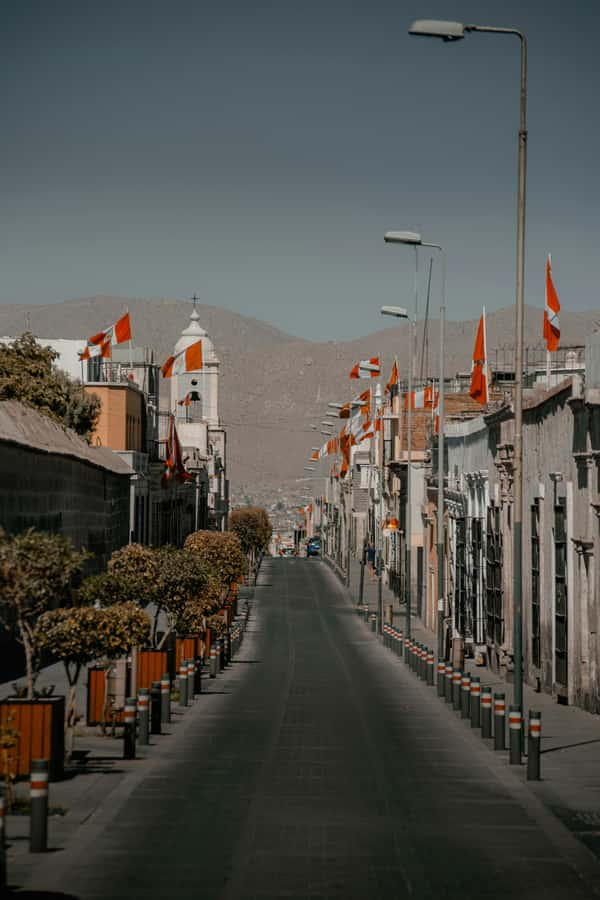
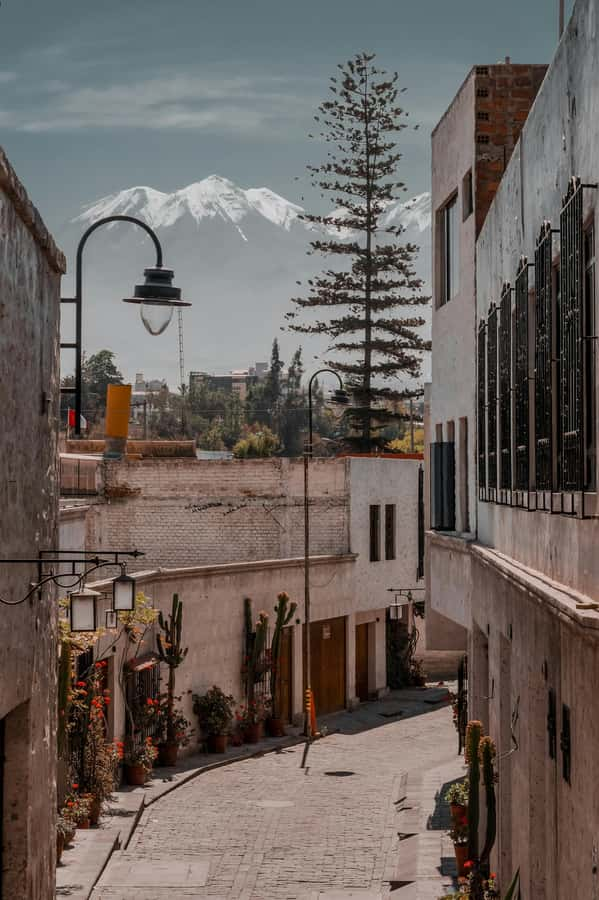
The tour ends at a lookout point with wide views toward the volcanoes surrounding Arequipa: Misti, Chachani, and Pichu Pichu. This gives the walk a satisfying finish. After spending time among stone walls and narrow streets, you step back and see the larger setting that shapes the city.
The volcano view is not just a photo opportunity. It helps you understand Arequipa’s geography and gives the city a clear sense of place. Guides have been praised for connecting urban architecture with the region’s geography, and this is where those two subjects come together.
The exact mood depends on the departure time and the viewpoint reached. An afternoon outing may end with changing light or a sunset atmosphere. Several participants enjoyed a rooftop or terrace with pisco sours after the walk. The listed experience promises a lookout, but a drink is not stated as an included feature, so budget separately if you want to linger for one.
This ending is one reason I prefer the tour to a simple central-plaza orientation. You finish with a view that places the historic center within the surrounding mountains and volcanoes. It gives you a clear memory of Arequipa, not just a list of buildings.
Two hours, with about ninety minutes of walking
The activity is listed as two hours, while the walking portion is described as approximately one and a half hours. The difference likely allows time for stops, explanations, questions, and the final viewpoint. You should reserve the full two-hour window rather than planning another appointment immediately afterward.
The pace appears manageable for people who are comfortable walking city streets, but this is not a seated tour. You will cover cobblestones and spend much of the time outdoors. Wear shoes that you can walk in for two hours and bring what you normally need for changing conditions, without assuming that the tour provides transport or refreshments.
Morning and afternoon departures are available. Choose the morning if you want practical advice before planning the rest of your day. Choose the afternoon if you prefer a later stroll and like the possibility of ending with a sunset view.
The tour is suitable for solo participants, couples, and small groups who enjoy conversation. It may be less satisfying if you want a fast checklist of every major monument, a formal museum program, or constant commentary every minute. The route has some walking stretches, and the amount of detail may vary with the guide and group.
Is $15 a fair price?
At $15 per person, the tour offers good value if you use it as an introduction to Arequipa rather than as a full historical survey. You receive roughly two hours, a live English- or Spanish-speaking guide, five historic sites, local stories, recommendations, and a viewpoint. The group cap of six makes the price more appealing because you are not paying for a large, impersonal march.
The strongest value comes from the advice after the formal stops. A guide who points out a useful restaurant, explains which place deserves more time, or helps shape your plans for the rest of Peru can save you both time and money.
There is one fair criticism. One participant felt the price was high for a basic tour and wanted more information about the streets and buildings along the route. If you prefer dense commentary at every step, you may not see the same value. Ask questions early and tell the guide what interests you, especially architecture, local customs, food, or geography.
Free cancellation up to 24 hours before the start and the option to reserve now and pay later make the booking less rigid. These are useful safeguards when your Peru plans may shift, but they do not change the central question: do you want a friendly local orientation or a detailed monument-by-monument lecture?
Who should book this Arequipa walk?
I would recommend it most strongly to:
- First-time visitors who want a clear introduction to the historic center.
- Solo visitors and couples who prefer small groups.
- People who like local stories, legends, and practical recommendations.
- Anyone deciding what to see, eat, and do during a short stay.
- Visitors who want a mix of famous buildings and less obvious places.
- English- or Spanish-speaking participants who enjoy asking questions.
You may want another option if you need a fully scripted architecture tour, guaranteed long visits inside every building, or a packed schedule with no quiet walking stretches. The experience is best when you treat it as a personal orientation with history attached, not as an exhaustive course on Arequipa.
Should you book it?
I would book this tour early in an Arequipa stay, especially if you have only a day or two in the city. The combination of a six-person limit, local guides such as Joss and Joseph, useful recommendations, old tambos, colonial cloisters, and a volcano-facing finish gives you more than a basic stroll.
The choice is less clear if your main goal is detailed commentary on every street and building. In that case, ask the guide to focus on architecture and request more explanation during the quieter walking sections. At $15, the risk is small, and the flexible cancellation terms add comfort.
Book it if you want to get your bearings fast while meeting a local guide and finding places you might miss alone. Skip it only if you already know the historic center well or prefer to explore without a set route.
FAQ
How much does the Arequipa walking tour cost?
The tour costs $15 per person.
How long does the tour last?
The experience lasts two hours. The walking portion is described as approximately one and a half hours, with time also used for stops, explanations, questions, and the final viewpoint.
Where does the tour meet?
The meeting point is Campo Redondo in San Lázaro, Arequipa. The coordinates are -16.3934138, -71.5336117.
What languages are available?
The live tour guide is available in English and Spanish. Some content may be shown in its original language.
How many people can join the group?
The tour is limited to six participants.
What places are included?
The route includes the Cathedral, colonial cloisters, tambos, historic streets, and a final lookout point. The experience includes five historical sites overall.
Does the tour include a view of volcanoes?
Yes. The final viewpoint offers views toward Misti, Chachani, and Pichu Pichu.
Is the tour offered in the morning and afternoon?
Yes. The walk is available in both the morning and afternoon, subject to availability.
Can I cancel for a refund?
You can cancel up to 24 hours in advance for a full refund.
Can I reserve now and pay later?
Yes. You can reserve your place and pay nothing at the time of booking, which keeps your plans flexible.
Just added around the world
- Walking Tour of Boston’s Freedom Trail★ 4.5 · 77 reviews
- Downtown Freedom Trail Walking Tour – History & Architecture★ 4.5 · 194 reviews
- Boston Seafood Lovers Food and History Walking Tour★ 5.0 · 208 reviews
- Boston “Death and Dying” Walking Ghost Tour★ 4.5 · 223 reviews
- Boston Food of the North End Private Walking Tour★ 5.0 · 174 reviews
- Boston Movie Mile Walking Tour★ 4.5 · 119 reviews
- 1 If By Land Walking Tours★ 5.0 · 95 reviews
- Boston History and Freedom Trail Private Walking Tour★ 5.0 · 117 reviews
History Walking Tours, compared.
History and Hauntings of Salem Guided Walking Tour
Read our review →
Freedom Trail History Small Group Walking Tour
Read our review →
Historic Charleston Guided Sightseeing Walking Tour
Read our review →
Tapas Walking Tour with Food, Wine, and History
Read our review →
Savannah History and Haunts Candlelit Ghost Walking Tour
Read our review →
A History of Terror – Belfast City Centre Walking Tour
Read our review →Browse the lists this tour appears in