
Review · SOUTH AFRICA WALKING TOURS
Johannesburg: City Centre Walking Tour
Johannesburg’s past is written in its streets. This three-hour walk links gold mining, apartheid-era politics, architecture, migrant labour, street art, and today’s city life in one clear route. I especially like the local guide-led format, which gives you context that a bus tour cannot, and the chance to walk through Gandhi Square, Ferreirasdorp, Newtown, and Braamfontein rather than seeing them through a window.
I also like the personal touch. Guides such as Refiloe, Mulalo, Mathapelo, Thabo, and Clement have been praised for making the route feel safe, friendly, and easy to understand. The main consideration is that Johannesburg’s city centre is a busy, changing urban area, not a polished sightseeing district. Some stops are viewed from outside, the Workers Museum may be closed, and access details need checking because the tour is described both as wheelchair accessible and as unsuitable for wheelchair users.
Key points to know before you book

- Gold rush origins: Walk through Main Street, Ferreirasdorp, and Marshalltown, where Johannesburg’s mining story began.
- Mandela and Tambo connection: Visit Chancellor House, the former site of Nelson Mandela and Oliver Tambo’s black-owned law firm.
- A clear view of present-day Johannesburg: Guides discuss current city conditions, politics, housing pressures, and the changing Central Business District.
- Newtown’s cultural side: See the Workers Museum, Mary Fitzgerald Square, Market Theatre, galleries, street art, and creative spaces.
- A strong ending: Cross or view Nelson Mandela Bridge before finishing near Braamfontein and a local shisanyama restaurant.
- Good value at $40: The fee includes the guide, walking tour, bottled water, and entrance fees, though lunch and transport are extra.
Starting at Gandhi Square, where the city tells its story
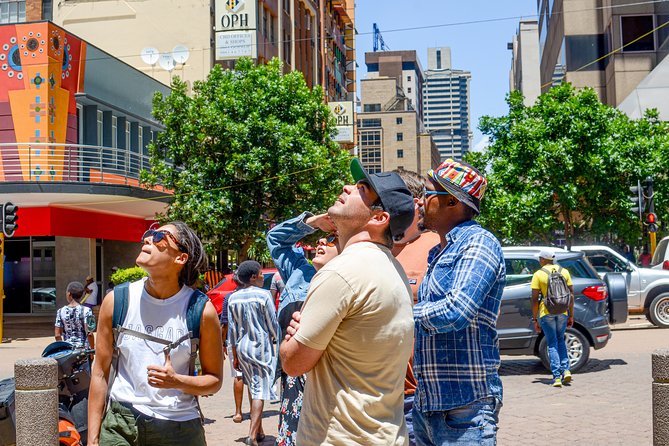
Meet your guide outside Nando’s at Gandhi Square, near the Metropolitan Building. This is a useful starting point because the square puts you close to Johannesburg’s central streets, older buildings, transport routes, and the city’s complicated daily rhythm.
The tour begins with the city’s gold mining story. Johannesburg grew rapidly after gold was found on the Witwatersrand, and the early development of the city is easier to understand when you walk through the streets rather than simply hear a date or two from a guidebook.
Your guide sets the tone by explaining both the past and the present. You will not get a soft-focus version of Johannesburg. The route includes discussion of politics, urban decline, redevelopment, migration, and the current condition of the Central Business District.
That balance is one of the best reasons to choose this walk. I like tours that explain what you are seeing now, not just what happened a century ago. Johannesburg can be difficult to read at street level, and a good guide helps connect its grand buildings, crowded pavements, closed businesses, and active public spaces.
A few more walks around South Africa worth a look
- Soweto: Walking Tour with a Local Guide and Lunch
★ 4.9 · 648 reviews - Plettenberg Bay: Bungee Jumping with Zipline and Sky Walk
★ 5.0 · 506 reviews - Cape Town: Nathi Langa Township Walking Tour
★ 4.9 · 493 reviews
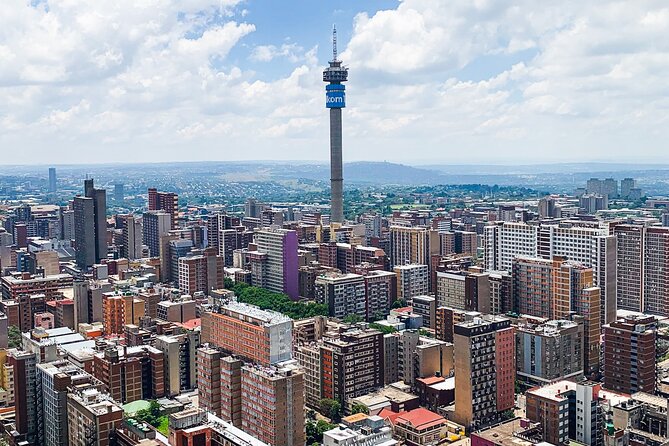
Carlton Centre and the changing Johannesburg skyline
The Carlton Centre is scheduled as a 20-minute guided stop. It is one of the city centre’s best-known high-rise landmarks and gives the tour a useful architectural and urban starting point.
You should check the current access arrangements before expecting a rooftop or 360-degree view. A past guest found that the towers had stopped accepting visitors for the skyline viewpoint, although the guides offered another way to see the city from above. That is a good example of why this tour works best when you treat the listed stops as a route, not a promise that every building will offer full interior access.
The guide can still explain the role of the Carlton Centre and point out the changing shape of Johannesburg. The city’s tall office blocks, older civic buildings, and newer creative districts tell different parts of the same story.
Courts, post offices, and the architecture of power
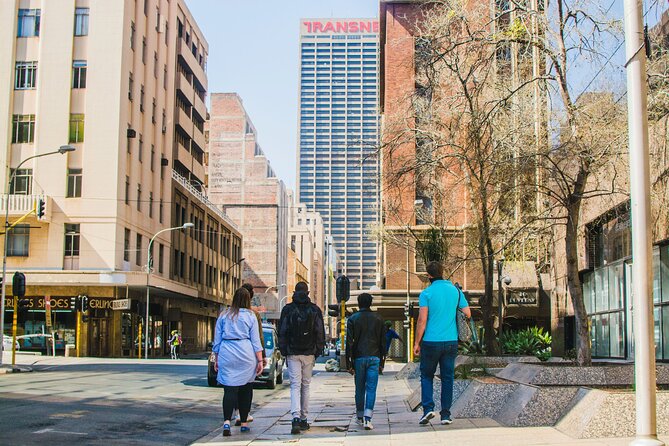
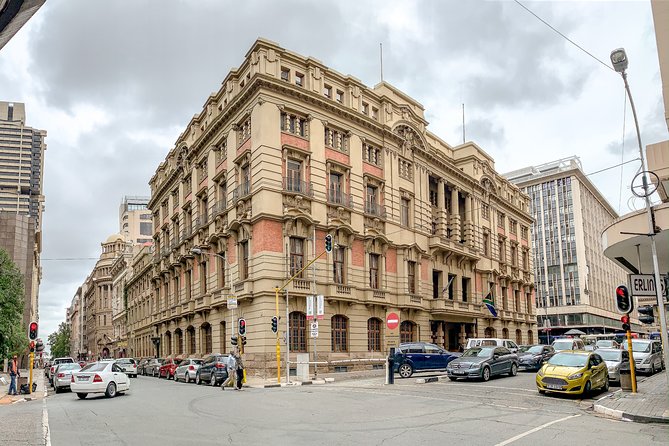
The walk continues through several civic and legal landmarks, including the High Court of South Africa, Gauteng Local Division, Marshalltown Post Office, and Johannesburg Central Magistrate’s Court.
These are not quick postcard stops. The High Court visit lasts about 20 minutes, while the post office receives around 10 minutes. The magistrate’s court has another 20-minute guided visit. Together, they show how Johannesburg’s public buildings reflect government, law, administration, and the unequal systems that shaped South African urban life.
You will also make photo stops along the way. The architecture is a major part of the appeal, particularly if you enjoy old façades, formal public buildings, and the contrast between historic structures and the active streets around them.
The route through Marshalltown lasts roughly 30 minutes and combines walking, sightseeing, and explanation. This is where the tour starts to feel less like a list of landmarks and more like a lesson in how a city works. You may notice the gap between the intended grandeur of some buildings and the practical problems facing the surrounding district.
That contrast is not a flaw in the tour. It is part of the subject. You are being shown a real city centre with visible pressure points, not a restored heritage zone prepared only for photographs.
Ferreirasdorp and the earliest gold diggings
Ferreirasdorp is sometimes called the cradle of Johannesburg because the first gold diggings began here and early diggers settled nearby. The tour uses this area to move from broad mining history to the physical places where the city first took shape.
This stop matters because Johannesburg is a young city by world standards, but its growth was extremely fast. Gold drew workers, businesses, investors, officials, and migrants into one expanding urban centre. The streets around Ferreirasdorp help you picture that early rush.
Your guide can also explain how mining shaped class, labour, housing, and movement. The most useful part of this section is not simply learning where the first diggings took place. It is understanding how the gold economy created the foundations for later conflicts and inequalities.
The walk requires comfortable shoes. You will cover several districts on foot, and the city centre can be tiring in warm weather. Bottled water is included, but bring sun protection and do not treat three hours of urban walking as a casual stroll.
Same streets, a different way to see them:
- Cape Town: Art, Culture & History Walking Tour
★ 4.9 · 392 reviews - Cape Town: Street Art Walking Tour in Woodstock
★ 4.8 · 293 reviews - Stellenbosch: Guided Historical Walking Tour
★ 4.7 · 283 reviews - Cape Town: Langa Township Walking Tour
★ 4.8 · 272 reviews
Chancellor House and the Mandela connection
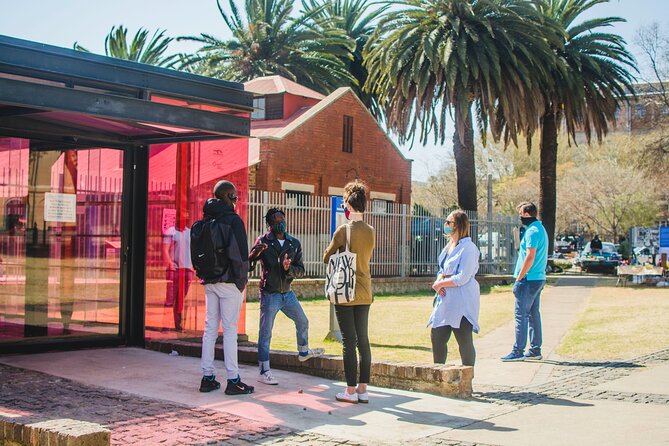
One of the most meaningful stops is Chancellor House, associated with Nelson Mandela and Oliver Tambo’s first black-owned law firm.
This is a strong point in the route because it connects national political history with an ordinary city building. Mandela is often presented through grand memorials and major museums. Here, you see the place where he and Tambo worked as lawyers and challenged an unjust legal system.
The stop is especially valuable if you want to understand how Johannesburg fits into South Africa’s political story. The guide can place Mandela’s legal work within the city’s racial laws, political movements, and changing public life.
Do not expect a long indoor museum visit at every landmark. The schedule is active, and much of the tour is based on exterior viewing, walking, photographs, and explanation. The guide’s storytelling is therefore important. Refiloe has received particular praise for making complicated history easy to follow, while Mathapelo has been praised for connecting political figures with the lives of younger South Africans today.
The Workers Museum and migrant labour
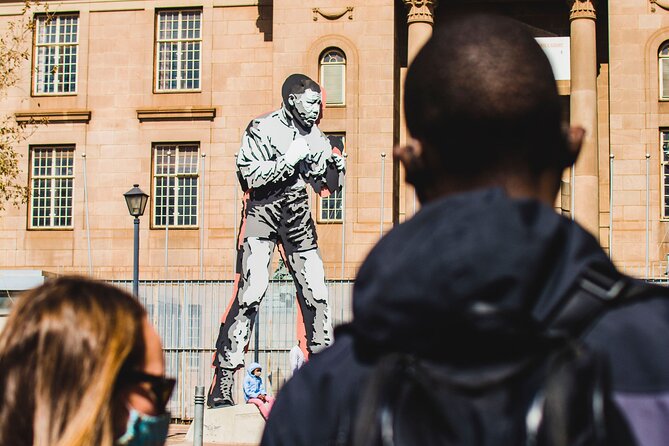
The tour then heads toward Newtown and the Workers Museum. The planned stop lasts about 15 minutes, but the subject deserves more attention than the clock suggests.
The museum focuses on migrant labour, a central part of Johannesburg’s development. Workers came to the city for mine employment under systems that separated families, controlled movement, and shaped where people could live. That history helps explain why Johannesburg’s urban identity reaches far beyond its office towers and mining companies.
The museum may not always be open. It has been closed on Mondays, and at least one guide compensated by explaining the workers’ living conditions in detail from outside. I would not cancel the tour because of a possible closure, but I would confirm the opening day if the museum is a priority for you.
Even without entry, this section remains useful because the guide links the museum’s subject to the city you are walking through. You learn how labour policy affected housing, family life, race relations, and the growth of the Central Business District.
Beyers Naude Square and corporate Johannesburg
Beyers Naude Square brings another public space into the route, followed by a photo stop at the Anglo American corporate office.
These stops help explain the relationship between Johannesburg and the mining companies that made the city wealthy. Anglo American represents the corporate side of the mining story, while earlier stops focus more closely on workers and early diggers.
I appreciate this range. You see the city from several angles: entrepreneurs, corporations, lawyers, workers, artists, officials, and residents trying to manage daily life in a changing centre.
The route does not pretend that mining is only a heroic story of economic growth. It also addresses the costs of that growth and the political structures that supported it. If you want only attractive buildings and easy sightseeing, parts of this tour may feel serious. If you want to understand why Johannesburg looks and feels the way it does, that seriousness is the point.
Newtown, Mary Fitzgerald Square, and creative Johannesburg
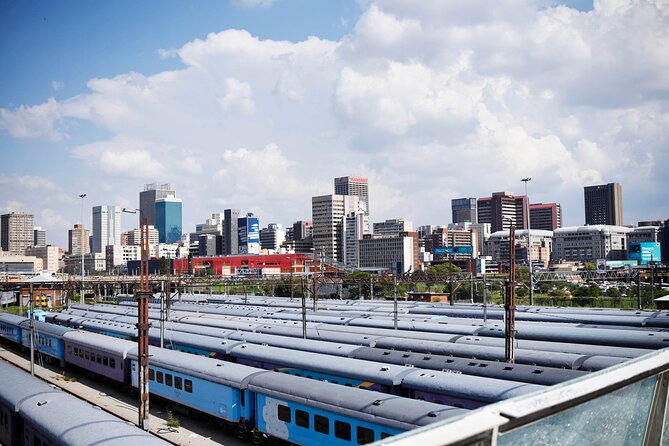
Newtown is one of the walk’s most appealing districts. It brings in music, theatre, public art, galleries, cultural spaces, and the city’s creative energy.
Mary Fitzgerald Square is a major stop, with about 15 minutes for sightseeing and explanation. The square is tied to labour and public gatherings, so it fits naturally after the Workers Museum. The tour shows how industrial and political history can lead into present-day arts and culture.
The Market Theatre is a shorter stop, listed at about five minutes, with the possibility of passing by rather than taking a full interior tour. Its importance is cultural and political. The theatre is linked with performance and resistance during apartheid, making it a useful bridge between the city’s political past and its current creative life.
Newtown is also a good place for photographs. You may see street art and galleries along the route, though the exact mix of open spaces and accessible venues can change. Keep your expectations practical. This is a guided city walk, not a dedicated gallery crawl.
Nelson Mandela Bridge and the final stretch
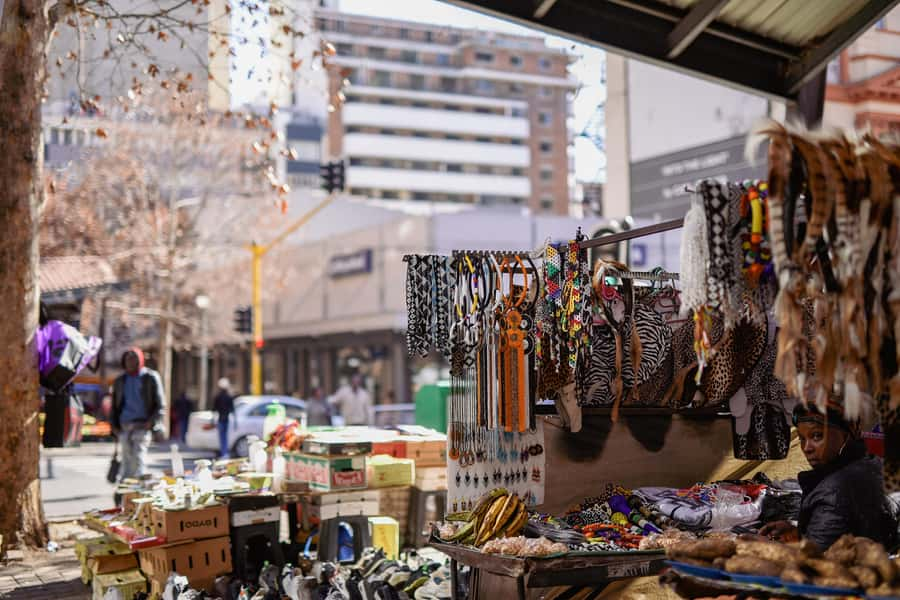
The route reaches Nelson Mandela Bridge for a photo stop and scenic views. The bridge links different parts of Johannesburg and provides one of the clearest visual moments on the walk.
After several hours of court buildings, mining history, labour policy, and politics, the bridge offers a simple reward: space, perspective, and a strong photograph. It also reinforces the tour’s larger theme of connection. Johannesburg is not one single district or mood. It is a collection of neighbourhoods with different histories and different futures.
The walk finishes in Braamfontein, an area associated with youthful energy, art, and new cultural activity. The stated finish is Sha’p Braai, a shisanyama restaurant, where you can buy lunch or a local meal if you wish. Lunch is not included, so budget separately.
One past guest praised the food at the end of the experience, but you should regard the restaurant stop as the finish point rather than a guaranteed meal package. It is a useful ending because it brings the tour back to everyday Johannesburg, after the formal history and major landmarks.
How safe and comfortable does the walk feel?
Safety is a central concern for many people considering a Johannesburg city-centre walk. The strongest practical advice is to go with the guide, stay with the group, and follow the route as directed.
The guides have been praised for choosing areas that feel manageable and for helping people feel comfortable as they walk. Several guests described the tour as safe, including people who had been hesitant about visiting the CBD alone. That does not mean you should switch off your usual city awareness. Johannesburg is an active urban centre with uneven conditions, and the guide cannot remove every risk.
The walking pace is suitable for people who can manage a three-hour city walk, but the tour is not aimed at anyone needing a short, flat, fully accessible route. The supplied information says both wheelchair accessible and not suitable for wheelchair users. Because those statements conflict, contact the provider before booking if you use a wheelchair or have limited mobility.
The activity is also marked as unsuitable for pregnant women. All ages are otherwise welcome, provided you bring comfortable shoes and a sense of adventure.
Is $40 a fair price?
At $40 per person, this is a fair price if you want a guided introduction to central Johannesburg rather than a quick sightseeing circuit.
The fee includes the guide, walking tour, bottled water, and entrance fees. Hotel pickup, drop-off, and lunch are not included, so you will need to arrange your own way to Gandhi Square and plan for food afterward.
The value depends heavily on the guide. The route covers a lot in three hours, and the best parts are the explanations between the stops. Refiloe has been praised for extending a private booking from three hours to four, while other guides, including Mulalo, Mathapelo, Thabo, and Clement, have been praised for their warmth and local insight. Extra time is not guaranteed, but smaller groups may make the experience more personal.
The rating is 4.8 from 152 reviews, with repeated praise for the guides’ history knowledge, friendliness, humour, and ability to make people feel safe. That pattern matters more than any single landmark. You are paying for local interpretation and a well-planned route through a complicated city centre.
Who will enjoy this Johannesburg walk?
I would choose this tour if you want to understand Johannesburg’s origins, politics, architecture, and current urban life in one outing. It suits first-time visitors who want a city-centre orientation, history-minded visitors, photographers, and anyone who prefers walking to a hop-on, hop-off bus.
It is especially useful if Sandton’s hotels, shopping centres, and office towers do not interest you. The city centre offers a much stronger sense of Johannesburg’s particular story, even when the streets are rough around the edges.
I would be more cautious if you want a relaxed stroll with many long indoor visits. Some stops are brief, some buildings may be viewed from outside, and the route covers serious subjects. The Workers Museum may be closed, and the Carlton Centre’s viewing access has changed.
Should you book it?
Book this tour if you want a direct, thoughtful introduction to Johannesburg’s city centre and are comfortable seeing both its proud history and its present problems. The strongest reason to go is the guide: Refiloe and the other named guides have been praised for warmth, humour, care, and clear explanations.
I would book it early in your stay so the route gives you a better sense of the city before exploring elsewhere. Wear proper walking shoes, bring sun protection, confirm museum and building access, and leave room for lunch at the finish.
Skip it if you want a polished sightseeing experience built around guaranteed interiors and panoramic views. For everyone else, $40 buys a useful three hours, a meaningful route, and a much fuller picture of Johannesburg than you are likely to get from a passing bus.
FAQ
Where does the Johannesburg city centre walking tour begin?
It begins outside Nando’s at Gandhi Square, near the Metropolitan Building area.
How long does the tour last?
The scheduled duration is three hours. Some private bookings have lasted longer, but extra time is not guaranteed.
What language is the tour conducted in?
The live guided tour is conducted in English.
Is lunch included?
No. Lunch is not included. The tour finishes at Sha’p Braai, a shisanyama restaurant, where you can arrange your own meal.
Is the Workers Museum always open during the tour?
No. The museum may be closed, including on Mondays. If it is closed, the guide may explain the migrant labour history from outside.
Is the tour suitable for wheelchair users?
The activity information is inconsistent, describing it as wheelchair accessible while also saying it is not suitable for wheelchair users. If you use a wheelchair, confirm the current route and access arrangements with the provider before booking.
Just added around South Africa
- Stellenbosch: Guided Historical Walking Tour★ 4.7 · 283 reviews
- Cape Town: Street Art Walking Tour in Woodstock★ 4.8 · 293 reviews
- Durban: City Sightseeing and Walking Tour★ 4.6 · 98 reviews
- Durban: Local Markets and Culture Guided Walking Tour★ 4.9 · 89 reviews
- Cape Town: Private Walking Tour with a Local★ 4.6 · 243 reviews
- Cape Town Walking Tour: Bo-Kaap & City Highlights★ 4.8 · 161 reviews
- Cape Town: Langa Township Walking Tour★ 4.8 · 272 reviews
- Cape Town: Bo-Kapp Walking Tour and Malay Cooking Class★ 4.7 · 105 reviews
South Africa Walking Tours, compared.

Soweto: Walking Tour with a Local Guide and Lunch
Read our review →
Plettenberg Bay: Bungee Jumping with Zipline and Sky Walk
Read our review →


Browse the lists this tour appears in