
Review · NIGHT WALKING TOURS
Kyoto: Gion Sunset Walking Tour with Local Guide
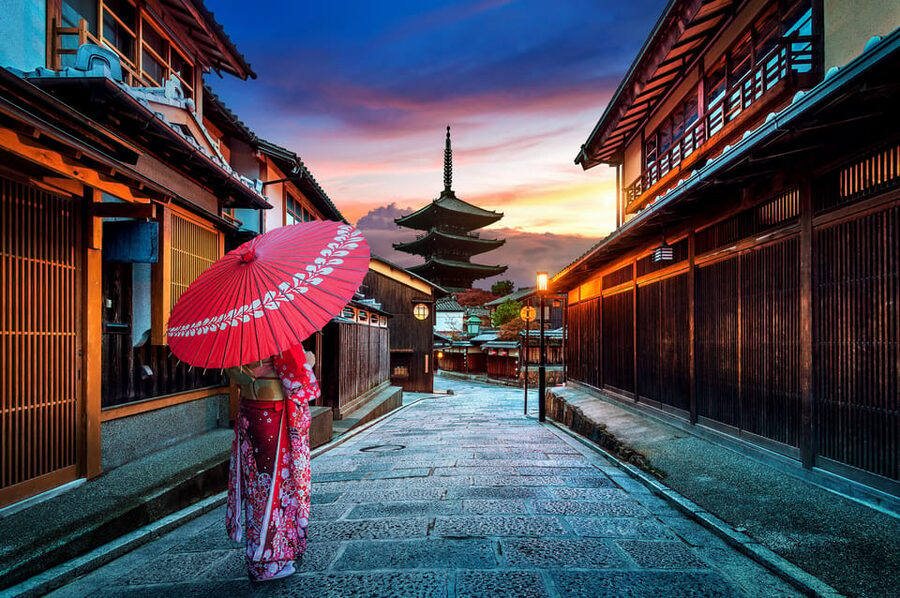
Kyoto changes after dark. This three-hour walk turns Gion’s lantern-lit lanes, temples, shrines, and teahouses into an easy evening introduction to the city. I like the small groups of up to nine and the way local guides such as Jasmine, Vincent, Alex, Katz, and Naoki add personal stories rather than simply pointing at buildings. I also like the useful route, which begins near Kawaramachi and ends at Sanjo Bridge.
The possible drawback is simple: this is a walking tour, not a slow sightseeing ride. You cover several areas in three hours, and the route is not suited to people with mobility problems, heart conditions, respiratory issues, or pregnancy. Geiko and maiko sightings are possible, but never promised. The temples and lanterns are the real show.
Why this Gion evening walk works
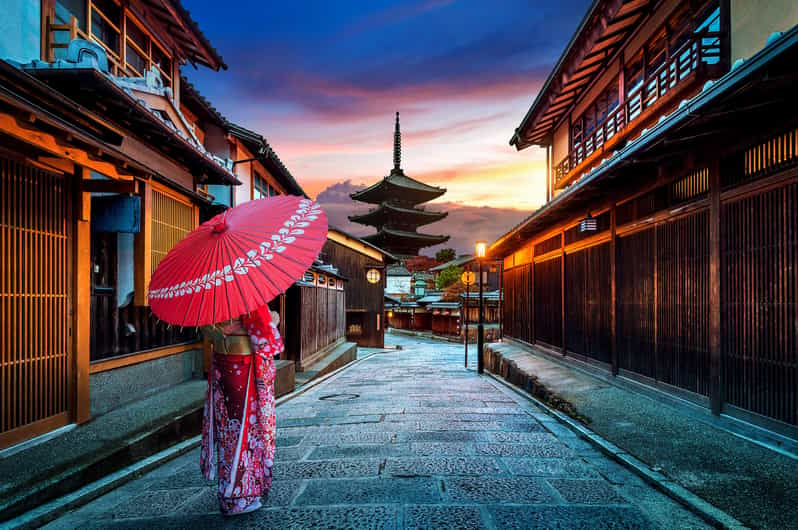
- Sunset timing changes the mood: You enter Gion as daylight fades, then see its lanes and shrines under lantern light.
- The route links major sights: Hanamikoji Street, Maruyama Park, Yasaka Shrine, Pontocho, and Sanjo Bridge all fit into one evening.
- Local guides add context: Guides including Jasmine, Raphael, Vincent, Alex, and Katz have been praised for clear explanations and thoughtful answers.
- The group stays intimate: The tour allows no more than nine people, making questions and pace adjustments easier.
- A snack is included: You get a local snack during the walk, with past stops sometimes including matcha or another choice costing up to 1,000 yen.
- Same-day plans are possible: Last-minute reservations are accepted, and you can cancel up to 24 hours before departure for a full refund.
Starting near Kawaramachi and the Minami-za Theatre
The meeting point is at Kyoto Kawaramachi Garden, beside the big black world map. Look for a guide wearing a TripGuru shirt or holding a TripGuru sign. Arrive at least 10 minutes early. The guide waits only 10 minutes, and Kyoto traffic can slow down more than a map app suggests.
From there, the walk passes the Kyōto Minami-za theatre. You spend about 10 minutes around this stop rather than entering for a performance. That still makes it a useful opening scene, since the theatre helps place you in Kyoto’s traditional entertainment quarter before the tour turns toward Gion.
I like this start because it gives you a clear city orientation. You are not being collected at your hotel and whisked away without context. You meet in a central area, then walk through the city toward the old district. The finish at Sanjo Bridge also leaves you near a practical part of central Kyoto rather than back at a remote meeting point.
More Night Walking Tours in Kyoto
- Kyoto: Gion Magical Night Walking Tour with Geisha Trivia
★ 4.9 · 2,393 reviews - Night Walk in Gion: Kyoto’s Geisha District
★ 4.5 · 2,003 reviews - Kyoto Gion Night Walk & Geisha District Guided Tour
★ 5.0 · 786 reviews
Hanamikoji Street at the first glow of evening
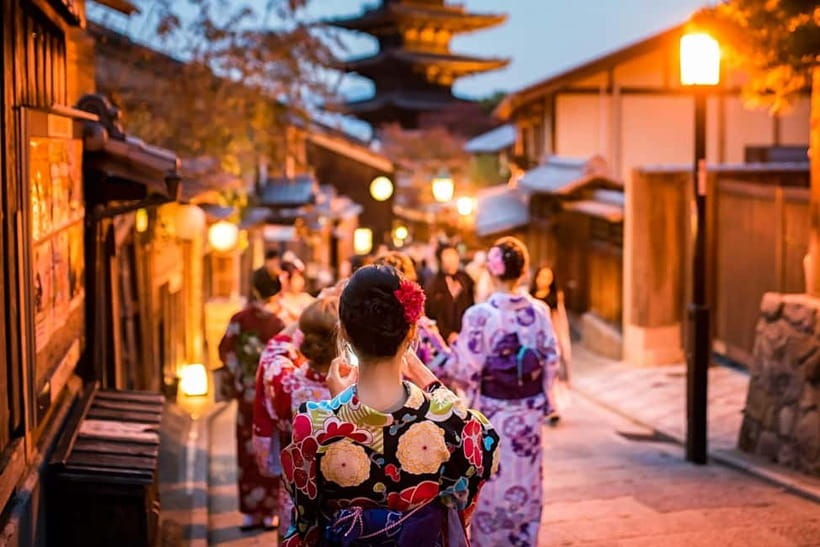
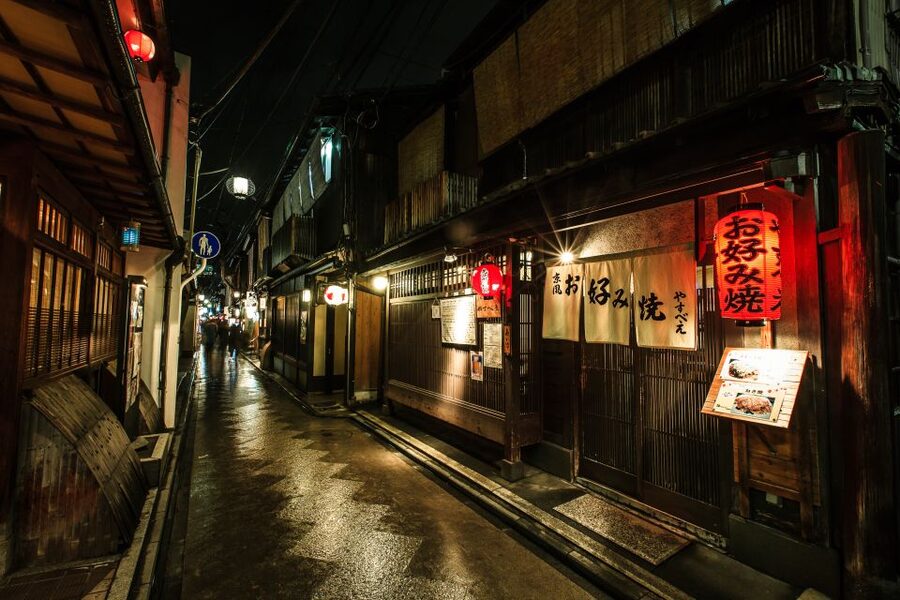
Hanamikoji Street receives about 30 minutes of guided attention. It is one of the best-preserved traditional streets in Gion, with wooden buildings, discreet entrances, and a visual style that many people come to Kyoto hoping to see.
The timing matters. In full daylight, the street can feel like a historic display. As evening arrives, lanterns begin to define the facades and narrow lanes. You get a better sense of why Gion has such a strong atmosphere without needing a restaurant reservation or an expensive cultural performance.
This is also where a guide earns the fee. A solo walk shows you the buildings, but it cannot explain the customs connected with teahouses, geiko, maiko, or the rules of the district. Jasmine has been praised for combining humor with clear information, while guides such as Vincent and Katz have explained Gion from a local point of view.
Please keep your camera ready, but your manners readier. If you see a geiko or maiko, stay back, do not block the path, and avoid interrupting her work. A longer lens is better than stepping close. A smile, small bow, and quiet thank you are far better than treating someone like a street performer.
Backstreets, temples, and small details
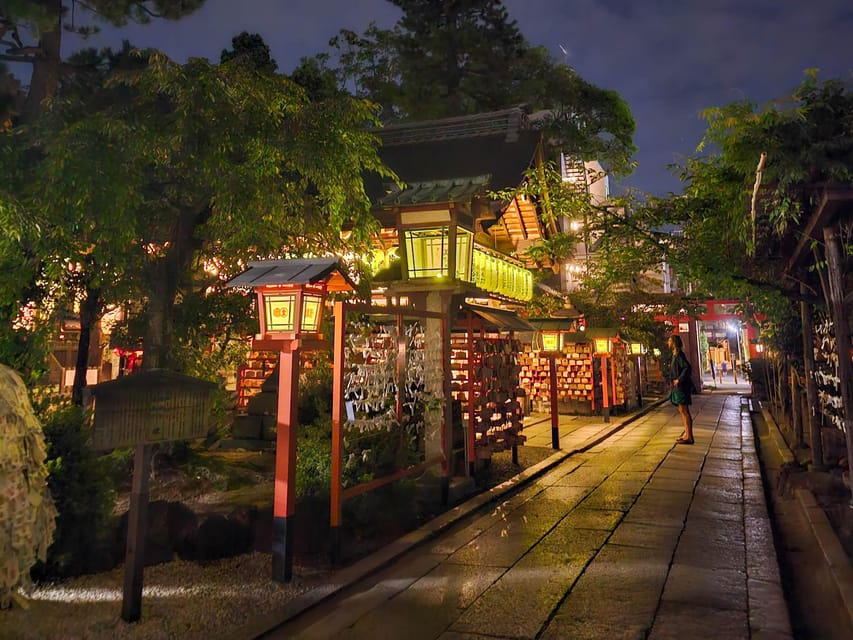
After Hanamikoji, the group continues through traditional side streets and less obvious religious sites. The schedule allows another 30 minutes for guided sightseeing and views along the way, though the exact feel of this section can change with the guide and group.
That flexibility is useful. The best part of a local walking tour is often not a single famous stop. It is the explanation of a small shrine, an architectural detail, or a custom you would have walked past alone. Past guides have adjusted their explanations to questions from the group, and one guide changed the evening’s approach during heavy rain so the group could still enjoy the area.
You should not expect a private, silent exploration of every lane. Gion is a working district, with restaurants, bars, teahouses, residents, and people heading to appointments. The tour gives you a respectful introduction, not special access behind closed doors.
Maruyama Park and Yasaka Shrine after dark
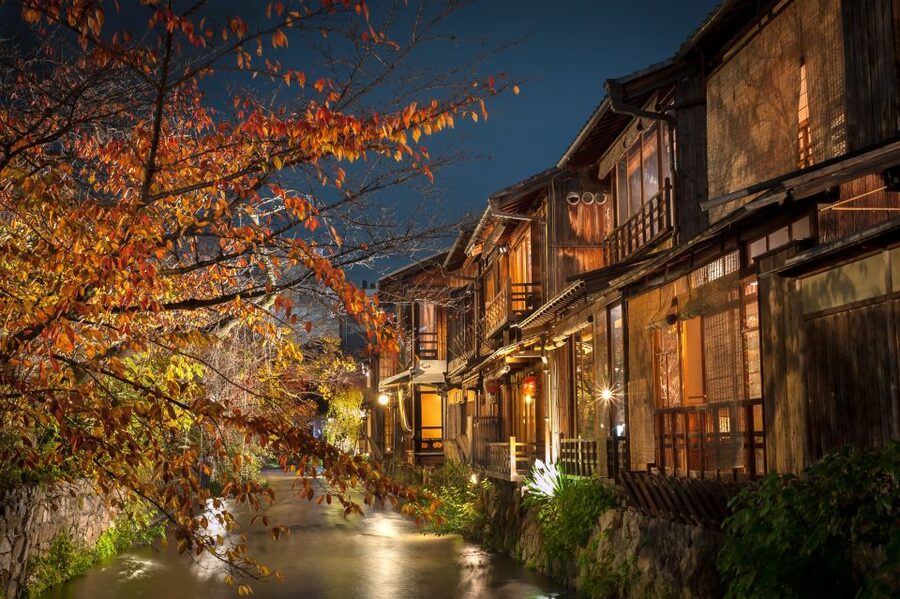
Maruyama Park gets about 15 minutes. This is a shorter stop, but it breaks up the walk and gives you a more open setting after the narrow lanes of Gion. Your guide may point out scenic views and explain how the park fits into the area around Yasaka Shrine.
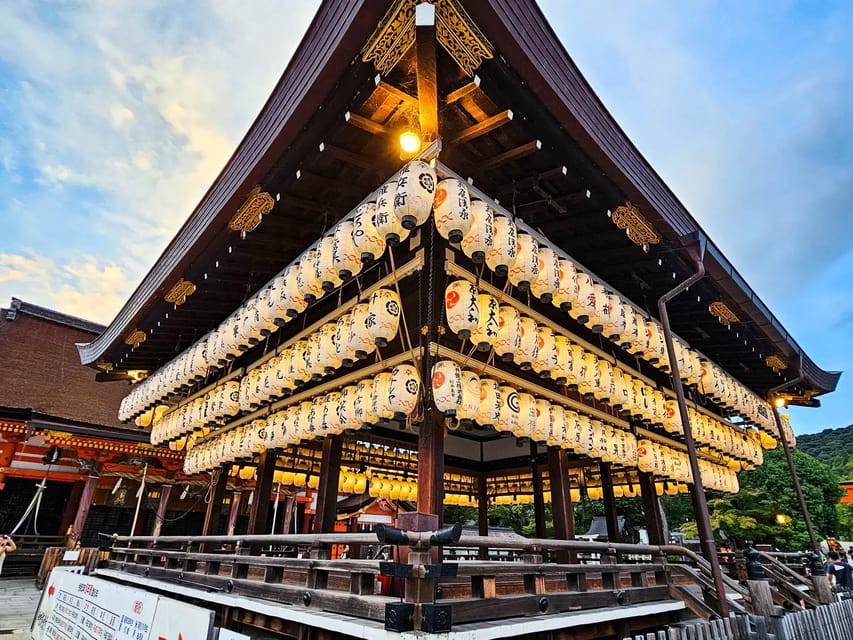
The main shrine visit follows, with around 20 minutes at Yasaka Shrine, also called Gion Shrine. Its scale and evening lighting provide one of the tour’s strongest visual moments. Several people have especially liked seeing temples and shrines at night, when the mood differs sharply from a daytime visit.
I would treat this section as an introduction rather than a full shrine visit. Twenty minutes is enough to learn what you are seeing and enjoy the setting, but not enough for a long, unhurried exploration of every structure. That is the tradeoff for covering several parts of central Kyoto in one evening.
The guide’s cultural explanation can make this stop far more meaningful. You may hear about Japanese religion, shrine customs, and the relationship between sacred sites and ordinary city life. Atsushi, for example, was praised for explaining religious details, while other guides have mixed cultural facts with practical suggestions for the rest of a Kyoto stay.
Same streets, a different way to see them:
- Kyoto Geisha Walking Tour: Gion District & Hidden Gems
★ 4.7 · 3,273 reviews - Kyoto: Gion Geisha District Walking Tour – Stories of Geisha
★ 4.7 · 2,187 reviews - Best of Kyoto: Gion, Geisha, Pagodas & Cobblestones
★ 4.9 · 2,058 reviews - Kyoto Gion Geisha District Walking Tour – The Stories of Geisha
★ 5.0 · 1,441 reviews
A local snack and a welcome pause
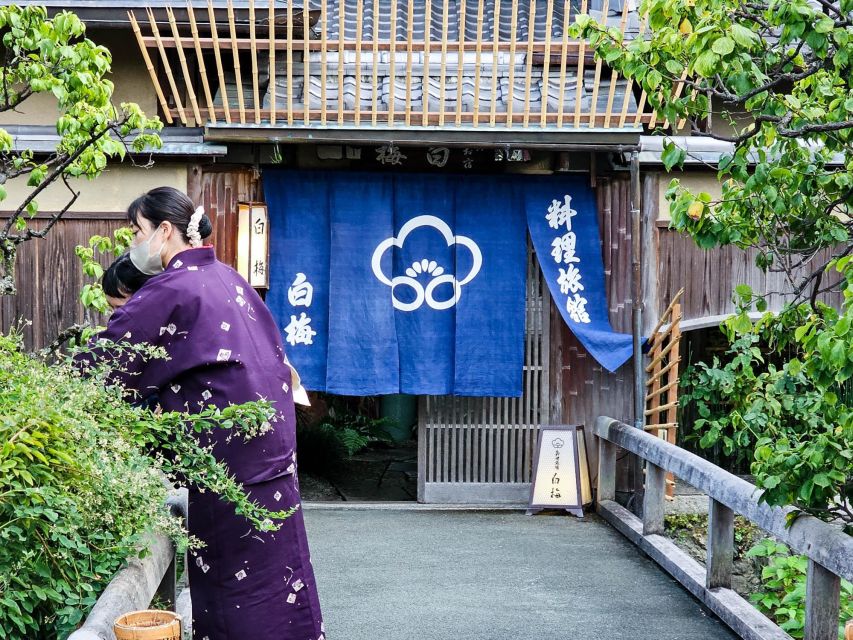
The walking route includes a 20-minute snack stop. The exact food or venue can vary, but past versions have included matcha desserts, a drink, a supermarket choice, or a cafe stop. One guide allowed each person to select a snack and drink, while another evening included matcha that helped warm the group in cold weather.
The value here is not the size of the snack. It is the pause. Three hours on foot can feel long if every minute is spent standing outside while someone talks. A short break gives you time to sit, ask questions, and compare notes with the group.
The snack is included, but meals and extra drinks are not. Some previous snack choices were capped at 1,000 yen per person, so bring cash if you want anything beyond what is covered. This is not a food tour. Think of it as a modest local taste built into a cultural walk.
Pontocho and the route to Sanjo Bridge
The final major district is Pontocho, with about 20 minutes of guided sightseeing. This narrow entertainment lane is a fitting contrast to the shrine grounds and quieter backstreets. Its restaurants, bars, and traditional facades show another side of Kyoto’s evening life.
You pass through rather than settle in for dinner. If you want to eat in Pontocho afterward, the tour’s ending at Sanjo Bridge puts you in a useful position to continue exploring. The walk finishes there, so plan your next step before the final goodbye.
The last section includes another stretch of sightseeing and scenic views, listed at roughly 25 minutes. In practice, the guide may spend more or less time depending on questions, weather, and the group’s pace. One group found that the tour ran beyond the planned time because the guide adapted to their interests. That can be a plus if you are enjoying yourself, but it matters if you have a fixed dinner reservation.
What the guide adds for your 22 dollars
At $22 per person, the tour is priced well for three hours in central Kyoto. You are paying for an English, Spanish, or French-speaking guide, a planned route through several important districts, and a snack. You are not paying for transport, a meal, hotel pickup, or entry to a performance.
The strongest value comes from interpretation. You could walk Hanamikoji, Yasaka Shrine, and Pontocho alone for free. What you cannot easily reproduce is the local explanation of geiko and maiko culture, religious customs, architecture, and the small social rules of Gion.
The quality depends heavily on your guide. That is normal for a walking tour, and the guide list includes many strong examples. Jasmine has been praised for her friendly style and excellent English. Raphael has been noted for adjusting the pace for an older couple. Alex has helped people find less obvious corners, and Naoki’s local background has been a particular strength.
A guide cannot guarantee a geiko or maiko sighting. Some evenings have produced several sightings, while others may produce none. Book this for the setting and the cultural explanation. Treat a geiko sighting as luck, not as part of the admission price.
Who will enjoy this tour most
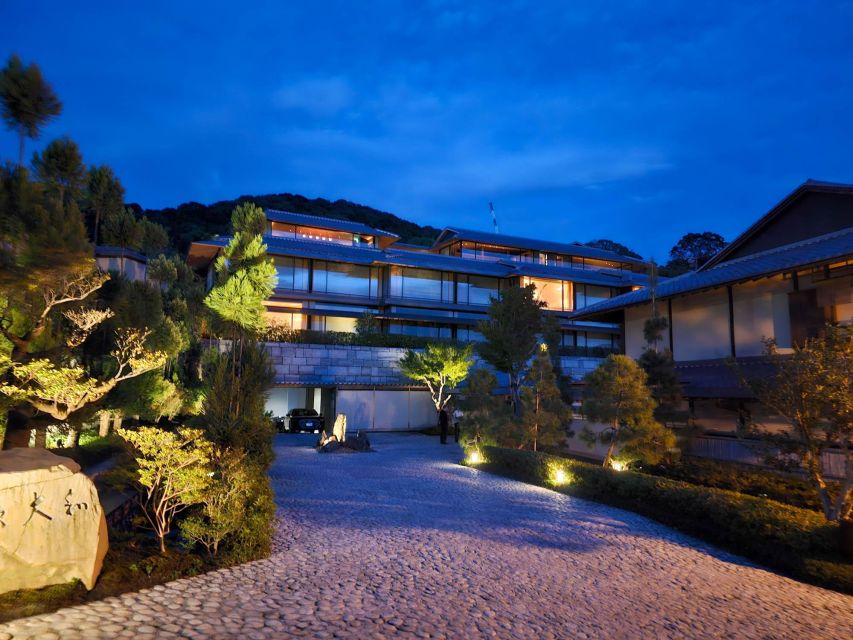
I would recommend it to a first-time Kyoto visitor who wants a quick but meaningful introduction to Gion. It is also useful on your first evening, when you want to understand the city’s layout before returning to selected places on your own.
The tour suits you if you:
- Have only one free evening or a few hours available
- Prefer walking to buses and taxis
- Want cultural explanation, not just photo stops
- Like asking questions in a small group
- Are curious about Gion, geiko, maiko, shrines, and traditional streets
- Want a flexible booking option close to the tour date
It may not suit you if you need frequent rest, dislike walking for several hours, or have a strict dinner booking immediately afterward. Comfortable shoes are essential. Bring a camera, some cash, and weather protection suited to the season.
The small group is a real advantage. With no more than nine people, the guide can hear questions and keep an eye on the pace. That does not make the walk private, but it is much more personal than being herded behind a large flag.
Practical timing and booking advice
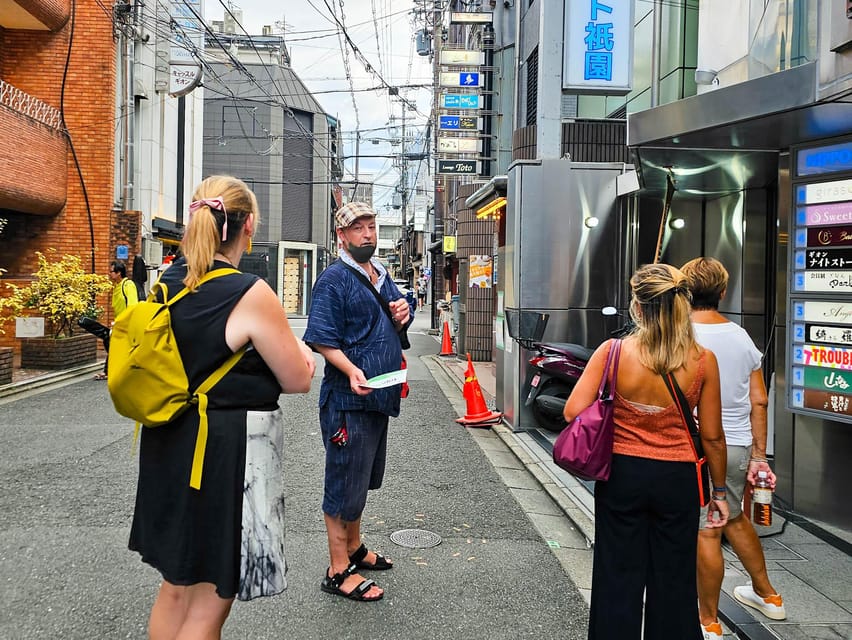
Choose an evening start that lets you see both the last daylight and the lantern-lit streets. The exact start time depends on availability and the season, so check the booking calendar rather than assuming sunset will look the same during every month.
Same-day booking is accepted, which helps if rain, jet lag, or a changing schedule has disrupted your plans. You can also reserve and pay later, and cancellation is free up to 24 hours in advance. These rules make the tour a fairly low-risk addition to a Kyoto schedule.
Arrive early at Kyoto Kawaramachi Garden. Do not rely on arriving exactly at the stated time, especially if you are crossing Kyoto during a busy period. The guide may leave after 10 minutes, and the group cannot wait indefinitely without losing time at the next stop.
The activity is offered in English, Spanish, and French. It is not designed for people with mobility impairments, pregnant women, or people with heart or respiratory problems. The route includes extended walking and several standing stops, so take that warning seriously.
Should you book the Gion Sunset Walking Tour?
Yes, if you want a reasonably priced evening walk with cultural explanation and a manageable group size. The route covers the right mix: Hanamikoji’s traditional facades, quieter lanes, Maruyama Park, Yasaka Shrine, a snack pause, and Pontocho’s nightlife.
Book it for Gion itself, not for a guaranteed geiko sighting. If you get one, enjoy the moment respectfully. If you do not, you still get a useful introduction to one of Kyoto’s most distinctive districts, guided by people who can explain what you are seeing.
At $22, the balance is strong. You get three hours, a snack, and access to the kind of local context that a self-guided walk usually misses. For a first Kyoto evening, a flexible last-minute plan, or anyone who wants to see Gion after sunset without arranging a costly private guide, I would book it.
FAQ
How long does the Gion Sunset Walking Tour last?
The tour lasts three hours. It includes walking through Gion, visits to cultural sights, a snack stop, and a finish near Sanjo Bridge.
Where does the tour begin?
It begins at the corner of Kyoto Kawaramachi Garden, in front of the large black world map.
Where does the tour finish?
The walk finishes at Sanjo Bridge.
What sights are included?
The route passes the Kyōto Minami-za theatre and includes Hanamikoji Street, traditional backstreets, Maruyama Park, Yasaka Shrine, scenic areas, a snack stop, and Pontocho.
Is a geiko or maiko sighting guaranteed?
No. You might see a geiko or maiko traveling to an appointment, but sightings are not guaranteed.
Is food included?
A local snack is included. Meals and other drinks are not included.
What languages are available?
The tour is available with a live guide speaking English, Spanish, or French.
Can I cancel or pay later?
You can cancel up to 24 hours before the tour for a full refund. Reserve now and pay later is also available.
Just added around Kyoto
- Kyoto : Private Custom Walking Tour With A Local Guide★ 4.6 · 144 reviews
- Kyoto: Private 2.5 Hour Historical Walking Tour★ 4.9 · 121 reviews
- Kyoto: Private Walking Tour with a Local★ 4.6 · 118 reviews
- Kyoto: Gion Walking Tour★ 5.0 · 195 reviews
- Kyoto: Izakaya Bars Guided Walking Tour★ 4.9 · 815 reviews
- Kyoto: Gion Hidden Gems & Geisha Culture Tour★ 4.9 · 126 reviews
- Kyoto: Imperial Palace & Nijo Castle Guided Walking Tour★ 4.7 · 453 reviews
- Kyoto Gion Cultural Walk & Geisha Show with Dining Options★ 5.0 · 518 reviews
Night Walking Tours, compared.

Private Street Food Evening Walking Tour in Ho Chi Minh City
Read our review →
Albaicín and Sacromonte Guided Sunset Walking Tour
Read our review →
Bremen: Walking Tour in German with Night Guard
Read our review →
Ghosts of Charleston Night-Time Walking Tour with Unitarian Church Graveyard
Read our review →
Savannah’s Ghost City “Dead of Night” Walking Night Tour
Read our review →
Gion Magical Night Walking Tour with Geisha Trivia
Read our review →
Browse the lists this tour appears in