
Review · HISTORY WALKING TOURS
Kyoto: Private 2.5 Hour Historical Walking Tour
Kyoto rewards curious walkers. This private route links Yasaka Shrine, a Zen temple, and Kiyomizu Temple while giving you the history and customs that are easy to miss on your own. I like the small group size, up to five people, and the way guides such as Hisako and Hiroko use hand-drawn maps and illustrations to make Japanese history easier to follow. The main consideration is that temple admission fees are extra, and the route includes several uphill streets and stone steps.
I also like the route’s balance. You get famous sights, including Kiyomizu Temple and Yasaka-no-to Pagoda, but you also spend time in quieter places such as Entokuin’s dry gardens. The tour is sold as 2.5 hours, while the activity details also describe a two-hour duration, so allow at least half a morning and expect the pace to depend on questions, photographs, and the group’s walking speed.
Key points at a glance
- A private tour for up to five people: The flat $80 group price can be good value for a family or small party.
- A useful introduction to shrine customs: At Yasaka Shrine, your guide explains how to worship, not just what to photograph.
- Entokuin supplies the calmest stop: Its Zen rooms, dry gardens, and sliding-door paintings give the walk a quiet change of pace.
- The pagoda stop is mainly an outside view: Yasaka-no-to is a fine photo subject, but you should not expect a full interior visit.
- Kiyomizu Temple finishes the route: You see Buddhist images, the famous wooden stage, Koyasu Pagoda, and the Otowa water stream.
- Guides use personal teaching materials: Hand-drawn maps, paintings, and notes help make difficult history more understandable.
Why this short Kyoto walk works
Kyoto can feel like a museum without labels. You see a red shrine gate, a temple roof, a pagoda, and a wooden hall, but the meaning behind them is not always clear. This tour gives those sights a connecting thread, moving from Shinto practice at Yasaka Shrine to Buddhist ideas at Kiyomizu Temple.
The private format matters. You can stop for photographs, ask about Japanese religion, or spend more time on a subject that catches your interest. Several guides have been praised for answering questions about the imperial family, samurai, shogunates, philosophy, language, gender, and modern Japan. That makes this more than a quick checklist of monuments.
I would book it early in a Kyoto visit. The explanations about shrines, temples, Buddhism, and Shintoism can help you understand other places later in your trip. One guide also gave a visitor suggestions for Kanazawa, while another offered ideas for further walks around Kyoto. Those small touches can make a private guide useful beyond the booked hours.
The format suits adults who want context, couples, families, and first-time visitors who need a clear introduction. Children can enjoy the sights, but the political and religious history may be demanding for younger ones. One family found the material difficult for children aged nine and twelve, although the guide adjusted her language and even switched to English when needed.
More History Walking Tours in Japan
- Kyoto Gion: 2-Hour Geisha Culture & History Walking Tour
★ 5.0 · 1,186 reviews - Tokyo: Imperial Palace and Shogun Historical Walking Tour
★ 5.0 · 2,251 reviews - Tokyo: Imperial Palace Japanese History Walking Tour
★ 4.9 · 987 reviews
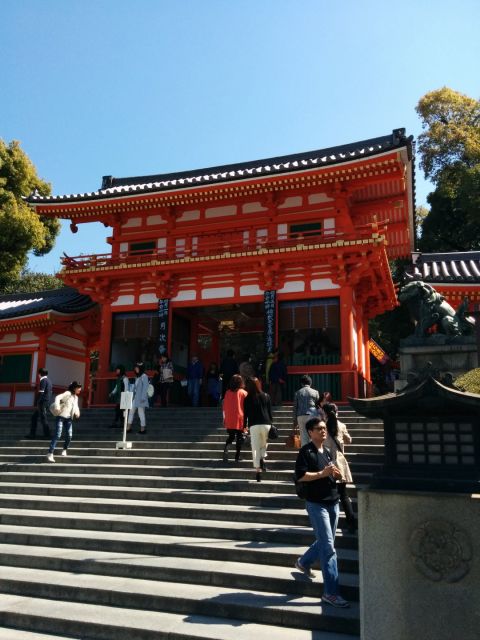
Meeting at Yasaka Shrine’s red west gate
The tour begins at the west gate of Yasaka Shrine, also called the Nishiromon Gate. It is a practical starting point in the Gion area, close to major streets and public transport.
From Gion-Shijo Station on the Keihan Line, walk east along Shijo Street toward the end, then climb the stone steps to the red gate. From Kawaramachi Station on the Hankyu Line, follow the same general route. If you arrive by bus, get off at the Gion stop, where the stone steps are before the gate.
Give yourself time to find the meeting point. A guide may hold a clear sign, but Kyoto’s streets can still be confusing when you are watching traffic, shop fronts, and shrine entrances. Comfortable shoes are essential. This is a walking tour, and the route includes stone paving, steps, and uphill sections.
Before setting off, the guide uses a map of Kyoto to explain the city’s position and development. This opening is valuable because Kyoto’s temples and shrines can otherwise seem scattered. You get a broad picture before focusing on the buildings in front of you.
Yasaka Shrine and the basics of Shinto worship
Yasaka Shrine is the first teaching stop. Here, the guide explains the shrine’s history and how to worship properly. That may include the basic sequence of approaching a shrine, cleansing, making an offering, and showing respect, but the exact depth can depend on your guide and questions.
This is one of the tour’s most useful features. Many first-time visitors know that they should bow, but not why people do it or how shrine customs differ from temple practice. Learning the difference at the beginning gives you a practical tool for the rest of your Japan trip.
The shrine also provides a good place to ask questions about Shinto. Guides have explained how to tell shrines and Buddhist temples apart, where the two traditions began, and how they have existed alongside one another in Japan. You are not simply looking at architecture. You are learning how the site functions.
Yasaka Shrine can be busy, especially around popular travel times. The advantage of having a private guide is that you can pause for the explanation and then move on when the crowds or noise become tiring. The drawback is that a short tour cannot cover every part of the shrine complex.
Maruyama Park and Nene-no-michi
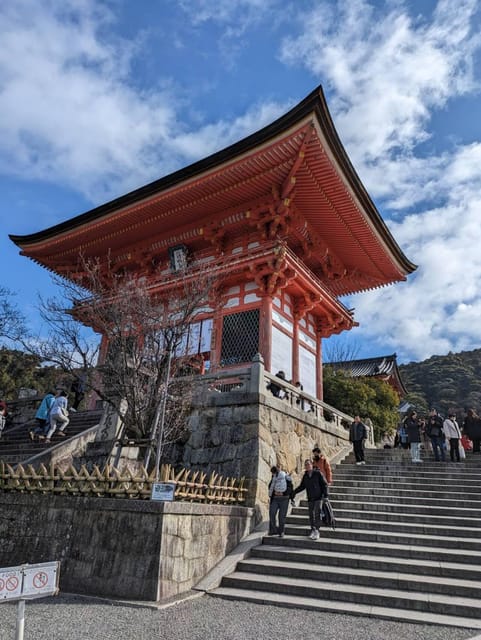
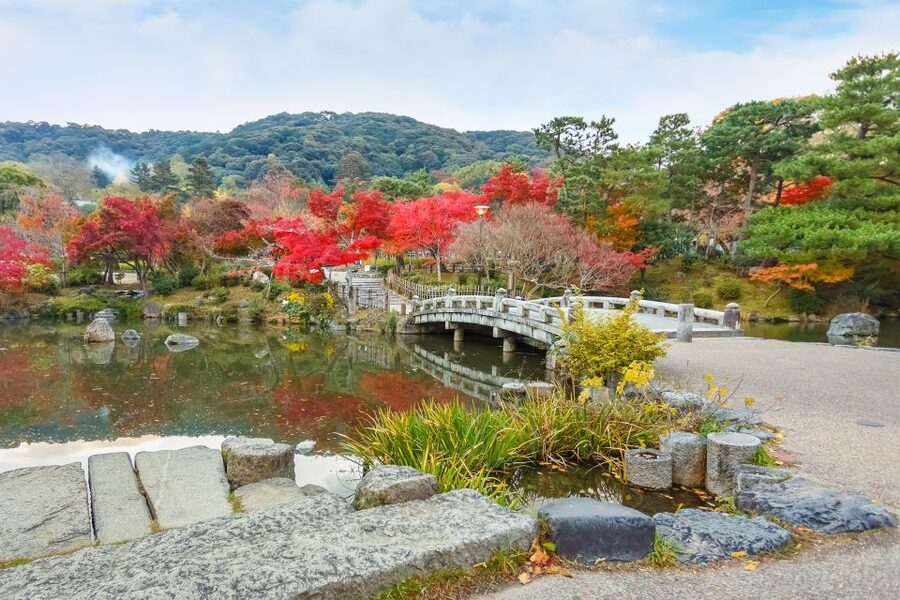
From Yasaka Shrine, the route passes through Maruyama Park. This green space links the shrine area with the old lanes leading toward Kiyomizu Temple.
You then reach Nene-no-michi, a busy street named for Nene, the wife of Toyotomi Hideyoshi. Hideyoshi was a major political leader in Japan during the late sixteenth century. The name adds a human connection to the area, and the guide explains Nene’s association with Entokuin.
This part of the walk shows why a guide can help. Without background, Nene-no-michi is simply a pleasant old street lined with traditional-looking buildings. With the story, it becomes part of Kyoto’s political and religious past. I like this kind of explanation because it uses the street itself as a history lesson.
The route is not a private back lane from start to finish. Some sections are busy, and the neighborhood is popular. Keep your group together and watch your footing on stone surfaces. The reward is a gradual change from shrine grounds and park paths to temple compounds and narrow historic streets.
More Private Walking Tours in Japan
- Kyoto: Private Customized Walking Tour with a Local Insider
★ 4.8 · 383 reviews - Kyoto : Private Custom Walking Tour With A Local Guide
★ 4.6 · 144 reviews - Kyoto: Private Walking Tour with a Local
★ 4.6 · 118 reviews - Osaka: Hotspots & Hidden Gems Walking Tour Private or Group
★ 4.9 · 1,300 reviews
Entokuin’s Zen rooms and dry gardens
Entokuin is the tour’s most peaceful stop. This Zen temple is associated with Nene and is known for dry landscape gardens, traditional Japanese rooms, and painted sliding doors.
The gardens are made from stones, gravel, and carefully arranged forms rather than ponds or large plantings. Your guide can explain how to look at them, which is helpful because the meaning is not always obvious at first glance. The quiet setting also gives you a break from the more crowded streets outside.
Inside the temple, you can see traditional rooms and famous images painted on sliding doors. The architecture is spare and deliberate. Empty space matters here, so the visit is less about collecting photographs and more about slowing down long enough to notice proportion, materials, and the relationship between room and garden.
Several guides have used hand-drawn illustrations, maps, and prepared notes at this point. Hisako, in particular, has been praised for bringing colored-pencil and watercolor drawings that explain architecture, history, and religious ideas. These materials may sound simple, but they are useful when a name or timeline is hard to remember.
The forty-minute visit is long enough to feel the atmosphere without taking over the entire walk. Admission is not included, so budget separately for Entokuin and the other temple entrance. The price is worth considering as part of the total, not as an unexpected extra at the gate.
Koshindo and the outside view of Yasaka-no-to
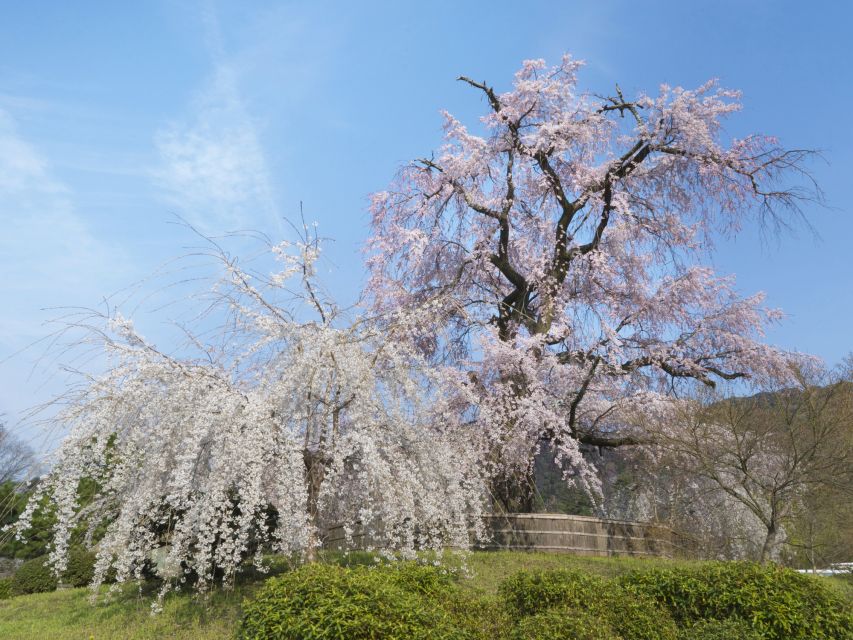
After Entokuin, the route continues toward Yasaka Koshin-do Temple. The stop is listed at about fifteen minutes. It is a smaller and more focused pause than the major temples, giving you another chance to ask about local religious practice.
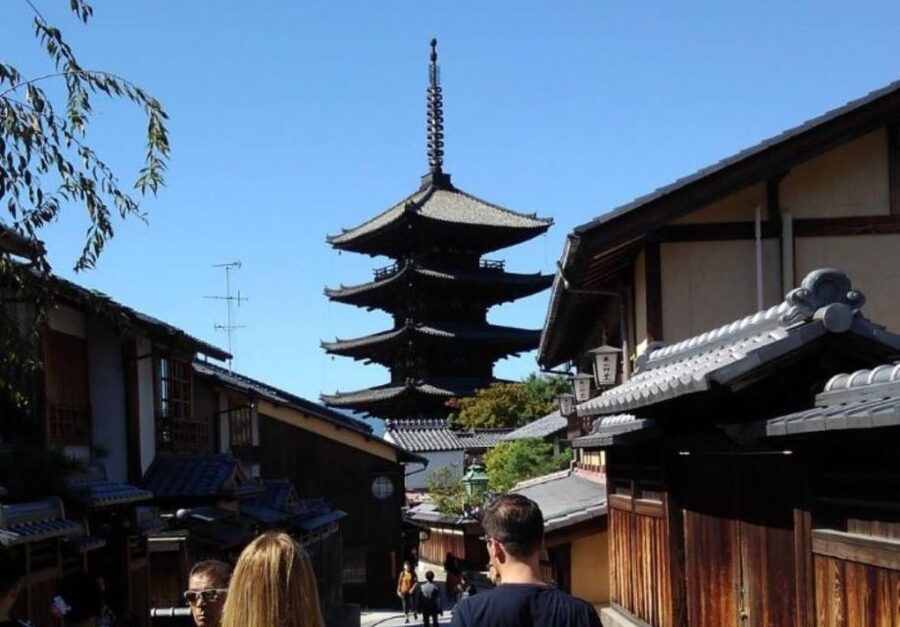
The nearby five-storied pagoda is commonly called Yasaka-no-to. You see it from outside, rather than taking a full tour of its interior. That distinction matters if you are expecting a detailed pagoda visit.
The street near the pagoda is a well-known photograph spot. The view brings together a narrow old street and the tall wooden tower, making this one of the strongest image-making moments on the route. Go in expecting a short exterior stop, not a long architectural inspection.
This area can be crowded, and the street is shared by pedestrians and vehicles. Your guide helps you find a safe place to pause, but you should still keep the camera ready and avoid blocking the lane. The stop is brief, yet it gives you a memorable view of Kyoto’s old town.
The final approach to Kiyomizu Temple
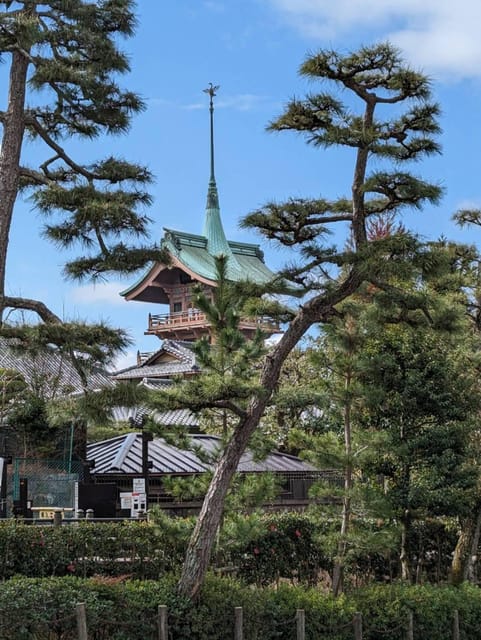
The route then heads uphill toward Kiyomizu Temple. The walk from the pagoda area is listed at about fifteen minutes, though the exact time depends on pace and crowd conditions.
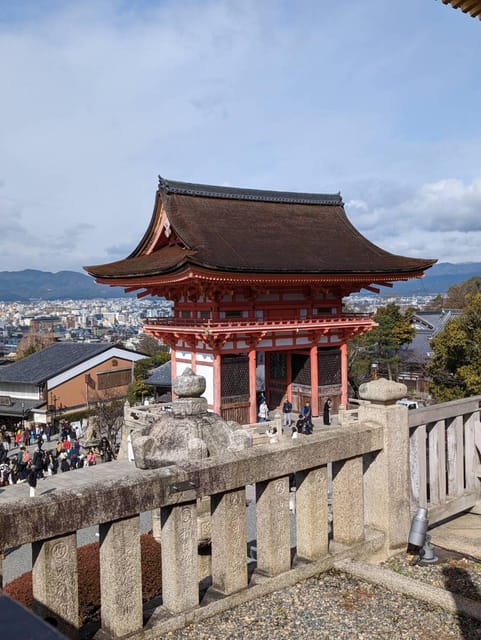
Kiyomizu is one of Kyoto’s most famous temples and dates originally to the eighth century. The site receives millions of visitors each year, so this is the least quiet part of the experience. A private guide cannot remove the crowds, but can explain what you are seeing and help keep the visit from becoming a blur of gates, shops, and viewpoints.
The main object of worship is Kannon Bodhisattva. Inside the temple precincts, you can see Buddhist statues, including Kannon. The guide explains the religious meaning rather than leaving you to guess from the architecture.
The wooden stage attached to the main hall is the visual centerpiece. It was built without nails, and its position gives you wide views over the surrounding area. From here, you can also see the three-storied Koyasu Pagoda, whose name means a pagoda for easy birth. Women visit it to pray for an easy birth.
The view is magnificent, but the stage is also a place where crowd control matters. You may need patience to reach a good viewing position. The tour gives you about thirty-five minutes at Kiyomizu, which is enough for an introduction but not for every corner of the grounds.
Pure water, iron objects, and Jishu Shrine
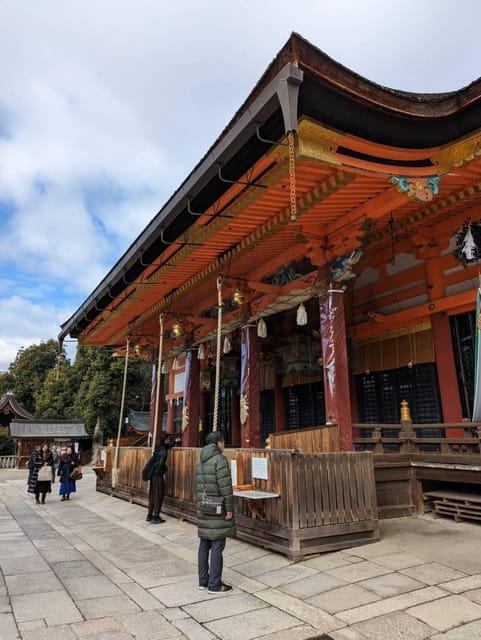
Kiyomizu means pure water, referring to the stream that runs down from the mountain behind the temple. The water is collected at the Otowa waterfall, where many people line up to drink from it.
The guide can explain the meaning of the water and the customs connected with it. Lines vary, and the tour schedule may not leave time for a long wait, so treat this as an opportunity rather than a guarantee of a full drinking ritual.
You can also see an iron stick and iron clogs donated to the temple. The iron stick is very heavy, and you may try to lift it. It is a small physical moment in an otherwise visual and historical visit, and children often find this kind of detail memorable.
The tour ends after you leave the main hall. Before saying goodbye, the guide explains Jishu Shrine, associated with matchmaking. This final note gives the visit a local human touch and rounds out the religious context of the temple.
What the $80 group price really buys
The price is $80 per private group of up to five people. For five people, that works out to $16 per person before admission fees. For two people, it is $40 each, so the value depends on how many are in your party and how much you want a private guide.
You are paying for personal attention, English explanations, route planning, and the freedom to ask questions. The strongest praise has focused on guides who adjust the pace, leave time for photographs, answer unusual questions, and use their own drawings or notes. Those qualities are difficult to get on a large group walk.
The price does not include transportation to the meeting point, food, drinks, temple admissions, or insurance. You need to handle your own arrival at Yasaka Shrine and pay the entrance fees along the way. A taxi may be useful if you have mobility concerns or are trying to reach the meeting point quickly, but that cost is separate.
The tour offers free cancellation up to 24 hours before the start and a reserve-now, pay-later option. Those terms help if your Kyoto schedule is still moving around, but check the current booking conditions when you reserve.
Who should book this Kyoto walk?
Book it if you want meaning as well as photographs. It is especially good for a first visit, a family group, or anyone who wants a clear explanation of Shinto, Buddhism, Kyoto’s political past, and local customs.
It is also a good early-trip choice. After learning how to recognize shrines, temples, pagodas, and Buddhist images, you will notice more during the rest of your time in Japan.
You may want a different experience if you prefer to wander alone, dislike scheduled stops, or want long visits inside every monument. The route covers several places in a short time, and Kiyomizu can be crowded. The pagoda is viewed from outside, and all admission charges are extra.
The strongest guide match appears to be someone who enjoys questions. Hisako and Hiroko have been praised for clear English, patient answers, personal drawings, and thoughtful explanations. Takayuki Ishii has also been praised for a steady pace, good timing, and friendly conversation. Your exact guide may differ, but the experience works best when you treat it as a discussion rather than a silent walk.
Final verdict
I would recommend this tour to anyone who wants a compact, personal introduction to Kyoto’s religious sites and history. The route is well chosen: Yasaka Shrine teaches shrine customs, Entokuin slows the pace with Zen gardens, Yasaka-no-to supplies a classic pagoda view, and Kiyomizu delivers the grand finish.
Allow for temple fees, walking effort, and crowds at Kiyomizu. If those limits suit you, the $80 private-group price can be strong value, especially for three to five people. Book it near the start of your Kyoto stay, arrive in comfortable shoes, and bring questions. You will get far more from the walk that way.
FAQ
How long does the tour last?
The experience is described as a two-hour walking tour in the activity details and as a 2.5-hour historical walking tour in the title and guest descriptions. Allow at least two to 2.5 hours, with the exact length affected by questions, photographs, and walking pace.
Where does the tour begin?
It begins at the west gate, also called the red gate, of Yasaka Shrine. The meeting point is near the Gion area.
Where does the tour finish?
The tour finishes at Kiyomizu Temple after the guide explains Jishu Shrine and the main temple area.
Is the tour private?
Yes. It is a private group experience for up to five people.
Are temple entrance fees included?
No. Admission fees to the temples are not included. Meals, drinks, transportation to and from the meeting point, and insurance are also not included.
What language is the tour in?
The live tour guide provides the experience in English. The listed tour language is English.
What should I bring?
Bring comfortable shoes. The route is on foot and includes streets, stone steps, and uphill sections.
More Private Walking Tours in Kyoto
- Beijing: Forbidden City Tour(Group/Private)-Tickets Included
★ 4.8 · 7,974 reviews - Private Walking Grand Tour of Copenhagen
★ 5.0 · 3,953 reviews - Private 3 hrs Venice Tour: St Mark’s, Walking tour & Boat tour
★ 4.0 · 3,372 reviews - Private Street Food Evening Walking Tour in Ho Chi Minh City
★ 5.0 · 3,175 reviews
More History Walking Tours in Kyoto
- History and Hauntings of Salem Guided Walking Tour
★ 5.0 · 14,564 reviews - Lisbon: History, Stories and Lifestyle Walking Tour
★ 4.8 · 10,902 reviews - Boston: Freedom Trail History Small Group Walking Tour
★ 5.0 · 6,450 reviews - Historic Charleston Guided Sightseeing Walking Tour
★ 5.0 · 6,216 reviews
Just added around Kyoto
- Kyoto : Private Custom Walking Tour With A Local Guide★ 4.6 · 144 reviews
- Kyoto: Private Walking Tour with a Local★ 4.6 · 118 reviews
- Kyoto: Gion Sunset Walking Tour with Local Guide★ 4.7 · 351 reviews
- Kyoto: Gion Walking Tour★ 5.0 · 195 reviews
- Kyoto: Izakaya Bars Guided Walking Tour★ 4.9 · 815 reviews
- Kyoto: Gion Hidden Gems & Geisha Culture Tour★ 4.9 · 126 reviews
- Kyoto: Imperial Palace & Nijo Castle Guided Walking Tour★ 4.7 · 453 reviews
- Kyoto Gion Cultural Walk & Geisha Show with Dining Options★ 5.0 · 518 reviews
History Walking Tours, compared.
History and Hauntings of Salem Guided Walking Tour
Read our review →

Freedom Trail History Small Group Walking Tour
Read our review →
Historic Charleston Guided Sightseeing Walking Tour
Read our review →
Tapas Walking Tour with Food, Wine, and History
Read our review →
Savannah History and Haunts Candlelit Ghost Walking Tour
Read our review →
A History of Terror – Belfast City Centre Walking Tour
Read our review →Browse the lists this tour appears in