
Review · HISTORY WALKING TOURS
Austin: Morning History Walking Tour of Downtown Austin
Austin reveals itself one story at a time. This 90-minute downtown walk mixes local history with useful advice on coffee, restaurants, and live music, making it a smart first activity in the city. I especially like the visit inside the Driskill Hotel and the way the route links several central districts instead of keeping you on one predictable street. The possible drawback is its brisk schedule: one hour and a half gives you a good orientation, but not much time to linger at each stop.
The tour costs $32 per person, which feels fair if you want context rather than a simple walk past buildings. Guides such as Audrey, Tyler, William, Jake, and Sharon have been praised for clear storytelling, archive photos, personal memories, and practical recommendations. The route is manageable for most walkers, though Austin’s heat, rain, and busy downtown sidewalks can affect your comfort.
Six details that make this Austin walk useful
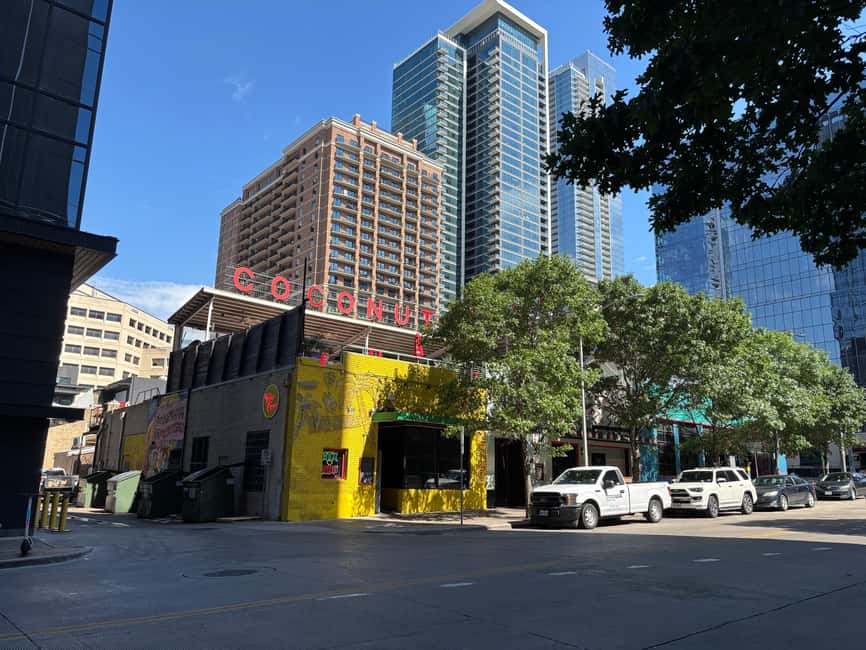
- Breakfast perk at Jo’s Coffee: Show proof of your tour purchase for 20% off your breakfast order at the Jo’s Coffee location on West 2nd Street.
- A genuine downtown orientation: The route covers the 2nd Street District, Warehouse District, Guytown, Congress Avenue, Sixth Street, San Jacinto, and the Capitol area.
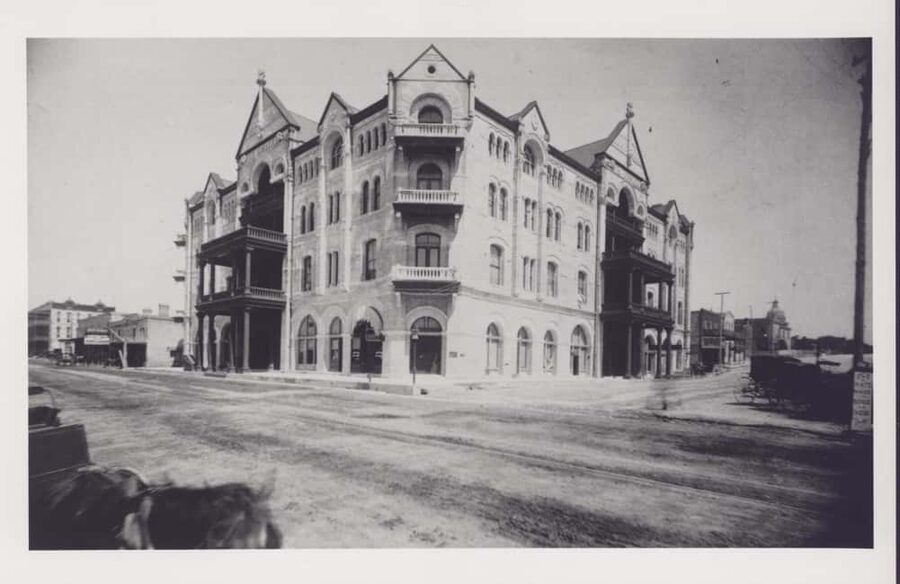
- Interior access at the Driskill: You go inside the 1885 hotel lobby and Driskill Bar and Lounge, rather than merely hearing about it from the sidewalk.
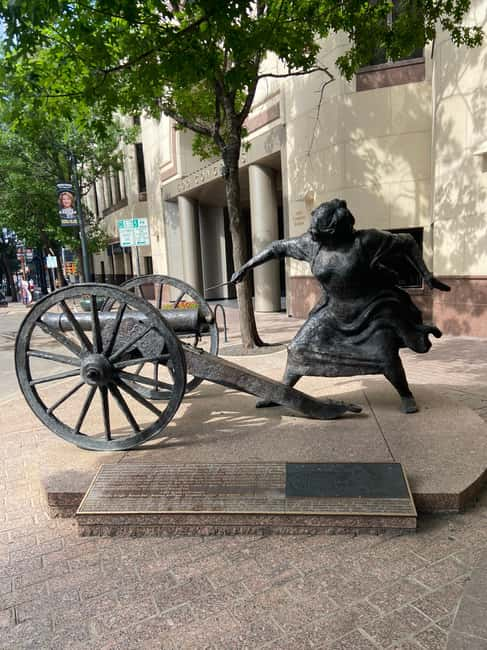
- Stories with local flavor: The Angelina Eberly story, the first railroad depot, Austin’s music scene, and the Congress Avenue bats give the walk a strong sense of place.
- Useful advice for the rest of your stay: Guides offer tips on restaurants, coffee shops, attractions, and music venues.
- An easy morning pace: The tour is wheelchair accessible, takes place in English, and can be canceled up to 24 hours ahead for a full refund.
Start with coffee on West 2nd Street
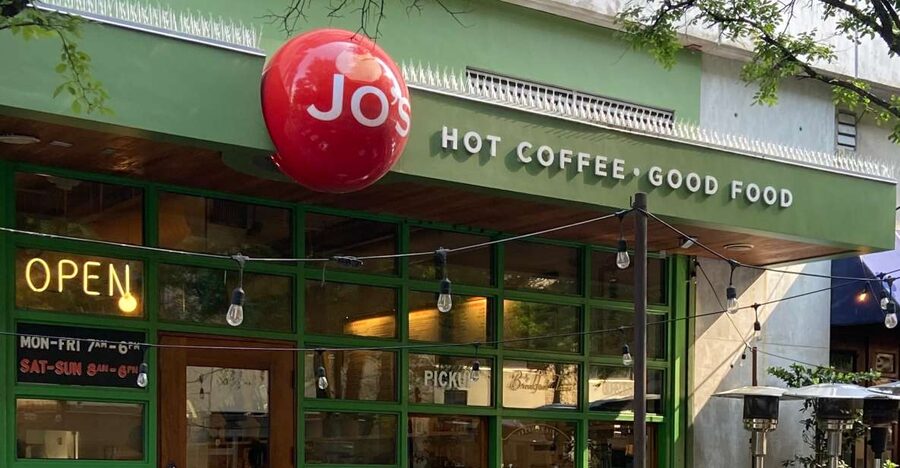
The meeting point is in front of Jo’s Coffee at 242 West 2nd Street. Look for a guide wearing a Walking Tours of Austin cap and shirt, along with an A-frame sign marked Morning Walk Austin. Restrooms are available at Jo’s, which is handy before setting off.
The breakfast discount is a small but worthwhile extra. You receive 20% off your breakfast order on the day of the walk when you show proof of purchase. Food and drinks are not included, so bring money if you want a coffee, snack, or treat.
I would arrive early enough to order something and find the meeting point without rushing. The discount gives you a reason to make this more than a simple assembly spot. It also helps the morning begin in a distinctly Austin way, with coffee before city stories.
The tour runs rain or shine. That matters here. A mild morning can make downtown walking easy, while strong sun or wet weather may call for water, sunscreen, and light rain gear. Comfortable shoes are more important than fashionable ones.
More History Walking Tours in the USA
- History and Hauntings of Salem Guided Walking Tour
★ 5.0 · 14,564 reviews - Boston: Freedom Trail History Small Group Walking Tour
★ 5.0 · 6,450 reviews - Historic Charleston Guided Sightseeing Walking Tour
★ 5.0 · 6,216 reviews
The 2nd Street District and Warehouse District
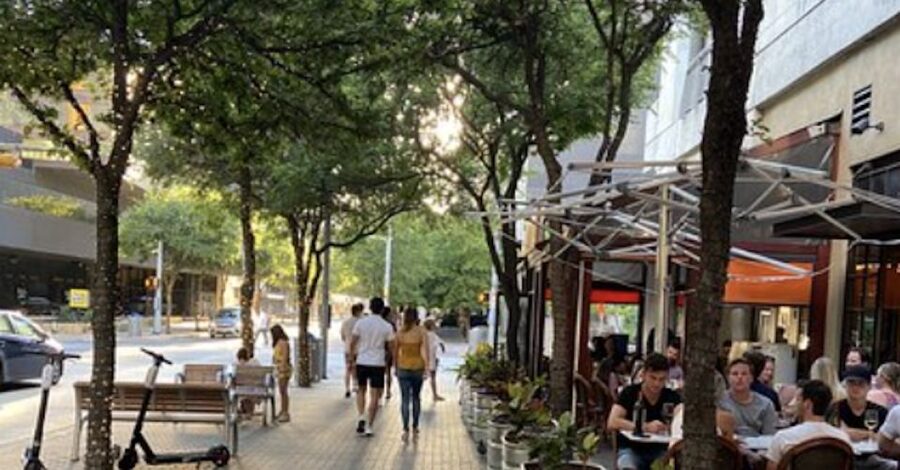
The walk begins around the 2nd Street District, also called the Warehouse District, west of Congress Avenue. This part of downtown brings together newer buildings, restaurants, shops, and entertainment spaces, while its older structures point to Austin’s commercial past.
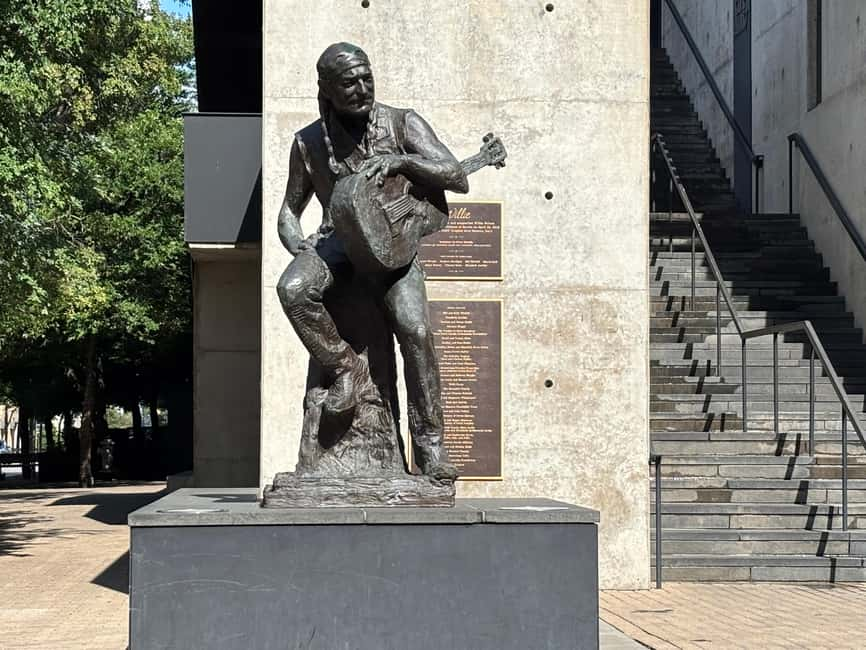
One early landmark is the Moody Theater, home to the famous Austin statue of Willie Nelson. The stop connects the city’s music identity with a real downtown location instead of treating live music as a vague slogan. Your guide can explain why Austin’s performance culture matters and point out places to return to later.
The value here is orientation. On your own, you might walk through the district and see polished streets, venues, and restaurants without understanding how the area fits together. A guide gives those blocks a purpose and helps you decide which areas deserve another visit after the tour.
The route continues through the Warehouse District toward Guytown. This is not a museum-style experience with long indoor visits. You spend most of the time outside, hearing short stories while moving through the city. That keeps the pace lively, but it also means you should expect brief stops rather than a detailed architectural study.
Guytown, the railroad depot, and old Austin infrastructure

In Guytown, the guide points out Austin’s first railroad depot, dating to about 1871. The building was later associated with the Spaghetti Warehouse. This stop adds an important piece of context: Austin’s growth was shaped not only by government and music, but also by rail connections and changing commercial use.
I like this part because it gives you a way to read older buildings. A structure may now hold a restaurant or another business, yet its earlier role can tell you how the city developed. That kind of information is easy to miss if you only follow the most photographed sights.
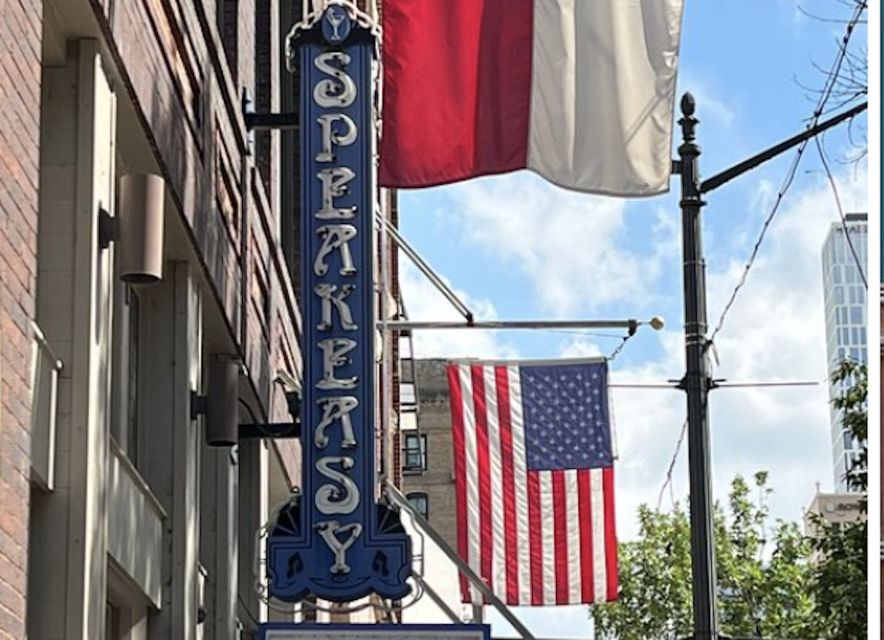
The tour then heads toward Congress Avenue and a former Southwestern Telephone and Telegraph Company building from about 1886, now associated with a speakeasy tavern. This stop brings in the city’s communications and prohibition-era stories without turning the walk into a lecture.
The guide’s job is especially important here. These are places you may pass without entering, so the story has to make the exterior meaningful. Tyler has been praised for using archive photos, while William was singled out for pairing clear narration with memorable facts. Those tools can help you picture earlier versions of downtown Austin.
Congress Avenue and the story of Angelina Eberly

The group heads north on Congress Avenue and crosses Sixth Street. This is one of the walk’s stronger transitions, moving from entertainment history toward civic history.
Near the Angelina Eberly statue, you hear how she helped save Austin in 1842. The story gives the city a human scale. Instead of hearing only about officials, dates, and buildings, you meet a determined figure connected to a dramatic moment in Austin’s early years.
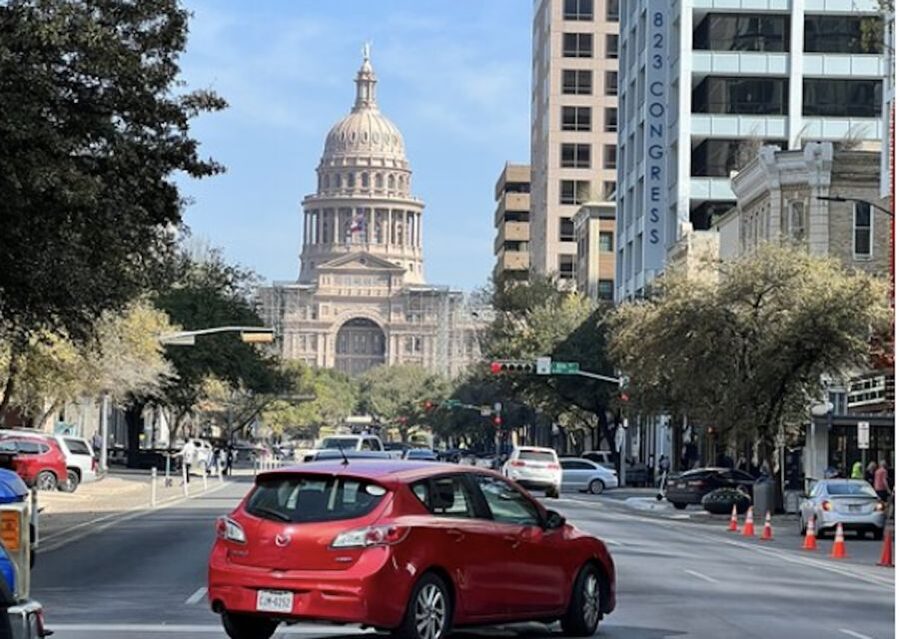
From the statue, you cross Congress Avenue with a clear view toward the Texas Capitol, only about two blocks away. This is a good example of how the route uses sightlines. You are not simply told that the Capitol matters. You see it ahead of you, then walk toward it with the story still fresh.
The Capitol discussion covers its history and place in Texas public life. The exact depth depends on the guide and the group. If you enjoy politics, architecture, or state history, ask questions here. Guides have been praised for answering questions and adapting the walk to group interests instead of reciting a fixed script.
Same streets, a different way to see them:
- New Orleans Premier Ghost, Voodoo and Vampire Walking Tour
★ 4.5 · 12,856 reviews - Little Havana Food and Walking Tour in Miami
★ 5.0 · 8,882 reviews - Chicago: Gangsters and Ghosts Walking Tour
★ 5.0 · 7,155 reviews - New Orleans Food Walking Tour of the French Quarter with Small-Group Option
★ 5.0 · 6,118 reviews
The Texas Capitol and a useful sense of scale
The Capitol is one of the clearest visual anchors on the route. You do not receive a full Capitol tour as part of this experience, but the stop gives you historical context and a good exterior view.
That distinction matters. If you want to explore the entire building, its rooms, or exhibits at length, you will need separate time. This morning walk is better at showing how the Capitol relates to downtown Austin and the streets you have already covered.
The stop also breaks up the entertainment focus of Sixth Street and the Warehouse District. Austin is more than music venues and restaurants. The Capitol adds government, civic identity, and Texas history to the picture.
Inside the Driskill Hotel, built in 1885
The Driskill Hotel is one of the tour’s best features because you actually go inside. The visit includes the ornate lobby and the Driskill Bar and Lounge, giving you a chance to see a grand historic interior without booking a room or planning a separate hotel visit.
Built in 1885, the Driskill offers a strong contrast to the newer downtown blocks. Its interior helps you understand how Austin once presented itself to important visitors and local society. The building is also a useful pause from the heat or rain, although the overall tour remains an outdoor walk.
Your guide points out details and adds stories as you move through the hotel. This is where a strong storyteller can make a real difference. Audrey, Tyler, William, and Jake have all received praise for enthusiasm, humor, and clear explanations. A good guide turns a beautiful lobby into a place with meaning, not just a quick photo stop.
The Driskill is also a practical stop for anyone who likes historic hotels. You receive a taste of the building’s atmosphere without paying for a formal hotel experience. Still, do not expect a long, room-by-room examination. The visit is one part of a larger walking route.
Sixth Street, music venues, and Voodoo Donuts
After the Driskill, the tour heads east along Sixth Street. You pass music venues and Voodoo Donuts while your guide explains how the area fits into Austin’s entertainment culture.
Sixth Street can feel very different at night than it does in the morning. A morning walk lets you see the street with less noise and fewer crowds, making it easier to hear your guide and notice the buildings. You also get a better sense of how the same block serves different purposes at different times of day.
This is a good place to ask for evening advice. The guide can point you toward music venues and help you avoid choosing a place based only on the loudest sign or the most obvious tourist traffic. The experience does not include admission to a venue, food, or drinks, so treat the music stops as recommendations and context.
One limitation is that you may not spend long inside any venue. The point is to understand the district and collect ideas for later. If live music is your main reason for visiting Austin, use the walk to gather suggestions, then return on your own at night.
San Jacinto, Congress Avenue, and the final bat discussion
The route continues down San Jacinto, where newer buildings meet older ones. You turn near Vince Young’s Steakhouse and head back toward Congress Avenue. This part of the walk is less about a single famous attraction and more about seeing how downtown changes from block to block.
The group then reaches the Pearl House Hotel and returns toward 2nd Street. From there, you can see Austin’s famous bat bridge. The guide stops to explain the city’s bat phenomenon, another piece of local identity that is easy to hear about without understanding its place in the city.
The bat discussion is an introduction, not a bat-watching event. There is no evening emergence viewing included, and the tour takes place in the morning. If you want to see the bats in action, you will need to make separate plans at the appropriate time.
Ending near the bridge gives the route a pleasing local touch. You finish with a story that is unusual, memorable, and connected to a specific Austin location. It also leaves you close to downtown areas you can continue exploring on foot.
What the guides do best
The strongest part of this experience is the guide’s storytelling. The highest praise has gone to guides who make history conversational, answer questions, and offer advice that remains useful after the walk.
Tyler has been praised repeatedly for his clear explanations, energy, archive photos, and restaurant suggestions. Audrey has received strong marks for giving a local perspective and explaining downtown history in an engaging way. William has been noted for well-chosen stories and for sharing lists of favorite places. Jake has been praised for making everyone feel included, while a local guide born and raised in Austin added personal stories.
That range matters because the experience may feel different depending on who leads it. The common thread is a relaxed approach rather than a dry, rehearsed lecture. One guest even received attraction addresses by text after the tour, showing how practical the advice can be.
The walk can also adapt to group size. A small group may give you more time for questions, and one person once received nearly one-on-one attention. A larger group may feel less personal, but the route and short stops keep the experience moving.
Is $32 a fair price?
At $32, this is a reasonable purchase for a first morning in Austin. You receive 90 minutes with a local guide, entry into the Driskill Hotel, a downtown orientation, historical stories, and practical suggestions for the rest of your stay.
The 20% Jo’s Coffee breakfast discount adds a little more value, though your savings depend on what you order. The real benefit is time. A good guide can help you understand which streets, buildings, and districts deserve another visit, saving you from wandering without context.
The price is less compelling if you want a long, detailed visit inside major attractions. You do not receive a full Capitol tour, a music performance, a meal, or a bat-viewing session. You are paying for a focused introduction to central Austin.
The tour is highly rated, with a 4.9 score from 71 ratings. One person wished the walk lasted longer, and another felt 90 minutes was too short. That is fair criticism. The route covers a lot of ground, so you should expect breadth rather than exhaustive detail.
Practical advice before you book
Wear comfortable shoes and prepare for changing weather. The tour takes place rain or shine, and much of it is outdoors. Bring water and money for a drink or snack if needed.
Arrive at Jo’s Coffee with proof of your purchase if you want the breakfast discount. Check the guide’s cap, shirt, and A-frame sign so you can identify the meeting point easily.
The tour is wheelchair accessible, but downtown sidewalks, crossings, and group movement can still affect the pace. If you have specific mobility needs, confirm the current route when booking.
Free cancellation is available up to 24 hours before the tour, and you can reserve now and pay later. The tour is offered in English with a live guide.
Who should take this tour?
I would recommend it most strongly to first-time visitors, short-stay visitors, couples, families with older children, and anyone who wants a useful city introduction before making evening plans.
It also suits people who prefer stories to formal museum displays. You keep moving, see several districts, and get a mix of civic history, local characters, historic buildings, music culture, and food suggestions.
You may want something else if you dislike walking, need long stops at each attraction, or mainly want live music and nightlife. The tour introduces those subjects but does not include performances or venue admission.
Should you book the Austin Morning History Walking Tour?
Yes, if you want to get your bearings quickly and understand why downtown Austin looks and feels the way it does. The Driskill interior, Angelina Eberly story, Capitol view, railroad history, and bat bridge discussion give the walk enough variety to justify the $32 price.
Book it early in your stay so you can use the guide’s restaurant, coffee, attraction, and music suggestions afterward. Just keep your expectations in check: this is a lively orientation, not a full-day history course. For most visitors, that balance is exactly its strength.
FAQ
Where does the Austin Morning History Walking Tour meet?
Meet in front of Jo’s Coffee at 242 West 2nd Street. Look for a guide wearing a Walking Tours of Austin cap and shirt, plus an A-frame Morning Walk Austin sign.
How long does the tour last?
The stated duration is 90 minutes. Some walks may run longer depending on the guide and group, but you should plan around an hour and a half.
What is included in the tour price?
The price includes a local English-speaking guide, the walking tour, and entry to the Driskill Hotel. Food and drinks are not included.
Is the Jo’s Coffee breakfast discount included?
Yes. Morning Walk guests receive 20% off a breakfast order at Jo’s Coffee at 242 West 2nd Street. You must show proof of your tour purchase on the day of the walk.
Does the tour enter the Texas Capitol?
The route includes a discussion of the Capitol and a view of the building from Congress Avenue. Entry to the Capitol is not listed as part of the experience.
Does the tour include the Austin bats?
The guide stops near the Pearl House Hotel and 2nd Street to discuss Austin’s bat phenomenon. The tour does not include an evening bat-watching event.
Can I cancel the tour or pay later?
You can cancel up to 24 hours in advance for a full refund. The tour also offers a reserve-now, pay-later option.
Just added around the USA
- Savor Bar Harbor Culinary Walking Tour in Maine★ 5.0 · 169 reviews
- Savor Bar Harbor Culinary Walking Tour★ 4.5 · 75 reviews
- 90-minute Ghost Walking Tour in Bar Harbor★ 4.5 · 161 reviews
- Baltimore Walking Foodie Tour in Fells Point★ 5.0 · 182 reviews
- The Original Fells Point Ghost Walk by Baltimore Ghost Tours★ 4.5 · 73 reviews
- The Story of Austin: Downtown History Walking Tour★ 5.0 · 216 reviews
- Austin Small Group Morning Walk★ 5.0 · 412 reviews
- The Madam’s Curse Walking Ghost Tour★ 4.5 · 103 reviews
History Walking Tours, compared.
History and Hauntings of Salem Guided Walking Tour
Read our review →
Freedom Trail History Small Group Walking Tour
Read our review →
Historic Charleston Guided Sightseeing Walking Tour
Read our review →
Tapas Walking Tour with Food, Wine, and History
Read our review →
Savannah History and Haunts Candlelit Ghost Walking Tour
Read our review →
A History of Terror – Belfast City Centre Walking Tour
Read our review →Browse the lists this tour appears in