
Review · HISTORY WALKING TOURS
Barcelona: Dark History Night Walking Tour
Dark stories make old streets feel different. This two-hour night walk through El Born and La Ribera looks at Barcelona’s grim past through real accounts of the Spanish Inquisition, public executions, forgotten cemeteries, and medieval punishment. I like that the tour uses history rather than cheap scares, and I like the guide’s visual aids, which include a portable wall projector, old images, books, and other props.
The main consideration is the subject matter. Torture, executions, religious persecution, and the life of Barcelona’s executioner are not light evening entertainment. The tour also runs in all weather, and its English-only format may not suit every group. Still, at $24 per person, it offers a strong dose of unusual history for the price.
Key points at a glance
- True dark history, not a ghost show: The focus is on documented events, with only a few city legends mixed in.
- El Born and La Ribera after sunset: Medieval streets and old buildings create the right setting without staged haunted-house tricks.
- Excellent storytelling: Guides including Elena, Sara, Noah, Albert, and Ross have been praised for energy, humor, and clear explanations.
- Useful visual aids: A wall projector, photographs, books, readings, and props help make old stories easier to follow.
- A manageable two-hour walk: The pace is designed for conversation and storytelling rather than a long-distance march.
- Best for ages 14 and up: The material is serious and sometimes graphic, so younger children should skip it.
What this Barcelona night walk is really about
This is a history tour with a dark theme, not a paranormal attraction. You will not be asked to chase ghosts, endure staged jumps, or pretend that every shadow hides a spirit. Instead, the guide uses Barcelona’s streets as a setting for stories about real punishments, victims, trials, executions, and social fears.
That distinction matters. Barcelona’s old quarters already have enough atmosphere. Narrow lanes, weathered stone, and centuries-old buildings do the work. The guide’s job is to explain what happened there and why these events mattered, not to manufacture a fright.
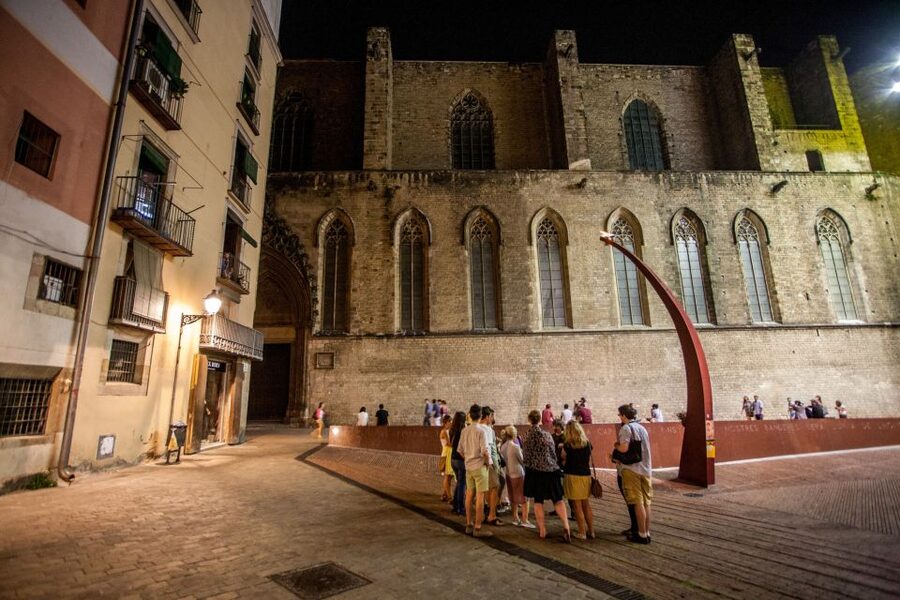
The tour centers on El Born and La Ribera, two historic areas in central Barcelona. The walk gives you a different way to read the city. A street name, an old wall, or an overlooked corner can take on a new meaning once you hear about the people who lived, suffered, or died nearby.
The Spanish Inquisition is one of the main subjects. The tour also reaches further into medieval life, including public punishment, alleged witches, executions, and the difficult social position of Barcelona’s executioner. You get a picture of a city where accusations could become dangerous very quickly and public punishment was part of civic life.
More History Walking Tours in Barcelona
- Barcelona: Tapas Walking Tour with Food, Wine, and History
★ 4.8 · 4,261 reviews - Barcelona Tapas Walking Tour: Food, Wine & History
★ 4.5 · 1,928 reviews - Barcelona: The Spanish Civil War Historical Walking Tour
★ 4.9 · 239 reviews
Meeting at Arc de Triomf, then heading into old Barcelona
The meeting point is under the arch of the Arc de Triomf, close to the Arc de Triomf Metro station on Line 1. That makes the start simple to reach, especially if you are staying near central Barcelona or already exploring the old quarters.
From there, the route moves toward El Born and La Ribera. The exact sequence and timing can change during the year because the start time depends on nightfall. That is sensible for a night walk, but you should check the confirmed starting time when booking rather than assuming it will begin at the same hour in every season.
The opening section sets the tone. A good guide needs to explain the difference between legend and evidence, introduce the city’s medieval setting, and give you enough background to understand the stories that follow. Elena has been praised for drawing the whole group into the subject, while Noah was noted for speaking slowly and clearly for people who do not use English as their first language.
That kind of delivery matters more than theatrical flair. Old history can become a blur of names and dates if the explanation is rushed. The strongest guides on this tour appear to use a clear pace, direct questions, and a lively tone to keep the group involved.
El Born and La Ribera through a darker lens
El Born and La Ribera are attractive areas to walk through at night, but the point here is not simply pretty scenery. The guide uses the neighborhoods to show how Barcelona’s past remains tied to its streets.
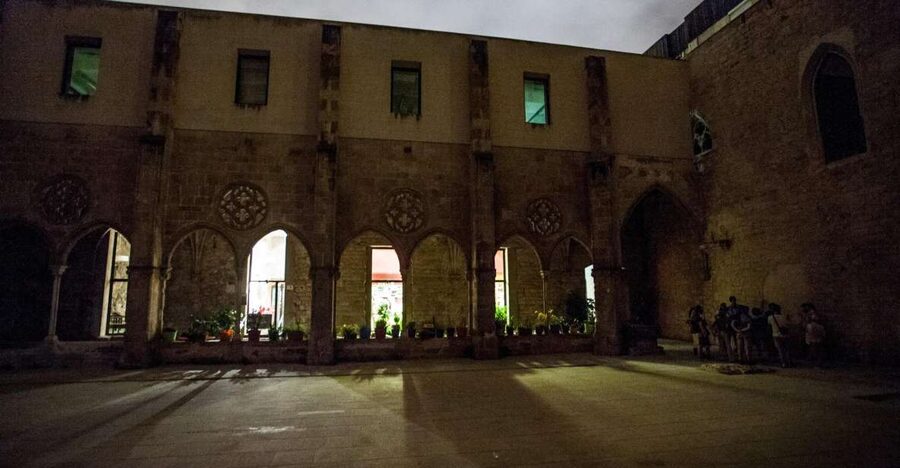
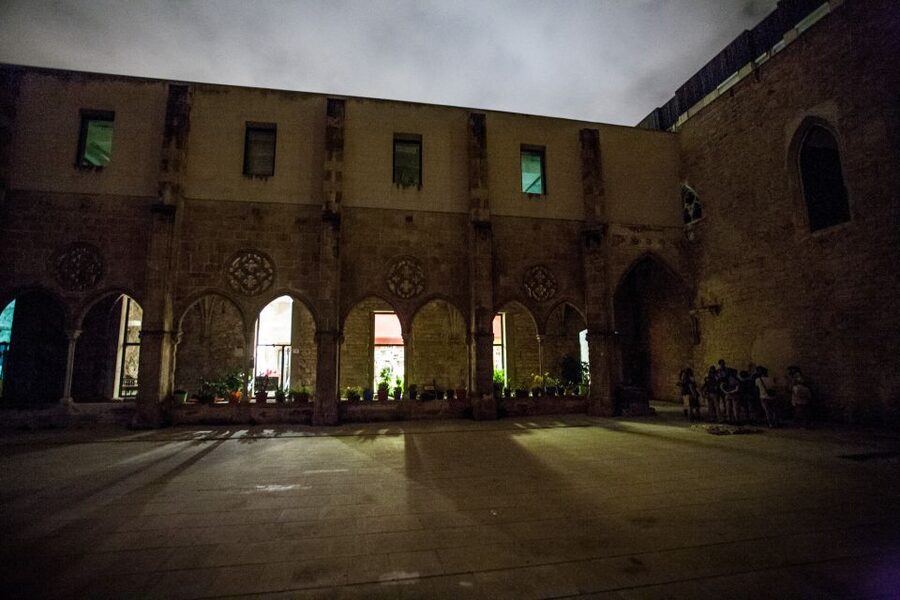
You may pass places that look ordinary during the day. Once the guide explains their connection to old punishments, cemeteries, executions, or religious conflict, they become part of a larger story. This is one of the tour’s best features: you are not sitting in a lecture room. You are hearing about the past in the same urban setting where it unfolded.
The walking itself is not described as especially strenuous. Several people have found the pace comfortable, and one couple called it a good choice after a long day of sightseeing. Still, it is a two-hour walking tour over old streets, so comfortable shoes remain a sensible choice.
Do not expect every stop to be a preserved monument with a sign explaining its grim past. Some of the value comes from the guide’s narration. The physical remains may be modest, and the story may depend on an image, reading, or explanation rather than a dramatic ruin.
The Spanish Inquisition without the usual shortcuts
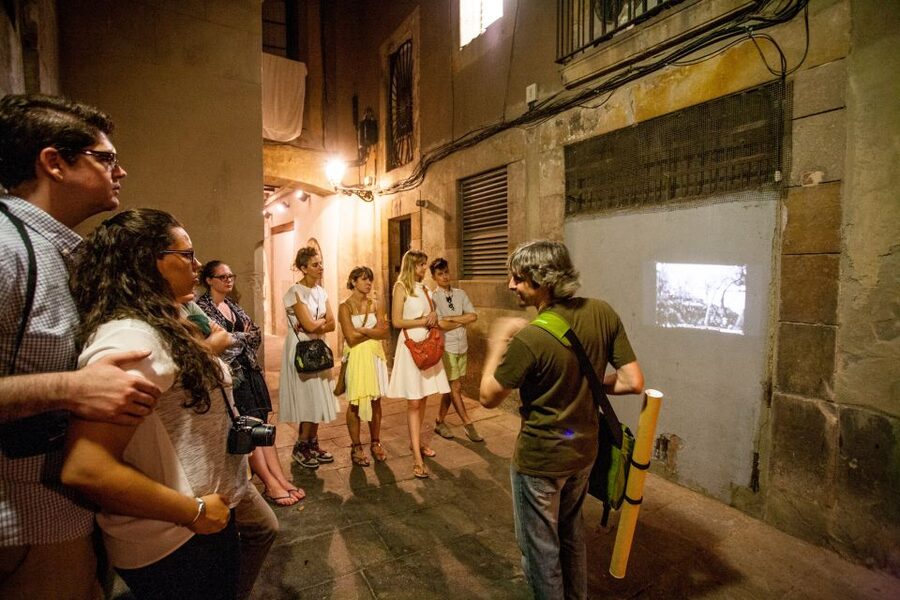
The Inquisition section is likely the central reason to book this walk. The topic is often reduced to a few familiar images, but the guide places it within the fears, beliefs, and power structures of the time.
You hear about accusations of heresy and the consequences of being judged by religious authorities. The tour also looks at victims and at the wider social climate that allowed suspicion to carry such force. For anyone interested in Spanish history, this is more useful than a vague ghost story because it connects individual cases to the institutions around them.
The material can be upsetting. The tour deals with torture and punishment in plain terms, and the point is not to soften the cruelty of the period. I would avoid booking it for anyone who is sensitive to graphic historical subjects or who expects a gentle evening stroll.
At the same time, the guides seem to keep the tone controlled. The goal is not shock for its own sake. Reviews repeatedly praise the way guides such as Sara and Elena combine serious content with humor, warmth, and a strong sense of narrative.
More Ghost Walking Tours in Barcelona:
- Barcelona Dark History Night Walking Tour With Drinks
★ 5.0 · 153 reviews - New Orleans Premier Ghost, Voodoo and Vampire Walking Tour
★ 4.5 · 12,856 reviews - London: The Original Jack the Ripper Walking Tour
★ 4.7 · 7,833 reviews - Chicago: Gangsters and Ghosts Walking Tour
★ 5.0 · 7,155 reviews
Executions, cemeteries, and Barcelona’s executioner
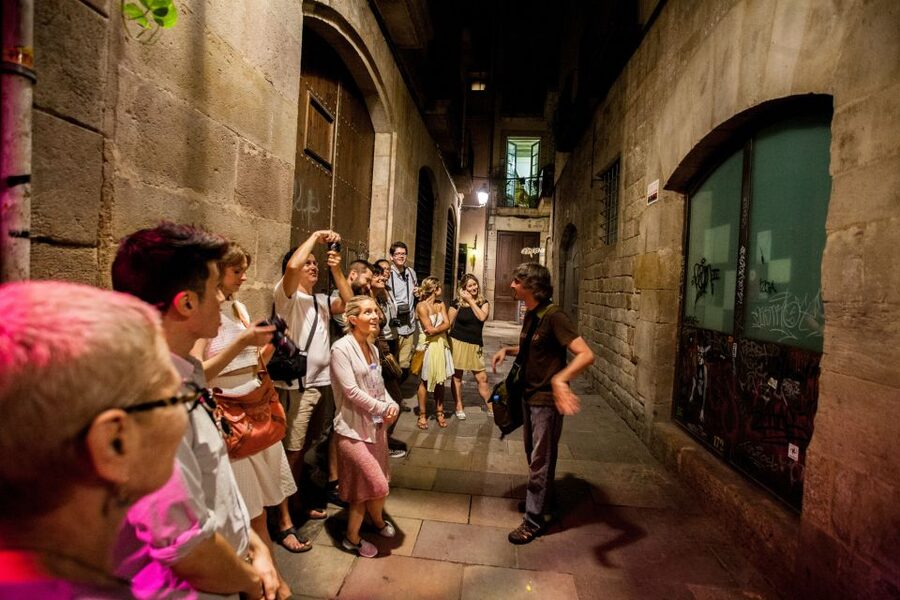
The tour’s most unusual themes are the forgotten cemeteries and former execution sites. These subjects help explain how medieval cities dealt with death in public and private spaces.
A cemetery that no longer looks like a cemetery can be easy to miss. The guide gives you the missing context: who was buried there, why the site mattered, and how urban change can erase difficult parts of the past. The same applies to places connected with public executions. You may not see a grand memorial, but the story changes how you look at the surrounding streets.
The discussion of Barcelona’s executioner is another distinctive feature. Rather than treating him as a cartoon villain, the tour considers what life was like for a person assigned to carry out punishments. That human angle makes the subject more complicated. The executioner was part of the system, but his position also placed him outside ordinary society.
This is where the tour offers more than a list of gruesome events. It asks you to think about the people who imposed punishment, the people who received it, and the crowds who watched. That wider view gives the walk some moral and social depth without turning it into a formal academic lecture.
Legends, witches, and the line between fact and folklore
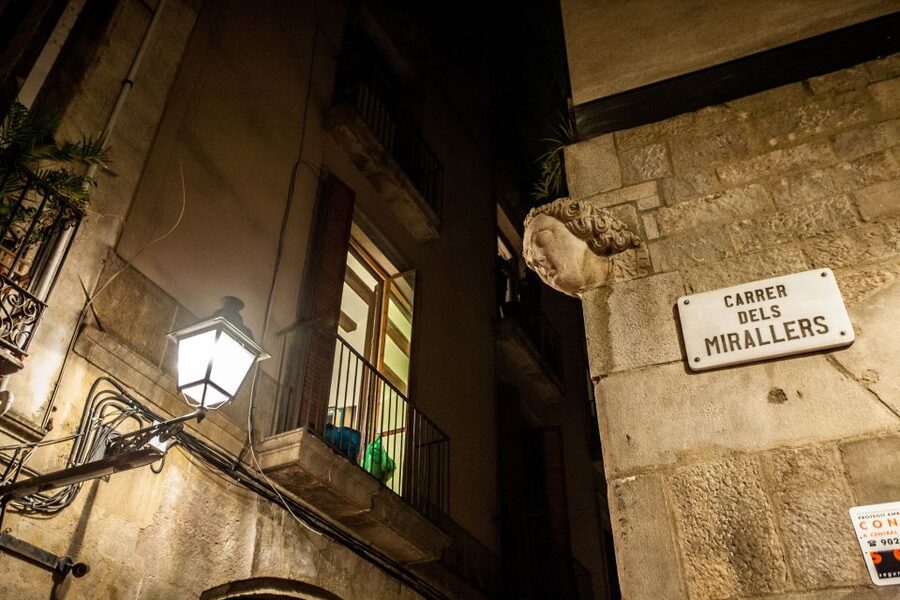
A few city legends may appear, including stories connected with witches and supernatural beliefs. But the tour does not present itself as a ghost tour, and that boundary is worth keeping clear.
The best use of legend is to show what people feared and believed. A story can tell you something about medieval attitudes even when it is not a verified event. The guide’s role is to make that distinction clear, and the available description emphasizes that the main material is based on historical facts.
This balance will suit you if you enjoy spooky atmosphere but want something more solid than invented hauntings. It may disappoint you if you are specifically looking for ghost sightings, paranormal equipment, or theatrical scares.
One past participant compared the experience favorably with traditional ghost tours because the real history felt more interesting. That is a fair description of the tour’s appeal. The city’s actual record of punishment and persecution is unsettling enough without adding fake footsteps.
Why the projector and props help
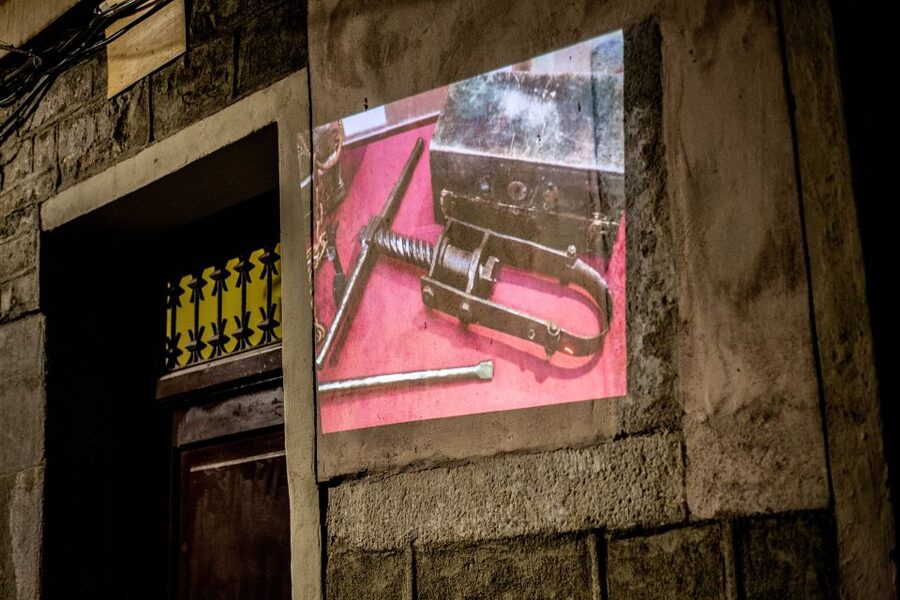
The tour includes a portable wall projector to support the guide’s explanations. Guides have also used photographs, paintings, excerpts from literature, books, readings, and other props.
That is not just decoration. Nighttime streets can be hard places to absorb a long explanation, especially when the subject includes unfamiliar names and old customs. A visual reference gives you something concrete to connect with the story.
The media also helps vary the pace. You may listen to a spoken account, look at an old image, then move on to another street or theme. The result is less like a continuous lecture and more like a guided story told in chapters.
There is one practical limitation. A portable projector needs a suitable surface and enough visibility, and a group standing outdoors may not get the same clear view as an audience in a museum. Headsets are provided for communication, which should help you follow the guide in a city setting, but you may still need to position yourself where you can see the visuals.
The guides make or break the evening
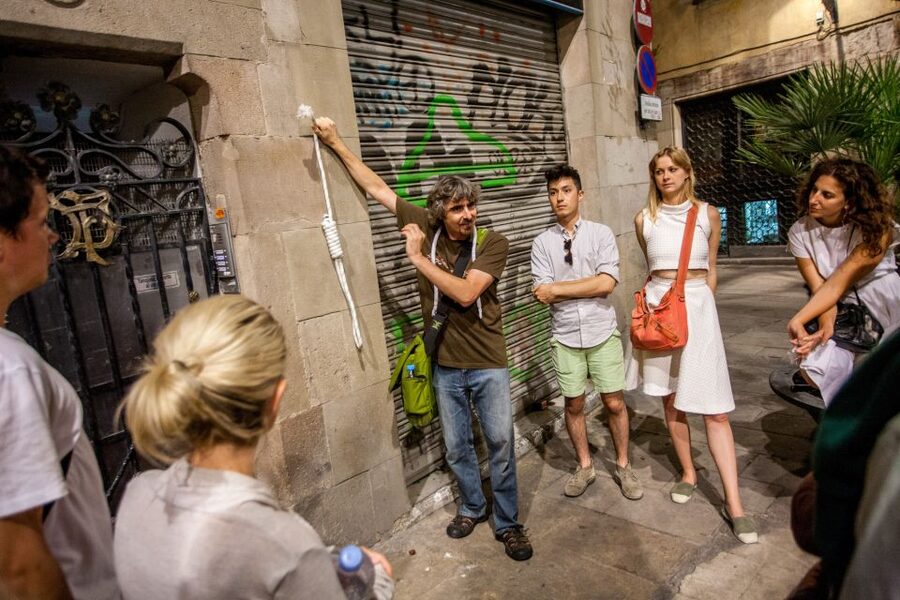
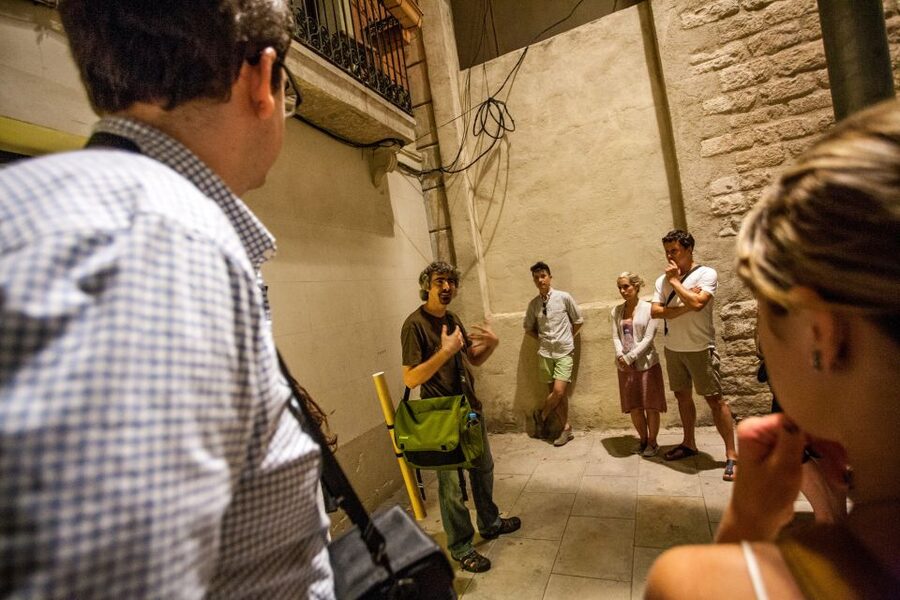
The strongest praise is aimed at the guides. Elena receives repeated approval for her enthusiasm, interaction, and dramatic storytelling. Sara is praised for warmth, energy, and the ability to make a small group feel personal. Noah is noted for his clear delivery and theatrical style, while Albert and Ross are described as well prepared and engaging.
The guide can change, so you should not book on the assumption that one particular person will lead your walk. Still, the range of positive comments suggests a clear training style: guides are expected to know the material, involve the group, and use supporting visuals rather than simply recite facts.
Small groups can make a real difference. Some departures have had only three, four, or five people, creating an intimate setting where questions are easy. Group size can vary, so this is not guaranteed, but the limited numbers are a good reason to reserve early if you prefer a quieter experience.
The guides also offer local suggestions along the route. Elena has given restaurant and bar tips, and other guides have shared extra information about Barcelona beyond the formal subject. Consider asking at the end if you want ideas for continuing your evening.
Is $24 a fair price?
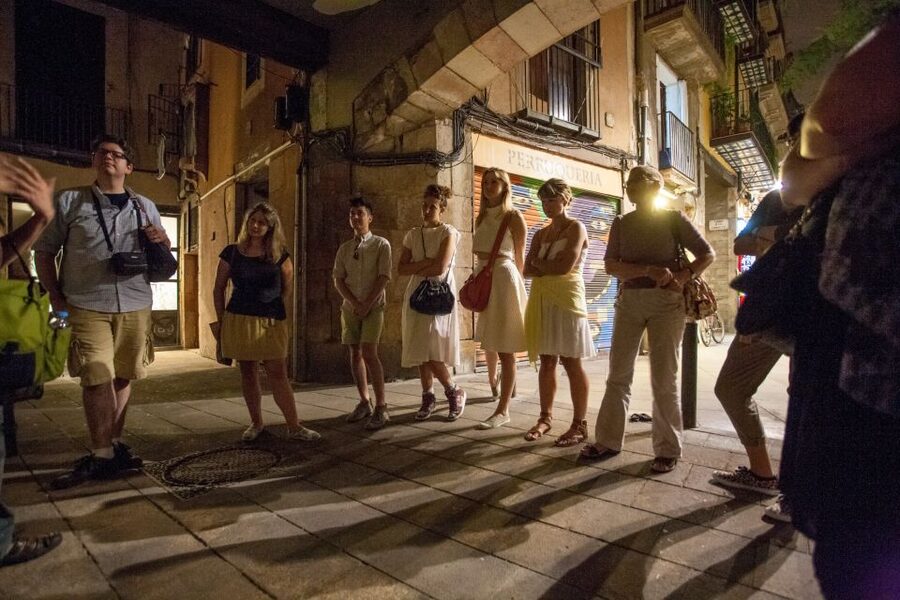
At $24, the tour is reasonably priced for a two-hour guided walk in central Barcelona. You are paying for a professional local guide, headsets, visual material, and a focused route through several historic themes.
The value is strongest if you want context you would not get by walking El Born alone. You can certainly explore the neighborhood for free, but you are unlikely to notice the links between old streets, punishment, religious authority, cemeteries, and executions without a guide.
The price is less attractive if you mainly want a scenic evening walk or a polished theatrical performance. This experience depends on narration. If the darker subjects do not interest you, the content will feel narrow, since the tour stays focused on Barcelona’s grim past rather than covering the city’s art, food, architecture, or general story.
Free cancellation up to 24 hours before the start gives you some flexibility, and you can reserve without paying immediately. The tour is listed as wheelchair accessible, though the route uses historic neighborhoods, so it is sensible to confirm any personal access concerns before setting out.
Weather, clothing, and the right age group
The walk operates in all weather. Rain alone does not cancel it, so bring suitable rain gear if the forecast looks poor. A compact waterproof jacket is more useful than an umbrella on narrow streets and while listening to a guide.
The tour is not recommended for children under 14. That limit makes sense because the content includes torture, executions, persecution, and victims. Teenagers who enjoy serious history may find it gripping, but younger children are likely to find it too intense.
You should also dress for an evening outside. The start time changes with nightfall, and the temperature can shift during the walk. Comfortable shoes are important, even though the route is not presented as a strenuous hike.
Who should book this night tour?
I would recommend it to you if you enjoy:
- Medieval and early modern European history
- The Spanish Inquisition and its social impact
- Serious stories with a spooky setting
- Small-group walks and active storytelling
- Seeing familiar neighborhoods from a less polished angle
- History supported by images, readings, and props
I would skip it if you want a classic ghost tour, a family activity for young children, or a broad introduction to Barcelona. It is also not the right choice if graphic historical subjects make you uncomfortable.
For a first evening in the city, the tour can work well because it begins near Arc de Triomf and ends after two hours with plenty of time left for a drink or late meal. It is especially useful after you have already seen Barcelona’s grand landmarks and want to understand the less comfortable stories behind the old quarters.
Should you book the Barcelona Dark History Night Walking Tour?
Yes, if you want real history with a dark edge, not a staged scare show. The price is fair, the walk is manageable, and the visual aids give the storytelling more shape. The most important factor is your guide, but Elena, Sara, Noah, Albert, and Ross have all been praised for making the material lively and clear.
Book early if you want a particular date or hope for a small group. Check the start time carefully because it changes with nightfall, bring rain gear in uncertain weather, and leave younger children at home. If you can handle the subject matter, this is a smart way to see El Born and La Ribera as more than picturesque old streets.
FAQ
How long does the Barcelona Dark History Night Walking Tour last?
The tour lasts two hours.
What language is the tour conducted in?
The live tour is conducted in English only.
Where does the tour meet?
You meet the guide under the arch of the Arc de Triomf. The nearest Metro stop is Arc de Triomf on Line 1.
Is this a ghost tour?
No. It is a historical night tour focused on real events, including the Spanish Inquisition, punishments, executions, and victims. A few city legends may be included, but the tour does not focus on paranormal activity.
Is the tour suitable for children?
The tour is not recommended for children younger than 14 because of its dark and sometimes graphic historical subjects.
Does the tour run in bad weather?
Yes. The tour operates in all kinds of weather. Rain or other weather conditions are not normally a reason for cancellation, so bring suitable rain gear during wet weather.
Is the tour wheelchair accessible?
Yes, the activity is listed as wheelchair accessible.
Can I cancel the booking for a refund?
You can cancel up to 24 hours in advance for a full refund. You can also reserve now and pay later, which keeps your plans flexible.
More Night Walking Tours in Barcelona
- Private Street Food Evening Walking Tour in Ho Chi Minh City
★ 5.0 · 3,175 reviews - Granada: Albaicín and Sacromonte Guided Sunset Walking Tour
★ 4.9 · 2,962 reviews - Bremen: Walking Tour in German with Night Guard
★ 4.7 · 2,922 reviews - Ghosts of Charleston Night-Time Walking Tour with Unitarian Church Graveyard
★ 4.5 · 2,835 reviews
Just added around Barcelona
- Barcelona Private Food Tour: Tapas, Paella & 8+ Food Tastings★ 5.0 · 164 reviews
- Barcelona Gothic Quarter Walking Tour with Tapas★ 5.0 · 248 reviews
- Picasso Museum and Walking Tour Plus Optional Wine & Food Tasting★ 5.0 · 596 reviews
- Private Barcelona Old Town and Gothic Quarter Walking Tour★ 5.0 · 134 reviews
- Barcelona Architecture Walking Tour With Casa Batlló Upgrade★ 5.0 · 137 reviews
- Montjuïc Walking Tour With Optional Flamenco Show★ 5.0 · 196 reviews
- Semi-Private Montserrat Monastery, Funicular & Scenic Nature Walk★ 5.0 · 172 reviews
- Gothic Quarter Donation-Based Walking Tour in English★ 5.0 · 72 reviews
History Walking Tours, compared.
History and Hauntings of Salem Guided Walking Tour
Read our review →
Freedom Trail History Small Group Walking Tour
Read our review →
Historic Charleston Guided Sightseeing Walking Tour
Read our review →
Tapas Walking Tour with Food, Wine, and History
Read our review →
Savannah History and Haunts Candlelit Ghost Walking Tour
Read our review →
A History of Terror – Belfast City Centre Walking Tour
Read our review →Browse the lists this tour appears in