
Review · CITY HIGHLIGHTS WALKING TOURS
Rome: City Highlights Walking Tour
Rome rewards curious walkers. This 2.5-hour City Highlights Walking Tour links ancient ruins, Baroque fountains, lively squares, and the Jewish Ghetto for $41 per person. I like the route’s variety, especially the mix of famous sights and less familiar corners. I also like that guides such as Brian, Fabio, and Monica bring the monuments to life with stories rather than simply pointing at them.
The main drawback is simple: this is a lot of Rome on foot. You will see the monuments from outside, with no interior visits, and the tour is not suitable for people with mobility impairments. The meeting point at Colonna Traiana n. 84 can also be easy to miss, so allow extra time to find the guide and the City Walkers sign.
Key points at a glance
- Ancient Rome begins at Trajan’s Market: The tour opens beside one of the city’s most impressive Roman remains.
- One route covers several eras: You move from imperial ruins to Renaissance and Baroque Rome, then finish at Trevi Fountain.
- The Jewish Ghetto adds a different side of Rome: This stop brings social and religious history into a route otherwise filled with grand monuments.
- Guides are the strongest part: Brian is frequently praised for his storytelling, humor, and ability to answer questions. Fabio and Monica also receive warm praise.
- Everything is explained from outside: The tour gives you orientation and context, but it does not include entry to the Pantheon or other buildings.
- The pace is designed for seeing a lot: It covers plenty of ground in 150 minutes, so good shoes, water, and sun protection matter.
Why this route is a smart first look at Rome
Rome can feel confusing at first. One street leads to a medieval church, the next opens onto a Baroque square, and a fragment of ancient masonry may be tucked into a modern building. This tour helps you connect those pieces.
For $41, you get a live English-speaking guide for two and a half hours, with headphones available if needed. That price is fair if you want a human guide to explain what you are seeing and help you find your way through the historic center. You are paying for interpretation and orientation, not admission tickets.
This is especially useful at the beginning of a Rome visit. Afterward, you can return to the Pantheon, Trevi Fountain, Piazza Navona, or the Jewish Ghetto with a better sense of where you are and why each place matters.
The tour’s strongest quality is its human scale. Brian is repeatedly praised for his friendly manner, clear English, humor, and ability to keep questions welcome. One family found that he held the attention of children aged seven to fifteen, while another group appreciated the relaxed pace and personal conversation. Fabio is also described as warm and reassuring, and Monica receives praise for her English and attention to the group.
The guide makes a real difference here. The route itself is excellent, but the monuments are easier to appreciate when someone explains the political struggles, building methods, religious changes, and personalities behind them.
More City Highlights Walking Tours in Italy
- Rome: Guided City Center Evening Sightseeing Walking Tour
★ 4.4 · 953 reviews - Rome: Small-Group City Highlights Moonlight Walking Tour
★ 4.9 · 949 reviews - Rome: Guided Small Group Walking Tour of City Highlights
★ 5.0 · 682 reviews
Starting beside Trajan’s Market
Meet at Colonna Traiana n. 84, beside Trajan’s Column and Trajan’s Market. Look for a guide holding a sign or flag with the City Walkers logo.
This meeting point is close to the Victor Emmanuel monument and Piazza Venezia, but it may not be instantly obvious. One practical tip is to use the large Victor Emmanuel monument as your visual reference and then look for the City Walkers sign near the stated address. Give yourself extra minutes, since a city-center meeting point can be harder to identify than the address suggests.
Trajan’s Market gives the tour a strong opening. Built in the second century AD, it was a large complex connected with the Roman Forum area. Its curved brick structures show how ambitious Roman construction could be, and the setting helps you picture the city as an organized imperial capital rather than a collection of scattered ruins.
This is also where a guide can explain Roman engineering in a useful way. One person particularly enjoyed learning about Roman construction and bricks, details that can easily be missed when you are simply taking photographs. The tour does not enter the buildings, but the exterior remains substantial enough to reward close attention.
Piazza Venezia and the Victor Emmanuel monument
From Trajan’s Market, the route continues to Piazza Venezia, one of central Rome’s grandest junctions. The square is dominated by the Monument to Victor Emmanuel II, the enormous white structure often called the Altar of the Fatherland.
The monument is hard to ignore. Its scale, stairways, columns, and bright stone create a sharp contrast with the older brick and weathered ruins nearby. A guide can help you understand why this building matters to modern Italian identity and why its imposing appearance has inspired so many nicknames.
This stop also shows you how Rome layers different periods in a very small area. Ancient imperial remains, nineteenth-century national symbolism, churches, palaces, and busy traffic all meet here. It is not a quiet square, but it is an excellent place to see how Rome’s past and present share the same streets.
Do not expect a long pause inside the monument. The tour explains the major sights from outside, so you will have time for views and context rather than a museum-style visit.
The Jewish Ghetto and a more personal side of Rome
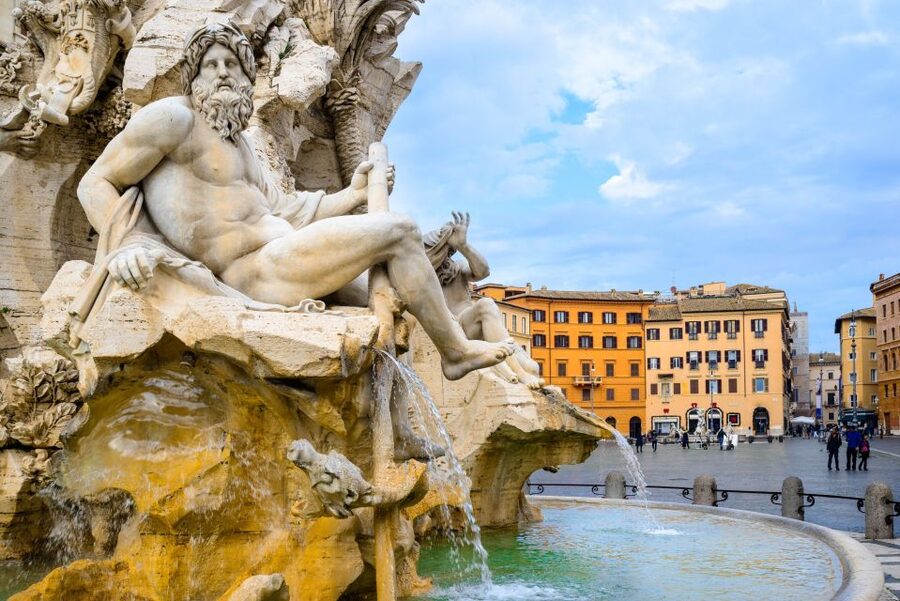
The route then turns toward the Jewish Ghetto, an area dating from the sixteenth century. This is one of the tour’s most useful changes of mood.
The Jewish Ghetto is not simply another grand Roman backdrop. Its story brings questions of law, religion, segregation, community, and survival into the day. It gives you a different way to understand Rome, beyond emperors, popes, fountains, and famous architects.
The stop may appeal most to people who want social history alongside architecture. One person felt that this part received a little more explanation than expected, but still praised the smaller historical details shared along the way. That is a fair point: the emphasis here can feel more specialized than the quick introductions at some of the major squares.
Still, I would keep it on the route. A city tour should show more than its postcard views, and the Jewish Ghetto adds an important human layer. Listen closely, ask questions, and expect the guide to spend time on the area’s particular story.
More City Highlights Walking Tours in Rome
- Rome: City Highlights Walking Tour
★ 4.6 · 368 reviews - Rome Highlights & Hidden Gems Guided Walking Tour
★ 4.8 · 280 reviews - Highlights of Jewish Ghetto And Trastevere Walking Tour
★ 4.8 · 233 reviews - Rome: Piazza del Popolo and City Sights Free Walking Tour
★ 4.8 · 83 reviews
Campo de’ Fiori and Rome’s street life
Campo de’ Fiori brings the tour into a more open public square. It is known for its street market, where stalls sell food, produce, and souvenirs.
The market gives you a chance to see Rome as a living city rather than an outdoor museum. It is also a useful place to note possible purchases for later, though this is not a shopping tour and there is no long buying break built into the schedule.
Campo de’ Fiori also has a serious side. The square’s history includes public ceremonies and darker episodes, so it is worth paying attention when the guide explains what happened here rather than focusing only on the market stalls.
Because the tour covers several major locations in a short time, the exact market atmosphere can vary by day and timing. The important point is that the square provides a welcome change from ruins and monumental architecture. You get a look at everyday Rome amid the sightseeing.
Piazza Navona and the Baroque show
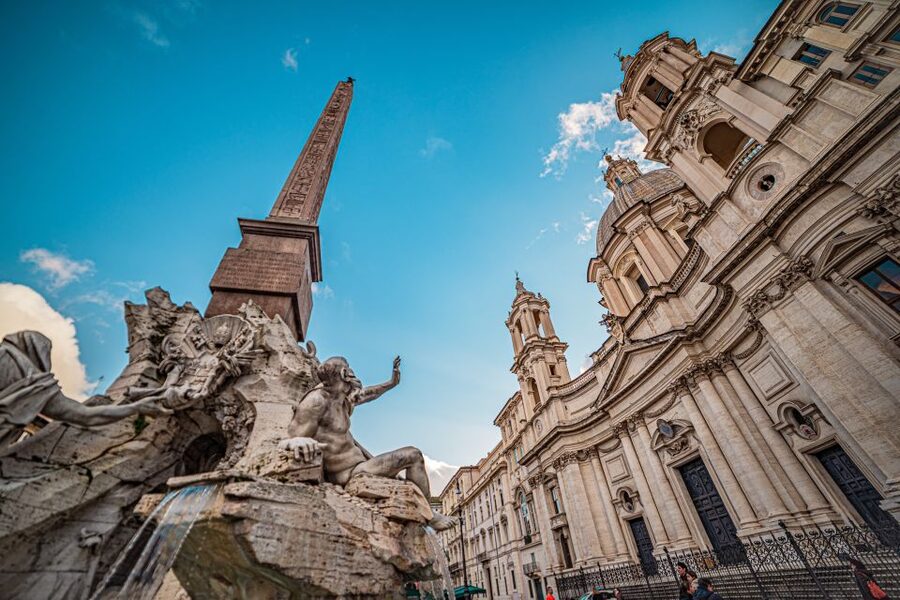
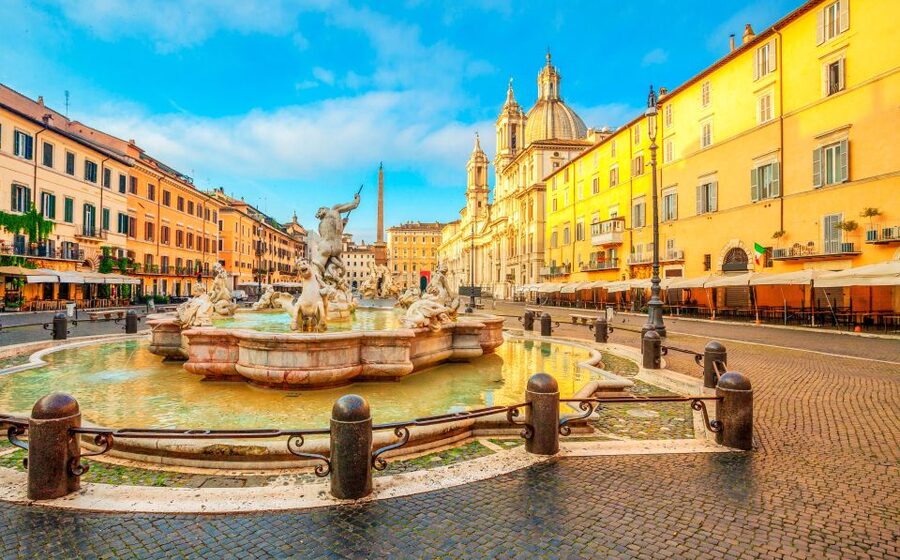
Piazza Navona is likely to be one of the visual highlights. The long, open square follows the shape of an ancient Roman stadium, but its present character comes from the Baroque period.
Here you will see fountains and sculptures designed to impress. The Fountain of the Four Rivers is the star, and its story was singled out as a favorite detail by one person on the tour. The fountain rewards a close look: its figures, animals, rockwork, and central obelisk are far more interesting when a guide points out the symbolism.
This is where the tour’s focus on Baroque architecture becomes clearest. The square is not just a place to snap a fountain photograph. It represents the rivalry, ambition, and theatrical taste that shaped seventeenth-century Rome.
Piazza Navona can be crowded, and the open space may feel exposed in strong sun. Keep water ready and use sunscreen. The guide may provide headphones if the group needs them, which helps when the square is noisy.
The Pantheon from the outside
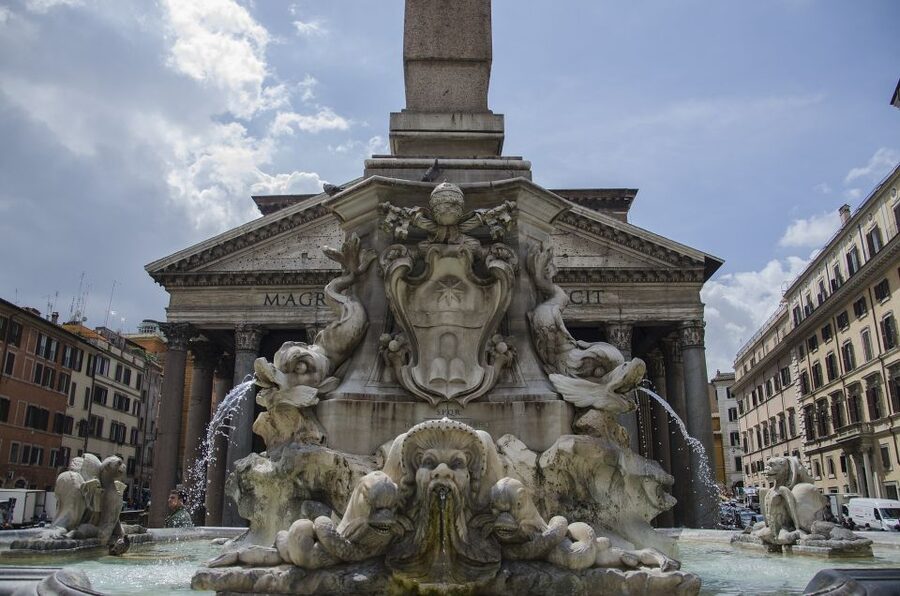
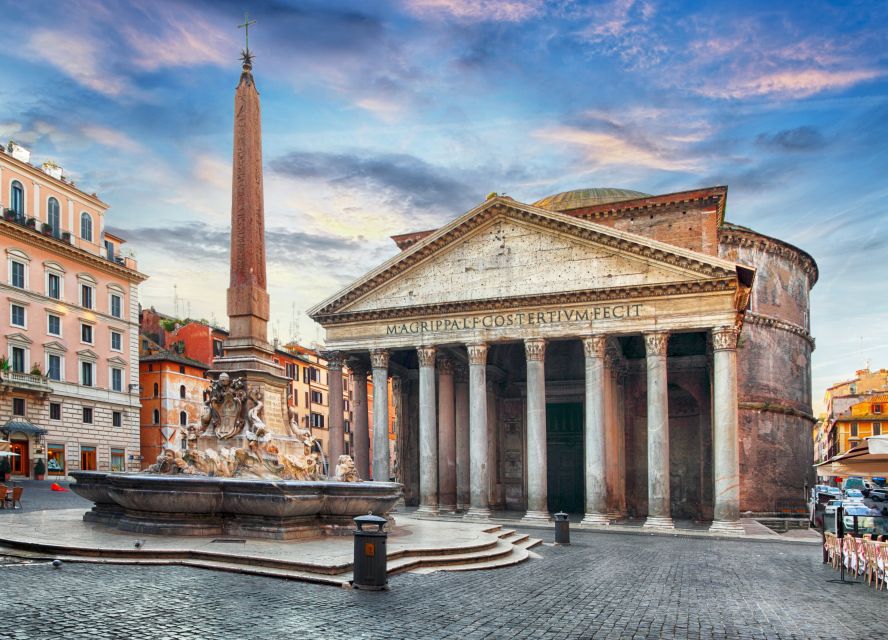
The Pantheon is one of Rome’s essential stops, even when you do not go inside. Its massive portico and ancient columns make an immediate impression, and the building remains one of the best-preserved monuments from ancient Rome.
The tour explains the Pantheon from outside, so you should not book this experience expecting an interior visit or time beneath the famous dome. That limitation is important. If the Pantheon is high on your personal list, plan a separate visit and check current entry arrangements independently.
Even from the piazza, a good guide can explain why the building has survived so well and how its original purpose changed over time. The exterior also shows how ancient structures continued to shape later Rome. You are not just seeing an old building; you are seeing how the city kept adapting around it.
This stop works well in the sequence because you have just seen the expressive Baroque design of Piazza Navona. The Pantheon offers a strong contrast: heavier, older, and more restrained.
Hadrian’s Temple and the layers of Rome
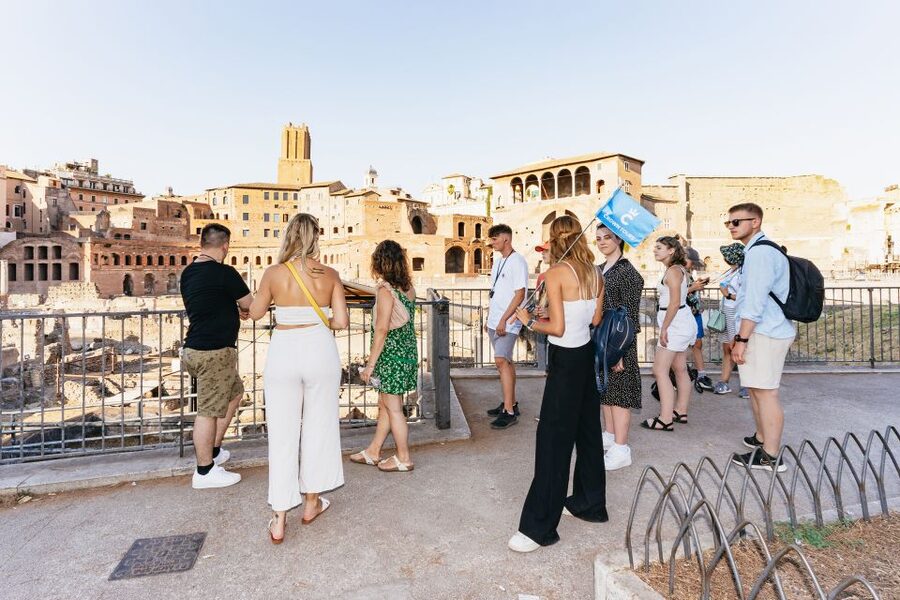
The itinerary also includes Hadrian’s Temple, one of the last great temples built in the city. Today, only part of the original structure remains visible, integrated into the modern urban setting.
That partial survival is typical of Rome. You may see ancient columns beside traffic, shops, and later buildings, with no clear boundary between the archaeological past and daily life. A guide helps you notice these connections.
This stop is less instantly famous than the Pantheon or Trevi Fountain, which is exactly why it adds value. You get another ancient monument without spending the entire tour at the standard highlights. The guide’s explanation matters more here because the remains do not always explain themselves.
Finishing at Trevi Fountain
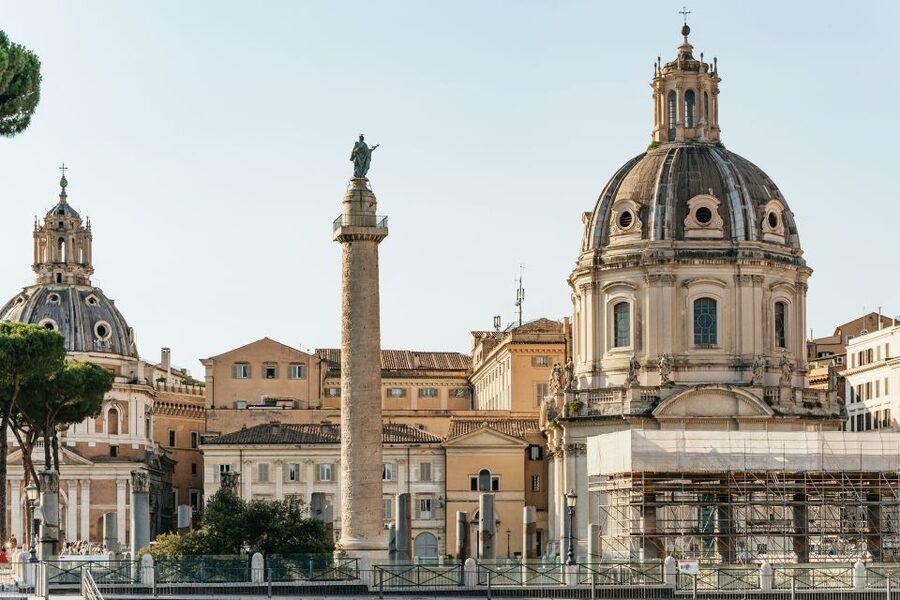
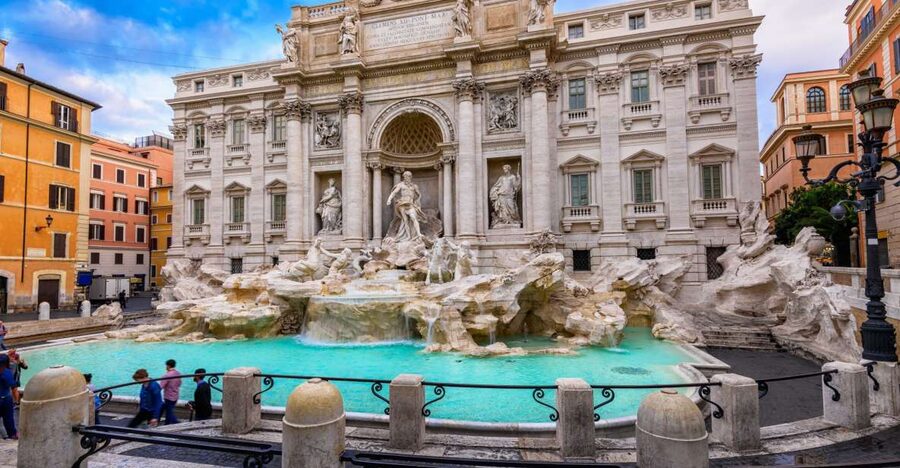
The tour ends at the Trevi Fountain, Rome’s most famous Baroque fountain. It is an effective finale: grand, theatrical, and instantly recognizable.
The fountain is best understood as a piece of urban theater. Water, sculpture, movement, and architecture combine to create a scene that feels larger than the surrounding streets. Your guide can explain the design and the traditions linked with the fountain before you take time for photographs.
Trevi is often crowded, so do not expect a quiet final stop. The value of ending here is not solitude. It is the chance to arrive with context, understand what you are looking at, and then decide if you want to return later for a longer look.
Finishing here also leaves you in a useful part of central Rome. You can continue sightseeing on your own after the tour, though no onward plans or transportation are included.
Pace, walking demands, and what to bring
The tour lasts 2.5 hours and covers a long sequence of central Rome sights. It is not described as suitable for people with mobility impairments, and the route includes sustained walking between stops.
You should wear comfortable clothes and proper walking shoes. Bring water and sunscreen, especially in warmer weather. Weather-appropriate clothing matters because the tour runs rain or shine.
The pace appears to balance sightseeing with explanation. Several people praised the amount covered and said the tour did not feel rushed, while another specifically warned that it involves a lot of walking. Both points can be true: the guide may keep a comfortable group pace, but the route still demands stamina.
Families can enjoy it, particularly if children are old enough to listen while walking. Brian successfully kept a group with children aged seven to fifteen engaged, but every family knows its own limits. There are no dedicated child activities listed, so younger children may need extra encouragement.
How the guides shape the experience
The guide is the main reason to choose this tour over a self-guided route. Brian receives the most repeated praise for his storytelling, good humor, historical detail, and willingness to answer questions. Several people describe feeling comfortable with him quickly, even when the group was very small.
That small-group feel can be a real advantage. One tour became a private experience when other participants did not arrive, while another had only three people. Group size can vary, so do not assume a private tour, but a smaller group allows more questions and easier conversation when it happens.
Fabio is praised for making people feel safe, welcomed, and valued. Monica is praised for her clear English and for making sure the group had a good time. These comments suggest a consistent strength across the guide team: friendly delivery paired with solid historical content.
The tour is in English only. Headphones are included if needed, which is useful when you are standing in crowded public spaces or near busy roads.
Cancellation, payment, and overall value
You can cancel up to 24 hours before the tour for a full refund. You can also reserve now and pay later, which helps if your Rome schedule is still shifting.
At $41 per person, the tour is good value for a first orientation to central Rome. You visit many important places without paying separate admission fees, and the guide provides the context that a map or audio app often lacks. The price is less attractive if you want building interiors, long stops at each monument, or a slow photography walk.
Think of it as a guided introduction, not a complete Rome sightseeing day. You will still need separate time for any interior visits and for attractions not included on this route.
Should you book the City Highlights Walking Tour?
I would book this tour if you are visiting Rome for the first time, want a clear introduction to the historic center, and enjoy learning through stories. It is also a good choice if you prefer a personal guide to a large audio group and want to see both famous monuments and the Jewish Ghetto.
I would skip it if walking for 2.5 hours is difficult or if you mainly want interior access. The tour explains monuments from outside, and the schedule moves through many locations rather than lingering at one.
For most able walkers, the combination of strong guides, a well-chosen route, and a reasonable $41 price makes this a useful first Rome experience. Arrive early at Colonna Traiana n. 84, bring water, and treat the tour as your city orientation. Then return to the places that caught your attention and explore them at your own speed.
FAQ
How long is the Rome City Highlights Walking Tour?
The tour lasts 2.5 hours.
How much does the tour cost?
The price is $41 per person.
What language is the tour offered in?
The live guided tour is offered in English.
Where does the tour meet?
Meet at Colonna Traiana n. 84. The guide will hold a sign or flag with the City Walkers logo.
Where does the tour finish?
The tour finishes at the Trevi Fountain.
Does the tour include entry to the Pantheon or other buildings?
No. The monuments are explained from the outside, and there is no entry into the buildings.
Is hotel pickup included?
No. Hotel pickup and drop-off are not included.
What should I bring?
Bring sunscreen, water, comfortable clothes, and clothing suitable for the weather. The tour runs rain or shine.
Just added around Rome
- Rome: Colosseum and Ancient Rome Guided Walking Tour★ 4.5 · 95 reviews
- Rome Walking Tour: Pantheon, Trevi, Navona & Hidden Gems★ 4.8 · 501 reviews
- Rome: Trevi Fountain, Spanish Steps & Pantheon Walking Tour★ 4.6 · 336 reviews
- Rome: Guided Walking Tour and Pantheon Priority Entry Ticket★ 4.3 · 317 reviews
- Rome: Trastevere Food Walking Tour with Beer and Wine★ 4.9 · 71 reviews
- Rome Trastevere Walking Food Tour★ 4.8 · 97 reviews
- Rome: Underground Trastevere Guided Walking Tour★ 4.8 · 87 reviews
- Rome: Relics from the Passion of the Christ Walking Tour★ 4.9 · 84 reviews
City Highlights Walking Tours, compared.

Historic Charleston Guided Sightseeing Walking Tour
Read our review →
Dublin Highlights and Hidden Gems Guided Walking Tour
Read our review →
Guided Walking Tour of City Center Highlights
Read our review →

City Highlights Temple and Market Walking Tour
Read our review →
Montmartre Hidden Gems and Scenic Highlights Walking Tour
Read our review →

Browse the lists this tour appears in