
Review · HISTORY WALKING TOURS
Barcelona: The Spanish Civil War Historical Walking Tour
Barcelona has a past its postcards leave out. This 2.5-hour walk through the old town explains how fascists, loyalists, anarchists, labor groups, and the Catholic Church became part of Spain’s violent struggle over its future. I like the way the tour uses real streets and surviving scars instead of relying on a museum display, and I especially like the clear visual material that guides such as Javier, Chrisa, Yannis, Filipa, and Henrieta use to make a tangled subject easier to follow.
The chief drawback is the subject itself. This is a serious tour about war, dictatorship, political violence, and national trauma, so it is not a light break between tapas stops. You will also spend much of the time standing, and the tour runs rain or shine. Still, at $46 per person, it offers strong value if you want to understand Barcelona beyond its polished historic facade.
Key points before you book
- Plaça de Catalunya meeting point: Find the Foot Locker on the sidewalk and look for a guide with a white umbrella.
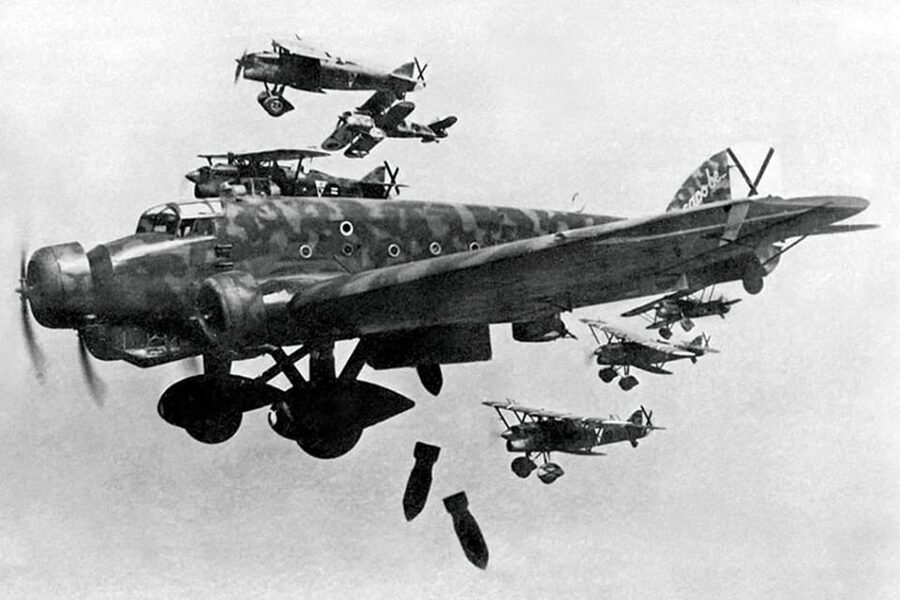
- The old town becomes the classroom: The route passes through streets and neighborhoods affected by fighting, political conflict, and fascist bombing.
- The faction map is the real service: Your guide explains the competing ideologies instead of reducing the war to a simple battle between two sides.
- George Orwell’s Barcelona appears in place: The tour visits locations connected with Homage to Catalonia.
- Expect a standing tour: You walk between stops, then listen for several minutes at each point. Comfortable shoes still matter.
- Bring a jacket or rain layer: The tour operates in all weather, and winter mornings can feel cold while you wait outside.
Why Barcelona needs this history walk
Barcelona is often presented through Gaudí, grand boulevards, markets, churches, and medieval lanes. Those sights matter, but they do not explain the political anger that shaped modern Catalonia or the damage left by the Spanish Civil War and Franco’s 36-year dictatorship.
This tour gives you another way to read the city. A building, square, or narrow street may look like an ordinary part of the Gothic Quarter, yet the guide connects it to street fighting, political organizing, censorship, religious division, or bombing. You begin to see that the old town is not just an attractive backdrop.
I appreciate that the tour starts before the war itself. The conflict did not appear out of nowhere. Your guide sets out the social and political pressures that led to the outbreak, then introduces the factions that fought over Spain’s direction.
That groundwork matters because the labels can become confusing fast. Fascists, loyalists, anarchists, socialists, labor unions, communists, regional movements, military leaders, and supporters of the Republic did not all share the same goals. The tour takes time to explain who wanted what, which groups cooperated, and why alliances could fracture.
More History Walking Tours in Barcelona
- Barcelona: Tapas Walking Tour with Food, Wine, and History
★ 4.8 · 4,261 reviews - Barcelona Tapas Walking Tour: Food, Wine & History
★ 4.5 · 1,928 reviews - Barcelona: Dark History Night Walking Tour
★ 4.8 · 344 reviews
Meeting at Plaça de Catalunya
The tour begins on the sidewalk in front of the Foot Locker at Plaça de Catalunya. Look for the white umbrella, which gives you a simple visual marker in one of Barcelona’s busiest central areas.
Arrive with enough time to find the exact spot. You are meeting outdoors, not inside a shop or visitor center, and the guide may need a moment to gather the group. In cold or wet weather, this short wait can feel longer, so dress for the forecast.
From Plaça de Catalunya, the walk heads toward the old town. The starting point is useful because it is central and easy to reach, but it also puts you immediately in the middle of modern Barcelona before the guide leads you into the historic streets.
Depending on the guide and group, wireless tour equipment is usually used. There is an additional charge of €1 per person at the start, payable by card or cash. This small cost is worth keeping in mind when you calculate the final price.
Walking through the old town’s conflict zones
The route focuses on the streets and neighborhoods where Barcelona experienced political confrontation, fighting, and fascist bombing. The value is not a parade of grand monuments. It is the connection between ordinary urban spaces and the people who lived through them.
Your guide uses photographs and other visual material to show how places looked during the war and the dictatorship. That helps bridge the gap between the Barcelona you see now and the city of barricades, shortages, fear, propaganda, and repression described during the tour.
The walking itself is manageable. You do not march continuously for two and a half hours. Instead, you move a short distance, stop, listen, ask questions, and then continue. One guide described the route as more of a stroll, but you should still wear comfortable shoes because much of the experience is spent standing.
That format works well for a complicated subject. You have time to absorb one piece of the story before the next. The pauses also let you ask about details that may not be clear, which is useful if you arrive with little background.
The route ends in the middle of the Gothic Quarter near Barcelona City Hall. This makes it easy to continue sightseeing, find lunch, or return to your hotel without arranging a separate pickup. Hotel transportation, food, and drinks are not included.
Making sense of the factions
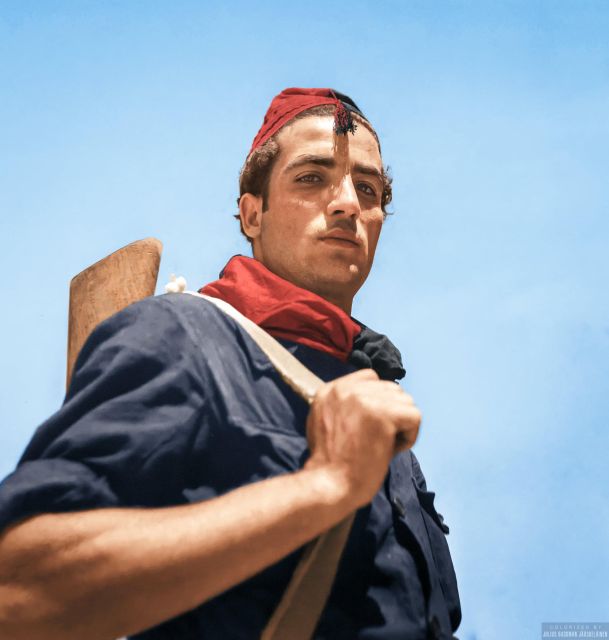
The best part of the experience is the attempt to make a confused political story readable. The Spanish Civil War is often reduced to Republicans versus Nationalists, but that shorthand leaves out much of what made the conflict so bitter.
The tour explains the role of the military uprising and the forces that backed Franco, along with the different groups supporting the Republic. You hear about fascists, anarchists, labor movements, communists, and other political currents that did not always agree with one another.
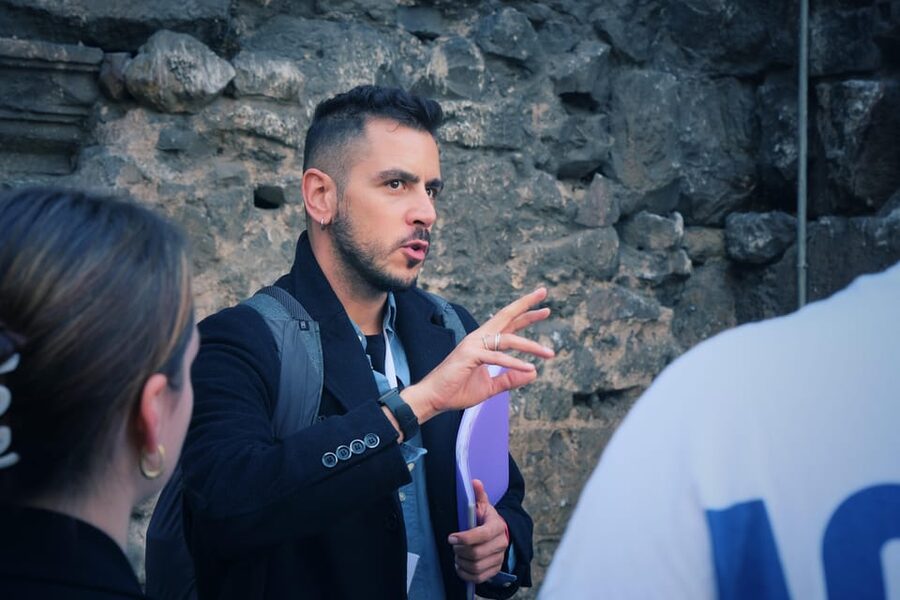
This is where the guide’s teaching style matters most. Javier has been praised for making a complex subject accessible, while Chrisa has been especially effective at explaining the motives of the different actors. Yannis is known for adding detail about industrial Barcelona, the political background, and the war’s aftermath.
The subject can become advanced at times. If you already know the basic outline of the war, you may enjoy the added detail. If you know very little, pay close attention to the early explanations and ask questions when the names and factions begin to pile up.
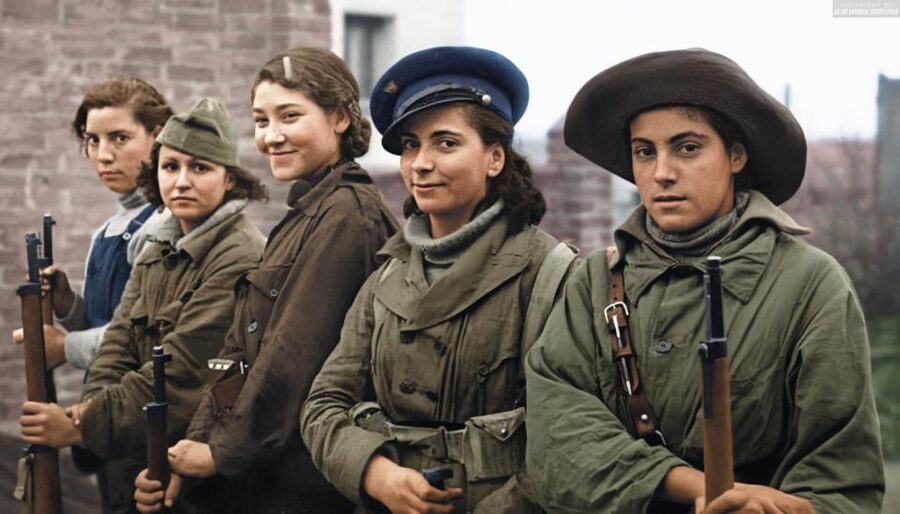
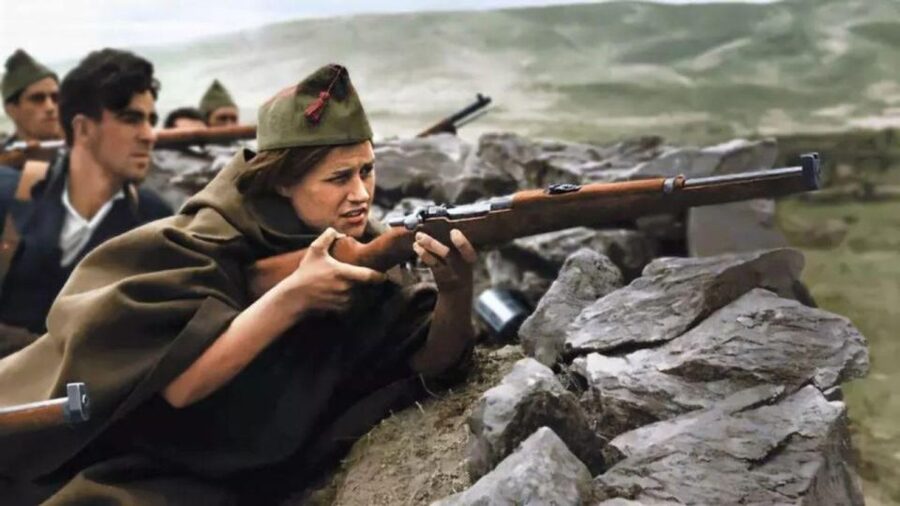
I also like that the tour does not present the conflict only through famous men. One especially worthwhile thread concerns women’s political participation and Mujeres Libres, the women’s organization linked to the anarchist movement. That brings everyday people, gender, work, and social change into a story often told through generals and political leaders.
Same streets, a different way to see them:
- Barcelona Tapas and Wine Experience Small-Group Walking Tour
★ 5.0 · 5,804 reviews - Barcelona: Food Walking Tour with Tapas and Wine
★ 4.9 · 2,180 reviews - Barcelona Helicopter, Sailboat & Old Town Private Walking Tour
★ 5.0 · 1,395 reviews - Barcelona: Old Town and Gothic Quarter Walking Tour
★ 4.8 · 1,393 reviews
Hitler, Mussolini, and the International Brigades
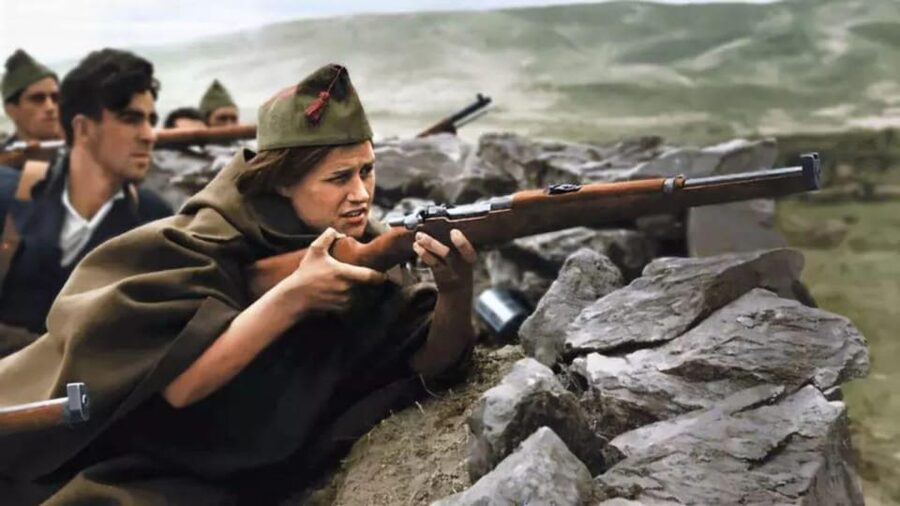
The war was not only a Spanish crisis. The guide explains the role of Hitler and Mussolini, as well as the International Brigades, helping you see why the conflict became important far beyond Spain.
This section gives the tour wider value. You are not simply learning local Barcelona history. You are looking at a conflict that drew in foreign powers, volunteers, political movements, and competing ideas about the future of Europe.
The tour also addresses how the Western Allies responded to the war and later to Franco’s dictatorship. That question helps explain why Spain’s political isolation, international connections, and postwar memory remain important topics.
The information is delivered as a connected story rather than a list of dates. Pictures support the explanations, and guides make an effort to check that the group is keeping up. That is helpful because the route covers the origins of the war, the conflict itself, and the dictatorship that followed within a limited time.
Seeing Barcelona through George Orwell’s eyes
George Orwell’s Homage to Catalonia gives many English-language readers their first picture of Barcelona during the Civil War. This tour visits places connected with the scenes Orwell describes, giving you a physical setting for his account.
That does not replace reading the book. Instead, it gives the book more weight. Streets that might otherwise seem like attractive old-town passages become places where political loyalties, street fighting, and competing visions of revolution played out.
The Orwell connection is one of the clearest reasons to choose this walk if you have read the book. You will have a better sense of the Barcelona he encountered, while the guide also places his experience inside the larger political conflict.
If you have not read Orwell, you can still follow the tour. The guide does not assume that everyone arrives as a Civil War specialist. Several guides have been praised for explaining the subject clearly to people starting with almost no background.
Franco’s dictatorship and Spain’s unfinished memory
The tour does not stop in 1939. It covers the 36-year dictatorship that followed, then asks how Spain deals with the period today.
That second half is essential. Without it, you might understand the war as a closed historical event rather than a period that affected families, public memory, politics, religion, language, and civic life for decades.
The Catholic Church also receives attention. The guide explains its role during the conflict and dictatorship, giving you another part of the story that is often left out of a basic military account.
You will also consider why there are so few official museums and memorials devoted to this history. That absence makes a street-based tour particularly useful, because the guide provides the context that formal signs and monuments often do not.
The strongest guides connect the past to current Spanish politics without turning the walk into a partisan speech. Chryssa, for example, has been praised for discussing historical memory and the need to understand the past in a modern democracy. The tone is serious, but guides also use restrained humor when it helps the group stay engaged.
The guide makes or breaks the experience
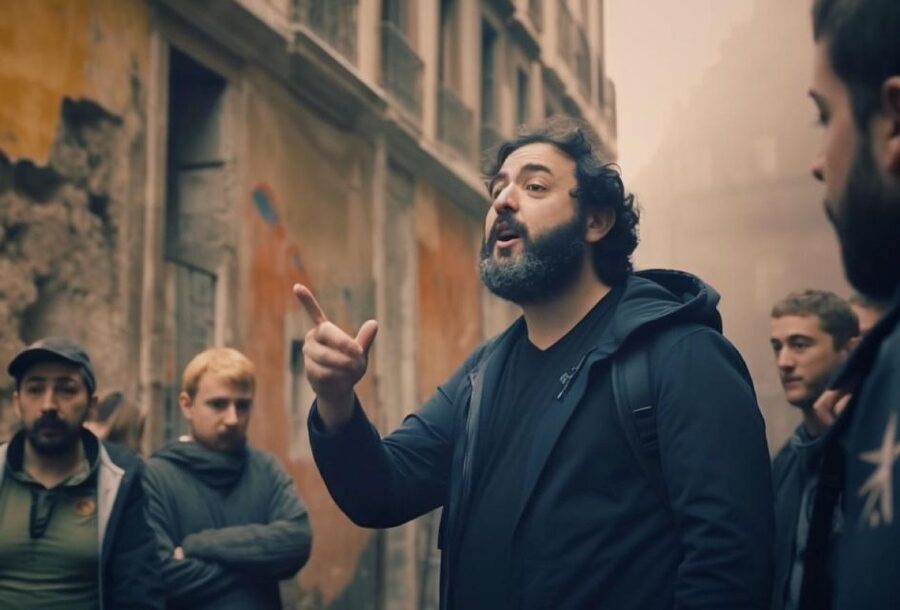
This is a guide-led history lesson, so the person holding the umbrella matters. The strongest feedback centers on clear explanations, passion, patience, and the ability to answer questions without losing the thread of the tour.
Javier is praised for his dry humor and friendly manner. Chrisa is known for organizing difficult material in a way that is easy to follow. Yannis brings strong subject knowledge and often adds restaurant suggestions after the tour. Filipa has a particular interest in Franco’s Spain, while Henrieta has been praised for her clarity, English, and willingness to stay a little longer for questions.
The guide team appears to have different personalities, but the common strength is teaching. That matters more here than theatrical performance. You need someone who can explain why the factions disagreed, not simply point at a wall and attach a dramatic date to it.
Ask questions. The format allows time for them, and several guides make a point of checking whether the group understands the story. If you have read about the war, ask about details beyond the standard outline. If you are new to the subject, ask for a quick recap when needed.
Is $46 a fair price?
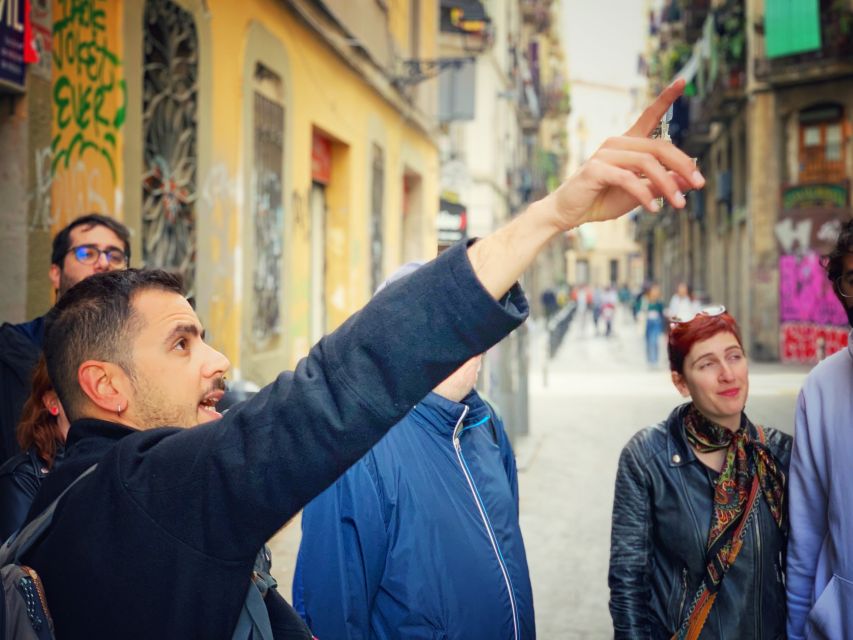
At $46 per person, this is not the cheapest way to spend two and a half hours in Barcelona. You could walk through the old town on your own for free, but you would miss the structured explanation, visual material, and links between separate sites.
I consider the price fair for visitors who value history and expert instruction. The tour fills a gap created by the limited public presentation of Civil War memory in the city. You are paying for interpretation, not admission to a major monument.
The value is strongest if you plan to spend several days in Barcelona. After the tour, streets and buildings throughout the old town may make more sense, and the city’s politics and social divisions will have more context.
A private group is available if you want a more personal format. The standard experience is also wheelchair accessible, though the outdoor route and standing time are still worth considering when deciding what will be most comfortable for you.
Who should take this tour?
I would choose this walk if you enjoy political history, modern European history, George Orwell, labor movements, or the study of dictatorship and memory. It is also a good choice if you have already seen Barcelona’s major architectural sights and want a more serious look at the city.
You do not need prior knowledge. The guides can start with the background, but one person who took the tour felt that reading a little about the war beforehand would help because parts of the talk can become advanced.
Teenagers are allowed to join, but the tour is not designed with children in mind. The topics include war, political violence, fascism, dictatorship, and repression. Use your judgment based on the age and interest of your group.
This is not the right pick if you want food, architecture, shopping, or a relaxed sightseeing loop. It is also not ideal if you dislike standing outdoors or prefer a private museum setting with benches and exhibits.
Weather, pace, and practical comfort
The tour runs rain or shine. Bring a rain jacket in unsettled weather and extra layers in winter. A January group found the wait and outdoor route very cold, while another group completed the walk in heavy rain, so the weather policy is not just fine print.
Wear shoes suited to old-town pavement. The walking distance is moderate, but you will be on your feet for most of the two and a half hours. There are no included food or drink stops, so eat beforehand and carry water if you need it.
English is the tour language. An optional English audio guide may be available, and wireless equipment is typically used depending on the guide. The extra €1 charge is collected at the start, by card or cash.
Cancellation is free up to 24 hours before the tour, and you can reserve now and pay later. Those terms are useful if your Barcelona schedule is still shifting, especially in a city where weather and timed attractions can complicate a day.
Should you book the Spanish Civil War walking tour?
Book it if you want Barcelona to become more than a collection of beautiful streets. The route gives you a clear explanation of the Civil War, the foreign powers involved, the competing factions, Franco’s dictatorship, and Spain’s continuing argument with its own memory.
The main caution is simple: this is serious material, and the tour asks you to stand, listen, and think. If that sounds worthwhile, the $46 price is justified, especially because the city offers so few official places where this story is explained.
I would place it early in a longer Barcelona visit. You will still enjoy Gaudí and the Gothic Quarter, but you will see them with more context after this walk. For history-minded visitors, it may become the tour that changes how the rest of the city looks.
FAQ
Where does the Spanish Civil War walking tour meet?
It meets on the sidewalk in front of the Foot Locker at Plaça de Catalunya. Your guide will be holding a white umbrella.
How long does the tour last?
The walking tour lasts about 2.5 hours and finishes in the Gothic Quarter near Barcelona City Hall.
What language is the tour offered in?
The live tour guide speaks English. An optional English audio guide may also be available.
Is the tour suitable for children?
Children are allowed to join, but the tour is not advised for young children because it discusses politics, war, dictatorship, and related serious subjects.
Does the tour operate in bad weather?
Yes. The tour takes place rain or shine, so bring suitable clothing and shoes.
Is the tour wheelchair accessible?
Yes, the activity is listed as wheelchair accessible. You should still consider the outdoor route and the amount of time spent standing.
Just added around Barcelona
- Barcelona Private Food Tour: Tapas, Paella & 8+ Food Tastings★ 5.0 · 164 reviews
- Barcelona Gothic Quarter Walking Tour with Tapas★ 5.0 · 248 reviews
- Picasso Museum and Walking Tour Plus Optional Wine & Food Tasting★ 5.0 · 596 reviews
- Private Barcelona Old Town and Gothic Quarter Walking Tour★ 5.0 · 134 reviews
- Barcelona Architecture Walking Tour With Casa Batlló Upgrade★ 5.0 · 137 reviews
- Montjuïc Walking Tour With Optional Flamenco Show★ 5.0 · 196 reviews
- Semi-Private Montserrat Monastery, Funicular & Scenic Nature Walk★ 5.0 · 172 reviews
- Barcelona: La Boqueria Food, Wine & History Walking Tour★ 5.0 · 126 reviews
History Walking Tours, compared.
History and Hauntings of Salem Guided Walking Tour
Read our review →
Freedom Trail History Small Group Walking Tour
Read our review →
Historic Charleston Guided Sightseeing Walking Tour
Read our review →
Tapas Walking Tour with Food, Wine, and History
Read our review →
Savannah History and Haunts Candlelit Ghost Walking Tour
Read our review →
A History of Terror – Belfast City Centre Walking Tour
Read our review →Browse the lists this tour appears in