Review · NIGHT WALKING TOURS
Rome: Guided City Center Evening Sightseeing Walking Tour
Rome reveals itself after sunset. This three-hour walking tour links the city center’s grandest squares, fountains, and monuments, starting at Piazza del Popolo and ending at Campo de’ Fiori. I like the sunset stop at Pincio Terrace, and I like how the route gives you a useful first look at Rome before you decide where to return. The main drawback is the pace: you walk almost continuously, with an uphill start and no scheduled break.
The evening timing is another strong point. You get cooler air, softer light, and a better chance to enjoy Rome without the full daytime crush. The tour costs $46 per person, which is fair if you want history and orientation in one outing, but less appealing if you prefer to linger quietly at each monument.
Key points to know before you book
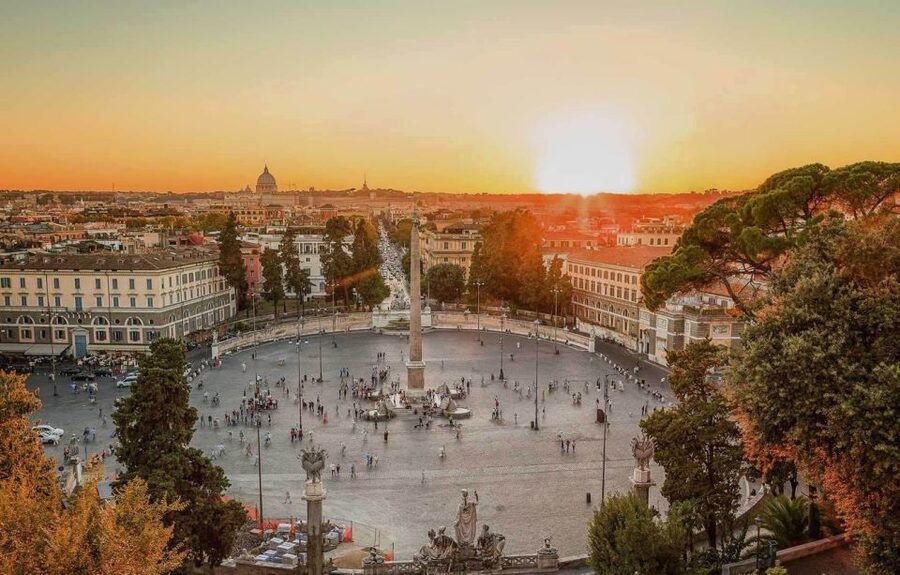
- Sunset at Pincio Terrace: The tour begins with a climb above Piazza del Popolo for wide views over Rome’s rooftops.
- Classic Rome in one route: You see the Spanish Steps, Trevi Fountain, Pantheon, Piazza Navona, and Campo de’ Fiori.
- A true walking tour: Expect three hours on your feet, including steps, slopes, and busy city streets.
- Strong guide element: Guides such as Andrada, Carolina, Marzia, and Ava have been praised for clear explanations, humor, and useful local suggestions.
- Good first-night choice: The route helps you get your bearings and decide which places deserve a longer visit.
- Simple booking terms: English guiding, headsets when needed, free cancellation up to 24 hours before departure, and free admission for children aged five and under.
Starting at Piazza del Popolo and climbing to Pincio
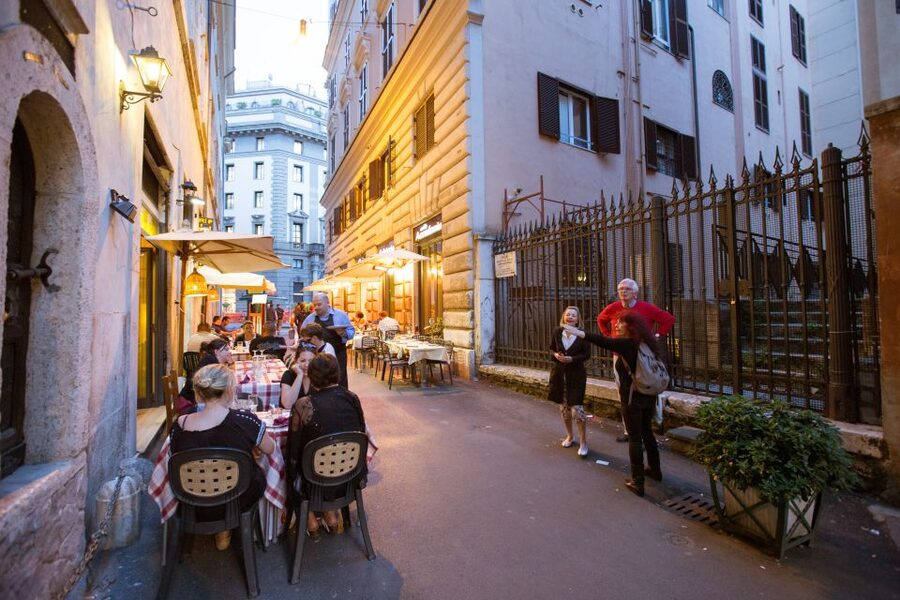
Meet your guide in front of Santa Maria del Popolo Church at Piazza del Popolo. Look for the guide holding a Rome Your Way sign. The meeting point is next to the Leonardo da Vinci Museum, but one visitor found it confusing, so give yourself a few extra minutes to locate the church and the sign.
Piazza del Popolo is a fitting starting place. Churches, fountains, and monuments frame the broad square, giving you an immediate lesson in how Rome layers different periods of art and power into one setting. You do not simply begin walking down a street. You begin in a grand urban room.
The first section includes an uphill walk to Pincio Terrace. This is the one part of the route that may feel demanding at the start, especially after a long day of sightseeing. If stairs or slopes are difficult for you, note that the tour is not suitable for wheelchair users.
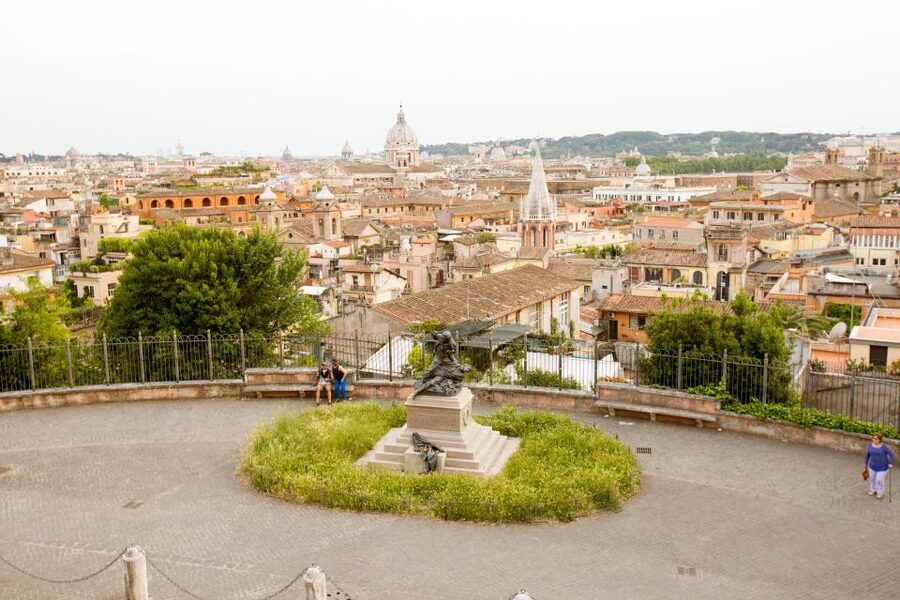
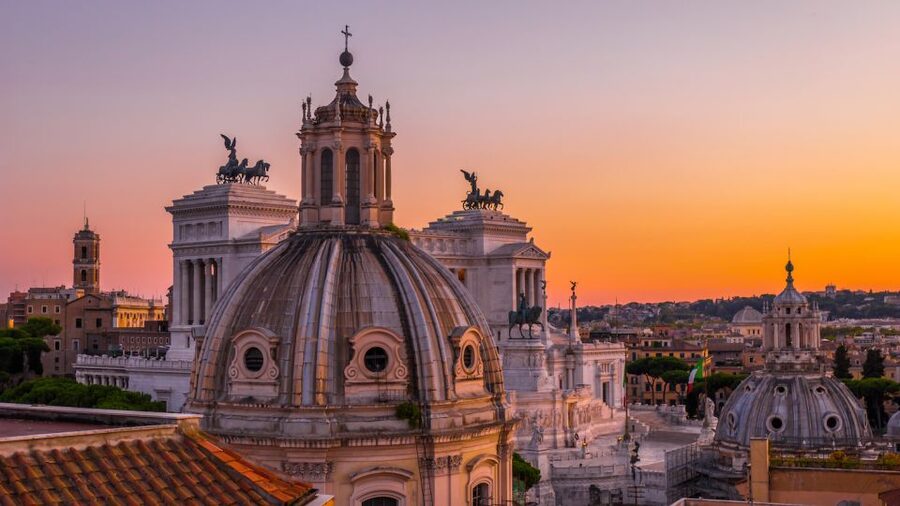
The effort pays off with the view. From Pincio Terrace, you can watch the sun lower over Rome’s rooftops and see the city spread below. The light matters here. Rome’s stone facades take on warmer tones, and the view gives you a useful sense of the city’s scale before the route moves into its tighter streets.
The exact amount of daylight depends on the season and starting time. The tour description says to check availability for current departure times, so do not assume every departure will include the same sunset conditions. Still, this opening viewpoint is one of the experience’s best features.
More City Highlights Walking Tours in Italy
- Rome: Small-Group City Highlights Moonlight Walking Tour
★ 4.9 · 949 reviews - Rome: Guided Small Group Walking Tour of City Highlights
★ 5.0 · 682 reviews - Rome: City Highlights Walking Tour
★ 4.6 · 368 reviews
Spanish Steps and Bernini’s Barcaccia Fountain
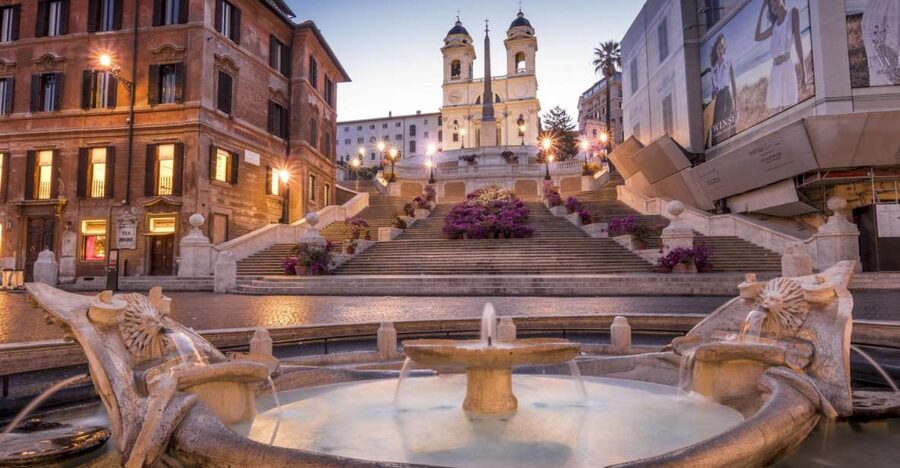
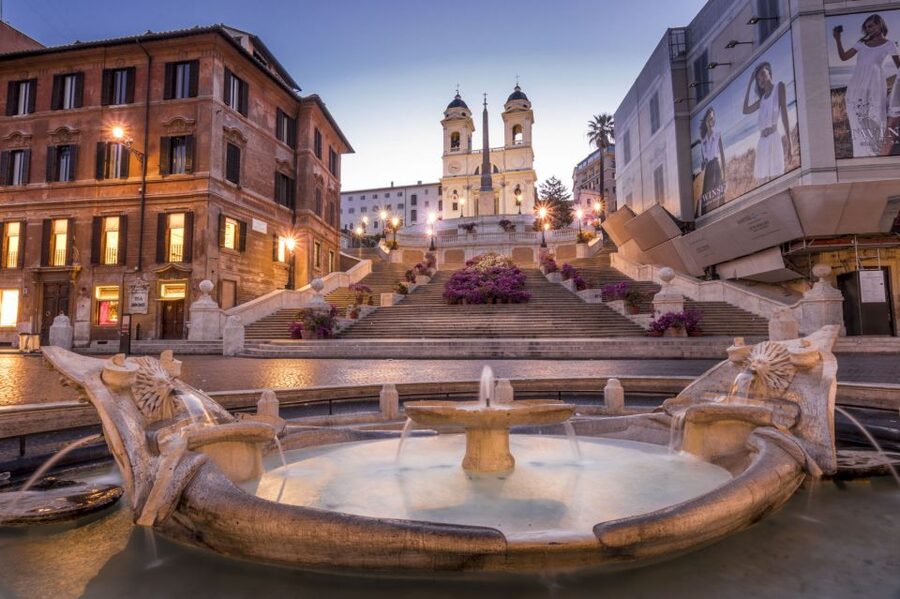
From the Pincio area, the walk continues toward Piazza di Spagna, home to the Spanish Steps. The steps attract plenty of attention, but the fountain below deserves equal time. Bernini’s Barcaccia Fountain has the shape of a low, half-sunken boat, a playful contrast to the steep staircase rising behind it.
A guide adds value here because the square can otherwise feel like a quick photo stop. You will hear how the fountain and steps relate to the surrounding architecture, then have a chance to look closely at the details before moving on.
This is also a good example of the tour’s overall approach. You are not entering a museum or spending a long period inside one monument. Instead, you are connecting famous outdoor places and learning how they fit into Rome’s story.
The trade-off is time. A three-hour route covering this many landmarks cannot give you a slow, detailed study of every sculpture. If you want to sit on the steps, examine the fountain from several angles, or shop along the nearby streets, plan to return later.
Trevi Fountain after dark
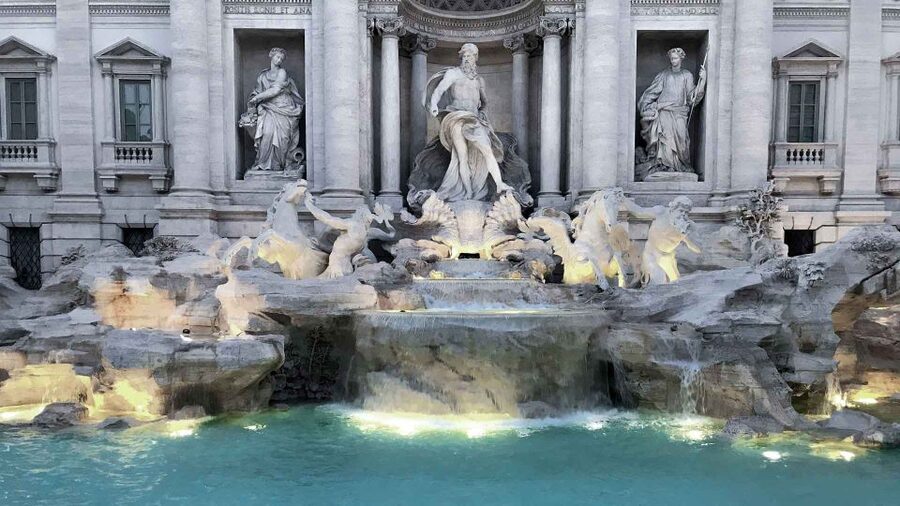
The Trevi Fountain is usually the emotional high point of a first Rome walk. It is the city’s largest Baroque fountain, with water, stone, figures, and theatrical movement packed into a relatively small urban space.
Your guide explains the familiar coin tradition: toss a coin over your left shoulder, and legend says you will return to Rome. It is a small ritual, but it gives the stop a bit of fun after the more formal art and history.
The fountain is especially effective in the evening. Artificial lighting brings out the pale stone and flowing water, while the darker streets around it make the fountain feel even more dramatic. The timing may also be more comfortable than visiting in the hot middle of the day, though you should not expect an empty square.
Stay alert around the group here. A guide has to keep everyone together in one of Rome’s most visited public spaces, and the crowd can make it easy to lose sight of the person carrying the tour sign. Headsets may be used when needed, which helps you hear the explanation when the surroundings are noisy.
The Pantheon from Piazza della Rotonda
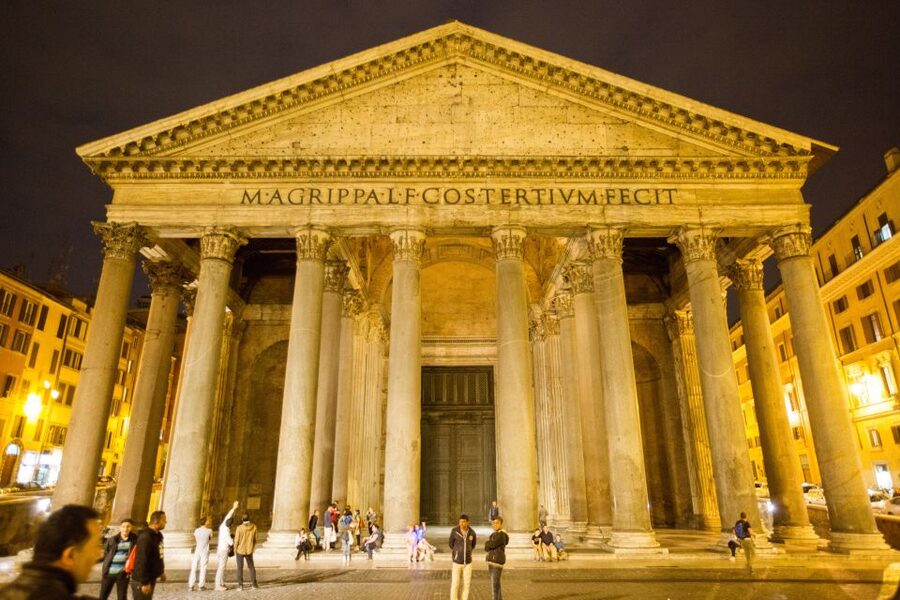
Next comes Piazza della Rotonda and the exterior of the Pantheon. The building dates to 27 B.C., when it was dedicated to all the Roman gods. In the seventh century, it became a church dedicated to Mary and the martyrs.
The Pantheon also contains the tomb of Raffaello, one of the major artists of the Renaissance. That combination of ancient Roman engineering, Christian use, and Renaissance memory makes this more than another impressive facade.
The tour views the exterior rather than promising an interior visit. That distinction matters. If seeing the inside is important to you, treat this stop as an introduction and return separately when you have time. The walking tour is designed to show you Rome’s central sights from the streets, not to replace dedicated entry visits.
I like this part of the route because it connects Rome’s long timeline in one stop. You move from ancient religion to a Christian church and then to Renaissance art, all while standing in the same square.
More City Highlights Walking Tours in Rome
- Rome Highlights & Hidden Gems Guided Walking Tour
★ 4.8 · 280 reviews - Highlights of Jewish Ghetto And Trastevere Walking Tour
★ 4.8 · 233 reviews - Rome: City Highlights Walking Tour
★ 4.8 · 124 reviews - Rome: Piazza del Popolo and City Sights Free Walking Tour
★ 4.8 · 83 reviews
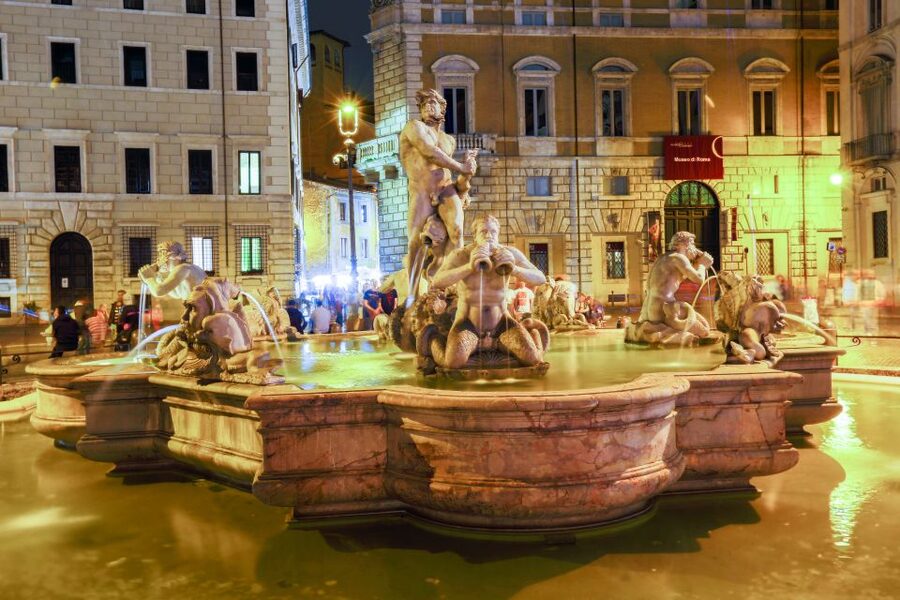
Piazza Navona and Bernini’s Four Rivers Fountain
Piazza Navona gives the tour one of its most elegant settings. The long square follows the shape of an ancient Roman stadium, and its center is marked by Bernini’s Four Rivers Fountain.
The fountain represents four great rivers, and your guide can help you read the figures and symbols rather than seeing them as a mass of marble at the center of the square. This is where a strong guide makes a clear difference. Andrada was praised for explaining complex Roman history, religion, and art in an easy way, while Carolina and Marzia were noted for bringing energy and personal interest to the stories.
Piazza Navona also gives you several architectural details to compare:
- The Church of Sant’Agnese in Agone by Borromini
- Palazzo Pamphili
- The Neptune Fountain at the northern end
- The Moor Fountain at the southern end
The square rewards a short pause, but do not expect a long café stop during the official route. The walk keeps moving, and several people have described it as fast-paced, even while praising the guide’s rhythm. Wear shoes that can handle cobblestones and keep water with you, since the tour runs for three hours without a planned meal break.
Ending at Campo de’ Fiori
The route finishes at Campo de’ Fiori, a useful place to end because you can continue your evening from there. During the morning, the square hosts a market. After dark, it becomes a popular meeting point for nightlife.
Its past is less cheerful. Campo de’ Fiori was once used for races and executions, and the statue of Giordano Bruno in the center recalls that darker chapter. This gives the final stop some weight after the fountains and romantic views.
I also like the practical value of ending here. You are not dropped at an isolated meeting point or sent back to a hotel. You finish in an active part of central Rome, with the chance to choose your own meal or evening walk. Guides have sometimes offered restaurant suggestions along the way, though you should treat any recommendation as a starting point rather than a guarantee.
What the $46 price really buys you
At $46, you are paying mainly for the guide, the route, and the context. There are no advertised admissions to major interiors, hotel transfers, or meals. If you only want to see the fountains and squares, you can walk much of this route independently for free.
The value comes from what you would miss without explanation. A fountain becomes a piece of Baroque competition. A church facade gains a place in Rome’s religious story. The Pantheon connects ancient Rome with later Christian and Renaissance use. That added meaning is why the tour makes sense for a first visit.
The route also saves planning time. You do not need to map the order of the sights or work out how to connect Piazza del Popolo with Campo de’ Fiori. For visitors with only a few days, that efficiency can justify the cost.
I would be less enthusiastic about the price if you have already explored central Rome carefully or prefer independent wandering. You may find the fixed pace restrictive, especially at the Trevi Fountain and Piazza Navona, where you could easily spend much longer.
The guides are a major part of the experience
The strongest praise goes to the guides. Andrada has been singled out repeatedly for her command of history, architecture, and religion, as well as her ability to explain complicated subjects clearly. Carolina has been praised for her warmth and enthusiasm, while Marzia brought archaeological knowledge and restaurant tips to one group.
Ava, Ghil, Juliano, Elida, Rosa, and others have also received praise for making the walk entertaining and approachable. Their names show that the experience can vary with the individual guide, but the pattern is clear: the guide is not just pointing at buildings and reading dates.
You should still keep expectations realistic. The guide assigned to your departure may be different, and no tour can guarantee a particular person. What you can reasonably expect is an English-speaking live guide, with headsets used when needed.
Pace, comfort, and who should take it
This is an active tour. You walk for the full three hours, with an uphill section at the beginning and plenty of standing at the monuments. One detailed account described the pace as fast and noted there was no break, so plan your clothing, footwear, and energy accordingly.
The evening schedule is best for you if daytime heat makes sightseeing tiring. Several people chose it specifically because the air felt cooler and the city was easier to enjoy after sunset. In summer, that can make a major difference.
I would recommend it most strongly for:
- First-time visitors who want a clear introduction to central Rome
- People arriving in Rome during the afternoon
- Anyone who prefers stories and context to independent sightseeing
- Visitors with limited time who want to see several major landmarks
- Families with children old enough to walk for three hours
Young children aged five and under go free, but free admission does not make the walk easy for them. A child who dislikes long walks, slopes, or standing may struggle even if the price is reduced.
The tour is not suitable for wheelchair users. If you have limited mobility, consider that the route includes an uphill start, steps, and uneven city streets.
Why the first evening can be the best time
The most useful advice is to take this tour near the start of your stay. It gives you a mental map of central Rome and helps you decide where to return in daylight.
You may see the Pantheon and think you want a later interior visit. You may spot a side street near Piazza Navona that deserves a meal. You may decide that the Trevi Fountain is better after dark, while the Spanish Steps deserve a quiet morning visit. The tour helps you make those choices.
Several people used it as their first Rome activity, including visitors who arrived that same day. That works well because the route is broad rather than specialized. You get a general sense of the city before spending a full morning inside a museum or archaeological site.
Should you book this Rome evening walk?
Book it if you want a well-organized introduction to Rome’s historic center, especially on your first evening. The sunset from Pincio Terrace, the evening light at the Trevi Fountain, and the sequence of major squares make the route memorable. The guides are the main reason to choose it over walking alone.
Skip it if you need frequent rests, want extended time at each monument, or have already explored these sights in detail. At $46, the tour is worthwhile for interpretation and orientation, not for admissions or exclusive access.
My practical advice is simple: wear supportive shoes, arrive early at Santa Maria del Popolo, bring water, and keep your plans after Campo de’ Fiori flexible. If you can handle three steady hours on foot, this is a smart way to meet Rome before you start exploring it on your own.
FAQ
Where does the Rome evening walking tour meet?
Meet in Piazza del Popolo, in front of Santa Maria del Popolo Church. The church is next to the Leonardo da Vinci Museum. Look for a guide holding a Rome Your Way sign.
How long does the tour last?
The guided walking tour lasts three hours.
What language is the tour conducted in?
The live tour guide speaks English.
Which major sights are included?
The route includes Piazza del Popolo, Pincio Terrace, the Spanish Steps, Bernini’s Barcaccia Fountain, the Trevi Fountain, the Pantheon exterior, Piazza Navona, and Campo de’ Fiori.
Does the tour visit the inside of the Pantheon?
The described stop is at Piazza della Rotonda, where you admire the exterior of the Pantheon. An interior visit is not listed as part of the tour.
Is the tour suitable for wheelchair users?
No. The activity is not suitable for wheelchair users.
Are children allowed to join for free?
Children aged five and under go free.
Is hotel pickup included?
No. Hotel pickup and drop-off are not included.
Can I cancel the booking for a refund?
You can cancel up to 24 hours in advance for a full refund. The reserve now and pay later option is also available.
More Night Walking Tours in Rome
- Rome: Paranormal Night Walking Tour & Secret Backstreets
★ 4.9 · 1,921 reviews - Rome: Small-Group Guided Day or Night Walking Tour
★ 4.8 · 1,009 reviews - Rome by Night Walking Tour – Legends & Criminal Stories
★ 4.5 · 1,003 reviews - Rome: Haunted City Night Walking Tour
★ 4.9 · 616 reviews
Just added around Rome
- Rome: Colosseum and Ancient Rome Guided Walking Tour★ 4.5 · 95 reviews
- Rome: Trevi Fountain, Spanish Steps & Pantheon Walking Tour★ 4.6 · 336 reviews
- Rome: Guided Walking Tour and Pantheon Priority Entry Ticket★ 4.3 · 317 reviews
- Rome Walking Tour: Pantheon, Trevi, Navona & Hidden Gems★ 4.8 · 501 reviews
- Rome: Trastevere Food Walking Tour with Beer and Wine★ 4.9 · 71 reviews
- Rome Trastevere Walking Food Tour★ 4.8 · 97 reviews
- Rome: Underground Trastevere Guided Walking Tour★ 4.8 · 87 reviews
- Rome: Trastevere and Roman Ghetto Guided Walking Tour★ 4.7 · 79 reviews
Night Walking Tours, compared.

Private Street Food Evening Walking Tour in Ho Chi Minh City
Read our review →
Albaicín and Sacromonte Guided Sunset Walking Tour
Read our review →
Bremen: Walking Tour in German with Night Guard
Read our review →
Ghosts of Charleston Night-Time Walking Tour with Unitarian Church Graveyard
Read our review →
Savannah’s Ghost City “Dead of Night” Walking Night Tour
Read our review →
Gion Magical Night Walking Tour with Geisha Trivia
Read our review →