
Review · HISTORY WALKING TOURS
Tarragona: Roman Heritage Guided Walking Tour
Rome left its fingerprints all over Tarragona. This two-hour walking tour brings the Roman walls, Circus vaults, and seaside Amphitheater into one compact visit, with an official city guide to explain how the ancient city worked. I like the clear route and the smart use of a city model and 3D audiovisual presentation. The main drawback is time: two hours can feel tight, especially when the group is large or the weather is poor.
I also like the price. At $17 per person, the tour includes a guided introduction to Tarragona and admission to the Circus, making it a useful first look before exploring more on your own. Guide Adrià has earned particular praise for explaining the city in a clear, warm way, though the tour is offered in Catalan and Spanish rather than English.
Key points at a glance
- The Roman walls are among the oldest outside Italy, giving you an immediate sense of Tarragona’s importance in the Roman world.
- Circus vaults bring chariot racing to life, with an included entrance that adds value to the modest tour price.
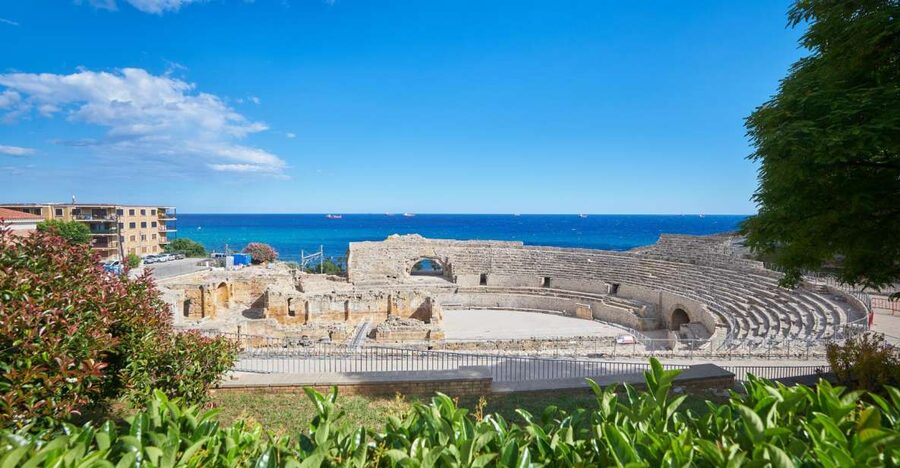
- The Amphitheater sits beside the Mediterranean, pairing Roman ruins with open sea views.
- A large city model and 3D audiovisual presentation make the ancient layout easier to understand.
- Adrià is especially praised for clear explanations, though busy departures can become noisy.
- Comfortable shoes are essential, and large bags or luggage are not allowed.
Why Tarragona’s Roman past feels unusually close
Tarragona is not a city where Roman remains sit far away behind a fence. Ancient structures are woven into the modern center, appearing beside houses, streets, and public squares. That makes this walk useful because your guide is not only pointing at ruins. You are learning how old and new Tarragona occupy the same space.
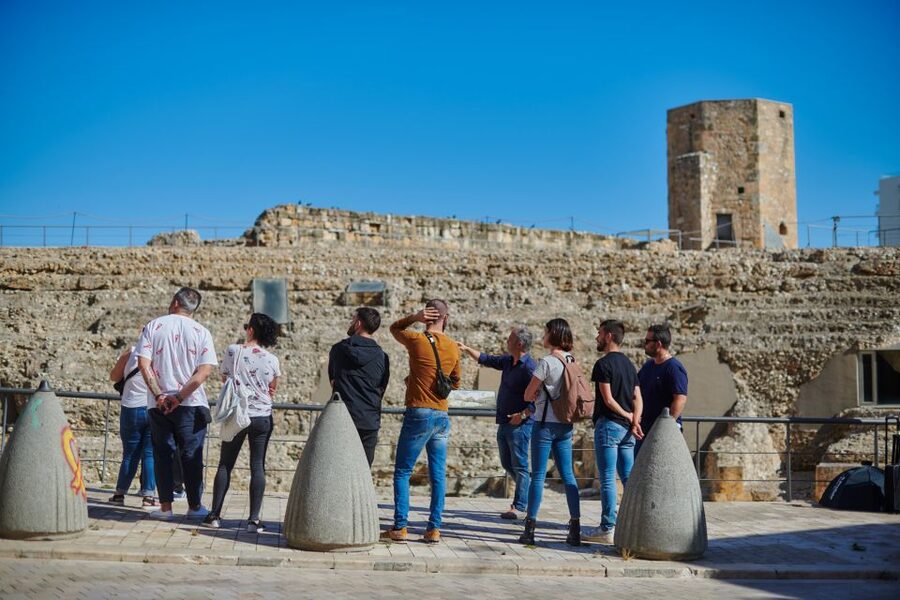
The tour begins beside the city walls, the oldest Roman walls outside Italy. This is a strong starting point because the walls show why the Romans chose Tarragona in the first place. The city rises on a hill beside the Mediterranean, a position that gave Rome a useful gateway into the Iberian Peninsula.
You will hear about Tarragona’s role as a base for Roman power across the peninsula. The exact structures make more sense once you understand this larger purpose. The walls were not simply decorative defenses. They marked a strategic settlement with access to the sea and control over the surrounding region.
I like beginning here rather than with a long general lecture. You get a physical object in front of you, then the guide adds the historical setting. It is easier to picture Roman Tarragona when you can look at stonework while hearing why this hill mattered.
More History Walking Tours in Spain:
- Barcelona: Tapas Walking Tour with Food, Wine, and History
★ 4.8 · 4,261 reviews - Barcelona Tapas Walking Tour: Food, Wine & History
★ 4.5 · 1,928 reviews - Madrid Historic Centre Food Tour with Authentic Tapas & Wines
★ 5.0 · 814 reviews
The city walls provide the tour’s best first lesson
The walls are also a good reminder that Roman Tarragona was not a small provincial outpost. Their age and scale point to a city with military and political importance. You can expect the guide to use this first stop to explain the origins of the Roman settlement and its connection to Rome.
The experience is guided in Catalan or Spanish, so you should choose it only if you are comfortable following one of those languages. That language choice is the most important practical consideration for many people. A good guide can make the ruins vivid, but the tour depends on understanding spoken explanations.
Adrià has been singled out for his ability to explain Tarragona clearly and with obvious affection for his home region. That warmth matters here. Roman remains can become a blur of dates and official names, but a guide who connects the monuments to the modern city helps you remember what you are seeing.
The meeting point is the Itinere office beside the Roman walls. Arrive 10 minutes early. That gives you time to find the office, get organized, and begin without the mild panic of joining a walking tour after the guide has already started.
The old center shows Roman Tarragona under modern streets
From the walls, the route moves into Tarragona’s historic center. This is where the tour becomes less about isolated monuments and more about the shape of the ancient city. Roman buildings are mixed into today’s streets, houses, and squares, so the guide helps you read clues that you might otherwise pass without noticing.
A large city model is used to show how Tarragona once looked. This is one of the most useful parts of the experience because ruins are often difficult to understand from ground level. You may see a fragment of wall or a section of an ancient building, but the model helps you imagine the complete Roman settlement.
The guide also explains what different buildings were used for. That distinction is valuable. You are not just hearing that a structure is Roman. You are learning whether it served public, military, entertainment, or civic purposes, and how those parts fitted together.
I like this approach because it gives you a mental map before the tour reaches the Circus and Amphitheater. Without that map, Roman Tarragona can feel like a collection of separate stones. With it, the monuments begin to form a city.
The central streets can also be the most difficult part of the walk if several groups gather at the same time. At a busy 11 a.m. departure, one group encountered around three groups of roughly 20 people, with noise making it hard to follow the guide. That may not happen on every departure, but it is a fair warning: smaller or quieter time slots should make the explanations easier to hear.
Circus vaults and the world of chariot racing
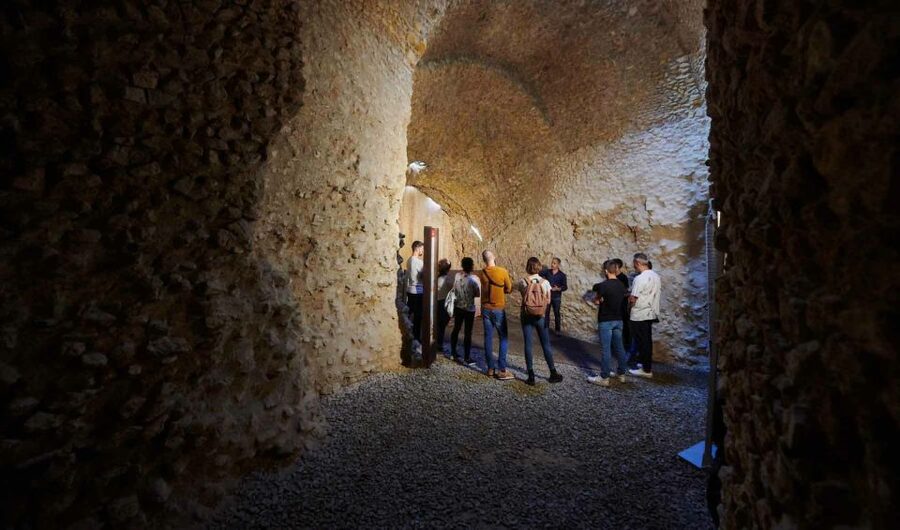
The Circus is the tour’s most vivid stop for many people. This was the setting for chariot races, one of the great public spectacles of the Roman world. The included entrance to the Circus adds real value because you are not only looking at remains from outside. You get access to the vaults, where the surviving spaces help you understand the structure of the ancient complex.
The vaults are especially helpful for imagining how the Circus functioned. A chariot race was not just a track with horses rushing around it. A large venue needed entrances, circulation areas, and support spaces, and the underground or enclosed sections reveal part of that practical machinery.
You can expect the guide to connect the physical space with the excitement of the races. The stop works best when you let yourself picture the noise, speed, and danger of the events rather than treating the vaults as quiet archaeological rooms. You will not see a restored stadium full of chariots, but the setting gives the story a firm place.
The Circus stop also shows why a guide is useful. Ancient entertainment buildings can be hard to interpret when only fragments remain. The explanation fills in the missing structure, while the vaults give you something solid to examine.
Time is the catch. The entire experience lasts two hours, and the route covers several major Roman sites. If you like to linger, study masonry, or ask many questions, the schedule may feel hurried. One person felt that three hours would have suited the content better. I agree that the tour is best viewed as an introduction, not a slow archaeological study.
More Guided Walks in Spain:
- Granada: Albaicín and Sacromonte Guided Sunset Walking Tour
★ 4.9 · 2,962 reviews - Madrid: Tapas & Wine Tasting Tour with Local Guide
★ 4.8 · 2,171 reviews - Madrid: Royal Palace Skip-the-Line Guided Tour
★ 4.5 · 2,140 reviews - Madrid: Welcome to Madrid Guided Walking Tour
★ 4.9 · 1,738 reviews
The audiovisual presentation fills in the missing pieces
Before heading to the Amphitheater, you watch an audiovisual presentation with 3D images. This is a smart change of pace after walking through remains that may be incomplete or difficult to picture.
Three-dimensional reconstruction can show how the ancient buildings may have looked when complete. That matters because Roman ruins often leave you with walls, foundations, and partial curves, while the original buildings were much larger and more dramatic.
The presentation also helps prepare you for the Amphitheater. You can compare the imagined ancient structure with what remains beside the sea. One recent German-speaking participant especially enjoyed the Tarragona video, and that reaction makes sense: visual material can reach you even when the architectural explanation feels dense.
Still, the quality of this part depends on your own expectations. It is not a substitute for seeing a fully preserved Roman venue. It is a tool for making partial remains easier to read. If you enjoy maps, models, and reconstructions, you will likely value it. If you prefer to spend every minute outdoors, it may feel like a pause in the walking route.
The seaside Amphitheater is the visual high point
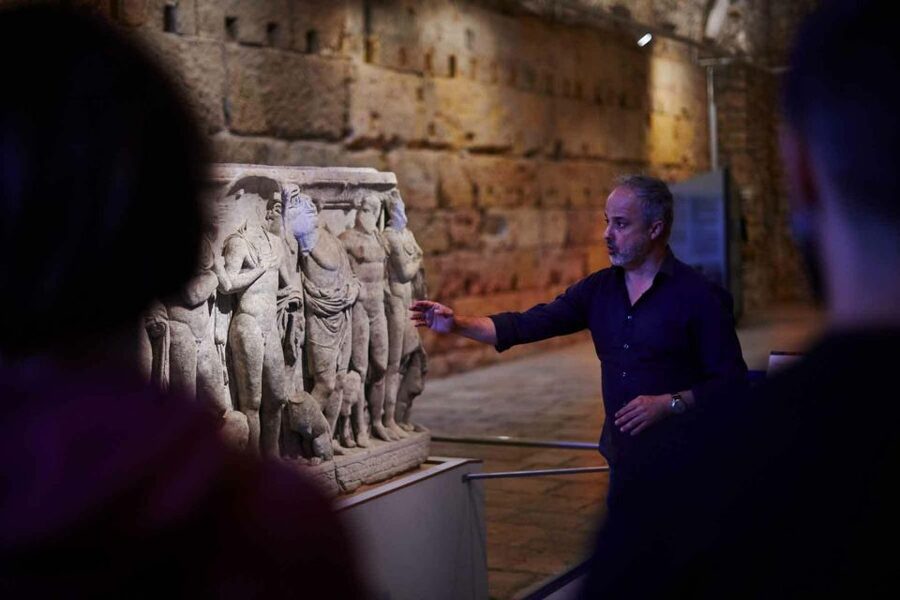
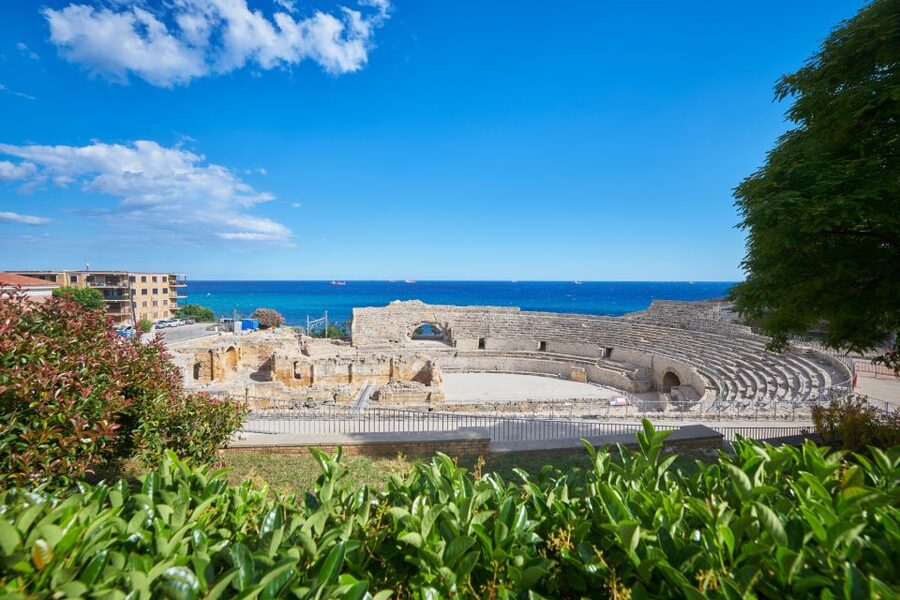
The final major stop is Tarragona’s Amphitheater, located beside the Mediterranean. This is the tour’s strongest visual moment. You get Roman stonework, the open sea, and a setting that makes the purpose of the building easier to imagine.
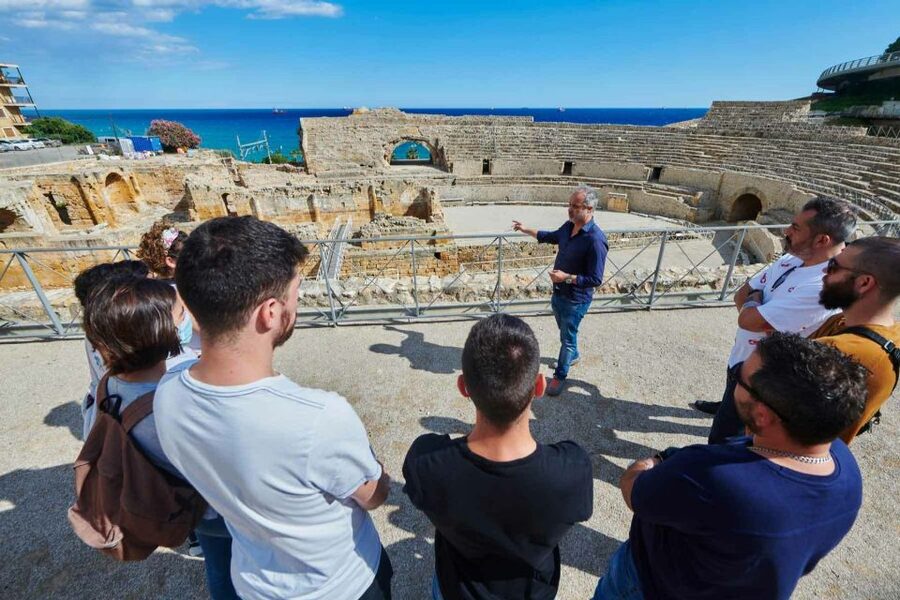
The guide explains the gladiator fights and animal hunts held here. These events were violent public spectacles, and the Amphitheater’s location makes the scale of the entertainment easier to grasp. You are standing in a venue built for large crowds, not simply looking at a quiet ruin.
The sea view also gives the stop a sense of place. Tarragona’s Roman builders were working beside a major water route, and the setting links the city’s military, commercial, and public roles. The view is not just a pleasant backdrop. It helps explain why this hill was important.
The Amphitheater has had an unusual life beyond its ancient use, and the guide reviews its history through to the present day. That wider story keeps the stop from becoming a simple lesson about gladiators. You learn how the stadium survived, changed, and remained part of Tarragona.
If you have limited time in the city, this is the sight I would be most reluctant to miss. The combination of ruins and sea makes it easy to remember. It also gives you a clear finish to the route after the more detailed explanations in the center.
What the $17 price really gives you
At $17, this is good value if you want a structured introduction to Tarragona’s Roman monuments. The price includes the guided city walk and entrance to the Circus. You are paying for context as much as admission, which is important in a city where many remains are partial or incorporated into modern streets.
The tour does not appear designed as an all-day archaeological experience. You should not expect every Roman site in Tarragona or a leisurely visit to each monument. Instead, you get a focused route through the city’s main Roman story, with three useful teaching tools: the walls, the city model, and the 3D presentation.
That makes the tour a good choice early in your visit. Afterward, you can return to the places that interested you most and spend more time on your own. The short format also works well if you have only part of a day in Tarragona.
The value drops if you cannot follow Catalan or Spanish. The physical sights are still there, but much of what you are paying for is the guide’s explanation. Check the language before booking rather than assuming an English departure is available.
Timing, shoes, and group comfort
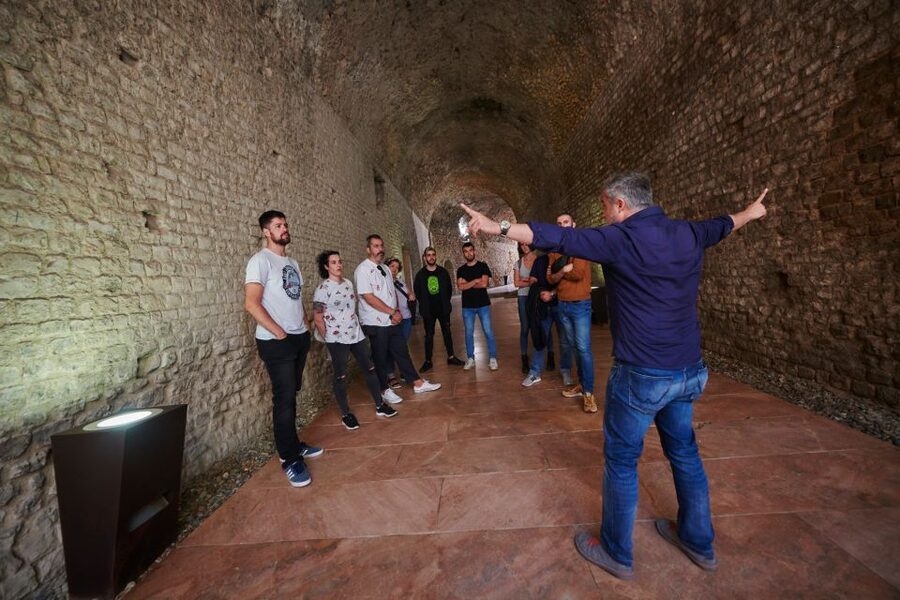
Wear comfortable shoes. This is a two-hour walk through historic streets and archaeological areas, and the practical advice is worth taking seriously. You should also leave luggage and large bags behind because they are not allowed.
The tour is listed as wheelchair accessible. Even so, the route includes historic monuments and walking between sites, so you should confirm any personal access needs with the provider before booking if you require specific arrangements.
Weather can affect the experience. One January departure took place during heavy rain and was still considered satisfactory, but poor weather can make outdoor ruins less enjoyable and make it harder to hear explanations. The Amphitheater and sea views will have more impact on a clear day.
Group size is another factor. A departure with several groups in the same area may create noise, particularly in the old center. If your schedule allows, check the available starting times and choose a departure that appears less crowded. The tour can be excellent with a clear view of the guide and a quiet enough setting to follow the story.
The provider offers free cancellation up to 24 hours before the activity, and you can reserve now and pay later. Those terms are useful if your Tarragona plans depend on weather or a changing day trip schedule.
Who should book this Tarragona walk?
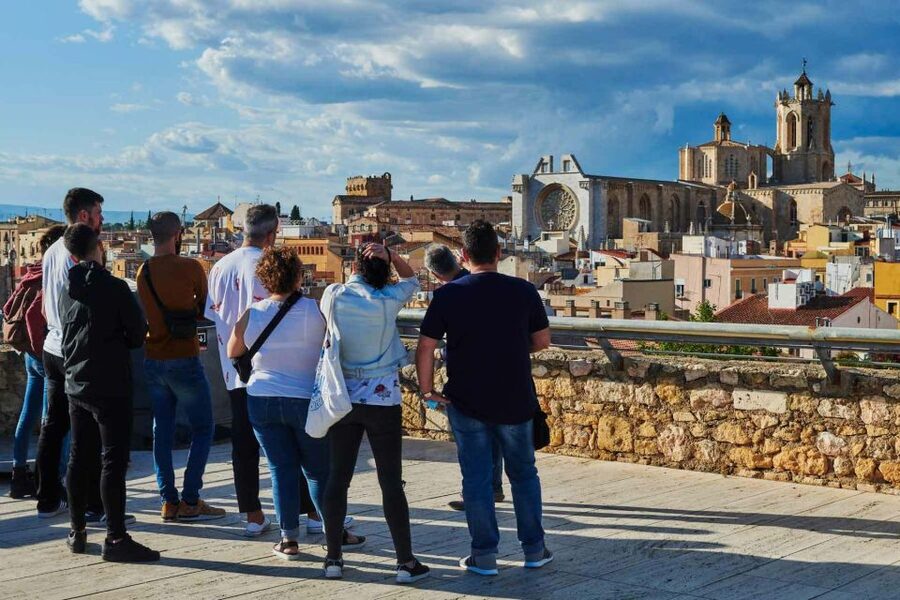
I would recommend it to you if you want the Roman essentials without spending a full day at archaeological sites. It suits first-time visitors, history fans who appreciate a guide’s explanation, and anyone who wants to understand how the monuments fit into the modern city.
It is also a good match for people who enjoy visual aids. The model and 3D presentation add structure to the walk and help you picture buildings that no longer survive intact. Families and mixed-interest groups may find that easier than a long lecture beside a ruin.
I would be more cautious if you need English commentary, dislike group tours, or want plenty of time for photography. The two-hour schedule is efficient, but it does not leave much room for lingering. Large departures may also make the central explanations harder to hear.
Should you book it?
Book this tour if you want a low-cost, guided introduction to Tarragona’s Roman core, especially the walls, Circus vaults, and seaside Amphitheater. The price is fair, the route covers the city’s strongest Roman sights, and Adrià’s clear, enthusiastic style can make the history much easier to follow.
Skip it if you need English, prefer exploring at your own pace, or already know Tarragona’s ancient sites well. For everyone else, it is a practical first step: take the walk, note which monument interests you most, then return independently if two hours leave you wanting more.
FAQ
Where does the tour meet?
The meeting point is the Itinere office next to the Roman walls in Tarragona.
How early should I arrive?
You should arrive 10 minutes before the activity begins.
How long does the tour last?
The tour lasts two hours.
What languages are available?
The live tour guide speaks Catalan and Spanish.
Is admission to the Circus included?
Yes. Entrance to the Circus is included in the tour.
Which Roman sites are visited?
The route covers the Roman walls, the historic center and its Roman monuments, the Circus vaults, and the Amphitheater.
Is the tour wheelchair accessible?
Yes, the activity is listed as wheelchair accessible.
What should I bring?
Bring comfortable shoes for the walking route.
Can I bring luggage or a large bag?
No. Luggage and large bags are not allowed on the activity.
Just added around Spain
- Barcelona Private Food Tour: Tapas, Paella & 8+ Food Tastings★ 5.0 · 164 reviews
- Barcelona Gothic Quarter Walking Tour with Tapas★ 5.0 · 248 reviews
- Picasso Museum and Walking Tour Plus Optional Wine & Food Tasting★ 5.0 · 596 reviews
- Private Barcelona Old Town and Gothic Quarter Walking Tour★ 5.0 · 134 reviews
- Barcelona Architecture Walking Tour With Casa Batlló Upgrade★ 5.0 · 137 reviews
- Montjuïc Walking Tour With Optional Flamenco Show★ 5.0 · 196 reviews
- Semi-Private Montserrat Monastery, Funicular & Scenic Nature Walk★ 5.0 · 172 reviews
- Gothic Quarter Donation-Based Walking Tour in English★ 5.0 · 72 reviews
History Walking Tours, compared.
History and Hauntings of Salem Guided Walking Tour
Read our review →

Freedom Trail History Small Group Walking Tour
Read our review →
Historic Charleston Guided Sightseeing Walking Tour
Read our review →
Tapas Walking Tour with Food, Wine, and History
Read our review →
Savannah History and Haunts Candlelit Ghost Walking Tour
Read our review →
A History of Terror – Belfast City Centre Walking Tour
Read our review →Browse the lists this tour appears in