
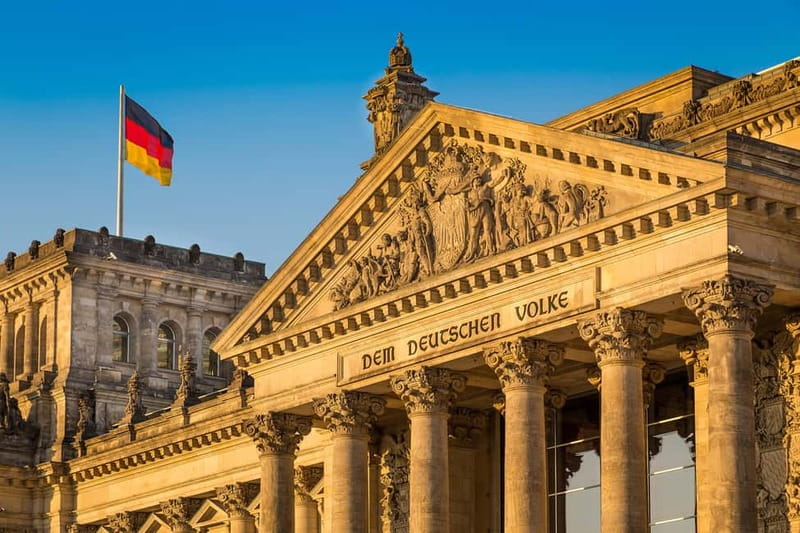
Review · HISTORY WALKING TOURS
Berlin: History of the Third Reich Guided Walking Tour
History becomes more powerful when you are standing where it happened. This two-hour walking tour connects Berlin’s Nazi-era headquarters, wartime ruins, Soviet memorials, and Hitler’s former bunker site into one clear story. I especially like the visit to the intact Luftwaffe headquarters and the way the guides explain how the Nazis gained and held power, not simply how the war ended. The main drawback is that you will need an AB transport ticket, and the walk can feel demanding in cold or wet weather.
I also like the small details that can disappear during an ordinary sightseeing day, such as the remaining section of the Berlin Wall beside the former SS and Gestapo headquarters. Guides including Dani, India, Theo, Elizabeth, and Daniel have been praised for combining serious historical detail with warmth and humor, although group sizes can vary and a larger group may be less personal.
Key Points Before You Book
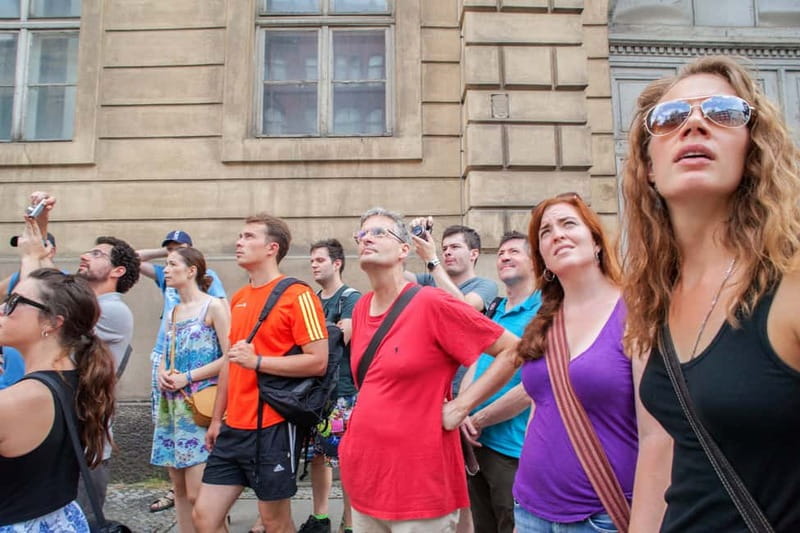
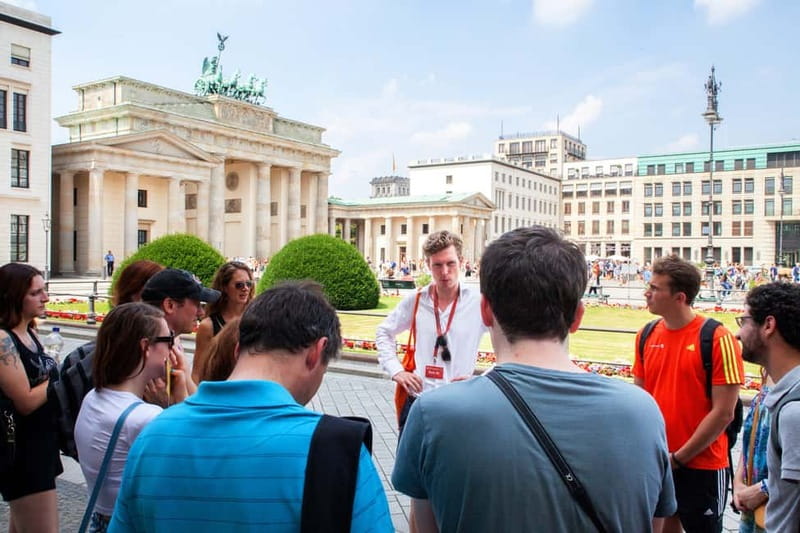
- The tour begins near Brandenburg Gate: Look for the guide in a red shirt with a red umbrella outside Starbucks.
- You see real Nazi-era buildings: The Luftwaffe headquarters still shows much of its imposing Third Reich architecture.
- The route explains power, not just war: You follow the Nazi rise from government takeover to propaganda, terror, and defeat.
- The former bunker site is now unmarked: You stand above the location where Hitler died as Soviet forces closed in.
- A transport ticket is required: Bring an AB ticket, as public transport is part of the route.
- Children up to 13 join free: A valid ID may be requested for children.
Why This Tour Helps You Read Berlin
Berlin is full of memorials and empty spaces, but the meaning is not always obvious from the pavement. A building may look like an ordinary government office, while the ground beneath it once housed an institution that helped run a dictatorship. This tour gives those places a timeline and a human context.
The route focuses on the 12 years of Nazi rule, from the party’s rise to power through war, persecution, and the final battle for Berlin. That focus matters because the tour is not simply a list of Hitler-related locations. It explains how propaganda, state control, police terror, and military power worked together.
I would choose this tour early in a Berlin visit if you want a framework for later museum visits. Once you understand where the Nazi ministries and security offices operated, the city’s memorials make more sense. You also get a useful introduction to the Battle of Berlin and the Soviet role in defeating Nazi Germany.
The subject is grim, and it should be. The strongest guides handle that weight carefully. Past guides such as Dani, India, Liz, Theo, and Martin were praised for clear storytelling, patience, and the ability to answer difficult questions without turning the tour into a lecture. Some also used gentle humor, which helped people stay focused during a long and emotionally heavy walk.
More History Walking Tours in Berlin
- Berlin Historical Highlights Walking Tour
★ 4.9 · 657 reviews - Berlin Private Complete History All Day Walking Tour
★ 5.0 · 474 reviews - Berlin: Charité Hospital Walking Tour of Medical History
★ 4.9 · 276 reviews
Meeting at Brandenburg Gate
The meeting point is in front of Starbucks near the historic Brandenburg Gate. Look for the local operator’s staff wearing red shirts and carrying red umbrellas. That detail is useful in a busy central area, especially when several groups gather near one of Berlin’s most photographed landmarks.
Arrive ready to walk rather than expecting a coach or a museum visit. The experience includes a live English-speaking guide and the walking tour itself. Food, drinks, entrance fees, and transportation tickets are not included.
You will need an AB public transport ticket. The information describes this as a requirement for the tour, so it is sensible to arrange one before meeting the group. If you are unsure which ticket applies, ask the guide at the start.
The advertised duration is two hours. A break is planned partway through, which gives you a chance to rest, buy a drink, and take in what you have heard. Wear comfortable shoes. That sounds basic, but the route combines walking, outdoor explanations, and public transport, so poor footwear can distract from the history.
The Luftwaffe Headquarters and Nazi Architecture
One of the first major stops is the former Luftwaffe headquarters, built for Hermann Göring’s air force. The building survived Allied bombing and is presented as one of the clearest surviving examples of Third Reich architecture.
This is a valuable stop because architecture here was part of the political message. The scale and severity of the building were designed to project order, strength, and state power. You are not simply looking at an old office block. You are seeing how a dictatorship used its public buildings to make authority feel permanent.
The site also offers a useful contrast with Berlin’s later history. Much of the city was destroyed or changed after the war, so an intact Nazi-era building can feel unsettling. The guide helps you read its design and place it within the machinery of the regime.
Do not expect a grand interior tour based on the details provided. The main value is the building itself and the explanation around it. If you prefer famous monuments with polished galleries, this stop may feel quieter. If you want to understand how the regime presented itself, it is one of the route’s most useful moments.
Goebbels’s Propaganda Ministry
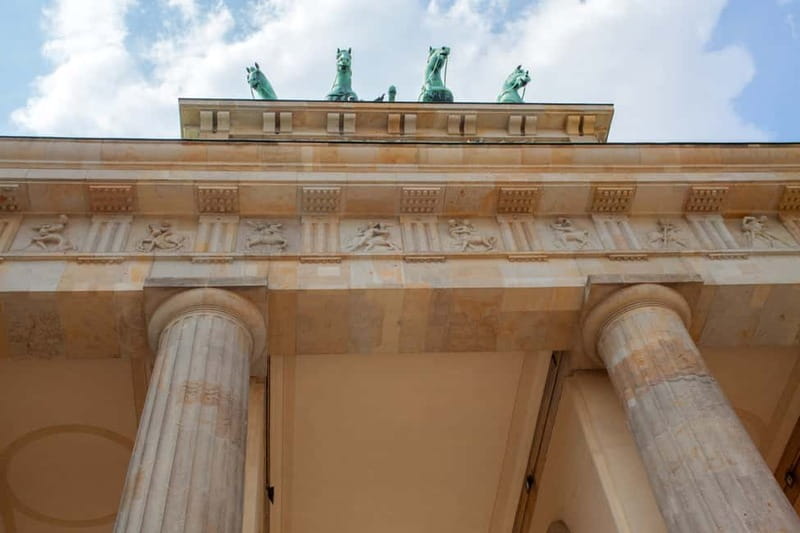
The next stop concerns Josef Goebbels’s Propaganda Ministry. Before the war, the building served as the Berlin Press Office, but it was converted into the center of the Nazi propaganda machine.
This part of the route moves beyond military history and asks how a government shaped what people read, heard, and believed. You learn how the Nazis maintained control after taking over the government, using information as a tool of obedience and political pressure.
That makes the stop especially useful for anyone who already knows the broad outline of World War II but wants to understand the process behind it. The Nazi dictatorship did not rely only on soldiers and police. It also used messaging, censorship, spectacle, and repeated claims designed to make the regime appear legitimate.
The building itself may not look dramatic to a casual passerby. That is exactly why a guide helps. You might walk past without realizing that this was once a nerve center of state propaganda. The explanation turns an easily missed address into part of the larger story.
More History Walking Tours in Germany
- Berlin Private Half-Day Walking Tour: Discover the German Capital’s History
★ 5.0 · 244 reviews - Berlin History Walking Tour with a French-Speaking Guide
★ 5.0 · 240 reviews - The History of Berlin: WWII PRIVATE Walking Tour With Locals
★ 5.0 · 209 reviews - East Berlin Food & History Tour with Eating Europe
★ 5.0 · 204 reviews
The Former SS and Gestapo Headquarters
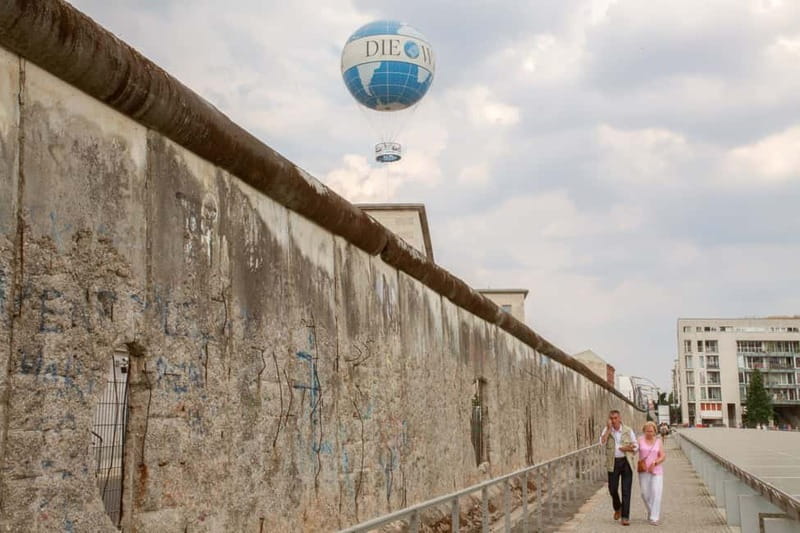
The route then reaches what was once one of the most feared addresses in Nazi Germany: the former SS and Gestapo headquarters on old Prinz-Albrecht-Straße. These organizations were central to political repression, surveillance, imprisonment, and terror.
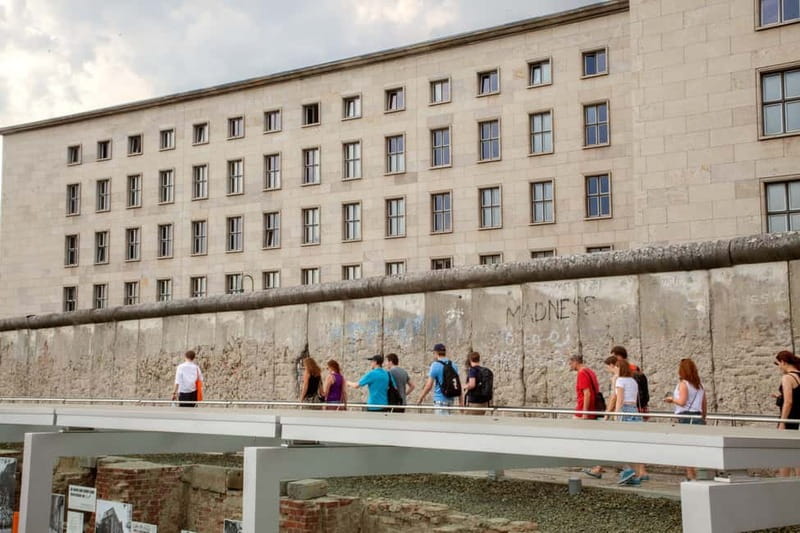
You also see one of the few remaining sections of the Berlin Wall beside the former headquarters. That pairing brings two dictatorships into close view. The Nazi period and the later division of Berlin were different historical systems, but both left physical traces in the same city.
The basement remains of the former buildings have been incorporated into an exhibition documenting the Nazi rise to power. This is one of the tour’s most serious stops because it connects the institutions of terror with the people who created and operated them.
The guide’s role matters here. Names, dates, agencies, and political changes can become hard to follow when presented without structure. The best accounts of this tour praise guides for putting events in chronological order and explaining how the Nazis moved from political opportunity to total control.
Allow yourself time to listen rather than rush through the area. The subject includes persecution and the Holocaust, so the tone is appropriately somber. You may find this part emotionally difficult, but it is also where the tour most clearly explains how ordinary government structures were turned toward criminal aims.
The Soviet Memorial and the Battle for Berlin
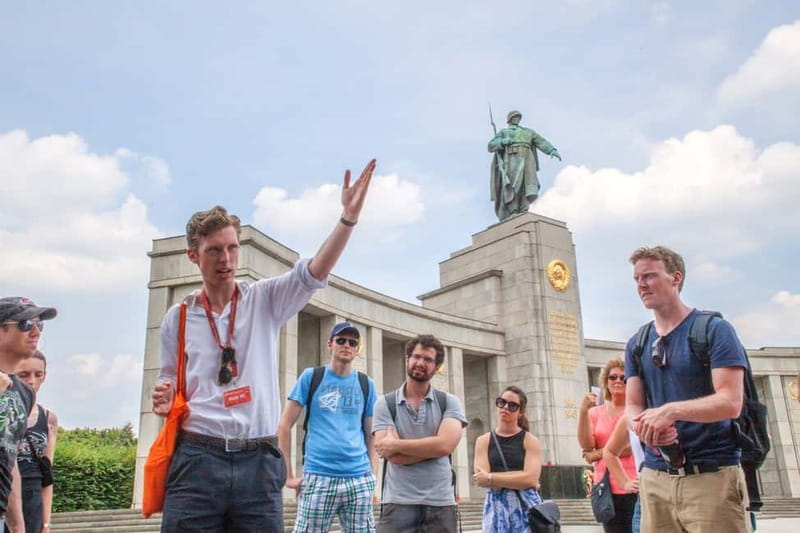
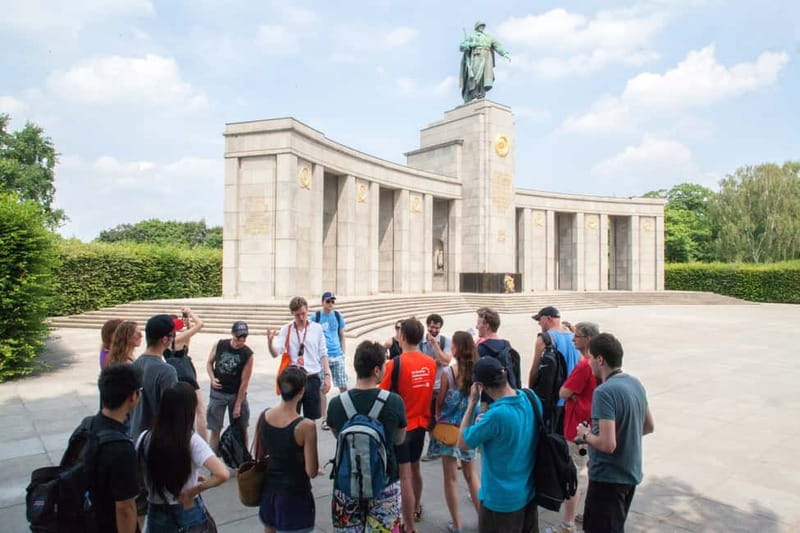
The route includes one of Berlin’s Soviet memorials, dedicated to the roughly 80,000 Soviet soldiers who died liberating the city. Two artillery pieces and two tanks stand in silent tribute at the memorial.
This stop broadens the story beyond Nazi Germany. Berlin’s final battle was not an abstract ending in a textbook. It was a brutal military campaign with enormous losses, and the Soviet forces carried the main burden of the assault on the city.
The memorial also helps explain why Berlin has several different layers of remembrance. The city remembers Nazi crimes, the destruction of the war, Soviet liberation, and the later division of Germany. None of these subjects can be reduced to a single monument.
You will spend time outside, so weather matters. In summer, this may be one of the easier stops. In winter, you will want a warm coat, gloves, and footwear that can handle a long period on your feet. One guide’s experience in cold rain was praised for staying upbeat, but good clothing is still your responsibility.
The Führer Bunker Site
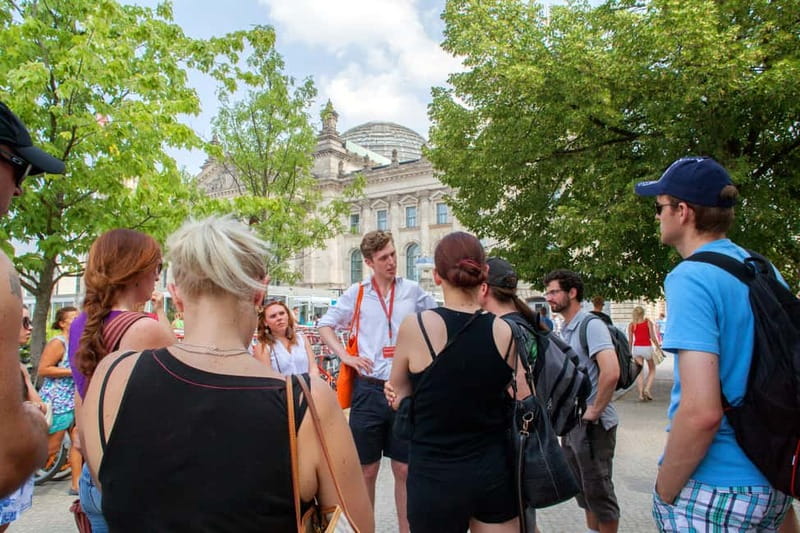
The final major stop is the location of Hitler’s former bunker. You stand above the place where he ended his life as Soviet troops closed in on Berlin.
There is no grand surviving entrance to visit. The power of this stop comes from the contrast between the ordinary surface and the enormous historical events associated with the ground below. The site marks the collapse of the Nazi regime and the beginning of the end of the war in Europe.
A guide is particularly useful here because the location can be confusing without explanation. The physical remains are limited, so you need the historical account to understand what happened and why the site is treated with restraint.
This is not a place for spectacle. Its plain appearance is part of the point. The tour presents the bunker site as the endpoint of a political system that began with propaganda, intimidation, and the capture of government institutions. The route’s chronology makes that connection clear.
The Guides Make or Break the Experience
The most consistently praised feature is the quality of the guides. Dani is repeatedly described as an excellent storyteller who could answer a steady stream of questions and explain complicated events in accessible language. India was praised for her passion, organization, and easy-going teaching style.
Theo, Elizabeth, Daniel, Chris, Liz, Martin, and others also received strong praise for making a difficult topic understandable. You should not assume you will have a particular guide, but the pattern is encouraging: the operator appears to use guides who know the material and can present it with personality.
Group size is less predictable. Some sessions have been small, including one with only three people and another with about 12. Other groups have been large enough to require splitting when a guide was unavailable. A small group gives you better access to questions and makes it easier to hear at street-side stops.
The tour may change slightly according to the guide and the needs of the group. That flexibility is usually helpful, but it means the experience is not a rigid audio guide with identical timing every day. If you want a very fixed schedule, ask about current arrangements when booking.
Price, Pace, and Who Gets the Most Value
At $30 per person, this is a fair price for a live, historically focused walking tour. You are paying for two hours of explanation, route planning, and access to context you would be unlikely to assemble quickly on your own.
The value is strongest for first-time visitors to Berlin, people with a serious interest in World War II, and anyone who wants to understand how the Nazi regime took control. It also works well for families with older children, since children up to age 13 can join free with valid identification if requested.
The price does not cover food, drinks, entrance fees, or the required AB transport ticket. That keeps the basic cost clear, but you should budget for the transport fare and a drink during the break.
I would not choose this tour if you dislike walking, outdoor sightseeing, or emotionally serious subjects. It may also be less satisfying if you want extended time inside museums, since the experience is built around moving through Berlin and hearing the guide’s account at each location.
The tour is wheelchair accessible, which makes it available to more visitors, though the route still involves outdoor movement and public transport. If you have specific mobility concerns, confirm the current route before booking.
Should You Book the Third Reich Walking Tour?
Yes, if you want a clear introduction to Nazi Berlin without spending a full day inside museums. The route links the Luftwaffe headquarters, propaganda ministry, SS and Gestapo site, Soviet memorial, Berlin Wall remains, and bunker location into a story that is easier to follow than a collection of isolated sights.
Book it early in your stay if possible. You will then recognize several important locations when you explore central Berlin on your own. Bring an AB ticket, wear comfortable shoes, and dress for the weather.
The best reason to book is the guide. The sites are meaningful, but the explanation is what turns them into history rather than scenery. If you want a serious, well-organized look at how Nazi power rose and collapsed, this tour offers strong value for $30.
FAQ
Where does the tour meet?
Meet in front of the Starbucks Café near Berlin’s historic Brandenburg Gate. Look for the local tour team wearing red shirts and carrying red umbrellas.
How long does the tour last?
The advertised duration is two hours. There is a break partway through the tour.
What language is the tour offered in?
The live guided tour is offered in English.
Is public transportation included?
No. You need to purchase an AB public transport ticket for the tour.
Are food and drinks included?
No. Food and drinks are not included.
Are entrance fees included?
No. Entrance fees are not included, although the listed route focuses on outdoor locations and existing exhibition areas.
Can children join the tour?
Yes. Children up to 13 years old may join free. The local partner may request valid identification.
Is the tour wheelchair accessible?
Yes, the activity is listed as wheelchair accessible.
Just added around Berlin
- Berlin Walking Tour★ 4.5 · 378 reviews
- Small Group Walking Tour of East Berlin with a French Guide★ 5.0 · 176 reviews
- Berlin Street Art Walking Tour – Off The Grid★ 5.0 · 270 reviews
- Berlin Highlights Private Guided Walking Tour★ 4.5 · 89 reviews
- Private Walking Tour: World War 2 and Cold War Sites in Berlin★ 5.0 · 230 reviews
- East Meets West: Berlin Food Culture & Street Art★ 5.0 · 157 reviews
- Kreuzberg Berlin: Off the Beaten Track PRIVATE Walking Tour★ 5.0 · 128 reviews
- The History of Berlin: WWII PRIVATE Walking Tour With Locals★ 5.0 · 209 reviews
History Walking Tours, compared.
History and Hauntings of Salem Guided Walking Tour
Read our review →
Freedom Trail History Small Group Walking Tour
Read our review →
Historic Charleston Guided Sightseeing Walking Tour
Read our review →
Tapas Walking Tour with Food, Wine, and History
Read our review →
Savannah History and Haunts Candlelit Ghost Walking Tour
Read our review →
A History of Terror – Belfast City Centre Walking Tour
Read our review →Browse the lists this tour appears in