
Review · TOKYO WALKING TOURS
Tokyo: Asakusa Temple & Shrine Walking Tour with Local Guide
Asakusa makes Tokyo’s old soul easy to find. This two-hour walk combines the grand scale of Sensoji Temple with small religious sites, local stories, photo stops, and simple rituals that help you understand what you are seeing. At $30 per person, it offers a useful introduction to one of Tokyo’s most rewarding historic districts.
I especially like the small group limit of eight and the chance to ask questions as you walk. Guides such as Nicolas, Erik, Nana, and Ayaka have earned warm praise for their clear explanations, relaxed manner, and willingness to help with photos, restaurants, shopping, and temple etiquette. The main consideration is physical: you walk for two hours, often through crowded areas, and the tour is not suitable for wheelchair users, people with mobility impairments, or those with a low level of fitness.
Key Points Before You Book
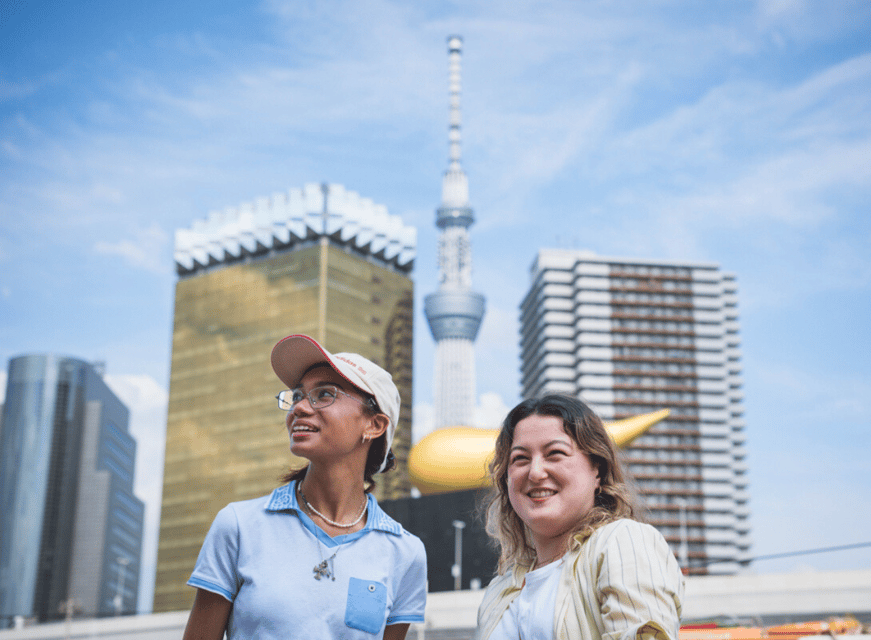
- Start with two excellent city views: See the Tokyo Skytree from Azuma Bridge, then look across the Sensoji grounds from the Asakusa Culture Tourist Information Center.
- Learn the difference between Buddhism and Shinto: The guide explains how to pray, bow, wash your hands, use incense, and move through torii gates respectfully.
- A small group changes the experience: With no more than eight people, it is easier to hear the guide and ask about food, customs, shopping, and Tokyo life.
- Expect practical cultural help: Your guide can explain Japanese signs, offer translation help, and show you how to take part in rituals without feeling awkward.
- Bring good shoes and water: The pace is relaxed, but the route includes steady walking, standing, and crowded temple areas.
- Ask about a kimono rental: A partner shop is only two minutes from the meeting point, making it an easy add-on before or after the walk.
Why This Two-Hour Walk Works Well in Asakusa
Asakusa is one of the best places in Tokyo to connect the modern city with older Japanese customs. You have tall buildings and the Skytree in view, yet the route quickly leads into temple gates, incense smoke, prayer rituals, souvenir stalls, and local shrines.
The tour is not just a march to Sensoji, followed by a few dates and names. Its main purpose is to show you how the area works as a living religious and neighborhood center. You will learn what people do at a Buddhist temple, what changes at a Shinto shrine, and how the two traditions can sit side by side.
That distinction matters. First-time visitors often see a gate, a lantern, a statue, or a water basin without knowing what it means. A guide gives you the confidence to take part in the customs respectfully, rather than standing back and guessing.
The small group format is a real advantage. A group of eight is compact enough for a crowded street, and you can stop to ask about anything from fortune slips to Japanese snacks. The guides also appear willing to adjust their attention to the group. Nana, for example, received praise for keeping two children aged five and eight interested, while other guides helped solo participants and private groups enjoy a more personal pace.
More Guided Walks in Tokyo:
- Tokyo: Shinjuku Local Bar and Izakaya Guided Walking Tour
★ 4.9 · 1,794 reviews - Tokyo: Tsukiji Fish Market Guided Walking Tour
★ 4.9 · 1,397 reviews - Tokyo: Private Custom Walking Tour with Local Guide
★ 4.8 · 533 reviews
Azuma Bridge and the Famous Golden View
The walk begins near Burger King Asakusa Azumabashi, though the exact meeting point depends on the option you book. From there, you head toward Azuma Bridge for a short photo stop and riverside view.
This is a smart opening. You get a quick sense of Tokyo’s scale before entering Asakusa’s temple district. The Tokyo Skytree rises across the city, while the unusual gold sculpture on the nearby Asahi building draws attention. Locals call it the golden poop, a nickname that your guide can explain with a bit of humor.
The stop lasts about 10 minutes, so do not expect a long river walk. It is mainly a chance to take photographs, orient yourself, and see how the old neighborhood sits beside modern Tokyo. If you like city views, this early stop gives you an image that is very different from the temple photographs later in the morning or afternoon.
A High View of Sensoji Before You Enter
Next comes the Asakusa Culture Tourist Information Center. The tour uses its upper level for a broad view over the temple area, including the approach through Nakamise and the major gates.
I like this order because it lets you see the whole area before walking into it. Once you reach the ground, the crowds, stalls, and gates can make the temple complex feel confusing. From above, the layout becomes much easier to understand.
The stop is listed at around 15 minutes and includes time for photographs and explanation. It is also useful for first-time visitors who want a quick orientation. You will see the traditional structures framed by modern buildings, a neat picture of how Asakusa has changed while keeping its religious center.
Kaminarimon Gate and the 700-Kilogram Lantern
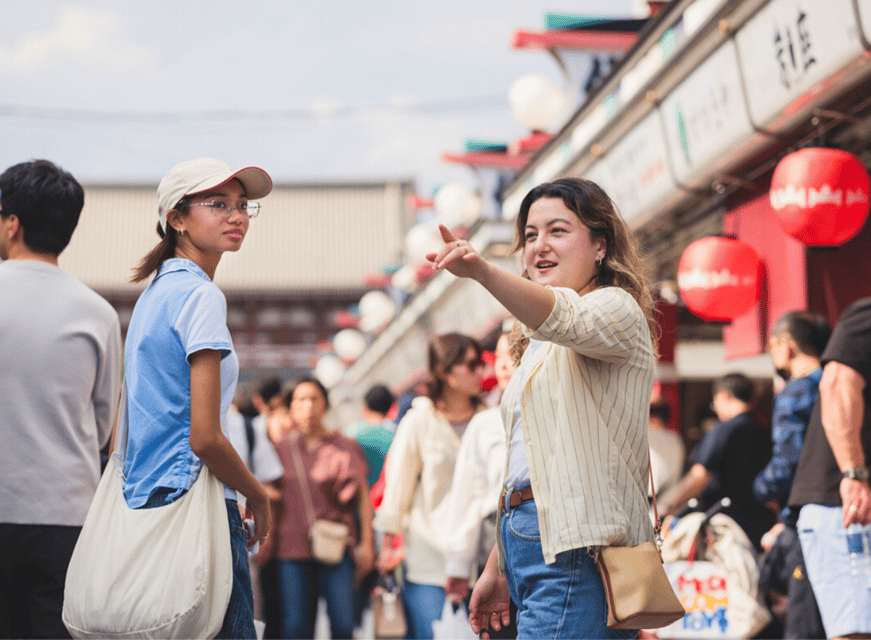
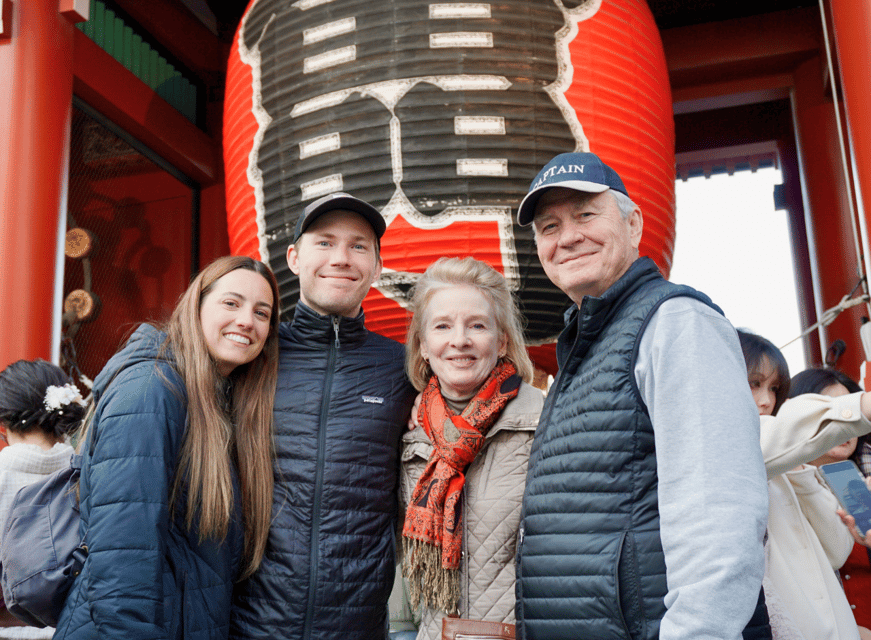
The Kaminarimon Gate is the classic entrance to Asakusa, and the tour gives it proper attention rather than treating it as a quick photo backdrop. Your guide explains the name, which means Thunder Gate, and the story behind the huge red lantern weighing about 700 kilograms.
This is the moment when the tour becomes more than sightseeing. The gate has a dramatic appearance, but its meaning becomes clearer when you understand the protective figures and the role of the entrance in the wider temple approach.
The area can be crowded. You may need patience for photographs, especially when large groups gather beneath the lantern. A small group helps because your guide can point out details without trying to manage a large crowd.
A few more walks around Tokyo worth a look
- Tokyo Tsukiji Fish Market Food and Culture Walking Tour
★ 5.0 · 3,184 reviews - Tokyo: Imperial Palace and Shogun Historical Walking Tour
★ 5.0 · 2,251 reviews - Tokyo: Tsukiji Fish Market Food and Walking tour
★ 5.0 · 1,724 reviews - Tokyo: Asakusa Walking Tour with Sensoji Temple Visit
★ 4.8 · 1,583 reviews
Nakamise Street: Snacks, Souvenirs, and Useful Advice
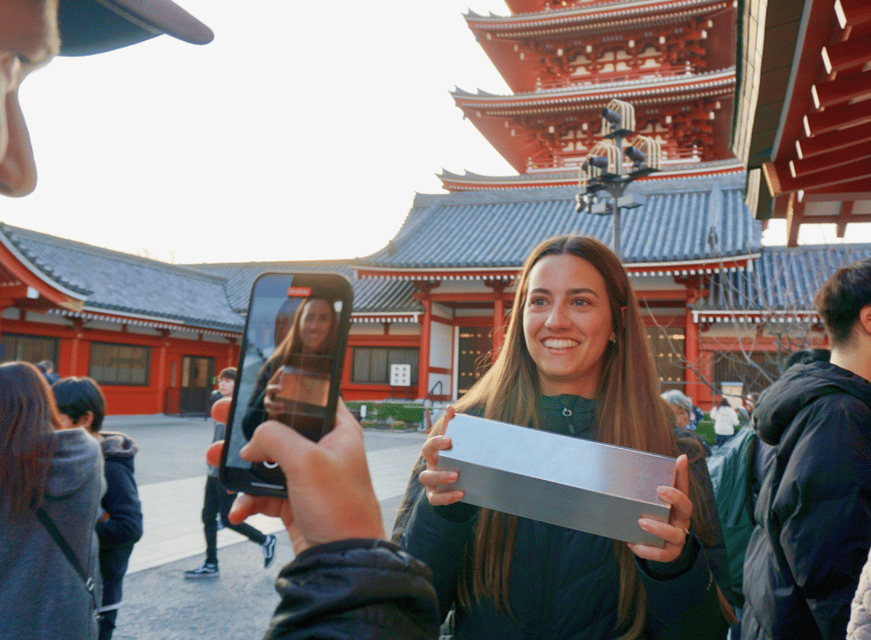
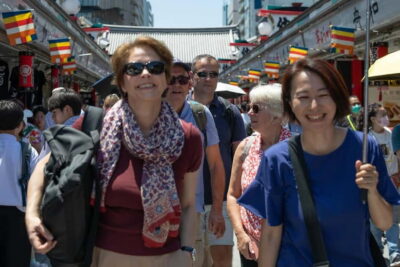
From Kaminarimon, you walk along Nakamise Shopping Street toward the temple. This is one of Asakusa’s most popular shopping stretches, lined with traditional sweets, snacks, souvenirs, and small gifts.
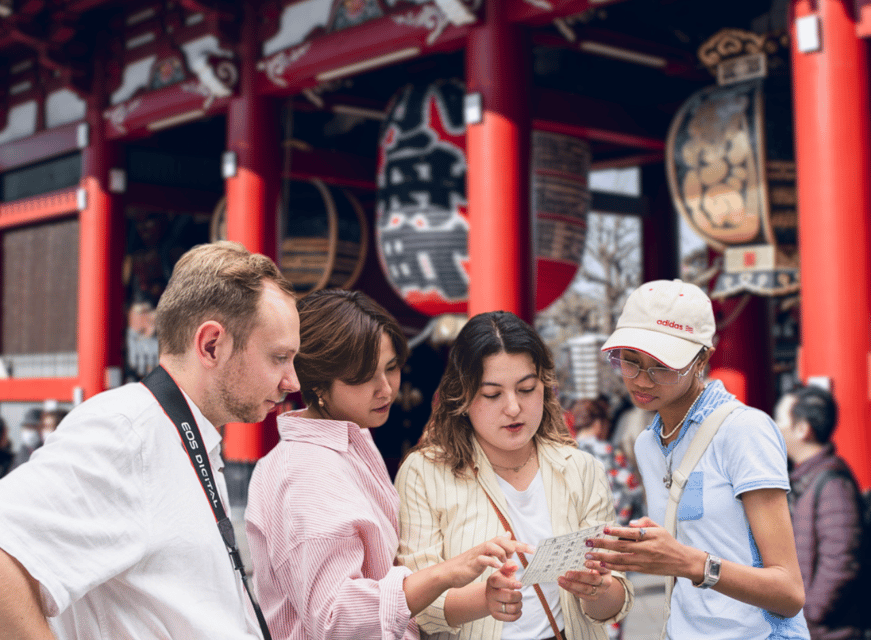
The guide’s role here is practical. You can ask what a particular snack is, what a souvenir represents, or how to understand a sign. Translation help is available, which is handy when you want to buy something but are not sure what it says.
The tour does not include food or shopping costs, so keep extra money with you if you want to sample something. You do not need to buy anything to enjoy the street, but the 15-minute stop can make you curious. The guide may also point you toward better choices instead of leaving you to sort through every stall alone.
Nakamise is also where the walking pace can slow. The street is popular and can feel packed. If you dislike crowds, stay close to the guide and take advantage of the small group. The route is short, but moving through it takes attention.
Hozomon Gate and the Smaller Religious Sites
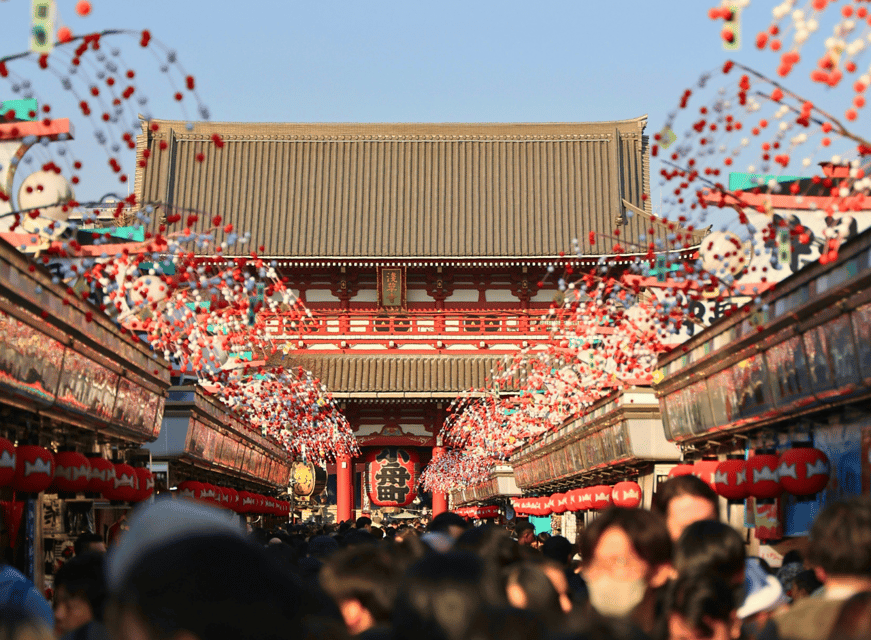
The Hozomon Gate leads farther into the Sensoji grounds. Like Kaminarimon, it is a major architectural landmark, but it feels more connected to the temple itself because you are now deeper inside the complex.
The itinerary also includes smaller temples and shrines along the way. The exact names of two listed stops are not specified, so you should think of these as flexible local points rather than a fixed set of famous monuments.
That flexibility can be useful. The guide can explain the quieter corners that many people pass without noticing, and the route may shift slightly depending on crowds or conditions. This is also where the tour’s cultural focus becomes strongest. Instead of seeing Sensoji as one large building, you begin to understand the grounds as a collection of religious spaces with different purposes.
The group may pause for about 10 minutes at these smaller sites. They are not likely to provide the same grand photographs as the main gates, but they help show the everyday side of Asakusa’s spiritual life.
Sensoji Temple and the Rituals You Can Try
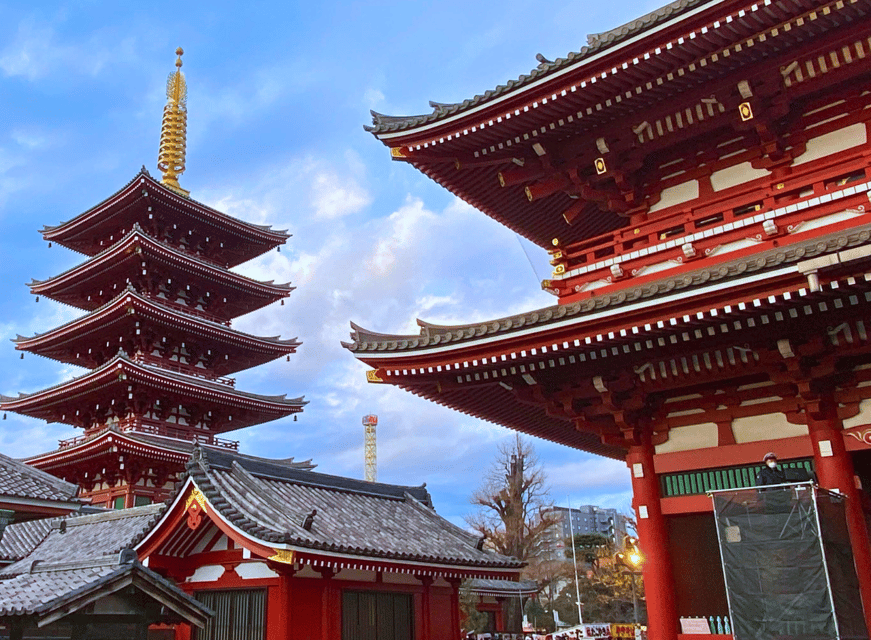
Sensoji is the center of the walk and receives about 30 minutes. It is Tokyo’s oldest temple, and its scale can be impressive even when the grounds are busy.
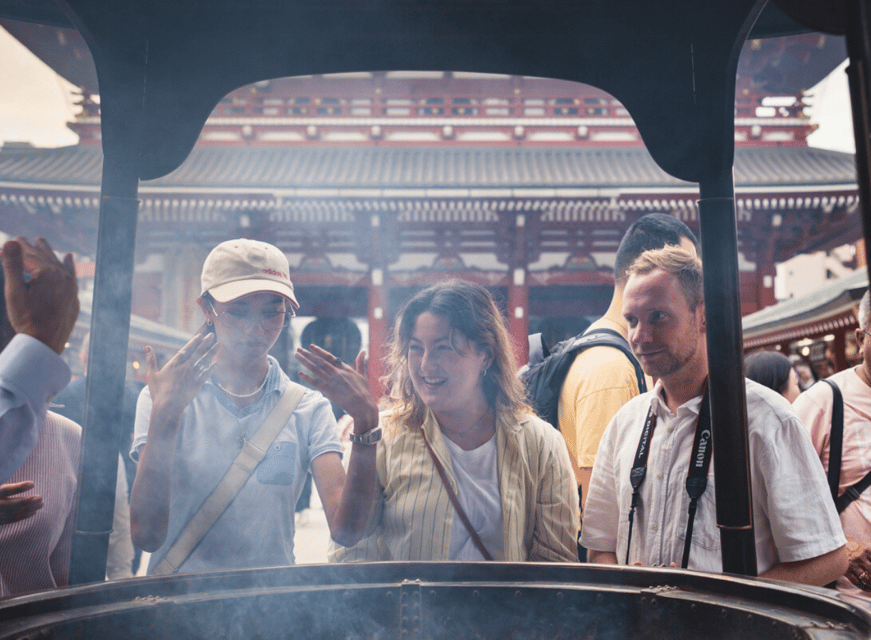
The guide explains how to pray in the Buddhist style and helps you follow the steps in order. You will also learn about temizu, the hand-washing ritual, omikuji fortune telling, and the use of incense smoke for physical and mental healing.
These activities are included as cultural experiences. You are not simply watching a ceremony from the edge. You can take part with guidance, which is useful if you are unsure how to hold a ladle, bow, pray, or handle a fortune slip.
Omikuji can be a fun moment, though the guide should help explain what happens if you receive an unfavorable fortune. Incense is another memorable part of the visit. You may see people wave smoke toward themselves, and the guide explains the meaning instead of leaving you to copy the nearest person.
A key strength is the attention to manners. You learn which side to walk on near a torii gate, how to bow, and how Buddhist prayer differs from Shinto prayer. These small details can improve the rest of your Japan trip because you will encounter similar customs at other temples and shrines.
Asakusa Shrine and the Buddhist-Shinto Connection
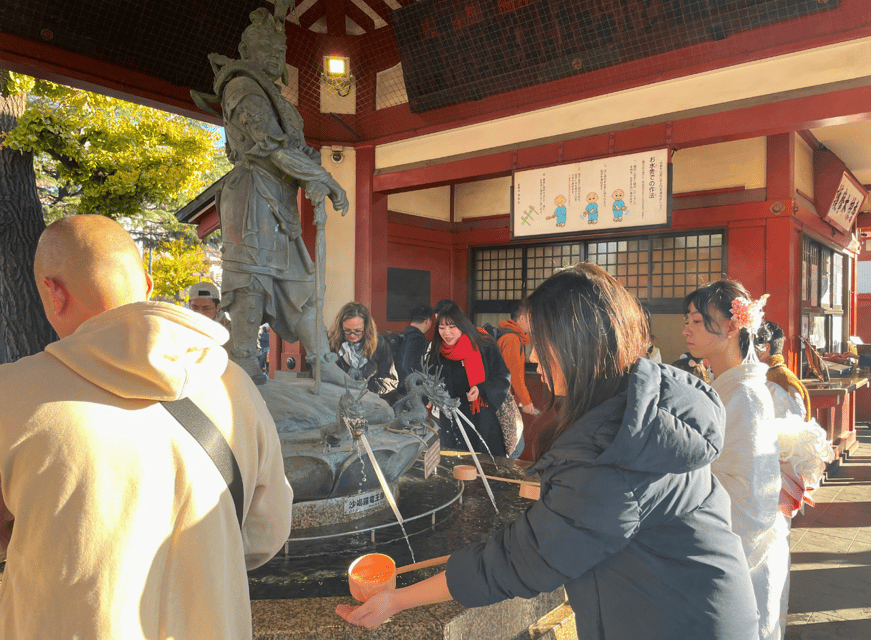
The final main stop is Asakusa Shrine, with about 15 minutes for a visit and explanation. It sits close to Sensoji, making the contrast between the two traditions easy to see in a single outing.
Your guide explains that Buddhism and Shinto have developed alongside each other in Japan. You will learn how the approach to a Shinto shrine differs from the Buddhist process at Sensoji, including the way you bow and pray.
This side-by-side comparison is one of the most useful parts of the tour. Without help, you might assume every Japanese religious site follows the same rules. Here, you see that the customs change according to the type of place, even when the buildings are close together.
For first-time visitors, this can remove much of the uncertainty around temple and shrine etiquette. You can still ask questions afterward, but you will already have a basic guide for future visits.
What the Guides Add to the Experience
The strongest pattern in the feedback is the quality of personal attention. Nicolas is praised for explaining Shinto and Buddhism in clear language, answering many questions, and sometimes pointing people toward nearby restaurants or Kappabashi Street. Erik received similar praise for historical explanations, temple etiquette, and helping with small practical matters such as offering coins.
Other guides bring different strengths. Lino is described as friendly and easy to understand, while Diane, Nana, Ayaka, Arief, Ariel, Somi, and Joe are each praised for patience, kindness, cultural explanations, or help during hot and rainy conditions.
You should not book this expecting one particular guide, since staff assignments can vary. Still, the repeated pattern is encouraging: guides are expected to be approachable and willing to adapt. That matters more than a rehearsed speech on a walking tour.
The tour also appears suitable for families and solo visitors. Children can ask questions, and solo participants may receive a more personal experience if the group is small. Couples can keep the pace relaxed and ask for help with photographs.
Practical Details, Comfort, and Value
At $30 per person, the tour is reasonably priced for two hours in central Tokyo, especially because it includes a small group, a live guide, cultural instruction, and several viewpoints. You are paying for interpretation and confidence, not entry tickets or food.
There are no personal expenses included. Plan to pay separately for snacks, souvenirs, fortune slips, or anything else you choose to buy.
Wear comfortable walking shoes. The route includes streets, temple grounds, standing, and crowded areas. Bring water on a hot day, although vending machines are available during the walk. Dress for the weather because the tour operates in rain or shine.
There is no dress code, and tattoos are welcome. Smoking, drones, alcohol, and drugs are not allowed. The tour is not suitable for wheelchair users, people with mobility impairments, or people with a low fitness level.
Cancellation is free up to 24 hours before the start, and you can reserve now and pay later. Since the group is limited to eight, booking ahead is sensible during busy periods.
Should You Book This Asakusa Tour?
Book it if you want more than photographs of Sensoji. The best reason to join is the combination of clear cultural instruction and a genuinely small group, especially if you are new to Japan or unsure about temple and shrine etiquette.
It is also a good first activity in Tokyo. After two hours, you will know how Buddhist and Shinto sites differ, what to do with incense and fortune slips, where the major gates fit into the temple grounds, and which questions to ask during the rest of your trip.
Skip it if you prefer exploring alone, dislike walking in crowded areas, or need step-free access. If you do join, arrive ready to ask questions, bring water, and tell the guide if you want help with photographs, translations, shopping, or a nearby meal.
For most first-time visitors, $30 is a fair price for a friendly orientation to one of Tokyo’s most important neighborhoods.
FAQ
How long does the Asakusa walking tour last?
The tour lasts two hours.
What is the price of the tour?
The price is $30 per person.
How large is the group?
The group is limited to eight participants.
Which languages are available?
Live guiding is available in English and French.
Where does the tour begin?
The listed starting point is Burger King Asakusa Azumabashi, but the meeting point can vary depending on the option booked.
Which major sites does the tour visit?
The route includes Azuma Bridge, the Asakusa Culture Tourist Information Center, Kaminarimon Gate, Nakamise Shopping Street, Hozomon Gate, Sensoji Temple, Asakusa Shrine, and smaller local religious sites.
Are temple and shrine rituals included?
Yes. The tour includes guidance for temizu hand washing, omikuji fortune telling, incense use, Buddhist prayer, Shinto prayer, bowing, and walking through torii gates.
Is there a dress code?
No. There is no dress code, and tattoos are welcome.
What should I bring?
Bring comfortable walking shoes and water. Vending machines are available during the tour on hot days.
Is the tour suitable for wheelchair users?
No. The tour is not suitable for wheelchair users, people with mobility impairments, or people with a low level of fitness.
Just added around Tokyo
- Tokyo: Tsukiji Market Walking Tour & Sushi Cooking Class★ 4.6 · 122 reviews
- Tokyo: Dark Side of Tokyo Shinjuku Red Light Walking Tour★ 4.7 · 862 reviews
- Tokyo: Shinjuku Nightlife & Secret Backstreets Walking Tour★ 4.8 · 229 reviews
- Tokyo: Shibuya Highlights Walking Tour★ 4.8 · 601 reviews
- Tokyo: Shibuya Highlights Walking Tour & Secret View Spot★ 4.9 · 196 reviews
- Tokyo: Shinjuku Bar Hopping & Night Walking Tour★ 4.6 · 137 reviews
- Tokyo: Private Custom Walking Tour with Local Guide★ 4.9 · 350 reviews
- Tokyo: Shibuya Crossing & Hidden Streets Walking Tour★ 4.8 · 128 reviews
Tokyo Walking Tours, compared.
Tokyo Tsukiji Fish Market Food and Culture Walking Tour
Read our review →
Imperial Palace and Shogun Historical Walking Tour
Read our review →
Shinjuku Local Bar and Izakaya Guided Walking Tour
Read our review →
Asakusa Walking Tour with Sensoji Temple Visit
Read our review →
Tokyo Castle & Imperial PalaceーShogun Walking Tour
Read our review →
Shibuya Meltdown Nightlife Tour: All-You-Can-Drink Bar Hopping
Read our review →Browse the lists this tour appears in