
Review · HIDDEN GEMS WALKING TOURS
Tokyo: Shinjuku Nightlife & Secret Backstreets Walking Tour
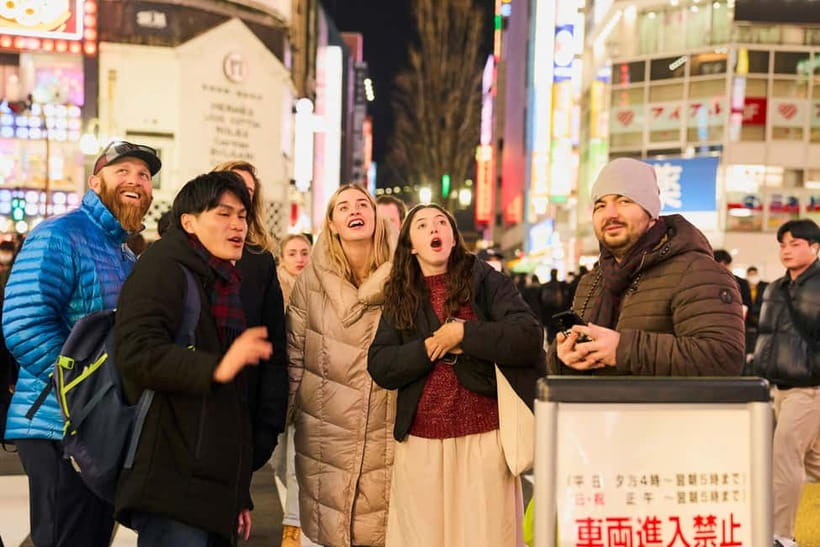
Shinjuku looks different after sunset. This 90-minute walk combines Omoide Yokocho, Kabukicho, Golden Gai, and Hanazono Shrine with the kind of local advice that can save you from wandering past the best small restaurants. I especially like the tour’s focus on backstreets and its low $22 price, but the short schedule means some stops receive only a quick look.
The route also includes Tokyu Kabukicho Tower, a complimentary vending-machine drink recommended by the guide, and plenty of time for questions. Guides such as Sota, Rinna, Akira, Mao, and Ai have been praised for clear English, humor, and practical food suggestions. Just bring comfortable shoes, warm clothing, and rain protection, since the walk runs in all weather.
Key points at a glance
- A smart first-night introduction: The route gives you a working map of Shinjuku before you return on your own.
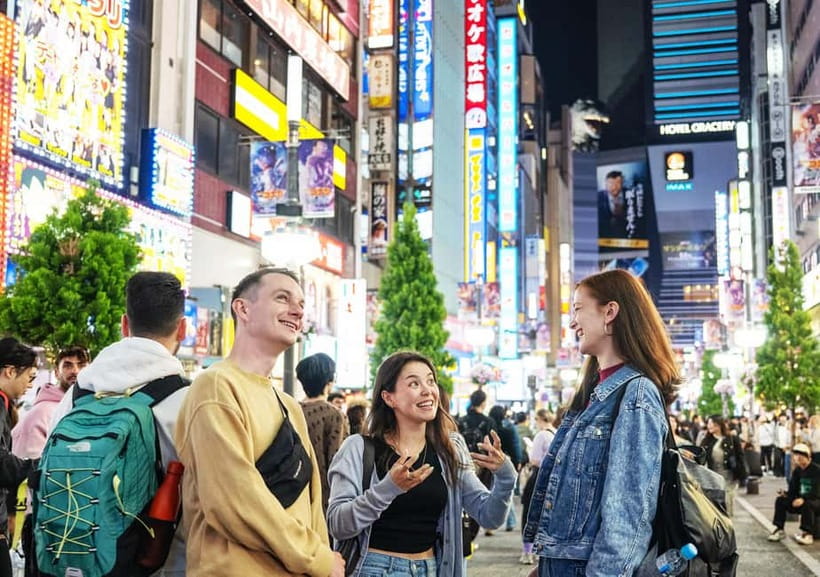
- Three very different night districts: Omoide Yokocho, Kabukicho, and Golden Gai each offer a separate look at Tokyo after dark.
- Local restaurant advice: Guides point out places to eat and drink that are easy to miss when you are exploring alone.
- A quieter ending: Hanazono Shrine provides a calm nighttime contrast to neon streets and crowded entertainment areas.
- Good value at $22: You receive a guided 90-minute walk, local commentary, and one recommended vending-machine drink.
- Fast pace: The route covers a lot, so you should expect orientation rather than long visits inside each area.
Meeting the guide beside Shinjuku Station
The tour begins at the Shinjuku Station East Exit Police Box, at 3-38-1 Shinjuku, Shinjuku-ku. Look for a guide holding a sign marked Local Guide Stars. Shinjuku Station is enormous, so allow extra time to find the East Exit rather than arriving at the last minute.
This is a practical meeting point because the tour returns there at the end. You do not need to arrange a second meeting point across the city, and you can continue to dinner, shopping, or your hotel afterward.
The station area can feel confusing, especially at night. One person had trouble finding the meeting point without passing through the station, so keep the address and coordinates handy: 35.6917846, 139.7011327. If you are traveling with children or moving slowly, stay close to the guide once the walk begins.
English and Japanese are offered. The strongest praise has gone to guides who explain clearly, answer questions, and adjust the conversation to the group. Kawa, for example, was appreciated for asking about interests and shaping the discussion around them. That sort of flexibility matters more than a memorized speech.
More Hidden Gems Walking Tours in Tokyo:
- Tokyo: Shibuya Highlights Walking Tour & Secret View Spot
★ 4.9 · 196 reviews - Dublin Highlights and Hidden Gems Guided Walking Tour
★ 5.0 · 6,020 reviews - Explore Berlin: See All The Iconic Sights & Some Hidden Gems
★ 5.0 · 4,429 reviews
Omoide Yokocho: Tokyo’s tiny food lanes
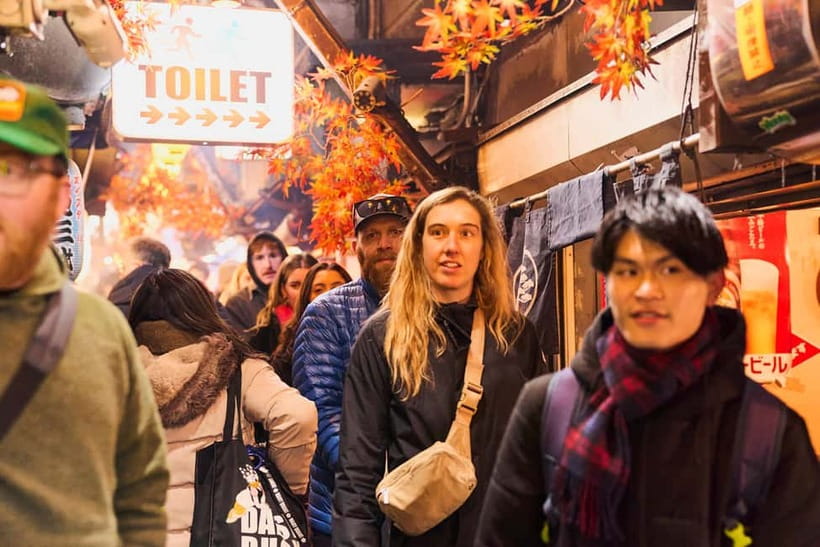
The first major stop is Omoide Yokocho, a narrow dining area packed with roughly 300 restaurants and bars. Its small lanes, closely set signs, and compact eateries offer a sharp contrast to the broad streets and giant screens outside Shinjuku Station.
You will spend about 10 minutes here with the guide. That is enough to understand the layout, learn what kind of places line the lanes, and note a restaurant or two for a later meal. It is not enough for a full dinner, so think of this part as a preview.
I like this stop because it gives you a useful choice: you can return later with a better sense of where you are going. A guide may also explain ordering customs, seating arrangements, or which places are aimed more at regular customers. The exact advice can vary by guide, but the practical value is clear. A small restaurant can be hard to judge from the street when every doorway looks busy and every menu seems tightly packed with Japanese text.
The drawback is simple: 10 minutes passes quickly. You will not linger over food, and the lanes may feel crowded. Take mental notes instead of trying to photograph everything.
Kabukicho and the changing face of nightlife
The next stop is Kabukicho, the famous entertainment district. The area developed from a former red-light district into one of Tokyo’s best-known nightlife centers. Your guide explains that cultural shift while leading you through streets where restaurants, bars, entertainment venues, and bright signs compete for attention.
Kabukicho can feel overwhelming on your first visit. That is exactly why a local guide helps. You receive context about what you are seeing instead of simply walking through a wall of neon. Guides have also been praised for explaining what to avoid, how to choose places to eat, and how to find the less obvious streets.
This is also where the tour’s tone matters. Kabukicho is an entertainment district, not a theme park. Some businesses cater to adults, and not every doorway is meant for casual sightseeing. A good guide can help you understand the area without making careless assumptions or turning local businesses into curiosities.
The scheduled explanation lasts around 10 minutes. You will get a useful overview, but do not expect a long stop at every sign or street corner. If you want detailed nightlife advice, ask direct questions while you walk. Guides including Sota, Noa, and Akira have been praised for giving specific suggestions instead of general travel talk.
Tokyu Kabukicho Tower and the high view
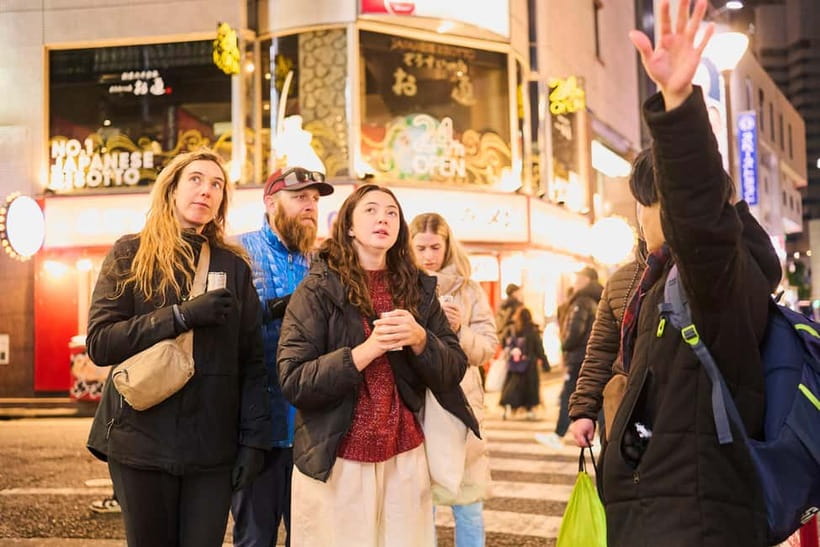
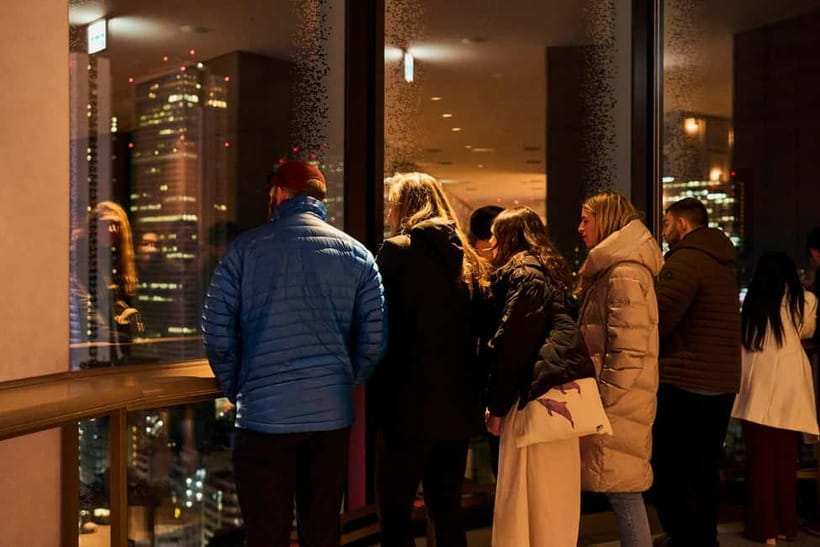
The tour then spends about 30 minutes at Tokyu Kabukicho Tower. This is the longest stop, and it offers a change of pace from street-level walking. One especially useful feature is the chance to visit an observation deck. A past group found it quiet enough to have the view largely to themselves, which can be a welcome break from the crowds below.
The tower helps you understand the scale of Shinjuku. From above, the district’s signs, roads, and clusters of buildings make more sense. You can also see why the area feels so dense when you are walking through it.
The exact use of the 30 minutes may depend on the guide and the day’s conditions. The supplied details identify the tower as a visit, but they do not promise a specific paid attraction or guaranteed observation-deck access. Ask your guide what is included when the tour reaches the building.
I would treat this stop as a useful bonus rather than the main reason to book. The tour’s real strength is its street-level orientation. Still, the tower gives the walk a visual pause and a chance to take photographs.
A few more walks around Tokyo worth a look
- Tokyo Tsukiji Fish Market Food and Culture Walking Tour
★ 5.0 · 3,184 reviews - Tokyo: Imperial Palace and Shogun Historical Walking Tour
★ 5.0 · 2,251 reviews - Tokyo: Shinjuku Local Bar and Izakaya Guided Walking Tour
★ 4.9 · 1,794 reviews - Tokyo: Tsukiji Fish Market Food and Walking tour
★ 5.0 · 1,724 reviews
Golden Gai: tiny bars, strong character
Golden Gai follows with another 10-minute guided visit. This compact area is known for very small bars and narrow lanes, each with its own look and feel. Even if you do not enter a bar, walking through the lanes helps you see a side of Shinjuku that large commercial streets cannot provide.
The guide’s role is valuable here. Some bars have limited seating, specific house rules, or a regular clientele. A short explanation can help you understand why you should not simply open every door and assume it is a casual drop-in venue.
The tour does not include a drink in Golden Gai, and 10 minutes is not enough to sample the area properly. You are getting a briefing and a first look. If you want to return later, ask for current suggestions and confirm prices before ordering.
This stop works best for curious adults who enjoy small spaces and local atmosphere. It may be less appealing if you prefer wide sidewalks, quiet restaurants, or a structured meal. The area can also be crowded, so stay near the guide and keep your belongings secure.
Hanazono Shrine after dark
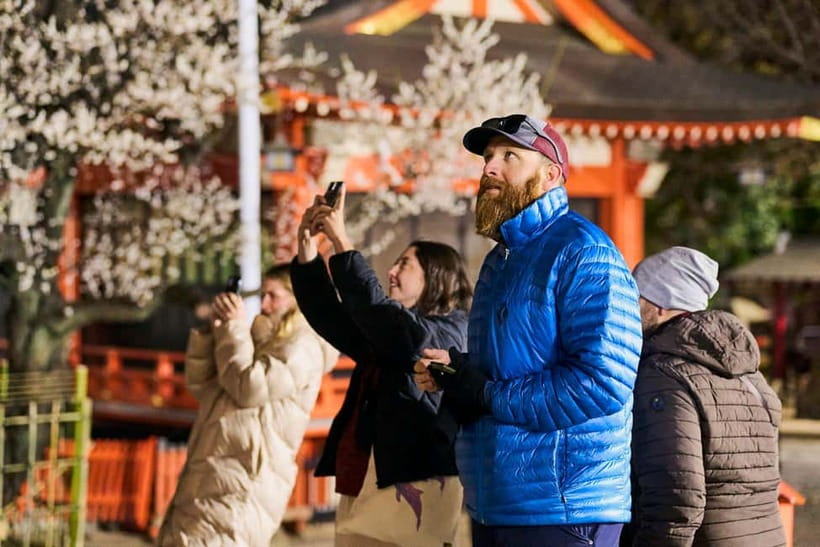
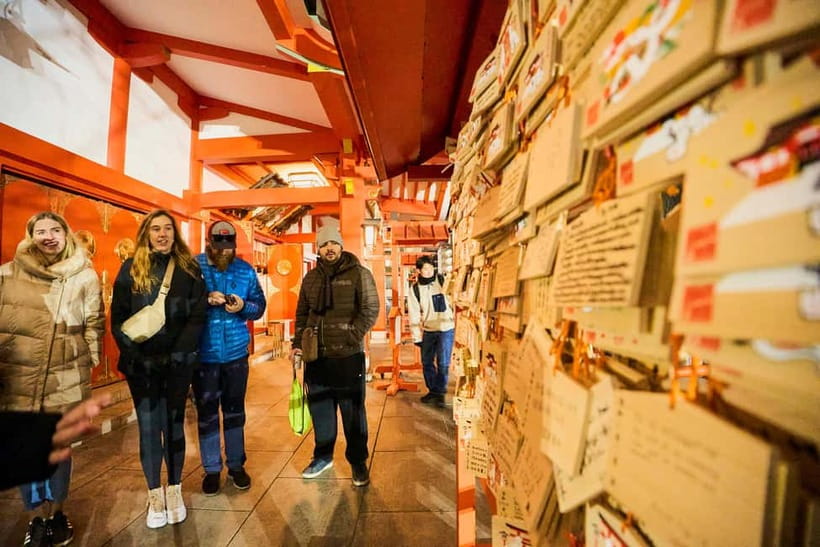
Hanazono Shrine is the final main stop and receives about 15 minutes. After Kabukicho and Golden Gai, the shrine feels notably calmer. Visiting at night gives it a different mood from a daytime temple or shrine visit, with fewer visual distractions from the surrounding entertainment district.
This is one of the tour’s best contrasts. You see that Shinjuku is not only signs, bars, and restaurants. A traditional religious site remains part of the district’s daily identity, even beside some of Tokyo’s busiest nightlife streets.
The guide can explain the shrine’s place in the neighborhood and point out details you might otherwise walk past. Fifteen minutes is enough for a respectful look and a few photographs, though it is not a full cultural lecture.
Remember that this is an active religious space. Keep your voice low, follow any posted instructions, and behave as you would at a place of worship. The nighttime setting makes it memorable, but it should not become a noisy photo stop.
The final five minutes back to the station
After Hanazono Shrine, the group walks for about five minutes back to the East Exit Police Box. The route ends where it began, which makes the tour easy to fit into an evening plan.
The timing deserves a realistic note. You cover several districts in only 90 minutes, and one person specifically wished for better time management. Another felt the walk could have been slower or longer to allow more time for photographs. I agree with the basic caution: this is an introduction, not an unhurried neighborhood stroll.
You will get the most from it if you listen while walking, ask questions promptly, and save restaurant names in your phone. If you stop often for photographs, you may miss part of the guide’s explanation.
What the $22 price really gives you
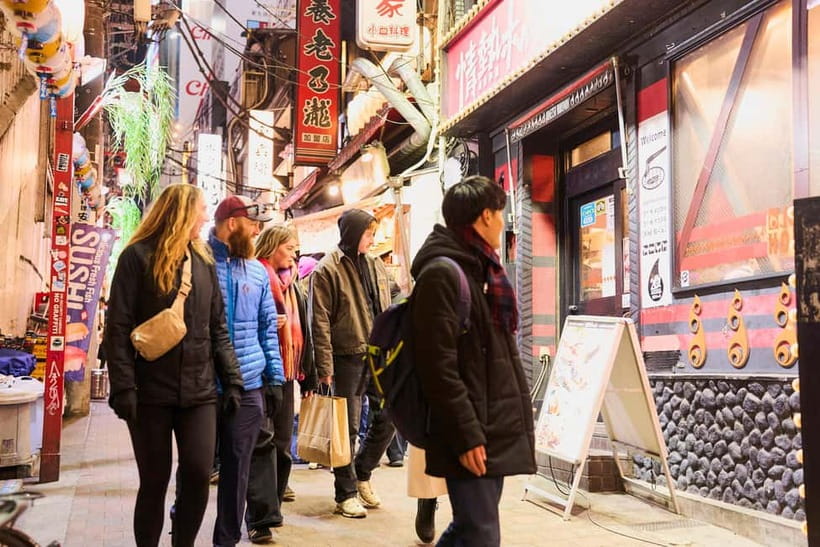
At $22 per person, this is a strong-value orientation walk. You are paying for a local guide, a planned route through several distinct areas, restaurant and nightlife suggestions, and one vending-machine drink recommended by the guide.
The value is not in admission tickets or a long meal. Those are not part of the experience. The value is in saving time and gaining confidence. A first visit to Shinjuku can easily become a series of aimless turns, especially around the station and Kabukicho. A guide gives you a basic map, cultural context, and ideas for where to return.
The drink is a small extra, not a reason to book. One person reported that it was not provided, so I would regard it as a promised inclusion that may occasionally be missed. If it matters to you, politely remind the guide during the walk.
Free cancellation is available up to 24 hours before the start time, and you can reserve while paying later. The tour lasts 90 minutes, with starting times based on availability. It is wheelchair accessible, although the route includes city walking, narrow entertainment lanes, and crowded areas, so you may want to confirm the practical details before booking.
Guides who make the difference
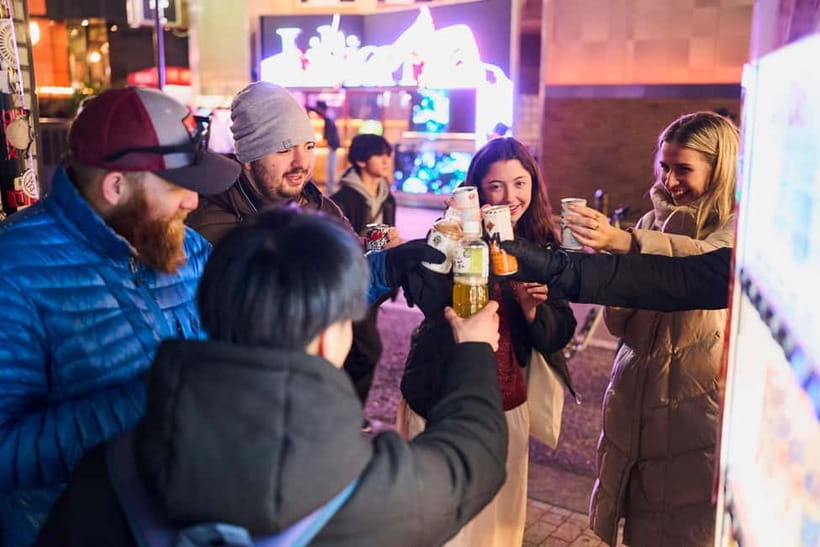
The experience depends heavily on the person leading it. The strongest comments consistently focus on friendly guides who answer questions, speak good English, and share advice that is hard to find by simply walking around.
Sota has been praised for detailed local suggestions and a warm manner. Rinna has been noted for cultural explanations, while Akira has been praised for mixing humor with useful information. Mao, Ai, Noa, Hannah, Chihiro, and Kawa have also received strong praise for friendliness, organization, and clear explanations.
That variety means your experience may differ slightly from another group’s. Some guides may focus more on history, others on food, nightlife, or local customs. You can improve the result by telling the guide what interests you: restaurants, photography, Japanese culture, family-friendly stops, or nightlife.
The tour has also worked well for solo visitors, families with children, and groups with teenagers. One family traveling with a seven-month-old and a two-year-old found the guides accommodating, while another family brought four children and enjoyed the walk. Still, Kabukicho and Golden Gai are nightlife districts, so parents should decide if the subject matter and late setting fit their group.
Who should book this walk?
I would choose this tour for a first evening in Shinjuku, especially if you want to return later for dinner or drinks. It suits you if you enjoy street scenes, local explanations, small restaurants, and a mixture of modern entertainment and traditional Japan.
It is also useful for repeat visitors. One person had already walked through Shinjuku but still found different streets and new explanations. A guide can show you routes and details you missed the first time.
I would be more cautious if you want a slow food tour, a private experience, or extended time inside bars. The route moves quickly, the group size can vary, and the walk does not include a meal. You should also wear comfortable shoes and bring warm clothing. Rain does not cancel the tour, so carry an umbrella or raincoat.
Should you book the Shinjuku night walk?
Book it if you want a friendly, affordable introduction before exploring Shinjuku on your own. The best reasons are the mix of Omoide Yokocho, Kabukicho, Golden Gai, Tokyu Kabukicho Tower, and Hanazono Shrine, plus practical advice from guides who know the streets.
Skip it if you already know these districts well and prefer to spend 90 minutes eating or drinking at your own pace. For most first-time visitors, though, $22 is a reasonable price for orientation, local context, and a list of places worth returning to. Go in expecting a fast overview, not a full night out, and you should find it useful.
FAQ
Where does the tour start?
It starts at the Shinjuku Station East Exit Police Box, at 3-38-1 Shinjuku, Shinjuku-ku, Tokyo.
How do I identify the guide?
The guide will be holding a sign that says Local Guide Stars.
How long does the tour last?
The walking tour lasts 90 minutes.
What areas are included?
The route includes the Shinjuku Station East Exit area, Omoide Yokocho, Kabukicho, Tokyu Kabukicho Tower, Golden Gai, and Hanazono Shrine.
Is the tour offered in English?
Yes. Live guiding is available in English and Japanese.
Is a drink included?
One vending-machine drink recommended by the guide is included.
Does the tour operate in bad weather?
Yes. The tour runs rain or shine, so bring an umbrella or raincoat when rain is expected.
Can I cancel for a full refund?
Yes. You can cancel up to 24 hours in advance for a full refund.
Just added around Tokyo
- Tokyo: Tsukiji Market Walking Tour & Sushi Cooking Class★ 4.6 · 122 reviews
- Tokyo: Dark Side of Tokyo Shinjuku Red Light Walking Tour★ 4.7 · 862 reviews
- Tokyo: Shibuya Highlights Walking Tour★ 4.8 · 601 reviews
- Tokyo: Shibuya Highlights Walking Tour & Secret View Spot★ 4.9 · 196 reviews
- Tokyo: Shinjuku Bar Hopping & Night Walking Tour★ 4.6 · 137 reviews
- Tokyo: Private Custom Walking Tour with Local Guide★ 4.9 · 350 reviews
- Tokyo: Shibuya Crossing & Hidden Streets Walking Tour★ 4.8 · 128 reviews
- Tokyo: Meiji Shrine Walking Tour — Shinto & Imperial System★ 4.9 · 266 reviews
Hidden Gems Walking Tours, compared.
Dublin Highlights and Hidden Gems Guided Walking Tour
Read our review →
Explore Berlin: See All The Iconic Sights & Some Hidden Gems
Read our review →
Kyoto Geisha Walking Tour: Gion District & Hidden Gems
Read our review →
Ben Youssef, Secret Garden, & Souks Walking Tour
Read our review →
Montmartre Hidden Gems and Scenic Highlights Walking Tour
Read our review →
Guided Walking Tour of City Highlights & Hidden Gems
Read our review →
Paranormal Night Walking Tour & Secret Backstreets
Read our review →Browse the lists this tour appears in