
Review · HISTORY WALKING TOURS
Aruba Downtown Historic and Cultural Walking Tour
Oranjestad rewards a closer look. This 2.5-hour walk gives you two things I value: a local guide who can explain Aruba beyond its beaches, and two included tastings that connect the history lesson to everyday island life. Fort Zoutman, the National Archaeological Museum, Parliament, old churches, local homes, and main shopping streets all appear along the route.
I also like the small-group limit of 20 people and the convenient 9:00 am start. The main caution is the pace: there are about 30 stops, and some museum or church visits are brief. On hot days, the walk can feel longer than its gentle route suggests.
Key details before you book
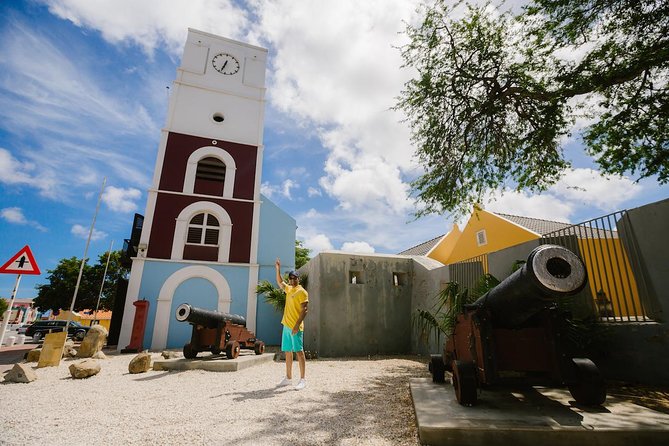
- Fort Zoutman and the clock tower: When open, you can enter Aruba’s old fort and climb its 19th-century tower for a downtown view.
- Two local food tastings: Try pan bati and another local favorite, with the exact serving point depending on the day’s route and opening conditions.
- About 30 stops in 2.5 hours: Expect a broad introduction to Oranjestad rather than long, quiet visits inside each sight.
- A 9:00 am start: The early timing helps you avoid the worst heat, which is important on a mostly outdoor walk.
- Guides with personal island stories: Guides such as Wendell, Evy, Marisa, Milton, Hazel, and Yvonne have been praised for humor, warmth, and strong local ties.
- Hotel pickup may be available: Pickup is offered from selected accommodations, and the walk returns to the Cosecha meeting point.
Why this Oranjestad walk is worth your morning
Oranjestad is easy to skim. Cruise passengers can walk past pastel buildings, shops, the tram, and the waterfront without learning why the city looks the way it does. This tour gives those sights a narrative.
I like that the route includes both official landmarks and ordinary streets. You hear about Aruba’s government, religion, food, family homes, archaeology, and colonial past in one compact outing. It is not a grand tour of the entire island. It is a town walk that helps you understand the place where many visitors shop, eat, and pass through.
The best guides make a difference here. Wendell has been praised for personal stories and clear explanations of how Aruba has changed. Evy is known for an energetic, funny approach and a strong interest in the island’s buildings and past. Marisa brings detailed local knowledge with a friendly manner, while Hazel Milton has connected family stories with Aruba’s social and political life.
That personal element is a major reason to choose a walking tour instead of simply following a map. You can ask questions, pause for context, and get suggestions for restaurants and drinks during the rest of your stay.
The format does have limits. You cover many subjects quickly, and a few stops last only two to five minutes. If you want time to read every museum label or sit quietly inside an old church, you may find the schedule rushed. Think of this as an orientation walk with museum access, not a slow academic tour.
More History Walking Tours in the world:
- History and Hauntings of Salem Guided Walking Tour
★ 5.0 · 14,564 reviews - Lisbon: History, Stories and Lifestyle Walking Tour
★ 4.8 · 10,902 reviews - Boston: Freedom Trail History Small Group Walking Tour
★ 5.0 · 6,450 reviews
Fort Zoutman begins the story
The tour starts at Cosecha Aruban Craft Design & Heritage on Zoutmanstraat, in front of one of Aruba’s early government buildings. That setting fits the experience well. You begin among local arts and crafts before moving toward Fort Zoutman, Aruba’s old fort from the 1700s.
When the Historical Museum is open, admission is included. Inside, you learn about Aruba’s earlier years, then climb the old clock tower built in the 1800s. The tower view is one of the more rewarding parts of the morning because it gives you a simple sense of downtown’s layout.
Do not expect a long fort visit. The scheduled stop is about 10 minutes, so opening hours and timing matter. Still, even a short visit adds substance to the streets around it. If the interior is closed, the guide can still explain the fort and its role from outside, but you lose the museum portion.
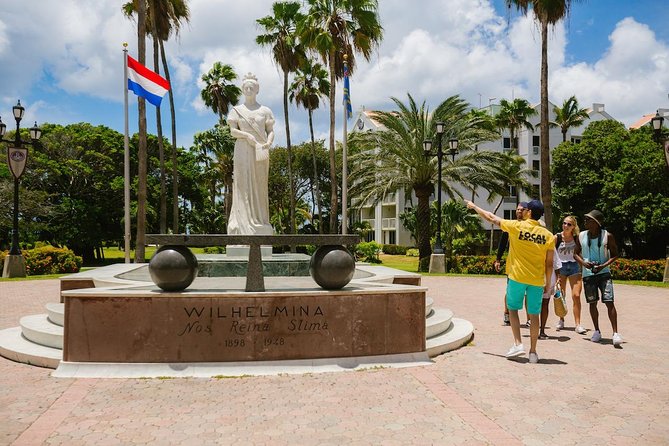
Wilhelmina Park adds statues and iguanas
A short walk brings you to Wilhelmina Park. Here, the guide explains two notable statues and points out the park’s large iguana population.
This is a lighter stop, but it breaks up the architectural and political information. The planned visit lasts around 10 minutes. Bring your camera, but remember that the park is not being presented as a long nature visit. It is a quick public-space stop within a larger city walk.
The park also helps show how Oranjestad mixes civic monuments with everyday island life. A statue, a shaded patch of greenery, and sunning iguanas can all share the same short section of the route.
The National Archaeological Museum looks far beyond colonial Aruba

The National Archaeological Museum is one of the most important stops for anyone who wants to understand Aruba before forts, churches, and government offices.
When open, you can see pottery, skulls, and tools associated with Aruba’s first inhabitants. The building itself also provides a strong backdrop for photographs. Admission is included when the museum is operating.
Again, the scheduled visit is about 10 minutes. That is enough for an introduction, but not enough to examine every object at length. One useful approach is to listen closely to the guide first, then note anything you want to revisit on your own later.
The museum keeps the tour from becoming only a story about European influence. It places Aruba’s Indigenous past near the center of the morning, which gives the later discussion of colonial buildings and modern government more context.
More Cultural Walking Tours in the world:
- Savannah First Squares Culinary & Cultural Walking Food Tour
★ 5.0 · 3,229 reviews - Tokyo Tsukiji Fish Market Food and Culture Walking Tour
★ 5.0 · 3,184 reviews - New Orleans French Quarter, Voodoo and Culture Walking Tour
★ 4.5 · 2,961 reviews - Amsterdam: Cultural Highlights Walking Tour
★ 4.9 · 2,629 reviews
Local food makes the history easier to remember

At Coco Plum Restaurant, you taste pan bati, a local snack still widely eaten in Aruba. Later, at Havenstraat, you hear about what Arubans eat at breakfast and at parties, with another tasting included.
These food stops are small, but they are among the most warmly praised parts of the experience. A traditional breakfast treat and pastechi have both been singled out as tasty additions to the walk. The portions are not presented as a full meal, so eat breakfast before you arrive, as the operator advises.
I like the way these tastings change the rhythm of the tour. Instead of hearing only names, dates, and buildings, you get a direct connection to daily life. You can also ask the guide where to find more local food during your stay.
There is one point to watch carefully. The route can change, and one poor experience involved a participant receiving only one tasting after a main shopping-area section was skipped. The tour is advertised with two tastings, so if the route changes, politely confirm with the guide how both are being handled.
Main Street shows the everyday side of Oranjestad

The walk continues through Aruba’s main shopping street, where you learn about stores that have been in place since 1928 and about the street tram that runs through the area.
This is useful even if you are not shopping. The main street is part of the city’s daily identity, and the tram helps explain how visitors and residents move through the center. Some people may find this section less historic than the fort or museum, but it gives you practical bearings for later.
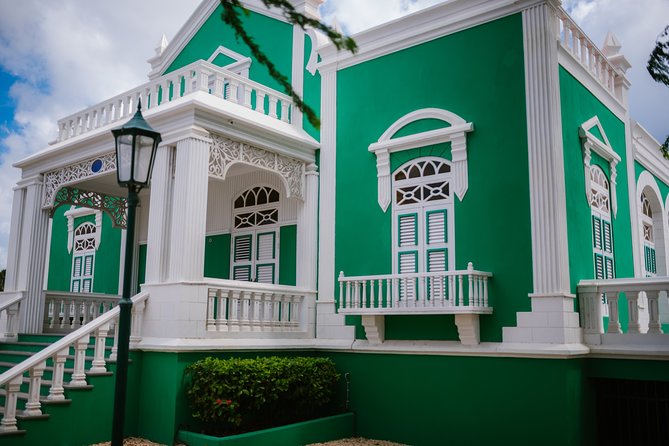
The route also passes one of Aruba’s first government buildings, now used for local arts and crafts by accredited artists. That stop links the city’s past with current creative work. You are not simply looking at old façades. You are seeing how some historic spaces continue to serve the community.
Parliament and the Protestant Church add civic and religious context
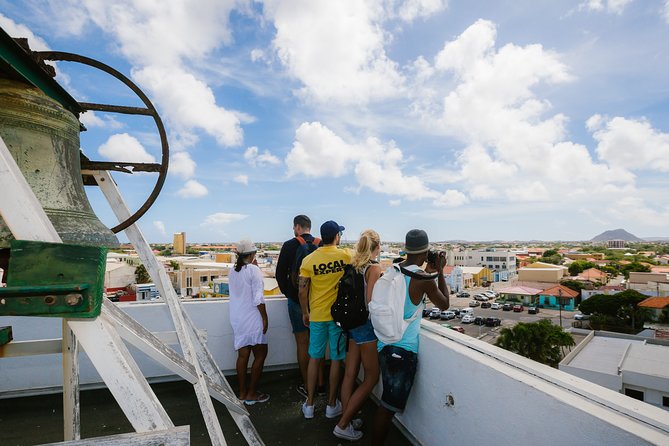
At Aruba Parliament, the guide explains the island’s political system and points out where local politicians debate laws and current affairs. This is a useful stop for anyone who wants to understand Aruba as a country within the Kingdom of the Netherlands, though the tour information focuses on the local political structure rather than promising a formal government visit.
The Protestant Church is one of Aruba’s oldest churches, dating to the 1800s. You hear how Protestantism arrived on the island and learn that it is not Aruba’s largest religion.
These stops are short, about five minutes at Parliament and two minutes at the church. That timing lets the tour cover more ground, but it also means you may not have enough time to study the church interior or ask every question. The political material can become personal depending on the guide. One participant found the political comments a little strong, so expect open conversation rather than a perfectly neutral script every minute.
Wilhelminastraat reveals local homes
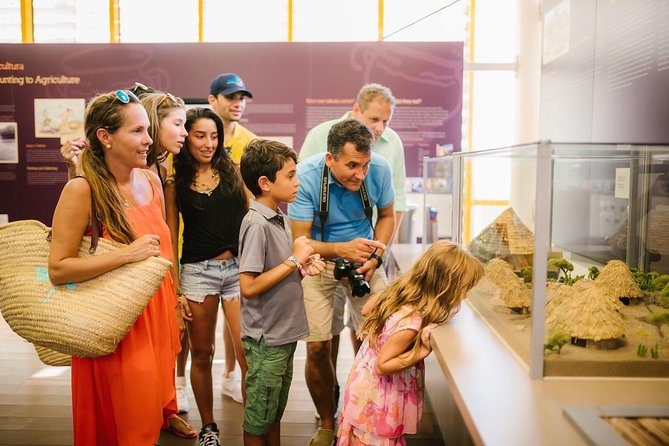
Wilhelminastraat takes you away from the main commercial streets and into a residential area. Your guide points out notable houses and explains where local people live.
I consider this one of the more useful parts of the route because it shows a side of Oranjestad that shopping areas cannot. The houses help you picture family life and changing building styles, while the quieter street gives the walk a different feel.
The stop lasts around five minutes, and the guide may point out several homes rather than lead you inside them. Treat it as a visual lesson in the city’s residential character, not a formal architecture tour.
The walk is easy, but Aruba’s heat is not
The route is described as a gentle walk, and many people find it manageable. Still, you are outside for roughly two and a half hours, with about 30 stops and plenty of standing.
The 9:00 am start is a real advantage. Several people found the heat to be the only major hindrance, and one person noted that the temperature made the walk feel harder later in the morning. Wear comfortable walking shoes, bring water, and eat before you arrive. Light clothing and sun protection are sensible choices.
The tour operates in all weather conditions. That means you should not assume a weather cancellation if the day is hot or rainy. Selected hotel pickup is available, and the activity ends back at the Cosecha meeting point. If you are staying near the major hotel area, downtown is reported to be roughly 10 to 15 minutes away by transport, though pickup details depend on your accommodation.
The group limit is 20, which keeps the tour more personal than a large coach outing. Service animals are allowed, and the tour is operated by a multilingual guide. Cruise passengers should pay close attention to booking instructions, since some cruise lines require booking through the ship.
Does the $45 price make sense?
At $45 per person, the value depends on what you want from Oranjestad. You receive about 2.5 hours with a local guide, two food tastings, and included entrance fees at Fort Zoutman and the National Archaeological Museum when those sites are open.
That is a fair price if you would otherwise wander without context and want help finding local food, historic buildings, and the political center. The guide’s advice about where to eat, drink, and return later adds value beyond the scheduled route.
The price feels less attractive if you mainly want dramatic sights or a large amount of museum time. Oranjestad’s core is compact, and one person felt the tour did not cover enough ground. A bus tour may suit you better if your priority is seeing the whole island. This walk is for understanding the capital, not checking off every beach and viewpoint in Aruba.
Who should book this walk?
I would choose it for a first morning in Aruba, especially if you want to learn the city before spending the rest of your stay at the beach or outside the capital.
It suits people who enjoy local stories, food samples, civic history, and a guide’s personal view of the island. It is also a good fit for cruise passengers with enough time after disembarkation, provided the ship’s booking rules and return schedule work for you.
I would be more cautious if you dislike heat, need long museum visits, or want a quiet, highly structured historical lecture. The tour’s quality depends heavily on the individual guide, and the schedule can feel packed. Still, guides such as Wendell, Evy, Marisa, Hazel, Milton, and Yvonne have helped make the experience lively and personal for many visitors.
FAQ
How long does the Aruba Downtown Historic and Cultural Walking Tour last?
The tour lasts approximately 2 hours and 30 minutes, although one experience ran about an hour longer than expected.
What time does the tour start?
The tour starts at 9:00 am.
Where does the tour meet?
The meeting point is Cosecha Aruban Craft Design & Heritage, at Zoutmanstraat 1 in Oranjestad, Aruba.
Where does the tour end?
The activity ends back at the meeting point.
Are museum entrance fees included?
Yes. Entrance fees at Fort Zoutman and the National Archaeological Museum are included when those museums are open.
Are food tastings included?
Yes. The tour includes two local tastings. Stops include pan bati at Coco Plum Restaurant and a local breakfast or party food tasting at Havenstraat.
Is the tour suitable for cruise ship passengers?
Yes, but cruise passengers from Carnival, Holland America, Princess, and P&O must book through their ship’s website or onboard. Passengers on other cruise lines must provide ship and port timing details when booking.
Can I cancel for a full refund?
Yes. You can cancel at least 24 hours before the start time for a full refund. Cancellations or changes made less than 24 hours before the start time are not accepted for a refund.
Should you book it?
Book this tour if you want a friendly introduction to Oranjestad, enjoy local food, and prefer stories about people and daily life over a quick photo stop. Start early, wear good shoes, and keep your expectations focused on a compact city walk with many short stops.
Skip it if you want a full-island tour, lengthy museum visits, or a route with little walking in the heat. For most first-time visitors who have a free morning in the capital, the combination of Fort Zoutman, archaeology, politics, old homes, and local snacks makes the $45 price reasonable.
Just added around the world
- Bern Private Walking Tour with a Local★ 4.5 · 75 reviews
- Berlin Walking Tour★ 4.5 · 378 reviews
- Bern Walking Tour: Explore Top Sights & Hidden Gems★ 5.0 · 108 reviews
- Small Group Walking Tour of East Berlin with a French Guide★ 5.0 · 176 reviews
- Berlin Street Art Walking Tour – Off The Grid★ 5.0 · 270 reviews
- Berlin Highlights Private Guided Walking Tour★ 4.5 · 89 reviews
- Private Walking Tour: World War 2 and Cold War Sites in Berlin★ 5.0 · 230 reviews
- Kreuzberg Berlin: Off the Beaten Track PRIVATE Walking Tour★ 5.0 · 128 reviews
History Walking Tours, compared.
History and Hauntings of Salem Guided Walking Tour
Read our review →
Freedom Trail History Small Group Walking Tour
Read our review →
Historic Charleston Guided Sightseeing Walking Tour
Read our review →
Tapas Walking Tour with Food, Wine, and History
Read our review →
Savannah History and Haunts Candlelit Ghost Walking Tour
Read our review →
A History of Terror – Belfast City Centre Walking Tour
Read our review →Browse the lists this tour appears in