
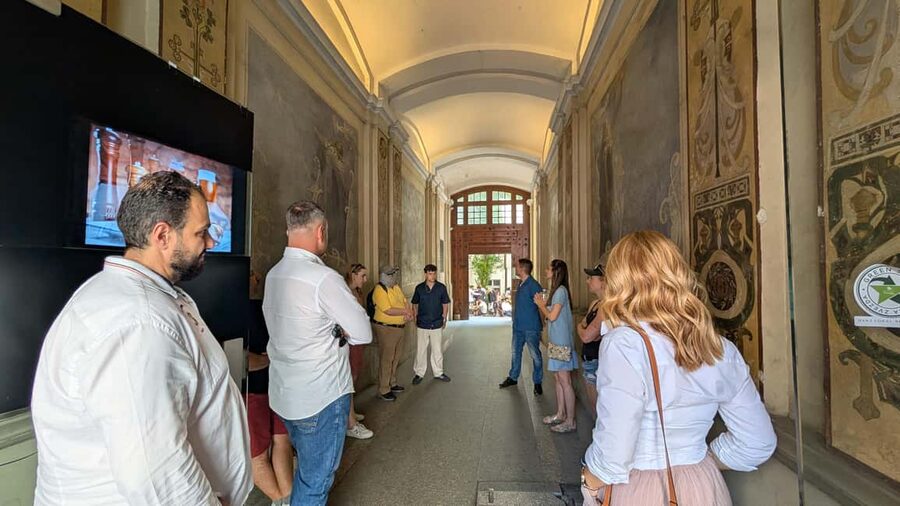
Review · HISTORY WALKING TOURS
Belgrade: 3-Hour Serbian History Walking Tour
Belgrade rewards the curious. This three-hour walking tour links the city’s Roman, Ottoman, Austro-Hungarian, and Yugoslav past with its life today. I especially like the route’s mix of grand political sites and ordinary city streets, plus the chance to ask direct questions about Serbia and the wider Balkans. The main tradeoff is pace: four kilometers and centuries of history leave little time for long visits inside buildings.
I also like the way the walk reaches both Skadarlija’s old-fashioned lanes and Kalemegdan’s river views. Guides such as Marija, Pedja, Aleksandar, Jovana, Tibor, and Andjelka have been praised for making difficult subjects clear, funny, and human. Still, the tour is more of an excellent introduction than a full study of Belgrade, so serious history fans may want extra museum time afterward.
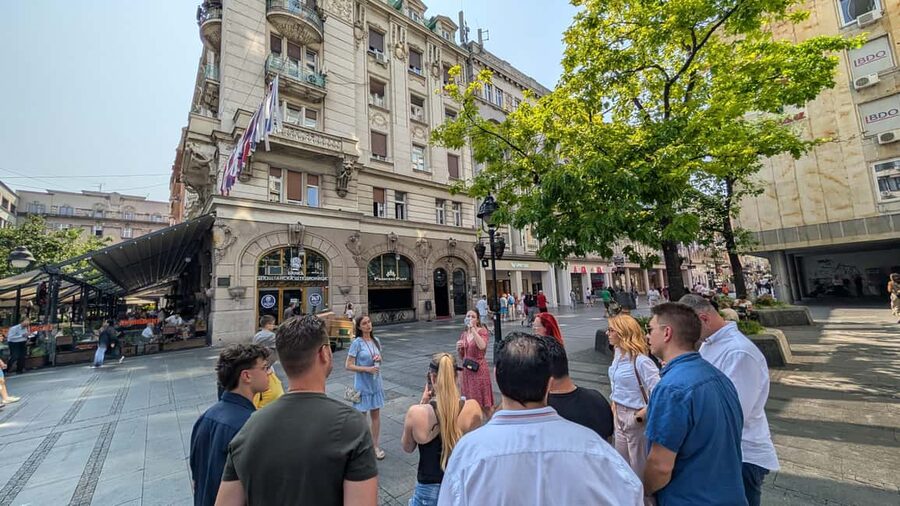
You meet beside the fountain at Terazije Square and finish near Rajićeva Shopping Center. Wear proper walking shoes, bring water in warm weather, and expect a route that is wheelchair accessible but still covers about four kilometers. At $35 per person, it offers strong value if you want your first day in Belgrade to come with context, local advice, and a useful sense of direction.
Key points to know before you book
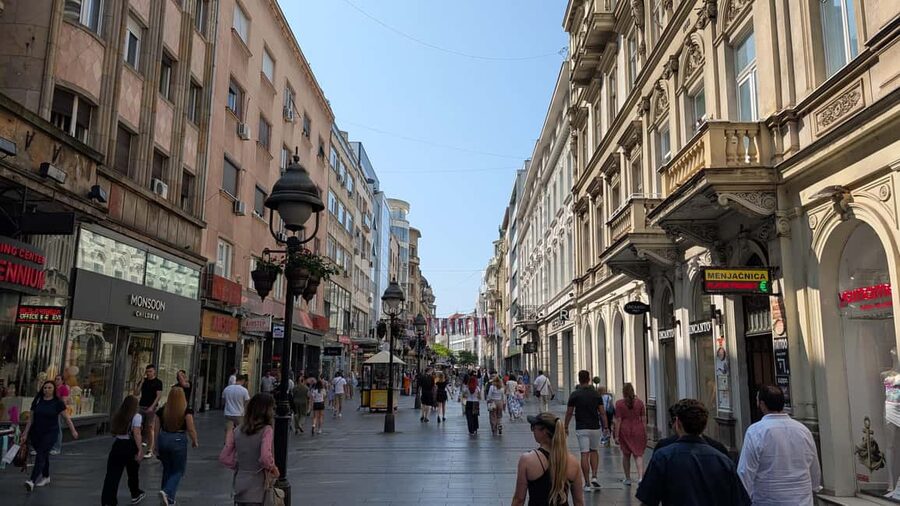
- The route covers about four kilometers: You walk from Terazije through the central city to Kalemegdan and the fortress.
- Serbia’s complicated past gets clear treatment: The guide connects ancient powers, the Ottoman and Austro-Hungarian eras, Yugoslavia, the 1990s, and present-day politics.
- Skadarlija adds a cultural break: This historic street brings food, music, poets, and old Belgrade atmosphere into an otherwise political and military route.
- Kalemegdan is the visual high point: The park, fortress, military displays, and meeting point of the Sava and Danube give the history a real setting.
- Guide quality is central to the experience: Marija, Pedja, Aleksandar, Jovana, Tibor, and others are praised for clarity, humor, patience, and thoughtful answers.
- It works best at the start of your stay: You leave with restaurant and museum suggestions, plus a better map in your head.
Start at Terazije with Belgrade’s modern center
The meeting point is Terazije Square, beside the fountain. This is a useful place to begin because it puts you in central Belgrade before the walk moves toward older districts and the fortress.
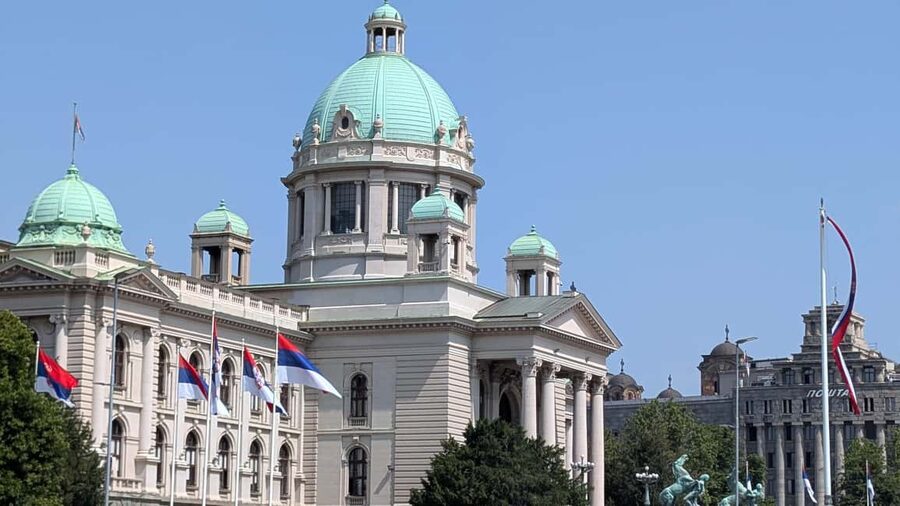
Your first major stop is the National Assembly of the Republic of Serbia. The scheduled visit lasts about 20 minutes, including explanation, sightseeing, and some free time. This gives the tour an early political focus and sets up one of its main themes: Belgrade is not simply an old city with attractive buildings. It has repeatedly been a place where decisions about Serbia, Yugoslavia, and the wider region played out.
I appreciate this kind of beginning because it gives later sights a frame. Instead of seeing government buildings as decoration, you can ask what they represent and how power has shifted across the city. The drawback is that the tour does not offer a full interior visit to every building, so you should not expect a museum-style architectural tour.
More History Walking Tours in the world:
- History and Hauntings of Salem Guided Walking Tour
★ 5.0 · 14,564 reviews - Lisbon: History, Stories and Lifestyle Walking Tour
★ 4.8 · 10,902 reviews - Boston: Freedom Trail History Small Group Walking Tour
★ 5.0 · 6,450 reviews
Walk Kneza Mihaila toward Republic Square
From Terazije, the route continues along Kneza Mihaila, one of Belgrade’s best-known central streets. You spend roughly 20 minutes walking and hearing about the city as it functions today.
This section helps connect the historical story to daily life. Shops, pedestrians, public spaces, and old façades share the same route, making it easier to see Belgrade as a living capital rather than a collection of monuments. The guide can also point out how the city’s architecture reflects changing rulers and periods.
Republic Square follows, with another 20-minute guided stop. It is a natural place to discuss Belgrade’s civic identity, public gatherings, and the way modern Serbia presents itself. A guide who can explain both the city’s past and its current politics adds real value here, particularly because Serbian and Balkan history can become confusing when dates and borders pile up.
The best guides do not simply list events. They explain cause and effect in plain language. Marija has been praised for making complex Serbian and Yugoslav subjects easy to follow, while Aleksandar is known for connecting historical forces to modern life. That style matters more than the number of facts you hear.
Skadarlija brings in food, poetry, and local character
The walk then reaches Skadarlija, also called Skadarska Street. You have about 20 minutes for a photo stop and guided sightseeing.
This is one of the route’s most appealing changes of mood. After government buildings and political history, Skadarlija gives you a street-level view of Belgrade’s cultural identity. Its old streets, restaurants, and artistic associations offer a setting for discussion of Serbian customs, music, food, and city life.
The stop is not a meal or a dedicated food tour, so keep your expectations in check. You may get restaurant suggestions, and several guides are praised for useful advice about where to eat and what to see later. But the tour is moving on, not sitting down for a long lunch.
I like this pause because it keeps the experience from becoming a march through wars and rulers. The Balkans can be presented too solemnly, especially on a history tour. Skadarlija gives the guide room to talk about people, habits, humor, and the social side of Belgrade.
Student Park and the Orthodox heart of the city
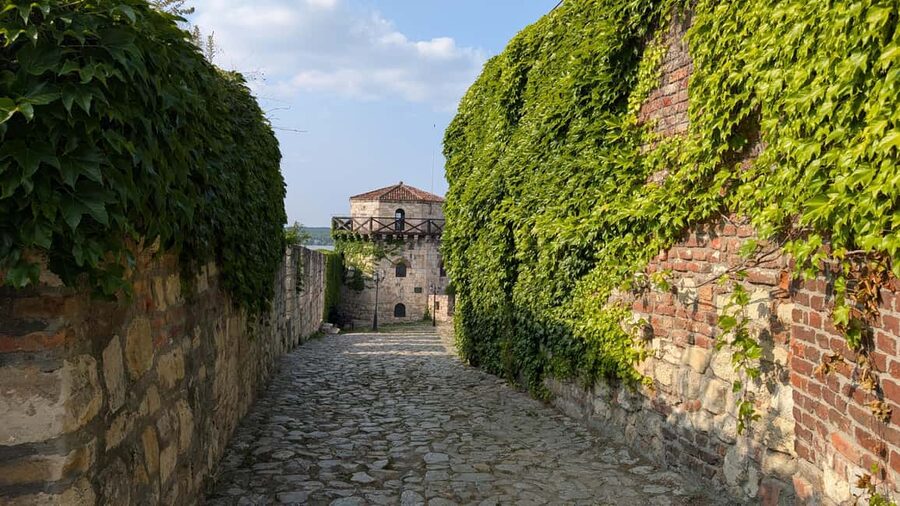
Student Park is next, with roughly 10 minutes of walking and explanation. It is a shorter stop, but it helps you understand the central district as a place shaped by students, public life, and changing political ideas.
The route then reaches the Church of the Holy Archangel Michael for about 15 minutes. This visit introduces Serbian religious and cultural traditions, which are important for understanding national identity. The guide can help you separate religious history from later political uses of religion, a useful distinction in a region where the two subjects often overlap.
This is also where a good guide earns the price of the tour. Serbia’s past includes shifting borders, competing empires, Orthodox Christian traditions, Ottoman influence, Austro-Hungarian rule, Yugoslavia, and the conflicts of the 20th century. A simple list would be hard to remember. The strongest guides use stories and clear explanations instead.
Jovana has been praised for adding Serbian traditions and everyday habits to the historical account. Tibor is valued for explaining culture, politics, economics, and national identity in accessible terms. Those details make the church stop more than a quick photograph.
A few more walks around the world worth a look
- Prague: 3-Hour Walking Tour of Old Town & Prague Castle
★ 4.7 · 5,696 reviews - Experience Porto’s Charm: 3-Hour Guided Walking Tour
★ 5.0 · 2,432 reviews - Valletta: 3-Hour Walking Tour
★ 4.7 · 2,219 reviews - Belfast: Political Conflict 3-Hour Walking Tour
★ 4.6 · 2,215 reviews
Kalemegdan Park opens the city toward the rivers
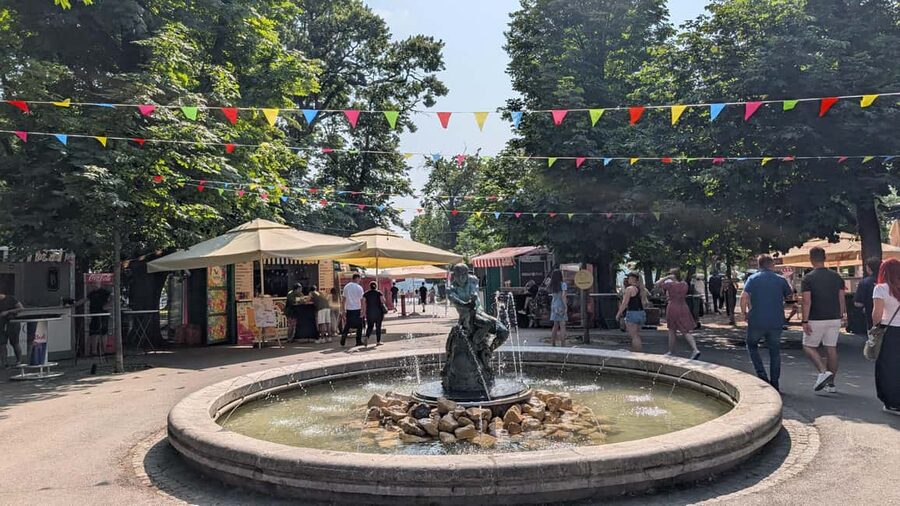
Kalemegdan Park is one of the tour’s main rewards. You spend about 20 minutes visiting, walking, and hearing how the park fits into Belgrade’s past.
Here, the setting does much of the teaching. Belgrade sits where the Sava and Danube meet, and that position helped make it a strategic frontier between major powers. The tour description presents the city as a border point between east and west, and Kalemegdan is where that idea becomes easiest to picture.
Bring your camera, but also pause to listen. The views help explain why control of Belgrade mattered for so long. Rivers carried trade, armies, and political influence, while the high ground offered military advantage. You are not just looking out over water. You are looking at the reason this city has been fought over repeatedly.
In hot weather, the route requires some planning. One guide, Maria, was praised for finding shady places during a very warm walk, but conditions will still depend on the day and the group. Comfortable shoes and water are sensible choices.
Belgrade Fortress turns history into scenery
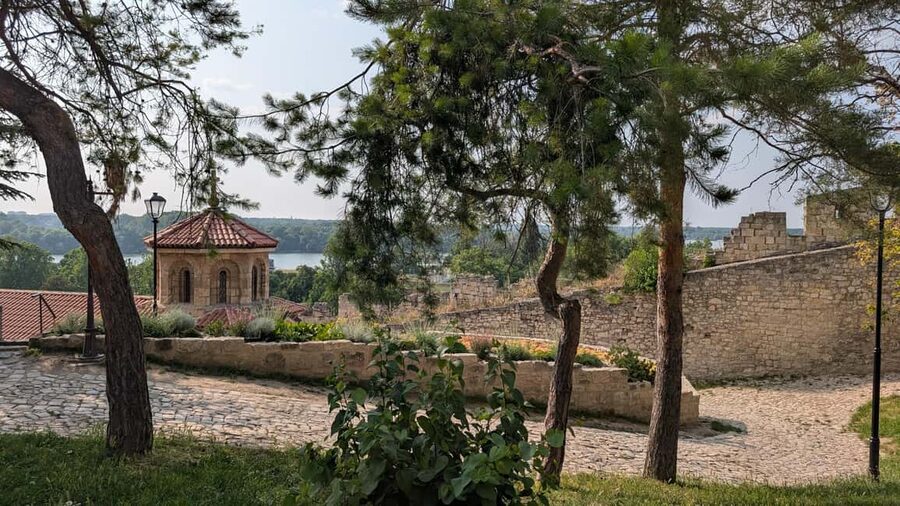
The fortress receives another 20 minutes, including a photo stop, walking, and guided sightseeing. This is the core historical section of the tour.
Belgrade’s position between two rivers made it a natural stronghold. Celts, Romans, Byzantines, Ottomans, Austro-Hungarians, Germans, and Russians all appear in the city’s long story, along with the people who lived through those changes. You will hear about invasion, defense, liberation, and the way the city’s borders and rulers shifted over time.
The great strength of this stop is scale. At street level, history can feel abstract. Inside the fortress area, walls, open ground, river views, and military sites give the story physical weight. You can better understand why Belgrade was described as the white city and why control of it mattered beyond Serbia itself.
The Military Museum is included as an encounter along the route, but this is not a full museum tour. If military history is your main interest, plan to return independently with more time. During the three-hour walk, the guide must keep the group moving and make room for the rest of the city.
Ružica Church offers a quieter final chapter
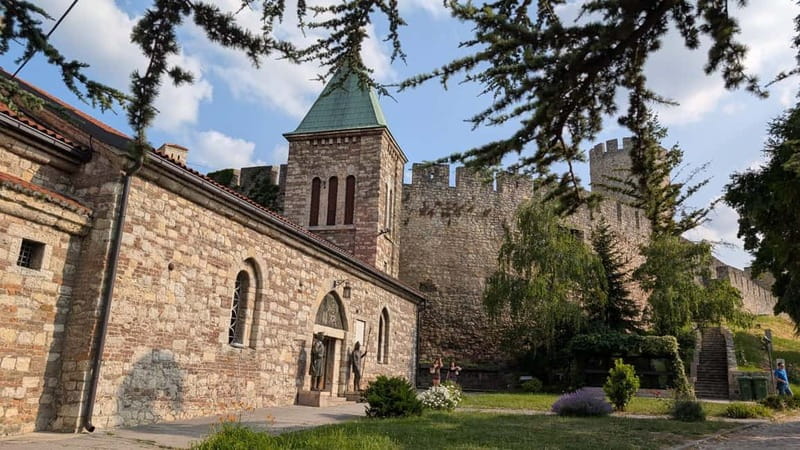
Ružica Church receives about 15 minutes. The church was built in the 15th century and is one of the most distinctive stops on the route.
Its age matters because it carries you back before the modern Serbian state, before Yugoslavia, and before the current city took shape. The visit also gives the tour a quieter spiritual moment after the open spaces and military focus of the fortress.
You should expect a guided visit and a photo stop rather than an extended religious study. Still, the church adds balance. The tour is not only about generals, empires, and political borders. It also points to faith, memory, and the traditions that survived through repeated change.
The Monument of Gratitude to France closes the historical arc
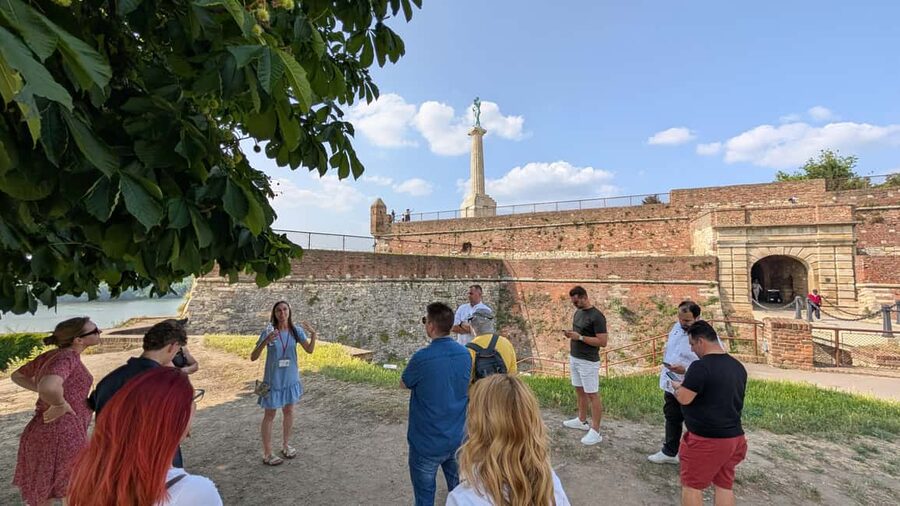
The final sightseeing stop is the Monument of Gratitude to France, with about 15 minutes devoted to it. This adds another layer to the story of Serbia’s international relationships and wartime memory.
By this point, the route has moved from government and public squares to old streets, religious sites, fortress walls, and monuments. The monument works as a final reminder that Serbian history cannot be understood in isolation. Foreign alliances, occupations, liberation movements, and European politics all shaped Belgrade.
The tour finishes at Rajićeva Shopping Center. That is practical because you are near central restaurants, shops, and further sightseeing. Guides often offer suggestions for the rest of your stay, and some have gone beyond the scheduled three hours by answering questions or helping with ideas for museums and restaurants.
How the guides shape the experience
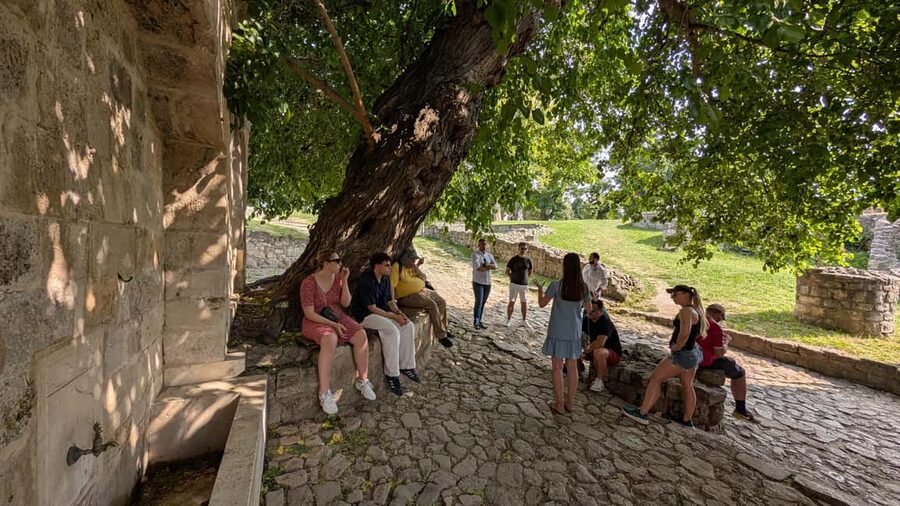
The guide is the real variable here. The route is strong, but the subject is too complex for a flat script.
Marija is repeatedly praised for clear, balanced explanations of Serbian history, current politics, religion, and social issues. Her humor and willingness to discuss different viewpoints appeal to people who want more than dates. Pedja is praised for patience, local insight, and connecting buildings with the city’s past. He has also been especially accommodating to families, including a parent walking with a small child.
Aleksandar is valued for explaining Serbia and Yugoslavia in a simple, engaging way. Jovana brings in traditions and practical suggestions, while Tibor is praised for turning difficult historical material into an approachable conversation. Andjelka has been noted for vivid storytelling, wit, and good pacing.
These details matter because you should feel free to ask questions. The tour is designed to discuss politics, geography, and geopolitics, including subjects you may hesitate to raise. A polite, open question can turn a standard stop into the most useful part of your afternoon.
Is $35 a fair price for three hours?
Yes, if you want orientation and historical context rather than admission-heavy sightseeing. The fee includes the live English-speaking guide, and the route covers central Belgrade, Skadarlija, the fortress, two churches, a major monument, and several civic spaces.
You are paying for interpretation, not transport or a meal. The walk covers about four kilometers, and most stops are outdoor explanations or short visits. If you prefer slow museum visits, private transfers, or extensive interior access, this may feel limited.
For a first day, though, the value is strong. You get a map of the center, a basic understanding of why Belgrade matters, and practical ideas for the rest of your stay. Free cancellation up to 24 hours before the start and reserve-now, pay-later booking also make it easier to fit into a changing trip plan.
Who should book this Belgrade history walk?
I would choose it for first-time visitors, short-break travelers, history fans, and anyone who wants help sorting out Serbia’s complicated past. It also suits visitors who enjoy asking questions and talking about modern politics without expecting a formal lecture.
Families can manage it, but remember that four kilometers and three hours may be demanding for very young children. One guide has been especially praised for being patient with a two-year-old, yet that kind of personal attention can depend on the group and the guide.
You should also book it if you want a useful introduction before visiting museums. The tour gives you enough context to decide which subjects deserve more of your own time.
Who may want a different experience?
You may prefer another format if you want a food-centered walk, a dedicated military museum visit, or a long architectural study. Skadarlija is included, but there is no stated meal. The Military Museum is part of the route, but the tour does not promise a lengthy museum visit.
You should also think about weather. The walk is outdoors and includes open fortress areas. Comfortable shoes are required, and warm days can make the route harder, even with a considerate guide.
Should you book the Serbian History Walking Tour?
I would book it, especially near the start of a Belgrade visit. The route is well chosen, the price is reasonable, and the guides are consistently praised for making complex subjects understandable without turning the experience into a dry lecture.
Go in expecting a brisk introduction, not an exhaustive study. If you listen closely at Kalemegdan, ask questions about the 20th century, and take note of restaurant and museum advice, you will finish with more than photographs. You will understand why Belgrade looks and feels the way it does.
FAQ
Where does the walking tour begin?
It begins at Terazije Square, next to the fountain.
Where does the tour finish?
The tour finishes at Rajićeva Shopping Center.
How long is the tour?
The experience lasts three hours.
How far do you walk?
The route covers about four kilometers.
What language is the tour offered in?
The live tour guide speaks English.
Is the tour wheelchair accessible?
Yes, the activity is listed as wheelchair accessible.
What should I bring?
Bring comfortable shoes. Water may also be useful, especially in warm weather.
Can I cancel for a full refund?
Yes. You can cancel up to 24 hours in advance for a full refund.
Just added around the world
- Bern Private Walking Tour with a Local★ 4.5 · 75 reviews
- Berlin Walking Tour★ 4.5 · 378 reviews
- Bern Walking Tour: Explore Top Sights & Hidden Gems★ 5.0 · 108 reviews
- Small Group Walking Tour of East Berlin with a French Guide★ 5.0 · 176 reviews
- Berlin Street Art Walking Tour – Off The Grid★ 5.0 · 270 reviews
- Berlin Highlights Private Guided Walking Tour★ 4.5 · 89 reviews
- Private Walking Tour: World War 2 and Cold War Sites in Berlin★ 5.0 · 230 reviews
- Kreuzberg Berlin: Off the Beaten Track PRIVATE Walking Tour★ 5.0 · 128 reviews
History Walking Tours, compared.
History and Hauntings of Salem Guided Walking Tour
Read our review →
Freedom Trail History Small Group Walking Tour
Read our review →
Historic Charleston Guided Sightseeing Walking Tour
Read our review →
Tapas Walking Tour with Food, Wine, and History
Read our review →
Savannah History and Haunts Candlelit Ghost Walking Tour
Read our review →
A History of Terror – Belfast City Centre Walking Tour
Read our review →Browse the lists this tour appears in