
Review · CITY HIGHLIGHTS WALKING TOURS
Highlights of Charleston Guided Walking Tour
History feels close in Charleston. This two-hour walk links the French Quarter and South of Broad with stories about churches, slavery, commerce, architecture, and the city’s long political past. I like the route’s clear first-timer focus, and I like that it includes famous sights such as Rainbow Row alongside less obvious details that are easy to miss on your own. The main caution is that the guide may spend a long time talking in one place, so this is better for people who enjoy serious history than for anyone expecting a brisk sightseeing stroll.
The experience is led by Oyster Point Historic Tours, with guides such as Bill Harris and Vanna earning especially warm praise for their humor, passion, and command of Charleston’s past. Bring water, sun protection, and comfortable shoes. You will be outside almost the entire time, and restrooms are not always available along the route.
Key points to know before you book
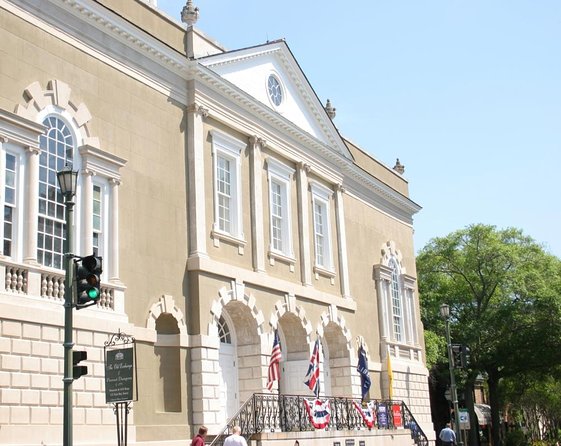
- The route covers six major stops between East Bay Street and Broad Street, including Rainbow Row, the Old Slave Mart Museum, and the Old Exchange.
- Bill Harris is a major draw for history-minded guests, with an entertaining style and strong command of local, national, and religious history.
- The tour is more talk-focused than walk-focused, so expect detailed explanations at several stops rather than constant movement.
- The Old Slave Mart Museum and Old Exchange require separate admission if you want to go inside.
- The group can include up to 20 people, small enough for a personal feel but not necessarily a private tour.
- Plan for Charleston weather, with bottled water, a hat, sunscreen, and rain gear. The company may cancel for lightning, flooding, or high winds.
Why this Charleston walk is useful on a first visit
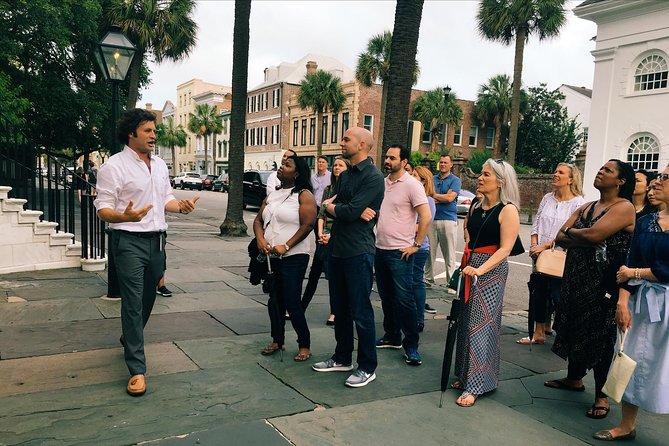
Charleston can look easy to cover. The historic center is compact, the streets are pleasant, and many of the grandest buildings are close together. But a self-guided walk often gives you a collection of pretty façades without explaining how the city developed or why its past remains difficult.
This tour gives you a two-hour framework. You move through the French Quarter and South of Broad while the guide connects religious freedom, colonial trade, slavery, the American Revolution, architecture, and modern preservation. That wider context is the strongest reason to book it.
I especially like the balance between famous photo stops and places with harder stories to tell. Rainbow Row is Charleston’s postcard scene, but the Old Slave Mart Museum forces the route to address the city’s role in the history of enslavement. The Old Exchange adds another piece, showing the economic and political importance of Charleston before and during the Revolution.
The guide’s personality matters here. Bill Harris is repeatedly praised for being funny, direct, and intensely well-read. He can give a broad account of the city, then connect it to the colonies, the wider world, religion, and American politics. Vanna is also described as personable and amusing, with a strong command of the subject.
That style will suit you if you like a guide who has opinions and enjoys explaining why events happened. It may be less appealing if you prefer a quiet walk with only brief comments. One particularly important point: the tour can become lecture-heavy. A past group felt they spent too long standing in one place and saw less of the city than expected. That is the tradeoff for receiving more historical detail.
More City Highlights Walking Tours in Charleston:
- Historic Charleston Guided Sightseeing Walking Tour
★ 5.0 · 6,216 reviews - Dublin Highlights and Hidden Gems Guided Walking Tour
★ 5.0 · 6,020 reviews - Vienna: Guided Walking Tour of City Center Highlights
★ 4.7 · 4,989 reviews
Starting at St. Philip’s Church
The meeting point is at 200 East Bay Street, and you are asked to arrive five to 10 minutes early. The group cannot wait for late arrivals, so give yourself time to find the starting point, especially if you are coming from a garage or public transit.
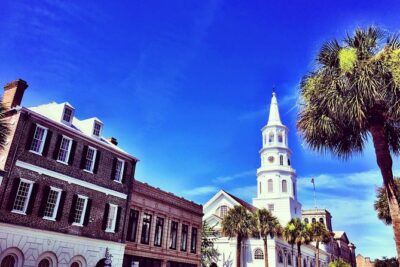
St. Philip’s Church is the first scheduled stop. You view the historic church connected with Charleston’s longest-meeting congregation. The stop lasts about 10 minutes and costs nothing to view from the route.
This opening works well because it immediately places you in old Charleston rather than beginning with general orientation. The church introduces the city’s religious and civic life, and it gives the guide a natural way to explain how Charleston grew and how its institutions shaped the city.
Do not expect an extended interior visit based on the published details. The stop is described as a view, and the tour is primarily outdoors. If you want to explore the church beyond the walk, ask your guide about timing and access rather than assuming it is included.
French Huguenot Church and Charleston’s religious story
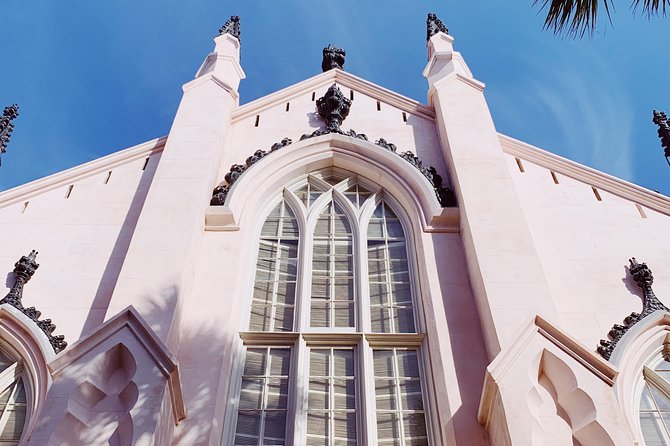
The next stop is the French Huguenot Church, described as the only church of its denomination in North America. You spend roughly 10 minutes here, with no admission fee included because the stop is a viewing point.
This is one of the route’s more distinctive stops. Many city walks focus only on military history, wealthy homes, and photogenic streets. This church gives the guide a chance to discuss the religious groups that helped shape Charleston and the forces that brought them to the region.
The tour’s guides are particularly strong when they connect local places to wider history. Bill’s background in religion, noted by several people who took the tour, adds useful depth here. If you enjoy learning how faith, politics, migration, and colonial society intersected, this may be one of the most rewarding parts of the walk.
Again, expect a talk beside the site rather than a guaranteed interior tour. Comfortable shoes matter because you may be standing on pavement while the guide speaks.
The Pink House Gallery and old Charleston architecture
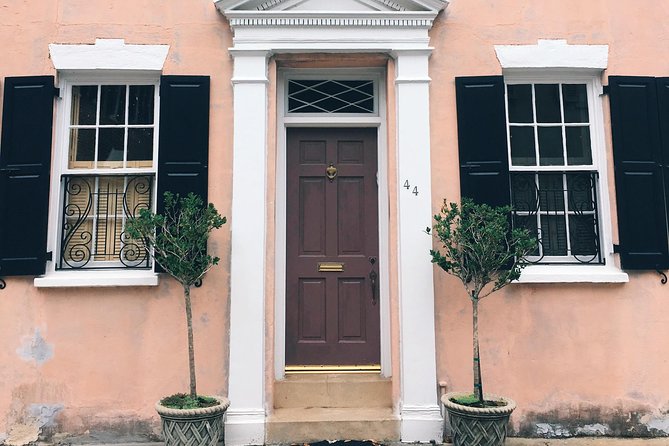
The Pink House Gallery is presented as the oldest private residence in Charleston. It is a small but memorable stop, especially after the larger churches. You get about 10 minutes to view it and hear why the building matters.
This part of the walk helps you read Charleston’s architecture instead of simply photographing it. The city’s old buildings can blur together when you are moving quickly, but a guide can point out what makes one house important, unusual, or historically useful.
The stop also adds variety. You are not only hearing about public institutions and major events. You are looking at a private home and considering how ordinary domestic buildings fit into the story of the city. That makes the route feel more like a walk through a lived-in historic district.
The drawback is that the stop may not satisfy anyone hoping for a full house tour. The experience is built around exterior views and explanations. If you want indoor access, you may need to return separately.
More Guided Walks in Charleston:
- Charleston Ghost & Graveyard Night-Time Guided Walking Tour
★ 4.5 · 1,100 reviews - Charleston: History and Architecture Guided Walking Tour
★ 4.8 · 349 reviews - Magical London: Harry Potter Guided Walking Tour
★ 4.7 · 22,044 reviews - History and Hauntings of Salem Guided Walking Tour
★ 5.0 · 14,564 reviews
The Old Slave Mart Museum and Charleston’s difficult past
The Old Slave Mart Museum is the most important stop for understanding the city’s connection to slavery. It is described as the only museum in Charleston dedicated to the history of enslaved people. Admission is not included, so you should budget separately if you want to enter.
The scheduled stop is about 10 minutes, which is enough for an introduction but not enough for a full museum visit. That distinction matters. The walking tour gives you context and points out the site, but you should not treat the stop as a substitute for spending time inside the museum.
This is also where the quality of the guide matters most. A strong guide can present Charleston’s past plainly, without softening the role of slavery in the city’s economy and development. Several people praised Bill for offering a direct account of local history, including facts that are often skipped in school lessons or polished city tours.
I appreciate that the route places this subject beside churches, homes, and civic buildings. It shows that slavery was not a separate chapter disconnected from daily life. It was tied to commerce, property, politics, and the growth of Charleston itself.
This portion may feel serious, and it should. If you are looking only for light sightseeing, the historical approach may feel heavier than expected. If you want an honest account of the city, it is essential.
The Old Exchange and Provost Dungeon
The Old Exchange and Provost Dungeon marks what the tour calls the pre-Revolutionary heart of economic Charleston. The stop lasts around 10 minutes, and admission is not included.
This site gives the guide a chance to explain Charleston as a trading center and political gathering place. Its importance is not just architectural. It represents the city’s commercial ambitions, colonial power structure, and role in the events leading toward the American Revolution.
The word dungeon can attract attention, but the value of the stop is broader than a quick look at an underground space. Listen for the connection between the building and the city’s public life. The guide’s job here is to show how money, government, protest, and war overlapped in one important place.
As with the museum, you are paying for the walking tour guide, not admission to the interior. If you want to go inside, check the separate entry arrangements and allow extra time beyond the two-hour walk.
Rainbow Row and the photogenic finish
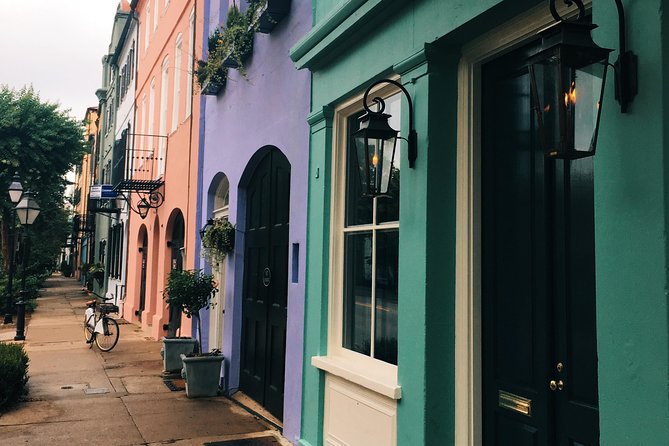
Rainbow Row is the route’s most familiar sight and its natural finale. The colorful row of historic buildings is Charleston’s most photographed view, and you get about 10 minutes to see it without an extra admission charge.
This is the lightest and most picture-friendly stop. After the heavier material at the Old Slave Mart Museum and Old Exchange, Rainbow Row gives you a chance to enjoy the city’s visual appeal. Your guide can also help put the buildings in context rather than treating them as a stand-alone photo backdrop.
The route generally ends near the intersection of Meeting Street and Broad Street, although the exact endpoint can change with the group’s pace and the guide. That is useful because you finish in a central area where you can continue sightseeing, find food, or walk to other historic sights.
The ending point is listed as 71 Broad Street, but think of that as a general finish rather than a guaranteed door-to-door endpoint. Keep your plans flexible by a few minutes.
What the guide style is really like
The strongest feature of this experience is the human guide. Bill Harris receives especially high praise for combining humor with serious historical detail. People describe him as charismatic, friendly, opinionated, and capable of speaking for hours about Charleston.
That can make the tour memorable. A guide who enjoys the subject can turn a church wall or old street corner into a starting point for a larger story. Bill is also described as someone who adjusts the level of detail to the group, offering either a lighter tour or a more demanding history lesson.
You should know what you are choosing. This is not a quick list of dates and building names. It can become a substantial history talk, with connections to religion, colonial politics, slavery, and the development of the United States. One group even felt they could have listened all day.
Vanna has also been praised for being funny, friendly, and well informed. Since guide assignments can vary, you should not assume Bill will lead every departure. If a specific guide matters to you, request one when booking, but understand that requests may not be guaranteed.
Timing, group size, and physical effort
The walk lasts about two hours and has a maximum group size of 20. That is a reasonable size for a city walk. You are not likely to feel lost in a huge crowd, but it may not have the close attention of a private tour.
The route includes six main stops, each planned for about 10 minutes. Walking time between them fills out the rest of the experience. In practice, the amount of walking may depend on how much the guide talks at each location and how quickly the group moves.
You need a moderate level of fitness. The route is outdoors and involves walking and standing in historic streets. Wear comfortable shoes, bring water, and use sunscreen, sunglasses, or a hat. Charleston heat can make a two-hour walk feel longer than the clock suggests.
Restrooms are not always accessible along the route. Use one before you arrive. Children are allowed but must be with an adult, and the tour is designed mainly with adults in mind. Children and young adults can enjoy it, especially if they like history, but very young children may find the long explanations difficult.
Service animals are allowed. Other pets are not permitted.
Weather, parking, and the real value
Charleston weather can change the feel of this tour. The walk usually operates in rain, but dangerous conditions such as lightning, flooding, or high winds can lead to cancellation. Bring your own rain gear rather than assuming supplies will be available.
Bottled water is strongly recommended because it may not be available for purchase along the route. If you drive, parking fees are separate. Two suggested city garages are at 1 Cumberland Street and 89 Cumberland Street, both about a five-minute walk from the meeting point.
There is no ticket price provided here, so I cannot judge the exact cost. The value depends on what you want from a city tour. If you only want quick photos of Rainbow Row and the churches, a self-guided walk may be enough. If you want a serious explanation of why these places matter, the guide adds the main value.
The admission charges for the Old Slave Mart Museum and Old Exchange are also separate. Think of the walking tour as an introduction and orientation. You may choose to return to one or both sites afterward for a longer visit.
Free cancellation is available up to 24 hours before the start time. Inside that window, changes and refunds are not accepted unless poor weather causes the company to cancel.
Who should book this walking tour?
I would choose this tour if you are visiting Charleston for the first time and want more than architecture photos. It is particularly well suited to adults, families with older children, history teachers, students, and anyone who enjoys a guide with a strong point of view.
You should also book it early in your Charleston stay. The route gives you a useful map of the historic center, and the guide may point out places you want to revisit on your own.
I would hesitate if you dislike standing still while someone gives a long explanation. The tour can be talk-heavy, and the pace may feel slow to someone expecting continuous walking. It is also not ideal if you need frequent restroom stops or do not enjoy being outdoors in heat or rain.
Should you book the Charleston Guided Walking Tour?
Book it if you want Charleston explained, not simply displayed. The combination of churches, private architecture, slavery history, colonial commerce, and Rainbow Row gives you a well-rounded two-hour introduction.
The best reason to go is the guide. Bill Harris, in particular, has the rare ability to make serious history entertaining without turning it into a shallow performance. Request him if possible, but keep your expectations flexible.
Skip it if you want a fast-moving photo walk or a guaranteed interior tour of every major site. For everyone else, especially first-time visitors who value honest history and lively storytelling, this is a strong use of two hours.
FAQ
How long is the Highlights of Charleston Guided Walking Tour?
The tour lasts approximately two hours.
Where does the tour begin?
It begins at 200 East Bay Street, Charleston, South Carolina 29401. You should check in five to 10 minutes before the scheduled start.
Where does the tour end?
It generally ends near the intersection of Meeting Street and Broad Street, with 71 Broad Street given as the endpoint. The exact finish can change based on walking speed and the guide.
Which sights are included on the route?
The route includes St. Philip’s Church, the French Huguenot Church, the Pink House Gallery, the Old Slave Mart Museum, the Old Exchange and Provost Dungeon, and Rainbow Row.
Are museum admission fees included?
No. Admission to the Old Slave Mart Museum and the Old Exchange and Provost Dungeon is not included in the tour ticket.
What should I bring?
Bring comfortable walking shoes, bottled water, sunscreen, a hat, sunglasses, and rain gear if needed. Restrooms are not always accessible along the route.
Are children and pets allowed?
Children must be accompanied by an adult. Service animals are allowed, but pets are not permitted unless they are registered service animals.
What happens if the weather is bad?
The tour usually operates in rain, but it may be canceled for dangerous or disruptive conditions such as lightning, flooding, or high winds. If the company cancels, you can reschedule or receive a full refund.
Just added around Charleston
- Charleston: Old Walled City Historical Walking Tour★ 4.7 · 705 reviews
- Charleston walking tour with a Citadel history professor★ 5.0 · 105 reviews
- Charleston: 90-Minute Ghost & Graveyard Walking Tour★ 4.5 · 75 reviews
- Charleston: History and Architecture Guided Walking Tour★ 4.8 · 349 reviews
- Charleston: 90-Minute Ghost and Dungeon Walking Tour★ 4.2 · 266 reviews
- Charleston Ghost & Graveyard Night-Time Guided Walking Tour★ 4.5 · 1,100 reviews
- Charleston historical walking tour with a Professor of History at The Citadel★ 5.0 · 1,284 reviews
- Charleston’s Pleasing Terrors Night-Time Walking Ghost Tour★ 5.0 · 1,345 reviews
City Highlights Walking Tours, compared.
Historic Charleston Guided Sightseeing Walking Tour
Read our review →
Dublin Highlights and Hidden Gems Guided Walking Tour
Read our review →
Guided Walking Tour of City Center Highlights
Read our review →

City Highlights Temple and Market Walking Tour
Read our review →
Montmartre Hidden Gems and Scenic Highlights Walking Tour
Read our review →

Browse the lists this tour appears in