

Review · HISTORY WALKING TOURS
Charleston walking tour with a Citadel history professor
Charleston rewards curious walkers. This three-hour tour with Eric Lager, a Citadel history professor, connects colonial streets, old alleys, graveyards, churches, architecture, and the people who shaped the city. It is not just a parade of pretty buildings. Eric explains why Charleston developed as it did, and how local events fit into South Carolina and American history.
I especially like the small group limit of 12 and Eric’s academic background. The format gives you room to ask questions, hear clearly, and notice details that a larger group would pass by. The main consideration is the length: three hours on foot can feel demanding in heat or rain, and the tour is not suitable for wheelchair users.
The tour costs $40 per person, which is a fair price for a private-feeling history walk led by a professional historian. You will not enter house museums, and food, drinks, hotel pickup, and drop-off are not included. Still, if you want Charleston explained rather than simply pointed out, this is one of the stronger choices in the city.
Key points to know before you book

- A Citadel history professor leads the walk: Eric Lager teaches and works in South Carolina history, with a focus on the Colonial Era, American Revolution, Antebellum Era, and Civil War.
- The group stays small: No more than 12 people means easier conversation, clearer speaking, and more chances to ask questions.
- The route reaches beyond postcard views: Expect old alleys, graveyards, Washington Park, the Four Corners of Law, Dock Street Theater, and the French Huguenot Church.
- Architecture gets proper attention: Eric explains why Charleston homes and public buildings were designed as they were, not just when they were built.
- The pace is built for conversation: Previous groups describe an easy walking pace, with time for questions and discussion.
- Prepare for outdoor conditions: Wear comfortable shoes and bring water. The tour runs rain or shine unless conditions become unsafe.
Why Eric Lager changes the feel of the tour

Charleston has no shortage of horse carriages, sightseeing buses, and walking tours. The useful difference here is the guide’s training and teaching experience. Eric Lager presents himself as a historian specializing in South Carolina and Charleston from the colonial period through the Civil War and into the present.
That background matters because Charleston’s story is not a single subject. Its architecture connects to climate and social customs. Its churches connect to immigration and religious freedom. Its public spaces connect to politics, war, commerce, and civic life. A guide who can move between those subjects gives you a clearer picture of the city.
Eric also seems to favor stories over a list of dates. His approach includes famous and infamous characters, local incidents, architectural clues, religious context, and cultural influences. That mix keeps the walk from becoming a lecture delivered beside a sidewalk.
His speaking style receives strong praise for being clear, humorous, and easy to follow. He also welcomes questions rather than treating them as interruptions. For you, that can make the difference between hearing facts and actually understanding why they matter.
More History Walking Tours in the USA
- Historic Charleston Guided Sightseeing Walking Tour
★ 5.0 · 6,216 reviews - Hidden Alleyways and Historic Sites Small-Group Walking Tour
★ 5.0 · 2,335 reviews - Charleston historical walking tour with a Professor of History at The Citadel
★ 5.0 · 1,284 reviews
A small group makes Charleston easier to read
The tour allows no more than 12 people, and some departures have been described as closer to 10. That is a valuable limit in a historic district where sidewalks can be tight and street noise can compete with a guide’s voice.
I like small tours because they give the guide room to adjust. If your group has questions about architecture, religion, military history, or local personalities, Eric can spend time on the subject without holding up two dozen people. He also makes a point of speaking with people individually, which adds a personal touch without turning the tour into a private booking.
There is a practical benefit, too. You can stay close enough to hear and see what the guide is pointing out. A large group often turns a historic building into a distant backdrop. Here, details are more likely to remain visible and useful.
The tradeoff is that small departures can fill quickly. If this is important to your Charleston plans, reserve early. A fully booked history walk does not help you after you arrive.
Starting at 108 Meeting Street
The meeting point is at 108 Meeting Street, beside the brick wall on the sidewalk. Look for a building with four small white Ionic Greek columns. It now serves as a graphic design center for the City of Charleston and is not open to the public.
The location is directly across from Hibernian Hall and the pink Mills House Hotel. There are restrooms at the Mills House Hotel, but not at the meeting building, so plan ahead before the three-hour walk begins.
This is a useful place to begin because it puts you right in the historic district rather than sending you through a visitor center or hotel lobby. You should arrive ready to walk, with comfortable shoes and water in hand.
There is no hotel pickup or drop-off. You make your own way to the starting point, and the experience remains focused on the central streets rather than transportation between distant attractions.
Colonial Charleston through alleys and graveyards

The walk looks at Charleston from its founding in 1670 to the present. The colonial period forms an important foundation, and the route uses streets, alleys, churches, and burial grounds to make that era easier to picture.
Old alleys are especially useful because they show a side of Charleston you could easily miss while following the main roads. A guide can point out how the city developed behind its grand facades and explain the people, work, and movement that shaped those spaces.
Graveyards add another layer. They are not simply quiet scenic stops. Names, dates, religious symbols, and burial customs can reveal social rank, faith, family connections, and the hazards of earlier life. Eric’s historical training gives this part of the walk more purpose than a quick glance at old stones.
You should expect plenty of information. The tour is designed for people who want context, not just a list of photo stops. If you prefer a short orientation with only a few facts, three hours may feel long. If you enjoy asking why a city looks and functions the way it does, the length works in your favor.
More History Walking Tours in Charleston:
- Charleston: Old Walled City Historical Walking Tour
★ 4.7 · 705 reviews - Charleston: History and Architecture Guided Walking Tour
★ 4.8 · 349 reviews - History and Hauntings of Salem Guided Walking Tour
★ 5.0 · 14,564 reviews - Lisbon: History, Stories and Lifestyle Walking Tour
★ 4.8 · 10,902 reviews
Dock Street Theater and the French Huguenot Church

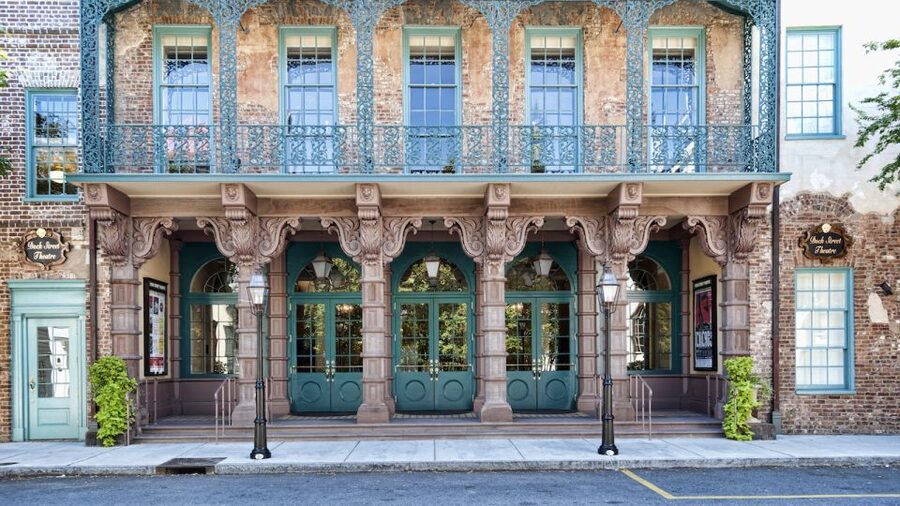
Two named stops are the Dock Street Theater and the French Huguenot Church. Both help show how Charleston’s public life was shaped by culture, religion, and the arts.
The Dock Street Theater gives the tour a chance to discuss Charleston’s performing arts and civic life. It is the kind of building that looks attractive from the outside, but becomes more meaningful when you know what role it played in the city.
The French Huguenot Church points to Charleston’s European religious influences. Its presence helps explain that the city’s identity was formed by more than one colonial tradition. You will hear how religious communities and cultural groups contributed to Charleston’s development.
The tour does not include entry into house museums, so do not book it expecting interior visits. The focus is the streetscape and the guide’s interpretation. That can be a better fit for a first-day orientation, especially if you plan to visit museums separately.
The Four Corners of Law and Washington Park
The Four Corners of Law is one of the tour’s most useful civic landmarks. The name refers to the meeting point of four buildings representing different forms of authority: religious, political, judicial, and municipal power.
Rather than treating the corner as a quick photo stop, Eric can use it to explain how Charleston organized public life. It is a good example of the tour’s wider method: one location becomes a doorway into several subjects.
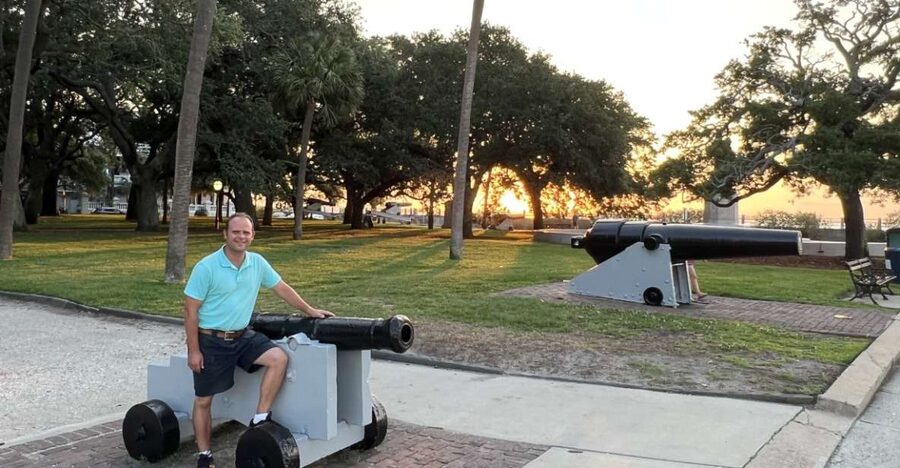
Washington Park adds another public space to the route. Parks can seem simple until a guide explains how they fit into a city’s political and social history. This stop gives you a chance to consider Charleston not only as a collection of old houses, but also as a living civic center.
You may find that these locations become easier to remember because they connect ideas to physical places. That is one of the best reasons to take a walking tour early in your visit. Afterward, familiar streets carry more meaning.
Architecture with reasons behind it
A recurring strength of this walk is the attention to architecture. Eric explains why homes and buildings were designed in particular ways, including the practical functions behind their form.
That approach is more useful than memorizing architectural labels. You begin to look at doors, windows, building orientation, public facades, and street layouts as evidence. The city becomes something you can read.
The architectural material also links neatly to history. Design reflects climate, wealth, trade, family life, religion, and social customs. A building can tell you about daily life even when no museum label is nearby.
This is where a professional historian’s background adds real value. Eric is not limited to the most famous names and dates. He can connect a building to the larger story of Charleston and the United States.
One caution is worth noting. A lot of detail is packed into the walk. Some people have wished they had taken notes because Eric covers so much. If a particular subject matters to you, ask questions and write down a few names afterward.
Stories of famous and infamous Charlestonians
The walk also brings in the people behind the city’s public image. Charleston’s past includes celebrated leaders, difficult characters, religious figures, civic personalities, and people whose actions left a darker mark.
Personal stories help prevent the tour from becoming too abstract. Dates tell you when something happened. A well-told story helps you understand how people made choices, argued, built, worshiped, profited, suffered, and changed the city.
Eric’s humor is part of the appeal, but it does not replace serious history. The strongest descriptions of his style point to a balance between entertaining delivery and careful attention to facts. That is exactly what you want on a long walking tour.
The approach also leaves room for questions. If you are interested in the Revolutionary War, the Civil War, religion, architecture, or Charleston’s cultural development, you can steer part of the conversation toward those areas.
What the pace and weather are really like
The walk lasts three hours, although some departures have finished closer to two and a half or two hours and 45 minutes. The exact timing can vary, but you should plan your morning or afternoon around a substantial outdoor activity.
The pace is described as easy, with regular stops for explanation and questions. Even so, you remain on your feet for a long time. Comfortable shoes are not a minor suggestion here. Water is also important, especially during warm weather.
The tour operates rain or shine unless conditions are unsafe. Bring weather protection and dress for the forecast. Charleston’s old streets can be uneven, and the tour is not suitable for wheelchair users.
Pets are not allowed, although assistance dogs are permitted. There are no food or drink inclusions, so handle those needs before or after the walk unless you bring water with you.
Is $40 a fair price?
At $40 per person, this sits in a reasonable range for a three-hour guided walk, particularly when the guide is a professor with nearly two decades of combined college teaching and public history experience.
The value comes from the depth and small group size. You are paying for interpretation, not transportation or admission tickets. The tour does not include house museum entry, meals, or hotel transfers, so compare it with what you actually want from a Charleston experience.
I think the price works best for first-time visitors, history fans, architecture enthusiasts, and anyone who wants a strong orientation before exploring alone. It also suits repeat visitors who have seen the main buildings but want to understand the people and decisions behind them.
It may be less suitable if you want a quick photo tour, dislike extended historical discussion, or need a fully accessible route. In those cases, check the format carefully before booking.
Who should book this Charleston history walk?
Book it if you like asking questions and want a guide who can explain connections between buildings, events, religion, politics, and culture. The tour is especially useful if you are interested in the colonial era, the American Revolution, the Antebellum Era, or the Civil War.
It is also a good choice for couples, families with older children, and small groups who value conversation. The limit of 12 keeps the experience more personal than many city tours.
I would suggest taking it near the start of your stay. Once you understand the street plan and the main historical themes, later walks through Charleston become more rewarding.
Final verdict: a strong choice for serious curiosity
This is the tour I would choose if I wanted Charleston explained by a historian rather than simply displayed. Eric Lager’s teaching background, clear speaking style, humor, and willingness to answer questions give the walk a personal feel.
The main drawbacks are practical: three hours outside, no museum entry, no transportation, and limited accessibility. But at $40, the small group and level of historical detail offer good value.
Book this tour if you want to leave Charleston seeing more than attractive streets. You should come away noticing why buildings look the way they do, how public spaces gained meaning, and how the city’s past still shapes its present.
FAQ
How long is the Charleston History Walk?
The tour is scheduled to last three hours. Some past departures have lasted about two and a half hours to two hours and 45 minutes.
How much does the tour cost?
The price is $40 per person.
Who leads the tour?
Eric Lager leads the walk. He is a Citadel history professor with experience teaching at the college level and working in public history.
What subjects does Eric specialize in?
His specialties include South Carolina and Charleston history during the Colonial Era, American Revolution, Antebellum Era, and Civil War.
How large is the tour group?
The group is limited to no more than 12 people. Some departures have had 10 or fewer participants.
Where does the tour meet?
The meeting point is along the brick wall on the sidewalk in front of 108 Meeting Street, across from Hibernian Hall and the pink Mills House Hotel.
Are restrooms available at the meeting point?
There are no restrooms at 108 Meeting Street. Restrooms are available at the Mills House Hotel.
What should I bring?
Bring comfortable shoes and water.
Does the tour run in bad weather?
The walk operates rain or shine unless conditions are unsafe.
Is the tour wheelchair accessible?
The tour is not suitable for wheelchair users. Pets are not allowed, but assistance dogs are permitted.
Just added around Charleston
- Charleston: Old Walled City Historical Walking Tour★ 4.7 · 705 reviews
- Charleston: 90-Minute Ghost & Graveyard Walking Tour★ 4.5 · 75 reviews
- Charleston: History and Architecture Guided Walking Tour★ 4.8 · 349 reviews
- Charleston: 90-Minute Ghost and Dungeon Walking Tour★ 4.2 · 266 reviews
- Charleston Ghost & Graveyard Night-Time Guided Walking Tour★ 4.5 · 1,100 reviews
- Charleston historical walking tour with a Professor of History at The Citadel★ 5.0 · 1,284 reviews
- Charleston’s Pleasing Terrors Night-Time Walking Ghost Tour★ 5.0 · 1,345 reviews
- Charleston Haunted Booze and Boos Ghost Walking Tour★ 5.0 · 1,569 reviews
History Walking Tours, compared.

History and Hauntings of Salem Guided Walking Tour
Read our review →
Freedom Trail History Small Group Walking Tour
Read our review →
Historic Charleston Guided Sightseeing Walking Tour
Read our review →
Tapas Walking Tour with Food, Wine, and History
Read our review →
Savannah History and Haunts Candlelit Ghost Walking Tour
Read our review →
A History of Terror – Belfast City Centre Walking Tour
Read our review →Browse the lists this tour appears in