
Review · HISTORY WALKING TOURS
Charleston historical walking tour with a Professor of History at The Citadel
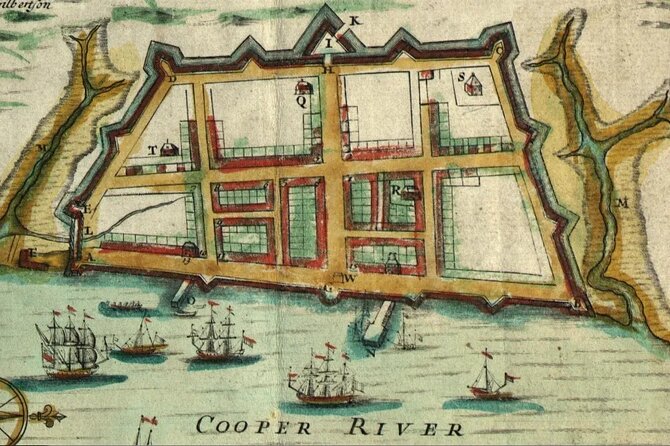
Charleston rewards curious walkers. This three-hour tour gives you a close look at the city with Eric Lager, a Ph.D. historian and professor at The Citadel, moving through the old streets in a group capped at 12 people. You cover everything from the colonial era and American Revolution to the Civil War and modern Charleston, with buildings and public squares serving as your classroom.
I like the small-group format, which makes it easier to hear, ask questions, and speak with Eric as you walk. I also like the serious historical focus. This is not a quick parade of pretty houses and easy facts. The tradeoff is that the pace is packed, and the experience suits people who want a substantial history lesson more than those seeking a light stroll.
Key points to know before you book
- A real history professor leads the walk: Eric Lager teaches at The Citadel and brings academic depth without turning the tour into a lecture hall.
- The group is limited to 12: That small size helps you hear clearly and gives you room to ask detailed questions.
- You walk through Charleston’s historic core: The route links churches, civic buildings, the French Quarter, Washington Square, the Battery, and views toward Fort Sumter.
- Three hours pass quickly: The tour covers roughly 400 years, so expect a steady stream of stories about politics, religion, architecture, war, and city life.
- Fort Sumter is viewed from shore: You see the site from the Battery, but this tour does not include a boat trip or admission to the fort.
- Good weather matters: You need a moderate level of fitness, and the tour can be changed or refunded if poor weather causes cancellation.
Why this Charleston walk feels different

Charleston offers plenty of ways to see its historic center, but this walk is built around explanation rather than simple sightseeing. Eric Lager’s background in American and European nineteenth-century history gives the route a wider frame. You are not just told that a building is old. You learn how it fit into Charleston’s political, religious, commercial, and military life.
I especially like the way the route links grand events to ordinary streets. A church, courthouse, hotel, or square becomes part of a larger story. The city’s past can otherwise feel like a string of handsome façades. Here, the buildings help you follow the arguments, conflicts, ambitions, and changes that shaped South Carolina.
The tone also matters. Eric is described as funny, approachable, and happy to answer questions, including questions that stray beyond the basic route. That is useful in a small group. If you are interested in architecture, the Civil War, religion, government, or the American Revolution, you can push the discussion in a direction that suits you.
The main caution is information density. You will hear a great deal in three hours. People who want a relaxed walk with only a few highlights may find the presentation too full. For history buffs, that is likely the point.
More History Walking Tours in the USA
- Historic Charleston Guided Sightseeing Walking Tour
★ 5.0 · 6,216 reviews - Hidden Alleyways and Historic Sites Small-Group Walking Tour
★ 5.0 · 2,335 reviews - Charleston: Old Walled City Historical Walking Tour
★ 4.7 · 705 reviews
Starting at Mills House and Dock Street Theater
The tour begins at 108 Meeting Street, near Mills House Charleston, Curio Collection by Hilton. The hotel is not just a convenient starting point. Its early Civil War connections give Eric a chance to place Charleston in the tense years when the city was moving toward conflict.
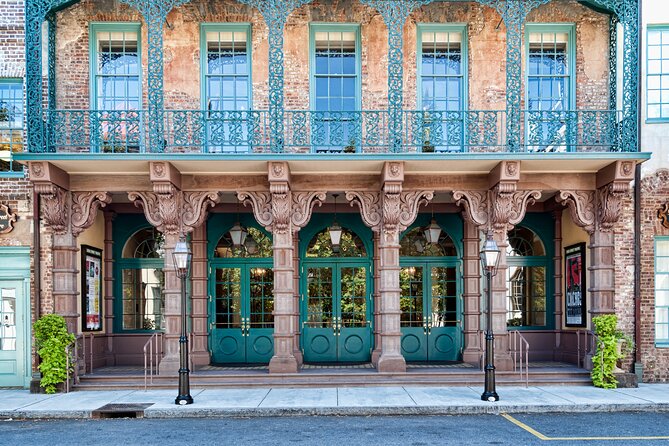
From there, the walk reaches Dock Street Theater. This is one of the best stops for understanding Charleston’s place in American cultural life. You hear about the first theater built in North America and the colorful, sometimes infamous people connected with it.
The stop lasts about ten minutes, which gives you enough time for the main story without turning the tour into an interior visit. Admission is not charged for the tour stop. You should think of this as an exterior history lesson, not a ticketed theater performance.
Next comes the Pink House Gallery, one of the oldest buildings in Charleston, dating to about 1712. The stop is brief, around five minutes, but it helps show how early Charleston buildings can be small, unusual, and easy to overlook if you are walking alone.
Washington Square and Charleston’s public life
Washington Square gives the route a little breathing room. You spend about 15 minutes here, taking in a historic public space with several monuments.
This is a useful place to listen for the way Charleston remembers its past. A square is more than a patch of grass and a statue. It can reveal which people and events a city chooses to honor, and how public memory changes over time.
The route then moves to Charleston City Hall. The building’s earlier uses are part of the story: it once served as a meat market and a bank before becoming City Hall. That sequence shows how civic buildings change as a city grows and its needs shift.
At the Charleston County Courthouse, Eric explains the building’s earlier role as the old South Carolina statehouse. This is one of the tour’s stronger political stops. The courthouse is tied to the machinery of government, not just the visual appeal of old Charleston.
I like this section because it moves beyond famous names and war dates. You get a sense of how Charleston worked as a city, with spaces for trade, law, banking, government, and public debate.
St. Michael’s Church and the city’s religious past
St. Michael’s Church is one of the route’s major landmarks. Completed in 1761, it is Charleston’s oldest church edifice.
The stop lasts about ten minutes. You learn about the church’s place in Charleston’s religious and civic life, and you can ask questions about the people and events connected with it. The tour does not present the church as an isolated work of architecture. Instead, it helps you see how religion was woven into public life in the colonial and early national periods.
For me, this is where the value of an academic guide becomes clearest. Churches in Charleston are beautiful, but their importance is not only visual. Their congregations, traditions, and political connections tell you much about who held influence in the city and how local society was organized.
The walk can cover heavy subjects, including slavery, war, political division, and the long effects of those forces. The supplied details do not promise a separate specialist discussion of every topic, so you should expect a broad city history rather than a single-theme tour. Still, Eric’s background allows him to handle questions with more depth than a basic sightseeing script.
More History Walking Tours in Charleston:
- Charleston: History and Architecture Guided Walking Tour
★ 4.8 · 349 reviews - Charleston walking tour with a Citadel history professor
★ 5.0 · 105 reviews - History and Hauntings of Salem Guided Walking Tour
★ 5.0 · 14,564 reviews - Lisbon: History, Stories and Lifestyle Walking Tour
★ 4.8 · 10,902 reviews
Heyward-Washington House and the Old Exchange
The Heyward-Washington House marks a personal connection to national history. George Washington stayed there during his 1791 visit to Charleston.
You stop outside or near the site as part of the walking route, but admission to the house is not included. That distinction matters. If you want to tour the interior, you would need to arrange that separately. The stop itself is about ten minutes and focuses on Washington’s visit and the house’s role in Charleston’s story.
The Old Exchange and Provost Dungeon is another short stop, listed at about five minutes. It was the last public building built by the British in North America, and it is also connected with the ratification of the Constitution in 1788.
The name of the site hints at Charleston’s complicated past. Trade, government, imprisonment, and national politics all meet here. Admission is not included, so the tour gives you context and an exterior look rather than a full interior visit.
These two stops show the tour’s approach well. You see major places, but you do not spend the full afternoon inside every museum or historic house. That keeps the route moving and lets you cover more of the old city.
French Huguenot Church and the French Quarter
At the French Huguenot Church, you learn about Charleston’s French Huguenot community and the city’s first church built in the Gothic Revival style.
The stop takes about ten minutes. It adds a religious and immigrant dimension to the tour, reminding you that Charleston was shaped by more than one cultural tradition. The story of the Huguenots also gives useful context for the French Quarter, where the walk continues.
The French Quarter gets about 15 minutes, allowing time to enjoy its streets and architectural character. This is one of the prettiest parts of the route, but the tour does not treat it as scenery alone. Eric explains how the district fits into Charleston’s wider development.
I appreciate that balance. You get time to look up and enjoy the buildings, but you also learn why this part of the city looks and feels distinct. Bring your own questions about architecture here. The small group makes it easier to stop for a short discussion without losing the guide in a crowd.
Hibernian Hall and the road toward secession

Hibernian Hall offers one of the tour’s more pointed political stops. Eric discusses the building where the seeds of disunion were sown and connects it with Greek Revival architecture.
This part of the walk helps link Charleston’s buildings with the political arguments that led to the Civil War. The city was not merely a backdrop to national events. Its institutions, clubs, leaders, and public debates helped shape the direction of South Carolina and the country.
Admission to Hibernian Hall is not included. The tour stop is about ten minutes, so you should expect historical explanation rather than a full building visit.
If you have studied the Civil War, you may want to ask about causes, competing interpretations, and the difference between local and national viewpoints. Eric’s academic background is particularly useful for that kind of conversation. The walk is not just about identifying where something happened. It is about understanding why Charleston mattered.
The Battery and the view toward Fort Sumter
The route ends at 39 East Battery, near Rainbow Row. This is a fitting finish because the Battery brings together Charleston’s harbor views, defensive past, grand homes, and Civil War memory.
From the Battery, you look toward Fort Sumter National Monument, where the first shots of the Civil War were fired. The tour does not travel out to the fort. There is no boat ride or fort admission included. Instead, you see it from shore and hear why the site matters.
That limitation is easy to understand, but you should plan around it. If Fort Sumter is a priority, you will need a separate visit. This tour gives you the setting and context, then leaves you in a useful location to continue exploring the Battery and Rainbow Row on your own.
Ending here is practical, too. The Battery is a memorable place to finish a walking tour, and the route has carried you from Meeting Street through the historic center without private transport. You can continue sightseeing afterward or use the area as a reference point for later plans.
What the three-hour format delivers for $40
The price is $40 per person, with taxes and fees included. For three hours with a Ph.D. historian in a group of no more than 12, I consider that a strong value if you genuinely want history rather than a quick orientation.
You are paying for the guide’s preparation and ability to answer questions, not for attraction admissions or transportation. Two stops specifically note that admission is not included, and Fort Sumter is viewed from the Battery only. That keeps the cost down, but it also means you should not compare this $40 walk with a package that includes house interiors, museum tickets, or a harbor cruise.
The small group improves the value. In a large group, a detailed history walk can become tiring because you may struggle to hear or ask anything. Here, you are much more likely to get a direct answer, especially if the group stays at its maximum size.
The route is offered in English and uses a mobile ticket. Bottled water and private transport are not included. Charleston’s weather can be hot, rainy, or cold depending on the season, so bring water and dress for several hours outdoors.
The tour is typically booked about 22 days ahead. That suggests you should not leave it until the last minute if your Charleston dates are fixed.
Who should take this tour?
I would choose this walk early in a Charleston visit. It gives you a framework for the city, and several people found that the tour helped them decide what to explore afterward. Once you understand the connections between the buildings, you can return to the sites that interest you most.
This is a particularly good fit for:
- History buffs who want more than standard facts
- People interested in the Revolution, Civil War, religion, politics, and architecture
- Visitors who prefer a small group to a large procession
- Anyone who likes asking detailed questions
- Couples, solo visitors, and small family groups comfortable walking for about three hours
It may be less suitable if you have limited walking ability, want a short introduction, or mainly want to enter historic houses and museums. The stated fitness level is moderate, and the tour requires good weather.
Eric’s style appears to combine a professor’s command of the subject with humor and personal interaction. His adopted connection to Charleston also comes through in the way he speaks with people about their own backgrounds. That can make the walk feel more like a conversation than a memorized speech.
Booking, weather, and cancellation details
Confirmation arrives when you book. Service animals are allowed, and the meeting point is near public transportation.
You can cancel for a full refund up to 24 hours before the start time. Cancellations or changes made within 24 hours are not refunded or accepted. If poor weather cancels the experience, you are offered another date or a full refund.
Since the tour is outdoors and ends at the Battery, check the forecast before you go. Comfortable shoes are essential, and water is worth carrying even though bottled water is not provided.
Should you book this Charleston history walk?
Book it if you want Charleston explained by an actual historian, not simply pointed out. The combination of Eric Lager, a 12-person limit, a three-hour route, and a $40 price makes this one of the better choices for visitors who care about context.
Skip it if you want a casual stroll, a harbor cruise, or included admission to historic interiors. For everyone else, I would schedule it near the start of a Charleston stay. The route covers a large part of the old city, the questions are welcome, and the final view toward Fort Sumter gives the city’s past a powerful sense of place.
FAQ
How long does the Charleston historical walking tour last?
The tour lasts approximately three hours.
How much does the tour cost?
The price is $40 per person, including all fees and taxes.
Who leads the walking tour?
Eric Lager, Ph.D., leads the tour. He is a professor of history at The Citadel.
How large is the tour group?
The group is limited to a maximum of 12 people.
Where does the tour begin?
The tour begins at 108 Meeting Street, Charleston, South Carolina 29401.
Where does the tour end?
The tour ends at 39 East Battery, near Rainbow Row and the Battery.
Does the tour visit Fort Sumter?
The tour views Fort Sumter National Monument from the Battery. It does not travel out to the fort.
Are attraction admission tickets included?
Admission is free for some tour stops, but tickets for places including the Heyward-Washington House and Old Exchange and Provost Dungeon are not included.
Can I cancel for a full refund?
Yes. You can cancel at least 24 hours before the experience starts for a full refund. Cancellations within 24 hours are not refunded.
Just added around Charleston
- Charleston: Old Walled City Historical Walking Tour★ 4.7 · 705 reviews
- Charleston walking tour with a Citadel history professor★ 5.0 · 105 reviews
- Charleston: 90-Minute Ghost & Graveyard Walking Tour★ 4.5 · 75 reviews
- Charleston: History and Architecture Guided Walking Tour★ 4.8 · 349 reviews
- Charleston: 90-Minute Ghost and Dungeon Walking Tour★ 4.2 · 266 reviews
- Charleston Ghost & Graveyard Night-Time Guided Walking Tour★ 4.5 · 1,100 reviews
- Charleston’s Pleasing Terrors Night-Time Walking Ghost Tour★ 5.0 · 1,345 reviews
- Charleston Haunted Booze and Boos Ghost Walking Tour★ 5.0 · 1,569 reviews
History Walking Tours, compared.
History and Hauntings of Salem Guided Walking Tour
Read our review →
Freedom Trail History Small Group Walking Tour
Read our review →
Historic Charleston Guided Sightseeing Walking Tour
Read our review →
Tapas Walking Tour with Food, Wine, and History
Read our review →
Savannah History and Haunts Candlelit Ghost Walking Tour
Read our review →
A History of Terror – Belfast City Centre Walking Tour
Read our review →Browse the lists this tour appears in