
Review · HISTORY WALKING TOURS
Belfast: Best of Belfast History, Culture & Art Walking Tour
Belfast’s story is bigger than the Troubles. This three-hour walk gives you a useful first look at the city, linking medieval beginnings, linen wealth, shipbuilding, music, politics, public art, and daily life. I especially like the local storytelling and the way the tour connects grand buildings with ordinary people. The headsets are another real plus, since you can hear the guide clearly without crowding around.
The route covers less than two miles, with 14 stops, so it is not a punishing march. Still, three hours is a long time on your feet, and one past participant felt the tour ran on too long while missing some other sights. Wear good shoes and arrive ready for Belfast weather, which may provide all four seasons before lunch.
Key points at a glance
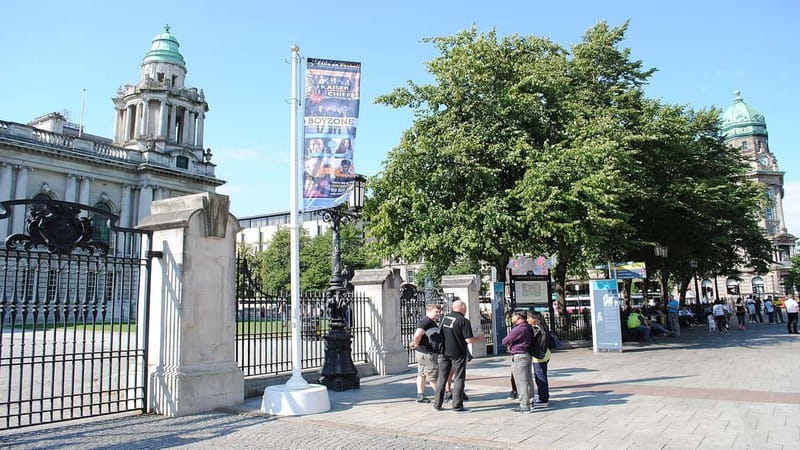
- Starts at Belfast City Hall: Meet at the front gates on Donegall Square North, an easy central location.
- Four sides of Belfast: The route brings together the Cathedral Quarter, historic Entries, Waterfront, and central streets.
- History without tunnel vision: The Troubles receive context, but so do industry, religion, rebellion, music, trade, and social change.
- Good audio support: Headsets help you follow the guide in busy streets and open spaces.
- A useful first-day tour: Guides regularly offer practical suggestions for food, pubs, music, shops, and free things to do.
- Strong value at $35: For three hours with a local guide, the price is fair, especially if you are new to Belfast.
Starting beside Belfast City Hall
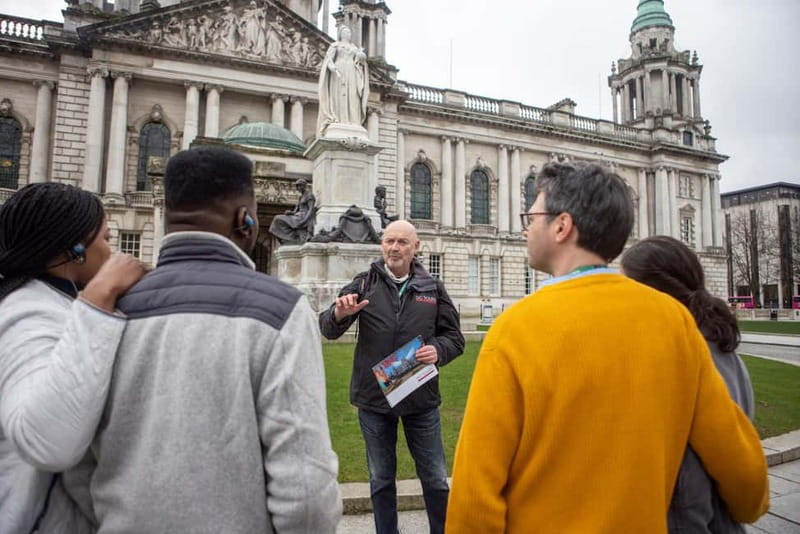
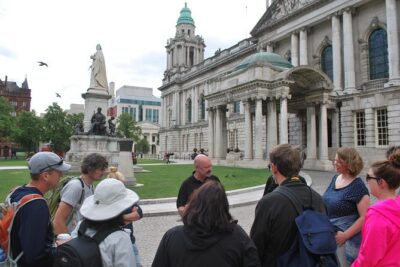
Your meeting point is the front gates of Belfast City Hall in Donegall Square North. Look for a guide wearing a black jacket or T-shirt with the DC Tours logo on the left breast.
This is a sensible place to begin. City Hall puts you in the middle of Belfast, close to shops, cafés, transport links, and the main central streets. The building also gives the guide a natural starting point for explaining the city’s civic ambitions and Victorian confidence.
The tour is conducted in English, and headsets are provided. That small detail matters more than it may sound. You can stand back, look at the building or street art, and still hear the explanation. Several guides, including Mark, Steve, James, Chris, and Colin, have been praised for clear delivery, warmth, and humor. Your guide will vary, but the company’s strength appears to be its pool of local storytellers.
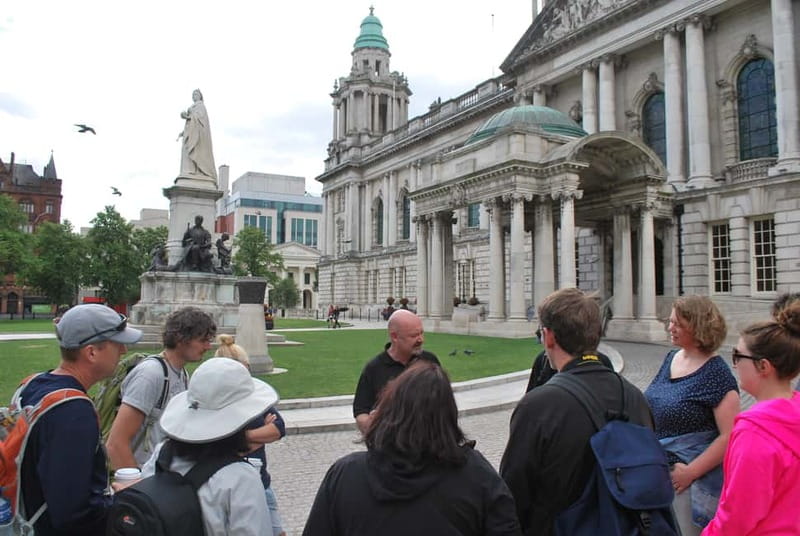
Expect a walking group rather than a private tour. Group size can vary, and some sessions have been small, with one group numbering eight people. A small group makes it easier to ask questions and have the guide remember your name. Larger groups may feel less personal, but the headsets help.
More History Walking Tours in the UK
- A History of Terror – Belfast City Centre Walking Tour
★ 5.0 · 2,883 reviews - Belfast: A History of Terror Walking Tour
★ 4.9 · 854 reviews - Belfast Walking Tour with a Local – History & Craic
★ 4.9 · 130 reviews
From a river settlement to an industrial city
Early in the walk, the guide sets up the long story of Belfast. The city grew from a small settlement near the River Lagan into an industrial center with major trade links. You learn how linen, shipbuilding, engineering, commerce, and port activity shaped both the city’s buildings and its social structure.
This broad opening is one of the tour’s best features. If you only visit Belfast’s famous sights, it is easy to treat the city as a place defined by one ship and one political conflict. The tour gives you a wider frame. It shows how work, wealth, faith, class, and migration affected the people who lived here.
The linen trade receives particular attention. Belfast’s Victorian buildings were not simply decorative projects. They reflected money earned through trade and industry, along with the civic pride of merchants and business owners. As you look at the architecture, the guide helps connect stone façades and grand public spaces to the people and industries that paid for them.
You also hear about figures from different parts of Belfast’s past. Merchants, rebels, reformers, artists, and local characters appear throughout the walk. This approach keeps the history human. Dates matter, but a story about what a person did, believed, or changed is usually easier to remember.
Victorian architecture and modern Belfast
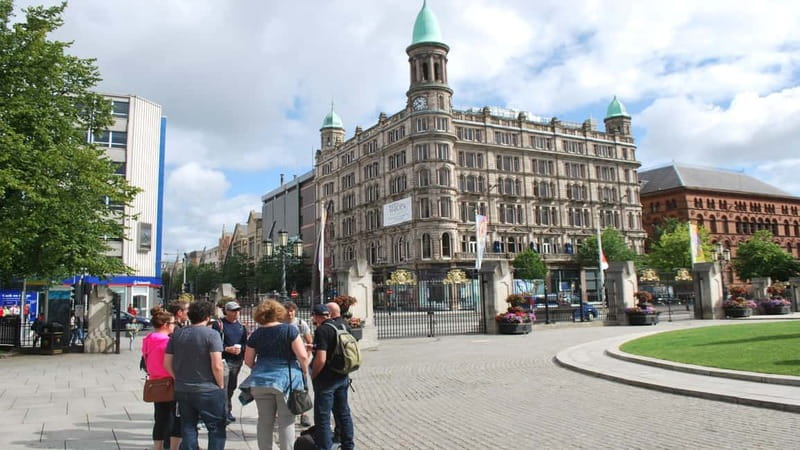
Belfast has a useful visual contrast between Victorian grandeur and newer buildings. The tour points out architectural details that are easy to miss when you are walking from one attraction to the next.
Your guide may draw attention to the purpose of a building, the wealth behind it, or the way its design reflects Belfast at a particular moment. This makes the architecture more than a backdrop for photographs. You begin to read the city as a record of changing priorities.
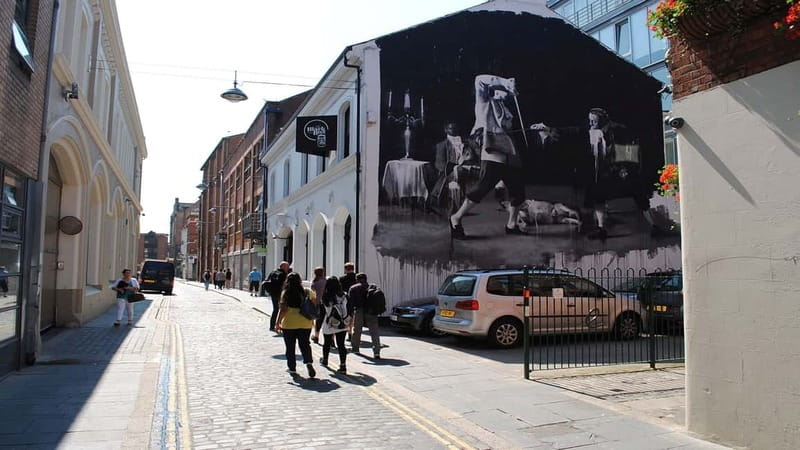
The modern side of Belfast comes through public art and newer architecture. Street art, murals, and creative spaces show how the city continues to argue with, remember, and rework its past. The Cathedral Quarter is especially important here, since it has become a cultural center for art, music, restaurants, and nightlife.
The guide also explains where to hear Irish traditional music and why punk matters in Belfast. That musical range is valuable. It reminds you that the city’s identity is not frozen in old political divisions. Music has offered people a way to express anger, humor, pride, belonging, and independence.
If you are hoping for a dedicated street-art tour, this is not quite that. Art forms one part of a wider history walk. You will see and discuss public art, but the emphasis remains on how it fits into the city’s changing character.
The Cathedral Quarter and Belfast’s creative side
The Cathedral Quarter is one of the main areas on the route. Its lanes and streets offer a different mood from the formal center around City Hall.
Here, the guide links old buildings with Belfast’s present-day cultural life. You learn why the quarter became associated with creative work, nightlife, music, and art. It is a good place to hear practical recommendations, too. Guides have suggested restaurants, pubs, shops, and places with live music during or after the walk.
This advice can save you time later. A central orientation tour is most useful when it leaves you with ideas for the rest of your stay. Several guides have also pointed out free things to do, which is helpful if you are watching your budget.
The Cathedral Quarter can be lively, and street conditions may be less smooth than a formal square. Keep your attention on the pavement while listening through the headset. You may want to return later when the area is busier, especially if music and evening atmosphere are part of your Belfast plans.
More History Walking Tours in Belfast:
- History and Hauntings of Salem Guided Walking Tour
★ 5.0 · 14,564 reviews - Lisbon: History, Stories and Lifestyle Walking Tour
★ 4.8 · 10,902 reviews - Boston: Freedom Trail History Small Group Walking Tour
★ 5.0 · 6,450 reviews - Historic Charleston Guided Sightseeing Walking Tour
★ 5.0 · 6,216 reviews
Historic Entries and the stories between the streets
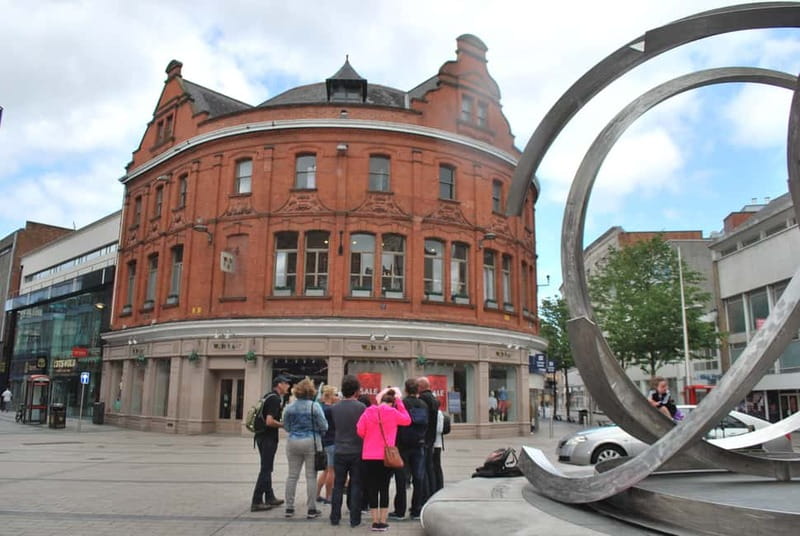
The historic Entries are among the most rewarding parts of the walk. These narrow lanes are easy to pass without noticing, particularly if you are focused on major landmarks.
The guide uses them to explain how people moved through, worked in, and lived around central Belfast. The lanes help turn the city’s past into something physical. Instead of hearing only about old Belfast in a museum, you stand in the kinds of spaces where its daily life unfolded.
This is also where good guiding makes a difference. A sign or alleyway may look ordinary until someone explains its age, use, or connection to a local story. The tour’s focus on overlooked details gives you a better sense of place than a simple list of famous buildings.
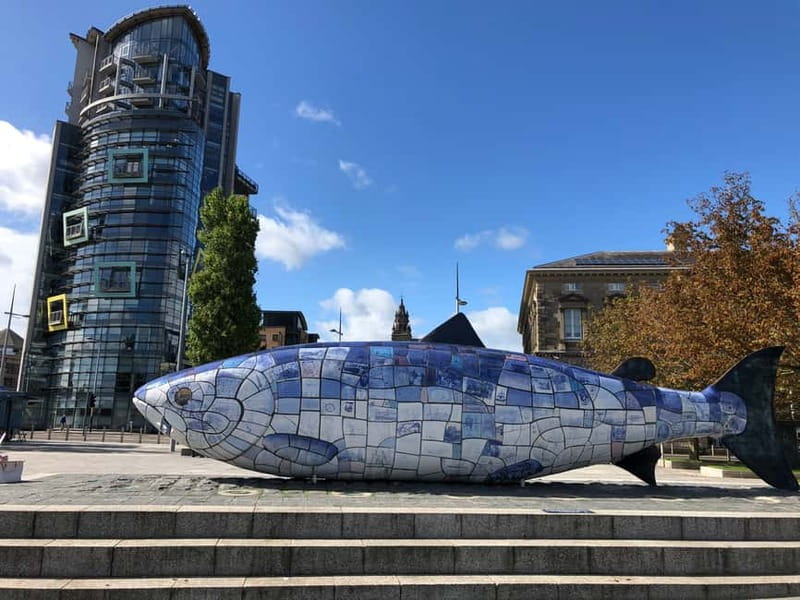
One story associated with the route is the Salmon of Knowledge. The legend adds a lighter note, but it also gives the guide a way to discuss local identity, folklore, and the meaning attached to the River Lagan. Do not expect a folklore-only experience. These tales are woven into the larger history.
The Waterfront and the river’s role
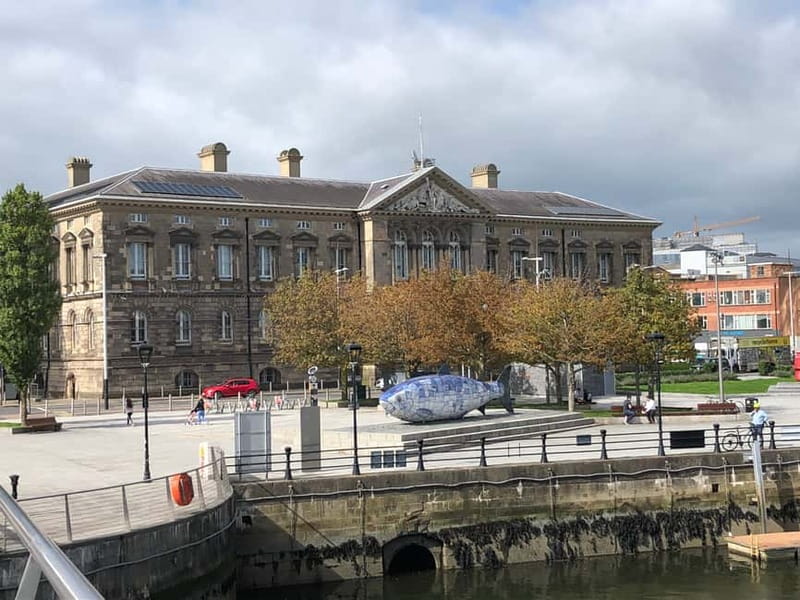
The route also reaches the Waterfront and the River Lagan. The river is central to understanding Belfast’s growth, trade, industry, and connections beyond Northern Ireland.
This part of the walk helps explain why the city developed where it did. The waterway was not just a scenic feature. It supported commerce and industry, helped shape employment, and tied Belfast to wider economic changes.
The Waterfront also gives you a chance to see newer Belfast alongside older civic and industrial areas. That contrast supports one of the tour’s main ideas: Belfast has repeatedly changed direction while carrying its past with it.
The walk does not replace a dedicated visit to Titanic Belfast. Instead, Titanic is placed in context as one part of the city’s industrial story. You hear about the people, skills, work, and ambition behind Belfast’s shipbuilding reputation, rather than treating the Titanic as an isolated attraction.
If Titanic is your main reason for visiting, allow separate time for the museum and shipyard area. This walking tour helps you understand the setting, but it is not a full Titanic visit.
The Troubles, handled as part of a larger story
The Troubles are unavoidable in any serious account of Belfast, but this tour does not make them the only subject. The guide explains key political and social developments, including the creation of Northern Ireland and the role of religion in public life.
The better part of this approach is balance. You hear about conflict, but also about economic pressures, social structures, personal choices, and the small acts of kindness that helped people through difficult periods. The tour also touches on transgenerational trauma, an important reminder that historical violence does not end neatly when a political agreement is signed.
Guides have been praised for staying neutral while explaining contested history. That does not mean pretending every issue is simple or that all viewpoints are identical. It means giving you enough context to understand why Belfast remains a place of strong identities and sensitive memories.
The discussion is serious, but the tone is not relentlessly heavy. Humor and personal stories help keep the three hours manageable. The goal is understanding, not shock value.
If you want detailed visits to political murals, peace walls, or neighborhoods outside the city center, choose a separate black cab or political history tour. This walk gives you an introduction from the center, not an exhaustive study of the Troubles.
Local people, music, and modern references
The tour works best when it moves from large events to individual lives. You hear about people who shaped Belfast through business, politics, reform, art, rebellion, and everyday courage.
Guides also connect the past with present-day culture. References to Irish traditional music and Belfast punk help explain the city’s emotional range. Popular culture may appear too, including discussion of Line of Duty characters and locations associated with the show.
These details are not essential to understanding Belfast, but they make the tour feel current. They also give you easy conversation starters with your guide. Ask questions. Guides such as Steve, Chris, James, Mark, and Mylie have been praised for welcoming questions and adding personal insight.
One especially useful quality is pride without blind cheerleading. The guides clearly care about Belfast, but the best accounts also acknowledge conflict, loss, inequality, and uncertainty. That guarded optimism gives you a more believable picture of the city today.
Pace, comfort, and weather
The advertised duration is three hours, and the route covers less than two miles. That is a relaxed distance, but the time includes frequent stops for explanations, so you will spend plenty of time standing.
The pace has been described as comfortable, and guides generally check that everyone is keeping up. A short café or comfort break has been included on some tours, sometimes near a theater, but treat this as a possibility rather than a guaranteed stop.
Bring comfortable shoes and clothing for the forecast. The tour runs in rain or shine. Belfast weather can make exposed sections feel colder than expected, so a waterproof layer is a sensible choice.
The tour is wheelchair accessible, though you should still consider the mix of streets, lanes, and historic areas. If you have specific mobility needs, confirm the current route before booking, since older Entries and street surfaces can vary.
Is $35 a fair price?
At $35 per person, this is a fair buy for a three-hour guided introduction. You are paying for a local guide, audio equipment, and a route that combines major themes with places you might otherwise walk past.
The value depends on how you use it. If you want a quick orientation on your first day, the tour can help you decide where to spend the rest of your time. The food, pub, music, shopping, and free-activity suggestions add practical value beyond the formal route.
It is less useful if you already know central Belfast well or want one narrow subject in great depth. You may also prefer a self-guided walk if you like moving at your own pace and stopping often for photographs.
Free cancellation up to 24 hours before the start gives you some flexibility, and you can reserve now and pay later. Those terms are useful when Belfast is one stop in a longer United Kingdom or Ireland trip.
Who should book this Belfast walk?
I would choose this tour for a first visit, especially if you want history and culture without spending the whole morning on the Troubles. It suits adults, older children, and teenagers who are comfortable with light but serious historical themes.
It is also a good fit if you like local anecdotes, architecture, public art, music, and practical advice. The route is short enough for many people who do not want a strenuous city walk, though standing for three hours still requires reasonable comfort.
You may want something else if you need a museum-style lecture, a dedicated Titanic tour, or a detailed exploration of Belfast’s outer neighborhoods. This is an all-round introduction, not a specialist excursion.
Should you book it?
Book it if you want Belfast to make sense before you explore on your own. The best reasons are the clear headsets, lively local guides, short route, balanced treatment of difficult history, and useful tips for food, music, and free activities.
I would schedule it early in your stay, then use the guide’s suggestions to shape the next day or two. At $35, it offers solid value for a well-paced introduction, provided you bring good shoes and accept that the exact guide and emphasis can vary.
FAQ
Where does the Belfast walking tour start?
It starts at the front gates of Belfast City Hall in Donegall Square North. The guide wears a black jacket or T-shirt with the DC Tours logo on the left breast.
How long is the tour?
The tour lasts three hours. The full walk is less than two miles and includes 14 stops.
What parts of Belfast does the route cover?
The walk includes the Cathedral Quarter, historic Entries, the Waterfront, central streets, architecture, public art, and places connected with Belfast’s cultural life.
Does the tour discuss the Troubles?
Yes. The guide places the Troubles within the wider story of Belfast, alongside religion, politics, industry, social change, music, and the people who shaped the city.
Is the tour conducted in English?
Yes. The live tour guide speaks English, and headsets are provided so you can hear clearly.
Is the walking tour wheelchair accessible?
Yes, the activity is listed as wheelchair accessible. The route includes historic lanes and city streets, so you may wish to confirm current route details if you have specific access needs.
What should I bring?
Bring comfortable shoes and clothing suitable for the weather. The tour runs rain or shine.
More Cultural Walking Tours in Belfast
- Savannah First Squares Culinary & Cultural Walking Food Tour
★ 5.0 · 3,229 reviews - Tokyo Tsukiji Fish Market Food and Culture Walking Tour
★ 5.0 · 3,184 reviews - New Orleans French Quarter, Voodoo and Culture Walking Tour
★ 4.5 · 2,961 reviews - Amsterdam: Cultural Highlights Walking Tour
★ 4.9 · 2,629 reviews
Just added around Belfast
- The Real Eclectic Belfast City Walking Tour/Experience.★ 5.0 · 152 reviews
- Belfast Political Tour-Conflicting Stories Walking Tour★ 4.5 · 459 reviews
- Belfast Eclectic Walking City Center Experience, The Marti Way★ 5.0 · 348 reviews
- The Real Story of Belfast walking tour with a local guide★ 5.0 · 144 reviews
- Best of Belfast Walking Tour★ 5.0 · 399 reviews
- Belfast Centre Food Tour of 12+ Local Irish Dishes & Drinks★ 5.0 · 266 reviews
- Belfast Troubles Murals Street Art and Peace Wall Walking Tour★ 5.0 · 163 reviews
- Belfast Walking Tour with a Local – History & Craic★ 4.9 · 130 reviews
History Walking Tours, compared.
History and Hauntings of Salem Guided Walking Tour
Read our review →
Freedom Trail History Small Group Walking Tour
Read our review →
Historic Charleston Guided Sightseeing Walking Tour
Read our review →
Tapas Walking Tour with Food, Wine, and History
Read our review →
Savannah History and Haunts Candlelit Ghost Walking Tour
Read our review →
A History of Terror – Belfast City Centre Walking Tour
Read our review →Browse the lists this tour appears in