
Review · JAPAN WALKING TOURS
Kyoto Gion Geisha District Walking Tour – The Stories of Geisha
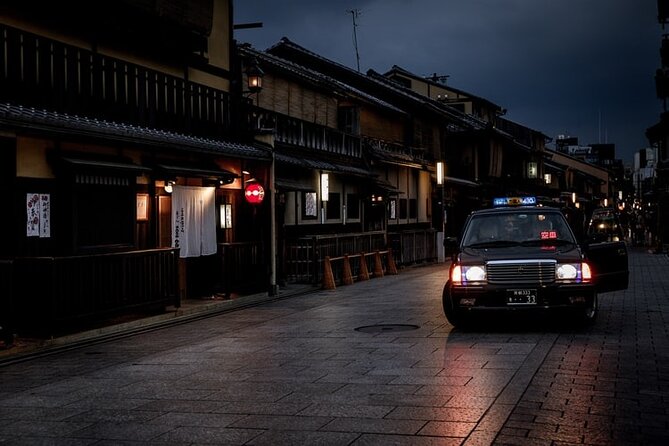
Lantern-lit Gion tells a different story after dark. This two-hour walk introduces you to Kyoto’s geiko and maiko traditions while leading you through the district’s old streets, theaters, bridges, shrines, and tea-house lanes. The small group, capped at 15 people, makes it easier to hear the guide and ask questions.
I like the evening timing, when Gion is calmer and the lanterns give the neighborhood a more graceful mood. I also like the guides’ focus on context, from the meaning of geiko and maiko to the hidden signs of the old flower towns. At $25 per person, it is a good buy for a first look at Gion, though one guest felt the route could use more content, and winter evenings can be very cold.
The walk is best for first-time visitors who want a clear introduction rather than a long lecture or a formal performance. Guides such as Ben, Deborah, Shin, Nami, Kenji, Melanie, Joy, and Manuel have been praised for making the subject easy to follow, answering questions, and connecting geisha culture with wider Kyoto history.
Key points to know before you book
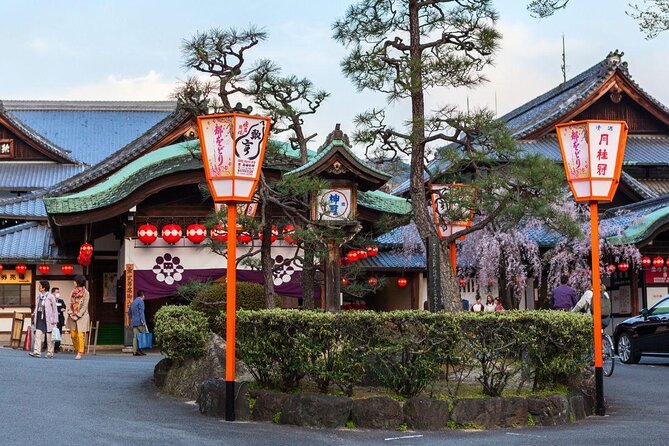
- After-dark atmosphere: Gion feels more graceful under lantern light and is usually less crowded than during the day.
- A small group of up to 15: You get a better chance to hear the guide and ask about geiko, maiko, tea houses, and local customs.
- A useful first-night orientation: The route links Gion landmarks with the history of entertainment in Kyoto.
- A compact two-hour walk: It fits neatly into an evening, but the pace may feel brisk in cold weather.
- A strong guide-led experience: Ben, Deborah, Shin, Nami, Kenji, Melanie, Joy, Manuel, Tommy, Ikari, Sakuri, and others have received praise for clear explanations and friendly service.
- A respectful look at geisha culture: The tour explains the tradition without reducing it to costume spotting or staged entertainment.
Why an evening walk works better in Gion
Gion can be hard to appreciate in the middle of the day. Main streets fill with people, cameras appear at every corner, and the district’s quieter details become easy to miss. This walk begins after the heaviest daytime crowds have eased, giving you more room to notice the wooden facades, narrow lanes, paper lanterns, and discreet entrances to tea houses.
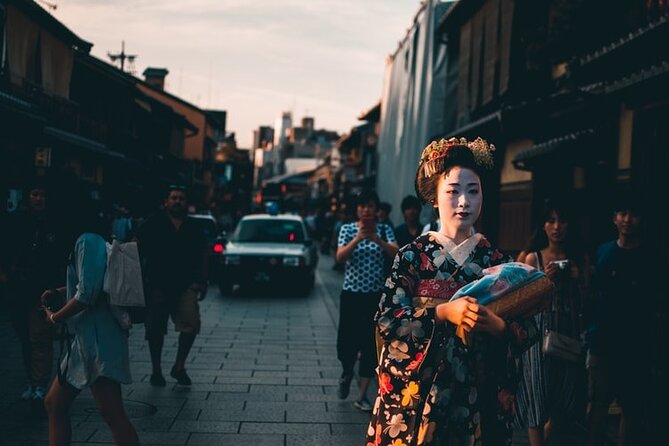
The timing also fits the subject. Geiko and maiko may be moving toward evening appointments, although seeing one is not guaranteed. The point is not a guaranteed sighting. It is learning how the district works and why ordinary-looking buildings can matter.
I like that distinction. A good guide can show you the cultural setting without treating people who work there as a photo opportunity. The route gives you a better chance to understand Gion as a working neighborhood and entertainment district.
The walk lasts about two hours. That is long enough to cover several major places without taking over your whole evening. It also means you should wear comfortable shoes and bring a warm layer. A winter walk can feel especially chilly, and the route involves a fair amount of walking.
A few more walks around Kyoto worth a look
- Kyoto Geisha Walking Tour: Gion District & Hidden Gems
★ 4.7 · 3,273 reviews - Kyoto: Gion Magical Night Walking Tour with Geisha Trivia
★ 4.9 · 2,393 reviews - Kyoto: Gion Geisha District Walking Tour – Stories of Geisha
★ 4.7 · 2,187 reviews
Meeting near Shijo and starting with Kabuki
The meeting point is Ben’s Cookies Kyoto Shijo at 89 Shinchō, in Shimogyo Ward. The tour then moves toward Gion and the nearby cultural landmarks. Because the starting point is near public transportation, it is a practical place to reach before the walk begins.
One early stop is the Statue of Izumo-no-Okuni. The bronze figure honors Okuni, the legendary founder of Kabuki theater. This is a smart opening because it places Gion’s geisha culture inside Kyoto’s larger history of public entertainment.
You are not simply looking at old streets. You are learning that performance, music, theater, dance, dress, and hospitality have long been connected in this part of the city. The statue gives the guide a natural way to explain how Kyoto’s entertainment districts developed.
The stop lasts about 10 minutes and has no admission charge. It is short, so expect an explanation rather than a long visit. If you want detailed information about the statue itself, listen closely and use the question period. The value comes from the story attached to the place.
Minamiza and Kyoto’s theater tradition
The route also includes Minamiza, one of Kyoto’s historic Kabuki theaters. Kabuki is known for elaborate costumes, dramatic storytelling, and stylized performance. Even from outside, the theater helps you see that Gion is linked to a much wider performing-arts tradition.
This part of the tour is useful because geisha culture can be misunderstood as a single subject. The guide can show how it relates to theaters, restaurants, music, dance, and the old entertainment quarters. The setting adds weight to the explanation without requiring a separate ticket or theater visit.
Minamiza is especially helpful if you know little about Japanese performance arts. The tour does not appear to include a Kabuki performance, so do not book it expecting a show. Think of the theater as a landmark and a lesson in how Kyoto’s arts developed around one another.
Tatsumi Bridge and the Shinbashi lanes
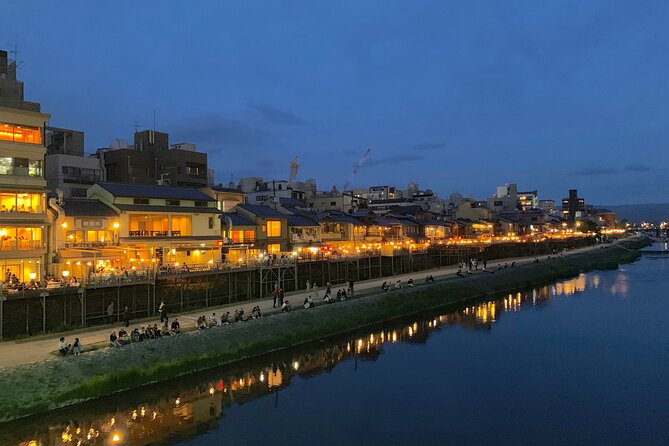
Tatsumi Bridge leads into the Gion Shinbashi area, one of the prettiest portions of the route. Here, traditional streets and tea-house exteriors create the sort of Kyoto scene many people hope to find, but the guide adds information that you would likely miss on your own.
The walk pauses for about 10 minutes. That is enough time to take in the bridge and surrounding streets, though you should not expect a long stop at every corner. A guide may point out buildings that look plain to an untrained eye but carry meaning within Gion’s working culture.
This is where the tour’s strongest feature becomes clear: interpretation. Several guides have been praised for explaining small details, local codes, and the difference between what a building looks like and what it represents. Ben, in particular, has been appreciated for explaining the hidden codes of the flower towns. Sakuri has also been praised for identifying nondescript buildings and explaining their place in geisha culture.
That kind of information is hard to get from a standard guidebook paragraph. It turns a pleasant walk into a more informed one.
Same streets, a different way to see them:
- Best of Kyoto: Gion, Geisha, Pagodas & Cobblestones
★ 4.9 · 2,058 reviews - Night Walk in Gion: Kyoto’s Geisha District
★ 4.5 · 2,003 reviews - Nishiki Market Brunch Walking Tour (7 Tastings + Brunch)
★ 5.0 · 1,355 reviews - Kyoto Arashiyama Walking Tour: Bamboo, Monkeys, Gardens & Secrets
★ 5.0 · 1,216 reviews
Hanamikoji Street and the rules of respectful looking
Hanamikoji Street is one of Gion’s best-known lanes, lined with traditional machiya houses, restaurants, and tea houses. It is also one of the places where good manners matter most. The street is associated with geiko and maiko activity, but it is not a stage built for sightseeing.
A guide can explain what you are seeing without encouraging intrusive behavior. This matters because the district has become popular, and careless photography or blocking narrow lanes can create problems for the people who live and work there.
The stop is listed at about 10 minutes. Expect a compact explanation of the street, the buildings, and the role of the tea houses. You may also hear about the difference between a geiko and a maiko, how their training and public roles differ, and why the traditional districts are sometimes called flower towns.
The tour is not a replacement for a geisha performance or cultural demonstration. It is an introduction to the setting and customs. If you already know a great deal about geiko and maiko, this section may feel basic. For most first-time visitors, it supplies useful background before any evening meal or performance in Gion.
Gion Corner and the wider arts scene
Gion Corner is a cultural center and performance venue in the district. It presents several forms of traditional Japanese arts in a condensed format. The walking tour uses it as another way to connect geisha culture with the wider world of music, dance, theater, and ceremony.
The itinerary does not indicate that admission to a performance is included. The tour’s listed price covers the walking experience and all fees and taxes, but not bottled water. If you want to attend a show at Gion Corner, treat that as a separate plan.
Even without entering, the stop gives useful context. It reminds you that Kyoto’s cultural traditions are not limited to one type of performer. The evening walk explains how different arts sit alongside one another in the same district.
Yasaka Shrine and the finish in Gion
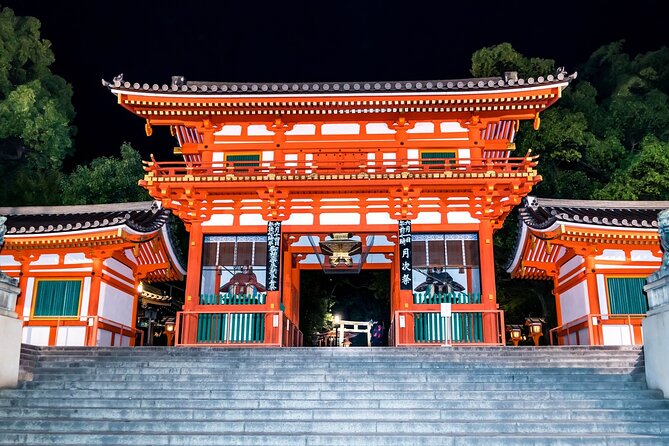
The final stop is Yasaka Shrine, also called Yasaka Jinja or Gion Shrine. It is one of the major Shinto shrines in Kyoto and sits at the eastern end of the Gion area. The tour ends here, at 625 Gionmachi Kitagawa.
Yasaka Shrine changes the tone of the walk. Earlier stops focus on theater, tea houses, streets, and entertainment. The shrine adds religious and civic history, helping you see that Gion is not only a nightlife district or a backdrop for photographs.
Ending here is practical. You can continue exploring the Gion area afterward, make your own dinner plans, or use the shrine as a clear reference point for your next stop. Since the tour ends rather than returning to the starting point, plan your evening around Yasaka Shrine.
The route’s listed stops are generally short, around 10 minutes each. That keeps the two-hour schedule manageable, but it also means the tour favors breadth over lengthy time at one site. One four-star assessment felt the itinerary needed more content. That is a fair caution if you prefer a very detailed academic tour.
What the guides add to the experience
Guide quality matters a great deal on this walk because many of the most interesting details are not visible. The strongest praise has gone to guides who explain clearly, answer questions, and link geisha culture with Japanese history.
Ben has been praised for his passion, friendly manner, and explanations of Gion, Pontocho, and Kyoto at night. Deborah has been appreciated for her detailed knowledge and ability to make the walk enjoyable even in very cold weather. Shin has been described as informative and good-natured, with a useful approach for people at the start of a Kyoto visit.
Nami, Kenji, Melanie, Joy, Manuel, Tommy, Ikari, Sakuri, Adrian, Manny, and Nikki have also received positive comments for friendly delivery and clear explanations. Melanie, in particular, has been praised for bringing the neighborhood and geisha traditions to life. Tommy has been appreciated for connecting local history with personal stories.
Guide assignments can change, so you should not book solely to meet one named guide. Still, the repeated praise for the guiding style is important. This is not a route where the landmarks do all the work. The explanations are the main attraction.
Is $25 a fair price?
At $25, the tour offers solid value if you want orientation, cultural background, and an easy evening route through Gion. You are paying for about two hours of guiding in a famous district, with a group limited to 15 people and no extra admission fee listed.
The small group is important. A much larger group would make it harder to hear explanations in narrow streets and would reduce the chance to ask questions. A maximum of 15 is not private touring, but it is intimate enough to feel manageable.
The value is strongest for a first visit. You will learn the basic vocabulary, understand the role of geiko and maiko, see key streets and landmarks, and finish near Yasaka Shrine. You also get a better sense of where you might want to return later for dinner, a performance, or further independent walking.
The value is weaker if you expect guaranteed geisha sightings, entry into tea houses, a performance, or an extensive lecture. None of those should be assumed. The tour is a walking introduction, not a full evening of entertainment.
Practical advice for a comfortable walk
Wear shoes suited to about two hours on foot. The route is outdoors, and cold weather can make the walk feel longer than expected. Bring a warm coat in winter, and consider carrying your own water because bottled water is not included.
The tour accepts mobile tickets, and confirmation is provided when you book. Service animals are allowed, and most people can take part. It runs near public transportation, which makes the meeting point easier to reach.
Free cancellation is available if you cancel at least 24 hours before the start time. Cancellations within 24 hours are not refunded, and late changes are not accepted. The experience depends on good weather, so a weather cancellation brings the choice of another date or a full refund.
Who should book this Gion walk?
I would recommend it to first-time Kyoto visitors, couples, families with older children or teenagers, and anyone who wants a short cultural activity after dinner. It also works well early in a Kyoto stay, since the route helps you understand the Gion area before you explore it alone.
The tour suits curious people who enjoy history explained in plain language. You do not need prior knowledge of Kabuki, geiko, maiko, or Japanese theater. The guides are there to build that background step by step.
I would choose something else if you want a private experience, a long photography session, a guaranteed encounter with performers, or a formal cultural show. The tour offers atmosphere and explanation, not access behind closed doors.
Should you book it?
Yes, if $25 sounds reasonable for a focused introduction to Gion. The evening setting, small group, strong guide feedback, and route through Tatsumi Bridge, Hanamikoji Street, Minamiza, and Yasaka Shrine make this a useful first look at Kyoto’s geisha district.
Book it with realistic expectations. You may see geiko or maiko heading to appointments, but that is not promised. The real reward is learning how to read Gion, understanding the traditions behind its quiet streets, and seeing more than a row of pretty wooden buildings.
FAQ
How long does the Kyoto Gion Geisha District Walking Tour last?
The tour lasts approximately two hours.
What is the maximum group size?
The group is limited to a maximum of 15 travelers.
Where does the tour start and end?
It starts at Ben’s Cookies Kyoto Shijo, 89 Shinchō, Shimogyo Ward, Kyoto. It ends at Yasaka Shrine, 625 Gionmachi Kitagawa, Higashiyama Ward, Kyoto.
Is admission to the sites included?
All fees and taxes are included. The listed experience does not include bottled water, and the information provided does not indicate that a Kabuki or Gion Corner performance is included.
Can I cancel for a full refund?
Yes. You must cancel at least 24 hours before the experience start time for a full refund. Cancellations within 24 hours are not refunded.
What happens if bad weather cancels the tour?
If poor weather causes the tour to be canceled, you will be offered another date or a full refund.
Just added around Kyoto
- Kyoto : Private Custom Walking Tour With A Local Guide★ 4.6 · 144 reviews
- Kyoto: Private 2.5 Hour Historical Walking Tour★ 4.9 · 121 reviews
- Kyoto: Private Walking Tour with a Local★ 4.6 · 118 reviews
- Kyoto: Gion Sunset Walking Tour with Local Guide★ 4.7 · 351 reviews
- Kyoto: Gion Walking Tour★ 5.0 · 195 reviews
- Kyoto: Izakaya Bars Guided Walking Tour★ 4.9 · 815 reviews
- Kyoto Gion Cultural Walk & Geisha Show with Dining Options★ 5.0 · 518 reviews
- Kyoto: Gion Hidden Gems & Geisha Culture Tour★ 4.9 · 126 reviews
Japan Walking Tours, compared.
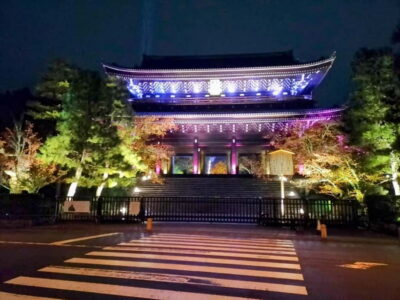
Kyoto Geisha Walking Tour: Gion District & Hidden Gems
Read our review →
Tokyo Tsukiji Fish Market Food and Culture Walking Tour
Read our review →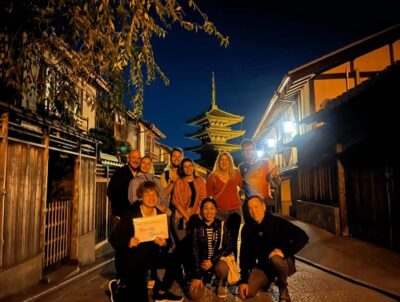
Gion Magical Night Walking Tour with Geisha Trivia
Read our review →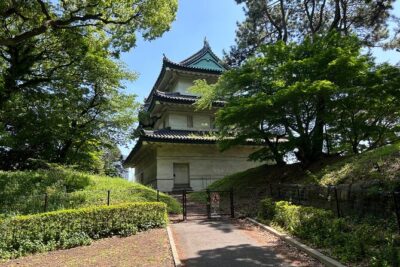
Imperial Palace and Shogun Historical Walking Tour
Read our review →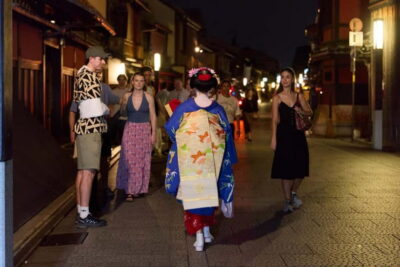
Gion Geisha District Walking Tour – Stories of Geisha
Read our review →
Best of Kyoto: Gion, Geisha, Pagodas & Cobblestones
Read our review →
Shinjuku Local Bar and Izakaya Guided Walking Tour
Read our review →Browse the lists this tour appears in