
Review · HISTORY WALKING TOURS
Cartagena: Ancient Roman Walking Tour with Entry Tickets
Cartagena rewards walkers who look down. I like the way this 2.5-hour Roman walking tour connects ruins with the modern city, and I like that your Roman Theater ticket, tapa, and drink are included. The route also adds views and eye-catching 19th- and 20th-century architecture, so you get more than an archaeology lesson.
The main consideration is the walking. You will cover a fair amount of ground, and hot weather can make the route feel longer. The pace can be relaxed, but comfortable shoes and water are sensible. The tour is wheelchair accessible, though outdoor museum platforms can sometimes be out of service.
Key points at a glance
- Roman Theater included: Enter Cartagena’s major Roman performance site with a guide rather than viewing it only from outside.
- Forum district ruins: See the public baths, Isis temple, part of the Forum, and the Roman Assembly area.
- History beyond Rome: The tour places Roman Cartagena within a much longer story reaching back to the city’s Carthaginian foundation.
- Modern architecture on foot: Look for 19th- and 20th-century buildings as you move between ancient sites.
- A local-style finish: End with one tapa and a choice of soft drink, beer, or tinto de verano.
- Strong guide record: Guides including Elisa, Ellie, Bruno, Carmelo, Cristina, and Juan have been praised for clear English, enthusiasm, and flexible pacing.
Why Cartagena works so well on foot
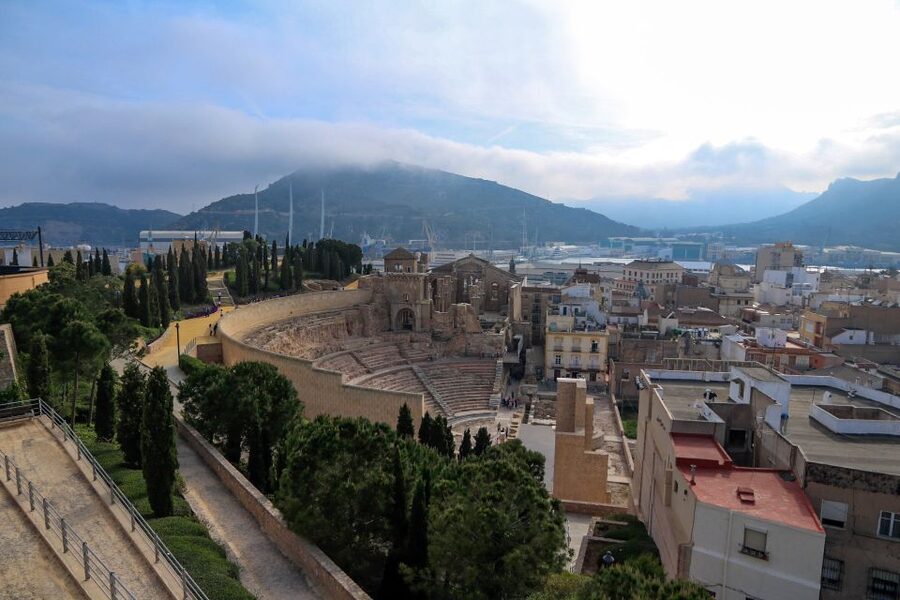
Cartagena is a useful city for a walking tour because its past is not shut away in one distant archaeological park. Ancient remains appear among streets, shops, churches, civic buildings, and later homes. That gives you a sense of how the city has changed instead of presenting Roman life as an isolated museum display.
This tour focuses on the Roman period, but it does not treat Rome as the whole story. One guide, Ellie, was especially praised for explaining the city’s development from its Carthaginian foundation in 229 BC through later periods. That wider frame matters. Roman ruins make more sense when you understand that Cartagena was already an important settlement before Rome arrived.
I also like the combination of large monuments and small details. You get the Roman Theater and Forum district, but you also pass architectural traces from the 19th and 20th centuries. The result is a city walk with several layers, not a simple march from one ruin to another.
More History Walking Tours in Spain:
- Barcelona: Tapas Walking Tour with Food, Wine, and History
★ 4.8 · 4,261 reviews - Barcelona Tapas Walking Tour: Food, Wine & History
★ 4.5 · 1,928 reviews - Madrid Historic Centre Food Tour with Authentic Tapas & Wines
★ 5.0 · 814 reviews
Meeting the guide at Mare Nostrum
The starting point is in front of the Mare Nostrum restaurant. Look for a white building with golden letters. Your guide should be wearing a white shirt and blue lanyard, which makes the meeting point easier to identify in a city center.
The tour is offered in English with a live guide. That is important here because the value lies in explanation. A Roman wall or foundation can look like a pile of old stone when you do not know its purpose. A good guide gives you the missing picture: what the structure was for, how it fitted into city life, and how archaeologists interpret what remains.
The guides have different personalities. Bruno has been praised for clear, detailed explanations, while Elisa was singled out for preparation and enthusiasm. Carmelo received high marks for adjusting the pace and making time for architecture. Cristina was described as friendly, efficient, and easy to follow.
One note of balance: a single comment suggested that one guide might have benefited from a more fixed script. That is not necessarily bad. A flexible conversation can make a small group tour feel personal, but you may prefer a tightly rehearsed presentation if you want every date and detail delivered in a fixed order.
The opening walk and Cartagena’s long story
The first part of the route introduces Cartagena and its Roman role. You can expect a guided city walk of about 15 minutes at one stage, followed by the main visits and stops. The exact order may vary, but the structure is clear: get oriented, visit the Roman sites, see later architecture, and finish with food and a drink.
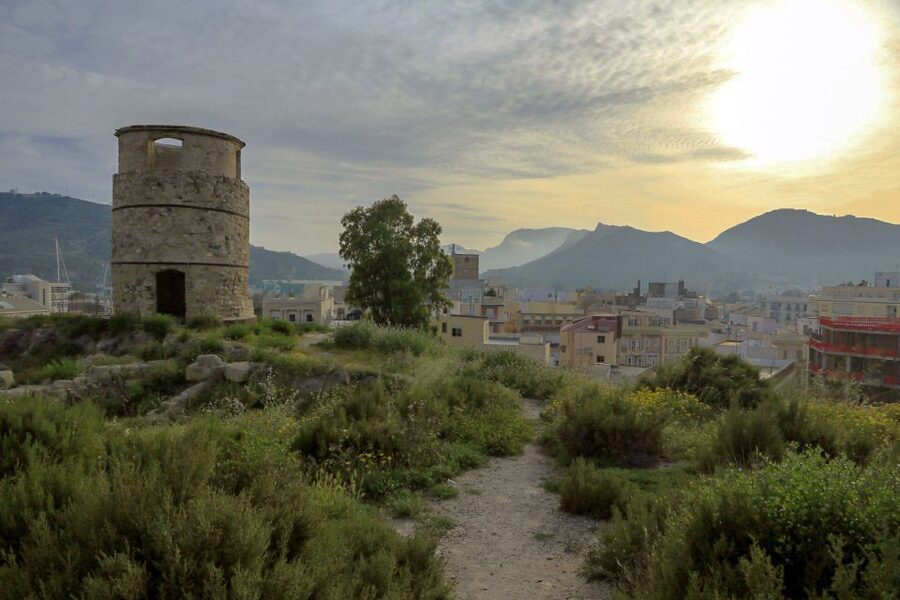
The panoramic views add useful context. Cartagena has long been shaped by its position and urban setting, and seeing the city from above or from an open viewpoint helps you understand why the location mattered. The views are not just a photo stop. They help you connect the ruins below with the city’s wider form.
The tour also uses the nickname Little Rome. That name points to the concentration of Roman remains found in Cartagena, though the city’s appeal is broader than the nickname suggests. You will hear about Roman buildings, but you will also see how later generations built over, around, and alongside the older city.
For me, this introductory section is most useful if you are new to Cartagena. It gives you a framework before the archaeological details begin. If you already know the city well, you may find the value comes more from the guide’s interpretation and the chance to ask questions.
Entering the Roman Theater
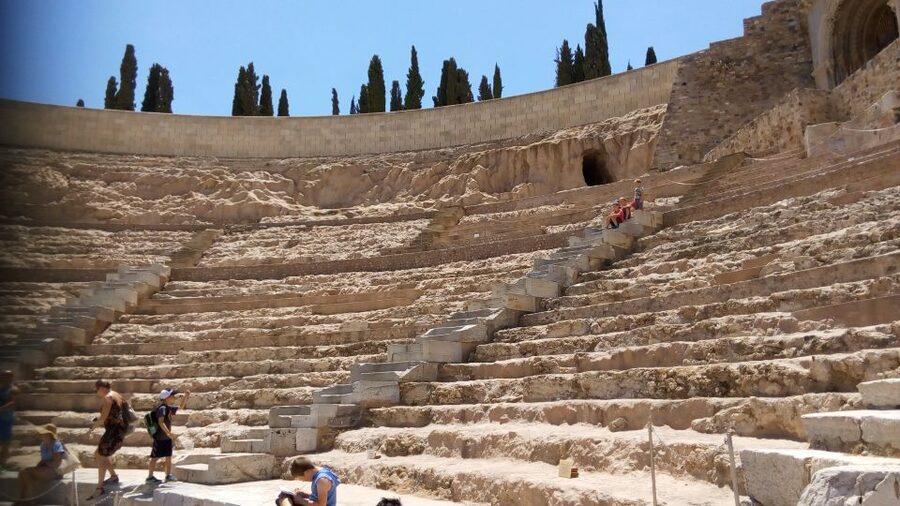
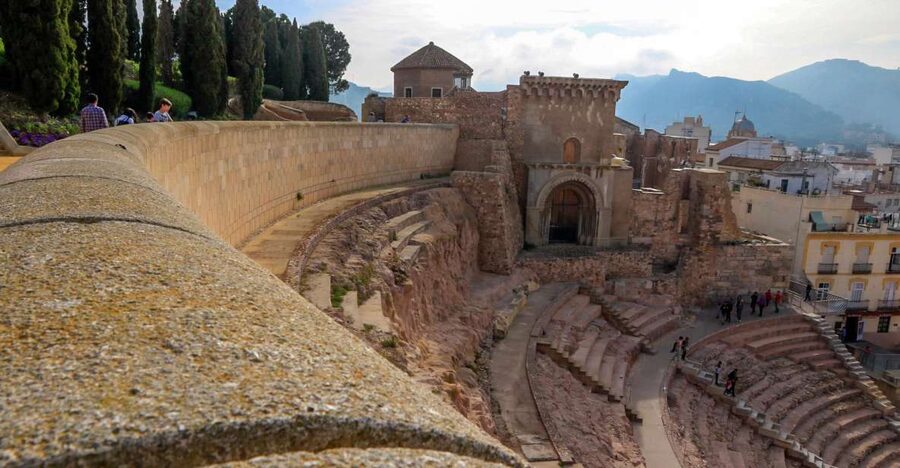
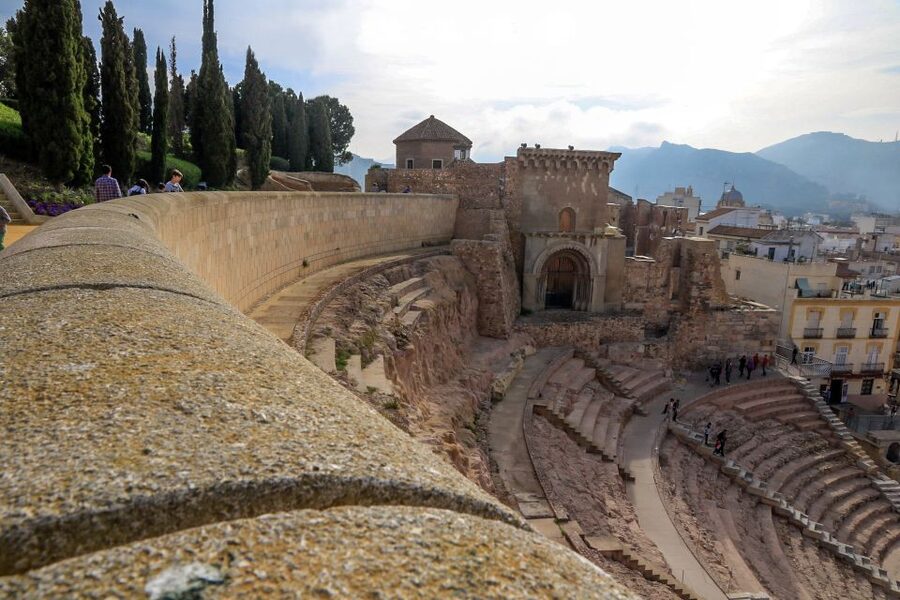
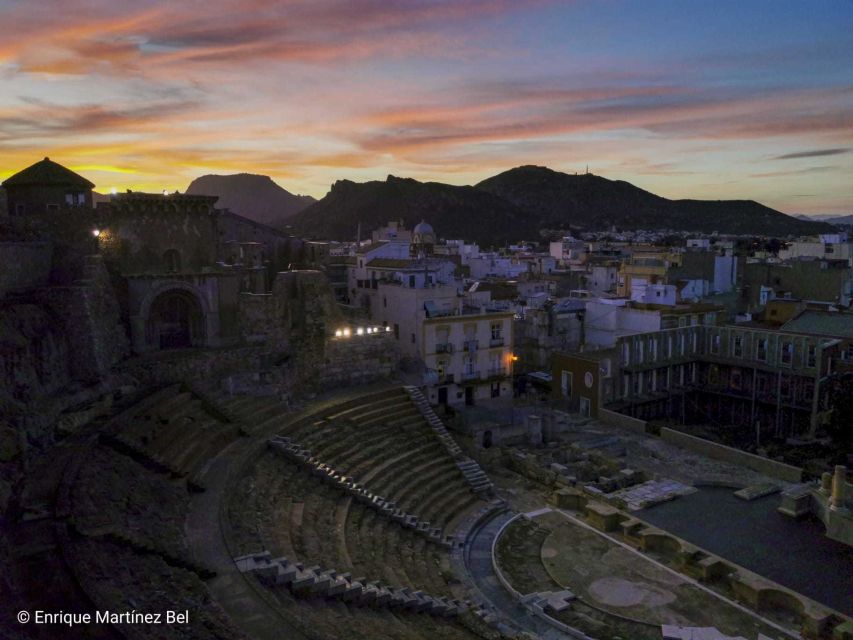
The Roman Theater is the central visit, and the entrance ticket is included in the $64 price. That makes a real difference. You are not simply walking past a Roman monument while the guide describes it from the street. You go inside and see the remains and archaeological finds as part of the tour.
A theater can tell you a great deal about Roman society. It was not only a place for entertainment. Its scale, arrangement, and decoration show how public life worked and how the city expressed Roman culture. The guide’s explanation helps turn the visible stonework into a picture of the original building.
Several guides have used visual material to show how the theater may have looked in Roman times. That is a strong teaching tool because ruins rarely preserve their original grandeur. I would especially value this if you have limited experience with archaeological sites. It gives you a clearer sense of what has been lost, what survives, and what is reconstruction.
The site is also likely to be the most memorable stop for anyone interested in Roman buildings. One guide was praised for explaining the archaeological finds and helping the group picture the theater’s former appearance. Another described the theater as spectacular. Those comments match the role this stop plays in the overall route: it is the moment when the Roman story becomes most visible.
More Tickets and Entries in Spain:
- Madrid Old Town & Royal Palace Walking Tour Skip the Line Ticket
★ 4.5 · 1,829 reviews - Málaga: 3-Hour Complete Walking Tour with Tickets
★ 4.5 · 976 reviews - Picasso Small Group Walking Tour with Museum Skip the Line Ticket
★ 4.0 · 548 reviews - Toledo: Guided Walking Tour with Cathedral Ticket and Tour
★ 4.2 · 98 reviews
Reading the Forum district one ruin at a time
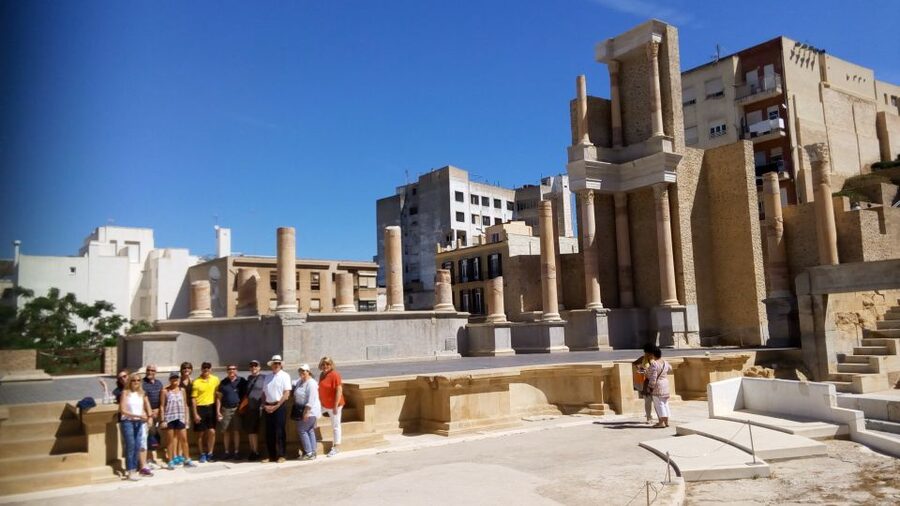
The Roman Forum district is the other major archaeological stop. It includes public baths, an Isis temple, part of the Forum, and the Roman Assembly area. These remains show that Roman Cartagena was not just a theater and a few walls. It had religious buildings, civic spaces, and facilities tied to daily life.
The public baths are useful for understanding ordinary urban routines. Roman baths were social places as well as practical ones, and the remains help you think about how public buildings supported community life. The Isis temple adds another angle, showing the religious variety present in the Roman world.
The Forum itself is harder to read without help. Modern visitors see fragments, foundations, and partial structures. Your guide’s job is to explain how these parts relate to one another and what kind of activity once took place there. This is where a well-prepared guide can save you from wandering through the site without a clear sense of scale.
The Roman Assembly is another reminder that civic life needed dedicated spaces. You will not get a full archaeological seminar in a walking tour, but you should come away understanding that Cartagena’s Roman center contained religious, political, social, and practical buildings.
The only limitation is time. The tour lasts about 2.5 hours, so the visits cannot give every site the attention of a full-day archaeology program. If you want a slow examination of every display and inscription, plan extra time in Cartagena for independent visits.
The modern city between ancient sites
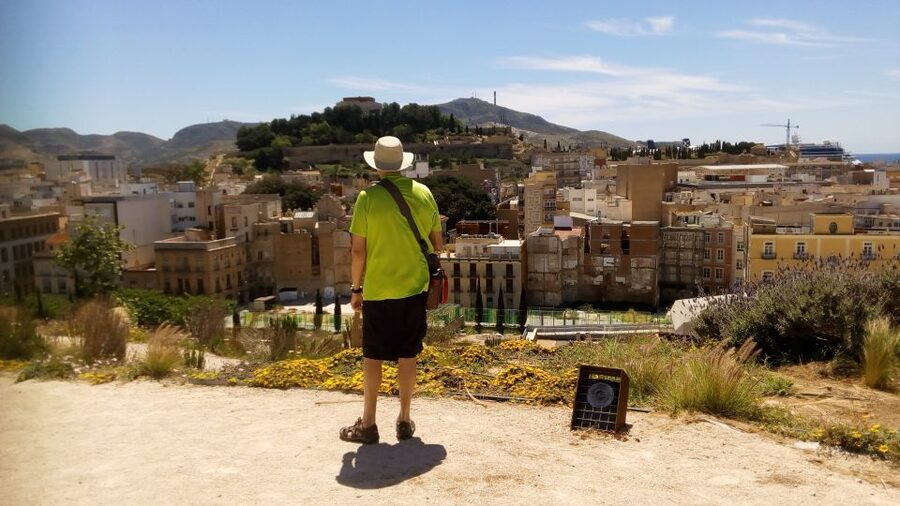
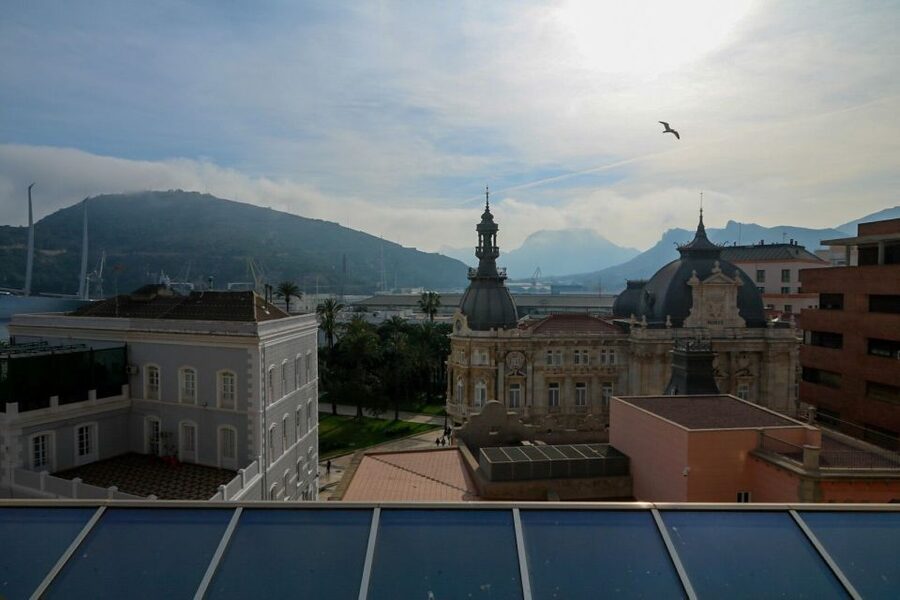
One of the better features of this route is the attention given to later Cartagena. You will pass 19th- and 20th-century buildings during the walk, including architecture that reflects the city’s more recent growth and changing tastes.
This creates a useful contrast. Roman remains can seem remote, while later buildings still resemble the city you are walking through. Moving from an ancient foundation to a more recent façade shows how Cartagena kept rebuilding itself rather than freezing in one historical period.
Architecture fans should tell the guide early that they are interested in this side of the city. Carmelo was praised for making time to show beautiful buildings when guests expressed that interest. That suggests the route can adapt, especially when the group is small.
Do not expect a dedicated modern architecture tour. The main subject remains Roman Cartagena. Still, the extra buildings make the walk feel fuller and give you something to notice during the transfers between archaeological sites.
A tapa, a drink, and a relaxed finish
The tour ends with one tapa and a drink. Your choices include a soft drink, beer, or tinto de verano. This is a modest inclusion, but it improves the rhythm of the afternoon. After several hours on foot, sitting down for a small bite gives you time to ask follow-up questions and let the history settle.
The food stop has been described as a genuine local bar rather than a formal restaurant setting. El Fuente is named as one place used for the finish, and the atmosphere was appreciated for feeling authentic and local. That kind of ending suits the tour better than simply handing you a snack and sending you away.
You should keep your expectations realistic. One tapa is not a full meal. If you are hungry, plan another meal before or after the tour. The value is in the social pause and the included drink, not in replacing lunch.
The drink choice also gives the ending a Spanish touch without forcing you into alcohol. Tinto de verano, beer, and soft drinks are available, so you can choose what suits you.
Is $64 a fair price?
At $64 per person, this is not the cheapest way to walk through Cartagena. The price makes more sense when you count the included Roman Theater ticket, live English-speaking guide, tapa, and drink.
You are also paying for interpretation. Cartagena’s ruins are valuable, but their meaning is not always obvious from the stones alone. A strong guide can explain the layout, fill in missing visual details, connect Roman life to the city’s earlier past, and point out buildings you might otherwise ignore.
The value rises if you are visiting Cartagena for the first time or have only one day. A guided route helps you cover the main Roman sights without spending time working out the city on your own. It is also a good choice if you prefer asking questions rather than reading every sign independently.
The value falls if you already know the Roman sites, dislike group pacing, or want several hours inside one archaeological complex. In that case, a self-guided visit may give you more control. You should also consider the weather. June and July can be very hot, and one guide sensibly allowed a slower pace with rest breaks during a warm tour.
Walking comfort and wheelchair access
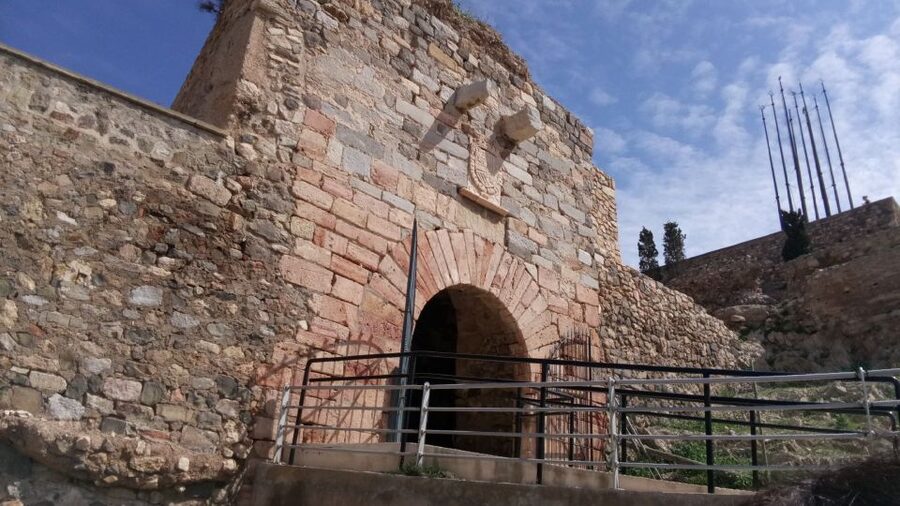
The walking is described as moderate, and comfortable shoes are strongly advised. You will move through city streets and archaeological areas, so supportive footwear is more useful than anything stylish but flimsy.
The activity is wheelchair accessible, but access may not be identical at every point. Outdoor museum platforms can sometimes fail or be under repair, and that may prevent wheelchair users from reaching all museum floors. Tell the operator about special needs in advance so the route can be adapted when possible.
The guides have been praised for patience and flexibility. That matters for mixed groups, warm days, and anyone who needs a gentler pace. Still, accessibility here should be understood as practical but not guaranteed at every platform or level.
Who will enjoy this Cartagena tour most?
I would recommend it most strongly to first-time visitors who want a clear introduction to Cartagena. You get the principal Roman monuments, a short city orientation, modern architecture, and a local food stop in one compact outing.
It also suits history fans who like connections between periods. The tour does not stop at the Roman Theater. It links the city’s Carthaginian foundation, Roman public life, later architecture, and present-day streets.
Families and mixed-age groups may appreciate the manageable duration and the food break. The guide can also make the ruins easier for younger visitors to picture by showing how the buildings once looked.
Architecture fans should mention their interests at the start. The route already includes later buildings, and guides have shown a willingness to add detail when guests ask.
I would hesitate only if you want a silent, self-directed museum visit or if you struggle with moderate walking in hot conditions. The route is accessible, but you should communicate your needs before arrival.
Should you book it?
Book this tour if you want Cartagena’s Roman remains explained in plain English, with the Roman Theater ticket handled and a local tapa at the end. The strongest reason to choose it is the guide-led interpretation. Names such as Bruno, Elisa, Ellie, Carmelo, Cristina, and Juan appear repeatedly in the tour’s strong record for clear explanations, warmth, and enthusiasm.
The best practical plan is to wear comfortable shoes, bring water, and tell the guide whether Roman archaeology, city history, or modern architecture matters most to you. If you want a relaxed introduction rather than an exhaustive archaeological study, this $64 experience offers a solid mix of ancient sites, city views, later buildings, and local flavor.
FAQ
How long does the Cartagena Roman walking tour last?
The tour lasts 2.5 hours. Availability should be checked for the specific starting time.
Where does the tour begin?
Meet in front of the Mare Nostrum restaurant. Look for a white building with golden letters. The guide will wear a white shirt and blue lanyard.
Is the Roman Theater entrance included?
Yes. The Roman Theater entrance ticket is included in the tour price.
What Roman sites are visited?
The route includes the Roman Theater and the Roman Forum district. The Forum area contains public baths, an Isis temple, part of the Forum, and the Roman Assembly area.
Is food included?
Yes. You receive one tapa and one drink. The drink can be a soft drink, beer, or tinto de verano.
Is the tour wheelchair accessible?
Yes, the activity is wheelchair accessible. Some outdoor platforms may occasionally fail or be under repair, so wheelchair users may not reach every museum floor.
Can I cancel the booking?
You can cancel up to 24 hours in advance for a full refund. A reserve-now, pay-later option is also available.
Just added around Spain
- Bilbao Food Tour – Basque Gastronomy Experience★ 5.0 · 79 reviews
- Bilbao´s Old Town Responsible Free Walking Tour★ 4.5 · 98 reviews
- Bilbao Walking Small Group Tour★ 5.0 · 203 reviews
- Barcelona Gothic Quarter Walking Tour with Tapas★ 5.0 · 248 reviews
- Barcelona Private Food Tour: Tapas, Paella & 8+ Food Tastings★ 5.0 · 164 reviews
- Picasso Museum and Walking Tour Plus Optional Wine & Food Tasting★ 5.0 · 596 reviews
- Private Barcelona Old Town and Gothic Quarter Walking Tour★ 5.0 · 134 reviews
- Barcelona Architecture Walking Tour With Casa Batlló Upgrade★ 5.0 · 137 reviews
History Walking Tours, compared.

History and Hauntings of Salem Guided Walking Tour
Read our review →

Freedom Trail History Small Group Walking Tour
Read our review →
Historic Charleston Guided Sightseeing Walking Tour
Read our review →
Tapas Walking Tour with Food, Wine, and History
Read our review →
Savannah History and Haunts Candlelit Ghost Walking Tour
Read our review →
A History of Terror – Belfast City Centre Walking Tour
Read our review →Browse the lists this tour appears in