
Review · HISTORY WALKING TOURS
Walking History Tour of St. Augustine’s Historic District
St. Augustine rewards curious walkers. This $25 tour links the Castillo de San Marcos, the old city gate, Flagler College, historic churches, and Tolomato Cemetery in one useful route through nearly two miles of downtown. I like the way it covers more than the Spanish period, and I like that guide Kevin brings humor, local insight, and room for questions. The main catch is timing: although advertised as 90 minutes, it often runs two hours or more.
You meet at the St. Augustine and St. Johns County Visitor Information Center on Castillo Drive and return there at the end. The group is capped at 15 people, which should make it easier to hear the guide than on a large trolley tour. Wear shoes made for walking, bring water, and leave enough time afterward if Kevin gets rolling on another historical story.
Key points at a glance
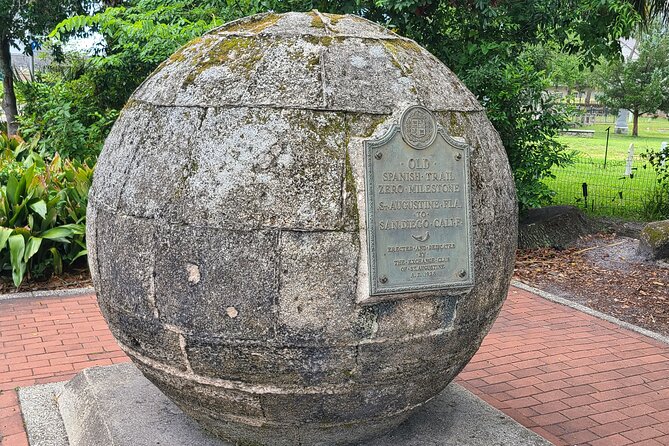
- Covers several centuries: You move from the city’s earliest settlement stories through the colonial era and into Henry Flagler’s Gilded Age rebuilding.
- A small group of up to 15: The size suits questions and conversation better than a large vehicle tour.
- Guide Kevin earns strong praise: His humor, local knowledge, easy delivery, and willingness to answer questions are the heart of the experience.
- Nearly two miles on foot: The route is manageable for people with moderate fitness, but Florida heat and pavement make good shoes and water important.
- More than a 90-minute commitment: Plan for two hours or longer, especially if the group asks questions or the guide expands on a story.
- Outdoor fort viewing: The tour explains the Castillo de San Marcos from the exterior, but it does not include admission inside the monument.
Why this tour works as a first look at St. Augustine
St. Augustine can feel like several cities layered on top of one another. Spanish colonial traces sit beside Victorian churches, grand hotel architecture, tourist shops, and reminders of Florida’s changing political fortunes. A walking tour helps you connect those pieces instead of seeing them as isolated photo stops.
I especially like the broad time span here. The tour begins with early city history, covers the Spanish occupation periods, explains the role of the plaza and fort, then moves into the late 1800s and the changes brought by Henry Flagler. That makes it a better fit for you if you want to understand how St. Augustine changed over time, not simply hear a list of dates about one colonial monument.
The group limit of 15 matters. St. Augustine’s old streets can be crowded, and a guide who cannot be heard quickly loses the group. A small party gives you a fair chance to ask about a building, a person, or a detail you notice along the way.
The clearest strength is Kevin’s presentation. He is described as funny, welcoming, and deeply familiar with the city’s past. He also seems comfortable with questions, which is useful if you want more than a fixed speech. The tradeoff is that his enthusiasm can stretch the schedule. That is a nice problem for a history fan, but a real problem if you have a restaurant booking or another attraction at a fixed time.
More History Walking Tours in the USA
- History and Hauntings of Salem Guided Walking Tour
★ 5.0 · 14,564 reviews - Boston: Freedom Trail History Small Group Walking Tour
★ 5.0 · 6,450 reviews - Historic Charleston Guided Sightseeing Walking Tour
★ 5.0 · 6,216 reviews
Starting at the visitor center on Castillo Drive
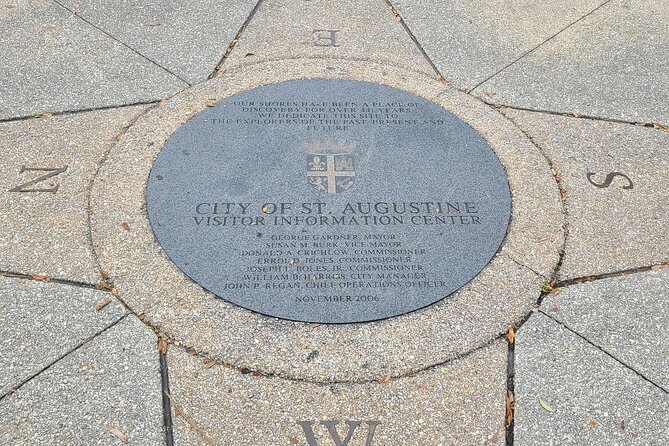
The tour begins at the St. Augustine and St. Johns County Visitor Information Center, 10 S Castillo Drive. Since the tour ends at this same point, you can use the start and finish to plan the rest of your day.
The meeting location is practical for a first visit because it places you near the Castillo de San Marcos and the northern end of the historic district. Still, arrive ready to walk right away. The route is not a short stroll between two or three nearby buildings. It covers close to two miles, and the total time may run well beyond the advertised 90 minutes.
I would schedule this early in your stay. You will get an introduction to the central sights, then can return later to the places that deserve more time. The tour does not function as a substitute for every museum or paid interior, but it gives you useful context before you choose where to spend your admission money.
Tolomato Cemetery and the Love Tree
Tolomato Cemetery is an unusual first stop. It is presented as the oldest cemetery in the city and as a site that predates the arrival of the Spanish in 1562. The stop is brief, about five minutes, so expect an introduction rather than a long visit.
The cemetery gives the tour an early reminder that St. Augustine’s story did not begin with one neat founding date. Burial grounds can reveal how a city remembers its past, and this stop sets up the larger theme of the tour: different eras have left their mark on the same compact area.
You will also hear about the Love Tree. The wording suggests a playful local story, but the stop remains part of a serious historical walk. Admission is not included, and the cemetery may not be open for a full independent visit during your tour, so treat this portion as an exterior or brief guided look unless the guide says otherwise.
Grace United Methodist Church and the Flagler era
Grace United Methodist Church introduces the late 1800s, when Henry Flagler helped remake St. Augustine for a new age of tourism and winter travel. You spend about five minutes here, enough to understand why the church belongs in a tour that reaches beyond the Spanish period.
This is one of the tour’s useful choices. Many first-time visits focus so heavily on the fort and colonial streets that they miss the city’s later architectural and social changes. Grace United Methodist Church helps show that St. Augustine was not frozen in the 1700s. It changed again when wealthy visitors, new hotels, and major construction projects altered the city.
You should not expect an extended church visit. Admission is not included, and the stop is mainly about setting the building within the city’s Flagler-era story. If you enjoy architecture, listen for the connection between this church, nearby buildings, and the larger effort to reshape St. Augustine’s image.
Same streets, a different way to see them:
- New Orleans Premier Ghost, Voodoo and Vampire Walking Tour
★ 4.5 · 12,856 reviews - Little Havana Food and Walking Tour in Miami
★ 5.0 · 8,882 reviews - Chicago: Gangsters and Ghosts Walking Tour
★ 5.0 · 7,155 reviews - New Orleans Food Walking Tour of the French Quarter with Small-Group Option
★ 5.0 · 6,118 reviews
Memorial Presbyterian Church and a difficult story
The Memorial Presbyterian Church receives about ten minutes, making it one of the longer stops. The tour presents it as one of the city’s most beautiful buildings and explains the sad story behind its creation.
That combination of design and personal loss gives the stop emotional weight. Instead of simply pointing out a decorative facade, the guide connects the building to the people and events that produced it. This is the kind of detail that can make an attractive building easier to remember.
Admission is not included. The stop may be most satisfying for you if you enjoy hearing the human story behind architecture. If you prefer extended interior visits, keep in mind that the walking tour’s purpose is interpretation across the district, not a series of full church tours.
Flagler College and the former Ponce de Leon Hotel
Flagler College is one of the tour’s essential sights. The college occupies the former Ponce de Leon hotel, a showpiece of the Gilded Age and a major part of Henry Flagler’s plans for St. Augustine.
The guide explains how the hotel set a new standard for luxury in the city. That gives you a clearer sense of why Flagler College looks different from the older Spanish structures nearby. The building is not just another pretty stop. It represents a period when St. Augustine was being marketed and rebuilt for affluent visitors.
The scheduled stop is only about five minutes, and admission is not included. That is the main limitation. You will hear the story and see the building as part of the walking route, but you should not assume you will receive a full interior tour of the former hotel.
If Flagler College is high on your list, consider returning separately after the walk. The tour gives you a reason to look more closely, but its focus is the wider city rather than a detailed examination of every room and feature.
Plaza de la Constitución and Government House
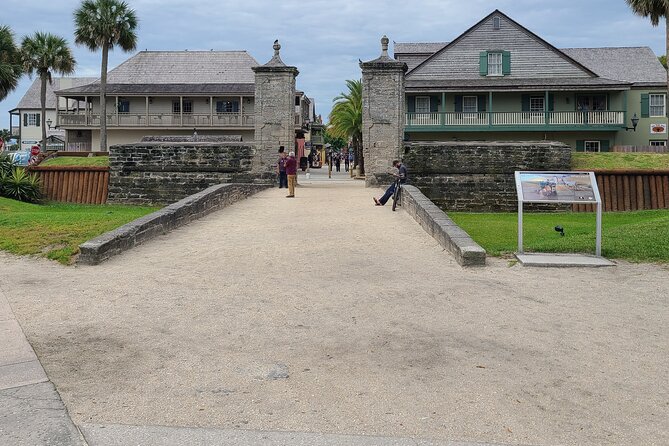
Plaza de la Constitución offers one of the longer stops, about ten minutes. The plaza was founded in 1599 by royal decree, and Government House served as Florida’s seat of power for nearly 250 years.
This stop helps explain the civic side of St. Augustine. The fort protected the city, but the plaza and Government House were tied to administration, public life, and the people who governed Florida. You will hear how the plaza developed, what happened to the governors who lived there, and how the space was recreated in 1933 through a Works Progress Administration project.
I like this stop because it shows how old places can be altered, restored, and reinterpreted. St. Augustine is not simply an untouched colonial town. Parts of the city reflect later decisions about what the past should look like and how it should be presented.
Admission to the plaza is free. The open setting also gives the group a natural place to pause before continuing toward the fort and city gate.
Castillo de San Marcos from the outside
The Castillo de San Marcos is the tour’s major military history stop. For about 15 minutes, a licensed fort guide explains the forts of St. Augustine, the construction of the Castillo, and its role in the story of the city and the nation.
The wording here is important: the tour visits the exterior of the structure. Admission to the monument is not included, so you should budget separately if you want to go inside, explore the rooms, or see the fort’s views from within.
Even an exterior explanation is useful because the Castillo can be easy to admire without understanding why it was built as it was. The guide connects the fort’s construction to St. Augustine’s wider history and explains why the site mattered beyond the city itself.
The fort is also where the route’s physical demands become most apparent. You have already walked through much of the historic district, and the Florida sun can add strain. Drink water before the tour and do not treat the nearly two miles as casual window shopping. It is not a strenuous hike, but it is steady walking on city streets.
The old city gate and the way out
The final listed stop is City Gate Spirits, at the traditional entrance to St. Augustine since 1762. The guide discusses the gate’s construction and the determined effort that saved it from demolition.
This is a fitting ending because gates explain how a city controlled movement and defined its limits. It also adds a preservation story. St. Augustine’s old structures did not survive by accident. People made choices about what to save, what to remove, and what future generations would see.
The stop lasts about five minutes and admission is free. From here, the tour returns to the visitor center. Since the group may run late, use the official 90-minute length as a minimum planning guide rather than a firm finish time.
What $25 gets you
At $25 per person, this is a reasonable price for a small-group introduction to the historic district. You are paying for a guide who connects several periods and landmarks, not for admission to the Castillo, Flagler College, churches, or cemetery.
The value improves if Kevin leads your group and gives the same kind of expanded presentation described in the tour feedback. His habit of answering questions and sharing extra stories can turn a scheduled 90-minute walk into a two-hour history lesson. I would see that as a strong deal if you enjoy history and have an open schedule.
The price is less compelling if you want interiors, formal museum access, or a short overview. You will need to pay separately for attractions you choose to enter, and the route does not replace those visits. Still, it can prevent you from spending money blindly by showing you which sites deserve a closer look.
Who should book this walk
This tour suits you best if:
- You want both Spanish colonial and Gilded Age history.
- You enjoy asking questions rather than listening to a rigid script.
- You prefer walking through the city to riding past it.
- You have moderate physical fitness and can manage nearly two miles.
- You want an early orientation before exploring on your own.
- You like stories about buildings, preservation, government, and local people.
It may not suit you if you need a guaranteed 90-minute finish. It is also not ideal if you want every stop to include an interior visit or if walking in heat is difficult for you.
The tour is offered in English, uses a mobile ticket, and allows service animals. It runs with a maximum of 15 people. Confirmation is sent within 48 hours, subject to availability, and the experience requires good weather. You can cancel for a full refund up to 24 hours before the start time. Poor weather or failure to meet the minimum group size can lead to a rescheduled tour or full refund.
Should you book the St. Augustine history tour?
I would book it if you want a thoughtful first walk through St. Augustine and can spare two hours, possibly more. The mix of cemetery, churches, plaza, fort, city gate, and Flagler-era buildings gives you a much fuller picture than a single-site visit.
Book with an open schedule and comfortable shoes. If you are assigned Kevin, expect a guide who may run long because he enjoys the subject and welcomes questions. That extra time is the tour’s greatest strength for history fans, but its main drawback for anyone trying to keep a tight day plan.
FAQ
How long is the Walking History Tour of St. Augustine’s Historic District?
The scheduled duration is approximately 1 hour and 30 minutes. The tour may run two hours or longer when the guide spends extra time answering questions and sharing additional stories.
How much does the tour cost?
The price is $25 per person.
Where does the tour begin and end?
It begins at the St. Augustine and St. Johns County Visitor Information Center at 10 S Castillo Drive, St. Augustine, Florida 32084. It ends back at the same meeting point.
How much walking is involved?
The route covers nearly two miles. A moderate level of physical fitness is recommended, and comfortable shoes and bottled water are advised.
Does the tour enter the Castillo de San Marcos?
The tour covers the exterior of the Castillo de San Marcos National Monument. Admission is not included.
Is the tour available in languages other than English?
The experience is offered in English.
Can I cancel for a refund?
You can cancel at least 24 hours before the start time for a full refund. Cancellations or changes made within 24 hours are not refunded. If poor weather or an insufficient number of participants cancels the tour, you will be offered another date or experience, or a full refund.
Just added around the USA
- Savor Bar Harbor Culinary Walking Tour in Maine★ 5.0 · 169 reviews
- Savor Bar Harbor Culinary Walking Tour★ 4.5 · 75 reviews
- 90-minute Ghost Walking Tour in Bar Harbor★ 4.5 · 161 reviews
- Baltimore Walking Foodie Tour in Fells Point★ 5.0 · 182 reviews
- The Original Fells Point Ghost Walk by Baltimore Ghost Tours★ 4.5 · 73 reviews
- The Story of Austin: Downtown History Walking Tour★ 5.0 · 216 reviews
- Austin Small Group Morning Walk★ 5.0 · 412 reviews
- The Madam’s Curse Walking Ghost Tour★ 4.5 · 103 reviews
History Walking Tours, compared.

History and Hauntings of Salem Guided Walking Tour
Read our review →

Freedom Trail History Small Group Walking Tour
Read our review →
Historic Charleston Guided Sightseeing Walking Tour
Read our review →
Tapas Walking Tour with Food, Wine, and History
Read our review →
Savannah History and Haunts Candlelit Ghost Walking Tour
Read our review →
A History of Terror – Belfast City Centre Walking Tour
Read our review →Browse the lists this tour appears in