
Review · FOOD WALKING TOURS
Tokyo: Tsukiji Fish Market Food and Walking tour
Tsukiji rewards the curious and hungry. I like the freedom to choose your own food instead of accepting a fixed menu, and I like having a guide such as Rie, Haydn, Minori, or Jim steer you through the market’s crowded lanes. The small-group format also helps, with no more than 10 people and a flexible pace shaped by what your group wants to see.
The main catch is that food and drinks cost extra, and you need cash in yen for purchases. I also find the 30-minute temple visit slightly out of step with the main food focus. It is a lovely stop, but if you want two straight hours of market tasting, this tour may feel briefly sidetracked.
Key points at a glance
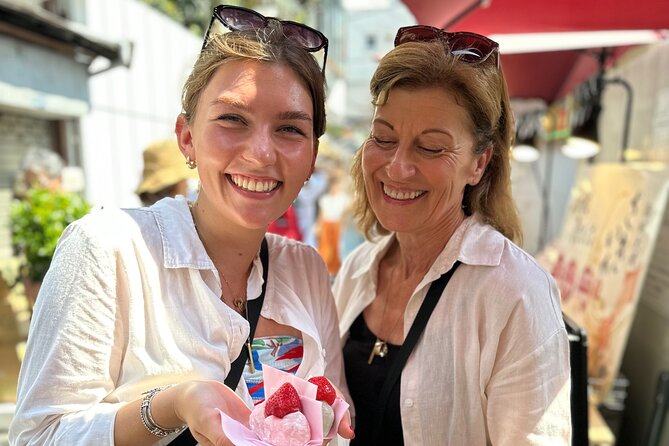
- Choose your own dishes: There is no fixed menu, so you pay only for the seafood, sushi, fruit, omelets, or snacks you decide to try.
- A useful first introduction: A guide helps you make sense of Tsukiji Jogai Market, where many food stalls and shops can feel confusing at first.
- Three distinct stops: The route includes Tsukiji Hongwanji Temple, Tsukiji Fish Market, and the surrounding Jogai Market.
- Bring Japanese yen: Food is not included, and cash is needed for many of the tasting purchases.
- Small groups matter: The maximum group size is 10, making it easier to ask questions and move through tight spaces.
- Strong guide element: Guides including Rie, Haydn, Minori, Shino, Yayoi, Nicolas, and Jim receive praise for food advice, cultural context, and friendly help.
Why a guide helps at Tsukiji
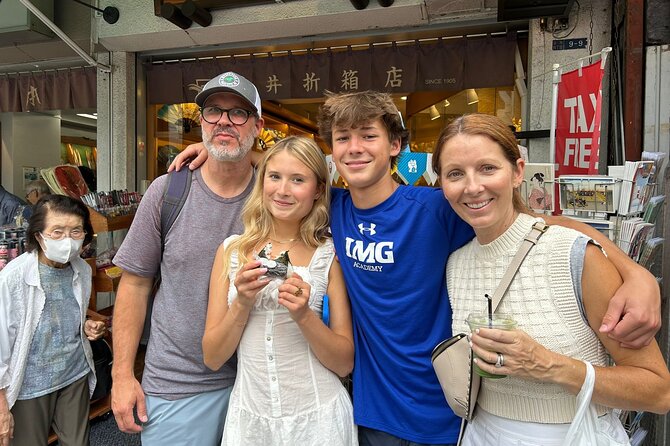
Tsukiji is easy to reach and easy to enter, but it is not always easy to understand. The market area is made up of many shops, counters, and food stalls, with different products and prices spread along busy lanes. On your own, you can certainly wander and eat. The harder part is knowing what deserves your limited stomach space and budget.
That is where this tour earns its modest price. Your guide points out Japanese ingredients, explains how foods connect to sushi and local cooking, and helps you decide what to taste. The best guides do not simply march you from one counter to the next. They help you read the place.
Rie is especially praised for guiding people toward good food while warning them away from tourist traps. Other guides, including Haydn and Minori, are praised for helping people find good value and explaining what they are seeing. Shino brings a chef’s perspective, while Jim is noted for adding a broader view of Japanese culture.
You should think of this as a guided food walk, not a traditional sit-down meal. You will stop at shops and counters, choose individual portions, and eat as you go. That makes it easy to adjust the experience to your appetite, but it also means you need to manage your own spending.
More Food Walking Tours in Japan
- Tokyo Tsukiji Fish Market Food and Culture Walking Tour
★ 5.0 · 3,184 reviews - Tsukiji Fish Market Small-Group Food Walking Tour
★ 5.0 · 621 reviews - Shinjuku: Food Tour – 15 Dishes at 4 Eateries
★ 5.0 · 493 reviews
Starting at Tsukiji Hongwanji Temple
The tour begins at Starbucks Coffee near Tsukiji Station, at 2-chome 12-8 in Tsukiji. From there, the first stop is Tsukiji Hongwanji Temple, which receives about 30 minutes of the two-hour outing.
This temple is worth seeing for its unusual architecture and peaceful setting. It gives the morning a cultural opening before the noise and food stalls take over. Haydn is praised for explaining the temple well, and several guides add useful context about Japanese culture and the area.
Still, this opening can feel unexpected. You booked a fish market food tour, and the market does not come first. One person found the temple interesting but felt that the time could have been used for more market exploration. I think the stop works best if you want a little culture with your breakfast tasting. If your only goal is seafood, you may see it as a detour.
The temple visit also gives your group a chance to gather before entering the tighter market lanes. With a group of up to 10 people, that matters. It is easier for the guide to explain the plan and for you to ask what kinds of food you want to try.
The fish market and the story behind it
The central market portion lasts about one hour. Your guide introduces Tsukiji as the famous Tokyo fish market associated with tuna auctions and explains how the area developed into a major food destination.
You should keep your expectations clear. This experience takes place around the public market area and its food stalls. The tour is not presented as access to a private auction or a behind-the-scenes wholesale operation. Its strength is the connection between the market’s past, its food culture, and what you can eat there today.
This is also where a guide can save you time. The market can feel like a wall of choices: seafood, sushi, fruit, Japanese omelets, fried fish cakes, and other snacks all compete for attention. A good guide helps you choose instead of simply pointing at everything.
The guide-led pace is flexible. You can express interest in particular foods, ask questions about ingredients, and spend more time at places that appeal to the group. The exact selection will depend on what you and the other participants want to buy. That is a plus for adventurous eaters and a relief for cautious ones.
I like this arrangement better than a fixed tasting menu. You can skip anything you dislike and put your money toward a few special items. If you are curious about sea urchin, eel, sushi, or wagyu beef, you can ask your guide for direction. If those foods are not for you, fruit, omelets, and fried fish cakes provide other options.
Eating through Tsukiji Jogai Market
The final 30 minutes are spent in Tsukiji Jogai Market, the outdoor market area filled with food shops and counters. This is the most practical part of the tour for many people because it shows you how to move around and make choices in a place that can be overwhelming on a first visit.
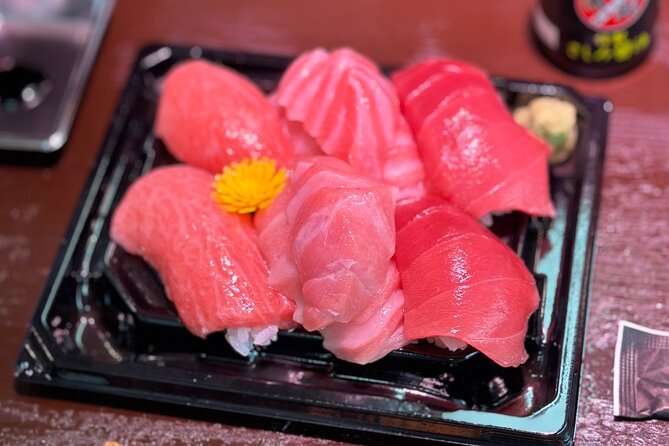
The food list is broad. You may sample fresh seafood, fruit, Japanese omelets, fried fish cakes, sushi, eel, sea urchin, and other local snacks. The tour does not promise a specific number of tastings or a set collection of dishes, so you should treat these examples as possibilities rather than guarantees.
That uncertainty is part of the appeal. You are not paying for food you do not want. You can follow your guide’s recommendations, then decide for yourself. The group’s preferences shape the route, so the morning feels more personal than a rigid procession of preselected bites.
There is a practical point here: bring enough yen. Food and drinks are excluded from the tour price, and cash is used for many purchases. One useful budget suggestion is to carry about 10,000 Japanese yen if you want room to sample several items, though your actual spending depends on what you choose.
You will be walking and standing, but the outing is described as not especially strenuous. Still, the market requires attention. Stay near your guide, watch where you step, and avoid blocking shop entrances while you eat or listen.
Same streets, a different way to see them:
- Tokyo: Imperial Palace and Shogun Historical Walking Tour
★ 5.0 · 2,251 reviews - Tokyo: Shinjuku Local Bar and Izakaya Guided Walking Tour
★ 4.9 · 1,794 reviews - Tokyo: Asakusa Walking Tour with Sensoji Temple Visit
★ 4.8 · 1,583 reviews - Tokyo: Tsukiji Fish Market Guided Walking Tour
★ 4.9 · 1,397 reviews
What the 30 dollar price really covers
At $30 per person, this is a reasonable price for a two-hour introduction, particularly if you are new to Tokyo’s food markets. You are paying for an English-speaking local guide, cultural explanation, route planning, and help making food choices. Admission to the temple and market areas is included.
The price does not cover your meal. That distinction is important. A couple can easily spend more on food than on the tour itself if they sample freely, so set a tasting budget before you start. The advantage is control. A small eater can keep costs down, while an enthusiastic food lover can spend more on premium items.
I see the value mainly in the orientation. You could walk through the market without paying a guide, but you would need to choose stalls, interpret unfamiliar ingredients, and judge prices on your own. The tour gives you a starting point and practical advice for the rest of your Tokyo stay.
It is especially good value for families and first-time visitors who want help without committing to a full-day food program. The small maximum group size also improves the experience. A guide can answer questions and keep an eye on the group more easily than on a large coach-style outing.
The guides shape the experience
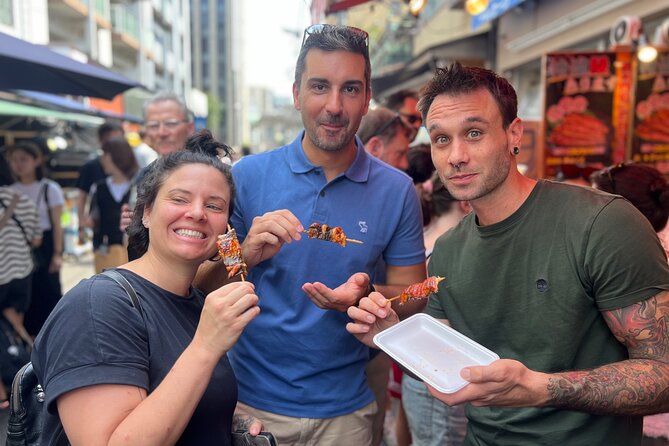
The company uses different guides, so the personality and emphasis can vary. That is worth knowing before you book. Rie is praised for energy, clear English, and strong food recommendations. She is also credited with encouraging people to try unfamiliar items such as sea urchin and eel.
Haydn is praised for guiding people through the market with ease, explaining the temple, and helping families stay engaged. Minori is noted for combining food advice with Japanese history and culture. Shino brings experience as a chef, which can add another layer to explanations of ingredients and preparation.
Yayoi is described as friendly and upbeat, while Nicolas receives praise for being both informative and flexible. Jim is noted for his cultural perspective and personal approach. These details matter because the guide is not a minor part of the tour. Your enjoyment depends heavily on how well that person handles the market and responds to your interests.
The strongest pattern is clear: people value guides who know where to go, explain what they are showing you, and help you avoid poor-value purchases. The less successful experience came from a participant who felt the tour was not organized enough and offered too little market history. That is a fair warning. The guide makes a major difference.
Timing, meeting point, and group size
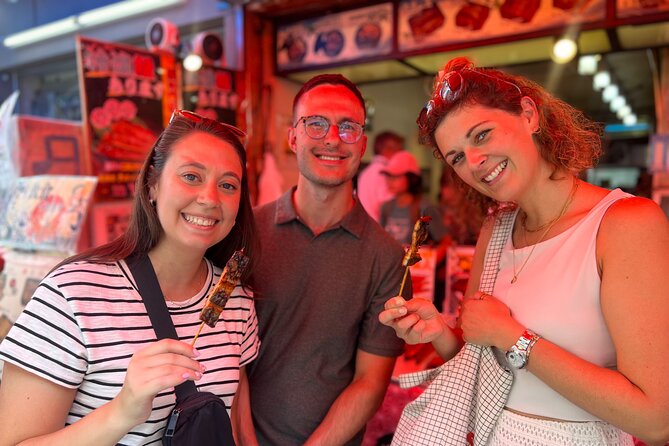
The meeting point is the Starbucks Coffee near Tsukiji Station, at Japan, 104-0045 Tokyo, Chuo City, Tsukiji, 2-chome 12-8, Daiko Building 1F. The tour returns to this same meeting point after about two hours.
A mobile ticket makes arrival simple, and confirmation is provided when you book. The area is near public transportation, so it fits neatly into a Tokyo morning, though the exact start time is not provided here. Check your confirmation carefully so you arrive at the correct time.
The maximum group size is 10 people. That is small enough for a guide to offer individual food suggestions and keep the walk together. It also means you should expect some compromise. If one person wants sushi and another wants fruit or snacks, the guide may need to balance several interests.
The pace is flexible rather than fixed. This can be a strength, but it also means the exact route and food selection are not guaranteed. Go in ready to make choices with the group rather than expecting a carefully scripted tasting menu.
Who will enjoy this market walk
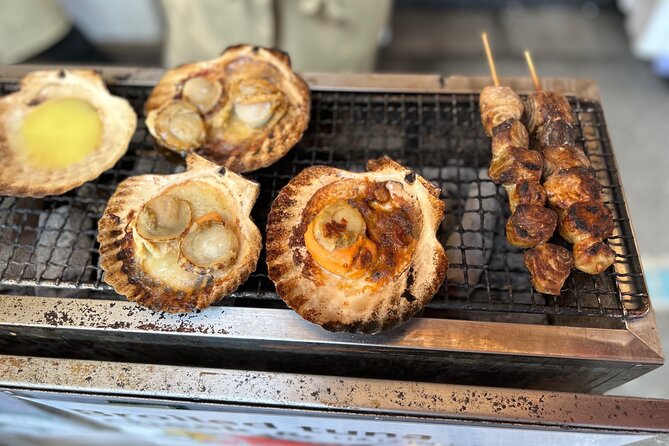
I would recommend this tour to first-time Tokyo visitors who want a friendly introduction to Tsukiji without trying to work out every stall alone. It also suits people who enjoy tasting small portions and learning what they are eating.
Families can benefit from the flexible approach. Children and adults can choose different foods, and the short format avoids turning the morning into an endurance test. The guides have also been praised for keeping both adults and children interested.
Food lovers should enjoy the freedom to choose. You can ask about seafood, sushi ingredients, eel, sea urchin, wagyu beef, omelets, fruit, or fried fish cakes, then spend your budget where your curiosity leads.
I would hesitate if you want a full meal included, a private market kitchen, or a strict focus on fish from start to finish. I would also think twice if you dislike standing, walking, or paying separately for each tasting. The temple stop may not suit someone who wants an uninterrupted food crawl.
Service animals are allowed, and most people can participate. The tour is near public transportation and does not require a special fitness level, although the market setting involves walking and standing.
Cancellation and planning notes
You can cancel up to 24 hours before the local start time for a full refund. Changes or cancellations made inside that 24-hour window are not accepted for a refund.
The most useful preparation is simple: wear comfortable shoes, bring Japanese yen, and arrive ready to choose your own food. Since no dishes are included in the price, decide how much you want to spend before the first tempting counter appears.
Should you book the Tsukiji food tour?
Book it if you want a guided first look at Tsukiji, practical food advice, and the freedom to choose your own tastings. At $30, the tour offers good value for route help, cultural context, and the chance to avoid wandering past the best choices.
Skip it if you want a fixed meal, a private behind-the-scenes market experience, or two uninterrupted hours of eating. The temple visit takes 30 minutes, food costs extra, and the quality of the morning depends on your assigned guide.
For most first-time visitors, I would book it early in a Tokyo stay. You will get your bearings, learn which foods interest you, and can return to Tsukiji later with more confidence and a better idea of how to spend your yen.
FAQ
How long does the Tsukiji food and walking tour last?
The tour lasts approximately two hours.
Where does the tour begin?
It begins at Starbucks Coffee near Tsukiji Station, at 2-chome 12-8, Daiko Building 1F, Tsukiji, Chuo City, Tokyo 104-0045.
Where does the tour end?
The activity ends back at the starting meeting point.
Is food included in the tour price?
No. Foods and drinks are not included. You choose and pay separately for the dishes you want to eat.
How much does the tour cost?
The listed price is $30 per person.
What places are included in the route?
The route includes Tsukiji Hongwanji Temple, Tsukiji Fish Market, and Tsukiji Jogai Market.
Is an English-speaking guide provided?
Yes. A local Japanese English-speaking guide leads the experience.
How many people can join the tour?
The maximum group size is 10 participants.
Can I cancel for a full refund?
Yes, if you cancel at least 24 hours before the experience start time. Cancellations made less than 24 hours before the start time are not refunded.
More Food Walking Tours in Tokyo
- Reykjavik Food Walk – Local Foodie Adventure in Iceland
★ 5.0 · 18,952 reviews - Little Havana Food and Walking Tour in Miami
★ 5.0 · 8,882 reviews - New Orleans Food Walking Tour of the French Quarter with Small-Group Option
★ 5.0 · 6,118 reviews - Naples: Street Food Walking Tour with Local Guide
★ 4.9 · 4,976 reviews
More Market Walking Tours in Japan
- Tokyo: Guided Walking Tour of Tsukiji Market with Breakfast
★ 4.4 · 134 reviews - Tokyo: Tsukiji Market Walking Tour & Sushi Cooking Class
★ 4.6 · 122 reviews - Nishiki Market Brunch Walking Tour (7 Tastings + Brunch)
★ 5.0 · 1,355 reviews - Osaka: Kuromon Market Food Walking Tour (6 stops, 6 tastes)
★ 4.6 · 272 reviews
Just added around Tokyo
- Tokyo: Tsukiji Market Walking Tour & Sushi Cooking Class★ 4.6 · 122 reviews
- Tokyo: Dark Side of Tokyo Shinjuku Red Light Walking Tour★ 4.7 · 862 reviews
- Tokyo: Shinjuku Nightlife & Secret Backstreets Walking Tour★ 4.8 · 229 reviews
- Tokyo: Shibuya Highlights Walking Tour★ 4.8 · 601 reviews
- Tokyo: Shibuya Highlights Walking Tour & Secret View Spot★ 4.9 · 196 reviews
- Tokyo: Shinjuku Bar Hopping & Night Walking Tour★ 4.6 · 137 reviews
- Tokyo: Private Custom Walking Tour with Local Guide★ 4.9 · 350 reviews
- Tokyo: Shibuya Crossing & Hidden Streets Walking Tour★ 4.8 · 128 reviews
Food Walking Tours, compared.
Reykjavik Food Walk – Local Foodie Adventure in Iceland
Read our review →

New Orleans Food Walking Tour of the French Quarter with Small-Group Option
Read our review →
Authentic Parisian Gourmet Food Tour with 10 Local Dishes & Wines
Read our review →
Tapas Walking Tour with Food, Wine, and History
Read our review →
Browse the lists this tour appears in