
Review · GERMANY WALKING TOURS
Nuremberg: Walking Tour of Former Nazi Party Rally Grounds
The buildings still make the argument. This two-hour walk across Nuremberg’s former Nazi Party Rally Grounds shows how architecture, scale, and mass gatherings served National Socialist propaganda. I love the use of historic photographs, which helps you picture the unfinished and altered structures as they once appeared. I also like the guide-led discussion of how the site is treated today. The main drawback is simple: there is a lot of walking, and late tours can reach Zeppelin Field after dark.
At $15 per person, this is one of Nuremberg’s better-value history tours. Guides such as Sylvia, Kai, Anita, Frank, Andreas, and Alan have been praised for clear explanations, thoughtful answers, and a careful approach to difficult material. Bring weatherproof clothing, good shoes, and enough time to listen without rushing.
Key points to know before you go
- The route covers three major sites: Congress Hall, the Great Road, and Zeppelin Field.
- The scale is the lesson: Congress Hall rises about 40 meters, while the Zeppelin Tribune was designed for crowds of up to 200,000 people.
- Historic photographs add real value: Guides use images to show how the grounds looked during the Nazi period.
- Expect roughly 5,000 steps: The walk is manageable for many people, but it is not a short stroll between nearby monuments.
- The subject is handled with care: The tour explains Nazi crimes, propaganda, concentration camp connections, and the National Socialist view of history without turning the past into spectacle.
- Winter daylight matters: Several tours have reached Zeppelin Field in darkness, making it harder to appreciate the open grounds.
Why these former rally grounds matter
Nuremberg is closely linked with the Nazi period for two different reasons. It hosted the huge National Socialist Party rallies, and after the war it became the setting for the international trials of leading Nazi officials. This tour concentrates on the rally grounds, where political ideas were turned into carefully staged public theater.
That distinction matters. You are not simply looking at old buildings. You are examining how a political movement used space, ceremony, uniforms, sound, symbols, and enormous crowds to make power feel permanent and unquestionable.
The grounds were designed to impress people before a speaker even said a word. Long axes directed movement. Broad open spaces reduced the individual to a small figure within a mass. Monumental walls and tribunals suggested order, destiny, and historical importance.
A good guide helps you notice these effects instead of letting the structures speak for themselves. The most praised guides on this tour, including Andreas, a political scientist, and Kai, who was praised for precise answers, appear to connect the physical setting with the political methods behind it.
The subject is serious. You will hear about Nazi crimes, the propaganda rallies, the concentration camp system, and the way the regime presented its own version of German history. The strongest part of the experience is its refusal to treat the site as a backdrop for dramatic photographs. The purpose is to understand how propaganda worked and why it could affect so many people.
A few more walks around Germany worth a look
- Discover Berlin Half-Day Walking Tour
★ 5.0 · 9,624 reviews - Berlin City walk Government District and Places of Democracy
★ 4.7 · 8,467 reviews - Berlin: Third Reich & Cold War Guided Walking Tour
★ 4.9 · 8,378 reviews
Meeting at Congress Hall
The tour begins beside the entrance stairs to the Documentation Center Nazi Party Rally Grounds at Bayernstraße 110. Look for the guide holding a picture folder and wearing a name tag marked Geschichte Für Alle e.V. There are two listed starting options connected with the Documentation Center, so check your booking details carefully before setting out.
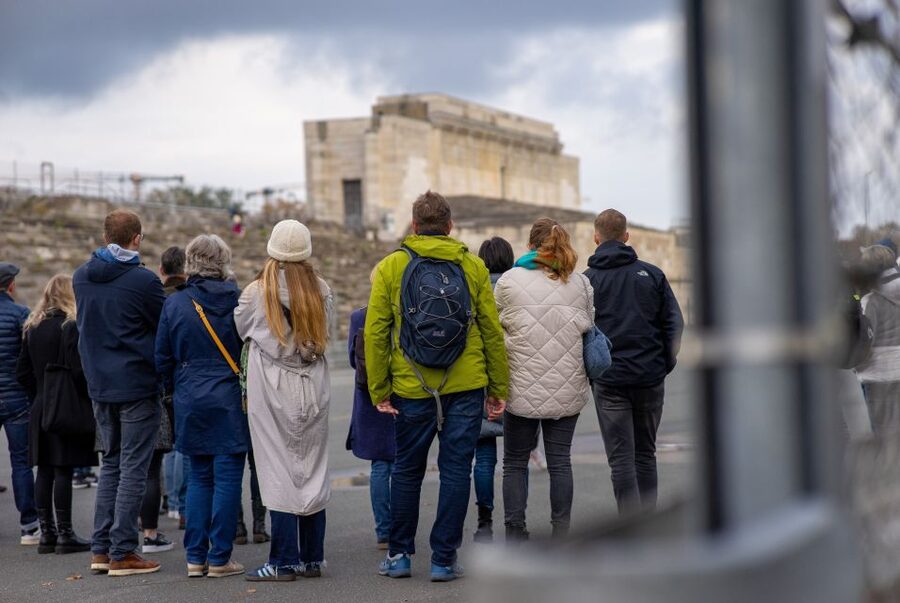
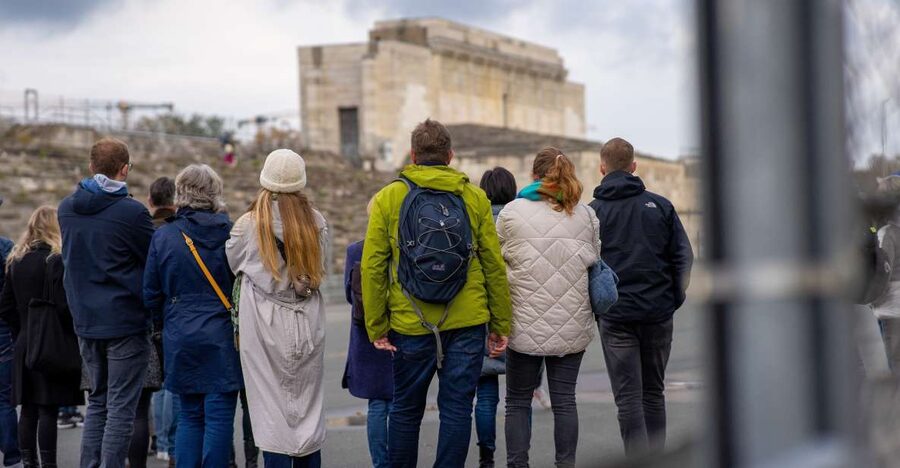
The first major stop is the Kongresshalle, or Congress Hall. Its remains give you the quickest sense of the regime’s ambition. The structure reaches about 40 meters, and its vast curved form was intended to communicate strength and permanence.
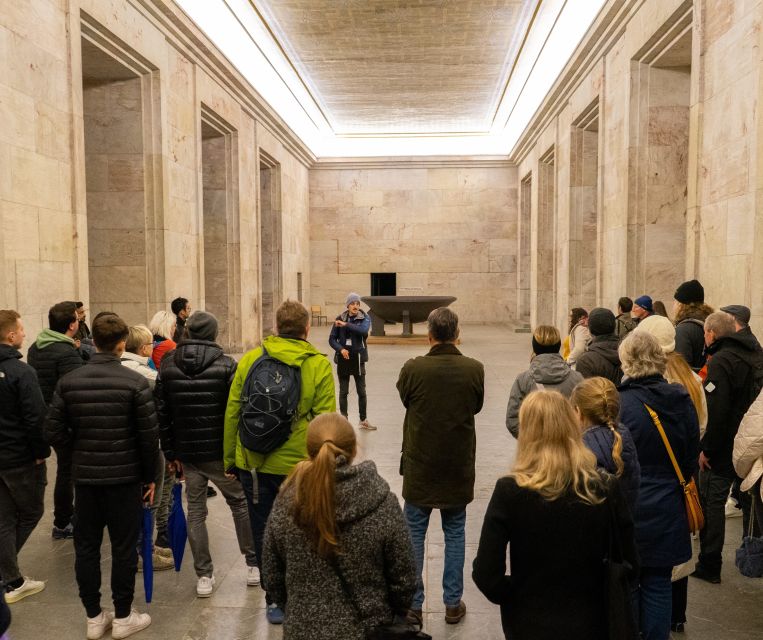
You will walk around the exterior rather than treating this as an ordinary museum visit. The guide explains the building’s purpose, its place within the rally grounds, and the effect its size was meant to have on people arriving there.
This is where the tour’s scale becomes clear. Photographs from the period help you compare the present-day remains with the planned and staged setting of the Nazi rallies. That visual comparison is useful because a ruin can otherwise look detached from its original political purpose.
The Congress Hall also introduces an important theme: National Socialist architecture was not only about function. It was designed to make ideology feel physical. The size of the building, the materials, and the surrounding open spaces all worked together to produce a message of authority.
Do not expect a conventional indoor tour of the Documentation Center as part of the $15 walking experience. The included feature is the guided outdoor walk. If you want the museum exhibits inside the documentation center, check separately for its opening arrangements and admission details.
Walking the Great Road’s north-south axis
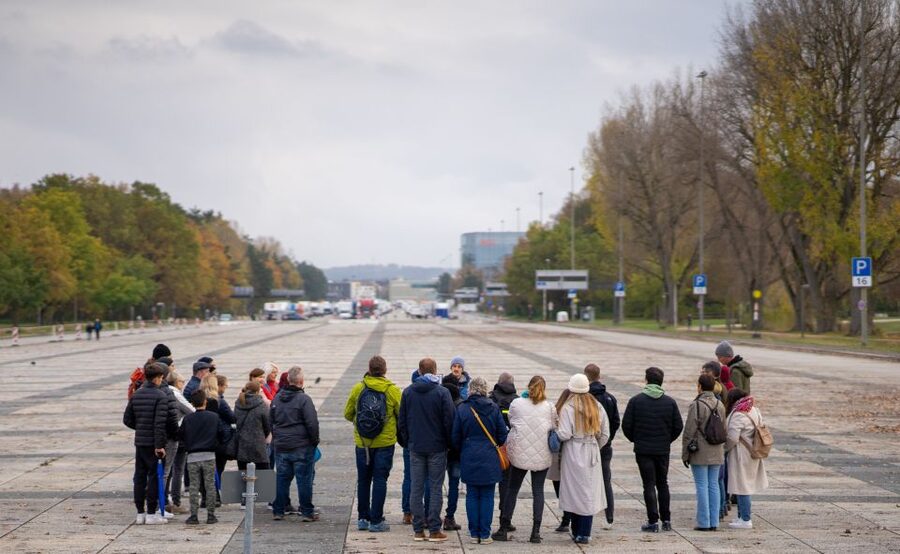
From Congress Hall, the group walks for about 10 minutes to the Great Road. This section is easy to underestimate because it may look like a broad, quiet strip of ground rather than a monument.
The guide explains that the Great Road formed the main north-south axis of the rally grounds. Its length and width helped turn movement itself into a display of order. The road was not simply a route from one site to another. It was part of the planned visual experience.
This is one of the places where a live guide earns the modest ticket price. On your own, you can see the paving and open space, but it is harder to understand why the road was placed there, how it related to the other buildings, and how the rally events used it.
Guides often bring the past into view with photographs. Several people have praised this approach because it helps you compare the present remains with the original events. You are encouraged to think about how an individual would have appeared within the vast arrangement, rather than only looking at the structure as an old construction project.
The tour also addresses the planned and uncompleted parts of the grounds. That is useful context. Nazi architecture often aimed at a future that never arrived, and the empty spaces can be as revealing as the finished structures.
The walk is not strenuous in the sense of a hike, but it is continuous. One visitor estimated about 5,000 steps in two hours, while others specifically wished they had been warned about the amount of walking. You should wear comfortable shoes and avoid assuming that a city sightseeing tour always means short distances.
Reaching Zeppelin Field
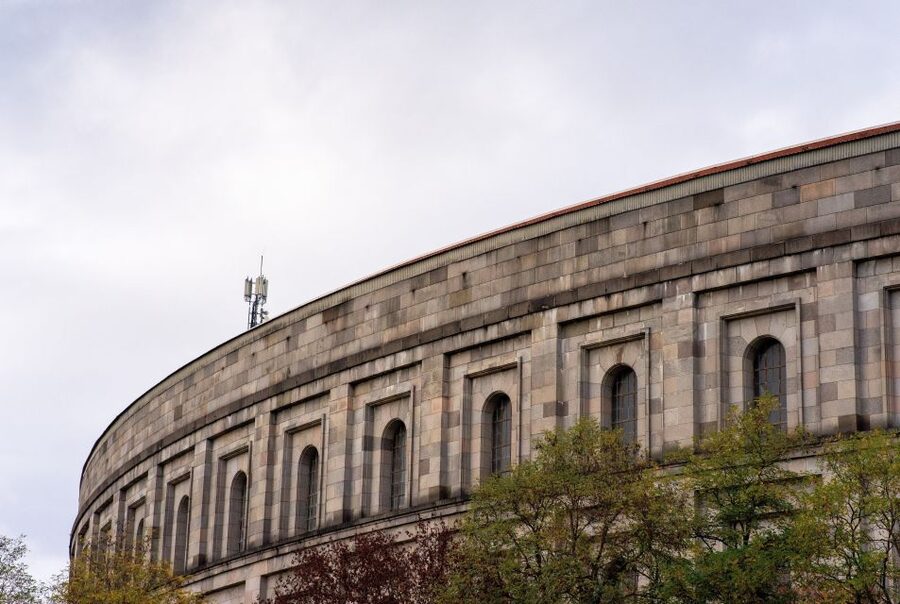
After another walk of about 15 minutes, you reach Zeppelinfeld, or Zeppelin Field. This is the most open and visually dramatic section of the route. It was used for mass rallies and designed to hold an enormous audience.
The Zeppelin Tribune, also called the Zeppelin Field Tribune, was built to accommodate up to 200,000 people. That number is difficult to grasp until you are standing in the open area and looking back toward the structure. The point was not intimacy. It was collective spectacle.
The guide explains how the field, the tribune, and the crowd worked together. The architecture directed attention toward the platform and made the gathering feel unified. The setting helped turn political loyalty into a public performance.
This final stop is also where daylight becomes important. Tours scheduled late in the afternoon during autumn and winter can finish in near darkness. Several people praised the guides but wished the starting time had been moved earlier so Zeppelin Field could be seen properly.
If you are visiting between November and February, check the exact start time and sunset. A darker ending does not erase the historical explanation, but it can reduce your ability to see the scale of the field and take useful photographs. In summer, timing is less of a concern.
The tour finishes at Zeppelin Field rather than returning you to Congress Hall. Plan your onward route from there and allow a little time after the official end if you want to take in the setting quietly.
Same streets, a different way to see them:
- Munich: Third Reich & WWII Walking Tour
★ 4.6 · 6,181 reviews - Berlin: Discover Berlin Walking Tour
★ 4.9 · 5,998 reviews - Berlin’s Best: 2 Hour Walking Tour Third Reich and the Cold War
★ 5.0 · 5,486 reviews - Berlin: Hidden Backyards Guided Walking Tour
★ 4.8 · 5,360 reviews
The value of seeing propaganda in place
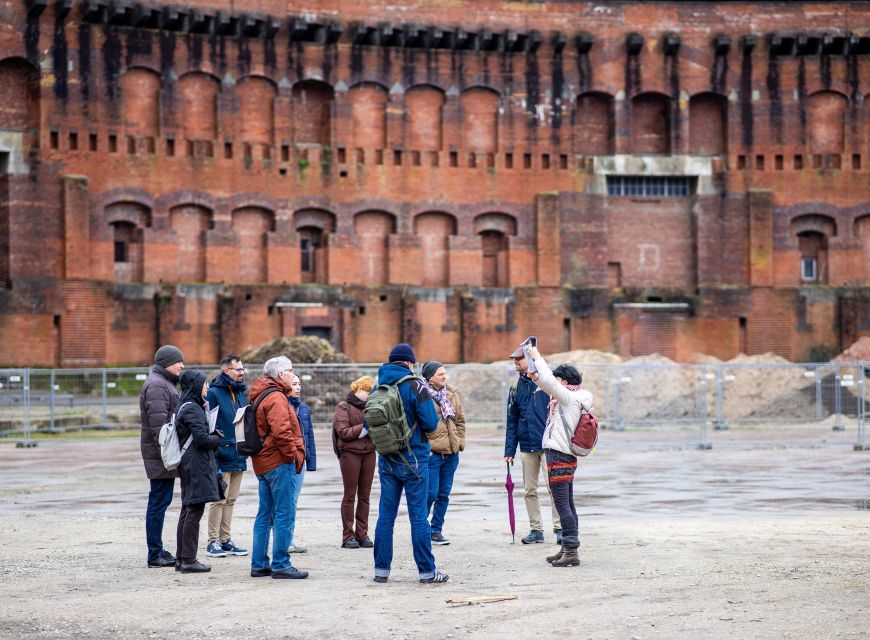
A book or museum display can explain National Socialist propaganda. This walk shows how the physical setting supported it.
The route demonstrates several methods:
- Scale reduced the individual: Huge buildings and open grounds made people feel small.
- Movement created order: The Great Road and planned axes directed the crowd.
- Architecture suggested permanence: Massive unfinished structures projected a future that the regime claimed was inevitable.
- Crowds created pressure: A rally could make political belief appear universal because thousands of people were gathered together.
- Images reinforced the message: Photographs, banners, uniforms, speeches, and carefully arranged views turned the event into a political show.
The guide also explains the basic features of the National Socialist view of history. This is important because the rallies were not only political meetings. They presented a false story about Germany’s past, its enemies, and its supposed destiny.
Several guides have been praised for asking questions rather than giving a string of dates. That approach works well here. You are asked to consider what the planners wanted people to feel, why certain spaces were so large, and how a crowd might respond to the setting.
The discussion of the concentration camp system adds a necessary counterweight. The rally grounds presented power and unity, while the camp system represented persecution, imprisonment, forced labor, and mass murder. Linking the two helps you see the gap between public propaganda and the violence behind it.
Guides, language, and the tone of the tour
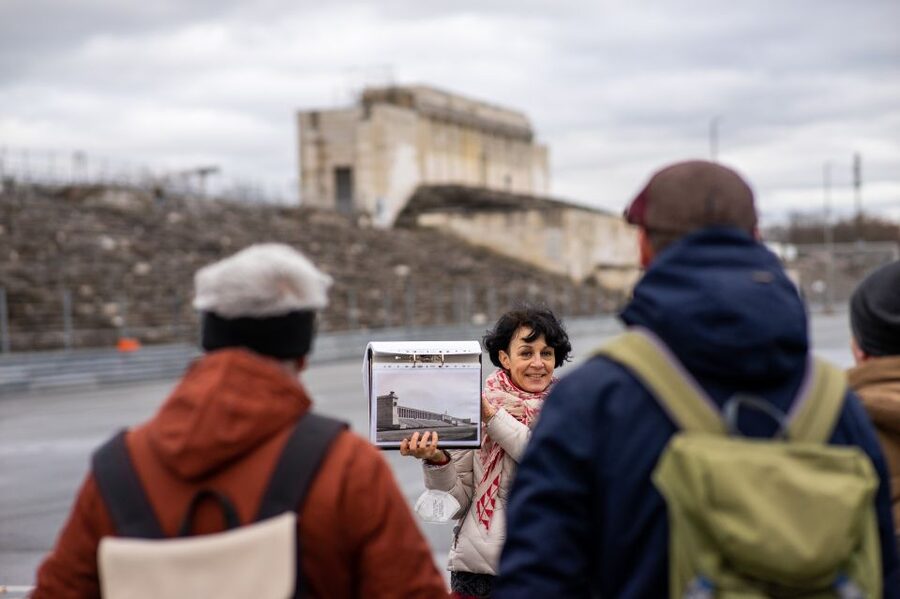
The tour is offered in English or German. The English guides have received especially strong praise for clear speech and detailed answers. Sylvia was praised for her easy-to-follow explanations, while Anita was singled out for explaining Hitler’s rise to power and the role of the grounds in the propaganda machine.
Frank was described as both kind and engaging, a useful quality when the subject is painful. Kai has been praised for remaining patient and precise, even in rainy conditions. Andreas brought a political science background, and one guide helped a participant with German as well as English.
Names and backgrounds can change by departure, so you should not book with the expectation of a particular guide. Still, the pattern is encouraging: this is not a tour that depends only on memorized dates. The strongest guides connect political history, architecture, personal experience, and the current debate over how the site should be used.
The tone is serious but not theatrical. You can ask questions, and the guide allows time for discussion. That makes the experience suitable for adults and older teenagers with an interest in modern European history. It may be less suitable for young children who are not ready for descriptions of Nazi crimes and the camp system.
Weather, walking, and practical comfort
The tour operates rain or shine. You spend the experience outdoors, so pack for the forecast rather than relying on a sunny morning. Rain, cold, and wind can make a two-hour discussion feel longer, especially at the open Zeppelin Field.
Winter clothing is not optional. One December group completed the tour on a very cold day, and another experienced darkness before the final site could be properly viewed. Gloves, waterproof shoes, and a warm layer will improve the experience.
Mobility is a serious consideration. The tour is listed as unsuitable for people with mobility impairments, and the route includes several stretches on foot between the main stops. The total distance may feel reasonable to an active walker, but the tour does not offer a short, vehicle-based way to move between each location.
Food and drinks are not included. Since the tour lasts two hours, this is easy to manage, but bring water if the weather is warm. There is no promise of a refreshment stop during the route.
The meeting point is specific, which helps. Find the entrance stairs to the Documentation Center at Bayernstraße 110, then look for the picture folder and Geschichte Für Alle e.V. name tag. Arriving a little early is sensible because the route begins away from the final stop.
Is $15 good value?
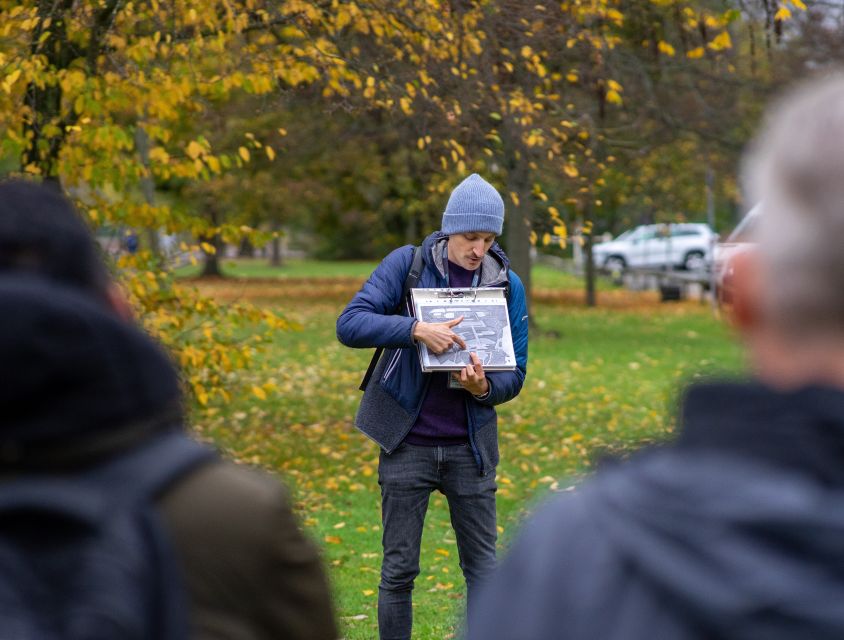
Yes, if you want context rather than a quick look at monuments. For $15, you receive two hours with a live guide, historic photographs, explanations at three major sites, and a connected account of architecture and propaganda.
The value is strongest for first-time visitors. You can walk around the grounds alone, but the structures do not explain their original function by themselves. Without guidance, the Great Road may seem like an oversized path, Congress Hall may seem like a huge shell, and Zeppelin Field may be difficult to read as a carefully staged political space.
The price is also modest compared with the time involved. You are not paying for food, transportation, or museum admission, so treat it as a focused outdoor history lesson rather than a full-day attraction.
The main limitation is that the experience covers the grounds but does not promise an indoor museum visit. If you want more exhibits, documents, and detailed material inside the Documentation Center, plan that separately.
Free cancellation up to 24 hours before the start and the option to reserve now and pay later make the booking flexible. A booking confirmation serves as proof of payment, and invoices cannot be issued through GetYourGuide. These details matter most for people booking on behalf of a school, company, or organization.
Who should book this walk?
I would choose this tour if you have a serious interest in the Nazi period, modern German history, political propaganda, architecture, or the way public spaces shape behavior. It also suits anyone who has visited Nuremberg’s historic center and wants to understand a very different part of the city.
It is particularly useful if you prefer explanation over spectacle. The guides focus on what the buildings were meant to do, how the rallies were staged, and how the site is understood now.
You might skip it if you want a short sightseeing outing, dislike outdoor walking, or expect to spend most of the time inside exhibitions. The subject is also emotionally heavy, so allow yourself some quiet time afterward rather than packing another major attraction immediately after the finish.
FAQ
How long does the walking tour last?
The tour lasts two hours. The route includes guided stops at Congress Hall, the Great Road, and Zeppelin Field.
Where does the tour begin?
Meet beside the entrance stairs to the Documentation Center Nazi Party Rally Grounds at Bayernstraße 110 in Nuremberg. The guide will hold a picture folder and wear a Geschichte Für Alle e.V. name tag.
Where does the tour finish?
The tour finishes at Zeppelin Field.
Is the tour offered in English?
Yes. Live guided tours are offered in English and German.
Does the tour run in bad weather?
Yes. The tour takes place rain or shine, so dress for outdoor conditions.
Is the tour suitable for people with mobility impairments?
The experience is listed as unsuitable for people with mobility impairments. It includes several walking sections between the main sites.
Should you book it?
Book this walk if you want the former rally grounds explained as a working propaganda site, not just photographed as a collection of ruins. The best part is the connection between place and political method, supported by historic photographs and careful explanations from guides such as Sylvia, Kai, Anita, Frank, and Andreas.
Choose an earlier departure when possible, especially in the darker months. With good shoes, weather protection, and a willingness to engage with difficult history, this $15 tour offers a clear and serious introduction to one of Nuremberg’s most important sites.
Just added around Germany
- Berlin Walking Tour★ 4.5 · 378 reviews
- Small Group Walking Tour of East Berlin with a French Guide★ 5.0 · 176 reviews
- Berlin Street Art Walking Tour – Off The Grid★ 5.0 · 270 reviews
- Berlin Highlights Private Guided Walking Tour★ 4.5 · 89 reviews
- Private Walking Tour: World War 2 and Cold War Sites in Berlin★ 5.0 · 230 reviews
- East Meets West: Berlin Food Culture & Street Art★ 5.0 · 157 reviews
- Kreuzberg Berlin: Off the Beaten Track PRIVATE Walking Tour★ 5.0 · 128 reviews
- The History of Berlin: WWII PRIVATE Walking Tour With Locals★ 5.0 · 209 reviews
Germany Walking Tours, compared.
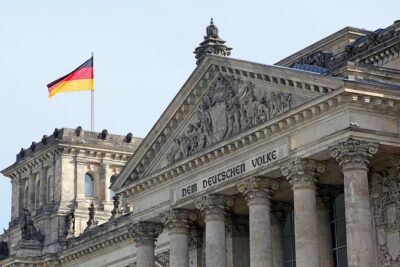
Berlin City walk Government District and Places of Democracy
Read our review →
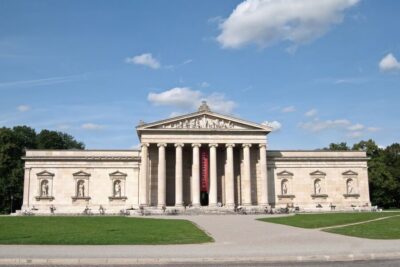
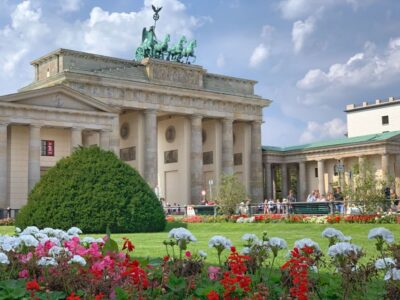
Berlin’s Best: 2 Hour Walking Tour Third Reich and the Cold War
Read our review →
Explore Berlin: See All The Iconic Sights & Some Hidden Gems
Read our review →Browse the lists this tour appears in