Review · HISTORY WALKING TOURS
The History of Berlin: WWII PRIVATE Walking Tour With Locals
Berlin’s past is written into its streets. This private four-hour walk connects Nazi-era sites, Cold War landmarks, and grand civic buildings with the help of a local guide. I like the one-party format, which lets you ask questions freely and adjust the route. I also like the chance to see familiar sights, such as the Brandenburg Gate and Holocaust Memorial, with their historical meaning explained on the spot. The main drawback is the amount of walking, and the exact route can vary by guide.
Guides such as Seth, Sara, Boyd, Amelia, Miha, and Pablo have earned especially warm praise for clear explanations, good storytelling, and flexible pacing. Still, one poor match can affect a private tour, so I would contact the provider with any strong guide preference before booking. At $143.97 per person, this makes the most sense for a small party that values personal attention over the lower price of a group walk.
Five things to know before you book
- Four hours on foot: Plan for a serious city walk. One party counted about 15,000 steps, with stops for questions and refreshments.
- A private route: Only your group takes part, and the guide can shape the walk around your interests.
- WWII and Cold War together: The tour links Nazi Germany, wartime destruction, divided Berlin, and the city’s later rebuilding.
- Many sights are viewed outside: Entry fees are not included, and the main experience is street-based.
- Guide quality matters: Seth, Sara, Boyd, Miha, Amelia, and Pablo receive especially strong praise for their stories and flexibility.
- Free cancellation: You can cancel up to 24 hours before the start for a full refund.
Starting on Oranienburger Strasse
The tour begins at Oranienburger Strasse 36, 10117 Berlin, and returns to the same meeting point. The area is near public transportation, which makes it a practical starting place, though you should allow enough time to arrive without rushing.
Your guide sets the tone early. A good private walk should begin with a quick sense of the route and your interests. Past visitors have especially valued guides who asked what they wanted to see, arranged the pace around them, and added a coffee or bathroom stop when needed. If you want a specific emphasis, such as the Holocaust, Nazi architecture, the Berlin Wall, or postwar rebuilding, say so at the start.
The setting also gives you a useful first lesson in Berlin’s layered past. Oranienburger Strasse leads toward important Jewish, wartime, and Cold War sites, so the tour begins with more than a list of famous monuments. You are already walking through a part of central Berlin where different eras overlap.
More History Walking Tours in Berlin
- Berlin: History of the Third Reich Guided Walking Tour
★ 4.7 · 791 reviews - Berlin Historical Highlights Walking Tour
★ 4.9 · 657 reviews - Berlin Private Complete History All Day Walking Tour
★ 5.0 · 474 reviews
The New Synagogue and Berlin’s Jewish past
One early stop is the New Synagogue, known for its striking Moorish-style architecture. The building is visually impressive, but the guide’s explanation gives it weight beyond its appearance.
This is a good place to ask how Berlin’s Jewish community was affected before, during, and after the Nazi period. The tour does not simply point at a facade. It uses the building as a starting point for discussing the city’s Jewish life and the damage caused by Nazi persecution.
Because this is a walking tour, you should expect to view important sites from the outside unless your guide adjusts the plan. The experience is built around explanation, location, and conversation rather than museum admission. That keeps the tour moving, but it also means you will need another visit if you want extended indoor time.
The Palace of Tears and divided Berlin
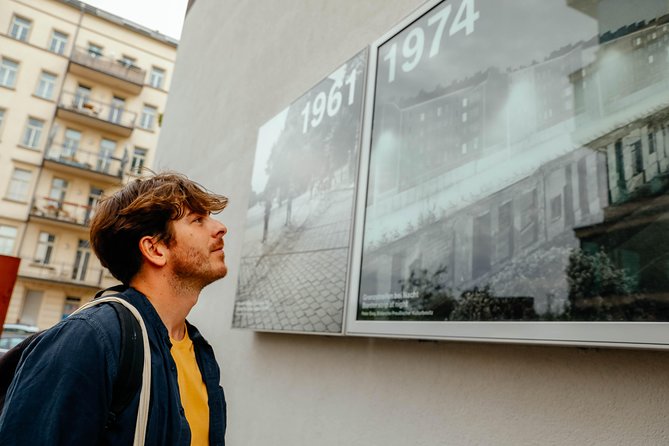
The Palace of Tears, a former border crossing between East and West Berlin, shifts the focus from WWII to the Cold War. Its exhibition tells the story of people leaving East Berlin through a controlled crossing point, often under painful and uncertain conditions.
This stop is valuable because it puts the division of Berlin at a human scale. The Berlin Wall is often presented through dramatic photographs and large political events. Here, the story centers on farewells, restrictions, and the fear attached to crossing between two political systems.
The exhibition may be included in the route, but attraction entry is not included in the tour price. Ask your guide how much time the route allows inside and outside. If the exhibition is a priority, mention that before the walk begins.
Brandenburg Gate and the city’s central symbols
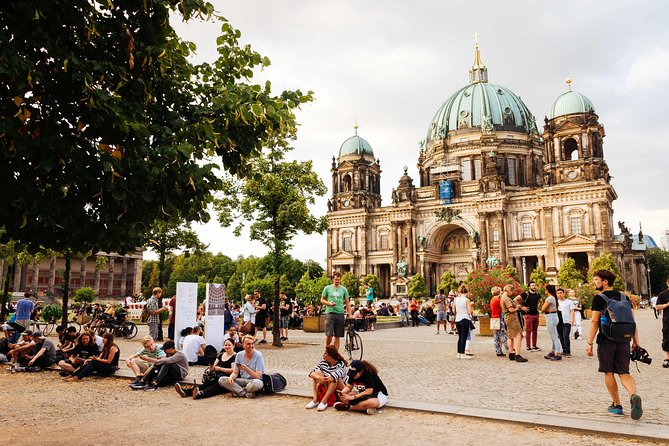
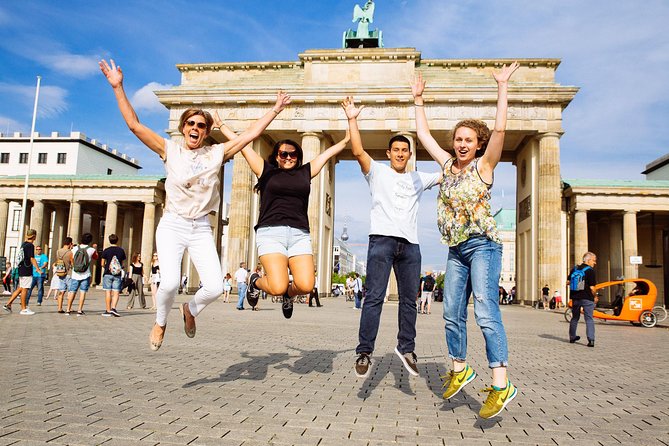
The Brandenburg Gate is one of Berlin’s essential sights, and the tour uses it as a place to connect several periods of German history. It began as a grand gateway, later became associated with Nazi spectacle, and then stood near the divided city’s political frontier before becoming a symbol of reunification.
You will have time to take photographs, but the real value comes from hearing how the gate’s meaning changed over time. Berlin has a habit of placing major history in ordinary public spaces. The Brandenburg Gate looks calm now, yet its surroundings have witnessed political ceremonies, wartime damage, division, and national celebration.
Crowds can affect how long you want to linger, though the private format gives you more freedom than a large group. You can ask for a few extra minutes for photographs or shift quickly to the next stop if the area feels too busy.
More History Walking Tours in Germany
- Berlin: Charité Hospital Walking Tour of Medical History
★ 4.9 · 276 reviews - Berlin Private Half-Day Walking Tour: Discover the German Capital’s History
★ 5.0 · 244 reviews - Berlin History Walking Tour with a French-Speaking Guide
★ 5.0 · 240 reviews - East Berlin Food & History Tour with Eating Europe
★ 5.0 · 204 reviews
The Holocaust Memorial and the challenge of remembrance
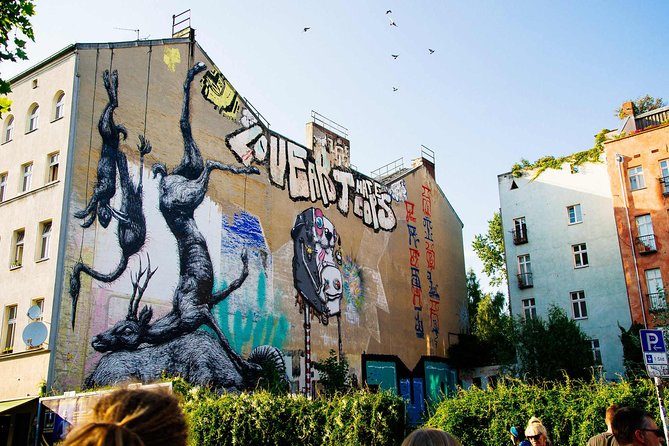
The Memorial to the Murdered Jews of Europe is one of the most powerful stops on the route. Its field of concrete blocks creates a changing sense of scale and direction as you walk through it.
A guide can help you consider the memorial without reducing it to a photo stop. Ask about its design, its location near other major government buildings, and the way Berlin presents difficult history in the middle of the city. The memorial is not a substitute for a museum visit, but it gives the discussion a physical setting that is hard to forget.
The experience is also personal here. Some people prefer quiet time to walk alone among the blocks, while others want historical explanation as they go. A private guide can adjust the balance. I would tell your guide if you want a few silent minutes rather than a continuous talk.
Hitler’s bunker and the rise of the Nazi party
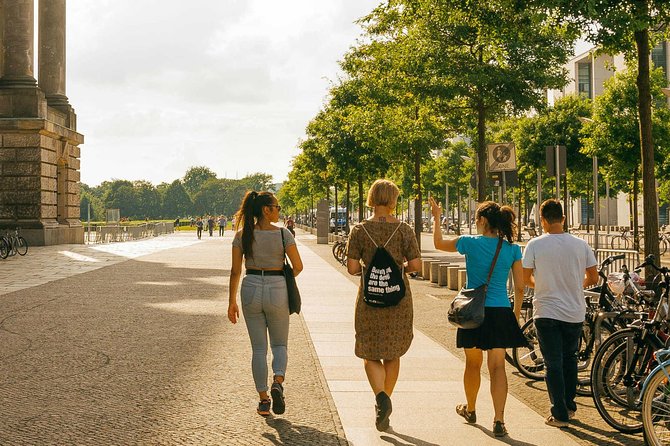
A visit to the former site of Hitler’s bunker offers more context about the final stage of WWII and the Nazi government. The bunker itself is not presented as a grand attraction. Its significance lies in what happened there and in the unremarkable urban setting around it today.
That contrast matters. Berlin did not turn the site into a shrine, and the plain surroundings make the discussion feel grounded. Your guide can explain the bunker’s role, the final days of the Nazi leadership, and how the city handles a place connected to dictatorship.
This stop suits visitors who want political and military context, but it may be difficult for younger children or anyone expecting a conventional museum display. The tour deals with heavy subjects, including persecution, war, dictatorship, and civilian suffering. A private setting lets you ask direct questions and set the level of detail.
Bebelplatz and the warning beneath the square
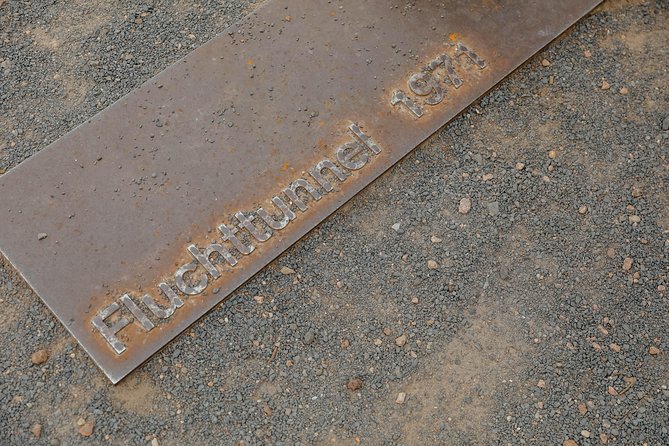
Bebelplatz brings you into one of Berlin’s most attractive architectural areas, surrounded by major historic buildings. It also carries a direct connection to Nazi repression.
The square is associated with the 1933 book burning, when Nazi authorities and supporters destroyed books considered politically or culturally dangerous. Your guide can help connect the event to the larger process of censorship, intimidation, and the removal of opposition.
This is one of the tour’s strongest architectural and historical combinations. You can look at the buildings, enjoy the space, and then confront the events that took place there. It is a useful reminder that Berlin’s most elegant squares are not separate from its darkest chapters.
Museum Island and Berlin’s changing city center
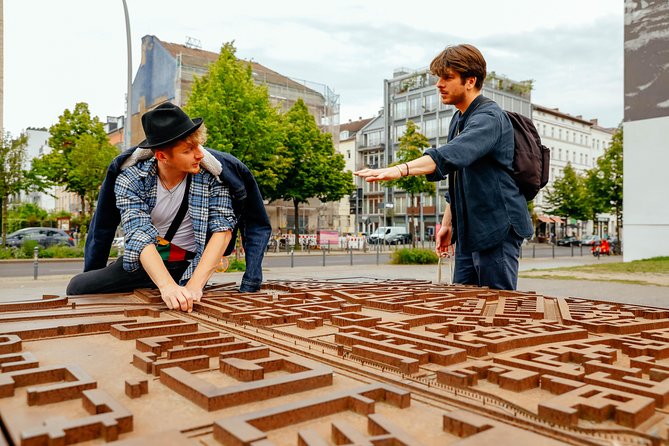
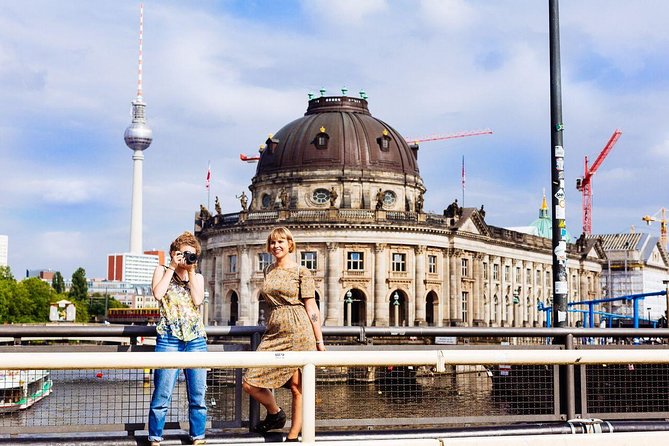
Museum Island forms the final major focus, with about an hour allotted to this museum complex on the Spree Island. It is one of Germany’s most important museum areas and a central part of Berlin’s historic core.
The tour generally treats Museum Island as an outdoor stop, and admission is not included. That is helpful if you want an orientation before choosing which museum to visit later. It is less satisfying if you hoped to spend that hour inside a collection.
The area also gives your guide a chance to explain how Berlin rebuilt, restored, and reshaped its central buildings after wartime destruction and political change. One particularly appealing part of the experience is the attention to the mix of old and modern Berlin. Several guides have been praised for pointing out details in buildings that are easy to miss when you walk alone.
Reichstag, Checkpoint Charlie, and route changes
The published route can also include the Reichstag Building and Checkpoint Charlie. The Reichstag, opened in 1894 as the seat of the German imperial government, was badly damaged by fire in 1933. Its history links imperial Germany, the Nazi period, postwar division, and modern government.
The tour allows about 30 minutes at the Reichstag, but admission is not included. Expect to view the building from outside unless your guide confirms another arrangement. If you want to visit the interior or dome, you will need to handle that separately.
Checkpoint Charlie was the best-known crossing point between East and West Berlin during the Cold War. It is an easy place to photograph, but its modern surroundings can feel commercial and busy. The guide’s explanation is what gives it value, especially when the discussion moves beyond the guardhouse replica and into the political tension of the divided city.
There is an important practical point here: the route is customizable. The overview names the New Synagogue, Palace of Tears, Brandenburg Gate, Holocaust Memorial, Hitler’s bunker, Bebelplatz, and Museum Island, while the itinerary also lists the Reichstag and Checkpoint Charlie. These sites may not all receive equal time. Confirm your priorities before you start.
What four hours really means
This is a walking tour first. The stated duration is about four hours, though some parties have spent four and a half hours with their guide. A long route can reach roughly 15,000 steps, so comfortable shoes matter more than stylish ones.
The tour requires a moderate level of physical fitness. There are chances to pause, but do not treat this as a gentle stroll between two nearby monuments. You will cross central Berlin on foot and stop often to listen, ask questions, and take photographs.
A private format helps with pacing. You can slow down at the Holocaust Memorial, spend longer discussing the Cold War, or move on from a site that is less important to you. You can also ask for a refreshment break. Several highly praised guides were noted for suggesting sensible stops and keeping the walk comfortable.
Small children may struggle with both the distance and the serious subject matter. Older children and teenagers with an interest in history could benefit, especially if you tell the guide in advance and request an age-appropriate approach.
The guides make the difference
The strongest part of this experience is the human connection. Seth is praised for bringing WWII and Cold War history into clear focus while welcoming questions. Sara is described as energetic, engaging, and able to build a custom route around a party’s interests.
Boyd is especially well regarded for explaining Berlin’s complex past with warmth and humor. Amelia is praised for adapting the walk and suggesting additional places to visit. Miha is valued for his historical knowledge, friendly manner, and good photography suggestions. Pablo is noted for showing both major sights and less obvious places.
One caution deserves attention. A private tour depends heavily on the individual guide assigned to you. One unhappy participant described poor conduct, no clear introduction, distracting phone use, and offensive language, then ended the walk after 15 minutes. That experience appears very different from the many strong reports, but it is still a fair reason to contact Withlocals before booking if a particular guide is important to you.
Is $143.97 per person a fair price?
At $143.97 per person, this is not a budget walk. The value depends on your group size and how much you want personal attention.
For two people, the price buys four hours with a guide focused only on your party. That can be worthwhile in Berlin, where the historical connections are complex and the route covers a lot of ground. You are not paying for attraction admission, transportation, or hotel pickup. You are paying for interpretation, flexibility, and the chance to ask as many questions as you like.
The value improves for a larger private party because the experience can be shared without joining strangers. Group discounts are available, though the exact reduction is not stated. Ask for the current group price before booking.
All tour carbon emissions are offset. That does not change the route or the price, but it is a useful detail for people who want a lower-impact booking.
Who should book this Berlin history walk?
I would choose this tour if you want a structured introduction to Berlin’s WWII and Cold War landmarks without being tied to a large group. It suits first-time visitors who want to understand how the sites connect, as well as returning visitors who want more context around places they have already seen.
It is especially good for:
- Couples, families, or friends who want a private pace
- History-minded visitors who enjoy asking detailed questions
- People who want both major landmarks and less obvious historical details
- Visitors who prefer walking and outdoor interpretation
- Small groups that can make the private price more reasonable
I would hesitate if you want long indoor museum visits, a short and easy walk, or a fixed guarantee that every listed site will receive equal time. I would also confirm your guide preference in advance.
If you want a personal, flexible introduction to Berlin’s difficult past, I think this is a strong choice. Book it early if your dates are firm, since it is commonly reserved well ahead of time. Free cancellation applies until 24 hours before the start, which gives you some protection while finalizing plans.
FAQ
How long is the tour?
The tour lasts approximately four hours. Some parties have spent about four and a half hours with their guide.
Where does the tour begin?
It begins at Oranienburger Strasse 36, 10117 Berlin, Germany.
Where does the tour end?
The activity ends back at the starting point.
Is this a private tour?
Yes. Only your group participates, and the route can be adjusted to your interests and preferences.
Is the tour offered in English?
Yes. English is the stated tour language.
Are attraction admission fees included?
No. Admission to attractions is not included. The main sites are visited from outside unless another arrangement is made.
Does the tour include hotel pickup?
No. Hotel pickup and drop-off are not included.
How much walking is involved?
A moderate level of physical fitness is recommended. One party reported walking about 15,000 steps during the experience.
Can the route include Checkpoint Charlie and the Reichstag?
They may be included depending on the route chosen by the guide. Confirm your priorities at the beginning of the tour.
Can I cancel for a full refund?
Yes. You must cancel at least 24 hours before the local start time to receive a full refund. Changes or cancellations made less than 24 hours before the start are not accepted for a refund.
More Private Walking Tours in Germany
- Kreuzberg Berlin: Off the Beaten Track PRIVATE Walking Tour
★ 5.0 · 128 reviews - Berlin Highlights Private Guided Walking Tour
★ 4.5 · 89 reviews - Hamburg: Private Tour Red Light District Walking Tour
★ 4.7 · 227 reviews - Hamburg: Private Couples’ Photoshoot and Walking Tour
★ 4.9 · 212 reviews
More Private Walking Tours in Berlin
- Private Walking Tour Berlin Third Reich Hitler and World War II
★ 5.0 · 360 reviews - Private Berlin: Iconic Sights and Hidden Gems Walking Tour
★ 5.0 · 292 reviews - Private Walking Tour: World War 2 and Cold War Sites in Berlin
★ 5.0 · 230 reviews - Berlin Private Walking Food Tour With Locals: the 10 Tastings
★ 4.5 · 139 reviews
Just added around Berlin
- Berlin Walking Tour★ 4.5 · 378 reviews
- Small Group Walking Tour of East Berlin with a French Guide★ 5.0 · 176 reviews
- Berlin Street Art Walking Tour – Off The Grid★ 5.0 · 270 reviews
- Berlin Highlights Private Guided Walking Tour★ 4.5 · 89 reviews
- Private Walking Tour: World War 2 and Cold War Sites in Berlin★ 5.0 · 230 reviews
- East Meets West: Berlin Food Culture & Street Art★ 5.0 · 157 reviews
- Kreuzberg Berlin: Off the Beaten Track PRIVATE Walking Tour★ 5.0 · 128 reviews
- Gruseltour Berlin Haunted Ghost Walk 90-minute at Berlin Mitte city center★ 5.0 · 75 reviews
History Walking Tours, compared.
History and Hauntings of Salem Guided Walking Tour
Read our review →
Freedom Trail History Small Group Walking Tour
Read our review →
Historic Charleston Guided Sightseeing Walking Tour
Read our review →
Tapas Walking Tour with Food, Wine, and History
Read our review →
Savannah History and Haunts Candlelit Ghost Walking Tour
Read our review →