
Review · HIDDEN GEMS WALKING TOURS
Alternative Walking Tour of Rome’s City Center & Hidden Gems
Rome reveals more when you know its scandals. This 2.5-hour walk links Trajan’s Column, Trevi Fountain, the Pantheon, and Piazza Navona with stories about popes, powerful families, artists, crime, and political intrigue. I like the story-first approach, and I like that the route includes churches and quieter corners you could easily miss alone. The main consideration is the tip-based price: the $3.77 booking cost is only the starting point, not the full expected payment.
The guides are the heart of the experience. Jacopo is praised for his family-history focus, while Simone and Iris bring plenty of energy, humor, and answers to questions. The tour’s dark jokes and politically incorrect humor will not suit every group, and the exact lesser-known stops may vary by guide, but this is a strong choice if you want Rome explained rather than simply pointed out.
Key things to know before you book
- The route covers Rome’s major center sights: Trajan’s Column, Piazza Venezia, Trevi Fountain, Sant’Ignazio, the Pantheon, and Piazza Navona.
- Family power is a central theme: the tour shows how dynasties, popes, and political interests shaped the city.
- The storytelling goes beyond dates and names: expect scandals, betrayal, murder, corruption, propaganda, legends, and local customs.
- The tour includes lesser-known locations: one secret stop and a monastery visit add variety to the famous squares.
- The guiding style is personal: the tour is conducted in English or Spanish, and some guides do not use headphones, allowing direct conversation.
- The $3.77 price is not the complete cost: this is a pay-what-you-want experience, with a usual tip described as 10€ to $50.
Starting beside Trajan’s Column
The walk begins on the steps of Chiesa del Santissimo Nome di Maria al Foro Traiano, beside Trajan’s Column and Trajan’s Forum. Look for a guide holding a sign with the tour name. This is a useful meeting point because it places you beside one of ancient Rome’s most striking monuments before the walk has properly begun.
Trajan’s Column is more than a photo stop. Its carved spiral tells the story of Emperor Trajan’s military campaigns, and the monument offers an early lesson in how Rome used public art to display power. A good guide can connect the column to the wider Roman habit of using architecture, sculpture, and inscriptions as political messaging.
You spend about 15 minutes here, which is enough for an introduction and a close look without turning the opening into a full archaeological lecture. If you want extensive information about the Forum itself, this tour is not a replacement for a dedicated ancient Rome visit. Its purpose is to connect places and people across many centuries.
More Hidden Gems Walking Tours in Rome:
- Rome: Paranormal Night Walking Tour & Secret Backstreets
★ 4.9 · 1,921 reviews - Rome Walking Tour: Pantheon, Trevi, Navona & Hidden Gems
★ 4.8 · 501 reviews - Rome Highlights & Hidden Gems Guided Walking Tour
★ 4.8 · 280 reviews
Piazza Venezia and Rome’s layers of power
The short stop at Piazza Venezia helps set the tone. This is one of the city center’s major traffic hubs, but the tour treats it as a political and historical stage rather than just a place to pass through.
The useful idea here is continuity. Ancient ruins, Renaissance churches, grand civic buildings, and modern Rome all press against one another in the center. The guide explains how the city was repeatedly reshaped by emperors, popes, wealthy families, and later political leaders.
You may not spend long at this stop, so pay attention to the larger story instead of expecting a detailed building tour. The value lies in understanding how Rome’s center became a display of authority. A fountain, church, column, or palace was rarely placed without a reason.
The secret stop and the monastery visit
The itinerary includes a five-minute secret stop and a longer 25-minute monastery visit. These are important because they break up the standard procession from one famous monument to another.
The precise identity of the secret stop is not given, and that is part of the tour’s changing character. The guide may use a lesser-known location to show a detail, symbol, view, or story that many people walk past. You should not book this expecting a fixed list of private interiors. Instead, think of it as a chance to see Rome through the guide’s own route and interests.
The monastery visit receives the longest single block of time on the itinerary. The tour description also lists admission to papal private gardens, though it does not identify exactly where that access occurs along the route. I would confirm the current details at booking if that inclusion is especially important to you.
This portion may be particularly rewarding for returning visitors. You still get the famous city center, but the quieter stops provide room for details about church life, art, religious power, and the people who shaped Rome behind the grand public scenes.
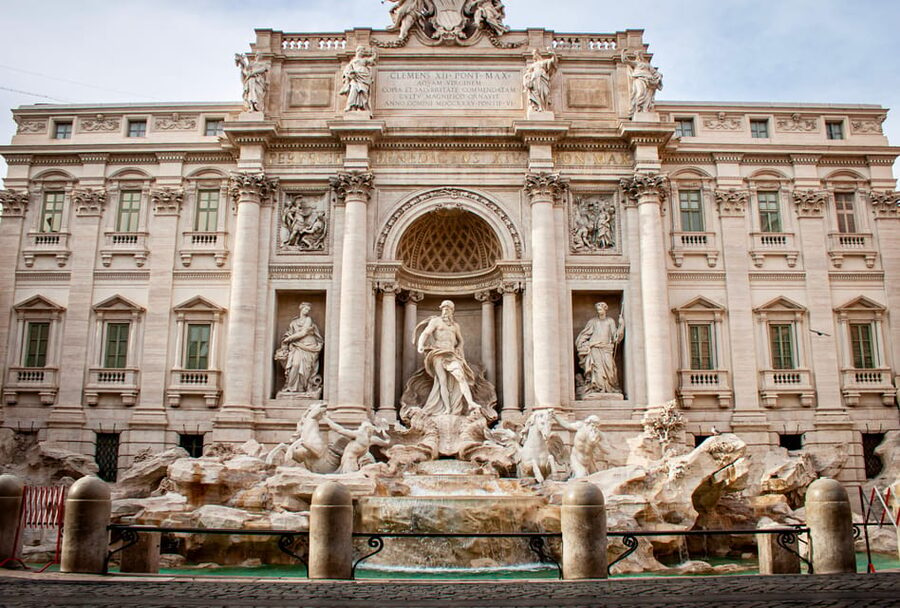
Trevi Fountain with the politics behind the water
Trevi Fountain gets about 15 minutes, including a short break, photos, guided explanation, and free time. That is enough to see the fountain and hear its main story, but not enough for a long pause if the square is crowded.
The guide uses Rome’s fountains to explain propaganda and power. In Rome, public water was never only practical. A fountain could announce the influence of a pope, family, or political faction, while also providing a dramatic piece of urban decoration.
This approach gives Trevi more meaning than a quick coin toss and photograph. You learn to look for the names, symbols, coats of arms, and placement that reveal who paid for a monument and what message it was meant to send.
Be realistic about the setting. Trevi Fountain is one of Rome’s busiest sights, and this is a group walking tour, not a private viewing. Keep your belongings secure, stay close enough to hear, and use the free time for pictures without losing the group.
A few more walks around Rome worth a look
- Rome: Guided Food Walking Tour with Wine in Trastevere
★ 4.9 · 3,105 reviews - Rome: Trastevere & Campo de Fiori Street Food Walking Tour
★ 4.9 · 2,768 reviews - Rome: Trastevere Street Food Walking Tour with Local Expert
★ 4.8 · 1,784 reviews - Rome: Small-Group Guided Day or Night Walking Tour
★ 4.8 · 1,009 reviews
Sant’Ignazio and the art of making space seem larger
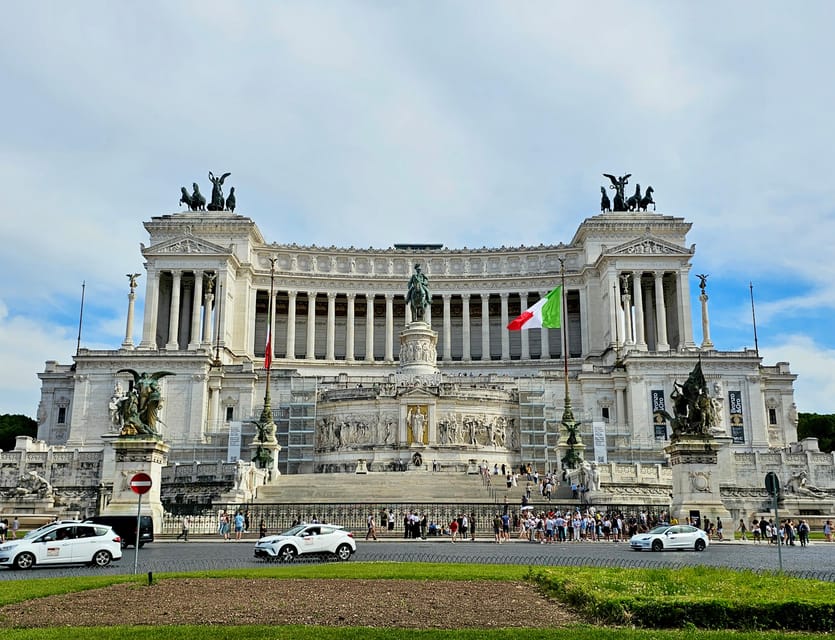
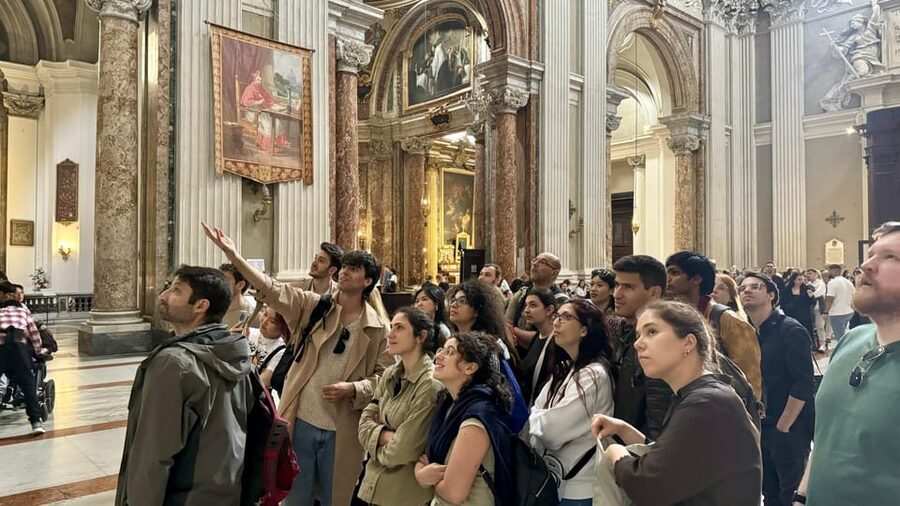
The Church of Sant’Ignazio di Loyola receives about 10 minutes. It is one of the route’s strongest stops for visitors interested in art, illusion, and the link between religion and public image.
The church is known for its dramatic ceiling fresco, and the tour places it within the story of Rome’s churches and powerful institutions. You also learn why the city has so many churches and how religious buildings helped shape daily life, politics, and identity.
A brief stop cannot cover every artistic detail, but it can teach you how to look. Instead of seeing a ceiling as decoration, you begin to notice how painted architecture creates the impression of extra height and space. The guide’s ability to explain symbols and inscriptions adds another layer, especially since Simone has been praised for reading Latin and Ancient Greek.
Church visits also require flexibility. The itinerary says the tour visits the church, but religious sites can have their own rules and schedules. Treat the stop as a guided opportunity rather than a guaranteed private visit.
The Pantheon in five focused minutes
The Pantheon appears late in the route, with about five minutes set aside for a photo stop, guided explanation, and sightseeing. That is a compact visit, so the Pantheon functions mainly as one link in the larger story.
You will likely get the most from this stop by listening for the changes in Rome’s identity over time. The building connects ancient engineering, later religious use, artistic memory, and the city’s ongoing habit of adapting old structures for new purposes.
If you want to study the interior in detail, allow separate time before or after the tour. This walk gives you context and a useful orientation, but five minutes is not enough for a slow examination of the building.
That short timing is one of the tour’s trade-offs. You cover a lot of ground and hear many stories, but each monument receives a selective treatment. I would pair this experience with independent visits to the Pantheon, Trevi Fountain, or Trajan’s Forum if they are priorities for you.
Finishing at Piazza Navona
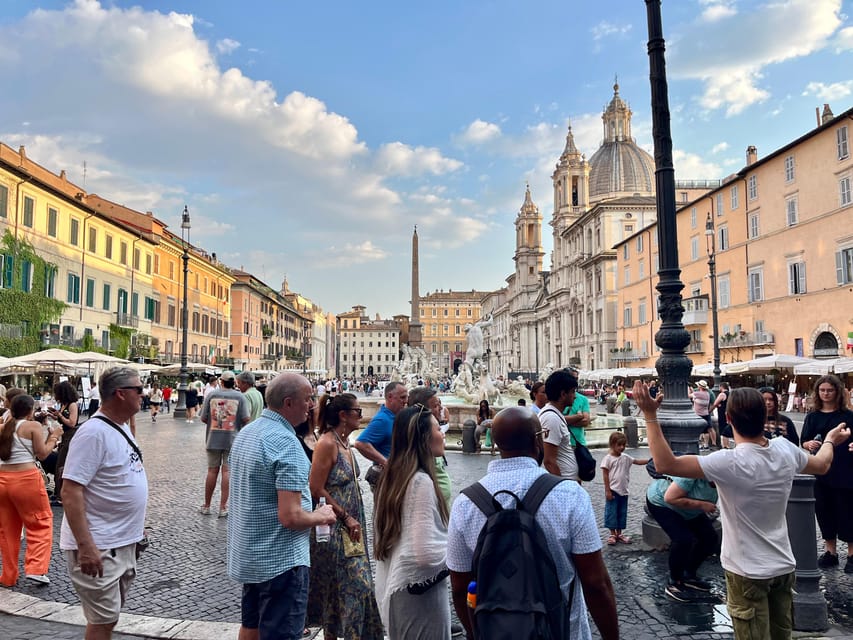
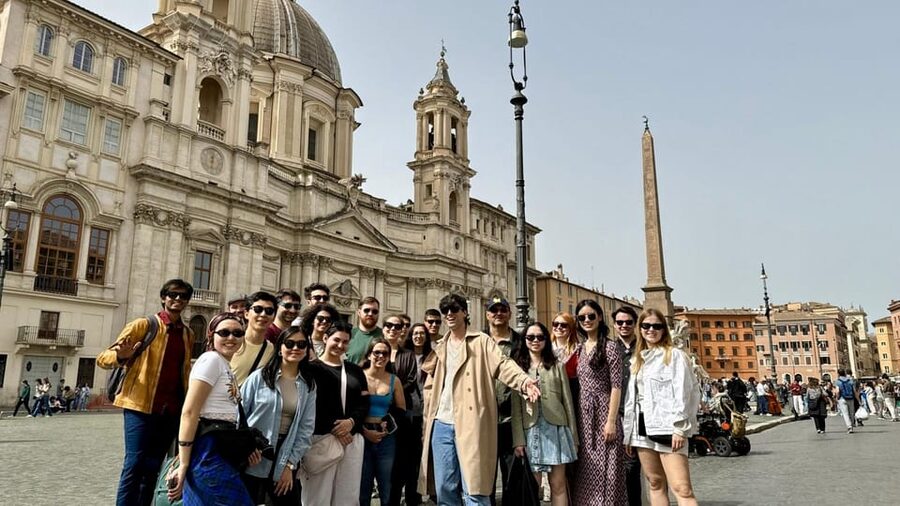
The tour ends at Piazza Navona after roughly 15 minutes of guided sightseeing there. This is a good finish because the square brings together many of the themes introduced earlier: church power, public art, fountains, rivalry, and urban spectacle.
Piazza Navona is not simply a pretty open space. Its shape reflects an earlier stadium, while its fountains and church create a powerful Baroque setting. The guide explains how fountains became symbols of status and propaganda, which helps you read the square as a contest between institutions rather than just a pleasant place for a drink.
The final stop also gives you a useful base for continuing your own visit. Guides such as Jacopo and Simone have offered suggestions for other places to see after the walk, and several participants appreciated receiving recommendations and, in one case, a small postcard. Do not expect a formal meal or a food tour, even though Roman food traditions and local life can appear in the conversation.
What the guides do best
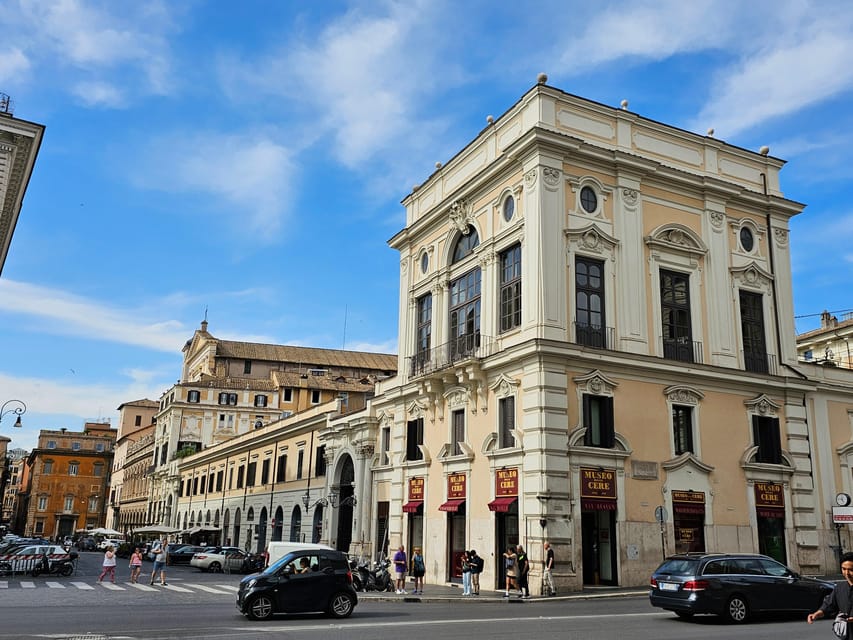
The strongest part of this experience is the guiding. The names most often associated with the tour include Simone, Jacopo, and Iris, with different guides bringing slightly different strengths.
Simone is praised for energy, humor, clear English, and detailed explanations of Rome’s political and family history. Jacopo is especially strong on powerful Roman families and dynasties, and he has been described as easy to understand even in noisy places. Iris brings an animated style and a good mix of information and humor.
The format also allows questions. One participant had a private departure with no other people in the group, while others described small, comfortable groups. Group size can change, so do not assume every departure will feel private. Still, the structure appears more conversational than a large tour where everyone listens through a headset.
The no-headphone style is another plus when it applies. Face-to-face guiding makes it easier to ask a question, notice a joke, or follow a sudden change in the story. The downside is that busy streets can make listening harder, especially if you drift to the back.
The guides’ enthusiasm is matched by a willingness to branch into related topics. You may hear about art, religion, ancient languages, food customs, family rivalries, and modern Roman life, not just the monument directly in front of you. That makes the route feel connected, but it also means the experience may be less predictable from one guide to the next.
Dark humor, scandals, and the right audience
This is not a gentle children’s introduction to Rome. The subject matter includes corruption, crime, murder, war, betrayal, scandals, and the less polished behavior of powerful people. Dark humor and politically incorrect jokes are part of the advertised style.
I think this works well for adults who enjoy history told as human drama. Rome becomes easier to remember when emperors, popes, artists, and families are shown as ambitious, vain, frightened, clever, and sometimes ruthless people.
Still, the humor is a matter of taste. If you prefer a formal, carefully neutral presentation, this may feel too loose. Families with older children may enjoy it, but parents should decide if the darker stories and jokes fit their group.
Is the $3.77 booking price really a bargain?
The advertised cost of $3.77 per person looks extremely low, but this is a tip-based tour. The guide works mainly for gratuities, and the stated usual payment is between 10€ and $50 at the end.
That makes the real value depend on how you judge the experience. At the lower end, it can be a very inexpensive introduction to central Rome. At the higher end, it costs more than the booking figure suggests, but you are paying for a live guide, local interpretation, access to lesser-known locations, and a route that covers several major sights in one morning or afternoon.
I like the model because it gives you flexibility, but you should plan for the tip instead of treating the tour as a nearly free activity. Bring a clear idea of what the time and guide’s effort are worth to you. The provider accepts payment by cash or card according to tour information shared by participants.
Free cancellation up to 24 hours before the start and reserve-now, pay-later booking also make it easier to fit the walk into a changing Rome schedule. The duration is 2.5 hours, so wear comfortable shoes and leave enough time afterward for a meal or a longer visit at the Pantheon or Piazza Navona.
Who should choose this Rome walking tour?
I would choose this tour if you want a broad introduction to Rome’s city center with a strong human story. It suits first-time visitors who need help connecting ancient ruins, churches, fountains, and squares, but it also works for repeat visitors who have already seen the standard sights.
It is especially good for you if you enjoy:
- History told through families, scandals, and personal rivalries
- Art and architecture explained in plain language
- Smaller groups and direct conversation
- A mix of famous monuments and lesser-known stops
- Guides who answer questions and offer ideas for the rest of your stay
I would look elsewhere if you want a long, detailed visit inside each monument, a strictly academic lecture, or a tour focused mainly on ancient archaeology. The stops are selective, and the route favors connections and stories over exhaustive detail.
Final verdict: book it for the stories
This is a strong-value introduction to central Rome, provided you understand the tip-based price and the brisk treatment of several monuments. I like the way it uses Trevi Fountain, the Pantheon, and Piazza Navona as entry points into bigger questions about authority, religion, art, and family power.
Book it early in your Rome stay if you want a useful framework for the city. Choose it later if you already know the major sights and want a guide to point out details you missed. Either way, go for the storytelling, the church interiors, and the chance to see Rome as a city shaped by people with money, ambition, faith, and an impressive talent for trouble.
FAQ
How long does the walking tour last?
The tour lasts 2.5 hours.
What is the price of the experience?
The listed booking price is $3.77 per person, but the tour uses a pay-what-you-want model. A tip is expected at the end, usually described as between 10€ and $50.
Where does the tour begin?
It begins on the steps of Chiesa del Santissimo Nome di Maria al Foro Traiano, beside Trajan’s Column and Trajan’s Forum.
How do I find the guide?
The guide holds a sign with the name of the tour at the meeting point.
Where does the tour finish?
The tour finishes at Piazza Navona.
Which languages are available?
The tour is offered in English and Spanish.
Which major sights are included?
The route includes Trajan’s Column, Piazza Venezia, Trevi Fountain, the Church of Sant’Ignazio di Loyola, the Pantheon, and Piazza Navona.
Does the tour include lesser-known places?
Yes. The experience includes a secret stop, a monastery visit, and locations described as available only on this tour.
Is admission to papal private gardens included?
Papal private gardens admission is listed as included, although the route details do not identify the exact point where this access takes place.
Can I cancel the booking?
You can cancel up to 24 hours in advance for a full refund.
Can I reserve now and pay later?
Yes. You can reserve your place and pay nothing at the time of booking. The tip is paid at the end of the experience.
Just added around Rome
- Rome: Colosseum and Ancient Rome Guided Walking Tour★ 4.5 · 95 reviews
- Rome: Trevi Fountain, Spanish Steps & Pantheon Walking Tour★ 4.6 · 336 reviews
- Rome: Guided Walking Tour and Pantheon Priority Entry Ticket★ 4.3 · 317 reviews
- Rome Walking Tour: Pantheon, Trevi, Navona & Hidden Gems★ 4.8 · 501 reviews
- Rome: Trastevere Food Walking Tour with Beer and Wine★ 4.9 · 71 reviews
- Rome Trastevere Walking Food Tour★ 4.8 · 97 reviews
- Rome: Underground Trastevere Guided Walking Tour★ 4.8 · 87 reviews
- Rome: Trastevere and Roman Ghetto Guided Walking Tour★ 4.7 · 79 reviews
Hidden Gems Walking Tours, compared.
Dublin Highlights and Hidden Gems Guided Walking Tour
Read our review →
Explore Berlin: See All The Iconic Sights & Some Hidden Gems
Read our review →
Kyoto Geisha Walking Tour: Gion District & Hidden Gems
Read our review →
Ben Youssef, Secret Garden, & Souks Walking Tour
Read our review →
Montmartre Hidden Gems and Scenic Highlights Walking Tour
Read our review →
Guided Walking Tour of City Highlights & Hidden Gems
Read our review →
Paranormal Night Walking Tour & Secret Backstreets
Read our review →Browse the lists this tour appears in