
Review · HISTORY WALKING TOURS
Arusha Guided Walking City Tour, Culture, Lifestyle & History
Arusha tells its story one street at a time. This four-hour city tour gives you a useful first look at Tanzania’s safari capital, mixing colonial history, local markets, art, Tanzanite, and daily city life. I like the chance to see Arusha beyond the hotel and safari lodge, and I especially like the time spent with local guide Israel, whose clear English and strong grasp of Tanzanian history earn repeated praise.
The tour also includes Tanzanite Experience admission and the Cultural Heritage Centre, two worthwhile stops that can cost more if arranged separately. The main drawback is that this is not always a pure walking tour. Depending on the day, you may use a car or tuk-tuk between sights, and the exact duration can range from about two and a half to six hours.
Key things to know before you book

- The Old Boma explains Arusha’s past: See a former German fort, human evolution displays, and wildlife photography.
- Tanzanite gets a proper introduction: Learn how the stone is mined, cut, polished, and sold.
- Israel is a highly praised guide: His clear English, local knowledge, and calm help in busy streets are major strengths.
- The tour mixes walking and short rides: Do not expect four straight hours on foot.
- You visit both shopping stops and museums: The Maasai market is informal, while the Cultural Heritage Centre is more polished.
- The price is reasonable for the coverage: At $26 per person, the tour includes a guide, Tanzanite museum, art gallery, and central pickup and drop-off.
Why an Arusha city tour is worth your time
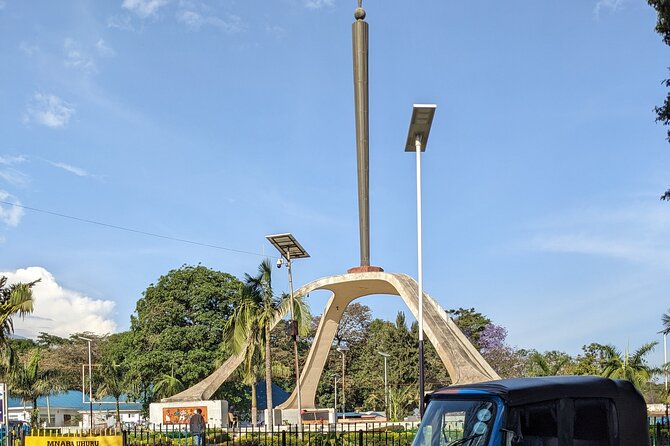
Arusha is often treated as a place to sleep before a safari. That is a mistake. The city is the practical meeting point for northern Tanzania, but it also has its own story, shaped by German colonial rule, East African diplomacy, local commerce, art, and the cultures of many communities.
This experience gives you that wider picture in a short span. You pass the East African Community headquarters, the international conference building, and a major public hospital before reaching the Old Boma area. Those sights help you see Arusha as an administrative center, not simply a launching point for national parks.
The price is $26 per person, which is fair if you want a guided introduction rather than a quick independent walk around town. You receive a professional local guide, entry to the Tanzanite museum, entry costs for the African art gallery, and hotel pickup and drop-off if your accommodation is near the city center.
The value is strongest for a first visit. You get context for places you might otherwise pass without understanding, and you can ask questions about local life as you go. It is less useful if you already know Arusha well or want a quiet, private museum tour with no shopping stops.
More History Walking Tours in the world:
- History and Hauntings of Salem Guided Walking Tour
★ 5.0 · 14,564 reviews - Lisbon: History, Stories and Lifestyle Walking Tour
★ 4.8 · 10,902 reviews - Boston: Freedom Trail History Small Group Walking Tour
★ 5.0 · 6,450 reviews
Starting near the Old Boma and Tanzania’s past
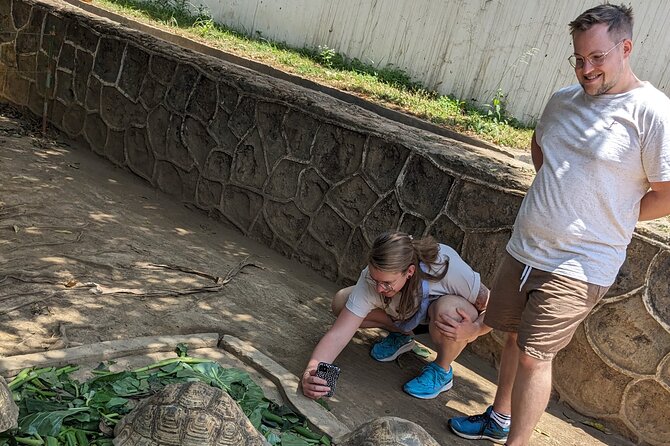
The Old Boma Museum is the most important historical stop. The building dates from the German colonial period, when it served as a fort. Today, it is the Natural History Museum and one of the oldest buildings in Arusha.
You have about 45 minutes here. That is enough for a useful overview, but not enough for a slow museum visit. The museum has three permanent exhibitions and three temporary exhibitions. The main displays cover human evolution, the history of the Boma, and ecology and wildlife photography.
The human evolution section uses replica fossils, tools, and a display of an ancient footprint found in East Africa. This gives you a helpful link between Tanzania’s archaeological importance and the wider story of human origins. If you have already visited major evolution museums elsewhere, the display may feel brief. For most first-time visitors, it adds valuable context to the region.
The Boma history section covers the city from 1884 to 1919. That period helps explain how colonial administration shaped Arusha’s early development. The wildlife photography exhibition shifts the focus from politics to the natural world that draws so many people to northern Tanzania.
Admission is not included. The listed price is $6 per adult, so bring that extra amount. You should also ask your guide how much time is available here, especially if museums are a main reason for booking.
Tanzanite, mining, and the shopping question
The Tanzanite Experience is one of the tour’s strongest inclusions. Tanzania is the only known source of this blue-violet gemstone, and the museum explains why its limited source makes it unusually rare. The presentation covers mining, cutting, polishing, and the stories connected with the stone.
You spend about 30 minutes here. That is a sensible length for a focused introduction. You learn how rough stone becomes a finished piece of jewelry, then have the option to browse the shop.
Prices begin around $100 and can reach $3,000 or more. That wide range matters. You can look without buying, but you should not feel pressured to make a purchase simply because the stop includes a shop. If you are interested in Tanzanite, ask about the stone’s quality, treatment, origin, and documentation before spending money.
I like this stop because it connects a famous Tanzanian product with actual local work. You are not only looking at jewelry in a display case. You are learning about the mining and skilled handwork behind it.
The practical issue is time. Thirty minutes goes quickly if you want both the museum explanation and a careful look at the shop. Treat the museum as the main purpose, and consider any purchase a separate decision.
The Clock Tower and Arusha’s central streets
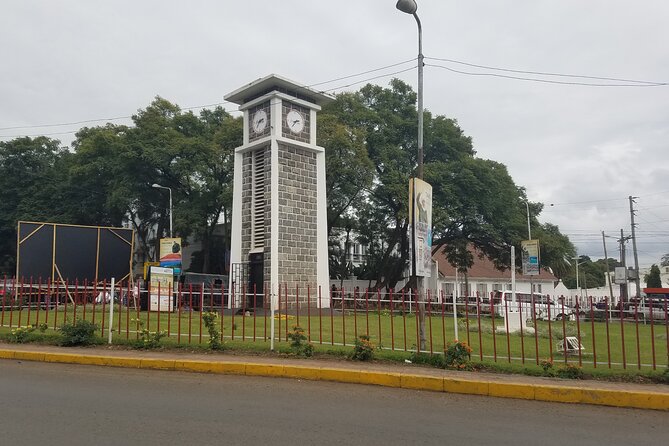
The Arusha Clock Tower is a short stop, about 15 minutes, but it helps you get oriented. It is a well-known meeting point in the city and has long been linked with local civic life.
The tower was built by Galanos, a Greek millionaire who came to Tanganyika in the early twentieth century. A popular local claim says the tower sits between Cairo and Cape Town and marks a central point between Tanzania, Kenya, and Uganda. Your guide can give this story more local context, but you should treat the geographic claim as a commonly repeated tradition rather than a precise surveying fact.
After the tower, the walk continues toward one of the older hotels and a colonial-era school. These brief street sections are useful because they show how the city’s older buildings sit alongside modern businesses and busy roads.
This is also where the mixed transport arrangement becomes clear. One direct account describes taking a tuk-tuk to the first sight and using vehicles between some locations, with shorter walks linking the stops. That may suit you if you want city coverage without four hours of continuous walking. If you specifically booked because you want a long walking route, confirm the plan at the start.
More Cultural Walking Tours in the world:
- Savannah First Squares Culinary & Cultural Walking Food Tour
★ 5.0 · 3,229 reviews - Tokyo Tsukiji Fish Market Food and Culture Walking Tour
★ 5.0 · 3,184 reviews - New Orleans French Quarter, Voodoo and Culture Walking Tour
★ 4.5 · 2,961 reviews - Amsterdam: Cultural Highlights Walking Tour
★ 4.9 · 2,629 reviews
Finding souvenirs at the Maasai market

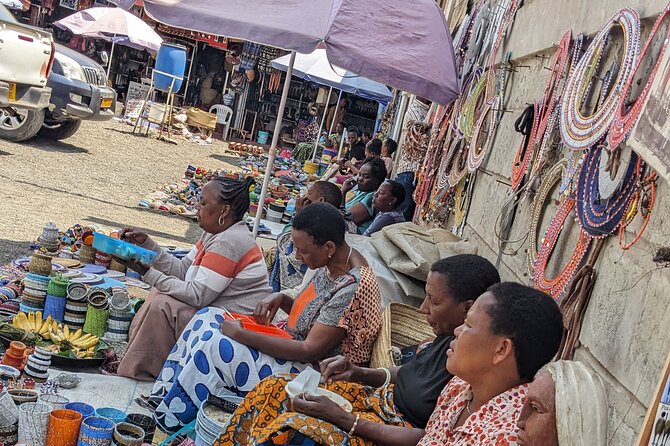
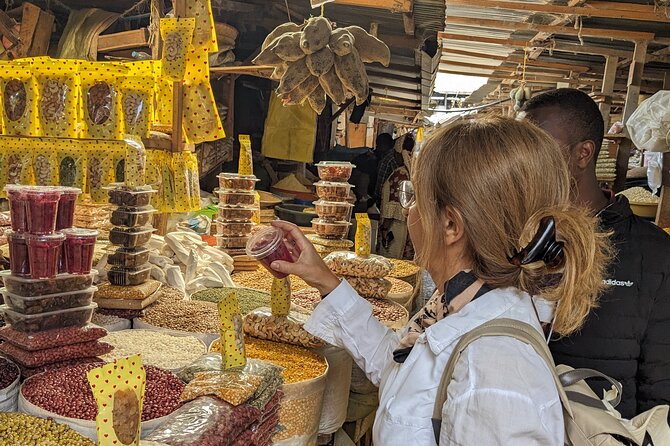
The Maasai Market Curios and Crafts stop lasts about 25 minutes. It is an open-air shopping area with common Tanzanian souvenirs, including fabric, safari shirts, jerseys, Maasai shoes and sandals, jewelry, necklaces, bags, blankets, pots, pans, and artwork.
This stop is not only about buying things. It shows you how souvenir shopping works in Arusha, and your guide can help you move through the stalls with more confidence. If you are uncomfortable bargaining or unsure about an item, ask for advice before agreeing to a price.
Bring cash for purchases. Souvenir money is not included, and the tour information specifically advises you to come prepared. You do not need to buy anything. A short visit still gives you a look at the colors, materials, and designs commonly sold in the city.
The limitation is time. Twenty-five minutes is enough for a quick browse, not a relaxed shopping session. If you see several items you like, you may need to choose quickly or ask whether more time is possible. The exact route can vary, so do not count on having a long afternoon here.
Art, antiques, and the Cultural Heritage Centre
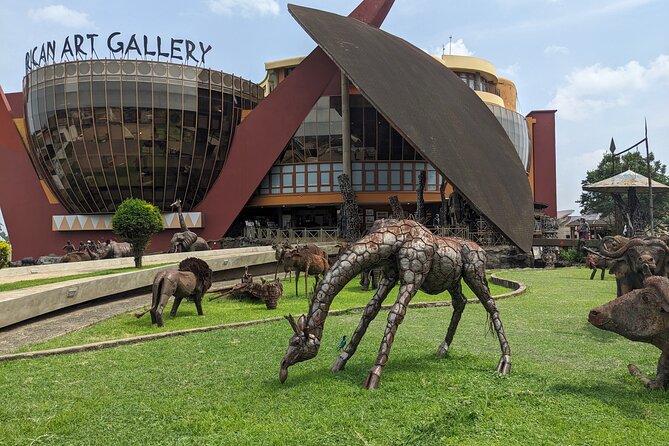
The Cultural Heritage Centre is a larger and more polished art stop. You have about 40 minutes to look through African artwork from Tanzania and other countries on the continent.
This is a good contrast to the Maasai market. The market feels informal and price-focused, while the Cultural Heritage Centre offers a more organized setting for viewing art and browsing higher-priced souvenirs. You can look at carvings, paintings, jewelry, and other pieces, although the exact selection can change.
The tour includes the cost of the African art gallery. There is also a shop, so the same advice applies as at the Tanzanite museum: enjoy the browsing, ask questions, and buy only if the item and price suit you.
For many people, this will be the most visually appealing part of the afternoon. It also gives you a broader view of African art rather than limiting the experience to Maasai-themed souvenirs. If you are not interested in shopping, tell your guide early so you can focus on the gallery rather than the sales area.
What the guide adds to the experience
The guide can make or break a city tour, and Israel receives the strongest praise here. His English is described as clear, and his explanations cover Arusha’s history, Tanzanian culture, and ordinary city life in a way that is easy to follow.
A particularly useful strength is his help in busy streets and markets. One account describes feeling comfortable while moving through hectic parts of Arusha, which matters if you are a solo visitor or not used to the city’s pace. Another notes that Israel met the visitor at the hotel and arranged a tuk-tuk to the first sight.
The guide’s pride in Tanzania also comes through. That can turn a list of buildings into a conversation about how people live, work, trade, and understand their city. You should still ask direct questions if you want more time at a museum or less time in a shop.
The maximum group size is 19 people. That is not a private tour, but it is still small enough for a guide to manage a city walk without becoming a large coach excursion. A smaller group may make it easier to ask questions and stay close in crowded areas.
Timing, transport, and what to bring
The experience is advertised at about four hours, though the included details allow for a range of roughly two and a half to six hours. That variation likely depends on pickup, traffic, walking speed, museum timing, and the amount of time spent shopping.
Pickup and drop-off are offered for hotels near the city center. The tour is also near public transportation. Confirm your pickup details when booking, especially if your hotel is outside the central area.
Wear comfortable shoes and bring water. Food and drinks are not included, and the supplied information does not promise a meal stop. You should also carry:
- About $6 for the Old Boma admission
- Cash for souvenirs
- Money for any Tanzanite or artwork purchase
- A little extra time if you want to ask questions at the museums
Most people can participate, but the route includes city walking and street movement. If you have mobility concerns, ask how much walking and vehicle transport are planned on your date.
The tour is free to cancel up to 24 hours before the start time for a full refund. Inside that window, the amount paid is not refunded, and last-minute changes are not accepted.
Who should book this Arusha experience?
I would recommend this tour to a first-time visitor who has half a day in Arusha and wants more than a hotel-to-safari transfer. It suits solo visitors, couples, and small groups who want a local guide, a little history, cultural context, and time to browse Tanzanian products.
It is also a good choice before a safari. The Old Boma and Clock Tower help you understand the city, while the markets and gallery give you a chance to buy souvenirs before heading into remote areas.
You may want something else if your priority is a long, quiet walk, serious art study, or a full day at the museum. The route includes shopping, short visits, and possible vehicle transfers. It is a city sampler, not a specialist museum tour.
Should you book the Arusha Guided Walking City Tour?
Book it if you want an affordable introduction to Arusha with a guide who can explain what you are seeing. The strongest reasons are Israel’s clear communication, the Old Boma’s historical displays, the included Tanzanite museum, and the mix of markets, streets, and African art.
Before you go, confirm the pickup point, expected amount of walking, and available time at each stop. Bring cash, allow $6 for the Old Boma, and treat the jewelry and souvenir shops as optional. With those expectations, this is a practical and worthwhile way to spend a first afternoon in Arusha.
FAQ
How long does the Arusha city tour last?
The tour is approximately four hours, but the included details give a possible duration of about two and a half to six hours. Timing can vary based on pickup, walking, traffic, and time spent at each stop.
Is hotel pickup included?
Pickup and drop-off are included for hotels near Arusha city center. The tour is also located near public transportation.
Is the Old Boma Museum admission included?
No. The Natural History Museum, also called the German Boma, costs $6 per adult and is not included in the tour price.
Is the Tanzanite museum included?
Yes. Admission to the Tanzanite Experience is included.
Does the tour include the Cultural Heritage Centre?
Yes. The African art gallery and Cultural Heritage Centre costs are included.
Is this tour entirely on foot?
No. The experience can include walking plus a car or tuk-tuk between some locations. The exact balance may vary.
How many people can join the tour?
The maximum group size is 19 people.
Can I cancel for a full refund?
Yes. You can cancel at least 24 hours before the start time for a full refund. Cancellations or changes made less than 24 hours before the start time are not refunded.
Just added around the world
- Walking Tour of Boston’s Freedom Trail★ 4.5 · 77 reviews
- Downtown Freedom Trail Walking Tour – History & Architecture★ 4.5 · 194 reviews
- Boston Seafood Lovers Food and History Walking Tour★ 5.0 · 208 reviews
- Boston “Death and Dying” Walking Ghost Tour★ 4.5 · 223 reviews
- Boston Food of the North End Private Walking Tour★ 5.0 · 174 reviews
- Boston Movie Mile Walking Tour★ 4.5 · 119 reviews
- 1 If By Land Walking Tours★ 5.0 · 95 reviews
- Boston History and Freedom Trail Private Walking Tour★ 5.0 · 117 reviews
History Walking Tours, compared.

History and Hauntings of Salem Guided Walking Tour
Read our review →

Freedom Trail History Small Group Walking Tour
Read our review →
Historic Charleston Guided Sightseeing Walking Tour
Read our review →
Tapas Walking Tour with Food, Wine, and History
Read our review →
Savannah History and Haunts Candlelit Ghost Walking Tour
Read our review →
A History of Terror – Belfast City Centre Walking Tour
Read our review →Browse the lists this tour appears in