
Review · CULTURAL WALKING TOURS
Asakusa Cultural Walk & Matcha Making Tour
Asakusa serves up old Tokyo. This three-hour tour brings together a rickshaw ride, temple customs, traditional sweets, matcha preparation, and a hands-on okonomiyaki lunch. I like the way it mixes sightseeing with activities, and I especially like the small group size, capped at seven people.
The tour also earns high marks for friendly guides who explain local customs in clear English. Guides such as Aoi, Yuki, Mai, Mihori, Hana, and Nori have helped make the day feel personal, often taking photos and offering practical suggestions for the rest of a Tokyo visit. The main drawback is that Asakusa can be very crowded, especially around Senso-ji, and the food arrangements cannot support gluten-free or fully allergy-free diets.
Key points to know before booking
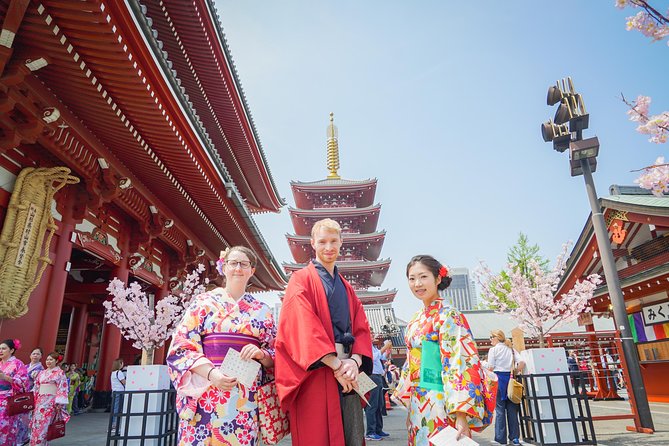
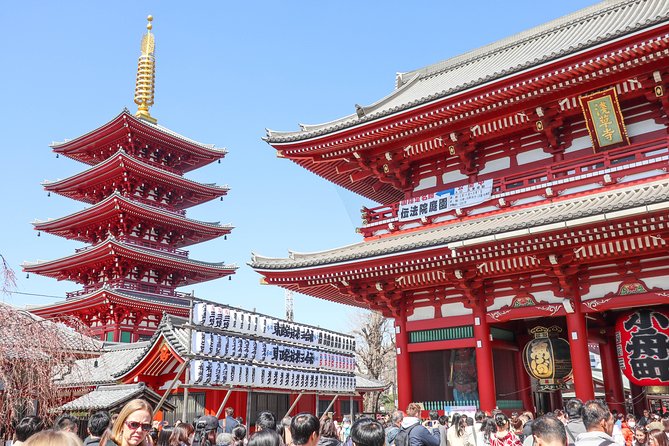
- A compact Asakusa sampler: In about three hours, you visit Nakamise Street, Kaminarimon, Senso-ji, and Asakusa Shrine.
- A small group of seven or fewer: The limited size gives you more time to ask questions and makes the meal and matcha session easier to follow.
- Two hands-on food experiences: You prepare matcha and cook okonomiyaki or monja-yaki at a traditional restaurant.
- A useful first-day activity: The mix of culture, food, and neighborhood orientation makes this a good introduction to Tokyo.
- Food restrictions need careful thought: Vegetarian food is available, but gluten-free and vegan meals are not.
- The price covers more than a walk: At $90.86 per person, the fee includes snacks, lunch, one drink, the matcha activity, photos, and a certified guide.
Why this tour works well in Asakusa
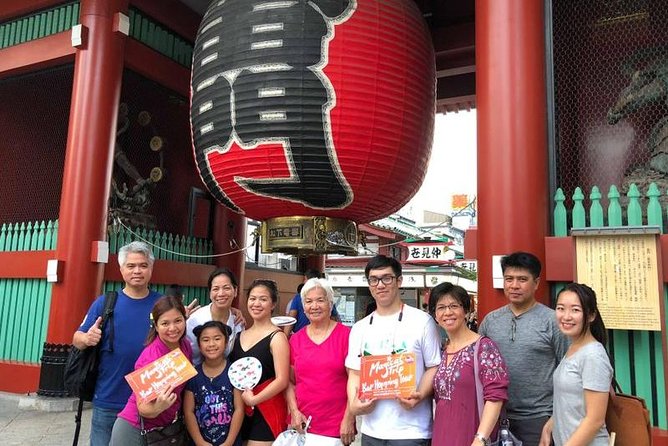
Asakusa is one of Tokyo’s best areas for seeing older customs in a compact setting. You can move from a grand temple gate to a candy shop, from a traditional shrine to a restaurant grill, without spending much time in transit.
That makes this tour a smart choice if you want more than a photo stop at Senso-ji. You get explanations of temple behavior, chances to sample Japanese sweets, and guided help with foods that may be unfamiliar. I like that the tour asks you to participate instead of simply pointing at buildings.
The half-day length also helps. Three hours is enough to keep the pace moving, but not so long that the temple district, shopping street, and food stops begin to blur together. One afternoon review described the timing as just right, which seems fair for a tour with several different parts.
The price is not cheap for three hours, but it includes a meal, snacks, a drink, two cultural activities, photos, and a guide. If you would otherwise pay separately for lunch and a tea activity, the total becomes easier to justify. The value is strongest for first-time visitors who want help understanding what they are seeing.
More Cultural Walking Tours in Japan:
- Tokyo Tsukiji Fish Market Food and Culture Walking Tour
★ 5.0 · 3,184 reviews - Kyoto Gion: 2-Hour Geisha Culture & History Walking Tour
★ 5.0 · 1,186 reviews - Kyoto Gion Cultural Walk & Geisha Show with Dining Options
★ 5.0 · 518 reviews
Meeting at Kaminarimon
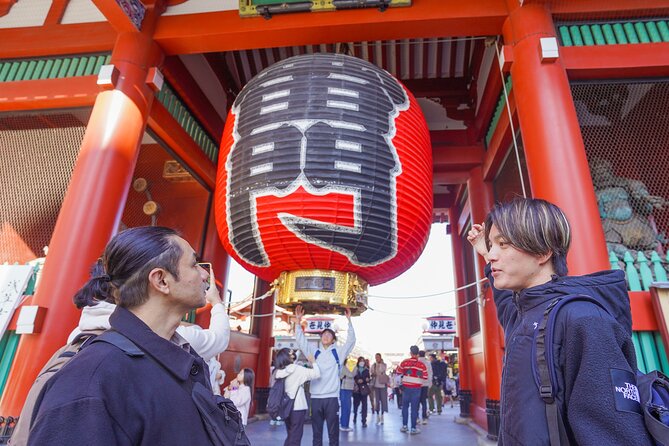
The tour begins at 11:00 am beside the Kaminarimon Police Box at 1-chōme-3-1 Asakusa, Taito City. This is a practical meeting point near public transportation and close to one of Asakusa’s most recognizable landmarks.
Kaminarimon means Thunder Gate, and its large lantern provides an easy visual marker. From here, you move into the shopping streets and temple area. The tour ends back at the same meeting point, so you do not need to work out a new route at the end of the meal.
Arrive with a little breathing room. The area can be crowded, and the tour depends on keeping a small group together. If you are late because of rain or traffic, do not assume the guide can always wait, even though one guide did assist a delayed party in the past.
Riding and walking through old Asakusa
The experience includes a ride through Asakusa by rickshaw, followed by walking through the district. The rickshaw offers a pleasant change from a standard walking tour and lets you see the neighborhood while your guide adds context.
The supplied details do not state the exact length of the ride, so you should think of it as one part of a broader route rather than the main event. The walking sections are where the tour spends time on shops, temple customs, and local food.
You will want comfortable shoes. The route includes several stops, shopping streets, temple grounds, and time on your feet. Summer is hot and humid in Japan, so bring water and wear a hat. That advice matters here because the tour begins late in the morning, when heat can build quickly.
Nakamise Street and traditional sweets
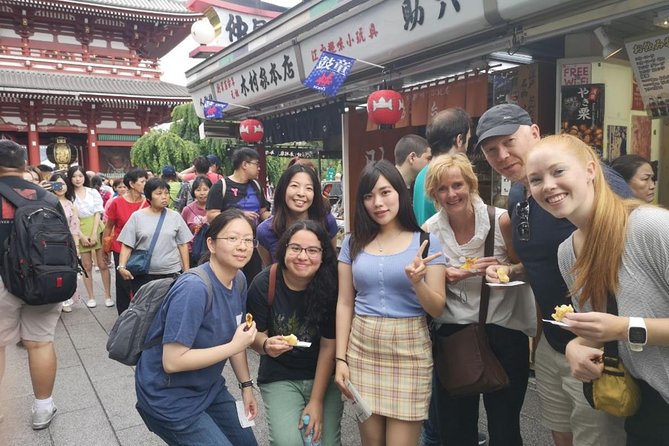
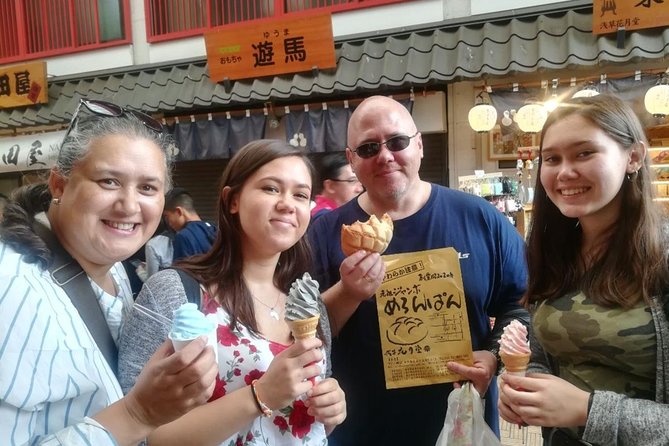
Nakamise Shopping Street leads toward Senso-ji and is lined with shops selling souvenirs, snacks, sweets, and small traditional goods. You have about 20 minutes here and sample Japanese treats along the way.
This is one of the more useful parts of the tour for first-time visitors. A guide can explain what you are eating, how certain sweets fit into local food culture, and which items are worth your attention. Several guides have also allowed time for shopping, which is helpful if you want small gifts rather than a rushed look at store windows.
Do not expect a full food crawl. The included food samplings are snacks and sweets, not a replacement for lunch. Additional food and drinks cost extra. If you enjoy browsing, you may wish the stop were longer, but the tight schedule keeps the tour moving toward the temple and later activities.
A few more walks around Japan worth a look
- Kyoto Geisha Walking Tour: Gion District & Hidden Gems
★ 4.7 · 3,273 reviews - Kyoto: Gion Magical Night Walking Tour with Geisha Trivia
★ 4.9 · 2,393 reviews - Tokyo: Imperial Palace and Shogun Historical Walking Tour
★ 5.0 · 2,251 reviews - Kyoto: Gion Geisha District Walking Tour – Stories of Geisha
★ 4.7 · 2,187 reviews
Kaminarimon and the approach to Senso-ji
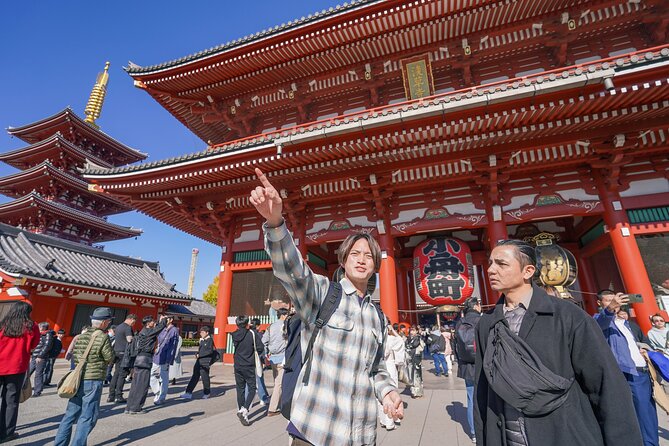
The stop at Asakusa Kaminarimondori Shopping Street lasts about 15 minutes and gives you another view of Kaminarimon. This is a short stop, but it helps place the gate within the wider street layout instead of treating it as an isolated photo backdrop.
Your guide can also help with photos here. That small service came up repeatedly in the guide praise, with Aoi, Meg, Hana, and Mai singled out for taking good pictures. If you are traveling as a couple or family, that can be worth more than it sounds. You get a record of the visit without handing your phone to a stranger.
The area is popular, so expect crowds. One person found the late-May crowd around the temple frustrating, although the range of activities helped keep the day enjoyable. If you want quiet temple grounds, this is not the right setting. If you want to see one of Tokyo’s best-known religious sites while learning how people use it, the crowd is part of the scene.
Senso-ji: customs, smoke, and fortune-telling
Senso-ji is the central cultural stop, with about 30 minutes set aside for the temple. The guide explains what people do there, including prayer, fortune-telling, and the use of incense.
This practical instruction is one of the tour’s strongest features. You are not left wondering when to bow, where to place a coin, or why people fan incense smoke toward themselves. Guides have also explained the belief that the smoke has healing qualities.
The temple is visually impressive, but this is not a quiet history lecture. One person wished for more historical detail about Senso-ji itself. That is a fair criticism. The tour gives more attention to customs and the surrounding district than to a long architectural or historical explanation.
I would treat the temple stop as an introduction. You learn how to behave respectfully and gain enough context to return on your own later. If your main goal is detailed Buddhist history, you may want a more specialized temple tour.
Asakusa Shrine beside the temple
Next comes Asakusa Shrine, located beside Senso-ji, with about 30 minutes for exploration. Having both a temple and a shrine in the same tour gives you a useful comparison between two important parts of Japanese religious life.
The guide can point out the different customs and explain how the shrine fits into the Asakusa district. This is especially valuable if you are new to Japan and have not yet learned how temples and shrines differ.
The two neighboring sites also make the itinerary efficient. You do not lose time traveling across Tokyo, yet the experience does not feel like one long temple visit. The shopping street, shrine, and food activities break up the sightseeing.
Matcha making and tea tasting
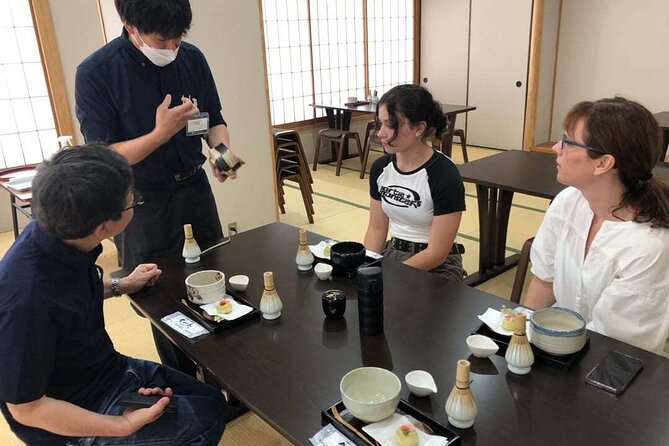
The matcha session is one of the most praised parts of the experience. You learn about matcha production and preparation, then make and taste the tea yourself.
This is more engaging than simply drinking a cup in a café. You get a closer look at the care involved in making matcha, and the guide can explain the process as you work. Several people described the session as informative, unusual, and worth the time.
The experience is also private in feel when the group is small. Some departures have had only two people, creating a near-private outing. That is not guaranteed, but the seven-person maximum gives you a better chance to ask questions than a large bus tour would.
Matcha can be bitter and grassy, and not everyone enjoys it immediately. The activity works well because it treats the tea as both a drink and a cultural practice. You do not need to be a tea enthusiast to get something from it.
Cooking okonomiyaki or monja-yaki for lunch
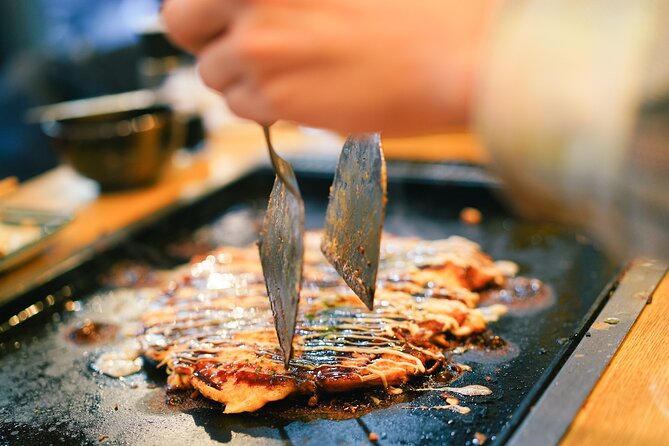
Lunch takes place at a traditional restaurant and includes okonomiyaki or monja-yaki, plus one drink. You help prepare the food on a table grill, which makes this a social ending to the tour rather than a quick meal handed to you.
Okonomiyaki is a savory Japanese pancake, while monja-yaki is a softer grilled mixture associated with Tokyo. The cooking experience gives you a chance to try the food in its intended setting and ask for help if the process is unfamiliar.
This part receives some of the strongest praise. People have enjoyed having an upstairs restaurant area to themselves, cooking on a large griddle, and sharing the meal with family or friends. Teenagers also seem likely to enjoy it because the food is an activity, not just another restaurant stop.
Vegetarian options are available. Vegan and gluten-free requests cannot be accommodated, and the operator cannot guarantee an allergy-free meal because the food is prepared in outside kitchens. Substitutions may not be possible at every stop, though the guide will try to compensate elsewhere. If your diet is strict, contact the provider before paying, and understand that the tour may not be suitable.
The guides make the difference
The strongest pattern across the experience is the quality of the guiding. Aoi has been praised for kindness, explanations, and photography. Yuki has been appreciated for strong English and cultural detail. Mai has helped with reservations and translation, while Mihori has offered clear explanations of Senso-ji and local customs.
Hana has been described as patient and helpful, especially during the food activities. Other guides, including Meg, Nori, Rina, Mami, and Hiroshi, have also been praised for warmth, local suggestions, and an easy conversational style.
Guide quality can vary on any scheduled tour, but the small group gives a good guide room to respond to your questions. This is not a script-heavy experience. You can ask about customs, food, shopping, and things to do after the tour.
There has been at least one cancellation with only a day’s notice. It appears to have involved sudden venue problems, but the result was still disruptive. Free cancellation is available up to 24 hours before the start time. Cancellations or changes inside that window are not refunded or accepted.
Who should book this Asakusa experience?
I would recommend it to first-time visitors who want a friendly introduction to Tokyo without committing to a full-day city tour. It suits couples, families, and small groups who like to eat, ask questions, and take part in activities.
It is also a good choice for a first or second day in Tokyo. The guide can help you understand basic temple and shrine customs, point out useful foods, and suggest other places to visit. Several people have used it as an early Tokyo orientation and found it helpful.
Families with older children and teenagers should find the mix appealing. The walking is broken up by the rickshaw ride, sweets, matcha preparation, and lunch cooking. People who want a quiet, scholarly temple tour should choose something more focused.
At $90.86, I would book this for the combined experience rather than the sightseeing alone. The price is reasonable if you value the included lunch, drink, snacks, photos, and hands-on activities. It is harder to justify if you mainly want to see Senso-ji and can arrange food and sightseeing yourself.
Should you book it?
Book this tour if you want Asakusa explained through food, customs, and conversation. The best parts are the small group, the matcha session, and the chance to cook lunch with a guide nearby.
Think twice if you need gluten-free, vegan, or tightly controlled allergy-safe food, or if you dislike crowds. For everyone else, this is a well-paced way to meet Asakusa, learn a few useful Japanese customs, and finish with a meal you helped make.
FAQ
How long does the Asakusa Cultural Walk and Matcha Making Tour last?
The tour lasts approximately three hours.
What time does the tour start?
It starts at 11:00 am.
Where does the tour meet?
The meeting point is the Kaminarimon Police Box at 1-chōme-3-1 Asakusa, Taito City, Tokyo 111-0032, Japan.
Where does the tour end?
The tour ends back at the meeting point.
What food is included?
The tour includes Japanese snack and sweet samples, plus lunch consisting of okonomiyaki or monja-yaki and one drink.
Is a vegetarian meal available?
Yes. A vegetarian menu is available.
Can the tour accommodate vegan or gluten-free diets?
No. The tour cannot accommodate vegan or gluten-free requests, and allergy-free meals cannot be guaranteed.
How many people can join the tour?
The maximum group size is seven people.
Can I cancel for a full refund?
Yes, if you cancel at least 24 hours before the experience start time. Cancellations made less than 24 hours before the start time are not refunded.
Just added around Japan
- Tokyo: Asakusa & Sensoji ー Oldest Temple Walking Tour (2hrs)★ 5.0 · 213 reviews
- Asakusa Senso-ji Temple and Old Tokyo Walking Tour★ 5.0 · 560 reviews
- Tokyo: Tsukiji Market Walking Tour & Sushi Cooking Class★ 4.6 · 122 reviews
- Tokyo: Dark Side of Tokyo Shinjuku Red Light Walking Tour★ 4.7 · 862 reviews
- Tokyo: Shinjuku Nightlife & Secret Backstreets Walking Tour★ 4.8 · 229 reviews
- Tokyo: Shibuya Highlights Walking Tour★ 4.8 · 601 reviews
- Tokyo: Shibuya Highlights Walking Tour & Secret View Spot★ 4.9 · 196 reviews
- Tokyo: Shinjuku Bar Hopping & Night Walking Tour★ 4.6 · 137 reviews
Cultural Walking Tours, compared.

Savannah First Squares Culinary & Cultural Walking Food Tour
Read our review →
Tokyo Tsukiji Fish Market Food and Culture Walking Tour
Read our review →
New Orleans French Quarter, Voodoo and Culture Walking Tour
Read our review →

Anne Frank Walking Tour Amsterdam Including Jewish Cultural Quarter
Read our review →
Southernmost Food & Cultural Walking Tour by Key West Food Tours
Read our review →
Ultimate Melbourne Walking Tour: History, Laneways & Culture
Read our review →
Browse the lists this tour appears in