
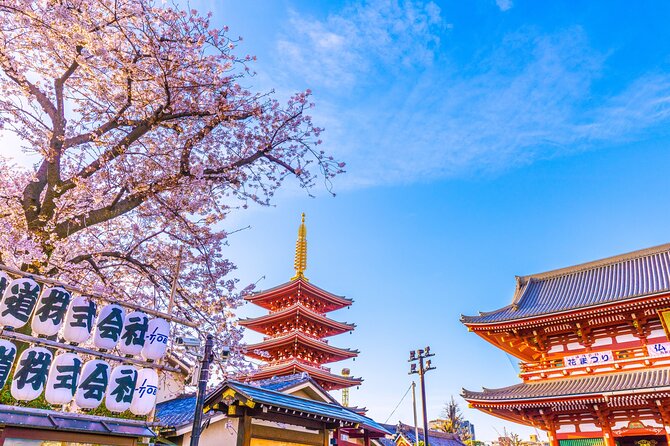
Review · JAPAN WALKING TOURS
Tokyo: Asakusa & Sensoji ー Oldest Temple Walking Tour (2hrs)
Tokyo’s oldest temple is only the beginning. This two-hour Asakusa walk combines Senso-ji, Nakamise shopping streets, local sweets, everyday grocery shopping, and old-style shops that are easy to miss on your own. I especially like the chance to learn temple customs while also seeing the neighborhood as a living part of Tokyo, not just a famous photo stop.
I also like the small group limit of 15 people and the guide-led route through food stalls, sword shops, kimono stores, and a local supermarket. The main caution is the food tasting: it is promoted as part of the experience, but one customer said the tasting did not happen, so you should treat it as a possible feature rather than a guarantee.
Key points at a glance
- Kaminarimon orientation: Start at the famous Thunder Gate and learn what its features mean before entering Senso-ji.
- Temple customs made clear: Try fortune-telling, hand purification, incense rituals, and a traditional Buddhist prayer with guidance.
- Old Asakusa shopping: Browse Nakamise Street, Hoppy Street, retro storefronts, snack stands, and local food shops.
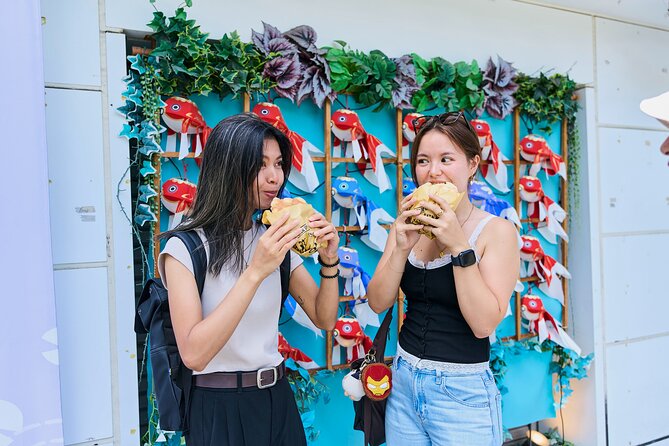
- Useful food stops: Look for matcha desserts, melon bread, menchi-katsu, skewers, and Japanese groceries.
- More personal than a large bus tour: The group can have up to 15 people, and guides such as Keiko, Yui, Josh, Nono, Nanami, and Naoto have been praised for friendly, careful guiding.
- Good value at $19.90: The price is modest for two hours of orientation, cultural explanation, and neighborhood recommendations.
Starting under the Thunder Gate at Kaminarimon
The meeting point is the Kaminarimon Police Box at 1-chome-3-1 Asakusa, Taito City. That places you right beside Kaminarimon, the outer gate of Senso-ji and one of Tokyo’s best-known landmarks.
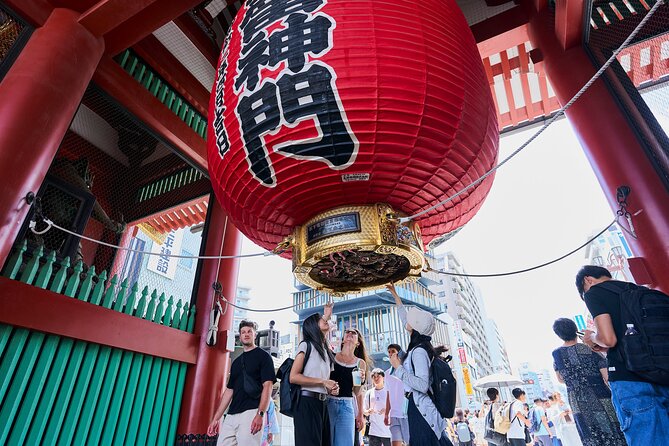
This is a sensible place to begin. Asakusa has many streets, stalls, temples, and small shops packed into a compact area. Without a guide, you can see the main gate and still miss the details that give it meaning. Your guide explains the gate’s proper name, its story, and the purpose of its famous features before the walk moves onward.
The first stop lasts about 20 minutes. That is enough time to get your bearings without spending the whole tour at the entrance. I like this approach because it gives you context before the crowds and shopping streets take over.
The tour uses a mobile ticket, and confirmation is provided when you book. It is also close to public transportation, which makes the meeting point practical for a first or last activity in Asakusa.
A few more walks around Japan worth a look
- Kyoto Geisha Walking Tour: Gion District & Hidden Gems
★ 4.7 · 3,273 reviews - Tokyo Tsukiji Fish Market Food and Culture Walking Tour
★ 5.0 · 3,184 reviews - Kyoto: Gion Magical Night Walking Tour with Geisha Trivia
★ 4.9 · 2,393 reviews
Nakamise Street, where temple shopping meets snack stops
From Kaminarimon, you move along Nakamise Shopping Street toward the temple. This is the classic approach to Senso-ji, lined with souvenir shops and food stands that have served visitors for generations.
You have about 20 minutes here. That is not enough for a long shopping session, but it works well as an introduction. Your guide can point out what is worth sampling and help you avoid spending all your time at the first few stalls.
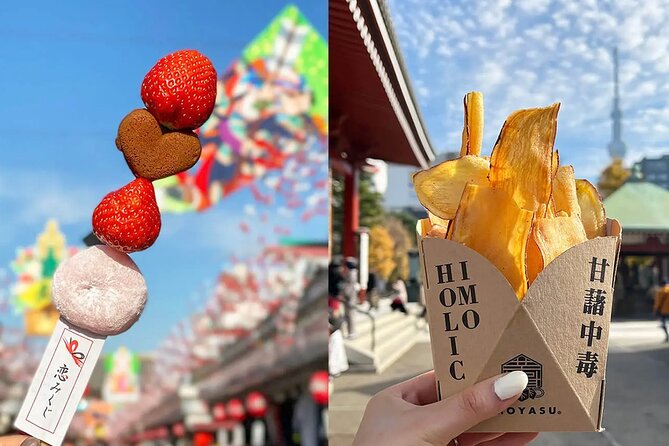
Possible food finds include traditional snacks, famous melon bread, and other street food. The route also includes souvenir shops, so this is a useful time to notice small Japanese gifts before returning later on your own.
The food tasting deserves a little caution. The tour description includes local street food with tasting, and several parts of the route highlight food. Still, one customer specifically said the promised tasting did not take place. I would book this for the history, customs, and neighborhood walk first, then treat any tasting as a welcome extra.
Senso-ji rituals in a short, useful visit
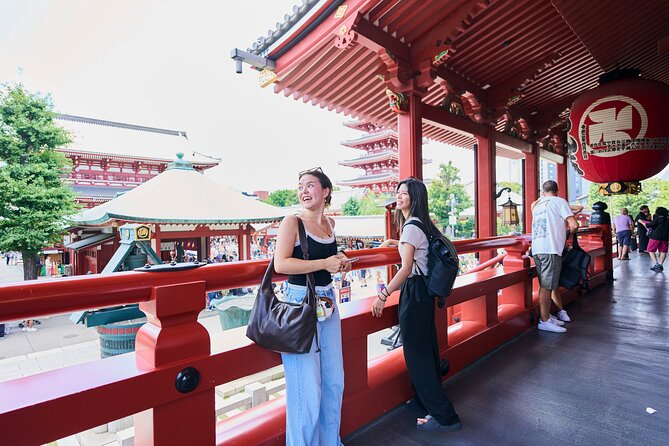
Senso-ji is the main reason most people come to Asakusa. It is described as Tokyo’s oldest and most sacred Buddhist place of worship, and the tour allows around 20 minutes here.
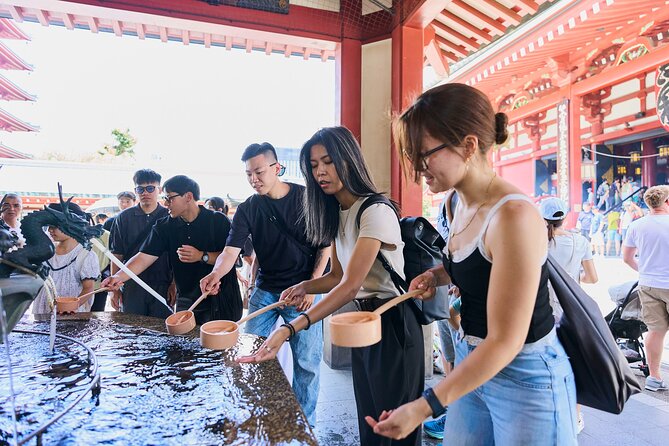
That may sound brief, but a guide can make the time count. You can draw a fortune, purify your hands with water, enjoy the incense smoke, and offer a traditional prayer. These actions can seem confusing when you first encounter them alone. A guide gives you a clear way to take part respectfully.
This is also where the tour connects the physical place with Japanese religious practice. The experience highlights a rare setting where a Buddhist temple and Shinto shrine coexist. That pairing gives the visit more depth than a simple walk past the main hall.
You should expect a working religious site rather than a quiet museum. The area is famous and can be busy, so your guide’s value comes from explaining what you are seeing and helping you focus on the details instead of simply following the crowd.
Yogodo, koi, and the Jizo statues
A smaller stop at Senso-ji Yogodo lasts about five minutes. It includes a goshuin desk, where you may see temple seal services, a pond with koi fish, and rows of Jizo statues connected with a well-known story.
This is a short stop, but it adds a different side of the temple grounds. The main gate and central temple buildings attract most attention. Yogodo offers smaller details, a pond, and a popular photo spot.
If you collect goshuin, this is worth noting. The tour does not say that a seal is included, so you should view the desk as something to see rather than assume you will receive anything as part of the price.
The Jizo statues are another reason a guide helps. A row of similar figures can be easy to pass without a second glance. With an explanation, the stop becomes more than a quick photograph.
Same streets, a different way to see them:
- Tokyo: Imperial Palace and Shogun Historical Walking Tour
★ 5.0 · 2,251 reviews - Kyoto: Gion Geisha District Walking Tour – Stories of Geisha
★ 4.7 · 2,187 reviews - Best of Kyoto: Gion, Geisha, Pagodas & Cobblestones
★ 4.9 · 2,058 reviews - Night Walk in Gion: Kyoto’s Geisha District
★ 4.5 · 2,003 reviews
Matcha sweets at Kaminari Issa
The route then pauses at Kaminari Issa, a local sweets shop focused on matcha. The stop lasts about five minutes and may include items such as matcha soft serve, matcha truffles, and seasonal desserts.
This is a quick taste of modern Japanese snack culture rather than a formal meal. Matcha fans should enjoy the chance to compare different forms of the flavor. If you prefer less sweet food, you may want to ask the guide what is available before choosing.
The wording around tasting is important here. The stop gives you the chance to try or purchase matcha treats, but the supplied details do not confirm that every participant receives a complimentary portion. Keep some spending money available if a dessert catches your eye.
Old Edo atmosphere on the shopping streets
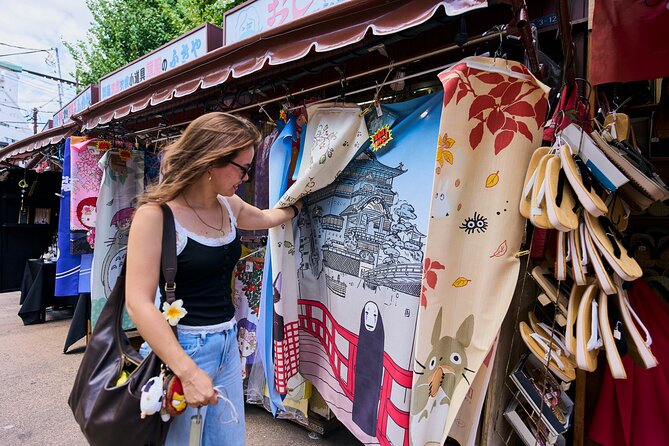
After the temple area, the walk continues through local shopping streets with snack stands, traditional storefronts, and small souvenir shops. This part is valuable because it shows how Asakusa extends beyond the famous temple entrance.
The route includes old-style streets with retro touches, playful storefronts, unusual vending machines, and food such as menchi-katsu and skewers. Menchi-katsu is a fried minced-meat cutlet, a simple but satisfying street snack if you want something savory.
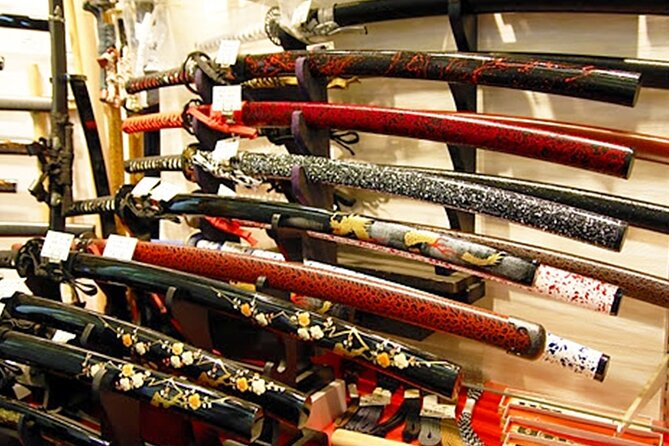
You may also see shops connected with traditional crafts and clothing. The experience specifically calls attention to a professional knife shop, where you might watch traditional sharpening, as well as a store selling samurai swords and ninja gear. These are useful stops for understanding how Asakusa mixes historical imagery, working retail, and tourist shopping.
The descriptions do not promise a demonstration at every departure, so think of the knife shop as an optional point of interest rather than a scheduled show. Still, Japanese knives are known for precision and craftsmanship, and seeing sharpening in action would be a memorable extra for cooks and design-minded shoppers.
Hoppy Street and the everyday side of Asakusa
Hoppy Street offers a different mood. You can observe locals enjoying daytime drinks and see shops with an old Edo feel, including sword stores and kimono shops.
The stop lasts about 10 minutes. That is enough to look around and hear how the area functions, but not enough for a full meal or extended bar visit. If Hoppy Street catches your interest, note the location and return later with more time.
I like this part of the route because it moves beyond formal sights. Senso-ji is essential, but Asakusa also has places where people eat, drink, shop, and meet during ordinary days. The guide can help you see that contrast without requiring a long walk.
The route is described as not too demanding, and one customer specifically valued it as a way to see a large neighborhood without excessive walking. Still, this is a walking tour on city streets, so comfortable shoes remain a sensible choice.
Finishing at a Japanese supermarket
The final listed stop is Ozeki Asakusa Kaminarimon Grocery and Supermarket. You have about 10 minutes to browse everyday Japanese groceries and choose souvenirs that feel more practical than standard temple gifts.
This is one of the tour’s most useful ideas. A supermarket can show you ordinary Japanese food packaging, snacks, drinks, and cooking ingredients in a way a souvenir shop cannot. You might find something to take home, but the tour does not specify which products are available or whether the guide recommends particular brands.
The activity ends back at the meeting point. That makes the route easy to understand and gives you a convenient base for continuing around Asakusa afterward.
What the guides add to the experience
The guide can make or break a short walking tour. Here, named guides praised for their approach include Keiko, Yui, Josh, Nono, Nanami, Naoto, Naruto, and Aiko.
Keiko was praised for making the walk fun for children with handwritten cards showing food items to try and stickers. Nono was described as patient and attentive when guiding a mother and daughter who were tired and jet-lagged. Those details suggest that the guiding style can adjust to the group rather than follow a rigid script.
Josh was praised for clear English and local insight. Yui received strong praise for detailed explanations of Senso-ji and useful food suggestions. Nanami was singled out for making the experience feel special, while Naoto was described as professional, entertaining, and good at creating a personalized walk.
The guide assigned to your departure may differ, so I would not book solely for one name. The larger point is that the tour has shown a pattern of friendly, careful guiding across several departures.
Is $19.90 a good price?
At $19.90 per person, this is a low-cost way to get an introduction to one of Tokyo’s most visited areas. The value does not come from admission tickets, since the listed stops are free. It comes from having someone explain the gates, rituals, shops, food, and local streets in a logical order.
You are paying for two hours of local direction and cultural context. That is useful if you are visiting Asakusa for the first time, want help with temple etiquette, or would like food and shopping ideas before exploring independently.
The price is less compelling if you already know Asakusa well or prefer to linger at each shop. The schedule moves quickly, with short stops of five to 20 minutes. You will get an overview, not a long food crawl or a detailed shopping appointment.
The maximum group size is 15 people. That is still a group, but it is more manageable than a large coach excursion. Some departures may be smaller, and one person received a private-style experience when they were the only booking, with the guide continuing rather than canceling. That cannot be guaranteed, but it shows the possible value of a lightly booked departure.
Who should book this Asakusa walk?
I would choose this tour if you want a friendly introduction to Senso-ji and the surrounding streets without spending half a day on your feet. It suits first-time Tokyo visitors, families who appreciate help with customs, and anyone who wants food suggestions mixed with temple history.
It also works well early in a Tokyo visit. You can return to the shops, supermarket, matcha store, or Hoppy Street after the guide points them out. The route gives you a useful map of the neighborhood.
You may want another type of experience if your main goal is a guaranteed food tasting, a long restaurant meal, or a deep focus on Japanese knives. The food element may vary, and the knife stop appears to depend on interest and local arrangements.
Free cancellation is available when you cancel at least 24 hours before the start time. Cancellations within 24 hours are not refunded, and changes in that period are not accepted.
Should you book it?
Book this tour if you want clear cultural guidance, gentle pacing, and practical Asakusa tips for $19.90. The strongest reasons are the Senso-ji rituals, the mix of temple and neighborhood life, and guides who have been praised for making the walk personal and easy to follow.
Just keep your expectations in the right place. This is a two-hour orientation, not a full meal tour or an extended temple study. If you see the food tasting and specialty shops as possible extras, the experience offers solid value and a smart first look at Asakusa.
FAQ
How long is the Asakusa and Senso-ji walking tour?
The tour lasts approximately two hours.
How much does the tour cost?
The listed price is $19.90 per person.
Where does the tour begin?
It begins at the Kaminarimon Police Box at 1-chome-3-1 Asakusa, Taito City, Tokyo 111-0032, Japan.
Where does the tour end?
The activity ends back at the meeting point.
What can I see at Senso-ji during the tour?
You can draw a fortune, purify your hands with water, enjoy the incense smoke, and offer a traditional prayer. The route also includes Senso-ji Yogodo, a goshuin desk, a koi pond, and rows of Jizo statues.
How large can the group be?
The tour can have a maximum of 15 participants.
Can I cancel for a full refund?
Yes. You can receive a full refund if you cancel at least 24 hours before the experience start time. Cancellations or changes made within 24 hours are not accepted and are not refunded.
Just added around Japan
- Asakusa Senso-ji Temple and Old Tokyo Walking Tour★ 5.0 · 560 reviews
- Asakusa Cultural Walk & Matcha Making Tour★ 5.0 · 245 reviews
- Tokyo: Tsukiji Market Walking Tour & Sushi Cooking Class★ 4.6 · 122 reviews
- Tokyo: Dark Side of Tokyo Shinjuku Red Light Walking Tour★ 4.7 · 862 reviews
- Tokyo: Shinjuku Nightlife & Secret Backstreets Walking Tour★ 4.8 · 229 reviews
- Tokyo: Shibuya Highlights Walking Tour★ 4.8 · 601 reviews
- Tokyo: Shibuya Highlights Walking Tour & Secret View Spot★ 4.9 · 196 reviews
- Tokyo: Shinjuku Bar Hopping & Night Walking Tour★ 4.6 · 137 reviews
Japan Walking Tours, compared.
Kyoto Geisha Walking Tour: Gion District & Hidden Gems
Read our review →
Tokyo Tsukiji Fish Market Food and Culture Walking Tour
Read our review →
Gion Magical Night Walking Tour with Geisha Trivia
Read our review →
Imperial Palace and Shogun Historical Walking Tour
Read our review →
Gion Geisha District Walking Tour – Stories of Geisha
Read our review →
Best of Kyoto: Gion, Geisha, Pagodas & Cobblestones
Read our review →
Shinjuku Local Bar and Izakaya Guided Walking Tour
Read our review →Browse the lists this tour appears in